



























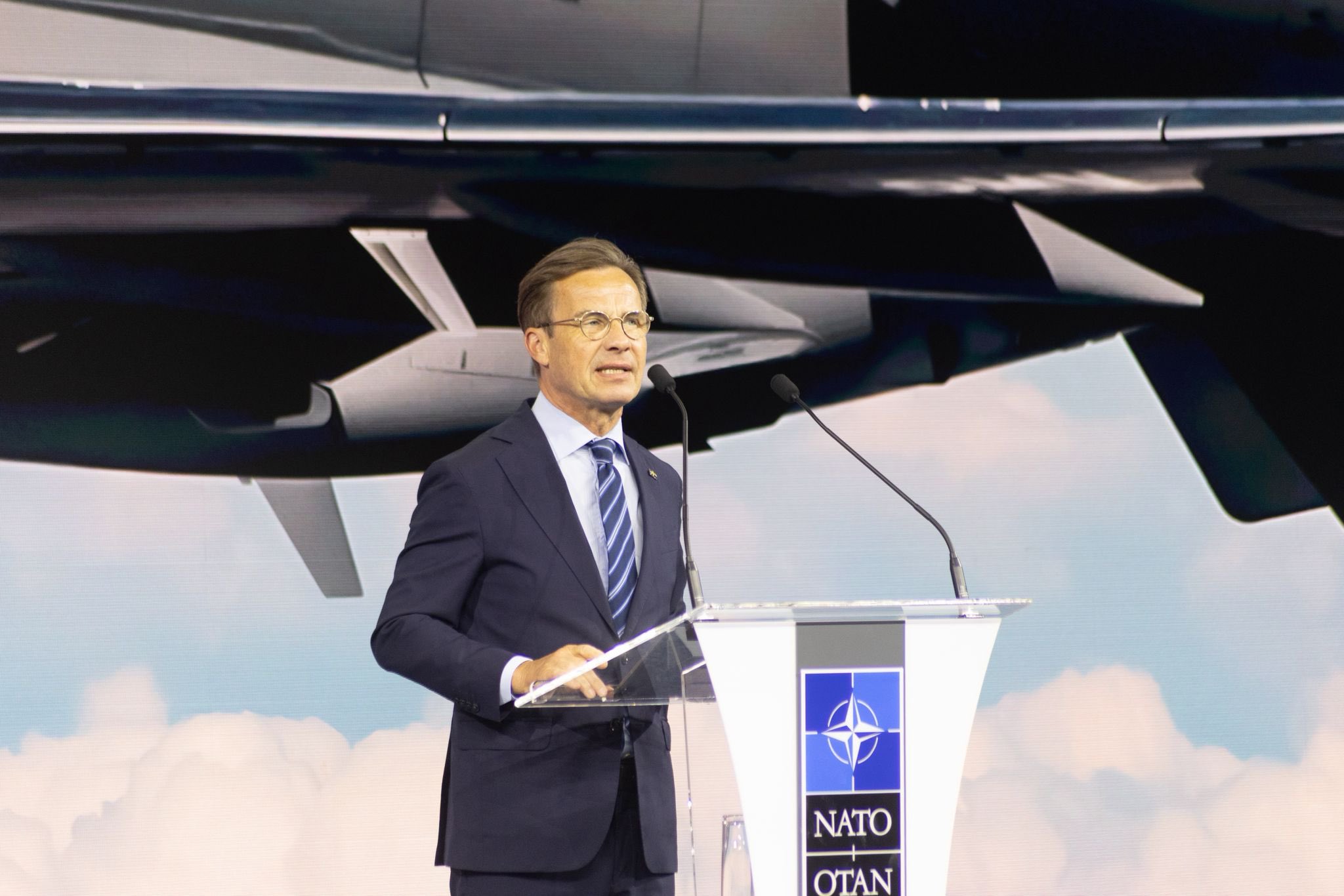
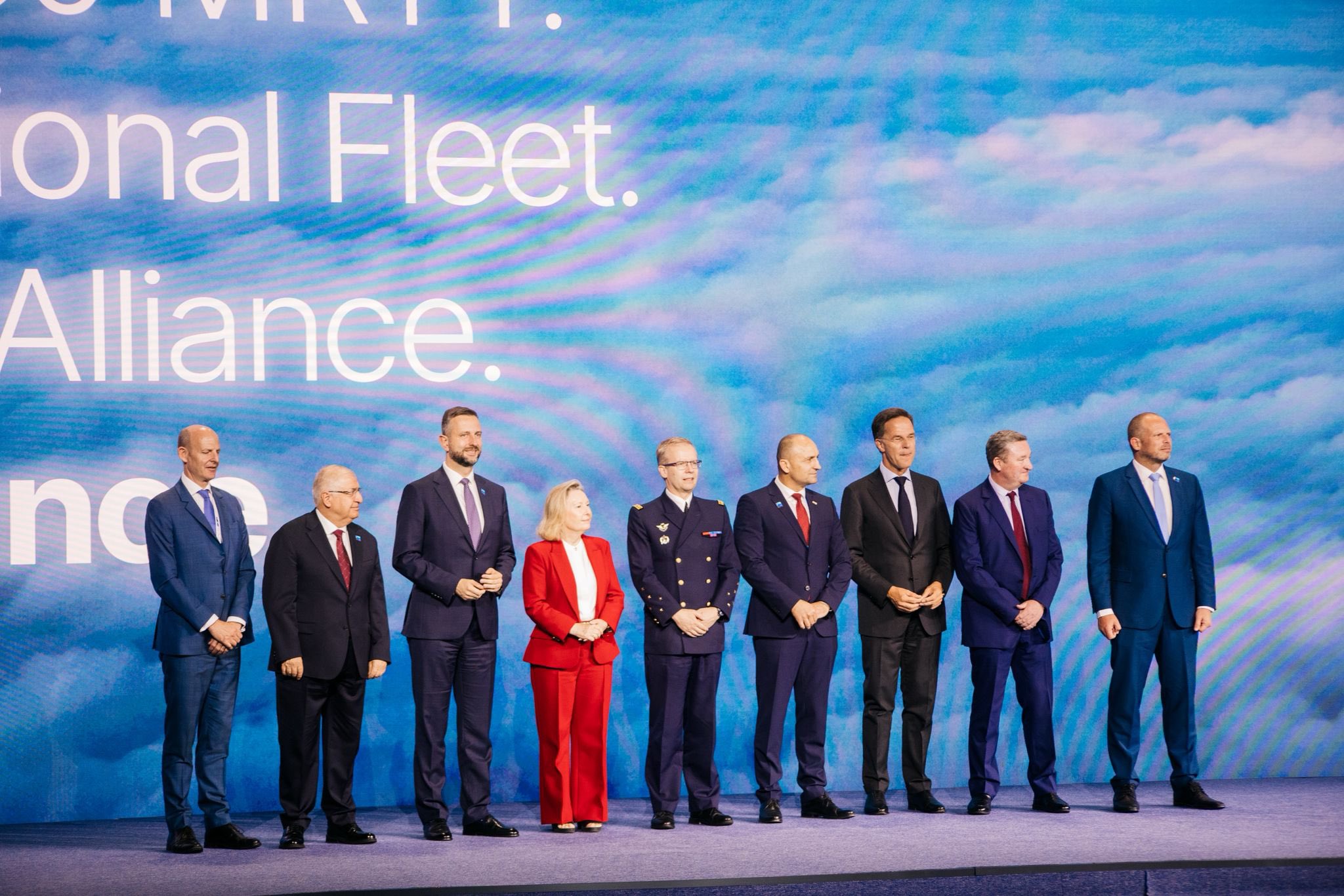





Photos: Ministry of National Defence
The initiatives were announced during a NATO Summit side event, the NATO Summit Defence Industry Forum. It is the most important event focused on transatlantic defense production, investment, and innovation.
Today, during the NATO Summit Defence Industry Forum in Ankara, in the presence of Deputy Prime Minister and Minister of National Defence Władysław Kosiniak-Kamysz, Poland joined two initiatives aimed at building defense capabilities:
- an initiative to increase transport capabilities, namely strategic airlift;
- an initiative to create a multinational fleet of manned airborne detection, reconnaissance, command, and control platforms.
Ministry of National Defence
A400M-180 Atlas
According to Airbus Defence and Space, a European company that is part of Airbus SE, the governments of Belgium, Croatia, France, Poland, Spain, Turkey, and the United Kingdom launched a High Visibility Project for the Airbus A400M-180 Atlas, a heavy four-engine transport aircraft that can also be configured for aerial refueling using a hose-and-drogue system.
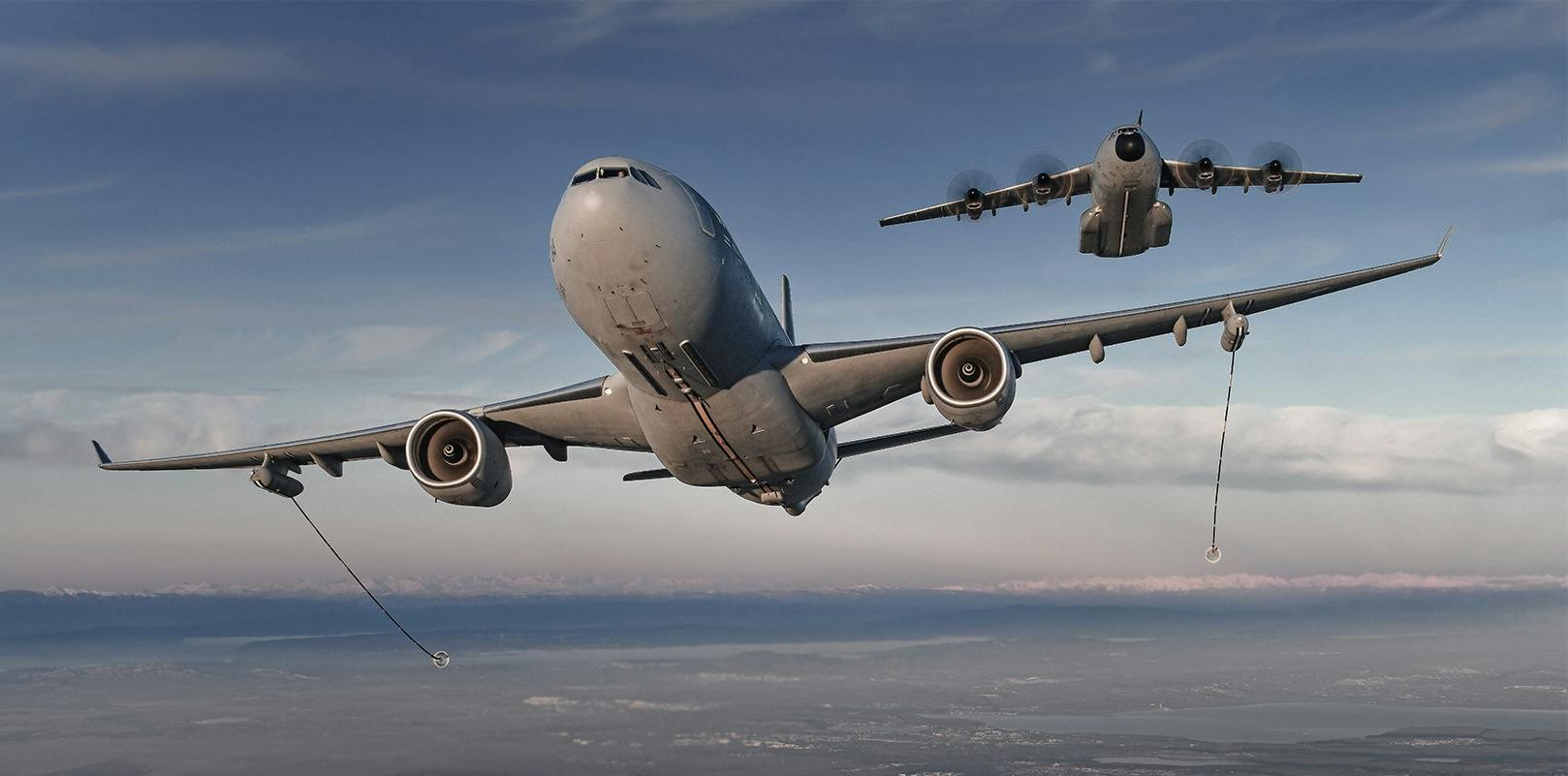 Image: Airbus Defence and Space
It is intended to be a strictly transport-focused counterpart to NATO’s Multinational MRTT Fleet (MMF), which consists of A330-200 MRTT (Multi-Role Tanker Transport) tanker-transport aircraft and which Finland joined during today’s Summit. The MMF had previously included the Kingdom of the Netherlands, Luxembourg, Norway, Germany, Belgium, the Czech Republic, Sweden, and Denmark. The fleet currently comprises nine of the 12 A330-200 MRTT aircraft ordered.
The aim of the High Visibility Project is to close gaps in strategic airlift capabilities among European Allies and ultimately establish a Multinational Fleet based on the A400M.
Based on a “pooling and sharing” strategy, the initiative envisages different stages of cooperation among the participating countries, ranging from an A400M fleet owned and operated by multiple multinational entities to related services such as maintenance, training support, infrastructure, and procurement.
The goal is to create a comprehensive solution that will more effectively meet national and NATO requirements while offering greater operational flexibility in specific capability areas such as air-to-air refueling, disaster relief, medical evacuation, and firefighting.
“The selection of the A400M for this multinational fleet underlines its key strategic airlift capabilities. With more than 135 aircraft in operation and more than 270,000 flight hours achieved by the global fleet, the A400M has become the backbone of Air Mobility for the largest European NATO countries, and with its future capability roadmap, its role will become even more essential for decades to come,” said Ben Bridge, Chairman Airbus Defence and Space in the UK.
It is worth adding that Poland had so far been interested in independently acquiring heavier transport aircraft under the Drop program, as well as tanker-transport aircraft under the Karkonosze program. The latter, covering four A330 MRTT aircraft, is to be financed through the SAFE (Security Action for Europe) loan program.
Saab S106 GlobalEye
Meanwhile, according to Sweden’s Saab Defence and Security, the NATO Support and Procurement Organisation (NSPA) announced the start of negotiations on the purchase of Saab S106 GlobalEye AEW&C (Airborne Early Warning and Control) aircraft, which would replace the fleet of 14 Boeing E-3A Sentry AWACS aircraft. Leaks on the matter had already been known since April 23 this year.
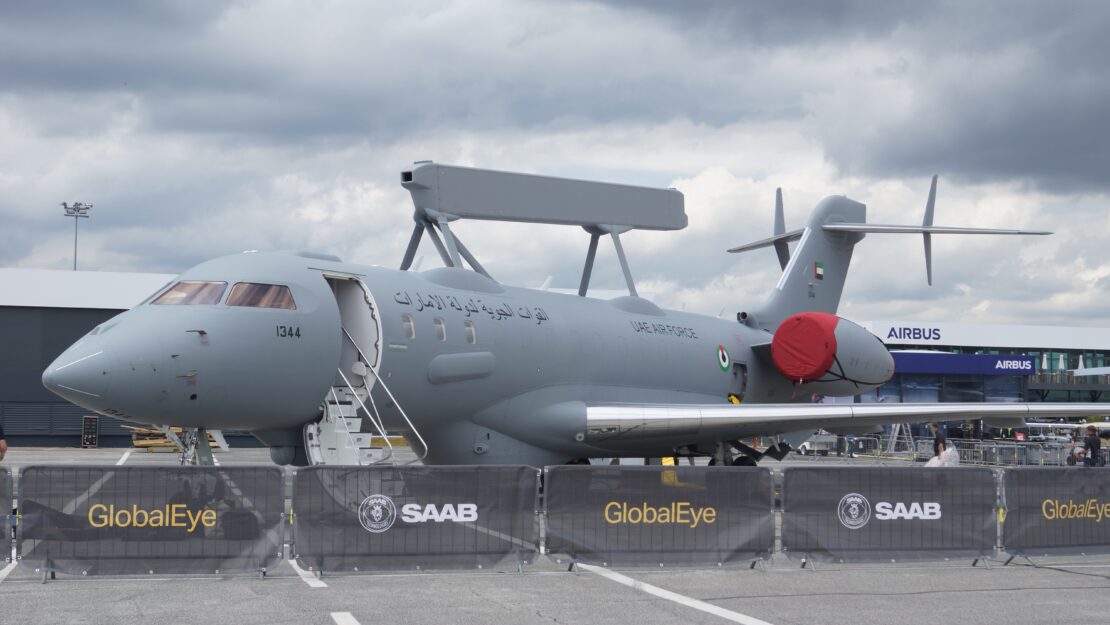 Photos: Radosław Niesobski, MILMAG
At this stage, Saab has not signed a contract or received an order related to the announcement. Earlier reports suggested that a future order under the AFSC (Alliance Future Surveillance and Control) program could cover 10 to 12 GlobalEye aircraft based on the Bombardier Global 6500 airframe, with a unit value of around 550 million EUR.
“We are honoured and proud to support NATO in its next-generation AEW&C capability. We are confident that GlobalEye is the right choice for the Alliance, delivering proven capability, adaptability and long-term operational advantage. Today’s announcement clearly positions GlobalEye as the world-leading solution for advanced airborne early warning and control. We look forward to the next steps in the negotiations,” says Micael Johansson, President and CEO of Saab.
The fact that the future GlobalEye fleet will be multinational is not surprising, as the current E-3A Sentry AWACS fleet is operated under the same formula through a program managed by the NATO Early Warning and Control Programme Management Organisation (NAPMO). The program’s members are Belgium, the Czech Republic, Denmark, Germany, Greece, Hungary, Italy, Luxembourg, the Kingdom of the Netherlands, Norway, Poland, which joined in 2006, Portugal, Romania, Spain, Turkey, and the United States.
It should be recalled that on November 13, 2025, the Ministry of Defence of the Kingdom of the Netherlands said that, together with six partner countries and on behalf of NATO, it was abandoning the plan to purchase the first six Boeing E-7A Wedgetail airborne early warning and control aircraft in the initial phase of the program, known as iAFSC, which had been selected two years earlier. This was understood to have followed a similar decision by the United States, which now appears to have changed its position and is continuing the program.
Even then, there were suggestions that the Alliance would invest in the Swedish early warning system installed on Canadian airframes, especially as other NATO countries had independently decided to purchase it: France for two aircraft with an option for two more, and Sweden for three aircraft with an option for one more. Canada recently announced a purchase as well, probably covering six aircraft. The system is also being offered separately in Denmark, Poland, Germany, and Greece.
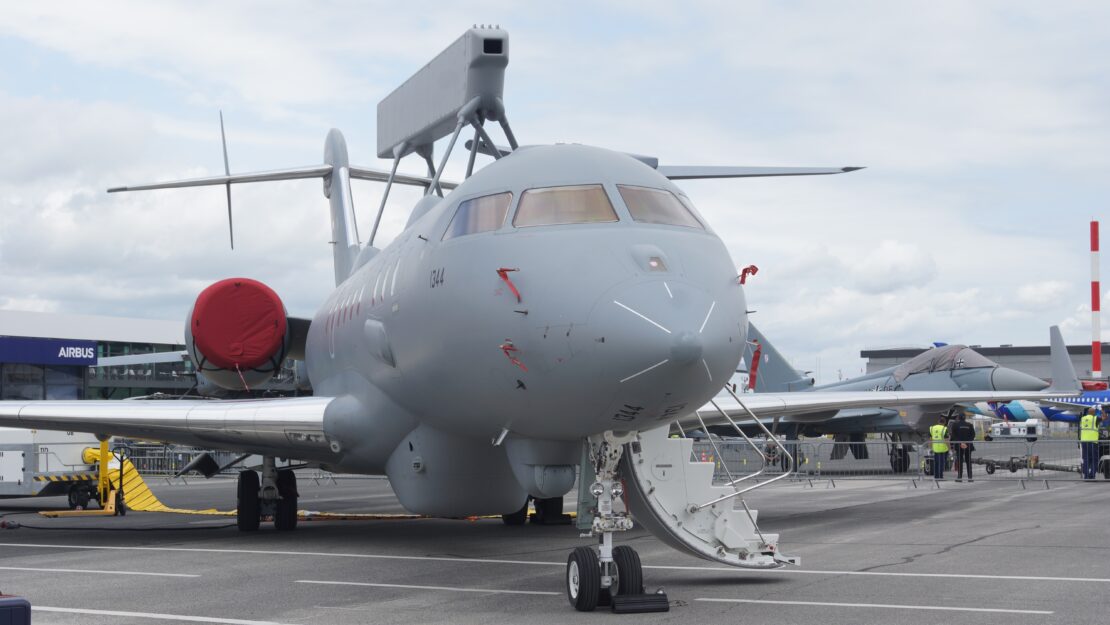
GlobalEye is based on the airframe of the Bombardier Global 6000, a civilian business jet, although it can also be integrated with the newer Global 6500. The aircraft is capable of conducting 11-hour non-stop missions. It carries a suite of sensors, including the new Erieye ER (Extended Range) radar, an X-band system with increased range. The radar can detect and track moving ground targets, including those with reduced radar signatures, as well as aircraft, cruise missiles, and submarine periscopes at ranges of up to 450 km. Erieye ER can operate despite active jamming.
Other equipment, in the baseline version for the United Arab Emirates, includes the Leonardo/Selex ES Seaspray 7500E radar for maritime and land surveillance, fitted for this purpose with a GMTI (Ground Moving Target Indication) capability; a FLIR Systems Star Safire 380HD electro-optical turret; an identification friend-or-foe system; an ADS-B transponder; a self-protection system; an AIS automatic identification system; data links, including satellite links; ESM electronic support measures; and an ELINT system for detecting and identifying sources of radio-frequency emissions.
The differences between the Global 6000 and Global 6500 mainly concern the engines, respectively the Rolls-Royce BR710A2-20 and Rolls-Royce Pearl 15; range, at 11,112 km, or 6,000 nautical miles, and 12,223 km, or 6,600 nautical miles; fuel efficiency, with fuel burn of 470 gallons per hour and 430 gallons per hour; technology, including different wings, with the Global 6500 using the Smooth Flĕx Wing from Mitsubishi Heavy Industries; and minor cabin improvements and different avionics.
The AFSC program has its roots in 2019, when signals emerged about the need to replace NATO’s E-3A Sentry aircraft after 2035, but it was formally launched in April 2022 by NAPMO. These aircraft are already undergoing their second modernization in recent years, under the FLEP (Final Lifetime Extension Programme), but replacement of the platform itself will be necessary.
NATO’s E-3A fleet has been the first multinational unit under Alliance command since January 1982. Its two squadrons, Flying Squadron 1 and Flying Squadron 2, consist of 20 multinational crews drawn from the armed forces of 15 NATO countries, including Poland. They are based at Geilenkirchen in Germany. In addition, forward operating bases have been established at Konya in Turkey, Preveza/Aktion in Greece, and Trapani-Birgi in Italy, along with a forward operating location at Ørland in Norway.
Poland, for its part, independently operates two second-hand Saab 340B AEW-300 airborne early warning and control aircraft purchased from Sweden. However, already at the time of their acquisition, it was said that they would serve as an interim solution, with GlobalEye being the system of interest.
Dziś w trakcie #NATOsummit Defence Industry Forum w Ankarze w obecności wicepremiera W. @KosiniakKamysz Polska przystąpiła do dwóch inicjatyw budujących potencjał obronny.
✅inicjatywa dotycząca zwiększenia zdolności transportowych, czyli strategiczny transport powietrzny… pic.twitter.com/MB97Xuq2dn
— Ministerstwo Obrony Narodowej 🇵🇱 (@MON_GOV_PL) July 7, 2026
At the #NATOSummit in Ankara, Türkiye 🇹🇷, @NATO paves the way towards a Multinational #A400M Fleet with European governments designed to address strategic airlift capability gaps among European allies.
The objective is to establish a ‘pooling and sharing’ strategy similar to the… pic.twitter.com/Q8loR4H1Wd— Airbus Defence (@AirbusDefence) July 7, 2026
NATO announces GlobalEye as its future AEW&C capability. GlobalEye – made in the Alliance. For the Alliance.
Read more: https://t.co/Ao5bVqxH5v pic.twitter.com/KQoxICbJ4e
— Saab (@Saab) July 7, 2026