





























On Thursday, April 23, 2026, the French daily La Lettre and the German news agency dpa, via Antenne Bayern, were the first to report that the NATO Support and Procurement Agency (NSPA) had selected Swedish Saab S106 GlobalEye airborne early warning and control (AEW&C) aircraft to replace the fleet of 14 Boeing E-3A Sentry AWACS aircraft.
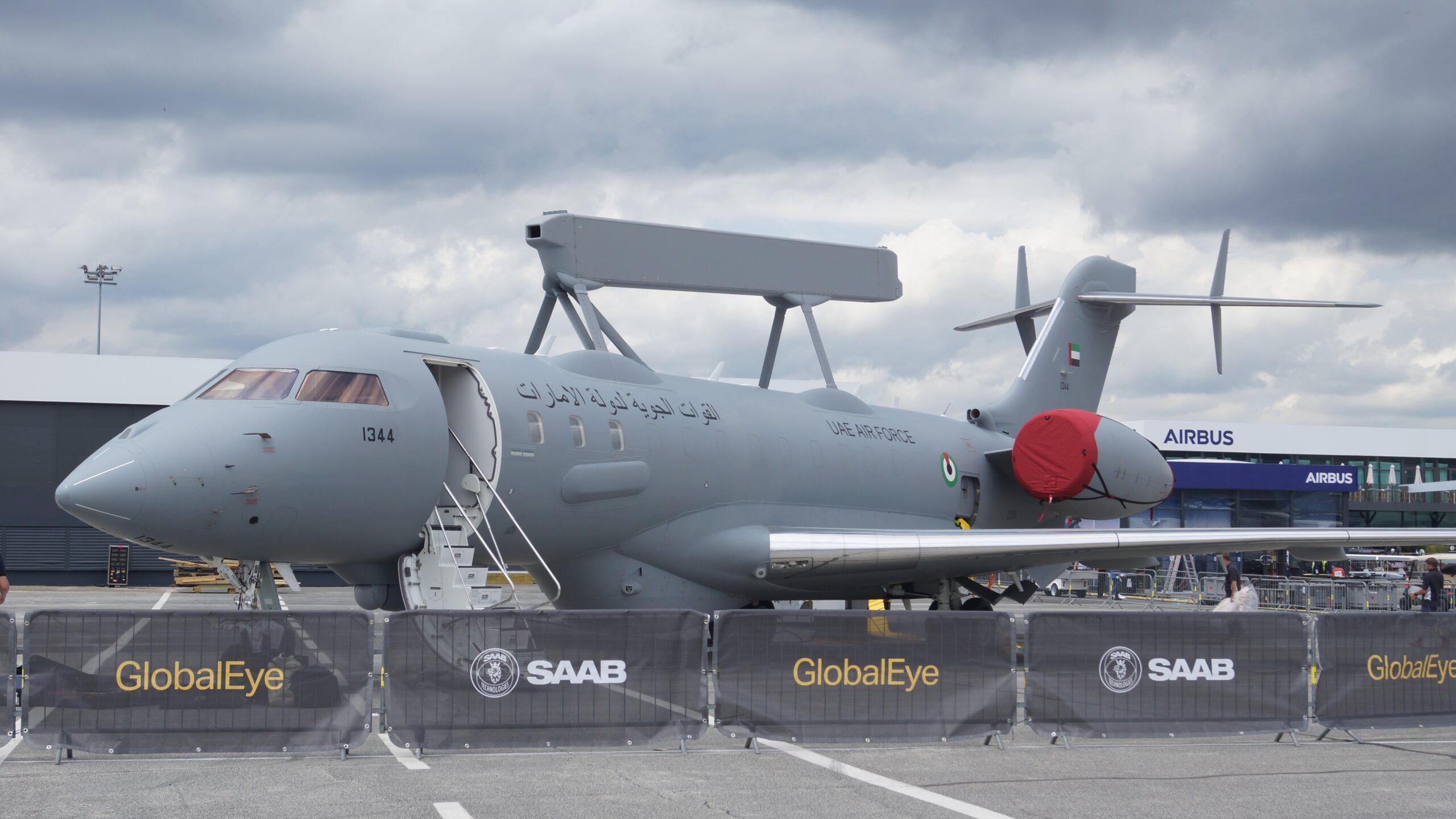 Photos: Radosław Niesobski, MILMAG
According to sources, NATO NSPA’s decision, which has not yet been made public, means the award of multibillion-euro contracts to Sweden’s Saab Defence and Security (the prime contractor and mission system integrator) and Canada’s Bombardier Defense (as a subcontractor and supplier of the Global 6000/6500 aircraft airframes). The order, under the AFSC (Alliance Future Surveillance and Control) program, is expected to cover 10 to 12 GlobalEye aircraft, with a unit value of approximately 550 million EUR. The decision is expected to be formally announced at the 36th NATO Summit in Ankara, which will take place on July 7–8 of this year.
It should be recalled that on November 13, 2025, the Ministry of Defence of the Kingdom of the Netherlands announced that, together with six partner nations and on behalf of NATO, it was abandoning the plan to purchase the first six Boeing E-7A Wedgetail airborne early warning and control aircraft in the initial phase of the program, known as iAFSC, which had been selected two years earlier. This was said to have followed a similar decision by the United States, which now appears to have changed its mind and is continuing the program.
It was announced that the partner nations in the program managed by NAPMO (NATO Early Warning and Control Programme Management Organisation) – namely Belgium, Czechia, Denmark, Germany, Greece, Hungary, Italy, Luxembourg, the Kingdom of the Netherlands, Norway, Poland (which joined in 2006), Portugal, Romania, Spain, Türkiye, and the United States – would reassess the available options in this area.
Even then, there were suggestions that the Alliance would invest in the Swedish early warning system installed on Canadian airframes, especially since other NATO countries had independently decided to purchase it: France ordered two aircraft with an option for two more, and Sweden ordered three aircraft with an option for one additional aircraft. The system is also being offered separately in Denmark, Canada, Poland, Germany, and Greece.
GlobalEye is based on the airframe of the Bombardier Global 6000 business jet, although it can also be based on the newer Global 6500. The aircraft is capable of conducting 11-hour non-stop flights. It carries a suite of sensors, including the new Erieye ER (Extended Range) radar, operating in the X band and offering increased range. The radar is capable of detecting and tracking moving ground targets, including those with a reduced radar signature, as well as aircraft, cruise missiles, and submarine periscopes at ranges of up to 450 km. Erieye ER can operate despite active jamming.
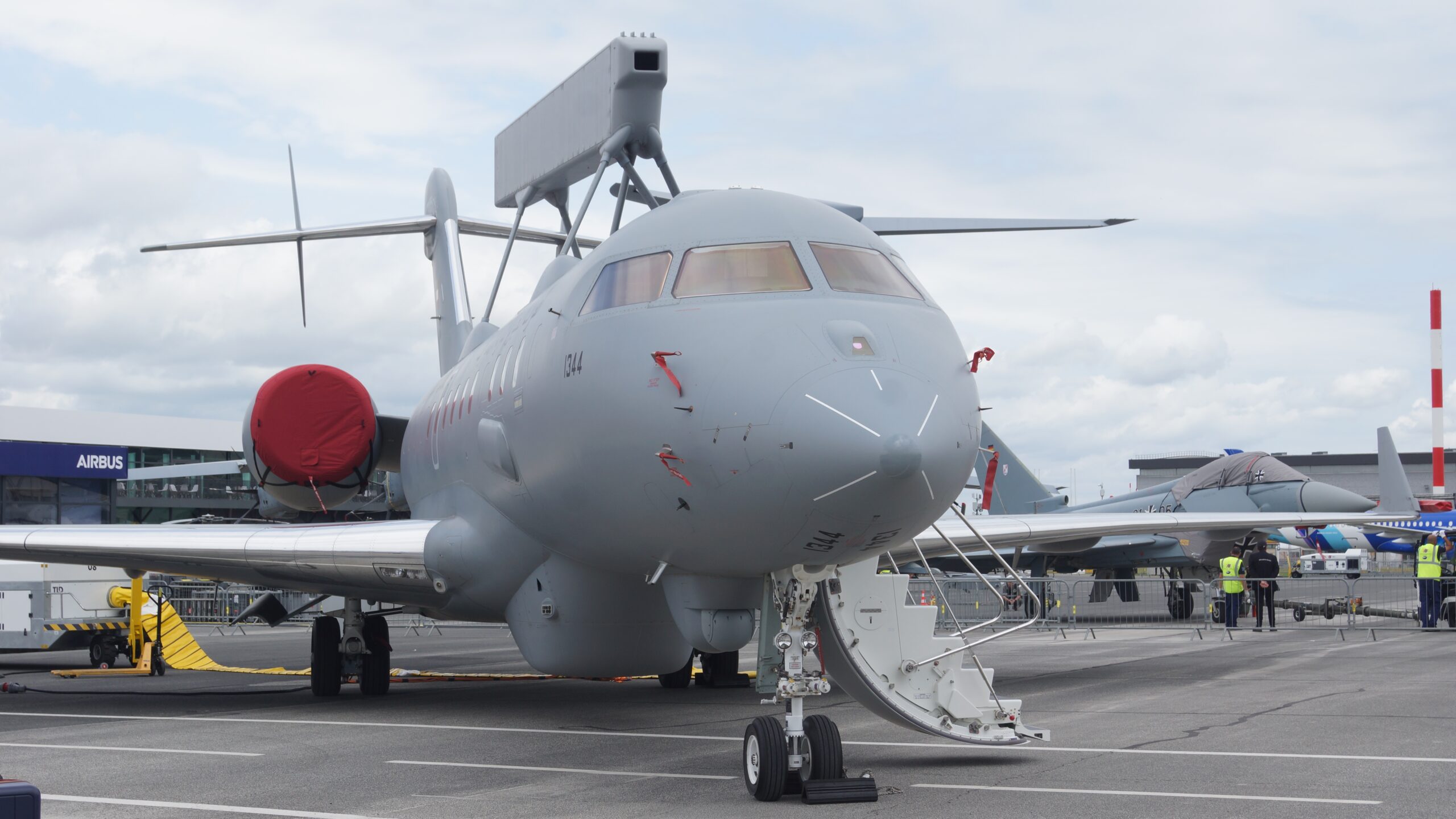
The remaining equipment, in the case of the baseline version for the UAE, includes a Leonardo/Selex ES Seaspray 7500E radar for maritime and land surveillance, equipped for this purpose with a GMTI (Ground Moving Target Indication) station; a FLIR Systems Star Safire 380HD electro-optical turret; an identification friend-or-foe system; an ADS-B transponder; a self-defense system; an automatic identification system (AIS); data links, including satellite links; electronic support measures (ESM) equipment; and an ELINT system for detecting and identifying sources of radio-frequency emissions.
The differences between the Global 6000 and 6500 mainly concern the engines, respectively the Rolls-Royce BR710A2-20 and Rolls-Royce Pearl 15; range, 11,112 km/6,000 nautical miles and 12,223 km/6,600 nautical miles; fuel efficiency, with fuel burn of 470 gallons per hour and 430 gallons per hour; technology, including different wings, with the Global 6500 using the Smooth Flĕx Wing from Mitsubishi Heavy Industries; and minor cabin improvements and the use of different avionics.
The AFSC program traces its origins to 2019, when signals emerged that NATO’s E-3A Sentry aircraft would need to be replaced after 2035, but it was formally launched in April 2022 by NAPMO. These aircraft are undergoing their second modernization in recent years, codenamed FLEP (Final Lifetime Extension Programme), but replacement of the platform itself will be necessary (Leonardo software-defined radios for NATO AWACS, NATO modernizes AWACS, NATO seeks AWACS successor).
NATO’s E-3A fleet is the first multinational unit under Alliance command, in service since January 1982. Two squadrons, Flying Squadron 1 and Flying Squadron 2, are composed of 20 multinational crews drawn from the armed forces of 15 NATO countries, including Poland. They are stationed at Geilenkirchen, Germany. In addition, forward operating bases have been established at Konya, Türkiye; Preveza/Aktion, Greece; and Trapani-Birgi, Italy; along with a forward operating location at Ørland, Norway.