


























Photos: Dennis Wolf, Christian Timmig, Simon Otte, Luka Wolff, Simon Wiesmann / Bundeswehr
The aircraft from the 62nd Tactical Airlift Wing (Lufttransportgeschwader 62, LTG 62) departed from its home base at Wunstorf Air Base in Lower Saxony, covering a distance of approximately 12,500 km non-stop in under 17 hours of flight and without support from other units or foreign armed forces.
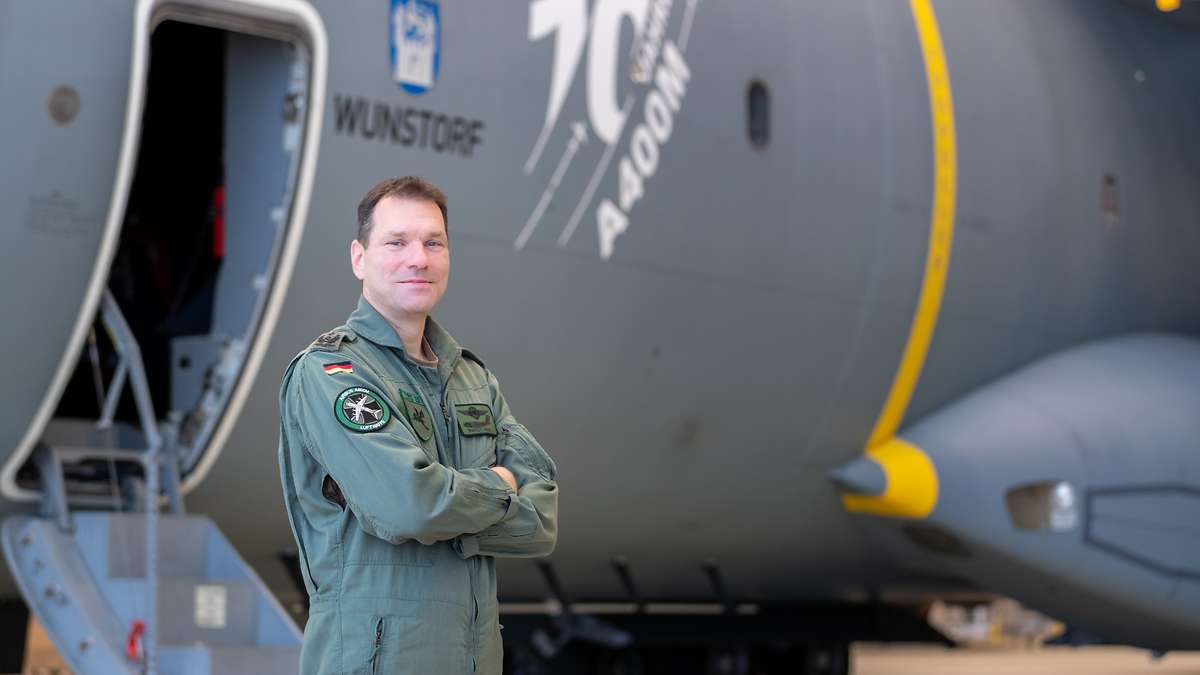
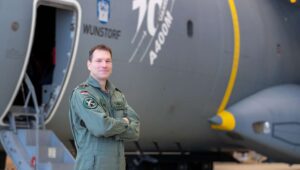
Colonel Markus Koll, Commander of LTG 62, explained how this long-distance flight proceeded, what was unique about it, and what purpose it served:
“We flew non-stop from Wunstorf to Hawaii. That is something very special for us. We covered a distance of around 12,500 kilometers, bridged just under 17 hours of flight time, plus approximately three hours of preparation time and one and a half hours of post-flight time, so almost 24 hours on flight duty. This cannot be done with a single crew, so two crews were deployed, alternating throughout.
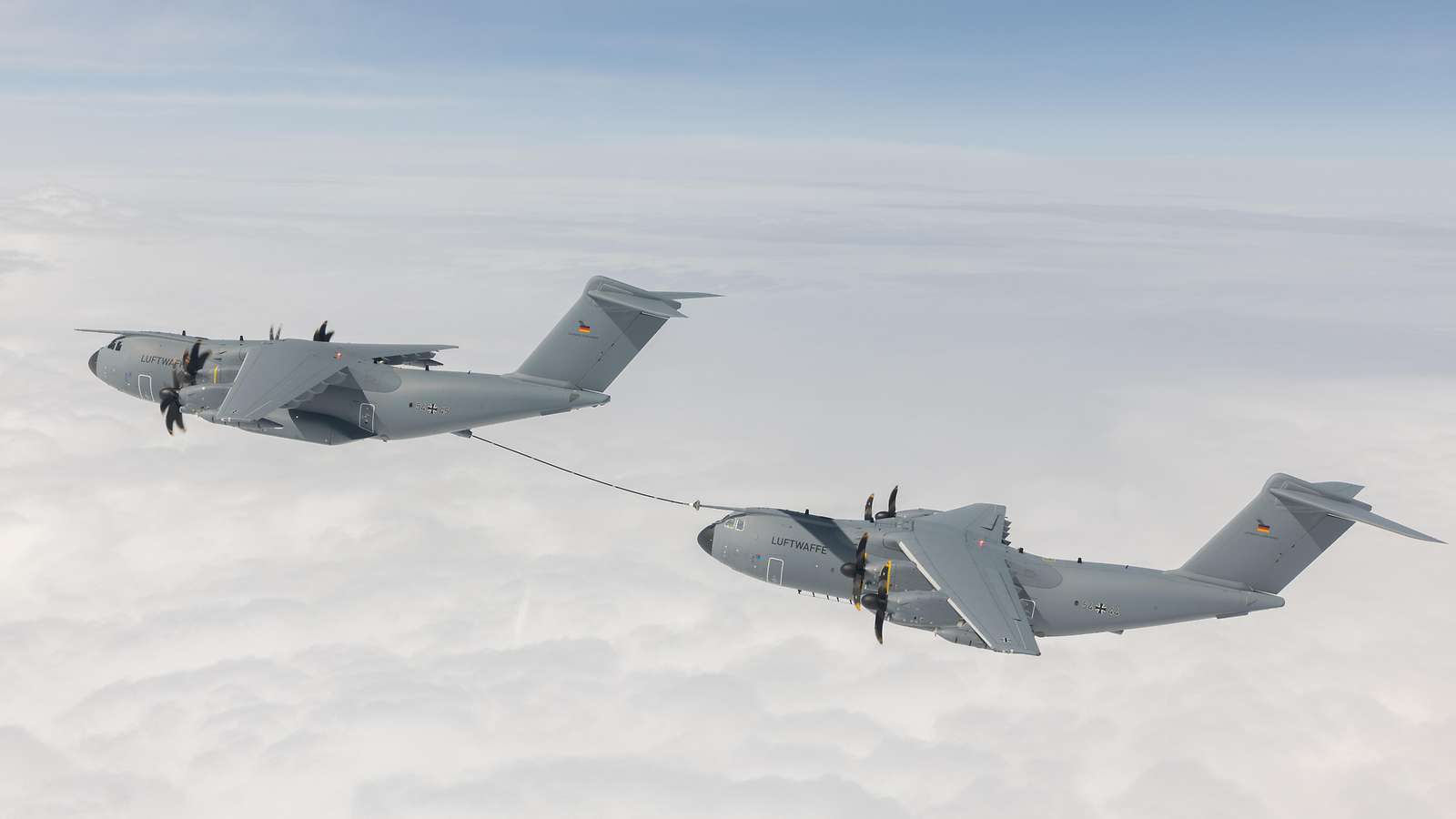
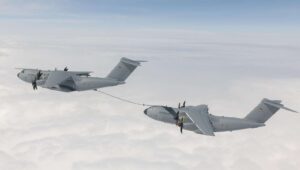
The calculated fuel requirement for such a long route is approximately 76 tonnes. Although the A400M is used for long distances, we cannot pre-load that quantity. This means we operated flying tankers using our own assets, our own A400M aircraft. To allow the A400M to fly non-stop to Hawaii, approximately 35 tonnes of fuel were transferred to the aircraft in two refueling operations. Also particularly special for us was the fact that this was simultaneously an operational trial. Among other things, we were testing: Can the A400M do this? Can we do this using our own assets, without relying on another aircraft or another nation? Our goal was to demonstrate and expand the A400M’s ‘toolbox’, its unique capability spectrum.”
What route did you take, and where did refueling take place?
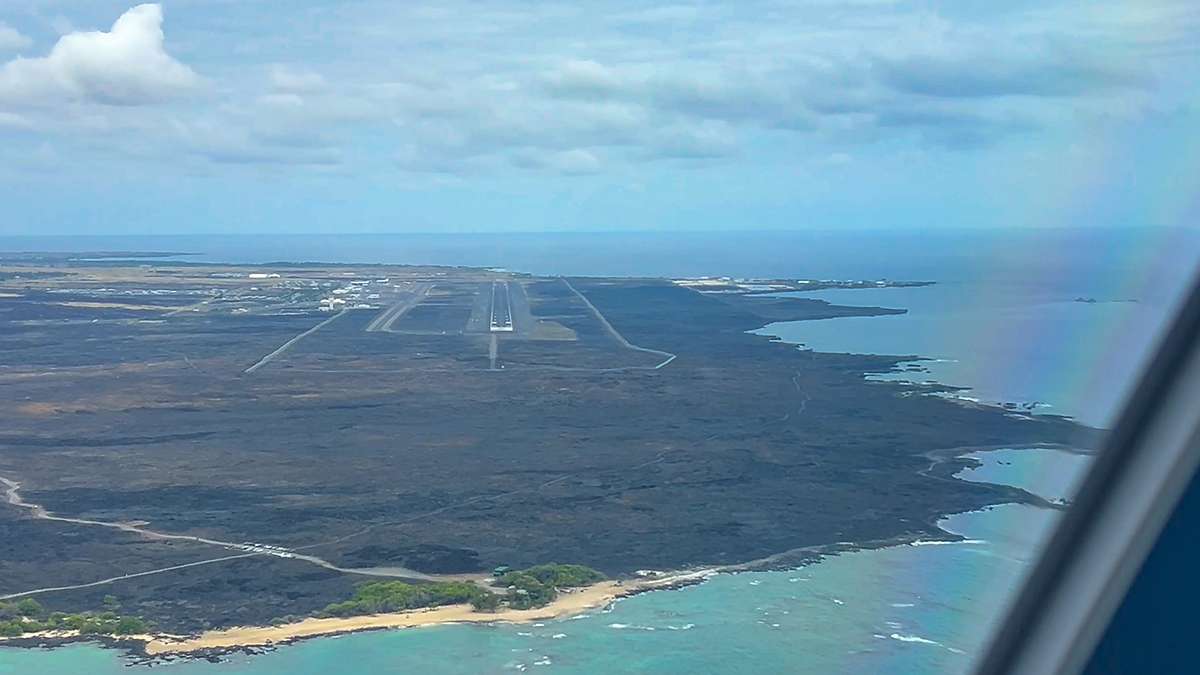
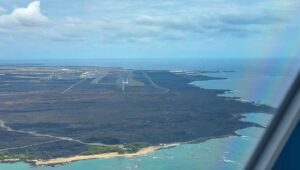
“The aircraft first flew toward Norway, then Iceland, and further north toward the North Pole, which was passed approximately 150 kilometers to the south. From there, it headed south to Alaska and then across the Pacific to Big Island, one of the Hawaiian islands.
Just under 15 minutes before this aircraft, another aircraft departed from Wunstorf. This was the first flying tanker, used between Norway and Iceland for the first refueling operation with approximately 18 tonnes of fuel, before turning back toward Norway for an intermediate landing. The second tanker we had pre-positioned in Alaska. After two-thirds of the route, it conducted the second refueling operation and transferred approximately the same amount of fuel again.”
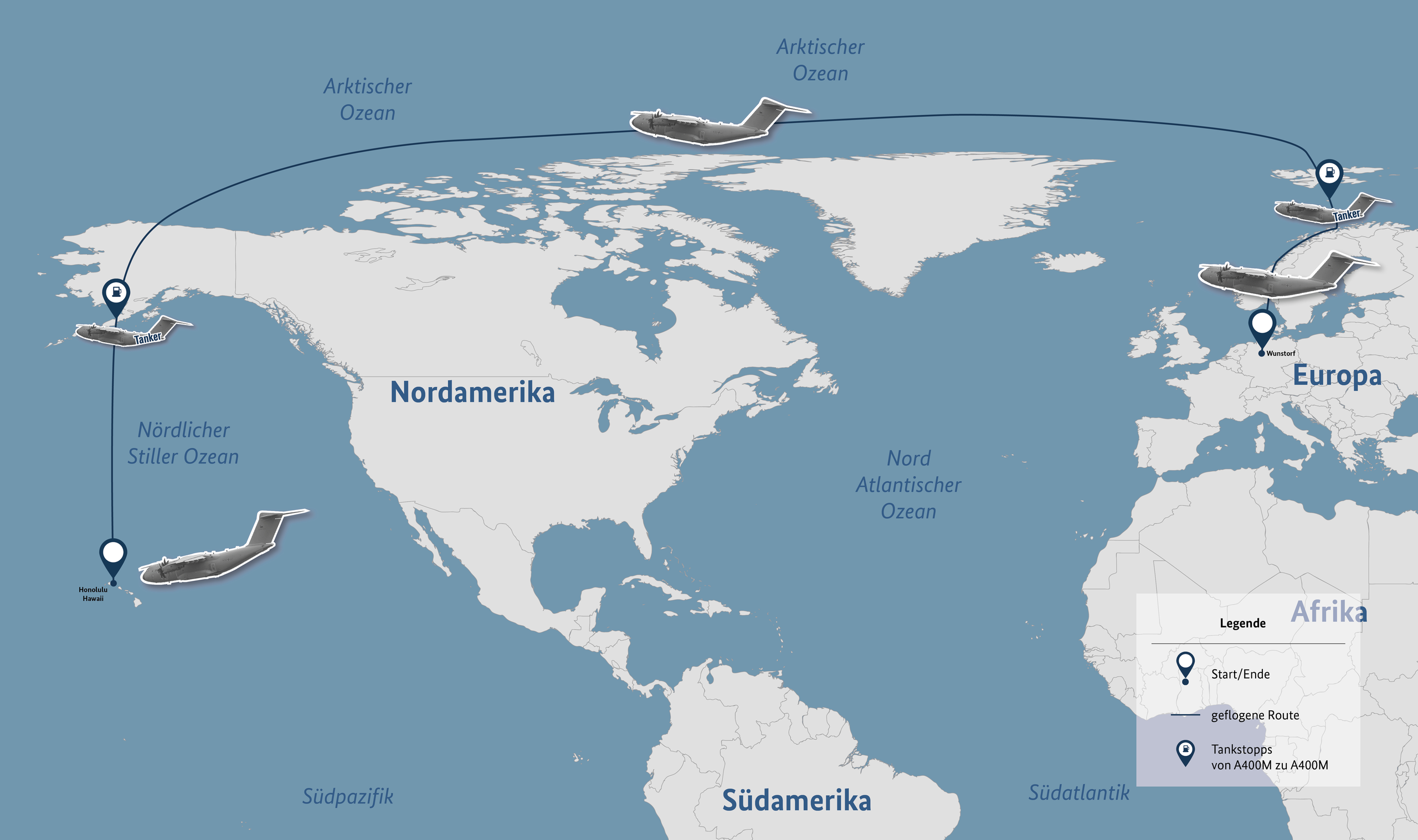 Image: Luftwaffe
“The fact that we flew so close to the North Pole also gave us the opportunity to trial non-stop flight and navigation in the polar region, conditions we do not otherwise encounter in Europe. If you look at a flat world map, the route looks like an enormous curve and a detour. But if you look at it on a globe, which some people still have at home, you realize this is almost the shortest route between Wunstorf and Hawaii.”
What added value does this exercise have for the Air Force?
“For the Air Force and for the Bundeswehr, we are testing a new capability: specifically, the ability to reach a very distant location in the shortest possible time. Let us assume that LTG 62 had to conduct an evacuation operation somewhere in the south of the African continent. There would be two options. The conventional approach used in normal flight operations would be to fly there via various countries, making ground refueling stops as needed. However, this requires overflight permissions, which involve a certain amount of communication with the countries concerned.
If, however, an operation needs to be kept as secret as possible, that is only achievable with this capability. This gives us a significant added value. We can thereby provide an additional tool in the Bundeswehr’s toolbox for evacuation operations, humanitarian assistance, or other purposes. We thus possess a cold-start capability using entirely our own assets. We do not need to request a large tanker aircraft from a partner nation well in advance. We can do it with our own A400M.”
Can every A400M conduct this type of air-to-air refueling?
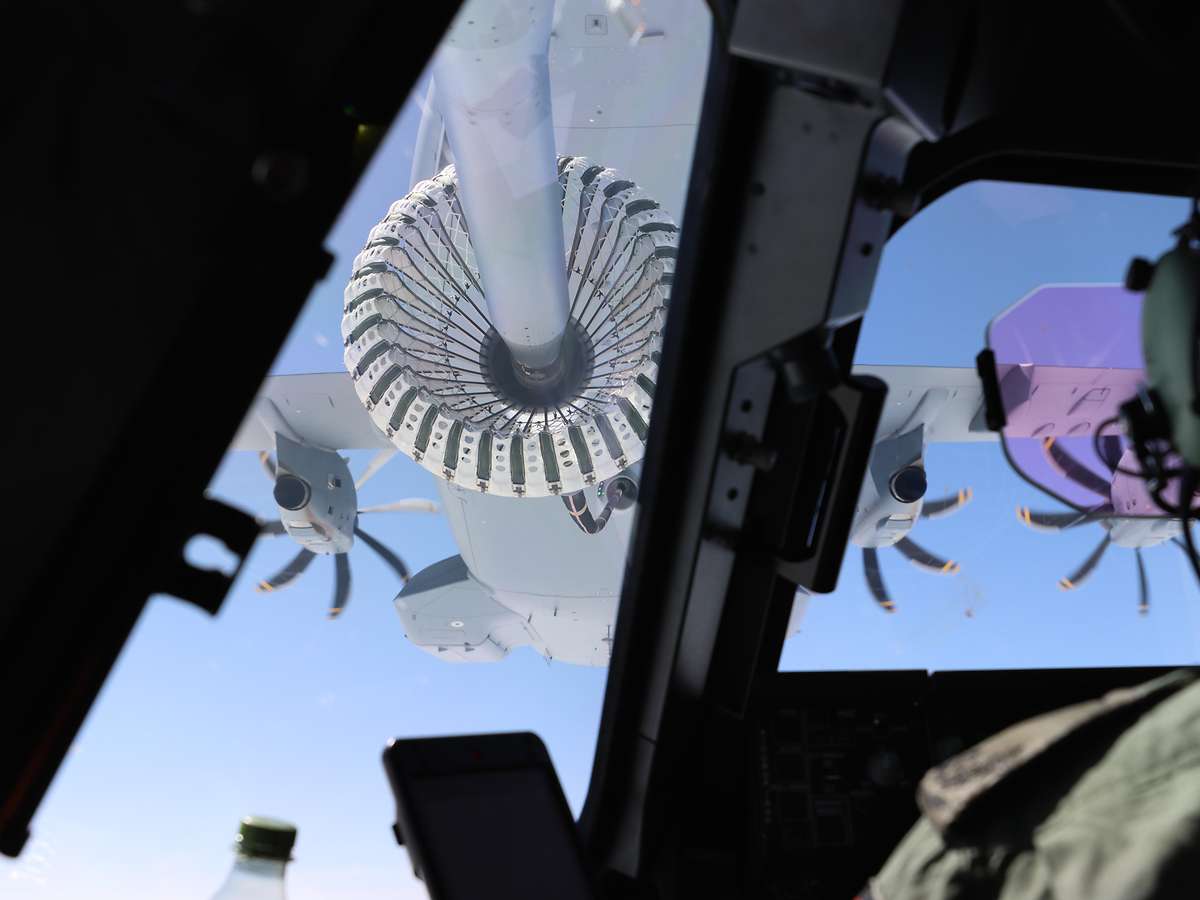
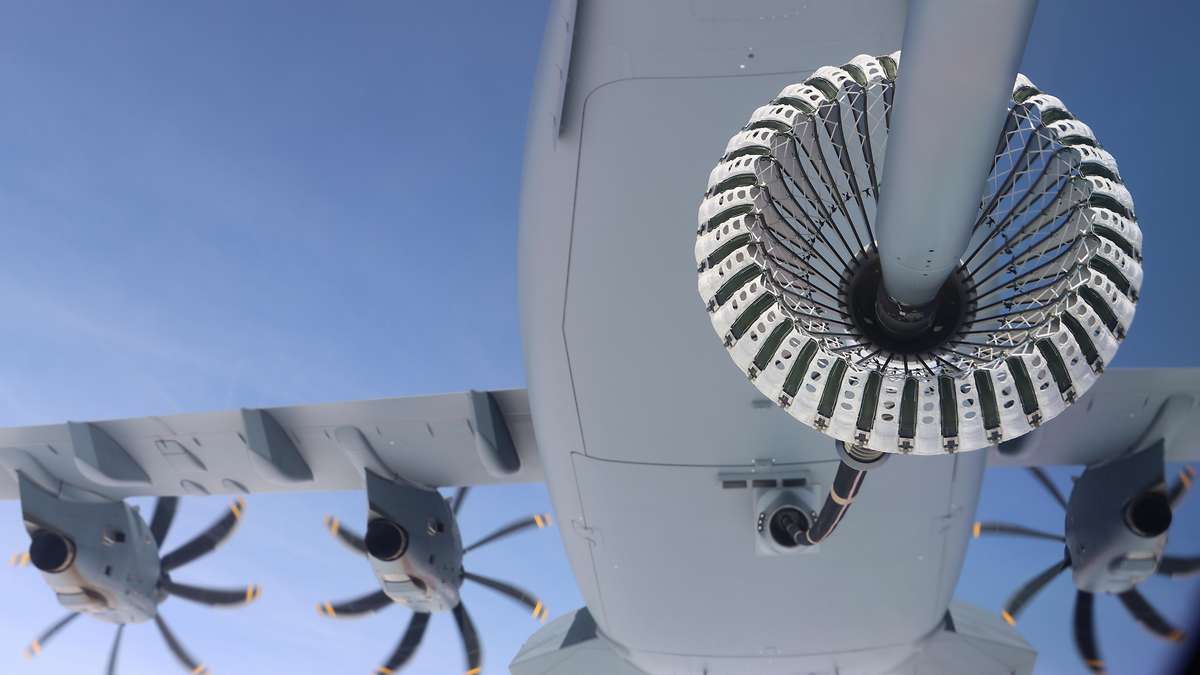
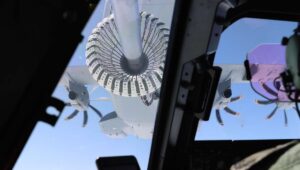
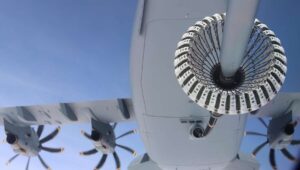
“Air-to-air refueling of another A400M can be performed by those equipped with what is known as a Hose-Drum Unit (HDU). Simply put, this is a hose that can be extended from the closed rear ramp. At its end is a large basket to which the aircraft being refueled can essentially dock in order to receive fuel. The tanker’s cargo hold naturally also contains a considerable amount of additional technical equipment and supplementary gear.
In principle, it is what we have been doing when refueling combat aircraft for around eight years. The main differences are that the hose is not extended from the sides of the wings via so-called pods, but from the center of the rear ramp using the HDU, and that we are not refueling other partner units and nations, we are refueling ourselves.”
What makes this type of air-to-air refueling so special?
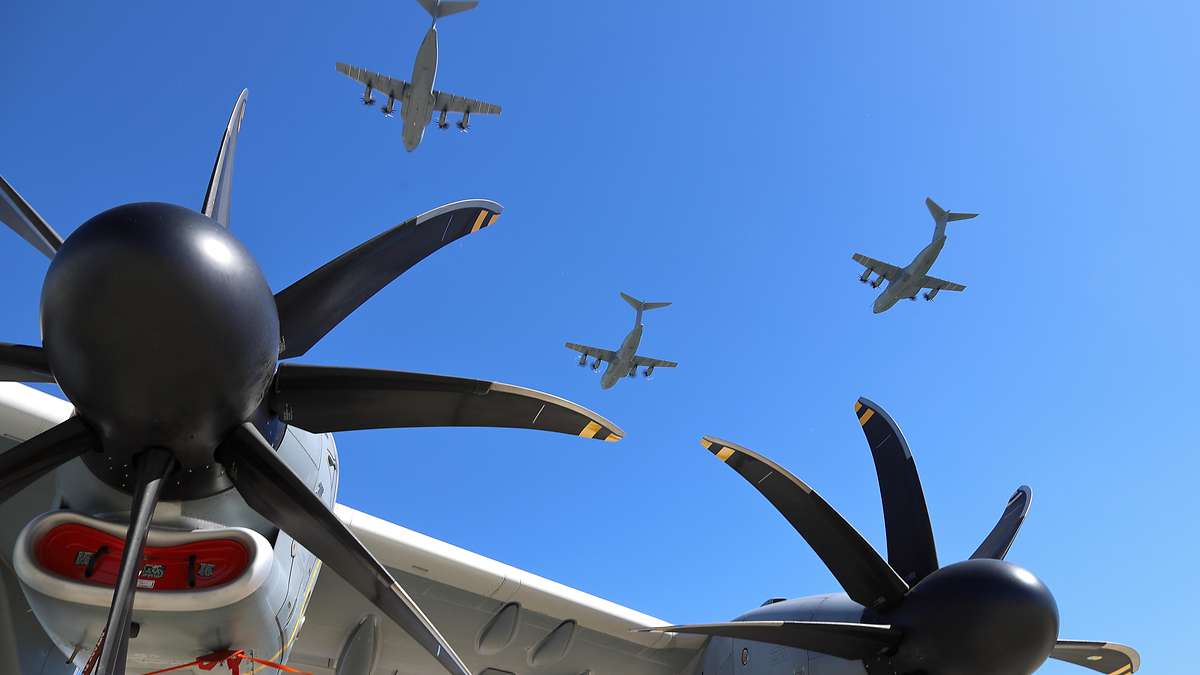
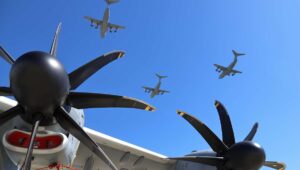
“Particularly with A400M-to-A400M refueling, what makes it special is that you get very, very close to another large aircraft. That is something we pilots generally try to avoid. You could see something similar from the ground at the Bundeswehr Open Day during our formation flypast. Three large transport aircraft flew in close formation. But even then, there still felt like a lot of space between them, and I can judge that, as I was at the controls of one of the aircraft myself. In the air, it is genuinely exciting, because you really have to intervene very actively in the controls, both in terms of speed and aircraft attitude, to prevent the aircraft from colliding.
During the refueling operation, I get so close to the other aircraft that I am essentially touching it through its refueling hose. and I have to hit that basket in the first place. That requires truly high levels of concentration and precision. Imagine it this way: both A400Ms are flying through the air at approximately 500 kilometers per hour, and the separation reduces to less than 20 meters. That is challenging.
In the flight we have just carried out, there is the additional factor that the pilots are not well-rested. During normal refueling flights, crews have been awake for approximately six hours and airborne for one hour at the time of a refueling. This time, the crew had to demonstrate the same level of concentration after already being awake for 18 hours and having been flying for over ten hours. Because when it matters, there are not unlimited chances. Either it works on the first, second, or third attempt, or it does not. Something else can also intervene, a technical fault, for example. Then the aircraft has to break off to head for the nearest safe airfield and land. It is genuinely exciting for us. We have practiced this in the simulator many times, but over this distance, at this range, that was an impressive achievement!”
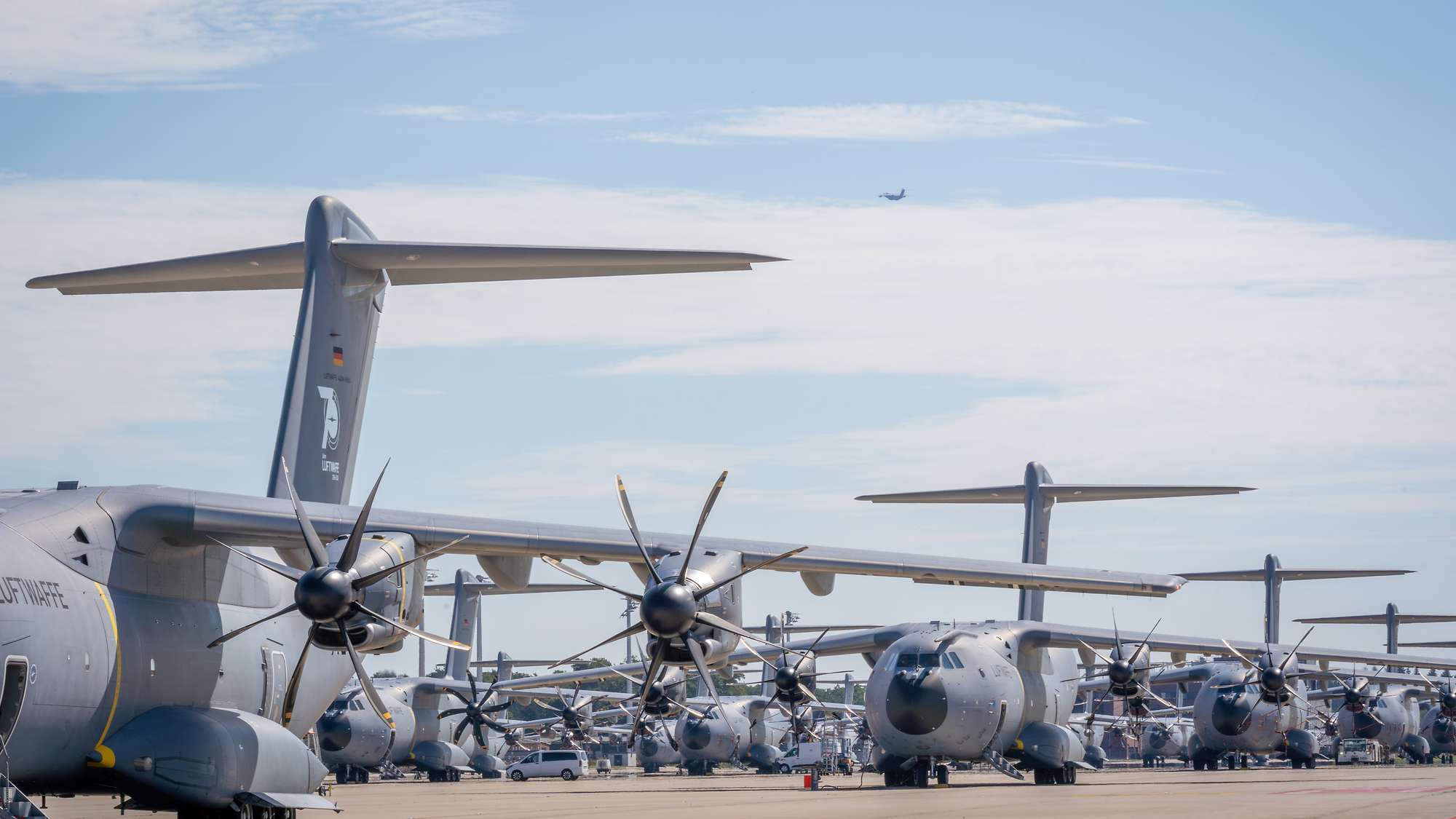
On April 17 of this year, European company Airbus Defence and Space (part of the Airbus SE group) delivered the last of the 53 ordered A400M aircraft to the Luftwaffe. The first aircraft entered service in December 2013 and are the successors to the Transall C-160, which was retired on December 15, 2021. From September 2025, the retrofitting of 22 of them with Israeli DIRCM self-protection systems from Elbit Systems began.
Germany also wants 13 of them to be made available to other NATO nations as part of allied transport capability support. In the future, they are to fly on 50% Sustainable Aviation Fuel (SAF), commonly known as biofuel.
Not only Germany
The British Royal Air Force (RAF) has a similarly impressive achievement on its record. On July 3, 2023, as part of exercise Mobility Guardian 23, one of the Atlas C.1 aircraft (the local designation for the A400M), registration RRR4514, departed from RAF Brize Norton in Oxfordshire and completed an uninterrupted flight to the island of Guam lasting 20 hours and 36 minutes, refueling three times from two Voyager (Airbus A330-203 Multi Role Tanker Transport) transport tanker aircraft. The exact distance was not disclosed.
See also:
