





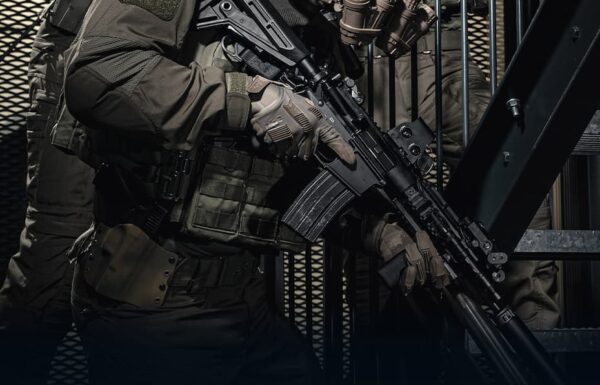

















The start of the third quarter proved to be a breakthrough period for Fabryka Broni. The Radom-based manufacturer announced readiness to produce 80,000 to 100,000 Grot A3 assault rifles per year. This was made possible by the approval of the technical documentation by the Armaments Agency (Polish Grot A3 Assault Rifle Nears Completion). In the wake of this, on June 24 the Ministry of National Defence ordered the first batch of 46,000 Grots in the latest A3 variant for nearly 600 million PLN (Contract for MSBS Grot A3 assault rifles for the Polish Armed Forces). While the contract leaves something to be desired, the order falls significantly below Fabryka Broni’s production capacity, covers only the 14.5-inch barrel version, and includes no additional accessories, this does not change the fact that soldiers will begin receiving the latest variant rifles this year.
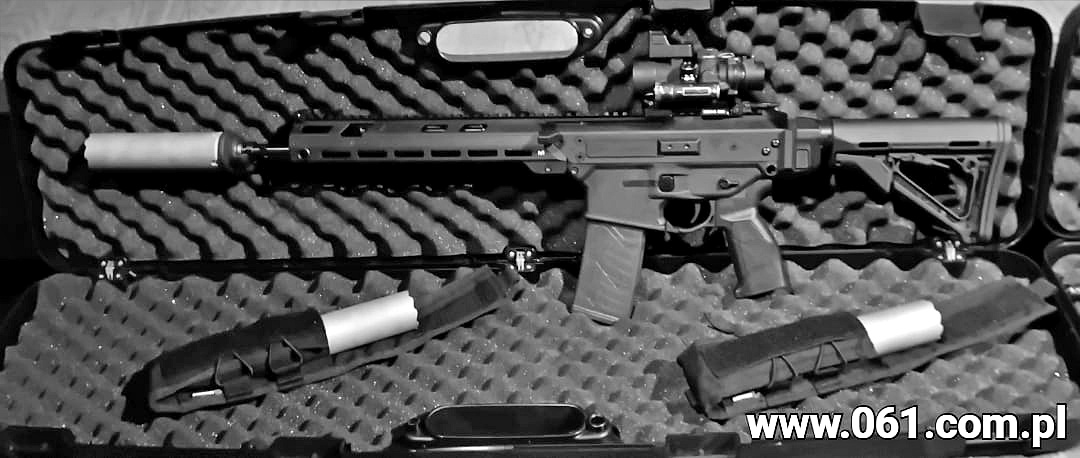
MSBS Grot A3, presented with a suppressor specially designed for this weapon / Photo courtesy of 061.com.pl
A total of 239,000 Grots have already been delivered to the Polish Armed Forces (202,000 in the A2 variant and 37,000 in the A1 variant), which is why the dominant subject of debate today is increasingly not whether soldiers will receive new weapons, but how they will be configured and equipped. The days when a weapon came with nothing more than a canvas sling, 4 magazines, and a cleaning kit are slowly becoming a thing of the past. The latest lessons from the battlefield clearly show how important is the advantage gained from detecting and engaging the enemy first while remaining unseen.
New developments at the GROTOWISKO 2026 conference
This is why this year’s GROTOWISKO conference emphasized the importance of delivering assault rifles together with electro-optical sights and suppressors. The Territorial Defence Forces Command confirmed this trend by declaring to the MILMAG editorial team that it is consulting with Fabryka Broni on the possibility of assembling rifles with additional equipment. The best confirmation of these words was the presentation at GROTOWISKO of the latest suppressors developed jointly by Fabryka Broni and Borimex (which supplies suppressors under the Gomander brand).
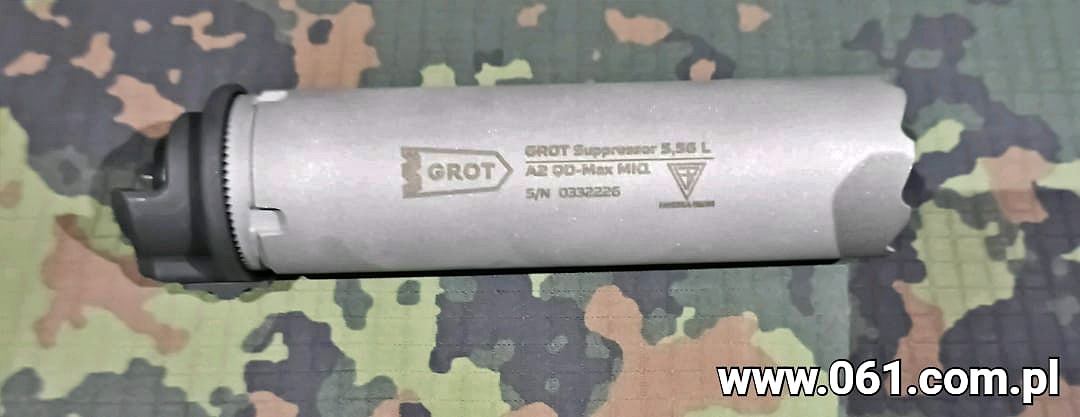
The latest suppressor designed specifically for use on MSBS GROT assault rifles with A2 muzzle devices / Photo courtesy of 061.com.pl
According to the manufacturer, the GROT SUPPRESSOR A2 QD-MAX MK1 is a flow-through suppressor design. It combines effective reduction of noise level and muzzle flash signature with a repeatable mounting system and full compatibility with the MSBS Grot platform. Depending on barrel length and ammunition type, it reduces sound level by 23-28 dB. The design allows for further development in line with user requirements. Work is currently underway on a version chambered for 7.62mm.
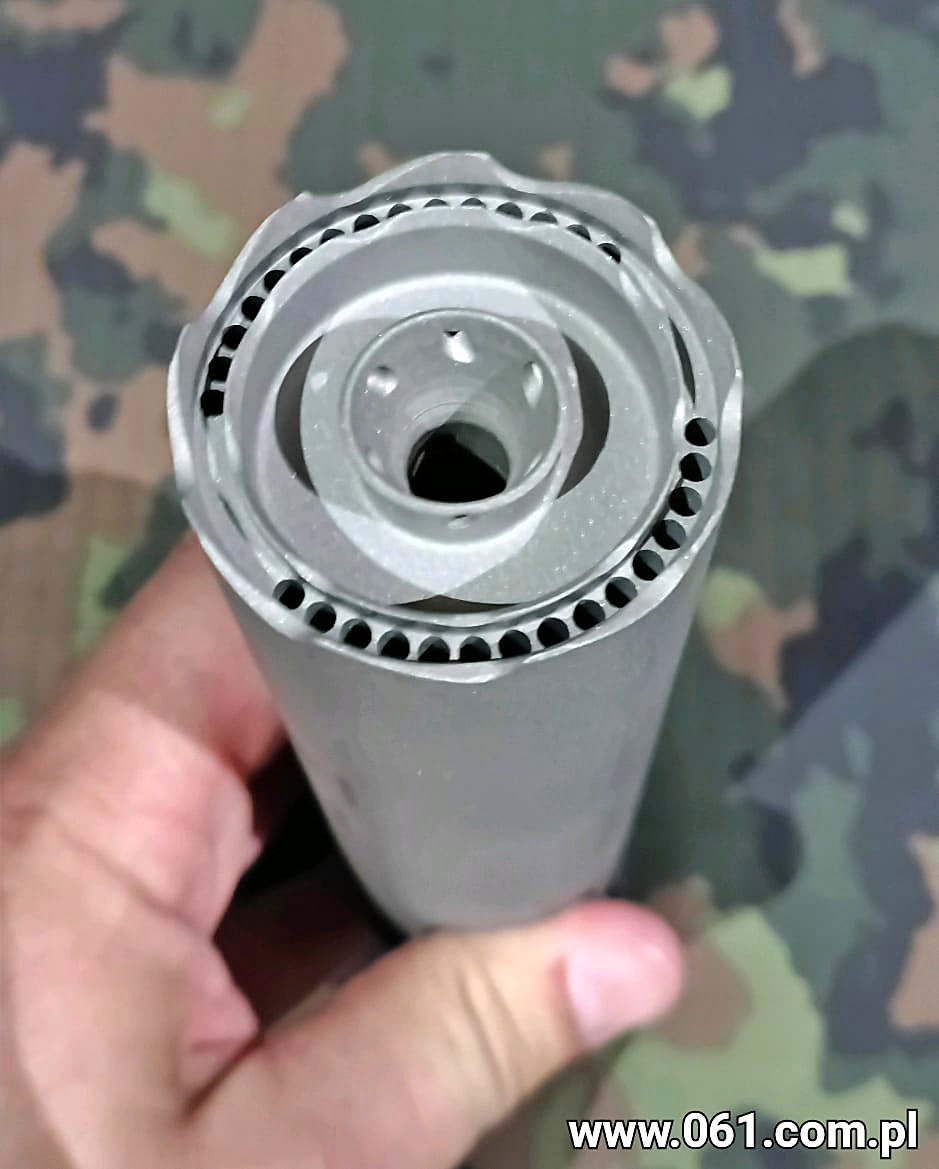
Internal structure of the GROT SUPPRESSOR A2 QD-MAX MK1 / Photo courtesy of 061.com.pl
The suppressor core is manufactured using a laser powder bed fusion process, which produces a durable, repeatable metallurgical bond while minimizing the heat-affected zone. This solution is intended to enhance structural integrity, improve manufacturing repeatability, and maintain correct gas flow. Suppressors have been developed in two lengths, depending on whether they are to be mounted on standard rifles or on shortened carbines. The suppressor mounting system was developed as a solution enabling quick and easy attachment and detachment of the device without the need for additional tools. Its purpose is to ensure secure and repeatable seating of the suppressor on the MSBS GROT A2/A3 assault rifle.
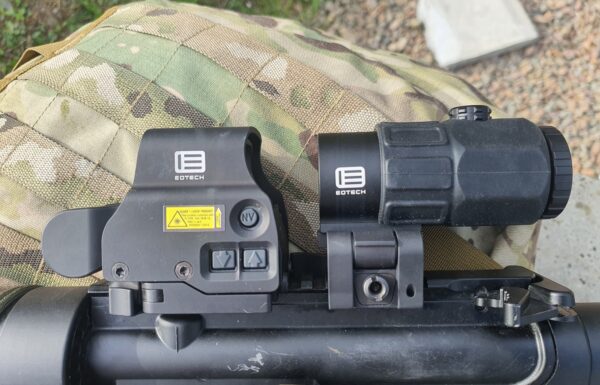
The situation is somewhat simpler with the new electro-optics. The Polish military has for years been equipping soldiers with EOTech holographic sights supplied in Poland by Griffin (Griffin to deliver EOTechs). Currently, these are purchased separately under individual contracts. The most recent contract signed between the Armaments Agency and Griffin Group Defence is the June 2 agreement worth 14,978,940.65 PLN for the delivery of another batch of 3,650 HWS EXPS3 holographic sights (Contract for additional EOTech HWS EXPS3 holographic sights for the Polish Armed Forces).
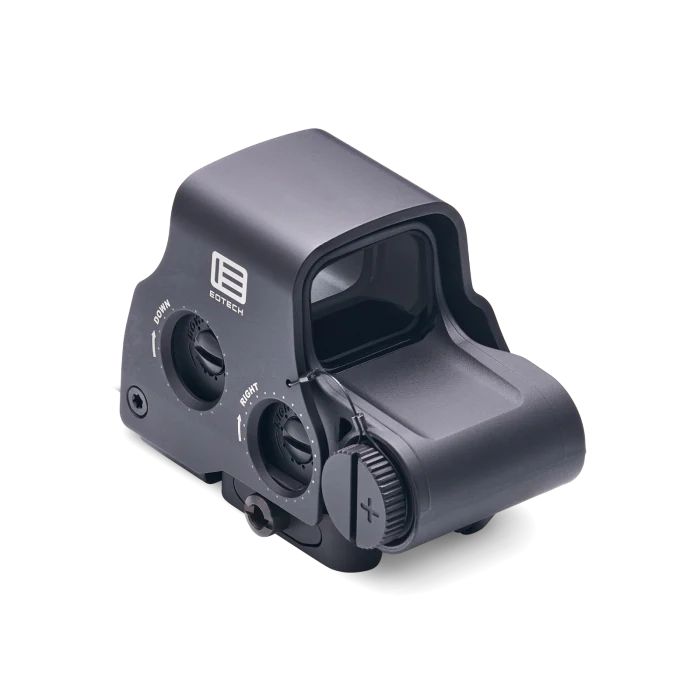
EOTech HWS EXPS3 sight / Photo: EOTech
The EOTech HWS EXPS3 is a holographic weapon sight enabling two-eyes-open shooting, allowing for fast and precise target acquisition while providing a wide field of view. The reticle in the standard version features the characteristic Speed Ring, with a 1 MOA center dot within a 65 MOA circle. Variants with other reticle patterns are also available, including those assisting with bullet drop compensation at longer distances.
The integrated mount positions the reticle at 1/3 lower co-witness height, allowing the use of AR-15 standard iron sights through its window. The HWS EXPS3, like other EOTech holographic sights, can operate in tandem with a magnifier or a night vision adapter. According to the manufacturer, the EXPS3 is waterproof to a depth of 10 m and adapted for operation across a wide temperature range – from -40°C to 60°C. With dimensions of 96.5 × 58.4 × 73.7 mm, the sight weighs 317.5 g.
Another critically important element of the MSBS system is the 40mm underbarrel grenade launcher. Less prominently featured during presentations and press conferences, it nonetheless plays a key role in increasing firepower. Weighing 1.4 kg and chambered for the 40×46mm LV cartridge, it can send a projectile to a distance of 400 m, where it can engage even concealed targets with fragmentation. As the MILMAG editorial team learned, by mid-May 2026 Fabryka Broni had delivered over 3,600 underbarrel grenade launchers to the Polish Armed Forces.
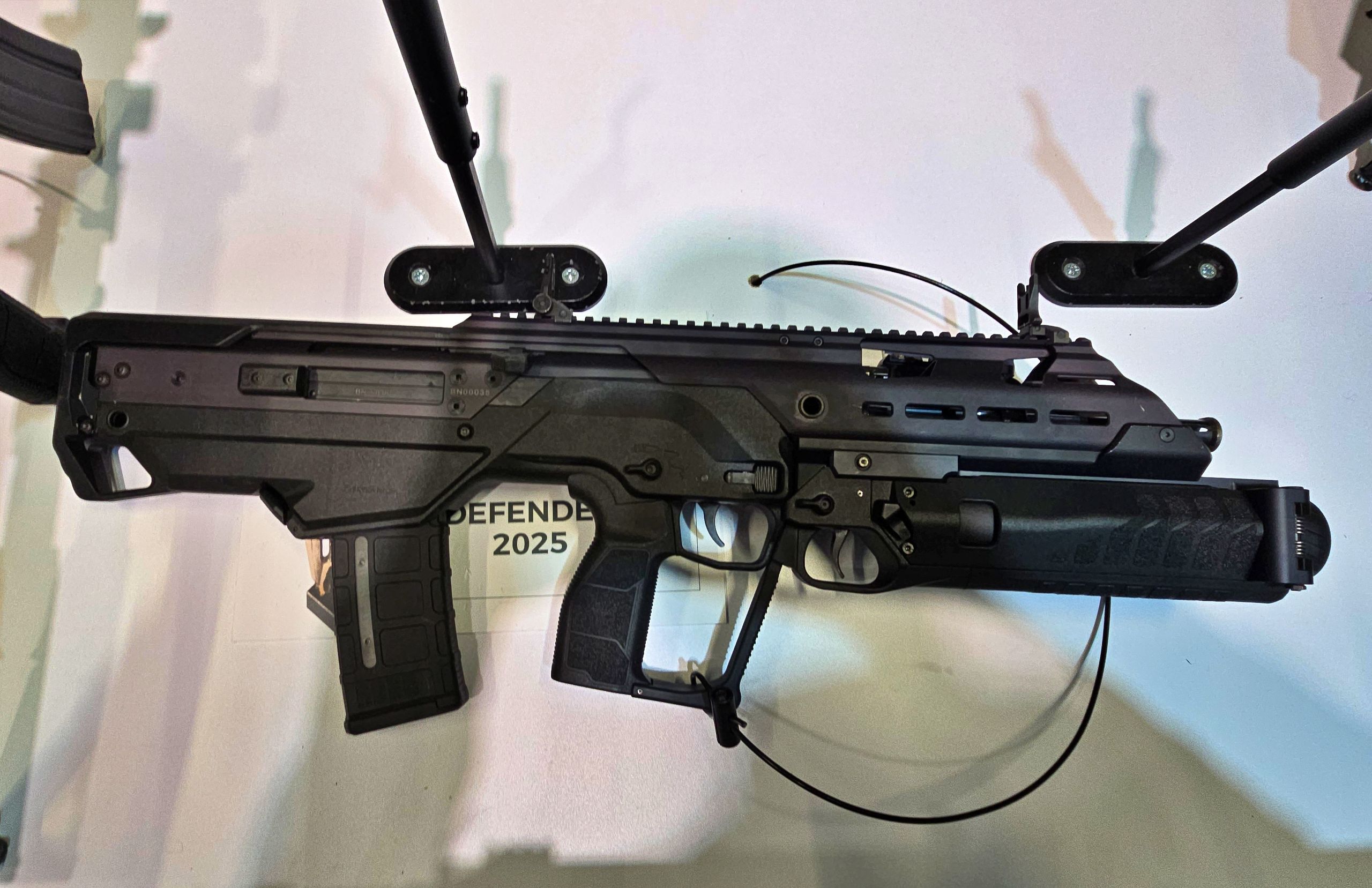
Stockless GROT with underbarrel GP 40mm grenade launcher / Photo: Jakub Link-Lenczowski, MILMAG
At GROTOWISKO 2026 we also learned about further development plans for the Modular Small Arms System in the A3 variant. Fabryka Broni “Łucznik” Radom is currently working, in cooperation with the Armaments Agency, on introducing the MSBS GROT A3 carbine to production. This will be a weapon modification package designated C10.5 A2, which has completed qualification testing and whose technical documentation was accepted by the Head of the Armaments Agency in 2024. The A3 carbine will weigh 3.3 kg, feature an 11-inch barrel with a thread-on muzzle device, a slimmer handguard with a reduced circumference, a fully field-strippable gas system without the need to unscrew the barrel, and a folding AR-type stock.
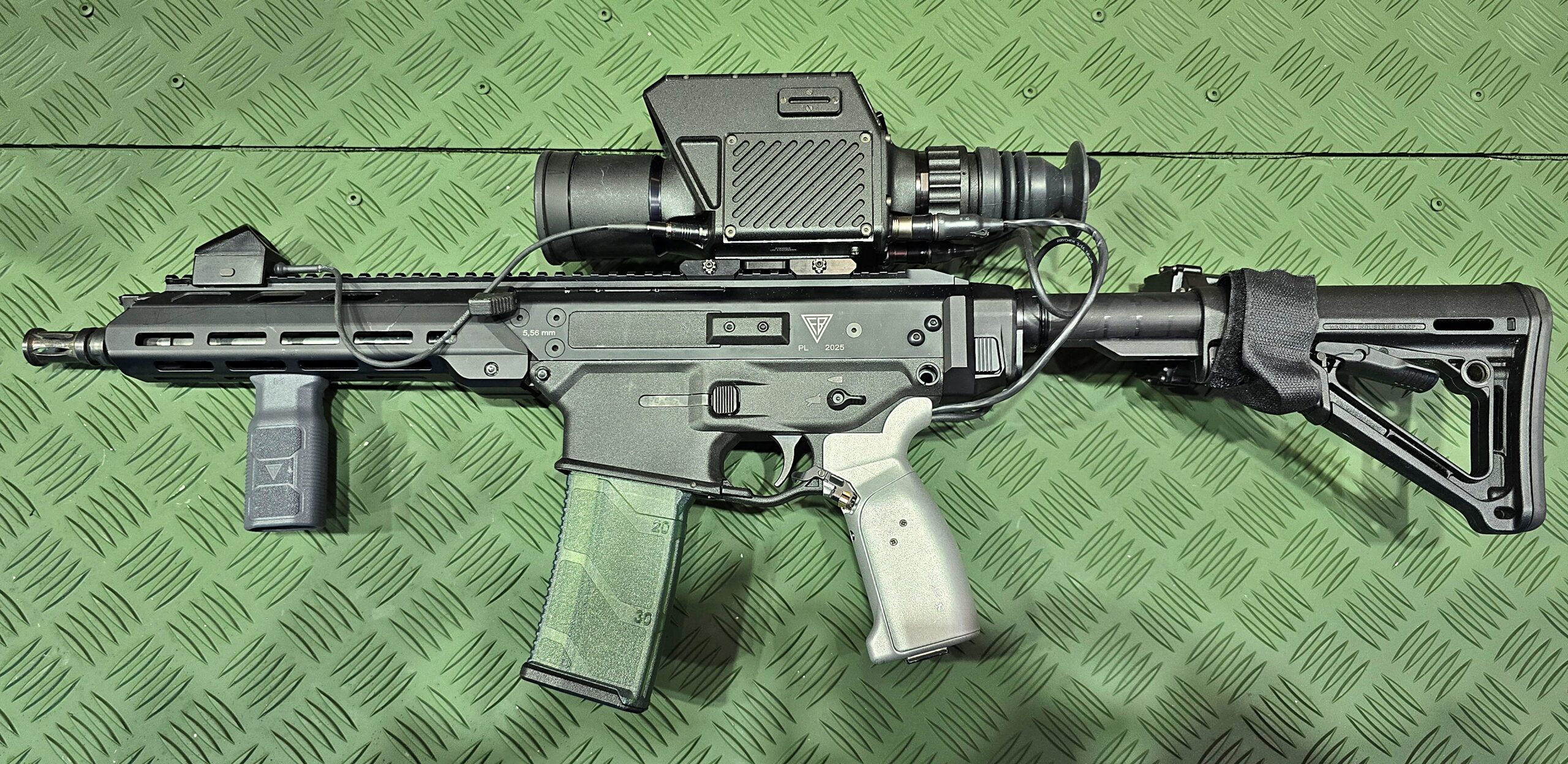
Grot A3 carbine with ARES sight / Photo: Jakub Link-Lenczowski, MILMAG
The next Grot model to be modernized to the A3 variant is the 5.56mm bullpup configuration. The MSBS GROT B16 bullpup assault rifle in the A2 variant has completed qualification testing and its technical documentation was accepted by the Head of the Armaments Agency in 2024. As part of the proposed design changes for the A3 version, the weight is to be reduced to approximately 3.6 kg, two barrel lengths of 14.5″ and 16″ are to be used, and the gas block and gas piston are to be the same as in the standard stock-equipped A3 variant assault rifle. Additionally, the weapon is to feature a shortened handguard for the 14.5″ barrel variant.
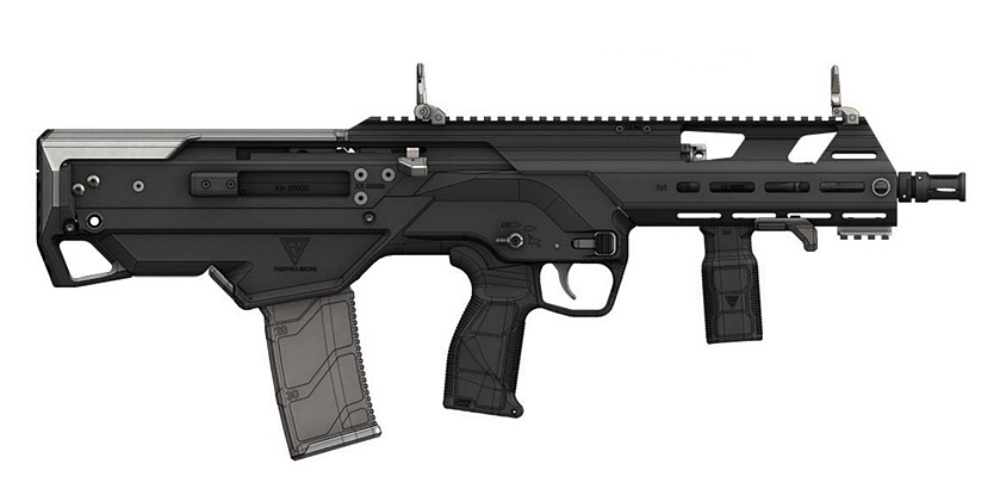
Visualization of the Grot bullpup A3 variant / Image: Fabryka Broni
Finally, it is worth mentioning Fabryka Broni’s announcements regarding the further development of the Grot. As part of work on the 7.62×51mm semi-automatic precision rifle, work is to continue enabling conversion to 6.5 Creedmoor and .277 Fury (6.8×51mm) calibers. Furthermore, the Radom manufacturer officially confirmed that it is working on a 9mm submachine gun, which is to become another platform developed within the Modular Small Arms System.
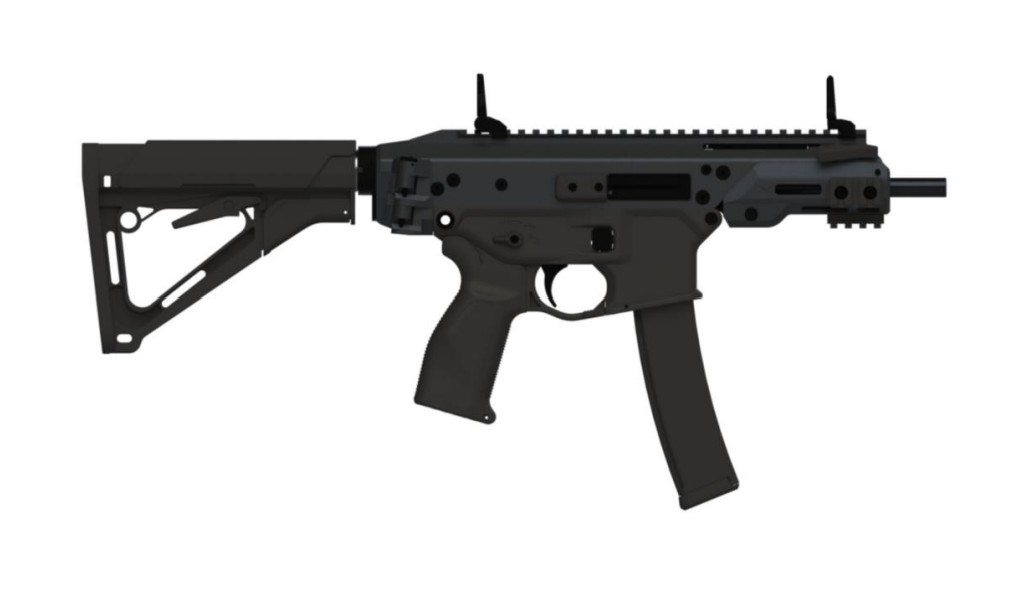
The newest member of the MSBS system – a 9mm submachine gun / Image: Fabryka Broni
ARES — an anti-drone ballistic computer for MSBS Grot assault rifles
As part of the system of new accessories for MSBS Grot assault rifles, the Industrial Centre of Optics (PCO) presented a prototype of a new computerized sight for Polish assault rifles. The SKO ARES (Advanced Rifle Engagement System) is an advanced targeting system for rifles chambered in 5.56×45mm NATO and special ammunition in 7.62×51mm caliber (Enforce Tac 2026: Fiocchi Munizioni presents tungsten anti-drone ammunition), which uses advanced algorithms to automatically determine the optimal trigger release point, increasing the probability of hitting a target, particularly a moving one.
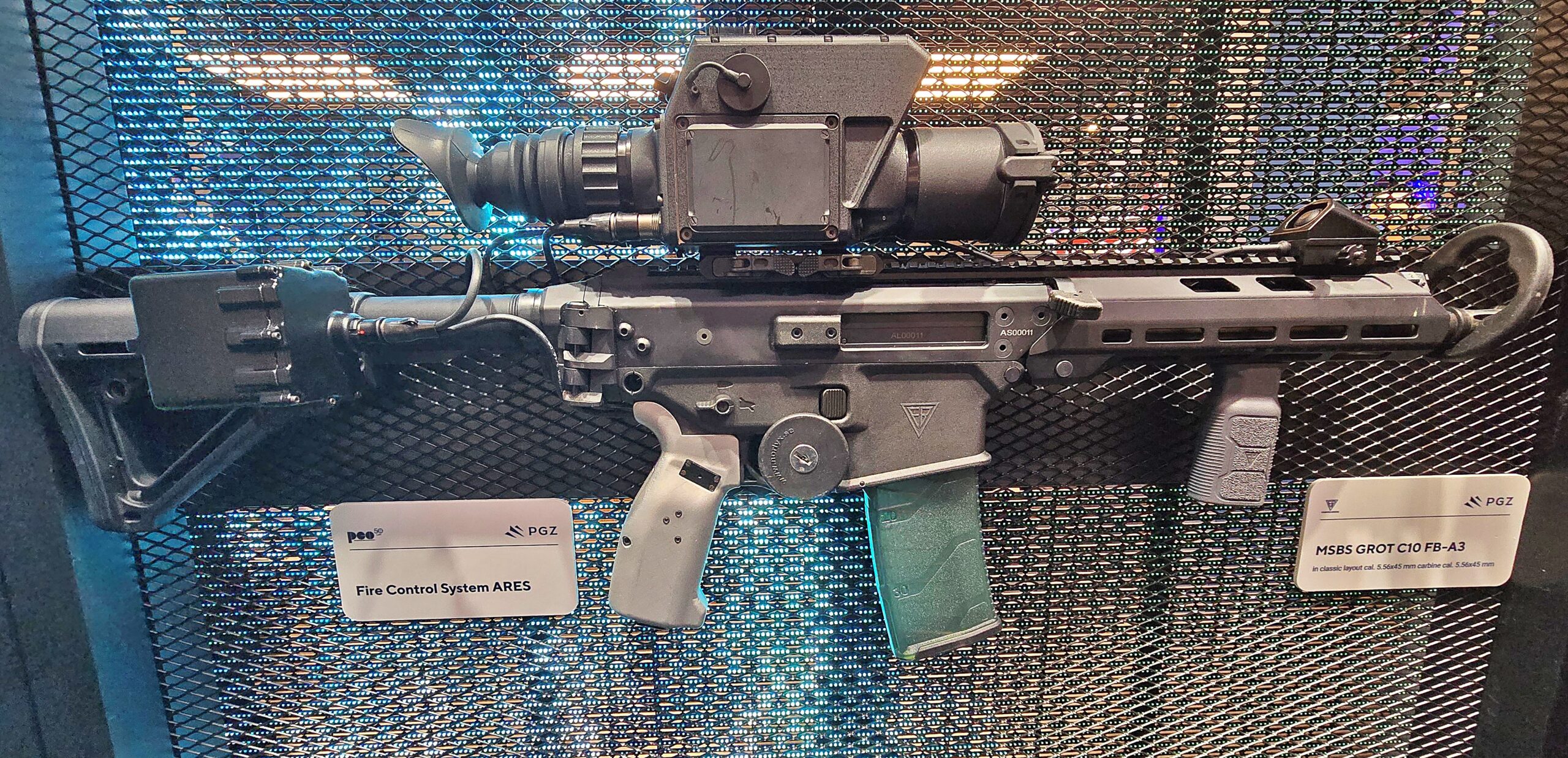
ARES is a fire control system for light firearms platforms. By integrating and advanced processing of data from sensors, the device calculates the optimal moment to fire, increasing the probability of hitting a static or moving target on the first shot, both day and night / Photo: Jakub Link-Lenczowski, MILMAG
The ARES sight is a device that integrates the following elements forming a combined Fire Control System:
- IR and TV camera;
- laser rangefinder;
- IMU (Inertial Measurement Unit) module;
- image processing computer enabling video tracking and AI support for threat detection and classification;
- ballistic computer;
- weather sensor;
- electronic trigger lock.
The ARES architecture also enables integration with a higher-level system (e.g. BMS).
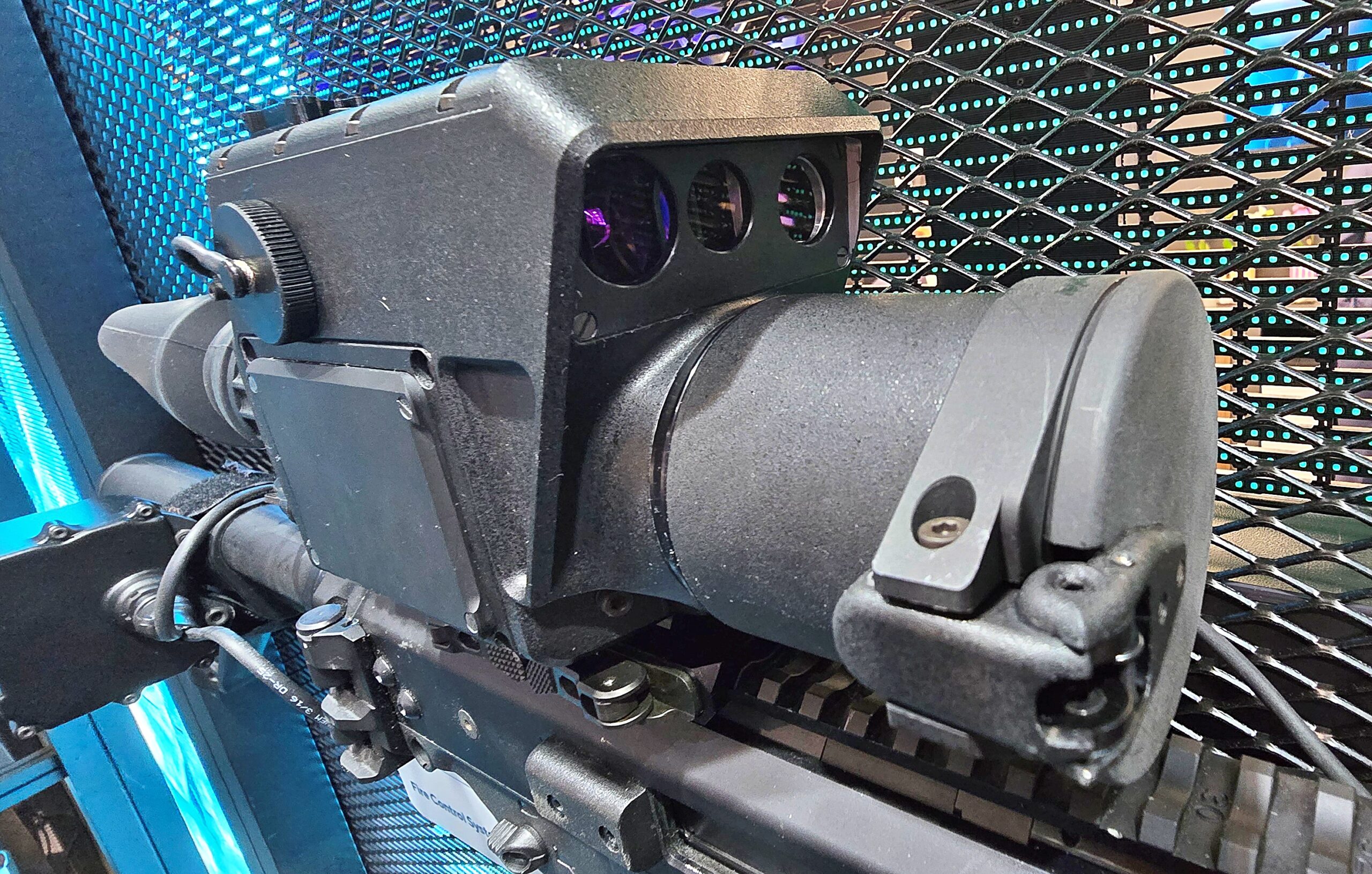
The ARES central module integrating visible light and infrared cameras, ballistic computer, and information processing modules / Photo: Jakub Link-Lenczowski, MILMAG
The ARES system, which made its debut in Paris at the Eurosatory trade show, was developed in two variants: as a device mounted on a soldier’s individual weapon, or as an element of a remotely operated weapon station. In this configuration, ARES can be integrated with various remote or autonomous systems. The system is designed to provide remote control using IP networks (internet, Starlink, etc.).

A button mounted on the weapon’s universal rail – when pressed, causes the system to lock onto the selected target / Photo: Jakub Link-Lenczowski, MILMAG
Operating the ARES is designed to be straightforward. The user selects a target, designates it to the system, and presses and holds the rifle’s trigger. The user then aligns the reticle with the prediction marker displayed in their field of view. The system tracks the target’s position in space and calculates the precise moment at which to release the trigger lock, firing the shot.
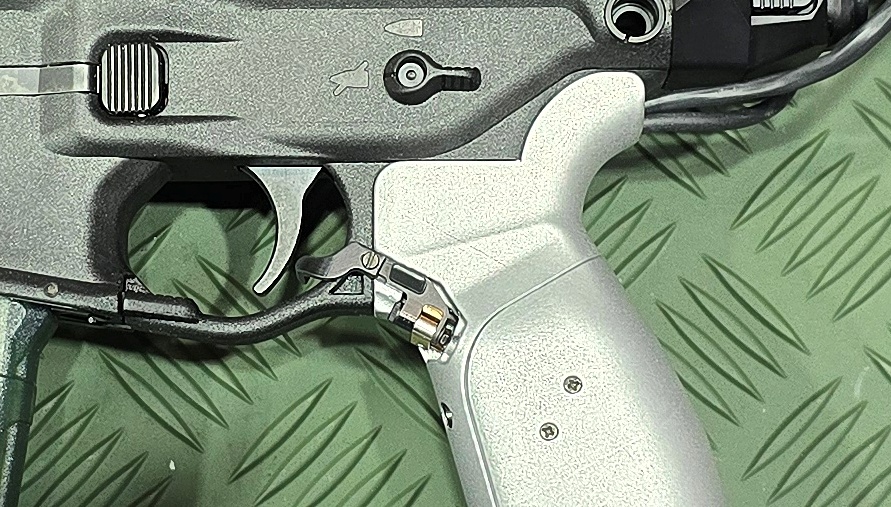
Electronic trigger lock / Photo: Jakub Link-Lenczowski, MILMAG
The electronic trigger lock blocks the trigger travel until the probability of hitting the target is sufficiently high. A key element of this mechanism is the speed and repeatability of its operation. The trigger lock actuator features a short and repeatable response time.
See also: