






















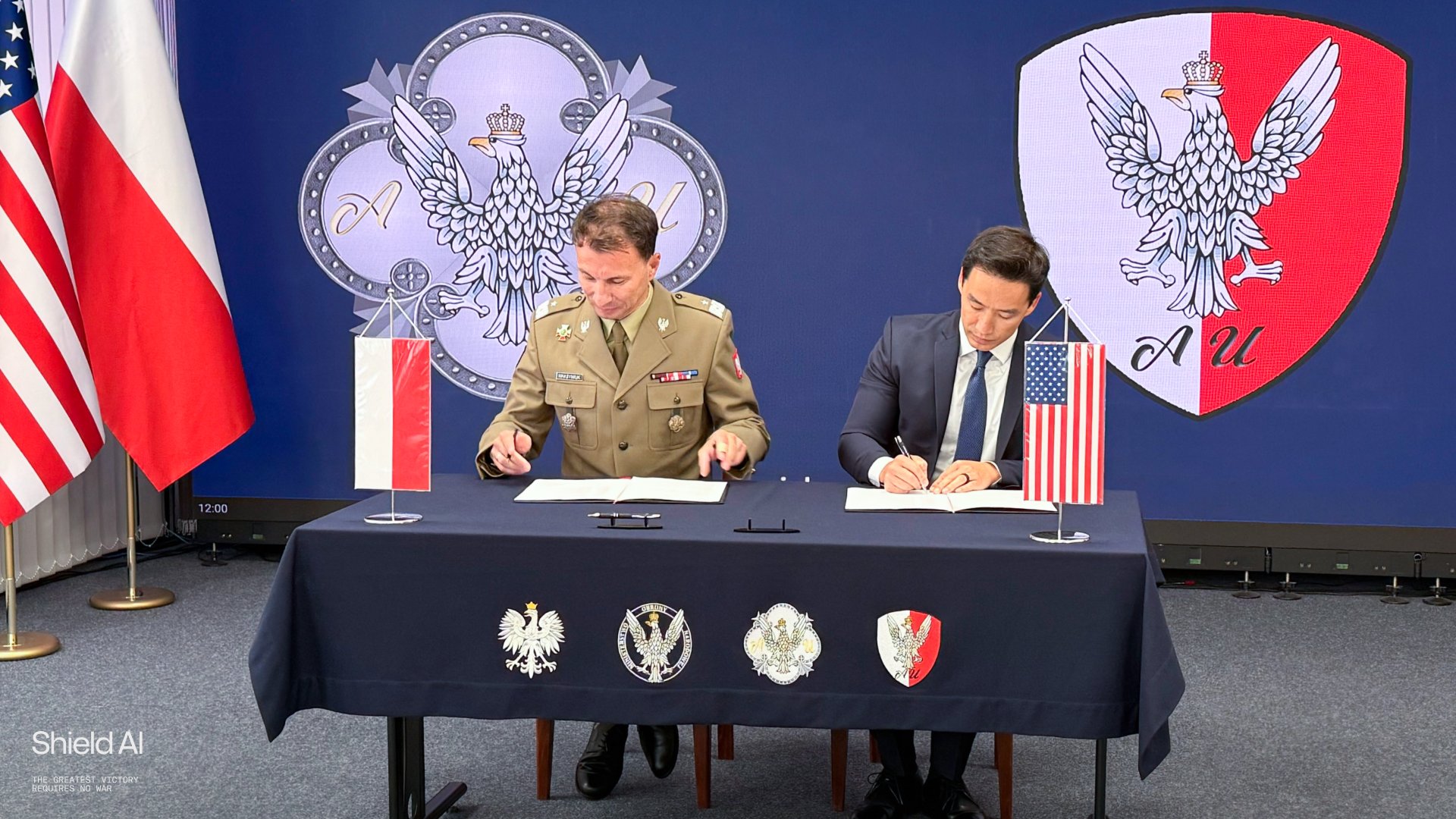
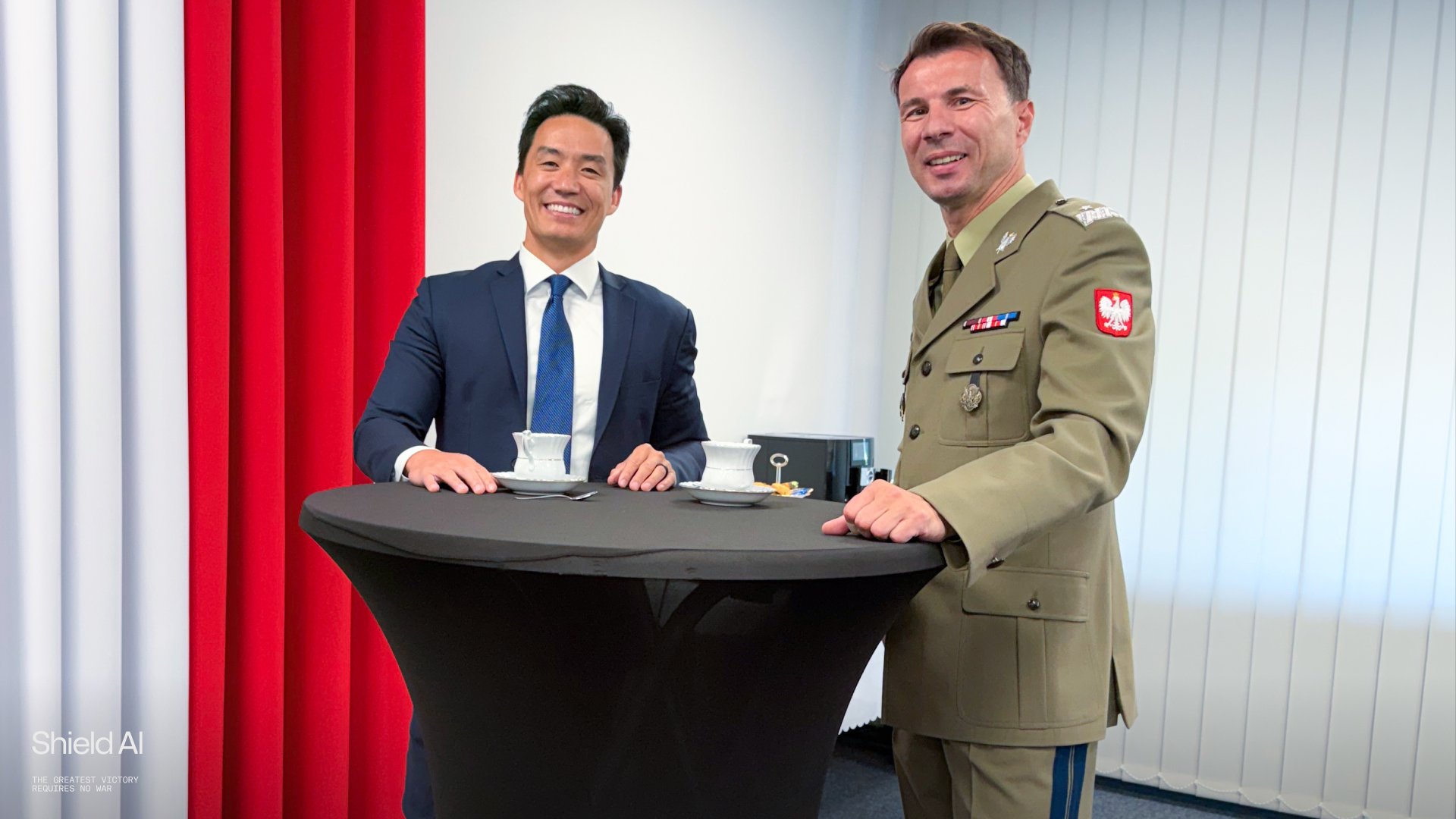






Photos: Armaments Agency, Shield AI
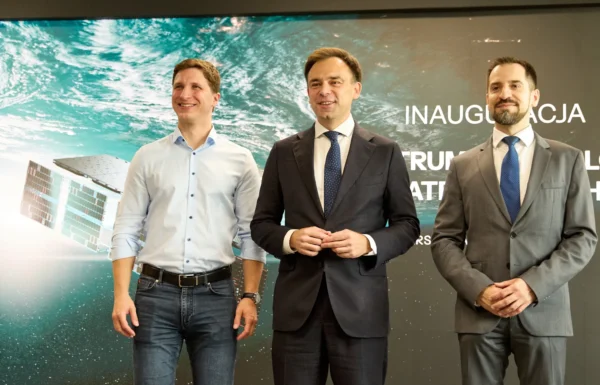
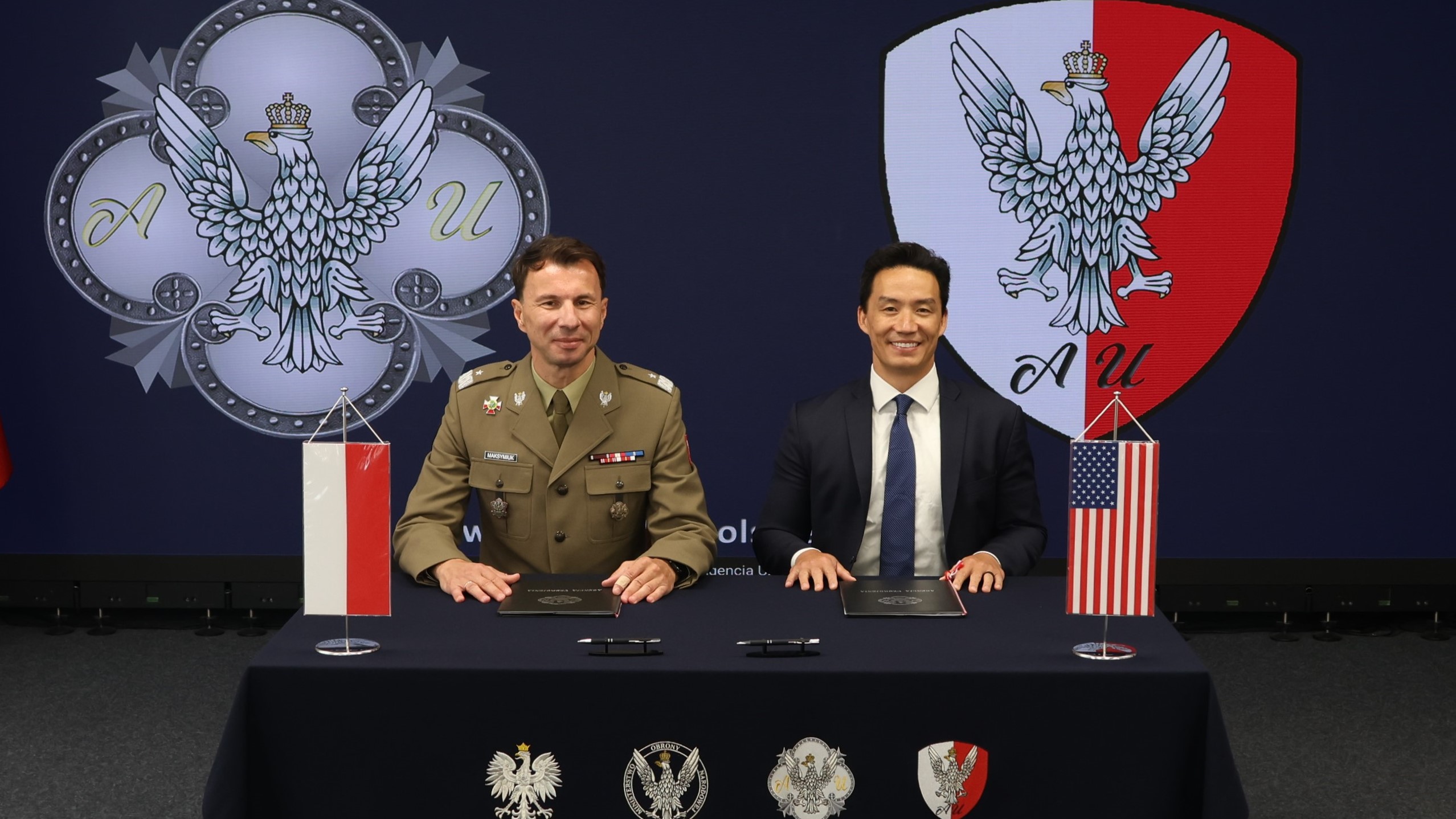
The contract was signed by Deputy Head of the Armaments Agency Brigadier General Romuald Maksymiuk and Shield AI co-founder and Chief Strategy Officer Ryan Tseng.
“V-BAT has proven its capabilities in Ukraine and beyond, particularly in environments where communications and GPS links are disrupted or denied. Operations in the Baltic Sea, where security threats against critical energy and communications infrastructure are becoming more frequent, demand reliable sensor platforms and systems in all weather conditions and sea states. V-BAT delivers exactly that, and will serve as a force multiplier for Poland, Baltic Sea nations, and NATO,” said Ryan Tseng, Shield AI’s president, co-founder, and chief strategy officer.
Following the necessary installation work, the V-Bat will operate from a vessel’s deck, expanding the Polish Navy’s capability to conduct Intelligence, Surveillance and Reconnaissance (ISR) operations, for the purpose of monitoring activity in maritime areas, including the protection of critical infrastructure and communication routes.
The V-Bat is a vertical take-off and landing unmanned aerial vehicle designed to operate in electronic warfare environments, including those with limited availability or complete absence of GPS signal and communications. The drone’s design enables take-off and landing without the need for additional infrastructure, both from ship decks and from improvised landing sites.
After take-off, the UAV transitions to horizontal flight, thanks to a ducted pusher propeller at the rear of the fuselage. It is operated by two operators and can take off from a flat surface measuring 365 × 365 cm (12 × 12 ft). The UAV’s payload capacity is 11.34 kg (25 lb), with a take-off weight of 56.7 kg (125 lb). It measures 274 cm in length (9 ft) with a wingspan of 296 cm (9.7 ft). It is powered by a Suter TOA 288 two-cylinder petrol engine developing 24 hp (17.6 kW), which provides a maximum speed of up to 167 km/h (90 kts), a ceiling of up to 6,096 m (20,000 ft), and an endurance of up to 11 hours.
 Photos: Shield AI
The V-Bat was originally developed by Martin UAV, which was acquired by Shield AI in 2021. The drones have been ordered by the US Navy, selected for the second phase of the US Army’s FTUAS (Future Tactical Unmanned Aerial Systems) program (in cooperation with Northrop Grumman), delivered to the US Coast Guard and US Marine Corps (the US military designation is MQ-35A), and selected by the Japan Maritime Self-Defense Force, Brazilian company VSK Tactical for protection purposes, the Indonesian Army, and more recently Greece (further purchases have also been approved), India, Armenia, and the Kingdom of the Netherlands. Shield AI is also cooperating with Palantir Technologies to further develop the platform.
V-Bat drones have also reached the Armed Forces of Ukraine, where in October 2024 they were reportedly used in combat operations, designating targets in the form of Russian Buk air defense system batteries for Ukrainian M142 HIMARS multiple rocket launchers. The drones were delivered to Ukraine at the manufacturer’s expense for the purpose of testing their resilience against electronic warfare (EW) measures. The drones use the Hivemind autonomous software.
It is also worth noting that on June 16, Prime Minister Donald Tusk announced that the Shield AI had proposed manufacturing in Poland its latest Hivemind-guided jet-powered vertical take-off and landing combat drone, the X-Bat.
Kupujemy kolejne systemy bezzałogowe dla @MarWojRP.
Dziś Zastępca Szefa #AU, gen. bryg. Romuald Maksymiuk podpisał umowę na dostawę kilku latających platform V-BAT @shieldaitech w 2026 roku.
Głównym zadaniem operującego z pokładu okrętu Marynarki Wojennej RP systemu będzie… pic.twitter.com/ggN2vyGmeS
— Agencja Uzbrojenia (@AgencjaUzbr) June 23, 2026
Excited to support Poland with VBAT, looking forward to doing even more with XBAT! Thank you to Ambassador Tom Rose @TomRoseIndy and the US Embassy in Poland and Polish Defence leaders.@shieldaitech is delivering unique, undeniable value and outcomes with VBAT and Hivemind in… https://t.co/VkVvK7rDCL
— Brandon Tseng (@brandontseng2) June 23, 2026
