



















The Problem No One Talks About
Most discussions about rifle lights begin and end with output figures. Lumens. Candela. Runtime. These numbers matter — but they are not the starting point for a useful evaluation. The starting point is the environment.
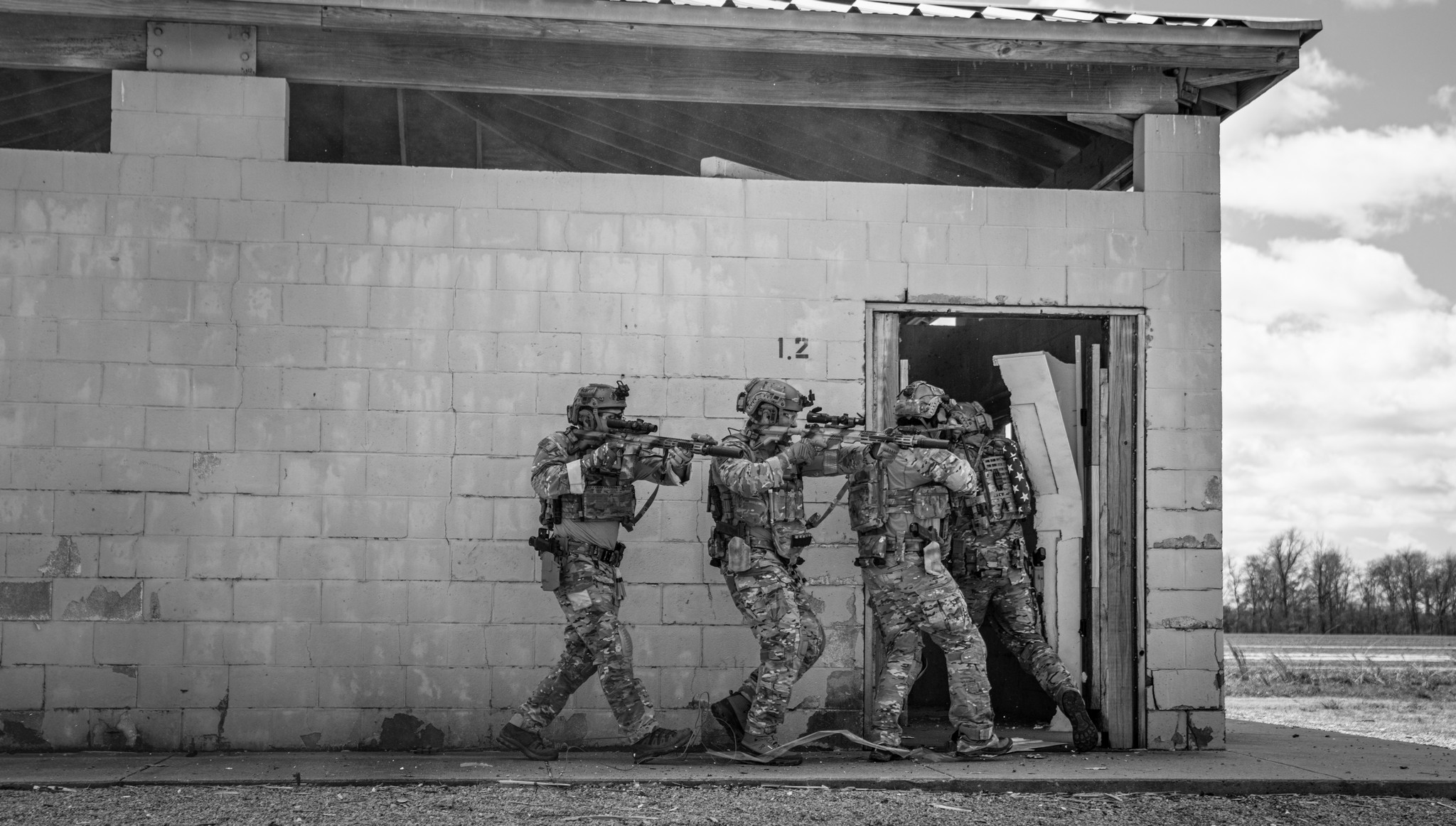
Images: Inforce
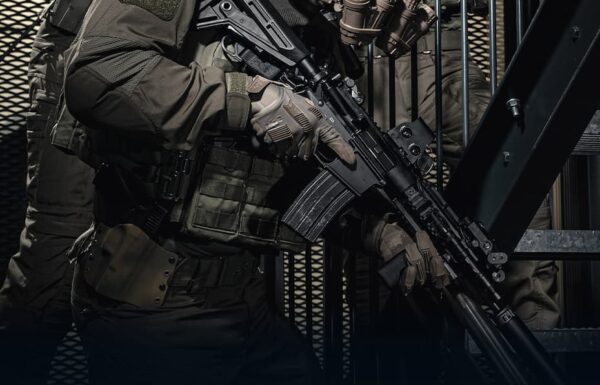
Consider the photograph above. Four operators are about to enter a building. Outside, there is daylight. Inside, there is darkness of unknown depth — rooms of unknown size, obstacles of unknown position, and people of unknown number and intent. That transition, from exterior light to interior darkness, happens in under a second. The human eye takes several minutes to fully adapt to low light. The situation does not wait.
A rifle light does not solve this problem by producing the most light possible. It solves it by producing the right light for the environment — and understanding that distinction is what separates an informed equipment decision from an expensive mistake.
Four Things a Mounted Rifle Light Changes
1. Target identification becomes possible. The most critical function of a weapon-mounted light is not illumination in the abstract. It is the ability to positively identify what the rifle is pointing at — a person, a doorway, a threat — before any irreversible action is taken. In low-light environments, identification is not a courtesy. It is the legal, ethical, and tactical foundation of every engagement decision. A mounted light makes that identification possible in the fraction of a second available.
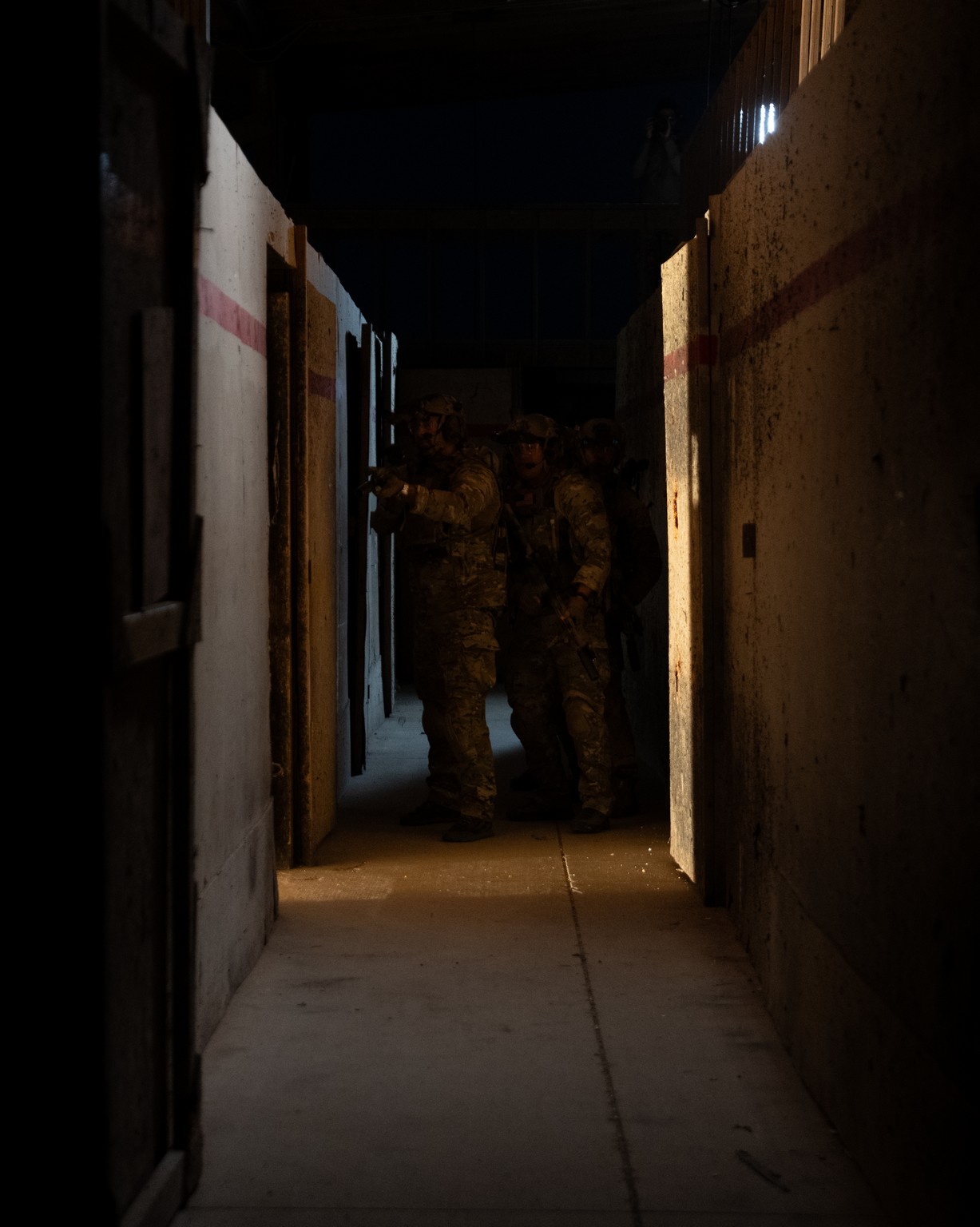
2. The grip stays intact. The alternative — holding a torch in the support hand while operating the rifle with the other — is a compromise that affects grip stability, recoil management, and accuracy simultaneously. A mounted light returns both hands to the weapon. That is not a marginal improvement. In a dynamic situation, it is the difference between a controlled shooting position and an improvised one.
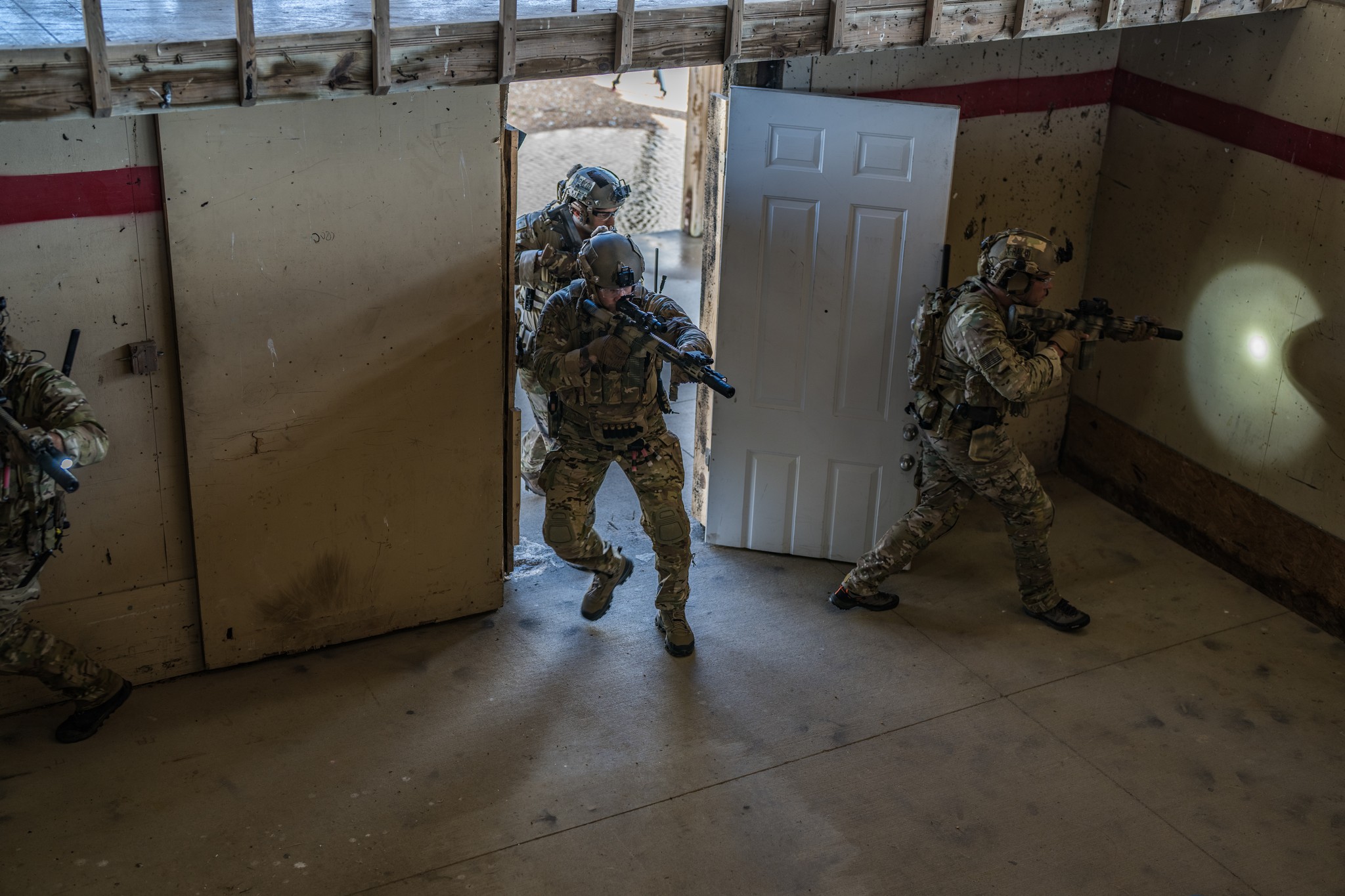
3. The room reveals itself. A good rifle light does not only project a beam at the point of aim. It produces usable spill illumination — peripheral light that maps the edges of the room, reveals movement in doorways, and provides spatial context without requiring the operator to sweep the torch independently. The operator’s attention and the rifle’s direction remain unified.
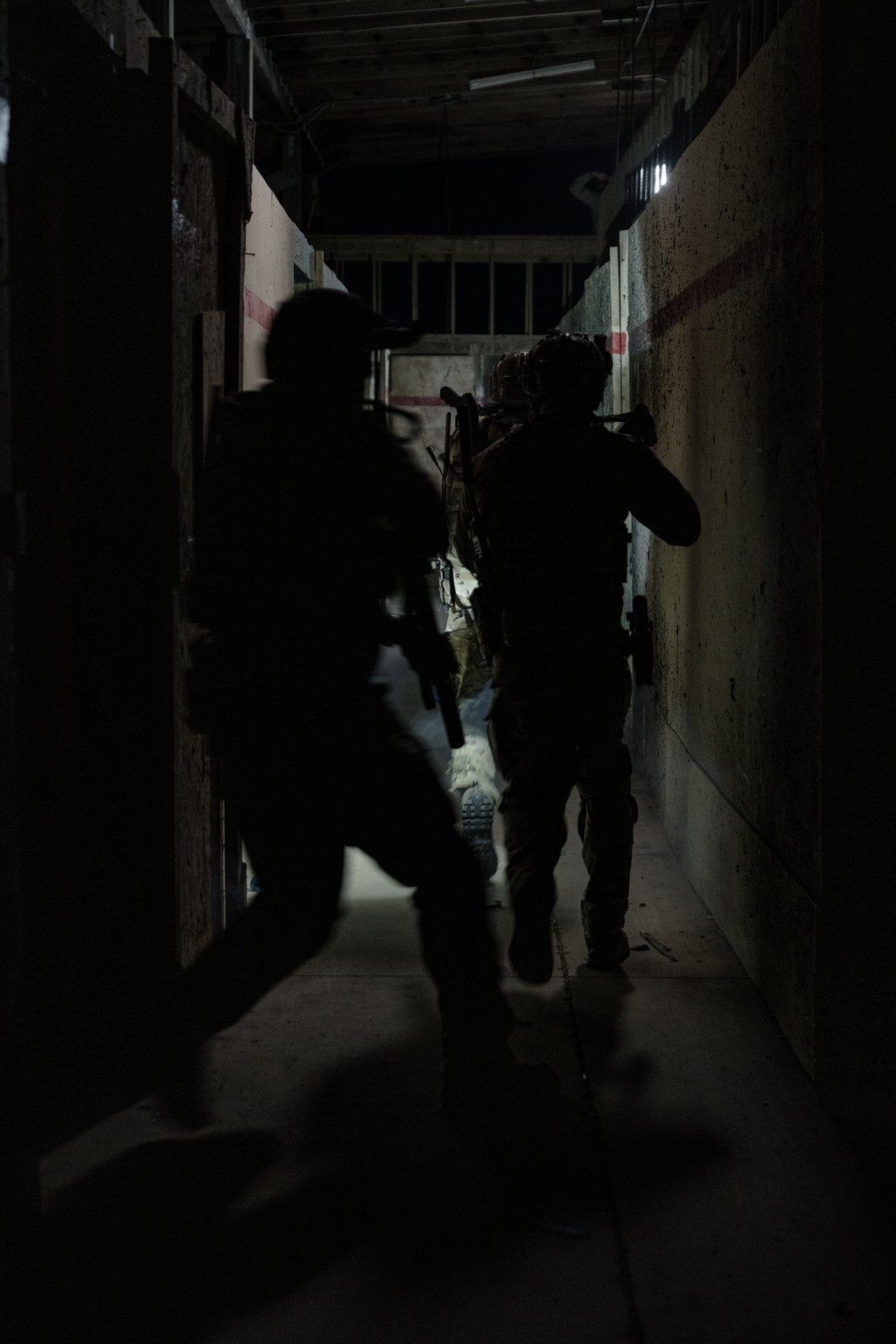
4. The platform stays consistent. A rifle with a mounted light handles the same way in full daylight and in complete darkness. The weight balance, the controls, the muscle memory — all unchanged. Training transfers directly to operational conditions without recalibration. This consistency is routinely underestimated in procurement decisions and routinely appreciated by the people who carry the equipment.
“In low-light conditions, a rifle without a mounted light is not a degraded platform. It is a different one — and a significantly less capable one.”
The Output Question
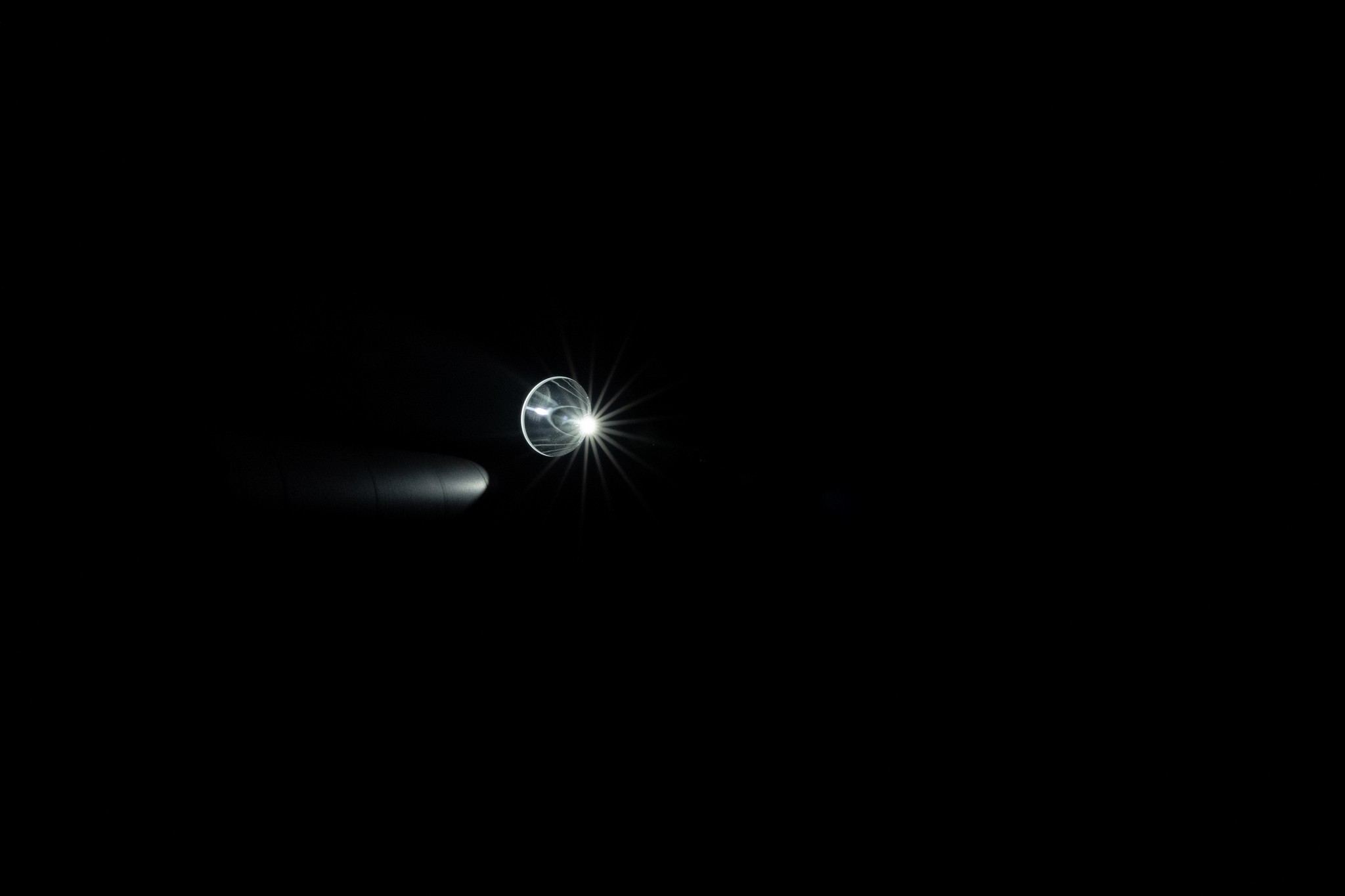
More lumens is not always better. This is one of the least intuitive facts in tactical lighting — and one of the most important.
In a small interior — a room, a corridor, a stairwell — a beam with excessive candela reflects off white walls and pale surfaces back into the operator’s eyes. The result is a phenomenon called back-scatter: the operator’s own light, turned against them. Situational awareness degrades precisely when it is most critical.
The correct output for a building environment is calibrated for the distances involved — typically under 50 metres — and for the surface characteristics of the space. More output is appropriate when the environment opens up: rural terrain, perimeter work, vehicle operations, and open industrial sites. A product line that covers both environments requires two different outputs, not a single maximum figure applied to every scenario.
Who This Equipment Is For
Weapon-mounted lighting at this level of specification was developed for, and continues to be used by, law enforcement units, military forces, and professional security organisations. The standards it is built to — MIL-STD-810H environmental testing, IPX8 waterproofing, MIL-SPEC hard coat anodising — reflect the conditions those professionals operate in.
Those same standards apply equally to the competitive shooter who trains seriously, the firearms instructor who demonstrates under field conditions, and any armed professional who understands that the equipment on their platform should be held to the same standard as the platform itself.
The specification does not change based on who is carrying it. The environment does not make exceptions. And the equipment should not either.
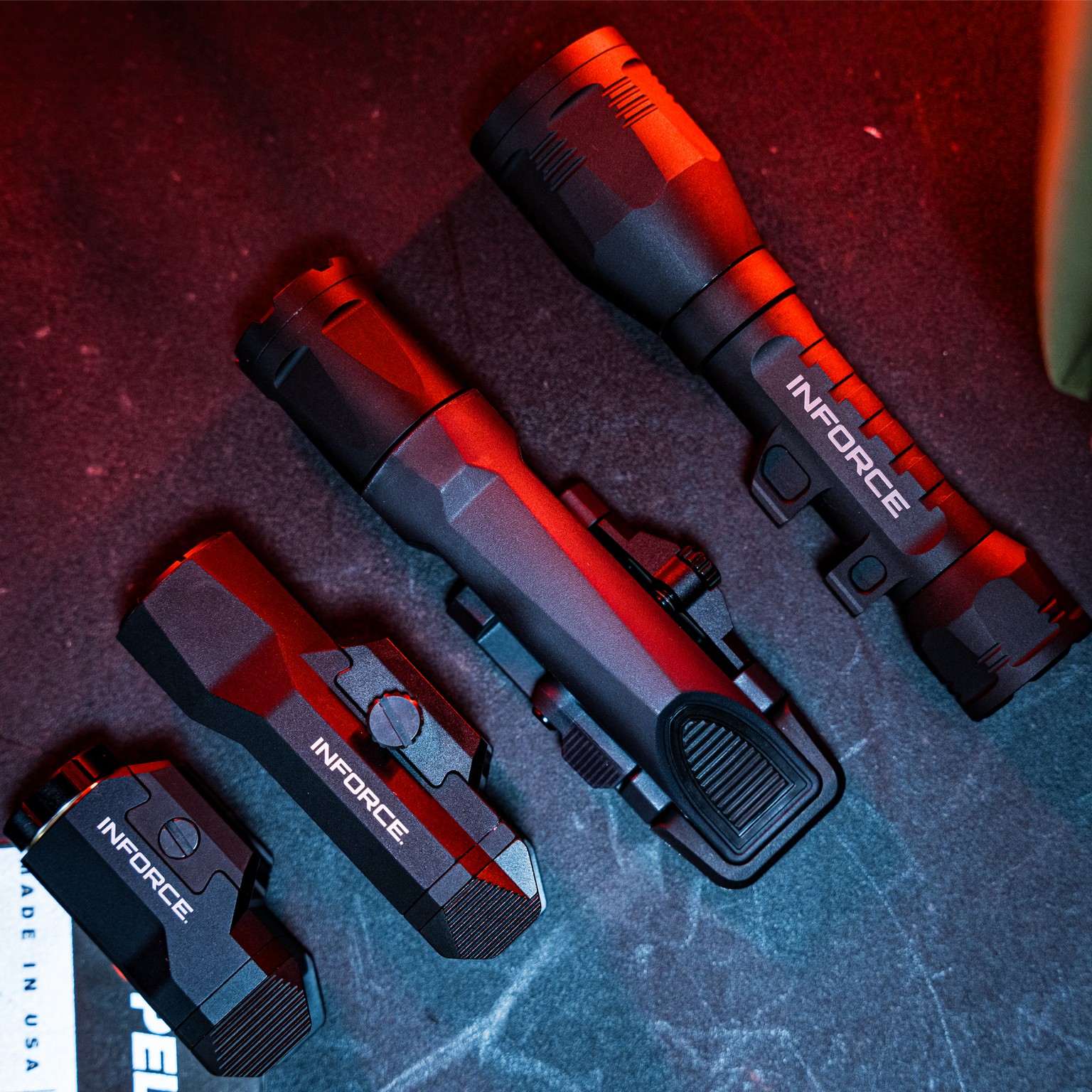
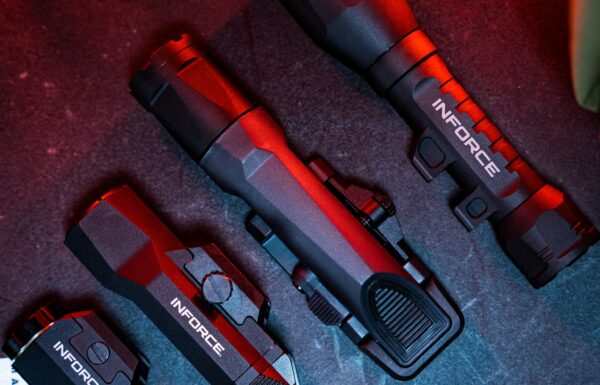
Inforce offers a wide range of weapon‑mounted lights for both handguns and long guns – all of them designed to meet the requirements of uniformed services.
Learn more about Inforce weapon lights in articles and reviews.
- REVIEW: Inforce WILD1 Pistol Flashlight
- Light It Up: Testing the Inforce WMLx Gen3 Weapon-Mounted Flashlight
- Wild Little Ones from INFORCE – Review of WILD1 and WILD2 Flashlights
Article sponsored by Sellmark
Advertising collaboration