


















On Wednesday, July 8, 2026, Norwegian company Kongsberg Defence & Aerospace (KDA) announced that Canada will become the sixth user of JSM (Joint Strike Missile) anti-ship missiles. The contract, worth 4.7 billion NOK, was signed with the country on June 30 this year, although the customer was not disclosed at the time.
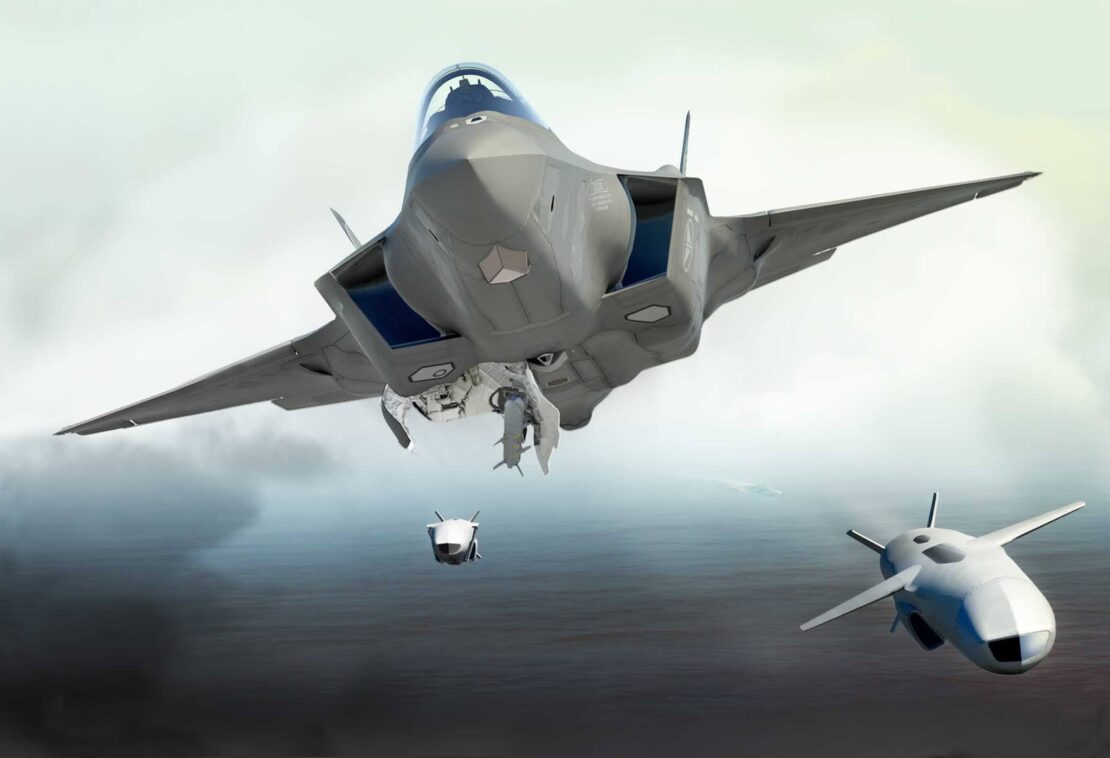 Image: KDA
The government in Ottawa has now disclosed the acquisition of the new capability for its future Lockheed Martin F-35A Lightning II multirole aircraft, during the second day of the 38th NATO Summit in Ankara.
On October 5, 2025, Canada declared that it would maintain plans to acquire 16 of the 88 F-35A Lightning II aircraft, whose production had entered the implementation phase. Meanwhile, on January 14 this year, CBC News reported that Sweden had offered Canada 72 JAS 39E Gripen multirole aircraft and six GlobalEye aircraft, the latter of which have already been selected.
Canadian F-35A Lightning II aircraft will also be armed with GBU-39/B SDB I glide bombs, GBU-53/B SDB II StormBreaker guided bombs, GBU-54 LJDAM, GBU-38 JDAM, and GBU-31 JDAM guided bombs, as well as the previously declared AIM-9X Sidewinder and AIM-120 AMRAAM air-to-air missiles and unspecified long-range weapons.
JSM
As mentioned, Canada will become the sixth user of the JSM weapon system, joining Norway, Japan, Australia, the United States, and Germany. Belgium is also expected to join them soon. Finland and Italy had previously declared purchases, while Poland is interested in the weapon system as it seeks an anti-ship missile for its F-35A Husarz aircraft. The larger AGM-158C LRASM from Lockheed Martin was also under consideration.
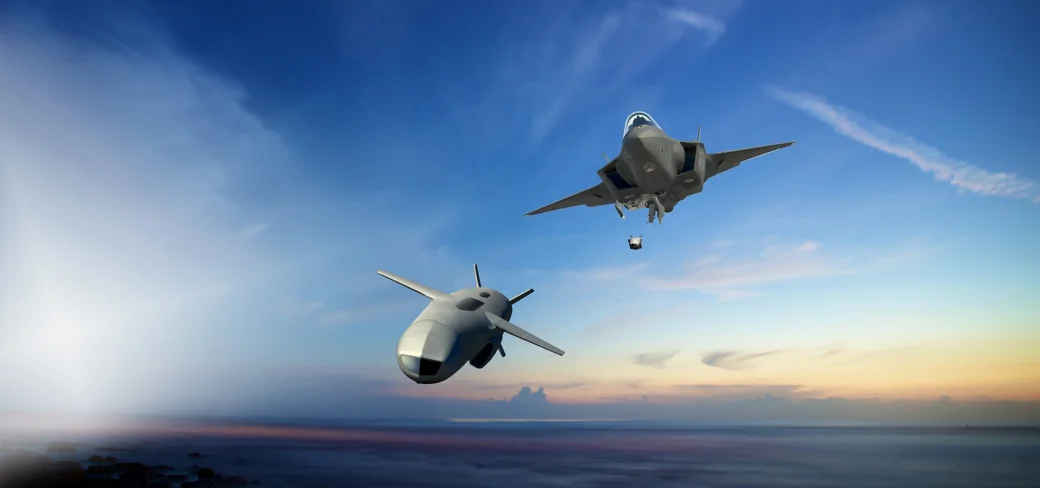
JSM is a fifth-generation anti-ship missile built using stealth technology and developed to address gaps in the F-35A’s ability to precisely engage surface targets. It is the only missile of its class that can be carried in the internal weapons bay of the F-35A and F-35C. In the case of the F-35B, it can only be carried on underwing hardpoints. In the latest Block 4 version with the Technical Refresh 3 (TR-3) configuration, the F-35A will also be capable of attacking land targets.
The missile is 3.95 meters long and weighs 410 kg. JSM has previously been integrated with the F-15, F-16, and F/A-18. Its first flight with a US F-16 took place in November 2015, while the first flight with a Norwegian F-16 followed three years later.
The JSM seeker features an autonomous target recognition system based on imagery stored in the onboard computer, combined with an infrared sensor, inertial navigation system (INS), satellite navigation (GPS), and a laser altimeter. Depending on the target, this allows the user to program the type of attack, point of impact, and detonation effect of the 125 kg high-explosive fragmentation warhead. Thanks to a two-way data link, the operator can also abort the attack at any point during the missile’s flight.
To meet demand for both JSM and NSM missiles, Kongsberg will expand production capacity in the United States and Australia.
Canada becomes sixth nation to select Joint Strike Missile 🇨🇦
Click here to read more: https://t.co/uMen37SGtP#Canada #defenceindustry #JointStrikeMissile pic.twitter.com/mzTL8bEnl4
— KONGSBERG (@kongsbergasa) July 8, 2026