


















The new weapon system is intended to increase the firepower of light infantry subunits while preserving their mobility. It is a response to the changing realities of the modern battlefield, where saturation with modern reconnaissance and command systems is increasing, including the now widespread use of inexpensive unmanned platforms capable of providing target coordinates. For this reason, Concept proposes changes in the way light artillery, including high-angle fire systems, is used. Under existing assumptions, a mortar must be prepared for use after being placed on a baseplate set on stable ground, the sighting devices must be set based on target coordinates provided by an observer, the first round must be fired, accuracy assessed, the necessary corrections introduced, and only then can a series of accurate rounds be fired. This entire process takes considerable time, exposing soldiers to detection and retaliatory attack by unmanned systems or unmanned aircraft. To counter these threats and accelerate the whole process, one solution may be to automate deployment and aiming in order to minimize the time between firing the first round and leaving the firing position.
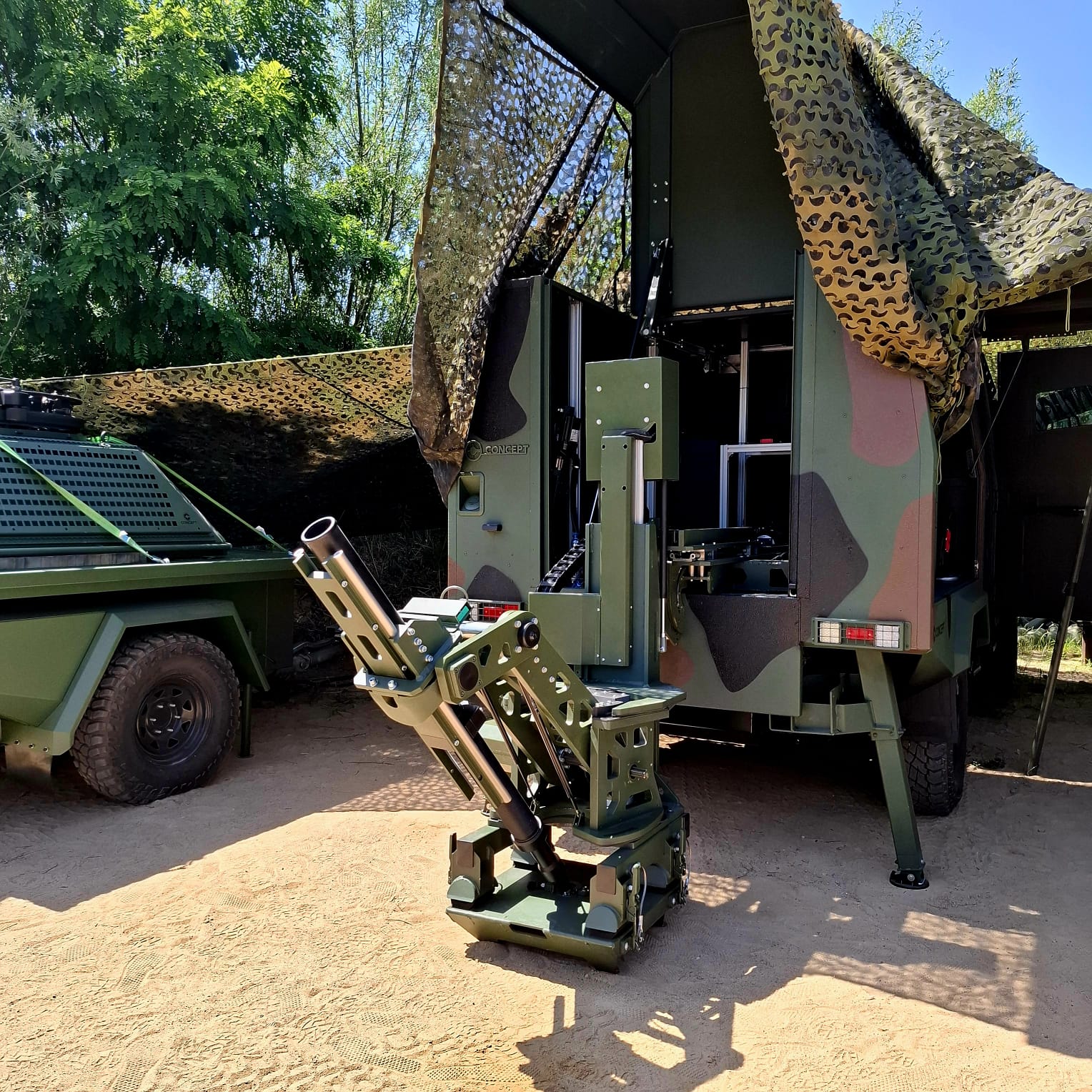 The automated mortar system was developed as part of cooperation between ZM Tarnów S.A. and Concept Sp. z o.o. ZM Tarnów’s product portfolio includes 60.7 mm Szerszeń mortars, successors to the LM-60 series, as well as 81 mm and 120 mm mortars. Integration with a lightweight, highly mobile 4×4 platform provides both substantial firepower and reduced training costs / Photos: Concept
Concept has developed an automated system for deploying the mortar into its firing position and folding it back after a series of shots. The system is equipped with integrated supports to stabilize the vehicle and a precise inertial navigation unit enabling GNSS positioning and three-axis control of the system’s orientation. The automation systems are based on electric drives, allowing the mortar to be precisely aligned with the required target coordinates and ensuring resistance to operation across a wide temperature range.
Concept’s solution allows target coordinates to be entered manually and is compatible with TAK software, which also enables automatic calculation of the correct aiming settings for 60.7 mm, 81 mm, and 120 mm mortars. The ability to use mortars of these calibers interchangeably makes it possible to conduct combat operations with larger rounds offering greater range and lethality, while also enabling training and operations with 60.7 mm rounds, which are lighter, cheaper, and allow training tasks to be carried out at a larger number of training facilities. Considering the many-times-lower cost of 60.7 mm mortar ammunition compared with 120 mm rounds, and the fact that only one training facility in Poland allows exercises using 120 mm mortar ammunition, the ability to easily reconfigure the system from 120 mm to 81 mm or 60.7 mm is an advantage of this solution. The 81 mm mortar, meanwhile, is intended to serve as a middle ground between 60.7 mm and 120 mm systems, providing significantly greater lethality and range than 60.7 mm systems, while 81 mm ammunition is cheaper and lighter than 120 mm rounds.
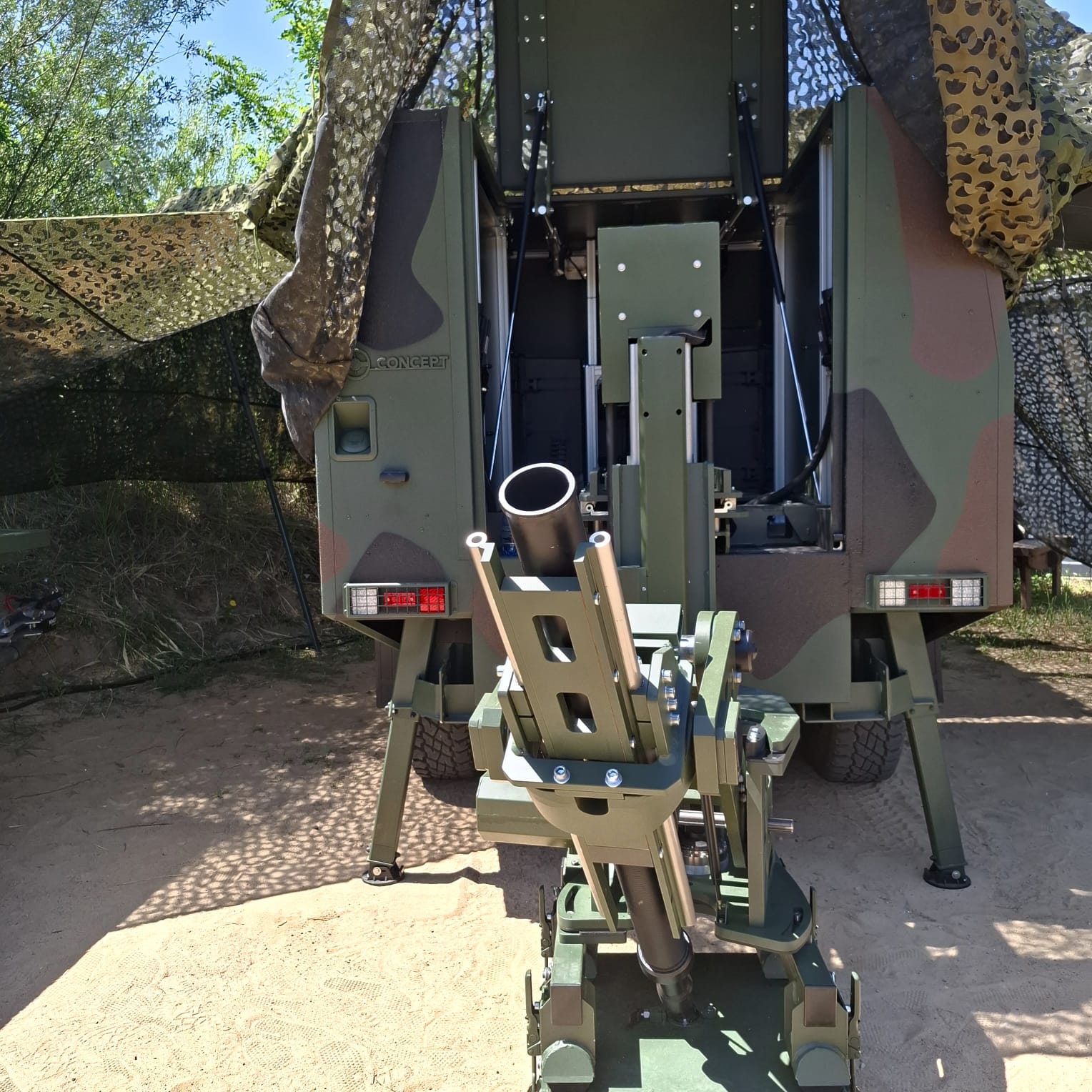
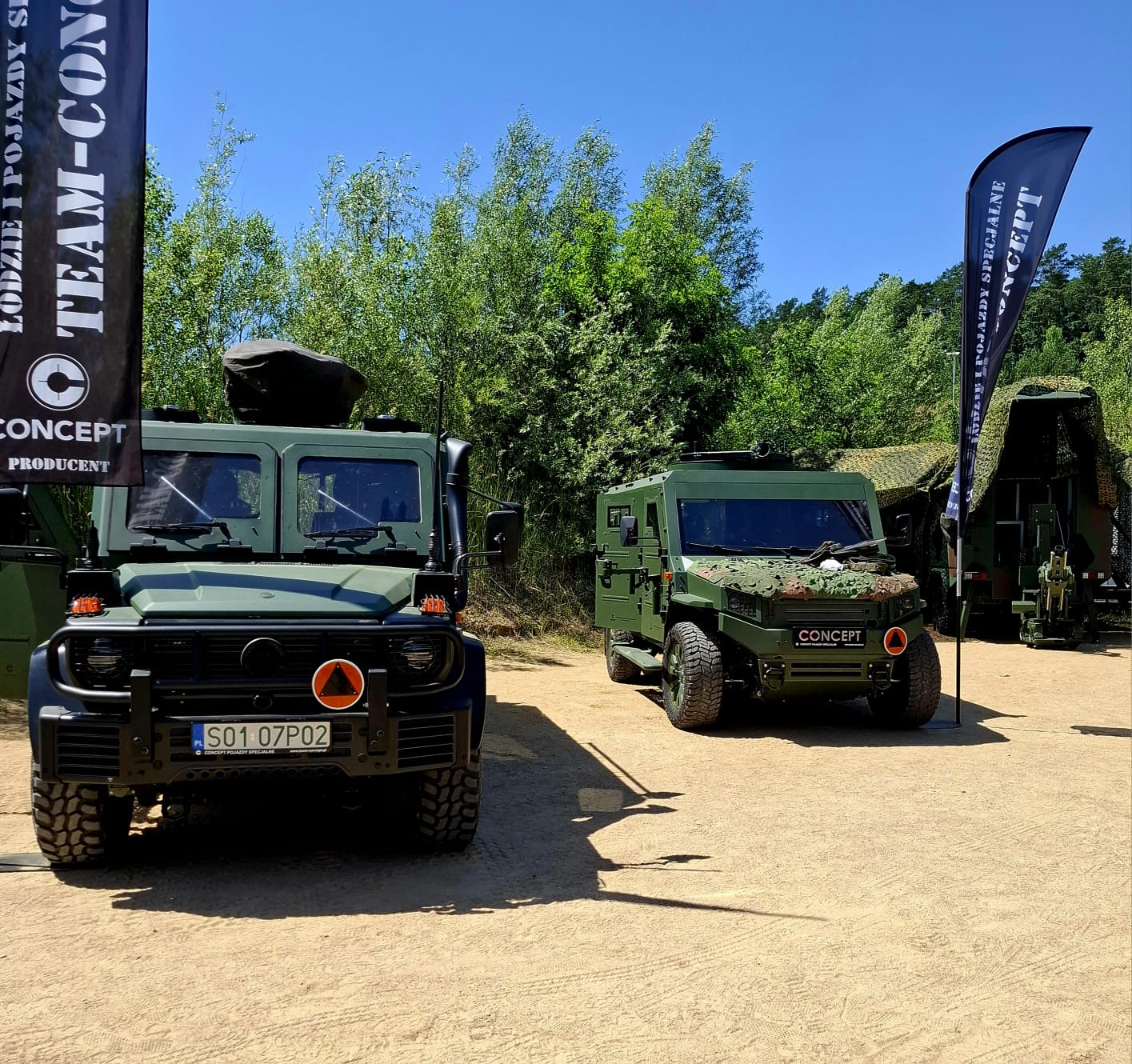
According to the manufacturer, the mortar can be deployed and folded back in less than 30 seconds. The system is designed for installation on vehicles with a payload capacity of 1 tonne. Concept installed the prototype in an automatically opening container on a Concept DINO 519 high-mobility vehicle based on a Mercedes-Benz Sprinter 519 4×4 chassis with a double armored cab meeting STANAG 4569 Level 1 protection. There is also a version installed on a Concept G350 high-mobility vehicle based on a Mercedes-Benz G350 4×4 chassis with an armored cab meeting STANAG 4569 Level 1 protection, with a container equipped with an automatically sliding roof and rear wall (Concept unveils new Mercedes G350 for special tasks, Concept presents the Mercedes 463 for Special Forces).
Installing the system in a container protects the structure from weather conditions, including by enabling the interior to be heated or cooled, which allows it to be used in Polish climatic conditions during winter. This feature distinguishes the system from competing designs that do not provide any protection for key system components against the effects of weather and rely on hydraulic systems, which are less well suited to operation at low ambient temperatures.
This article was prepared in cooperation with Concept
See also:
