

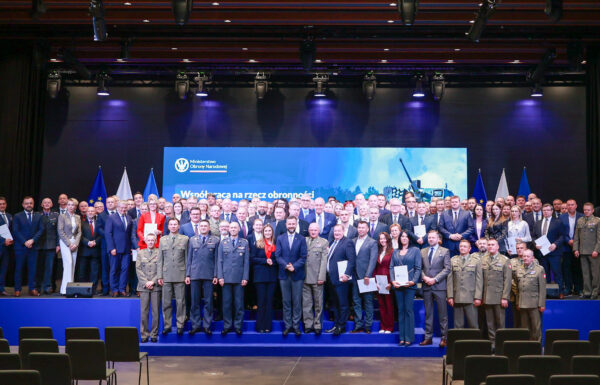


























On Tuesday, July 7, 2026, the first day of the 38th NATO Summit in Ankara, at the associated NATO Summit Defence Industry Forum, the defense ministries of Denmark, Finland, Germany, and Norway signed a Letter of Intent (LoI) on the joint purchase of up to five large MQ-4C Triton High-Altitude Long Endurance (HALE) unmanned aircraft, produced by US company Northrop Grumman.
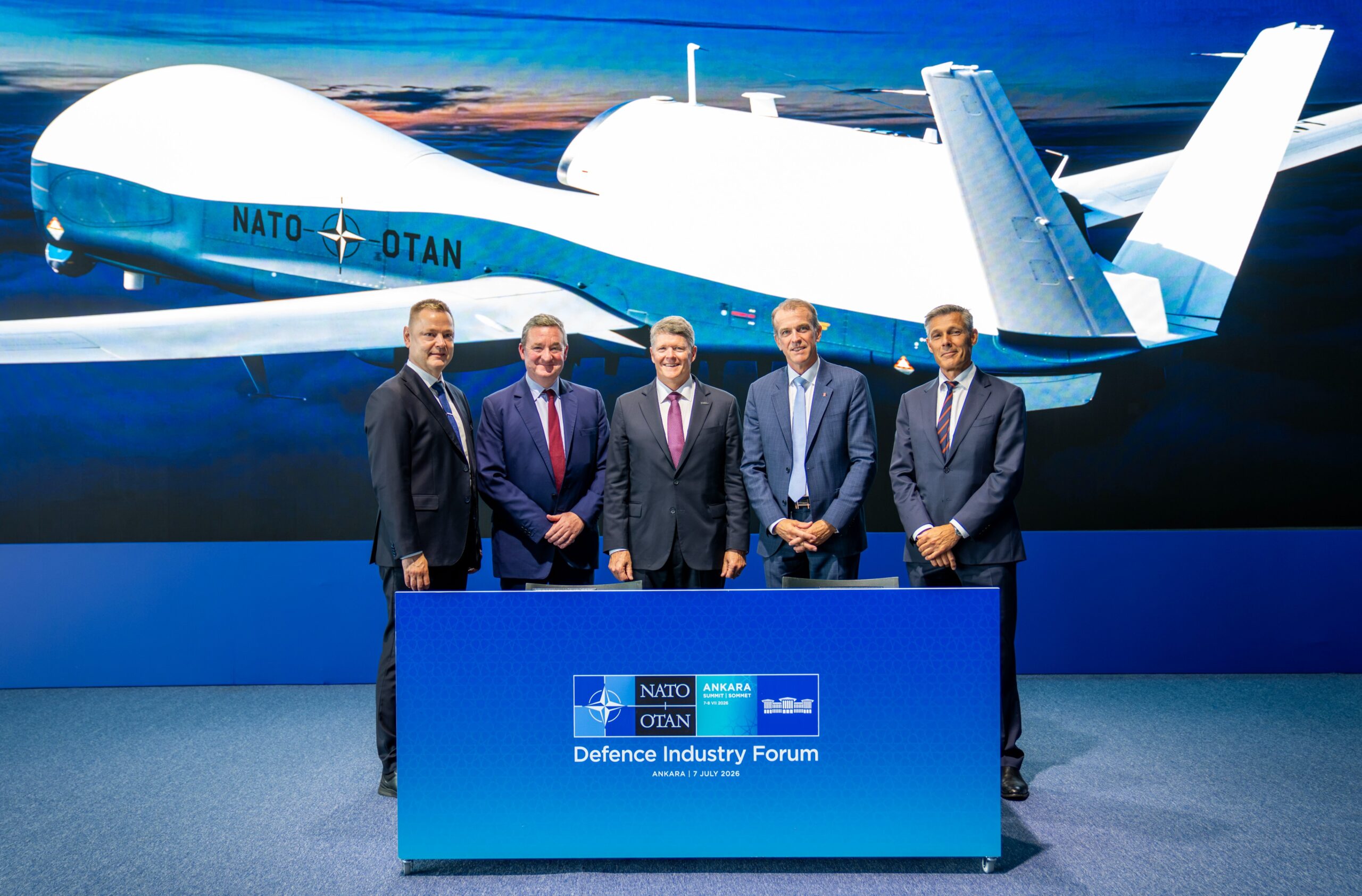 Photos: NATO
The new unmanned aircraft will complement the related RQ-4D Global Hawk Block 30 aircraft, also known as Phoenix, operated in a five-aircraft fleet under the Alliance Ground Surveillance (AGS) program. They are based at the US Navy’s NAS Sigonella on the Italian island of Sicily, together with a 400-strong military personnel contingent.
The AGS program is implemented by 15 NATO countries: Bulgaria, Czechia, Denmark, Estonia, Lithuania, Luxembourg, Latvia, Germany, Norway, Poland, Romania, Slovakia, Slovenia, and the United States. However, the intelligence data collected during reconnaissance and surveillance missions serve the entire Alliance. The program falls under NATO Allied Air Command in Mons, Belgium. Since the outbreak of the full-scale Russian-Ukrainian war, the RQ-4D Phoenix aircraft have been used on NATO’s eastern flank, mainly in the Black Sea region.
The new capabilities will provide NATO with enhanced surveillance of the strategically important Arctic and High North regions. To achieve this goal, a transatlantic industrial consortium is being established. US company Northrop Grumman will build and deliver the MQ-4C Triton aircraft, while European company Airbus Defence and Space, part of Airbus SE, and other entities from the continent will provide the ground segment, data management services, command-and-control systems, infrastructure, and mission support. Drawing on the transatlantic cooperation and relationships built over the past decade, NATO will be able to establish a modern and effective intelligence, surveillance, and reconnaissance (ISR) force.
Jane Bishop, vice president and general manager, global surveillance division, Northrop Grumman:
“Our collaboration with NATO and the U.S. Navy strengthens the Alliance’s ground and maritime surveillance capabilities. Like Phoenix, Triton conducts ISR at higher altitude and with longer endurance than medium-altitude systems, and is poised to provide NATO new levels of capability and operational flexibility to monitor and protect maritime interests from the Mediterranean to the High North.”
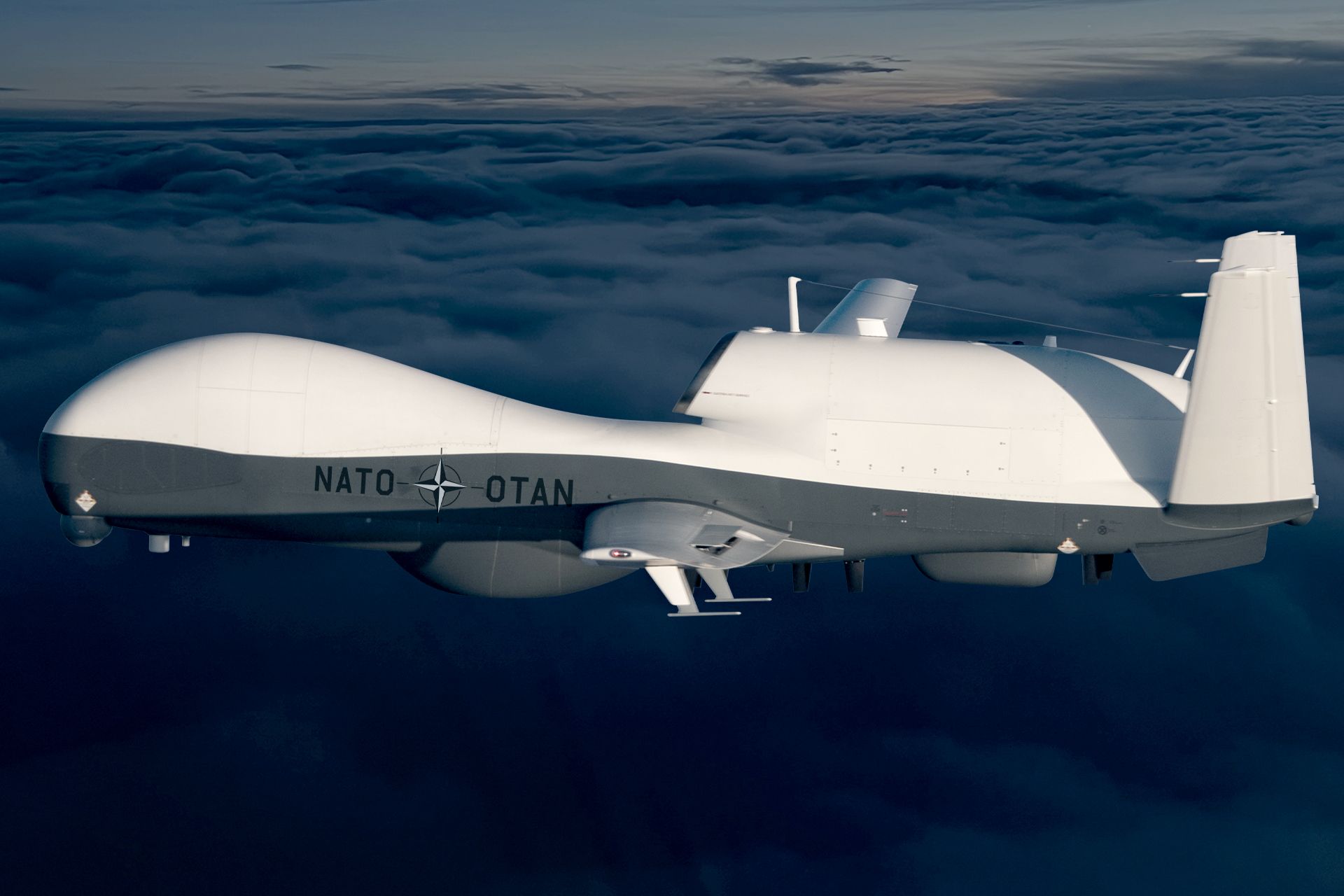 Image: Northrop Grumman
MQ-4C Triton
The main user of the MQ-4C Triton is the US Navy, which operates 29 aircraft and, interestingly, currently uses them, among other locations, from the aforementioned NAS Sigonella. The aircraft was developed under the BAMS (Broad Area Maritime Surveillance) program as a maritime derivative of the RQ-4 Global Hawk.
Before yesterday’s announcement, Australia was the only other country to have decided to purchase the Triton. Interestingly, in January 2020 Germany, discussed above, withdrew from the planned purchase of four Tritons, so this marks its return to the program, while Norway has been interested since July last year. The aircraft has also been offered to India.
The MQ-4C Triton is 14.5 meters long, has a wingspan of 39.9 meters, a height of 4.7 meters, and a mass of 14.63 tonnes. A single Rolls-Royce AE 3007 two-spool turbofan engine, generating 28.89–39.66 kN of thrust, gives it a maximum speed of 575 km/h and a service ceiling of 18,288 meters. The unmanned aircraft has a maximum range of 15,186 km.
On September 19, 2024, Northrop Grumman said that a US Navy aircraft had flown in the Arctic and North Pole region for the first time. Earlier, during Exercise Northern Edge 23-1 in the Gulf of Alaska, Triton provided simulated enemy surface target data for Allied strike assets. This is significant in the context of NATO’s announcement. On July 30, 2021, the first Triton with upgraded IFC-4 (Integrated Functional Capability Four) software made its first flight.
Airbus and Northop Grumman announced today at #NATOSummit Industrial Forum a transatlantic collaboration to expand @NATO’s ISR (Intelligence, Surveillance and Reconnaissance) Force Fleet with the objective to strengthen European security.
More information here:… pic.twitter.com/TAkLFyo8QO— Airbus Defence (@AirbusDefence) July 7, 2026
We’re collaborating with @NATO and @USNavy to expand NATO’s ISR Force with MQ-4C Triton, deploying the most advanced maritime intelligence, surveillance, reconnaissance and targeting capability available today. Learn more: https://t.co/zV74JOY4Qv pic.twitter.com/bw106rFzaH
— Northrop Grumman (@NGCNews) July 7, 2026
