






















On Monday, July 6, 2026, the press service of the People’s Liberation Army Navy (PLAN) said on social media that it had successfully tested an SLBM (Submarine-Launched Ballistic Missile) fired from a nuclear-powered ballistic missile submarine, or SSBN.
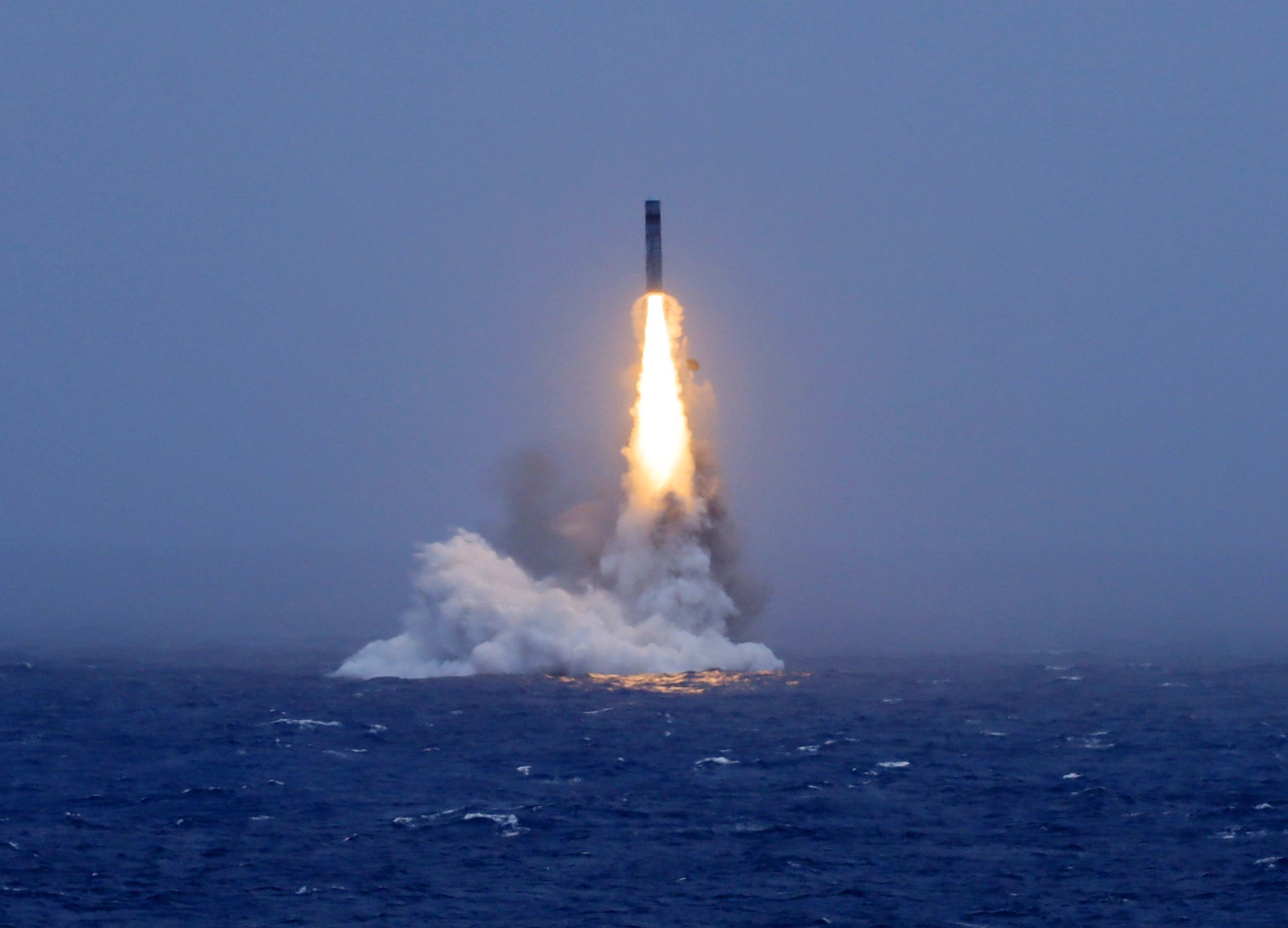
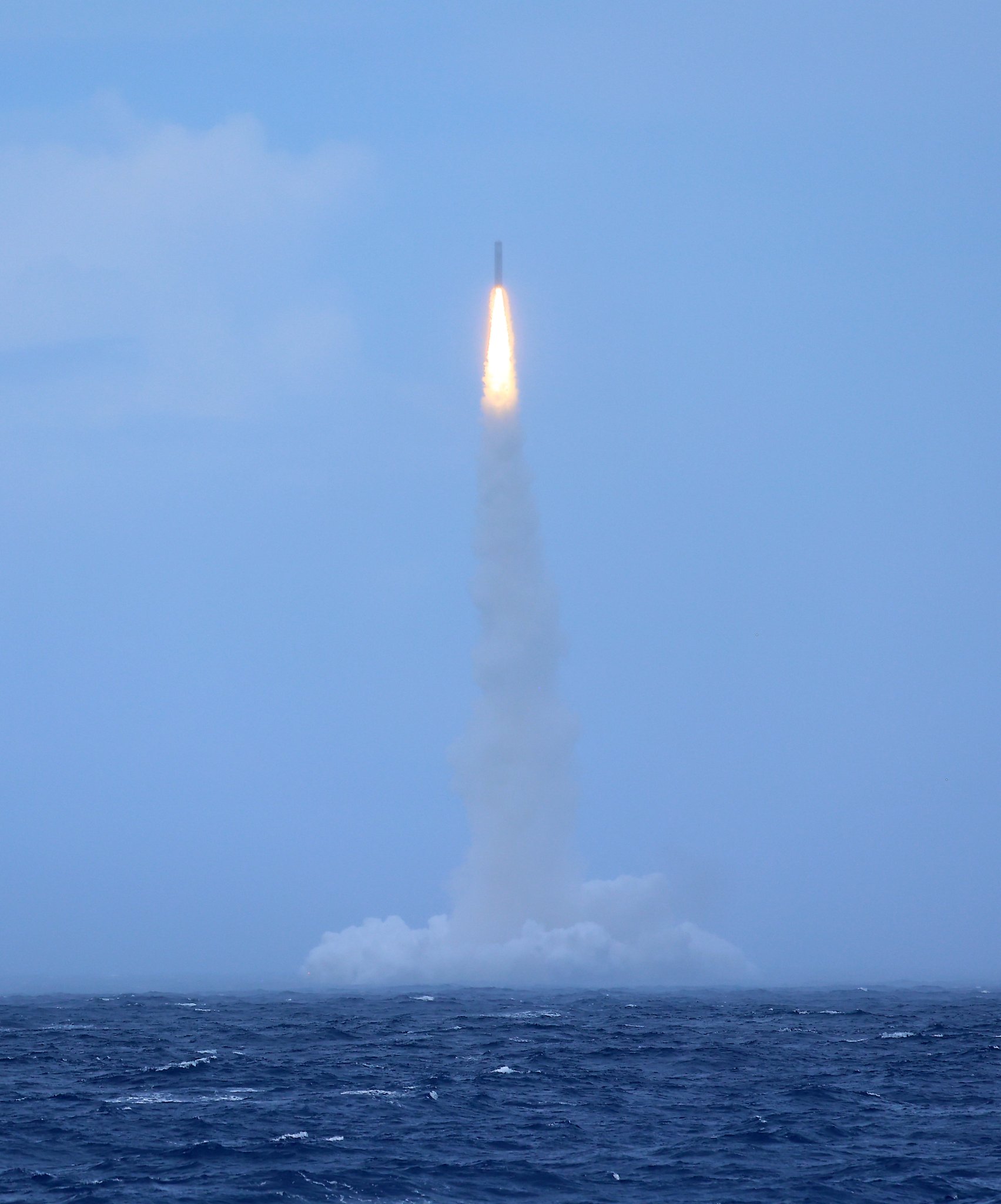
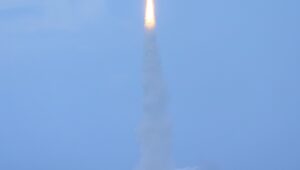
Photos: China Navy via X
At 12:01 p.m. on July 6 (5:01 a.m. UTC), one of the People’s Liberation Army Navy’s strategic submarines successfully launched a strategic missile with an inert warhead toward designated high-seas areas in the Pacific Ocean. The warhead landed precisely in the designated waters. The test launch was a routine element of the PLAN’s annual training. China had previously notified the relevant countries. The test launch complied with international law and international practice and was not directed against any specific country or target.
No details were provided on the type of submarine involved in the launch or the type of ballistic missile used. The Chinese Navy operates a single Type 092/09-II submarine, known in NATO reporting as the Xia class, equipped with 12 JL-1A ballistic missiles, designated CSS-N-3 by NATO, with a range of 2,500 km. However, China’s main deterrent is provided by six newer Type 094/09-IV submarines, known in NATO reporting as the Jin class, which carry 12 JL-2 missiles, designated CSS-NX-14 by NATO, with a range of 7,400–8,000 km. Two more are planned, so the launch likely involved one of these submarines.
Meanwhile, two of six next-generation Type 096/09-VI submarines, known in NATO reporting as the Tang class, are under construction. They will carry as many as 24 new-generation JL-3 missiles, also referred to as JL-2C, which are expected to have a range of up to 9,000 km. Interestingly, the missile has also been integrated with the Type 094/09-IV for test purposes, so it may have been the missile launched in the latest test.
Joint Chinese-Russian exercises
The test launch of a ballistic missile from a submarine coincided with the start of annual bilateral exercises between China and Russia, which are scheduled to continue until July 13. On Sunday, a task force of the Russian Navy’s Pacific Fleet arrived in Qingdao, China, to take part in naval exercises referred to by Russia as Maritime Interaction 2026 and by China as Joint Sea 2026. The Russian task force includes the Project 1164 Atlant missile cruiser RFS Varyag (011), the Project 20380 Steregushchiy-class corvette RFS Rezkiy (343), the submarine rescue ship Igor Belousov, and the Project 636.3 Varshavyanka-class conventional submarine B-588 Ufa.
The traditional Russian-Chinese Maritime Interaction 2026 exercise will take place in the Yellow Sea from July 6 to 13, 2026. Russian Fleet marines and the People’s Liberation Army Navy, supported at sea by naval aviation, will improve joint rescue operations, practice anti-submarine warfare and air defense missions, and conduct joint artillery firing, according to a Russian Ministry of Defense press release published on Sunday.
China has assigned to the exercise the Type 055 missile cruiser, or destroyer, CNS Anshan (103), known in NATO reporting as the Renhai class; the Type 052D destroyer CNS Kaifeng (124), known as Luyang III; the Type 054A frigate CNS Wuhu (539), known as Jiangkai II; the Type 903A fleet oiler CNS Kekexilihu (903); the submarine rescue ship Yangchenghu (847); and one Type 039A/B/C submarine, known as the Yuan class.
This year’s exercise is titled Joint Response to Maritime Security Threats and will include three phases: force assembly, port planning, and operations at sea. During the maritime phase, the participating warships will proceed to the Yellow Sea near Qingdao to conduct drills in joint reconnaissance, air and missile defense, and live weapons employment.
The exercise is part of the annual cooperation plan between the Chinese and Russian armed forces and is intended to jointly address security challenges and maintain peace and stability in the region, China’s Ministry of National Defense said in a press release. After the exercises, some forces from both sides will conduct joint maritime patrols in the Pacific Ocean.
The exercises were first launched in 2012 and were later formalized as an annual drill conducted by the two navies. Russia and China alternate as host nations, while each successive iteration of the exercise has become increasingly complex.
Last year’s edition saw submarines take part in the exercise for the first time. Russian and Chinese submarines then conducted a joint patrol in the Sea of Japan. Since 2021, Russia and China have carried out joint maritime patrols in the western Pacific, and in 2023 a joint naval patrol reached as far as Alaska and the Aleutian Islands.
【中国海军成功组织潜射战略导弹试射】7月6日12时01分,中国人民解放军海军1艘战略核潜艇向太平洋相关公海海域,成功发射1发携载训练模拟弹头的潜射战略导弹,准确落入预定海域。此次导弹试射是中方年度军事训练的例行性安排,已事先向有关国家作了通报,符合国际法和国际惯例,不针对任何特定国家和目… pic.twitter.com/UvkrrG3W9s
— ChinaNavy (@China_Navy) July 6, 2026