





















On Sunday, August 16, 2026, US President Donald Trump announced via his Truth Social account that he had instructed Secretary of Defense Pete Hegseth to reduce US military participation in the annual Ulchi Freedom Shield exercise in South Korea, citing his “good relationship” with North Korean leader Kim Jong Un.
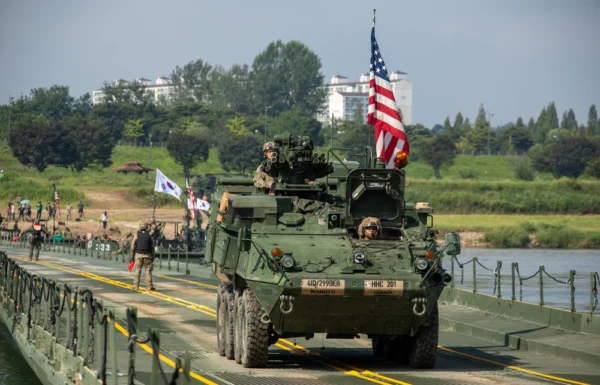
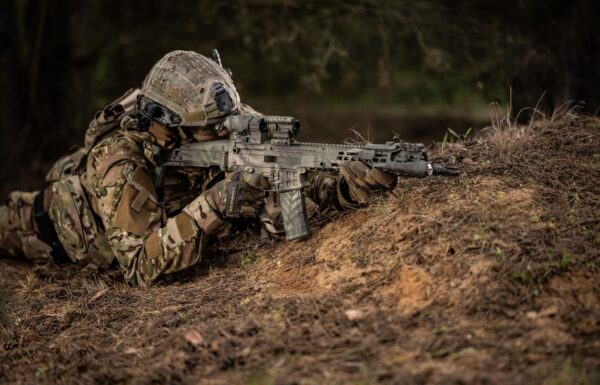
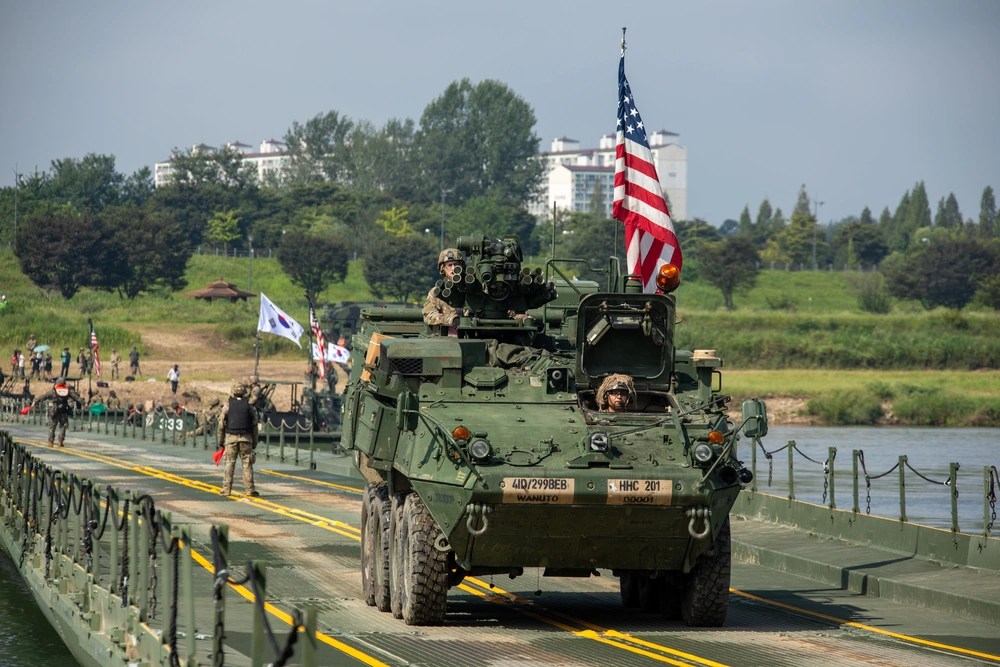 Photo: US DoD
“Based on my very good relationship with Kim Jong Un, of North Korea, I am not happy with the fact that the United States has, long ago, agreed to participate in Joint Military Exercises with South Korea. These exercises are not only costly, with much of these costs paid for by the United States of America (as usual!), but send a signal that is totally inappropriate and hostile, to a Country that, as long as Donald J. Trump has been President, has been unthreatening and respectful. Therefore, and based on the fact that it is too late to cancel, I have instructed Secretary of War, Pete Hegseth, to substantially reduce the Joint Military Exercises! While somewhat unrelated (?), I recently asked the President of South Korea if they would like to join us in the Denuclearization of the Islamic Republic of Iran, and they said, “No thanks!” Thank you for your attention to this matter. President DONALD J. TRUMP” – wrote president Trump on Truth Social.
The Ulchi Freedom Shield 2026 (UFS 26) exercise began on Monday, August 17, and will continue through August 27. It remains unclear what form the reduction in participation by United States Forces Korea (USFK) stationed in the Republic of Korea will take. Around 18,000 South Korean troops are taking part. According to Reuters, citing a statement from South Korea’s Joint Chiefs of Staff, the exercise began as planned. A total of 28,500 US troops are stationed in the Republic of Korea (Congress blocked Trump’s proposals to reduce this force by 4,500 personnel – ed.).
The Yonhap news agency reported the reaction of President Lee Jae-myung’s office to Donald Trump’s post. Interestingly, the office said it was reviewing the US president’s statement and expected that the friendship between the leaders of North Korea and the United States would contribute to bilateral talks on peace on the Korean Peninsula. At the same time, the office also stated that Seoul had been actively participating in international discussions on a ceasefire in Iran and efforts to restore freedom of navigation in the Strait of Hormuz, while closely consulting with the United States on ways to make practical and military contributions.
Earlier, on Saturday, August 15, during National Liberation Day celebrated by both Koreas, marking the 81st anniversary of the end of the Japanese Empire’s occupation of the Korean Peninsula, President Lee Jae-myung delivered a speech in Seoul:
“Let us put aside the tendency to threaten one another and begin discussions on ending this long war as parties directly involved in it. In the process, we can also discuss practical measures to halt the development of North Korea’s nuclear capabilities.” – said South Korean President Lee Jae-myung, referring to the July 27, 1953 armistice, which did not formally end the war begun three years earlier by North Korea.
Lee Jae-myung, who has served as the 14th President of the Republic of Korea since June 4, 2025, favors dialogue with Pyongyang, unlike Yoon Suk-yeol, who was removed from office following his attempt to impose martial law. This is despite such overtures being repeatedly rejected by Kim Jong Un. Lee has declared respect for North Korea’s political system [i.e. a communist dictatorship – ed.] and expressed a desire for peaceful coexistence with Pyongyang. Shortly before the exercises discussed here began, on August 6, North Korea launched another ballistic missile toward the Sea of Japan (East Sea) as a show of force, its first such test in more than 40 days.
Meanwhile, in July this year, South Korea’s Ministry of Unification announced that it was abandoning previous efforts to prioritize the dismantlement of North Korea’s nuclear program, focusing instead solely on halting its further development. At the same time, however, Seoul wants to develop its own military nuclear capabilities, having launched Project Jangbogo-N in May this year to build nuclear-powered submarines.
As for the current US president’s relationship with the North Korean dictator, it is worth recalling that during his first term in office, from 2017 to 2021, Donald Trump held three face-to-face meetings with Kim Jong Un: in Singapore in June 2018, in Hanoi in February 2019, and in the inter-Korean border village of Panmunjom in June 2019.