




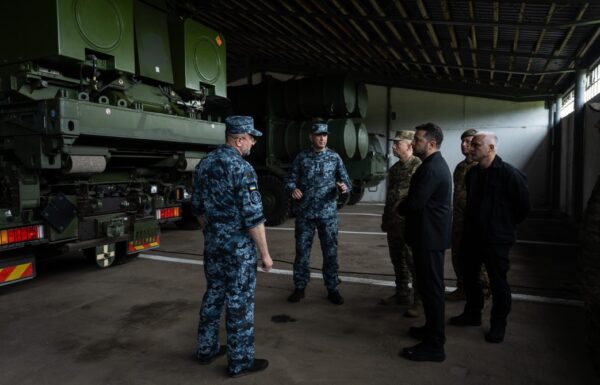















On Saturday, July 4, 2026, Ukrainian President Volodymyr Zelensky made a working visit to Odesa, including to the Command of the Naval Forces of the Armed Forces of Ukraine. One of the photographs shows the rear of a self-propelled missile launcher vehicle (MLV) for NSM (Naval Strike Missile) anti-ship missiles, whose delivery had not previously been officially announced.
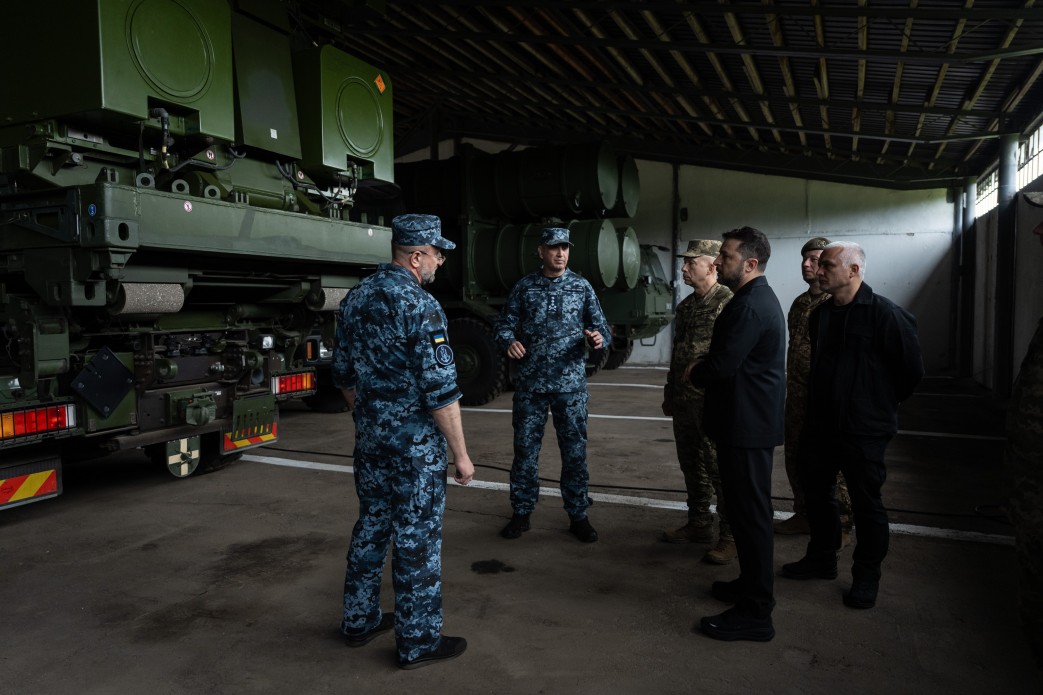 Photo: Office of the President of Ukraine
The vehicle is visible on the left side in the foreground, parked next to a launcher for ex-Danish RGM-84L-4 Harpoon anti-ship missiles, transferred under a decision of May 23, 2022, and already presented with their new recipient on April 10, 2023.
Meanwhile, amid the ongoing discussion in Poland about military aid to Ukraine, especially following reports about the transfer of a small batch of PAC-3 MSE interceptor missiles, some politicians and media outlets have suggested that Poland also supplied NSM launchers on Jelcz chassis, as such preliminary talks had taken place in the past.
What these biased opinions overlooked, however, is the fact that the NSM-CDS (Coastal Defence System) coastal defense system launcher partially shown in Odesa is not in the configuration used by the Naval Missile Unit of the 3rd Ship Flotilla in Siemirowice, which consists of two Coastal Missile Squadrons.
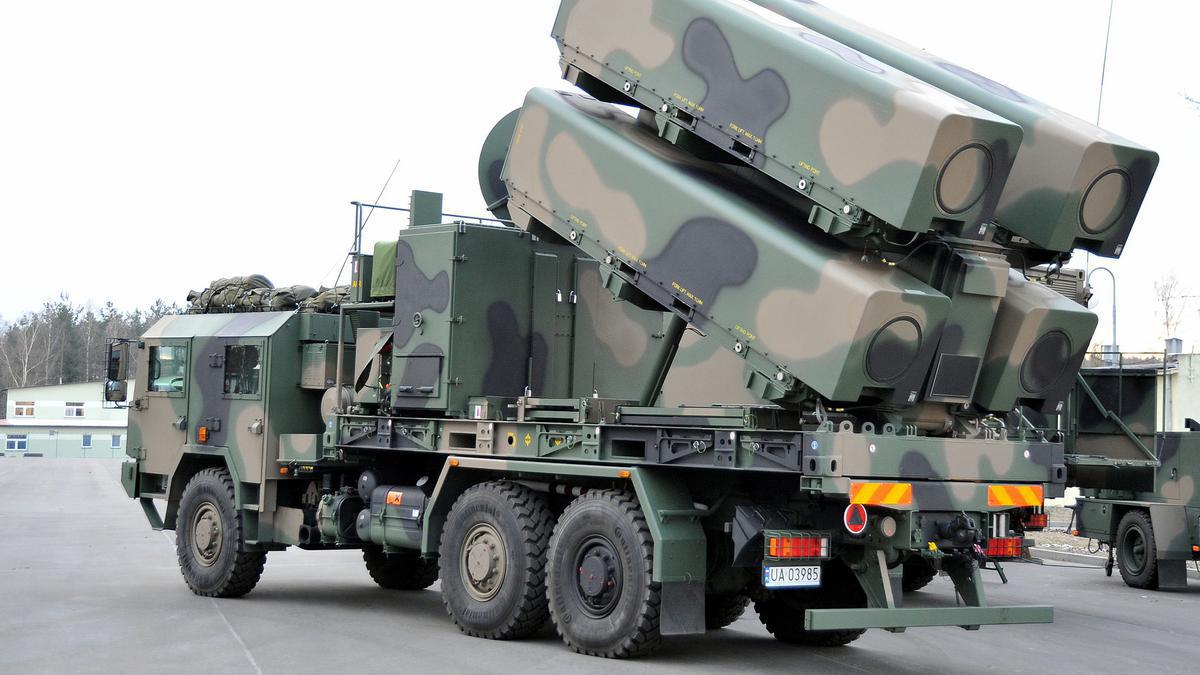 For comparison, a Polish NSM launcher, which differs from the Ukrainian one / Photo: Armament Agency
First, it is not a Jelcz P662D.43 6×6 of the type used by the Naval Missile Unit, although the rear lights may be misleading — the rest of the chassis is different. Second, the launcher itself is mounted on a platform using a hook-lift container loading system, or Multilift, which makes replacement easier. The Polish launcher is permanently integrated with the chassis, as is the version on the new, heavier Jelcz 8×8 chassis presented on April 13 this year during the defense minister’s visit to Oslo. Third, the Ukrainian launcher lacks the distinctive Polish camouflage. Although repainting the vehicle would seem simple and feasible, it would make little sense under wartime conditions. Fourth, the vehicle has reflective identification markings, in the form of yellow-orange diagonal stripes for night driving and poor visibility, placed below the lights rather than at the end of the launcher platform, as in the case of the Jelcz.
It is therefore likely that the Ukrainian NSM system comes from Norway, the producer and system integrator through Kongsberg Defence & Aerospace (KDA), as Oslo is one of the main donors of military aid to Ukraine, although there has, of course, been no public declaration on this matter. There are comments suggesting that the system was financed by Denmark, which is also plausible, as the Scandinavian countries cooperate closely. Earlier, Swedish RBS15 (Robotsystem 15) anti-ship missiles were delivered to Ukraine, as shown in a video of launches released on April 4 this year.
I began my working trip to the Odesa region by holding a coordination meeting with the Command of the Naval Forces of the Armed Forces of Ukraine, focused on security issues in the southern region.
Primary attention was given to countering constant Russian air attacks with… pic.twitter.com/9fo5wvf6Xt
— Volodymyr Zelenskyy / Володимир Зеленський (@ZelenskyyUa) July 4, 2026