





















On Monday, July 6, 2026, German company Rohde & Schwarz announced that Rohde & Schwarz Australia and BAE Systems Maritime Australia (BAESMA), part of the UK’s BAE Systems, had recently completed the Preliminary Design Review (PDR) phase for the Integrated Communications System (ICS) and NAVICS MLS (Multi-Level Security) communications security infrastructure for the first three Australian Hunter-class guided-missile frigates.
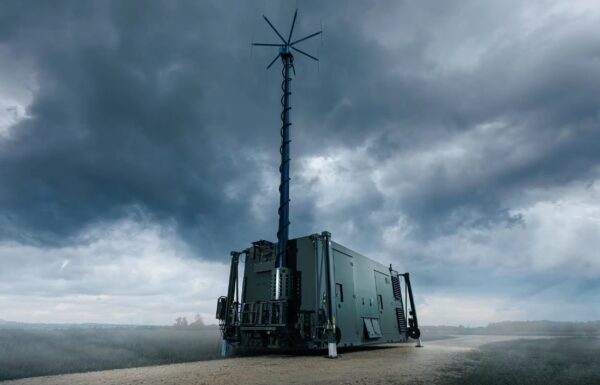
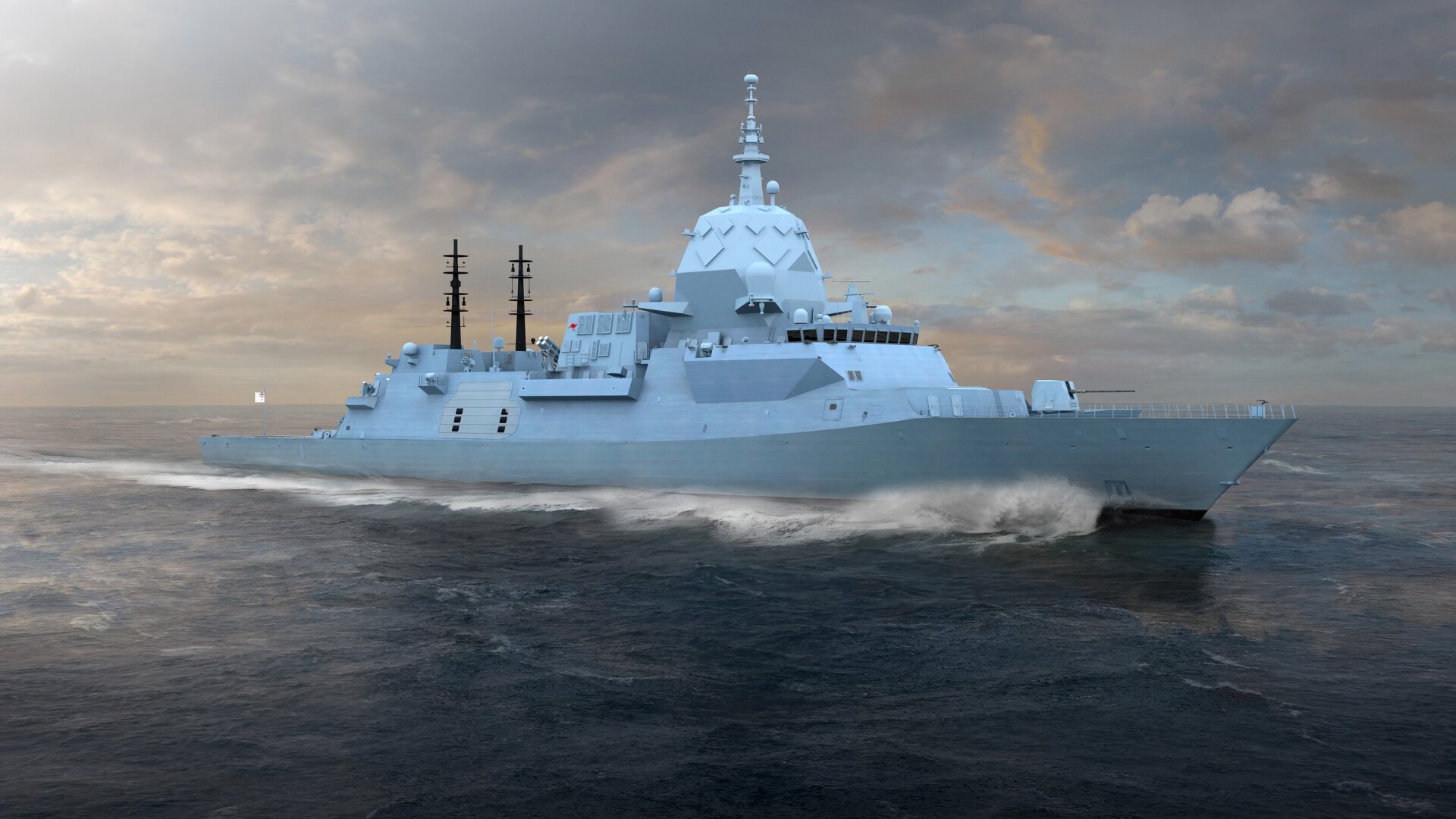 Image: Rohde & Schwarz
The preliminary design demonstrates the maturity of the system, with requirements allocated to individual subsystems and the system architecture defined to encompass all internal and external interfaces.
Rohde & Schwarz Australia has partnered with BAE Systems Maritime Australia (BAESMA) to deliver the Integrated Communications System (ICS), including a multidomain suite of internal and external communications products for the first three Hunter-class frigates, including NAVICS.
NAVICS will serve as the central nervous system of the Hunter-class frigates’ communications architecture, providing integrated and reliable communications as well as the processing of classified information within a multi-level security environment.
“I’m proud to say the design deliverables were very well received, and good discussions were held with [BAESMA] and the Commonwealth on design direction for the next phase,” said Rohde & Schwarz Australia Head of Programs (Navy) Paul Chisholm.
“The achievement of this milestone demonstrates Rohde & Schwarz Australia’s adherence to delivering on its commitments, with flawless execution and strong collaboration with BAESMA to ensure successful platform integration. The next significant phase of the program will culminate with the Critical Design Review (CDR) scheduled this Q2 and Q4 of 2026,” he added.
Rohde & Schwarz Australia has doubled its workforce to provide engineering services for the design and production of the ICS, and its headcount will continue to grow as it supports the delivery of the Hunter-class frigate program.
Rohde & Schwarz Australia Managing Director Gareth Evans attributed the good discussions between the company and BAESMA to a trusted and collaborative partnership developed over many years:
“This is an important step in the delivery of our ICS for the Hunter Class Frigate Program. The working relationship between Rohde & Schwarz, BAESMA and the Commonwealth has been extremely positive, as we work together to achieve our common objectives for the Royal Australian Navy.”
BAE Systems Maritime Australia Managing Director, David Shepherd, highlighted the strong industry relationships being developed by the Hunter Class Frigate Program:
“Hunter is not only about delivering a Tier 1 warship optimised for Anti-Submarine Warfare to the Royal Australian Navy – it is also about regenerating Australia’s sovereign shipbuilding capability. The way we work with our suppliers, including key partners like Rohde & Schwarz Australia, is paramount to enabling Australia’s continuous naval shipbuilding and sustainment endeavour.”
In 2024, Rohde & Schwarz Australia signed a contract with BAESMA to deliver its world-leading NAVICS communications technology for the first three Hunter-class frigates. Providing full Voice-over-IP functionality, NAVICS enables easy interoperability with all IP-based subsystems, such as radios, broadcasting systems, and intercom systems.
Later, on August 11, 2025, Rohde & Schwarz Australia awarded a contract of undisclosed value to the UK company STS Defence for the delivery of communications masts. On November 4 of the same year, it announced that local company Sitep Australia, part of Italy’s Sitep Italia, would integrate world-class antenna systems for ultra-high-frequency military satellite communications (UHF MILSATCOM).
It should be recalled that on June 21, 2024, the aforementioned BAE Systems Maritime Australia, the prime contractor for the SEA 5000 Future Frigates program, received an 1.9 billion AUD order from Australia’s Department of Defence for three of the six planned Hunter-class frigates. At the same time, the production phase of the program began, marked by a steel-cutting ceremony for the actual structural blocks of the prototype vessel. As noted, the first batch includes three frigates: Hunter, whose keel is to be laid this year and delivery is planned for 2032, as well as Flinders and Talisman. A further three ships are planned to be ordered under the second batch.
On May 25 this year, BAE Systems Australia reported that construction was underway on the first hull blocks for the keel-laying of the prototype and on the integrated mast.
They are expected to be joined by 11 general-purpose frigates based on Japan’s 30FFM Mogami design, which on August 4, 2025, was selected as the winner of the SEA 3000 program, beating a German counteroffer based on the MEKO A-200.
Western Australia is on the mission 🫡🚢
Our Henderson shipyard facility has been building hull units for the first Hunter class frigate, prototyping Hunter’s state-of-the-art mast and gearing up to construct the masts for the first three ships.
This pivotal work is crucial to… pic.twitter.com/4cKXp41PAL
— BAE Systems Australia (@BAESystemsAus) May 25, 2026