






















On Monday, July 6, 2026, the NATO Communications and Information Agency (NCIA) announced that it had selected a consortium of France’s Thales and Italy’s Leonardo as a trusted provider of next-generation encrypted communications and information-sharing systems for Allied Special Operations Forces Command (SOFCOM).
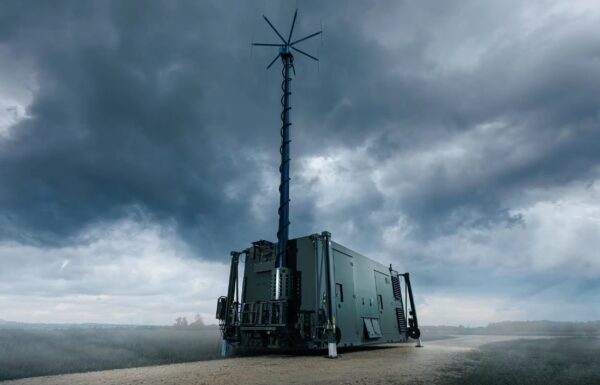
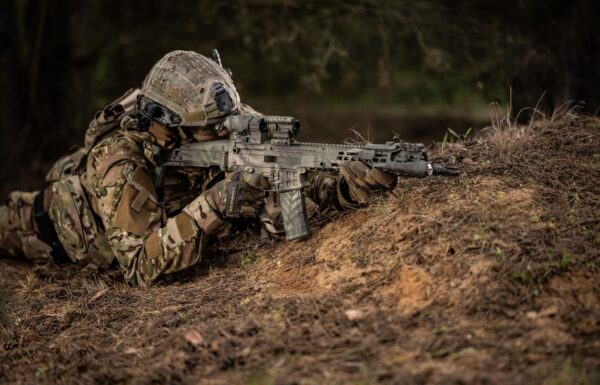
 Photo: Thales
This is the first project under a major NATO program aimed at delivering state-of-the-art communications and information-sharing systems to SOFCOM in order to strengthen the Alliance’s resilience against modern warfare.
This pan-European technological and industrial partnership draws on the best solutions available within the Alliance, combining proven capabilities with the latest available technologies to deliver urgently needed and scalable capabilities.
In response to NATO requirements, the Thales-Leonardo consortium agreement covers the delivery of and training for six SOFCOM mobile headquarters, known as Deployable Points of Presence for Special Operations Component Commands (DPOP SOCC). These new DPOP systems will provide mobile communications and information systems (CIS) tailored to the specific needs of NATO Special Operations Forces. They form the foundation of a future comprehensive and secure information and communications system for special operations, built on classified and resilient networks.
The system will offer dedicated next-generation capabilities designed specifically to meet the highly demanding requirements of NATO Special Operations Forces, including:
- new zero-day IT infrastructure, resilient communications, and high-performance processing, all designed with a reduced electromagnetic and physical footprint;
- a secure, multidomain mission data-sharing environment, along with field-proven solutions ensuring robustness, interoperability, and strong cybersecurity;
- for the first time in a NATO context, real-time Full Motion Video (FMV) sharing capabilities between different mobile systems, increasing the operational effectiveness and situational awareness of Special Operations Forces.
As system providers, Thales and Leonardo are delivering next-generation NATO deployable CIS systems that can be operated and updated throughout their life cycle, while training and support will ensure a smooth transition for users to NCIA-led operations. Beyond this French-Italian partnership, the consortium will deliver these systems to NATO by also drawing on industrial resources across the Alliance, including key technologies from the United Kingdom and Germany.
“Thales brings end‑to‑end expertise in secure information and communication systems, deep knowledge of NATO’s reference architecture, and a long track record of delivering projects to the Alliance. By combining this expertise with Leonardo’s capabilities, we are harnessing the best of European industry in a modular, upgradable, and field‑proven system, providing NATO Special Forces with next‑generation deployable CIS.” said Alexandre Bottero, Vice President, Networks and Infrastructure Systems, Thales.
“Leonardo’s experience, developed at Italian level through the delivery of complete Regimental and Divisional Command Post capabilities, enables the introduction of modular NATO-ready systems based on fixed and expandable shelters. The strength of the design stems from the close collaboration between industry and the end user, who has chosen Leonardo as both the System Integrator and the Design Authority for Italian command post. This partnership among two major players of the European defence industry allows to combine Leonardo’s field proven deployable solutions with Thales experience in NATO’s secure communications programs,” said Antonio Levato, SVP Air and Land Systems Land and Sea Business at Leonardo Electronics.