


























On Friday, July 3, 2026, Germany’s Rheinmetall AG announced that Rheinmetall Canada, through its subsidiary Provectus Robotics Solutions Inc., had been selected to supply the PATH autonomy system for Canada’s Lunar Utility Rover (LUR) program. The selection marks a significant step toward applying defense-proven autonomous technologies in future space exploration missions.
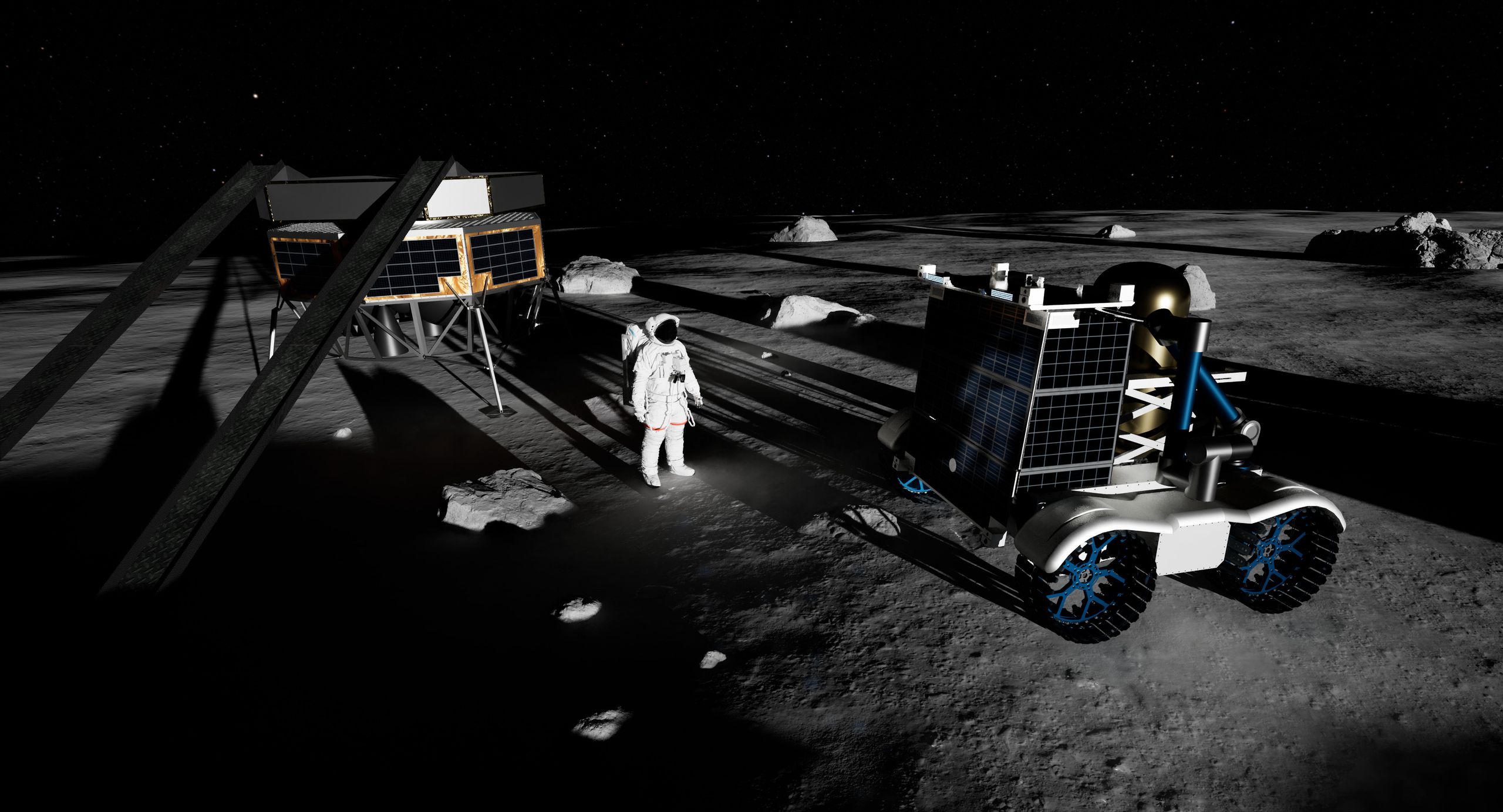 Image: CSA/ESA
Working with Canadian space robotics company Mission Control and a consortium of domestic technology companies, Rheinmetall Canada will support the development of the rover’s Guidance, Navigation, and Control (GNC) subsystem, which will enable autonomous operations on the lunar surface.
The initiative is part of the Canadian Space Agency’s (CSA) Lunar Utility Rover program, which aims to support astronauts during future lunar missions through autonomous logistics, cargo transport, and surface operations.
What is Rheinmetall PATH?
At the core of Rheinmetall AG’s contribution is the PATH autonomy kit, or A-kit, an advanced machine-learning-based autonomous software package developed for unmanned ground systems.
Originally designed for military applications, PATH has been deployed worldwide on military and commercial platforms, providing autonomous navigation, obstacle avoidance, route planning, and mission execution capabilities in complex operational environments.
For the lunar rover, PATH will provide the technological foundation for autonomous navigation, enabling the vehicle to move safely across challenging lunar terrain while carrying supplies and supporting astronaut operations.
Supporting the next generation of Canadian lunar missions
The lunar rover is expected to play a key role in future exploration of the Moon by supporting astronauts during longer missions.
Planned capabilities include:
- Autonomous navigation on the lunar surface;
- Cargo transport and logistics;
- Mission support for astronauts;
- Surface mobility in extreme conditions;
- Long-duration operational capability;
- The Guidance, Navigation, and Control subsystem is considered one of the mission’s most critical technologies, enabling the rover to operate safely with minimal human intervention.
From battlefield autonomy to space robotics
The project underscores the growing convergence between military innovation and civilian space exploration.
According to Rheinmetall AG, the PATH autonomy system evolved from research conducted under earlier Canadian Space Agency rover development programs before being adapted into commercially successful defense and industrial autonomy solutions.
The Lunar Utility Rover project brings this technology back to the space sector, demonstrating the dual-use potential of advanced autonomous systems
Strengthening Canada’s space and robotics ecosystem
Rheinmetall AG says the project reinforces Canada’s long-standing leadership in space robotics while strengthening national industrial capabilities in artificial intelligence, autonomous systems, and advanced robotics.
Commenting on the selection, Pietro Mazzei, President and CEO of Rheinmetall Canada, said:
“The integration of PATH into the Lunar Utility Rover brings together decades of Canadian innovation in the fields of autonomy and space robotics. This project strengthens the local supply chain and underscores the advanced technological capabilities of Canadian industry.”
Building the future of autonomous exploration
Ottawa-based Provectus Robotics Solutions operates as a fully integrated subsidiary of Rheinmetall Canada and Rheinmetall AG, focusing on autonomous technologies for military, industrial, and emerging space applications.
The company’s involvement in the Lunar Utility Rover project shows how proven autonomous technologies developed for demanding terrestrial environments can be adapted to support future exploration beyond Earth.
As international interest in lunar exploration grows, AI-enabled autonomous systems such as PATH are expected to become essential for ensuring safe, reliable, and efficient robotic operations on the Moon, supporting both scientific missions and a long-term human presence.
Lunar Utility Rover
In July 2025, three Canadian companies received contracts worth a total of 14.6 million CAD to accelerate the development of Canada’s new lunar rover. Over 18 months, Canadensys Aerospace Corporation, MDA Space, and Mission Control will conduct preparatory studies to assess various options for the rover, including potential capabilities depending on its size and scope.
In December 2025, four Canadian organizations received contracts worth a total of 3.2 million CAD. Over nine months, ABB Inc., Bubble Technology Industries, Mission Control, and Western University will develop concepts for scientific instruments for the lunar rover.
Canada’s Lunar Utility Rover will be designed in particular to:
- Provide a minimum service life of 10 years;
- Survive the approximately two-week lunar night, with temperatures ranging from -130°C to -190°C, and in deep craters even below -200°C, reaching about -246°C in permanently shadowed regions near the poles;
- Be operated from a Canadian operations center on Earth and by astronauts on the Moon or in lunar orbit;
- Use robotic tools, scientific instruments, and advanced sensors to support lunar operations.
The Lunar Utility Rover mission is scheduled to begin no earlier than 2033.
▶️ Rheinmetall’s Autonomous Technology for Space Exploration: Rheinmetall Canada Contributes PATH System to Canadian Lunar Rover Project
Read more:https://t.co/iXjqijsFyF pic.twitter.com/tZiafbmFqc
— Rheinmetall (@RheinmetallAG) July 3, 2026