




















On Tuesday, July 7, 2026, during Indian Prime Minister Narendra Modi’s visit to Jakarta, an agreement was signed for the sale to Indonesia of a battery of PJ-10 BrahMos supersonic cruise missiles, as well as Astra air-to-air missiles.
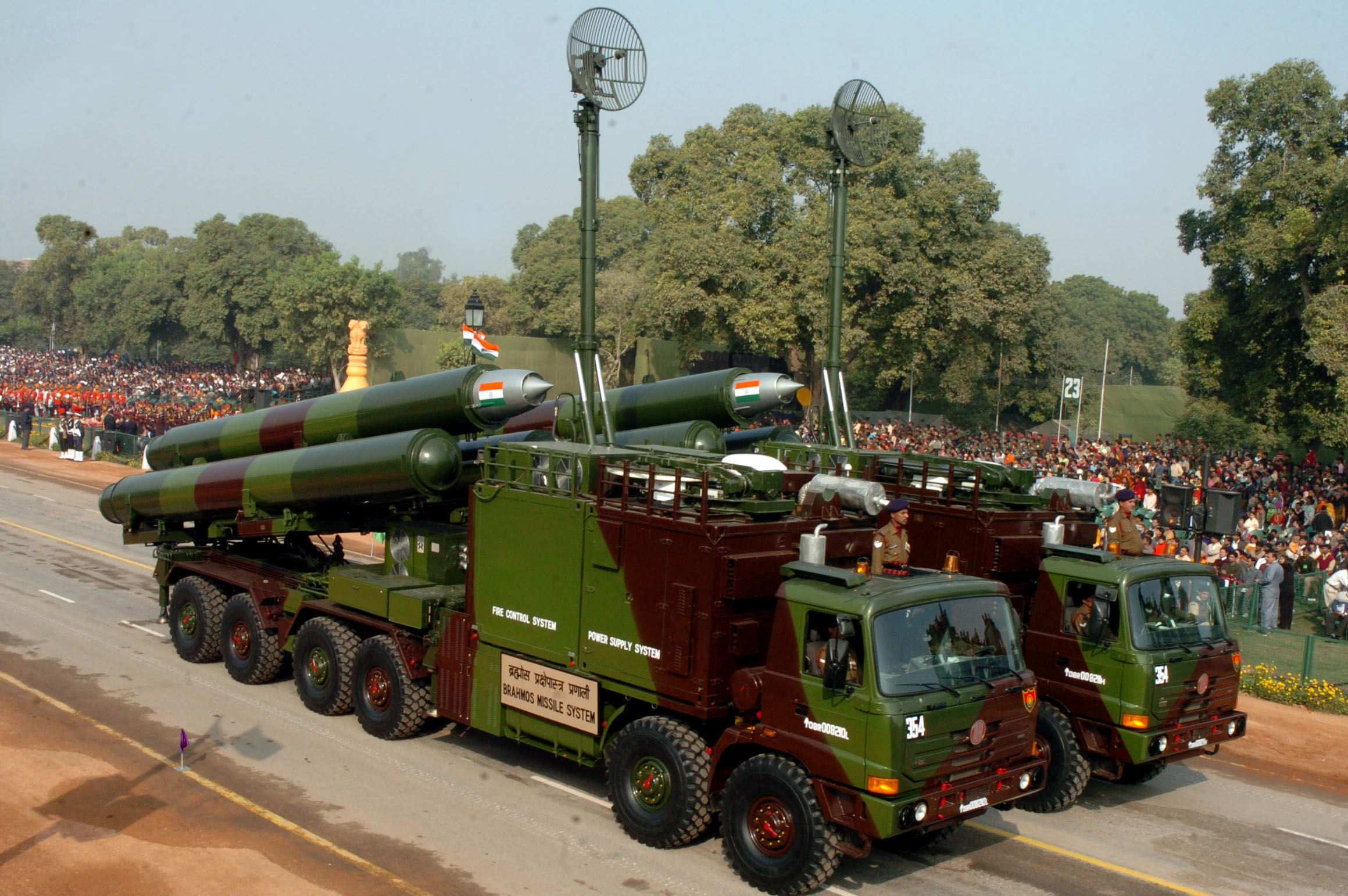 BrahMos in service with the Indian Army / Photo: B. M. Meena, Indian Ministry of Defence
Under the contract, the Indonesian Navy (Tentara Nasional Indonesia Angkatan Laut, TNI-AL) will receive one battery of the Shore-Based Anti-Ship Missile System (SBAMS), with an option for two additional batteries. The agreement is also expected to include a training package and logistics support. No delivery schedule has been disclosed.
It is also worth noting that during Modi’s visit, India’s Bharat Dynamics Ltd (BDL) and Indonesia’s Republikorp signed an agreement for the delivery of a batch of Astra medium-range air-to-air missiles to the Indonesian Air Force (Tentara Nasional Indonesia Angkatan Udara, TNI-AU). This is the first export contract for the weapon system. The Astra Mk1, with a range of 110 km, is currently in production, while India is also developing the longer-range Astra Mk2, with a range of 240 km, and the Astra Mk3, with a range of 350 km.
The combined value of the two contracts is estimated at 630 million USD.
PJ-10 BrahMos
On March 15, 2023, Reuters reported that India’s BrahMos Aerospace Private Limited (BAPL) expected to finalize an agreement with Indonesia by the end of that year. At the time, the deal was estimated to be worth at least 200–350 million USD and covered both a shore-based coastal defense system and PJ-10 BrahMos missiles for integration aboard surface vessels.
On November 27, 2025, the Indian newspaper ThePrint reported that negotiations were nearing completion. The report coincided with a visit by an Indonesian Ministry of Defence delegation led by Defence Minister Sjafrie Sjamsoeddin.
Reuters reported on March 9 this year that the agreement had been finalized. The development was confirmed by Indonesian Ministry of Defence spokesman Rico Ricardo Sirait. He said the deal formed part of efforts to modernize Indonesia’s military equipment and defense capabilities, particularly in the maritime domain. An intergovernmental agreement was expected to be signed within two to three months.
Each coastal defense battery consists of four transporter-launchers, each carrying three transport-launch canisters for PJ-10 BrahMos anti-ship missiles. This gives each battery a ready-to-fire load of 12 missiles. The system also includes command-and-control vehicles and radar stations.
Indonesia will become the second export customer for the system, which was developed jointly by India and Russia. The Philippines was the first, having ordered three batteries, although it is now discussing an increase to nine. Vietnam is expected to become the third customer, following a preliminary agreement signed on May 30 this year. The system has also been offered to Armenia, Brazil, Malaysia, and the United Arab Emirates, and was previously marketed to South Africa and Chile.
Development of the first BrahMos variants began in 1998. The design was based on the Russian P-800 Oniks/Yakhont missile, a type already operated by the Indonesian Navy. Work on the next-generation missile, designated BrahMos-II (K), has been underway since 2011. In 2017, the air-launched BrahMos-A variant for the Su-30MKI was tested for the first time. This was a reduced-size version of the PJ-10. The same year also saw testing of the extended-range BrahMos-ER, whose range was increased from the original 290–300 km to more than 400 km. In 2018, India reported progress in increasing the system’s indigenous content in order to reduce New Delhi’s dependence on Russia in matters related to exports.
Astra Mk.1
 Astra Mk.1 / Photo: DRDO
The Astra Mk1 is 3.57 m long, has a diameter of 178 mm, and weighs 154 kg. Powered by a solid-fuel rocket motor, it reaches a speed of Mach 4.5 and has a range of approximately 80–110 km at altitudes of up to 20,000 m. The missile uses active radar homing and inertial navigation, while its high-explosive fragmentation warhead weighs 15 kg.
Development of the missile began in the 1990s under the government-run Defence Research and Development Organisation (DRDO), with support from Hindustan Aeronautics Limited (HAL) and Electronics Corporation of India Limited (ECIL). A technology demonstrator was unveiled at the second Aero India air show in 1998. In 2004, the project received funding from the defense budget. The first version of the missile weighed as much as 300 kg and had a range of only 25–40 km. It was intended to arm the then-developing HAL Tejas LCA fighter. Testing began in May 2003.
The missile was redesigned in 2006, and testing of the revised version began two years later. The trials revealed further problems, prompting another redesign. Its weight was ultimately reduced to 154 kg, while its range was increased to 80–110 km, partly through the introduction of a new fin configuration. The first ground launches were conducted in December 2012, followed by the first launch from a Su-30MKI in April 2013. Testing was completed in 2017, after which the missile was approved for serial production at Bharat Dynamics.
In Indonesia’s case, the missiles will most likely equip its five Su-27SK/SKM and Su-30MK/MK2 fighters. However, the Indonesian Air Force is currently modernizing its fleet with more advanced aircraft, including the Dassault Rafale F4, while future plans call for the introduction of the Turkish TAI TF Kaan, the South Korean KF-21 Boramae, and the Chinese Chengdu J-10CE.