





























On Tuesday, June 30, 2026, American company Pratt & Whitney (part of RTX corporation) announced that the F119-PW-100 turbofan engines (manufacturer’s designation: PW5000), powering the Lockheed Martin/Boeing F-22A Raptor fifth-generation air superiority aircraft, have exceeded one million flight hours. This figure covers a total of 507 engines built, of which over 400 are currently in service.
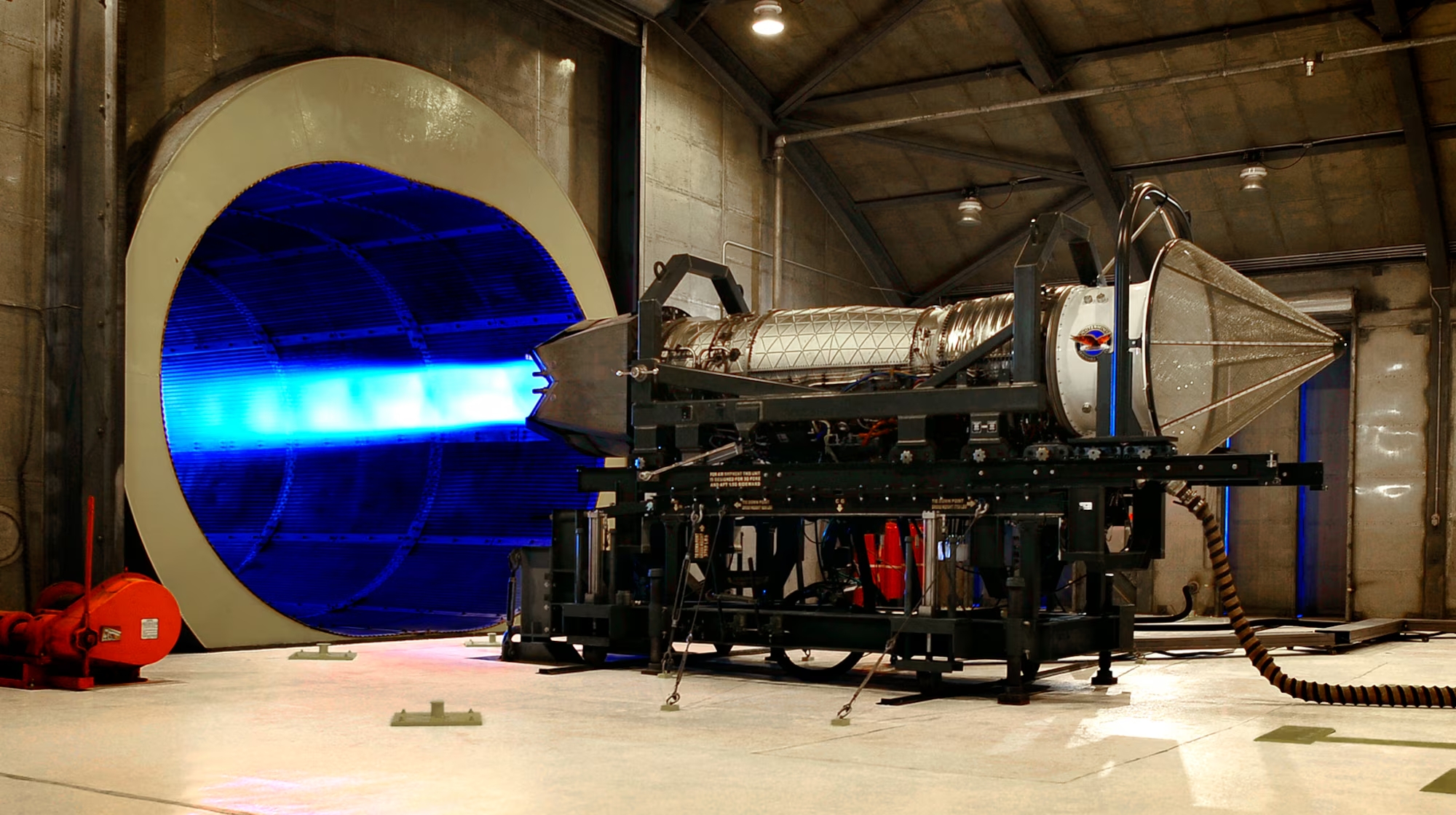 Photos: US Department Of Defense
„The F119 engine plays a critical role in maintaining air dominance for the U.S. Air Force, as it enables the F-22 mission,” said Jill Albertelli, president of Military Engines for Pratt & Whitney. „Having powered the F-22 Raptor since it launched over 20 years ago, the engine continues to provide unmatched capability, safety and readiness rates. This milestone demonstrates Pratt & Whitney’s commitment to delivering for our customers.”
Pratt & Whitney delivered the final F119 engine in 2013 and continues to support the global F-22 fleet, offering long-term maintenance services. On February 20, 2025, the company signed a three-year contract worth 1.5 billion USD with the US Department of Defense for continued operational support of these engines.
The aircraft themselves surpassed 500,000 flight hours on June 17, 2024.
Pratt & Whitney has reduced F119 engine operating costs through the Usage Based Lifting program, which uses real-time data to increase support efficiency and extend engine service life, while simultaneously improving the engine’s kinematic performance through updates to the engine control system upgrade schedule. The F119 engine is continuously refined through tools such as Model-Based Systems Engineering.
The F119-PW-100 afterburning turbofan generates 35,000 lb of thrust (156 kN) and is designed for supercruise (supersonic flight without afterburner) up to Mach 1.6 at altitudes above 19,800 m (65,000 ft). Compared to the previous generation of engines, it provides 22% greater thrust with 40% fewer components. It features a flat exhaust nozzle with 2D thrust vectoring in the pitch axis, with a maximum deflection angle of 20° in under one second. The thrust-to-weight ratio is 6.7:1 and 9.0:1 with afterburner.
Based on it, the Pratt & Whitney F135 engine developing 40,000 lb of thrust (180 kN), which powers the Lockheed Martin F-35 Lightning II multirole aircraft family, was developed as a modified F119 variant.

F-22A Raptor
According to the World Air Forces 2026 report, 177 aircraft remained in active operational service at the beginning of this year. Lockheed Corporation (and from 1995, Lockheed Martin) produced a total of 195 aircraft through 2012 (including 8 prototypes), of which 186 entered USAF operational squadrons. The aircraft entered service on December 15, 2005, but their combat debut – against ground targets – did not occur until September 23, 2014, against the Islamic State (ISIS) in Syria, while the first shootdown of an unidentified balloon over the Atlantic Ocean took place on February 4, 2023. Five aircraft have been lost in accidents (including one prototype), the most recent on May 15, 2020.
According to current plans, the F-22A Raptor’s operational service in the USAF will continue at least through the end of October 2031 – as per a contract signed on November 5, 2021, with Lockheed Martin worth 11 billion USD for continued operational support and modernization under the ARES (Advanced Raptor Enhancement & Sustainment) program. It is worth noting that as recently as May 2021, USAF leadership stated that it would seek to reduce the number of combat aircraft types in the future, with cuts potentially including the F-22A. Its successors will be the Boeing F-47 sixth-generation multirole aircraft being developed under the NGAD (Next Generation Air Dominance) program.
On January 14, 2022, the USAF announced operational requirements for a modernization package intended to enable continued F-22A service before their retirement: new stealth drop tanks, next-generation infrared defensive system (IRDS) sensors, a cyberattack detection and prevention system, predictive maintenance software, synthetic data generation, improved onboard sensor fusion, modification of the Northrop Grumman AN/APG-77 (AESA) radar, cooperation with unmanned systems under the MUM-T concept (tests conducted with the MQ-20 Avenger), limited autonomy, Thales Scorpion HObIT helmet-mounted displays, Red Air software for simulating an aggressor aircraft, as well as modernization for optimized intercept, real-time reporting in Basic Fighter Maneuvers (BFM) engagements, and a Combat ID capability.
In April 2023, testing began of next-generation AV 2.2 helmets under the NGFWH (Next Generation Fixed Wing Helmet) program, supplied by LIFT Airborne Technologies. In 2021, a new chrome/mirror-like fuselage coating was tested on one F-22A, a feature previously noted on the F-117 and later in 2023 on the F-35C.
📰 #NEWS: Pratt & Whitney’s F119 engine has surpassed one million flight hours powering the F‑22 Raptor. This accomplishment underscores the engine’s proven performance, dependability and continued support of the @usairforce‘s critical missions. Read more: https://t.co/x1FRseAndr pic.twitter.com/Nn17P0P8OA
— RTX (@RTX_News) June 30, 2026
