

































On Tuesday, February 17, 2026, U.S. defense corporation RTX Corporation released information and video footage detailing progress achieved by its subsidiary Pratt & Whitney on the prototype of the next-generation XA103 three-stream adaptive turbofan engine. The engine is being developed under the Next Generation Adaptive Propulsion (NGAP) program, which aims to provide propulsion for sixth-generation air superiority aircraft under the Next Generation Air Dominance (NGAD) initiative, reportedly designated the Boeing F-47. It appears that the video may have inadvertently revealed the full external configuration of the aircraft, which has not yet received an official public unveiling.
 Image: RTX
On March 21, 2025, Boeing won the contract to develop the first sixth-generation air superiority aircraft for the United States Air Force (USAF). The program is estimated at 20 billion USD and underwent a redefinition phase beginning in mid-2024 due to cost concerns.
It is worth noting that Boeing (and its Phantom Works design bureau) faced a single competitor: Lockheed Martin and its Skunk Works advanced development division. Both companies finalized their respective designs in 2024, after which the USAF extended the Technology Maturation and Risk Reduction (TMRR) phase.
On September 22, 2025, it was reported that Boeing had begun building the first Boeing F-47 prototype, which is scheduled for its maiden flight in 2028. The only publicly known specifications indicate a combat radius exceeding 1,000 miles (1,600 km), with the Air Force planning to procure more than 185 aircraft. The maximum speed is expected to exceed Mach 2. Notably, President Donald Trump reportedly offered the F-47 to Japan, which is participating in the Global Combat Air Programme (GCAP) alongside the United Kingdom and Italy.
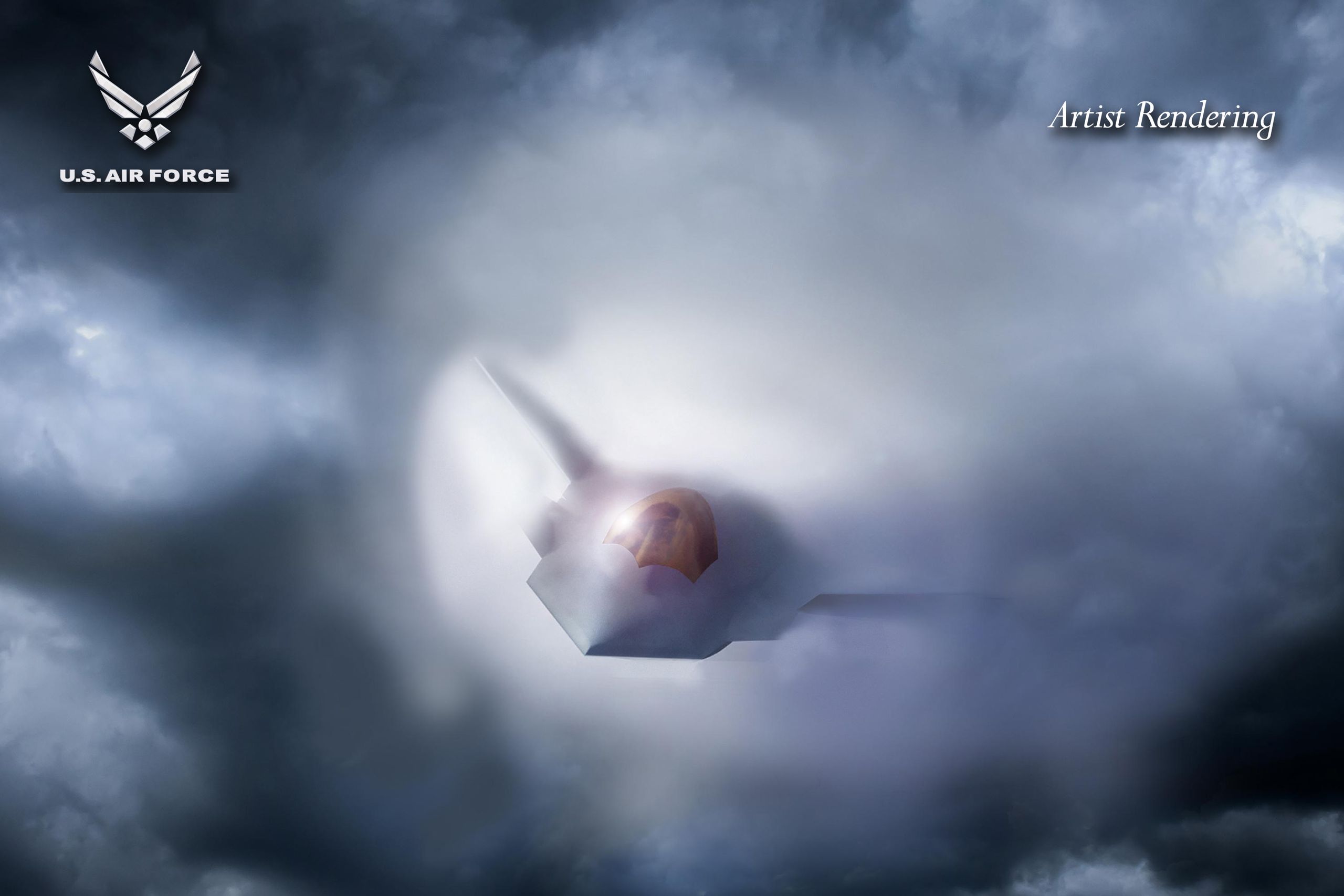
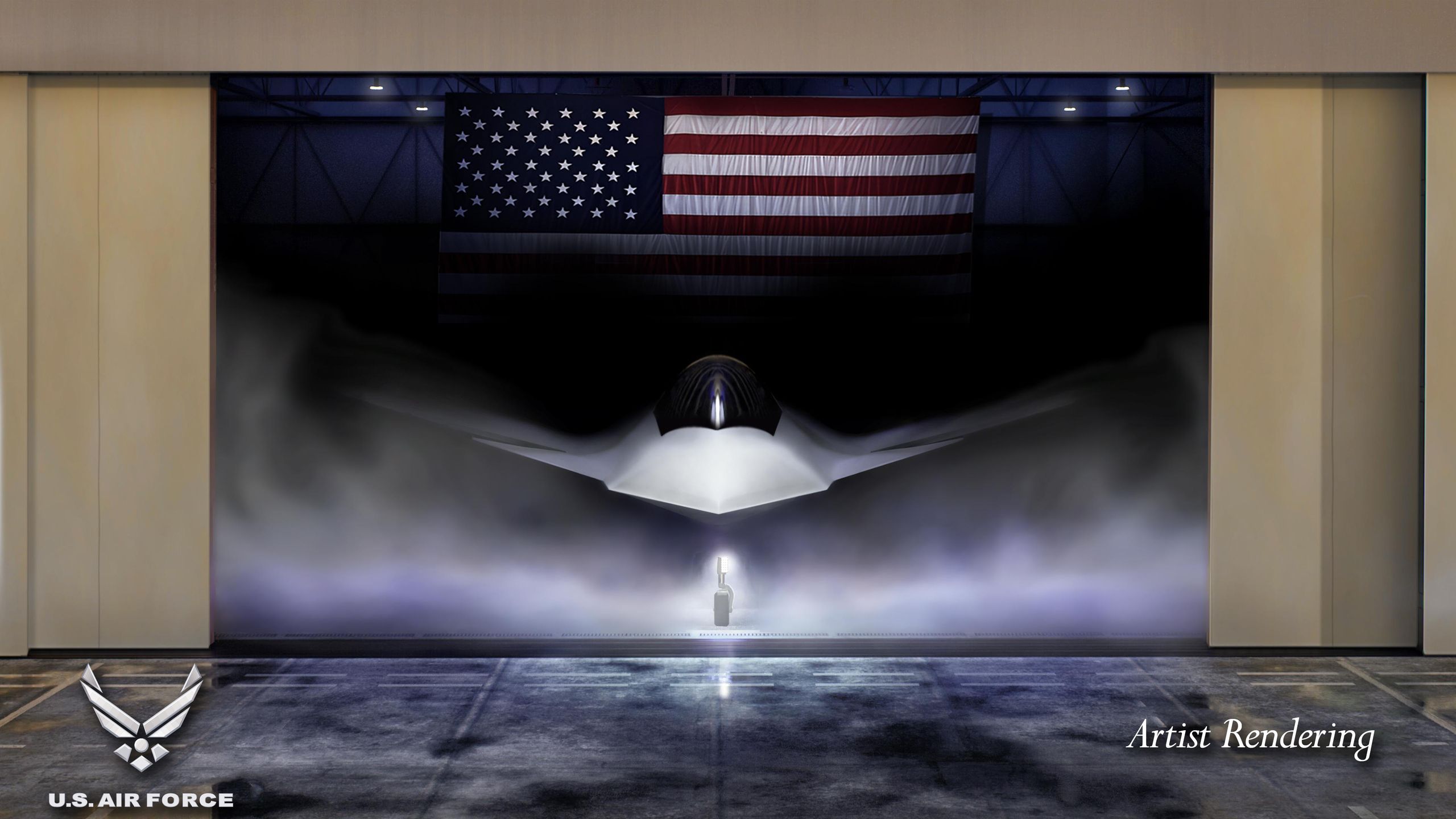
However, over the past 11 months, only two renderings have been released, partially showing the new aircraft – primarily its nose section, cockpit canopy, canard configuration, and a limited view of the wing leading edges:


Now, thanks to a few-second segment at the end of the video on the aforementioned engine, offered under the Next Generation Adaptive Propulsion (NGAP) program, it is possible to glimpse the likely overall aerodynamic configuration of the Boeing F-47, which is intended to succeed the fifth-generation air superiority F-22 Raptor.

What can be inferred from the footage is an expected tailless configuration, without a conventional vertical stabilizer, similar in concept to China’s Shenyang J-50 (also referred to as J-XDS) and Chengdu J-36. In the Chinese designs, flight control is achieved through two pairs of elevons positioned on the outer wing sections, whereas Boeing’s concept appears to feature broader control surfaces occupying nearly half of the trailing edge span.
Like the J-36, the Boeing F-47 seems to incorporate a blended wing body layout. However, rather than a double-delta configuration, it appears closer to a lambda or modified delta design, with sharply swept leading edges and a relatively wide central fuselage section.
The exhaust nozzles of the proposed Next Generation Adaptive Propulsion (NGAP) XA103 engines are shown with a flat, two-dimensional configuration and thrust-vectoring capability, similar to the proven Pratt & Whitney F119 engine used on the F-22 Raptor.
As for the engine itself, the Pratt & Whitney team completed a detailed design review of the program in early 2025 and is now preparing to build a prototype, which will undergo further testing and refinement leading up to a full ground engine test expected in the late 2020s.
The competing design is the XA102 engine offered by GE Aerospace, a subsidiary of General Electric. On January 27, 2025, the United States Air Force signed framework agreements with both contractors, each valued at up to 3.5 billion USD, for the development of the XA102 and XA103, with one of the two engines to be ultimately selected to power the F-47.
Below is the full video referenced above:
Video: RTX
