





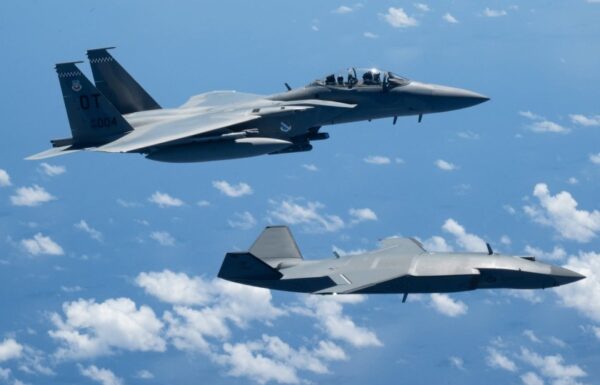












On Monday, June 22, 2026, Italian company Leonardo and Turkish company Baykar Makina announced that, under the initiative named K-SWARM concerning advanced Crewed-UnCrewed Teaming (CUC-T) capabilities, they conducted a series of joint flights of M-346 jet trainer/light combat aircraft and the Bayraktar Kızılelma combat drone.
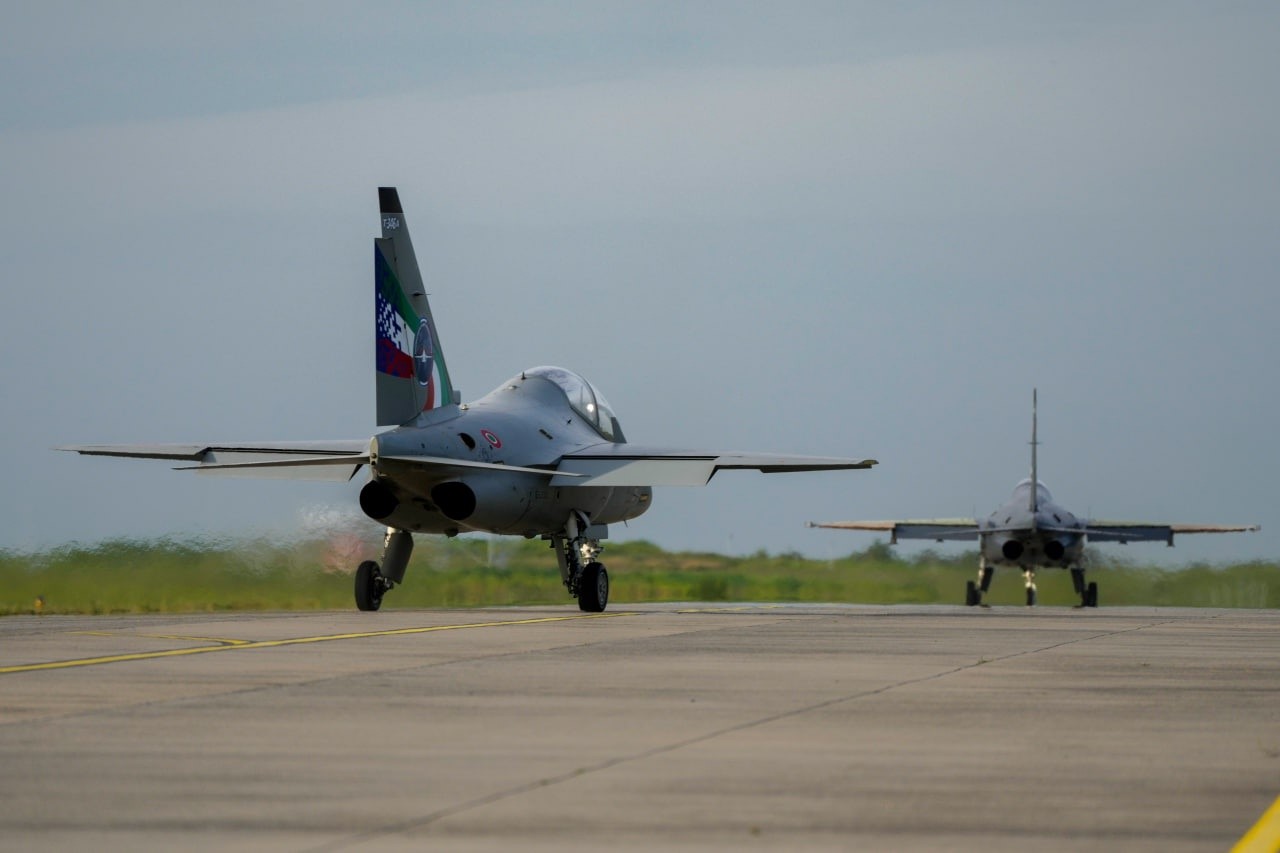 Photos: Leonardo
The live trials enabled the assessment and verification of cooperation and coordination during operations through advanced next-generation algorithms. The transition from simulation to live operations, utilizing a digital engineering approach, represented a key step in demonstrating the program’s advanced solutions and technologies. The capabilities demonstrated during the trials are a significant driver in the development of future combat aviation systems and form the foundation for the evolution of current-generation combat aircraft.
Leonardo and Baykar Makina have taken an important step in the development of CUC-T capabilities and swarm tactics, following the successful completion of the first phase of live tests under the K-SWARM program. The program aims to design and develop interoperability between manned and unmanned aircraft.
Combat teaming is becoming an increasingly critical driver in the development of future aerial systems and an element in the evolution of current-generation fighters. Today’s design of crewed/uncrewed teaming (CUC-T) systems represents one of the fundamental elements of the transformation of military and security tools across all domains. It has significance not only technologically, but also operationally, doctrinally, and industrially. The tests were conducted in May of this year at one of Baykar Makina’s facilities, specifically the Çorlu test and training center in Tekirdağ Province, Turkey. Two M-346 aircraft participated in the flight test campaign, Leonardo’s M-346FA jet trainer/light combat aircraft, while the Italian T-346A advanced trainer served as a chase aircraft, along with the Bayraktar Kızılelma unmanned fighter aircraft.
The test activities comprised a series of missions aimed at evaluating next-generation algorithms, as well as the corresponding tactics and procedures developed by Leonardo at its Avionic and Flight Control Innovation Labs and the PC2LAB (Product Concept and Capabilities Laboratory) in Turin, combined with the M-346 full mission simulator in Venegono, Italy. In parallel, utilizing state-of-the-art software and hardware at Baykar’s facilities, the Turkish partner integrated advanced Smart Fleet Autonomy capabilities with the CUC-T algorithms. The Kızılelma system’s advanced autonomy capabilities significantly simplified the integration process, enabling seamless implementation and rapid deployment.
These were implemented during formation flights of the M-346 with the Kızılelma, supporting the validation of advanced cooperation and coordination between different combat platforms and aerial systems, as the program marked the transition from simulation to live operations.
An advanced radio link data exchange system enabled the synchronization of all shared data between the M-346 and Kızılelma platforms, protected by Leonardo’s GCC tactical platform. This proprietary cyber defense platform protects and monitors systems in real time, enabling effective command and control over planned aerial formations.
During the flight campaign, following autonomous taxiing and takeoff, the Kızılelma autonomously joined the M-346FA using Smart Fleet Autonomy algorithms developed by Baykar’s Hardware-in-the-Loop (HIL) laboratory, enabling the manned aircraft to assume full control over the unmanned aerial vehicle. Using a newly developed, fully integrated onboard avionics system, the M-346 crew commanded various formations, which were autonomously executed by the Kızılelma via a dedicated crewed-uncrewed computer system. Various maneuvers and formations, including position changes, separations, and re-joins, were successfully tested, with the Kızılelma responding precisely to M-346 commands.
The tests conducted at Çorlu were the result of extensive and intensive preparatory work, including by pilots and technicians, conducted jointly over several months by Leonardo and Baykar teams. This extensive work enabled the achievement of the required level of technical systems integration, the development of test scenarios, algorithm validation, and the safe and efficient management and execution of the tests.
The data and analyses gathered played a key role in defining the next steps of the K-SWARM program, which is moving into more complex operations requiring greater situational awareness and the collaborative employment of assets “as one” in pursuit of mission objectives.
The refinement and maturation of AI technologies, algorithms, and CUC-T cooperation procedures will enable unmanned systems to progressively transition from remote piloting to autonomy, in order to reduce pilot workload and increase mission effectiveness while maintaining full control and decision-making capabilities. New tests of increasing complexity and additional features are planned in the coming months.
The first phase of testing demonstrates the robust partnership between Leonardo and Baykar and their respective technological and industrial competencies. It confirms the companies’ competitive advantage in this field and represents a concrete step toward developing key capabilities for modern air operations in multi-domain conditions.
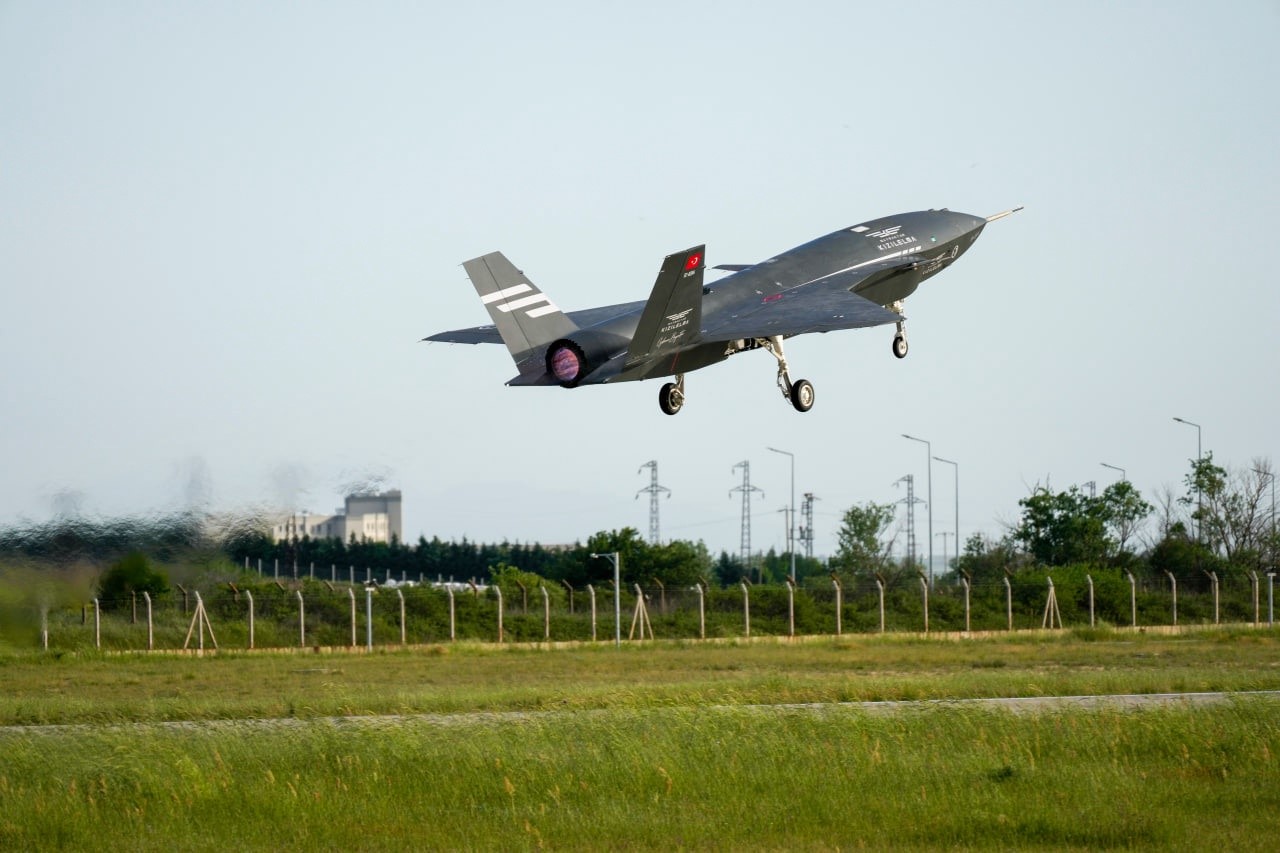
Bayraktar Kızılelma
The Bayraktar Kızılelma jet combat drone was previously known as MİUS (Muharip İnsansız Uçak Sistemi – Turkish for Combat Unmanned Aerial System). The first prototype made its maiden flight on December 3, 2022.
According to manufacturer data, the Bayraktar Kızılelma has a service ceiling of 12,000 m, a maximum take-off weight of 5,987.4 kg, of which 1,500 kg is payload capacity (including 1,000 kg for armament). It measures 14.7 m in length, has a wingspan of 10 m, and a height of 3.3 m. Flight endurance is 5-6 hours.
Three variants of the production drone are envisaged, depending on the powerplant. The Kızılelma-A will be capable of near-supersonic speeds thanks to the Ukrainian Ivchenko-Progress AL-25TLT turbofan engine. The Kızılelma-B will fly at supersonic speeds, powered by the Ukrainian AL-322F engine, and finally the Kızılelma-C will be powered by two AL-322F engines. The future use of indigenous TEI TF-6000 engines has also not been ruled out. The Kızılelma-B will therefore be equipped with an engine producing 2.5 times greater thrust, which significantly differentiates it in terms of technical parameters from the Kızılelma-A. This will enable take-off from the deck of the new amphibious assault ship TCG Anadolu (L-400) without the need for a catapult, using a ski-jump ramp instead.
The drone features autonomous take-off and landing, a reduced radar cross-section (RCS), high maneuverability, line-of-sight (LOS) and beyond-line-of-sight (BLOS) operation, the ability to take off and land from aircraft carriers and other flat-deck aviation vessels, high situational awareness through an AESA radar, and internal weapons bays.
In November 2025, the first tests of aerial target interception and shootdown were conducted.
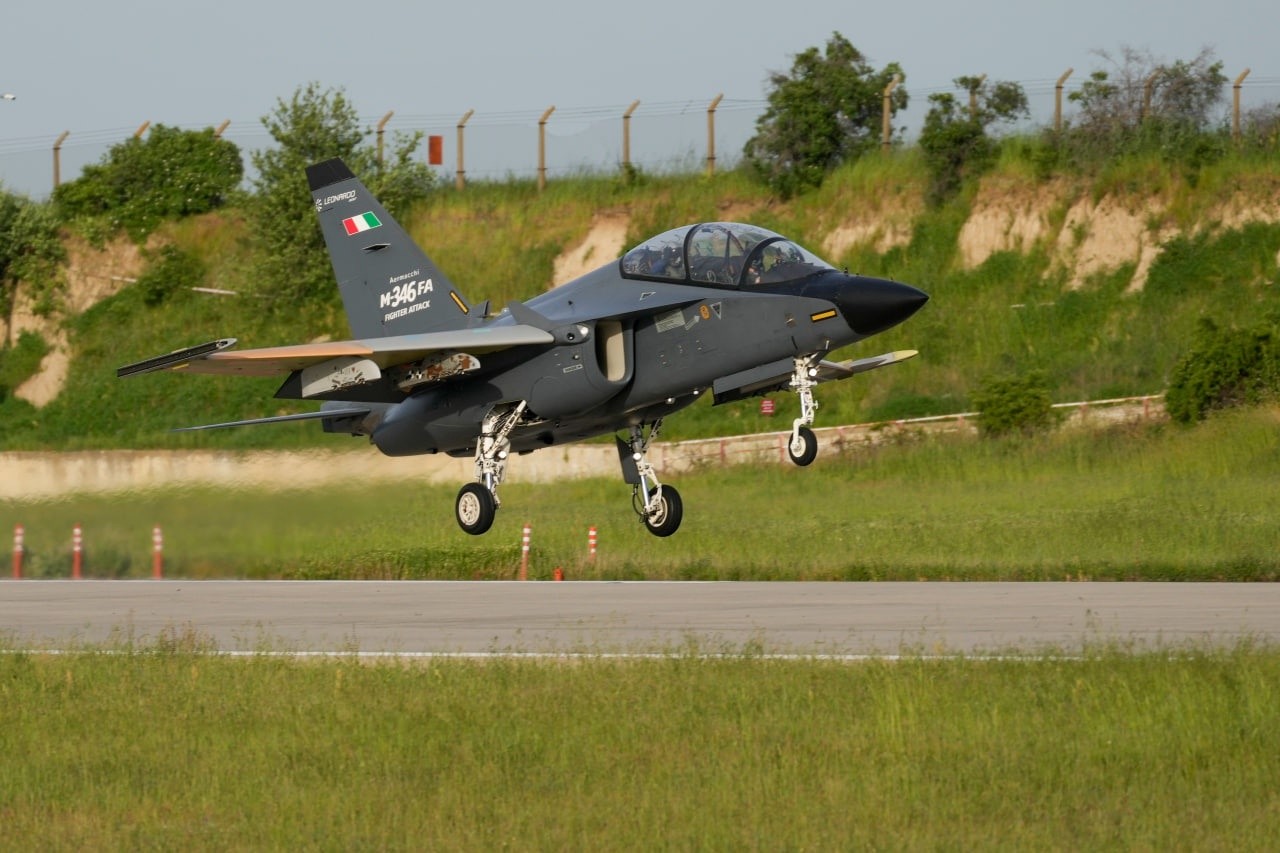
M-346FA
According to Italian company Leonardo, the M-346FA can serve in close air support (CAS) missions, including digital CAS (CAS-D), air policing and self-defense of national airspace, slow-mover interception, forward air control airborne (FAC-A), combat search and rescue (CSAR), interdiction including battlefield air interdiction (BAI), tactical air support for maritime operations (TASMO), and reconnaissance (RECCE) (Leonardo upgrades M-346 Master to Block 20 standard).
The M-346FA made its debut at the Paris Air Show on June 19-25, 2017, as a development of the M-346FT (Fighter Trainer). It received the Grifo-M-346 mechanically scanned multimode radar (a variant of the Grifo-S), operating in several modes including SAR and ISAR (Inverse Synthetic-Aperture Radar), and the Praetorian DASS (Defensive Aids Sub-System) self-protection system.
The M-346FA features seven hardpoints with a combined weapons load of 3,000 kg (at a maximum take-off weight of 9,700 kg), and the manufacturer offers integration with IRIS-T and AIM-9L/X Sidewinder air-to-air missiles, Brimstone air-to-ground missiles, Marte ER anti-ship missiles, Mark 82 Snake Eye unguided bombs, GBU-12 Paveway II, GBU-49 Enhanced Paveway II, Paveway IV, Lizard 2+, and Lizard 4 laser-guided bombs, GBU-3 and Lizard 4 GPS-guided bombs, as well as pods for unguided rockets and cannon.
The crew has at its disposal a Link-16 data exchange link, helmet mounted displays (HMD), reconnaissance, target designation, and electronic warfare systems. The M-346FA also benefits from all the advanced features of the M-346 trainer variant, including the ability to integrate into a live-virtual-constructive (LVC) environment — that is, training combining real and virtual assets. This includes cooperation between a real aircraft in the air and ground-based simulators, incorporating virtual friendly and aggressor forces, thus enabling trainee pilots to train in highly complex tactical scenarios (Leonardo unveils M-346 Block 20 aircraft advanced cockpit).
The aircraft is capable of conducting combat patrols with a full weapons load for 2 hours 40 minutes at distances of up to 185 km from its home base. In the case of reconnaissance operations, with two additional fuel tanks, a reconnaissance pod, and two air-to-air missiles for self-defense, the range increases to 890 km; in both cases, aerial refueling is possible to further extend range and endurance.
🔴#LDO_PR #Leonardo and @BaykarTech set a major milestone for advanced Crewed/UnCrrewed capability development with successful first K-SWARM live trials. https://t.co/WKZtLHugbM pic.twitter.com/uomPsBc46N
— Leonardo (@Leonardo_live) June 22, 2026
See also: