






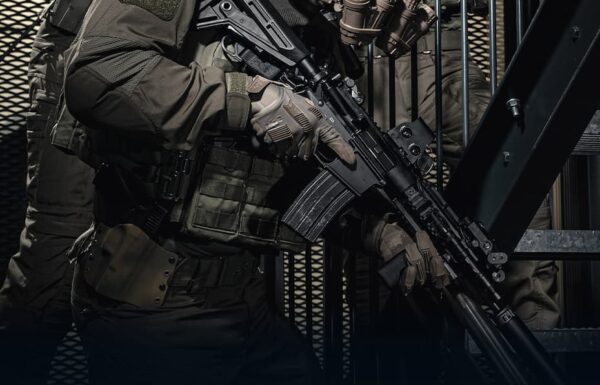








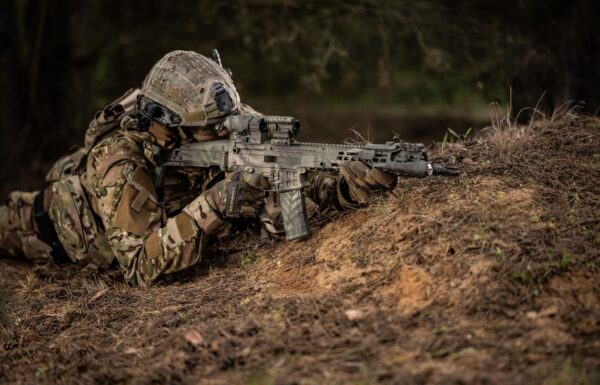






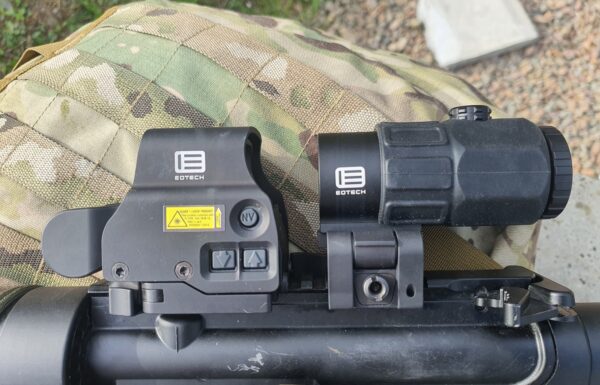


After receiving approval of the technical documentation for the MSBS Grot A3 rifle, Fabryka Broni is ready to begin manufacturing the weapon for the Polish Armed Forces. As Łucznik President Seweryn Figurski told MILMAG, the Radom-based plant is ready to start production of the Grot A3 as early as June 2026, with an annual production volume of 80,000–100,000 units. Importantly, as part of the procedure for introducing Technical Change Cards, technical documentation was agreed for the 5.56 mm MSBS Grot rifle in the A3 version with 16-inch and 14.5-inch barrels, which now makes it possible to order the weapon in both variants. Fabryka Broni is leaving the choice of barrel length for the basic Grot A3 version to the user, although it appears that soldiers prefer the 14.5-inch version.
“Approval of the MSBS Grot A3 documentation confirms that the objectives set for the next stage of development of this design have been achieved. It is the result of the work of designers, technologists, production staff, and close cooperation with military users. We are ready to begin production of the latest version of the rifle and to fulfill future orders for the Polish Armed Forces,” said Seweryn Figurski.
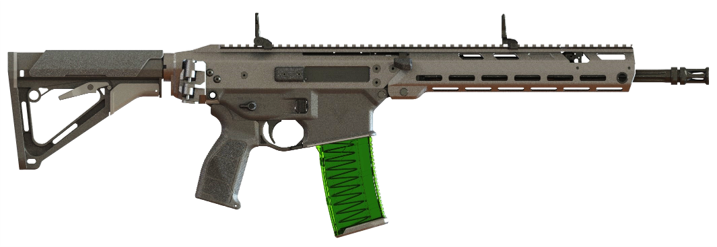 Grot A3 in the version submitted for type testing / Image: Fabryka Broni “Łucznik” – Radom
In the A3 variant, Grot was developed as a result of dialogue between the manufacturer and soldiers, taking into account feedback from the use of earlier versions. At first glance, the Grot A3 stands out with a redesigned stock adapter, allowing AR-15-standard solutions to be fitted, and a barrel shortened to 368 mm, or 14.5 inches. A new, slimmer handguard has also been introduced. As part of the changes, the weapon’s weight has been reduced to around 3.4 kg.
To increase durability, a nitriding process has been proposed for weapon components. Parts finished in this way, such as the bolt carrier, gas block with regulator, barrel mount, charging handle assembly, and trigger mechanism components, will be more resistant to wear of protective coatings and to corrosion. The gas block has also been modified by directing the vent holes toward the front of the rifle, which minimizes fouling of both the weapon itself and the user’s hand. It should also not contribute to overheating of the handguard.
Another change was the removal of one opening in the front section of the upper receiver, which is intended to improve the weapon’s handling characteristics. The orientation of the holes used to mount the rear section of the upper receiver was also reversed. This made it possible to modify the stock adapter, increasing the rigidity of its connection with the upper receiver assembly. The bolt catch lever was redesigned to eliminate the possibility of disassembling the weapon when the moving assembly is locked in the rear position.
The Grot’s regulator was also redesigned by introducing a new latch that prevents accidental removal of this component, as a result of impact or snagging on a sling. In addition, the operating rod with the gas piston was redesigned by integrating the two components and allowing them to be removed forward after the regulator is disassembled. Until now, cleaning the operating rod required unscrewing the entire barrel assembly (GROTowisko 2024: Grot A3 and Other New Developments).
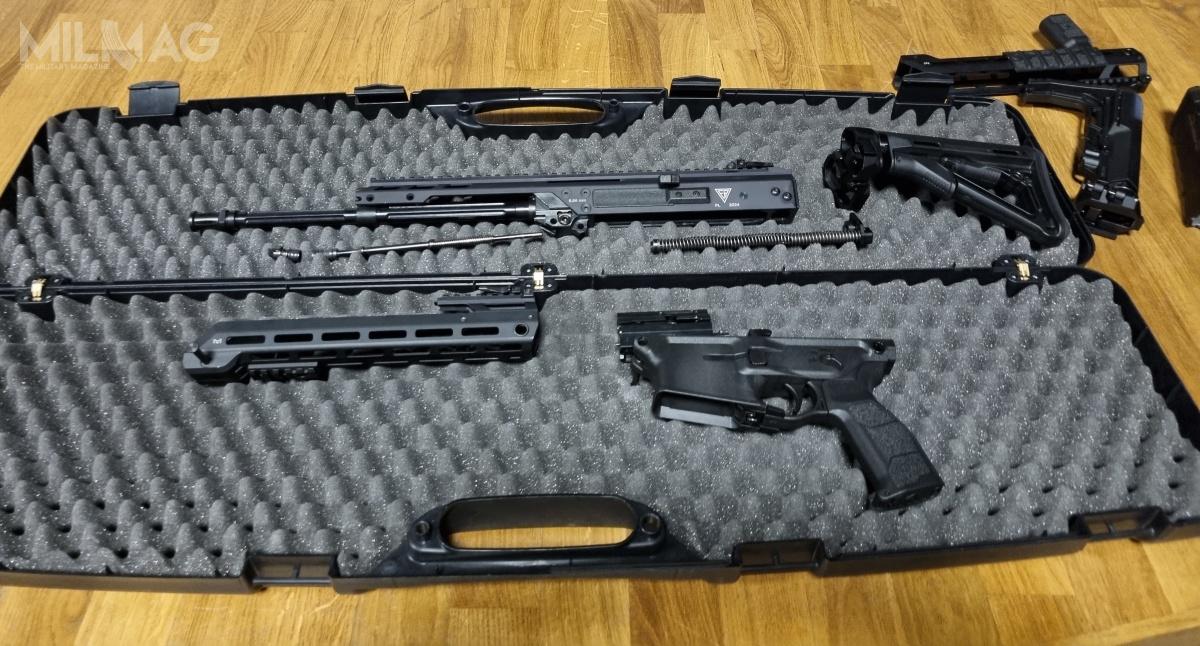 Partially disassembled Grot A3 / Photo: Remigiusz Wilk
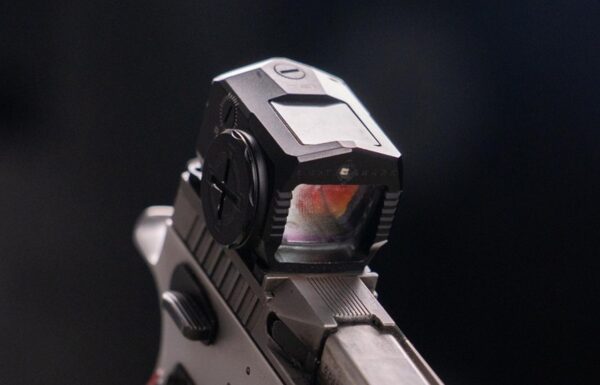
It is worth emphasizing that there is now a prospect of ordering complete weapon sets. MILMAG asked the Territorial Defence Forces about the possibility of Fabryka Broni supplying Grot A3 rifles with optoelectronic sights, sound suppressors, and weapon light, in line with the assumptions of Operation Szpej. In response, we were assured that the Territorial Defence Forces Command is consulting on the possibility of Fabryka Broni completing the rifles with additional equipment.
Per aspera ad astra — in other words, it was not easy
The positive decision by the Head of the Armament Agency, Maj. Gen. Dr. Artur Kuptel, is very good news. The strength and major advantage of the MSBS Grot system is precisely its adaptability to modifications. Thanks to its modular design, the weapon can be easily modified to meet user requirements. From the A0 and A1 variants, which became the Grot’s test platform in the Polish Armed Forces, through the mature A2 variant, to the now-approved A3 version, the Radom-made rifles have been consistently adapted to the requirements and expectations of soldiers.
 Grot rifles in the A2 variant, top, and A3 variant, bottom / Photos: Jakub Link-Lenczowski, MILMAG
However, when looking back at the announcements made in June 2025, there is a sense of disappointment. During last year’s GROTowisko conference, information appeared about the possibility of delivering some of the ordered MSBS Grot rifles in the A3 variant, specifically a batch of more than 20,000 weapons that was to be delivered by the end of May 2026. However, the process of agreeing and approving the technical documentation was extended until June 2026, which made it impossible to implement this option (GROTowisko-25: Grot A3 and MPS Army).
It is worth emphasizing here that Fabryka Broni “Łucznik” – Radom submitted the technical documentation for the Grot A3 to the Armament Agency at the beginning of December 2025, thereby launching the consultation process with Ministry of National Defense institutions required under military procedures.
This is also confirmed by the Armament Agency itself in its response to MILMAG’s questions regarding the Grot A3 certification process: “The Armament Agency assesses the documentation provided by the contractor in terms of technical clarity, the validity of references, the correctness of the prepared documents, and whether they meet the contracting authority’s expectations regarding content, such as technical conditions for the manufacture and acceptance of the weapon, user manuals, and the compliance of the technical documentation with applicable legal interpretations.”
The entire consultation process between Fabryka Broni and the Armament Agency was also consulted with the Territorial Defence Forces, which support the development of the Grot as an expert institution. This was confirmed to MILMAG by the TDF spokesman, who said: “The introduction of changes to the documentation was known to and acceptable to the Territorial Defence Forces Command as an expert institution.”
In May 2026, the Armament Agency confirmed to MILMAG that it had submitted proposed corrections, the acceptance of which would complete the technical documentation preparation process. It also confirmed that the second version of the documentation had been verified. The contracting authority requested the changes. This indicates that the third version of the technical documentation was ultimately approved. Although Fabryka Broni “Łucznik” – Radom submitted the technical documentation back in 2025, the process of changes requested by the Armament Agency took six months.
Finally, there remains the question of the announcements made during the GROTowisko 2025 conference. When MILMAG asked the Territorial Defence Forces in May 2026 about plans for the military to acquire carbines and bullpup weapons, it received the following assurance: “The direction of activities presented during GROTowisko-25 remains unchanged. The time frames cannot be clearly defined and depend on many factors: inclusion of the task in the Technical Modernization Plan, agreement of the technical documentation, and the conduct of the procurement procedure.“