




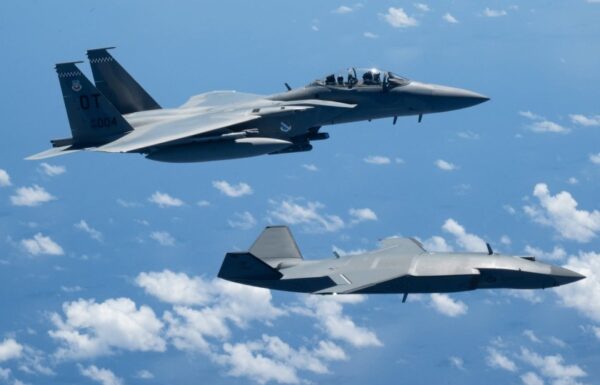











The position of the domestic defense industry on this issue is surprisingly clear. The largest defense companies and industry organizations have publicly supported the mechanism for financing European defense investments, viewing it as an opportunity to accelerate military modernization and expand domestic arms production. A similar assessment is shared by representatives of the armed forces and institutions responsible for procuring equipment for the military.
 Image: European Comission
The most explicit signal came in the form of an open letter addressed to Karol Nawrocki, in which representatives of the defense sector appealed for the signing of legislation introducing the SAFE mechanism in Poland. The authors stressed that the development of domestic technologies, production capabilities, and stable supply chains is one of the fundamental conditions of state sovereignty. In their view, the SAFE instrument could become one of the key tools strengthening Poland’s industrial and technological potential.
The document noted that Poland currently spends more than 4% of its GDP on defense annually, placing it among NATO leaders in terms of defense spending. At the same time, the importance of the domestic defense industry continues to grow, with revenues already reaching tens of billions of zlotys annually. The sector also emphasizes its significant contribution to the economy, both through tax revenues and through job creation and the development of dual-use technologies.
“The SAFE Security Enhancement Financial Instrument for Europe should be seen not as a loan, but as an investment instrument, stimulating the development of both Polish industry and Polish technological expertise,” said Sławomir Kułakowski, President of the Polish Chamber of Manufacturers for National Defence.
The largest companies are in favor
Independently of the letter, the largest companies in the defense sector also issued a joint statement clearly supporting the use of the SAFE mechanism. The document was signed by, among others, Polish Armaments Group, WB Group, ICEYE, TELDAT, Wielton, Ponar Wadowice, as well as companies such as AMZ-Kutno, Lubawa, Transbit, and Radiotechnika (Joint Position of the Polish Defense Industry on the EU’s SAFE Mechanism, WB Group on the SAFE program)
The companies’ joint position mirrors the arguments presented in the letter from the Polish Chamber of Manufacturers for National Defence. As stated in the communiqué:
“The implementation of the SAFE mechanism will mean a radical increase in defense production. This is not only an increase in production capacity within individual companies, but also an impact on the entire extensive network of domestic suppliers and subcontractors. The SAFE mechanism represents a huge opportunity for the Polish defense industry to secure new contracts, both domestic and export-oriented.”
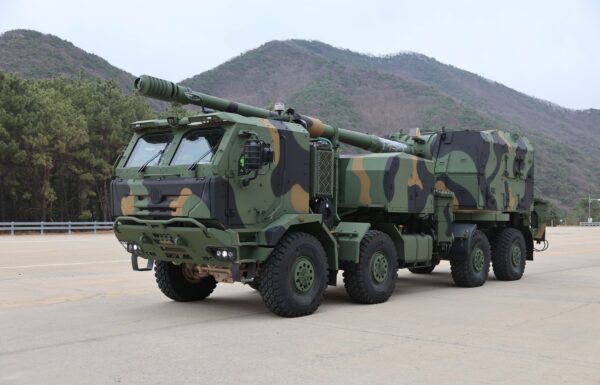
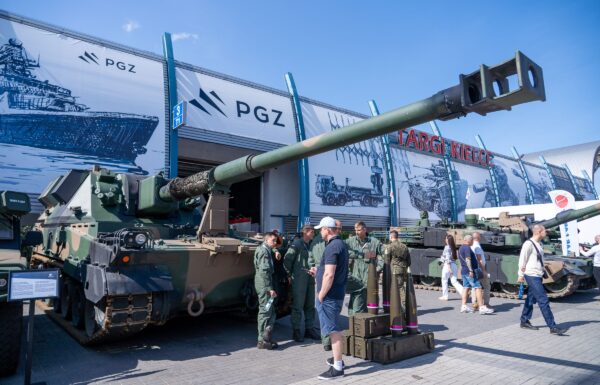
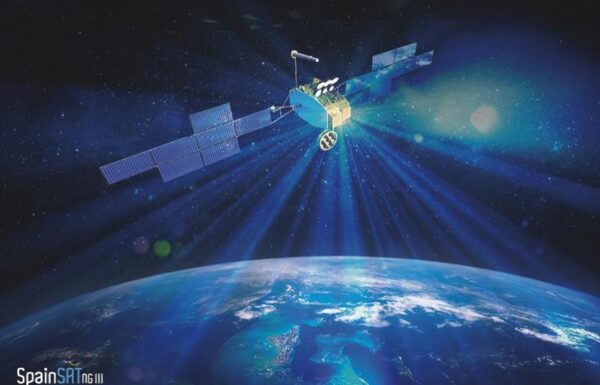
The authors emphasize that European interest in Polish defense products is already growing, and the program could further strengthen this trend. This applies in particular to artillery systems, unmanned systems, communications technologies, and space technologies.
An opportunity for economic development
Industry statements repeatedly highlight the economic argument, which is often overlooked in Poland’s debate on military modernization—especially by lay observers who see the military mainly during parades and pay little attention to how it is financed. Representatives of the sector stress the importance of domestic industry participation in defense procurement programs.
“For Poland, the issue of local content is also crucial. Investments financed through SAFE funds would generate new jobs, not only directly in the defense industry, but across the entire logistics and supply chain ecosystem. They would also generate tax revenues that remain in Poland and return to the national budget.”
In this context, companies point out that the development of defense production has a systemic character. Orders placed with large companies translate into contracts for hundreds of smaller subcontractors – from electronics component manufacturers to transport and logistics companies.
The authors of the statement also emphasize the importance of research and development. By financing new defense projects, SAFE could become a catalyst for the development of domestic technological competencies.
“SAFE represents a unique opportunity for the Polish defense industry and for our security. As stakeholders co-responsible for shaping it, we are acting together to ensure that Poland does not miss this opportunity,” the statement emphasized.
The military is waiting for equipment
A similar position is held by institutions responsible for the modernization of the armed forces. Both the Polish Armed Forces General Staff and the Armament Agency were involved in preparing the Polish list of projects to be financed under SAFE.
From the military’s perspective, the SAFE mechanism is primarily a financial tool enabling the acceleration of modernization programs. Through joint European financing, it becomes possible to launch a larger number of contracts within a shorter timeframe, while simultaneously increasing production in the European defense industry.
Representatives of the Ministry of National Defense have emphasized that the program could help implement projects crucial for the operational capabilities of the armed forces, particularly in areas such as artillery systems, ammunition, unmanned systems, and reconnaissance and satellite technologies.
For the Armament Agency, SAFE also means the possibility of more stable procurement planning. A long-term European financial instrument allows the costs of large defense programs to be spread over time and better synchronized with the development of industrial production capacity.
SAFE therefore represents an opportunity to increase production, create new jobs, and expand exports. Meanwhile, opposition politicians and online commentators portray the program as a threat to sovereignty, often without even a basic understanding of how military modernization has been financed for years. For them, it is simply another political battleground, aimed primarily at harming their opponents. In the meme wars fueled by AI-generated content, the debate about the future direction of the Polish Armed Forces, planned capabilities, and the means of achieving them is almost entirely absent. Yet programs like SAFE, combined with the capabilities of the Polish defense industry, are precisely the tools meant to achieve these goals.
The military already purchases equipment through loans, leasing arrangements, special funds, and bond financing – and no one finds that unusual. SAFE is simply another financial instrument, one that offers the opportunity to develop both the European and Polish defense industries. The problem is that in Poland’s public debate, facts increasingly lose out to political noise. For that reason, the presidential veto poses a significant risk to the future development of both the Polish Armed Forces and the national defense industry. Unfortunately, both sides of the political debate tend to discuss SAFE as if it existed outside a broader context. From a global perspective, SAFE is only one stage in a much longer process. The processes initiated today may shape the future architecture of European security. Acting like an Arab sheikh buying weapons off the shelf with gold works only if one actually is an Arab sheikh. A joint European initiative, however, gives Poland the opportunity for systems developed on the Vistula to become reference solutions across the EU—and for those same Arab sheikhs to come to Poland with their gold to buy them. And that part of the issue, in the political debate, seems to be carefully overlooked.
See also:
- Presidential bill on the Polish Defense Investment Fund
- Poland: Letter from the Defense Sector Trade Union to PGZ regarding SAFE
- Polish Minister of National Defence and EU Commissioner for Defence Visit Mesko
- Polish Ministry of National Defence: SAFE Program, Europe’s Security, and the Development of Defence Capabilities
- Poland: President Karol Nawrocki Announces Proposal for an Alternative to the SAFE Instrument
- Poland: MBF Group on Opportunities Related to the SAFE Instrument
- The Polish Government Reveals How It Will Spend €43.7 Billion from SAFE. Domestic Industry Will Be the Primary Focus
- The SAFE Program (Security Action for Europe) as the Foundation of a New European Defense Architecture and Industrial Sovereignty
- SAN: The First Polish Contract under the SAFE Program
- Poland: National Security Council Meeting – SAFE Among the Topics
- Polish Minister of Defence: SAFE Strengthens Our Country’s Defense and Industrial Potential
- The European Commission approved Poland’s applications for SAFE program