

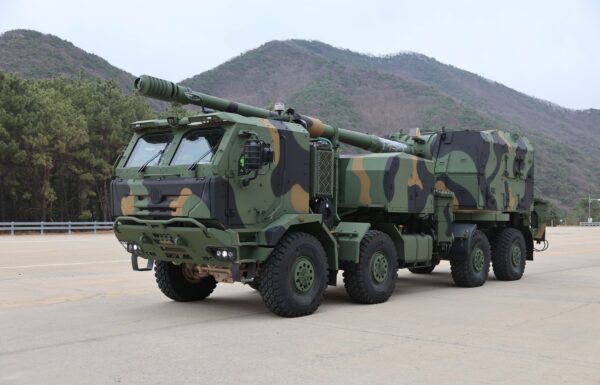
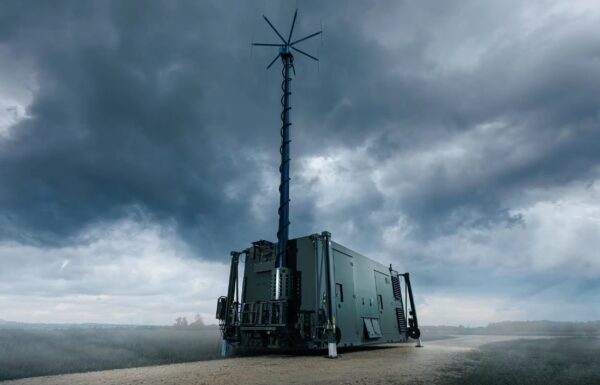




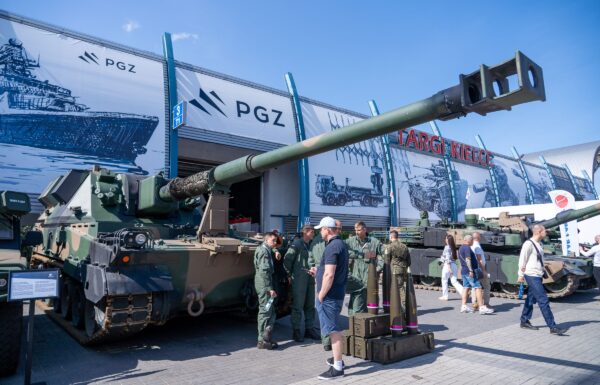














This is not merely a budget adjustment or a one-off procurement program – it is an attempt to reshape the model of cooperation between the state and industry. In the new framework, importance is being given not only to the main state-owned entities, but also to the entire supply chain, including integrators, technology companies, and specialized project consortia. In this context, SAFE is becoming a systemic driver that could genuinely influence the structure of the market.
 Image: MBF Group
SAFE Project – Budget and Accelerated Decision-Making
The presented structure of the program shows that 26% of the funds – 44.2 billion PLN – have been allocated to air defense, missile defense, and counter-drone systems. Additionally, 36% of the budget covers technologies such as satellites, space systems, cyber capabilities, drones, and counter-drone technologies. This clearly indicates that the UAV and C-UAS segment is among the key investment priorities (The Polish Government Reveals How It Will Spend €43.7 Billion from SAFE. Domestic Industry Will Be the Primary Focus).
Equally important is the declared acceleration of investment decisions. The Chief of the General Staff of the Polish Armed Forces, Gen. Wiesław Kukuła, stated directly:
“SAFE creates a financial space that will enable us to carry out additional acquisitions of systems that, under the current financial arrangements, we had scheduled well beyond 2030.”
This statement is strategically significant – we are not talking about plans postponed for a decade, but rather about the potential shortening of the implementation cycle. In practice, this means the possibility of moving more quickly from the demonstrator and prototype phase to operational pilot programs and initial deployments.
SAFE as a Program for Thousands of Companies – Not Only the Largest Ones
One of the most important elements of the government’s messaging is the scale of the program’s impact on the entire industrial ecosystem. Official communications state:
“Nearly 12,000 companies cooperating with the Polish defense industry will benefit from the SAFE program.” (Chancellery of the Prime Minister / Prime Minister of Poland)
“These companies operate in all voivodeships and in almost every county in Poland.” (Chancellery of the Prime Minister / Prime Minister of Poland)
“Nearly 12,000 partners cooperating with the PGZ Group will be able to benefit from the program.” (Polska Zbrojna)
This means that SAFE is not a program limited to a few major capital groups, but rather a potential stream of orders encompassing a broad ecosystem of suppliers, integrators, and subcontractors. In practice, the increased demand could include component manufacturers, software companies, research and development entities, and specialized technology consortia.
What Does This Mean in Practice?
If the government’s declarations translate into actual procurement procedures, SAFE could become one of the largest mechanisms in recent years for stimulating Poland’s defense supply chain. For companies that already possess ready technological solutions and operate within consortium-based structures, this may result in a potential increase in requests for proposals, pilot programs, and demonstration projects.
Consortium Established Before SAFE – A Time Advantage
In this context, it is worth emphasizing that the Iryda Plus and ARES projects were not created in response to the announcement of the SAFE program. The industrial and technological consortium agreement was signed during the MSPO 2025 defense exhibition in Kielce, that is before the detailed assumptions of the program were announced.
Since September 2025, the projects have been developed within a structured framework, including a clear division of competencies, a technology partner (Squadron ASE Group), an expert base (Polish Industrial Lobby), and a clearly defined commercialization model. In the defense sector, a time advantage often translates into a shorter path to operational pilot programs and demonstrators ready for testing in near-real conditions.
For projects such as Iryda Plus and ARES, this means they are positioned exactly within the technology segments identified as priorities. Moreover, if SAFE indeed accelerates the deployment of counter-drone systems and air technologies, projects already in the prototype phase may gain a time advantage over initiatives that are only just beginning.
Iryda Plus – A Project in the C-UAS Segment
IRYDA Plus is being developed as an unmanned C-UAS platform with a modular architecture, capable of integration with detection, command, and threat neutralization systems. The project assumes both military and dual-use applications, including the protection of critical infrastructure and strategic facilities. Such a model increases commercialization flexibility as well as potential funding sources, ranging from military procurement to infrastructure projects and export opportunities.
The presentation of the system model during Drone World Expo 2026 in Warsaw (March 3–5) marks the transition from the conceptual phase to a tangible demonstration of the technology. In the context of accelerated procurement decisions, the prototype stage gains particular importance.
ARES – Operational and Training Support
ARES is being developed as a training and simulation system designed to support training and analytical processes. In an operational environment saturated with unmanned systems, building competencies becomes just as important as acquiring equipment.
Training and simulation systems often have shorter implementation cycles than combat platforms, which may facilitate faster deployment within modernization programs. In this sense, ARES could serve as a complementary and relatively quicker-to-implement addition to hardware solutions.
Industrial Cooperation and Internationalization
An important element strengthening operational credibility is cooperation with PCO, a company wholly owned by the Polish Armaments Group (PGZ). Such relationships demonstrate that a model of cooperation between large state-owned entities and smaller, specialized consortia is not only possible but also functional.
In addition, a letter of intent on strategic technological cooperation has been signed with Rohde & Schwarz Polska Sp. z o.o. The cooperation includes potential integration of solutions in the areas of secure tactical communications, radio frequency spectrum monitoring, electromagnetic compatibility, and testing and measurement technologies, strengthening the technological foundation of the projects (MBF Group and Rohde & Schwarz Polska to Pursue Joint Technology Projects).
At the same time, talks are ongoing with a renowned partner from the United States, and cooperation with domestic and foreign entities from allied countries is being developed, as reported in ESPI stock exchange disclosures (Warsaw University of Technology, Lviv Polytechnic, AutoBOX Innovations, Franklin, Birlesik Defence and Security Systems Ltd., Shark Aviation Danışmanlık Sanayi, and many others). Such a configuration increases export potential and fits into a long-term strategy of building internationally oriented projects.
SAFE and the Perspective of Public Companies
From the perspective of the capital market, SAFE may become a factor increasing the likelihood of commercializing projects already under development today. For a publicly listed company, operating under a regime of reporting obligations, regulatory oversight, and financial transparency, cooperation with state institutions requires high standards of corporate governance and transparency. Being listed on the public market does not determine the success of a project, but in an environment of public and consortium-based financing, it may increase organizational credibility and the ability to scale a project over a multi-year horizon.
SAFE is not a guarantee of success for any company. However, for the first time in years, official government communications explicitly state that thousands of companies across the country are expected to benefit from the program. If this mechanism begins to materialize in the form of actual procurement contracts and pilot programs, mature technological projects developed within consortium frameworks may find themselves in a natural stream of funding.
In this sense, SAFE may become not only a procurement program but also an impulse for a lasting transformation of the Polish defense-industrial ecosystem, one in which there is space both for large state-owned entities and for smaller, specialized technology companies operating within a transparent, regulated, and market-based framework.
Program SAFE może stać się realnym impulsem rozwojowym dla projektów MBF Group – w tym IRYDA Plus i ARES. To blisko 200 mld zł na obronność i technologie przyszłości https://t.co/tZRjDKpibW
— MBF Group SA (@MBF_Group) March 2, 2026
IRYDA Plus (C-UAS) i ARES (system szkoleniowo-symulacyjny) wpisują się w priorytety SAFE: drony, systemy antydronowe i nowoczesne technologie. Przyspieszenie decyzji zakupowych może zwiększyć znaczenie projektów będących już w fazie prototypowej.
— MBF Group SA (@MBF_Group) March 2, 2026
SAFE to 150 mld € europejskiego instrumentu pożyczkowego na obronność. Polska – największy beneficjent – ma otrzymać ponad 43 mld €. Mechanizm zakłada 10 lat karencji i 45 lat spłaty, co tworzy nową przestrzeń finansową dla przyspieszenia zakupów już przed 2030 r.
— MBF Group SA (@MBF_Group) February 27, 2026
Na obronę przeciwlotniczą, przeciwrakietową i systemy antydronowe przewidziano 26% budżetu – ok. 44,2 mld zł. To jeden z największych w Europie programów inwestycji w technologie dronowe i antydronowe. 🇵🇱#SAFE #TarczaWschód #C_UAS #drony #obronność #IRYDAPlus pic.twitter.com/ur3Qj2YVUU
— MBF Group SA (@MBF_Group) February 27, 2026