























On Tuesday, June 16, 2026, the second day of the 29th edition of Eurosatory 2026 – the international defense industry trade show organized by Coges Events, which took place June 15-19 of this year in Paris-Nord Villepinte near Paris – Ukrainian company DKBB Luch and European consortium MBDA announced the signing of a Memorandum of Understanding (MoU) under which they will jointly develop the Neptun 2 next-generation cruise missile.
 Photo: MBDA
As announced, this further cooperation with the Ukrainian company in the field of deep strike capabilities underscores MBDA’s contribution to supporting Ukraine.
The agreement will focus on the further development of the Neptun cruise missile. DKBB Luch and MBDA will pursue breakthrough innovations to develop long-range capabilities for the Neptun 2 missile (stylized as NEPTUNE2 – ed.), while advancing strategic defense cooperation with Ukraine.
“As the European leader in complex weapon systems, MBDA has the technologies, expertise and cross-border partnerships to deliver European-designed deep strike systems and technologies across partner nations, enabling our armed forces to defend our values and freedoms,” says the official MBDA announcement.
It was emphasized that DKBB Luch possesses specialized knowledge, skills, and experience in the design, development, integration, and production of complex weapon systems.
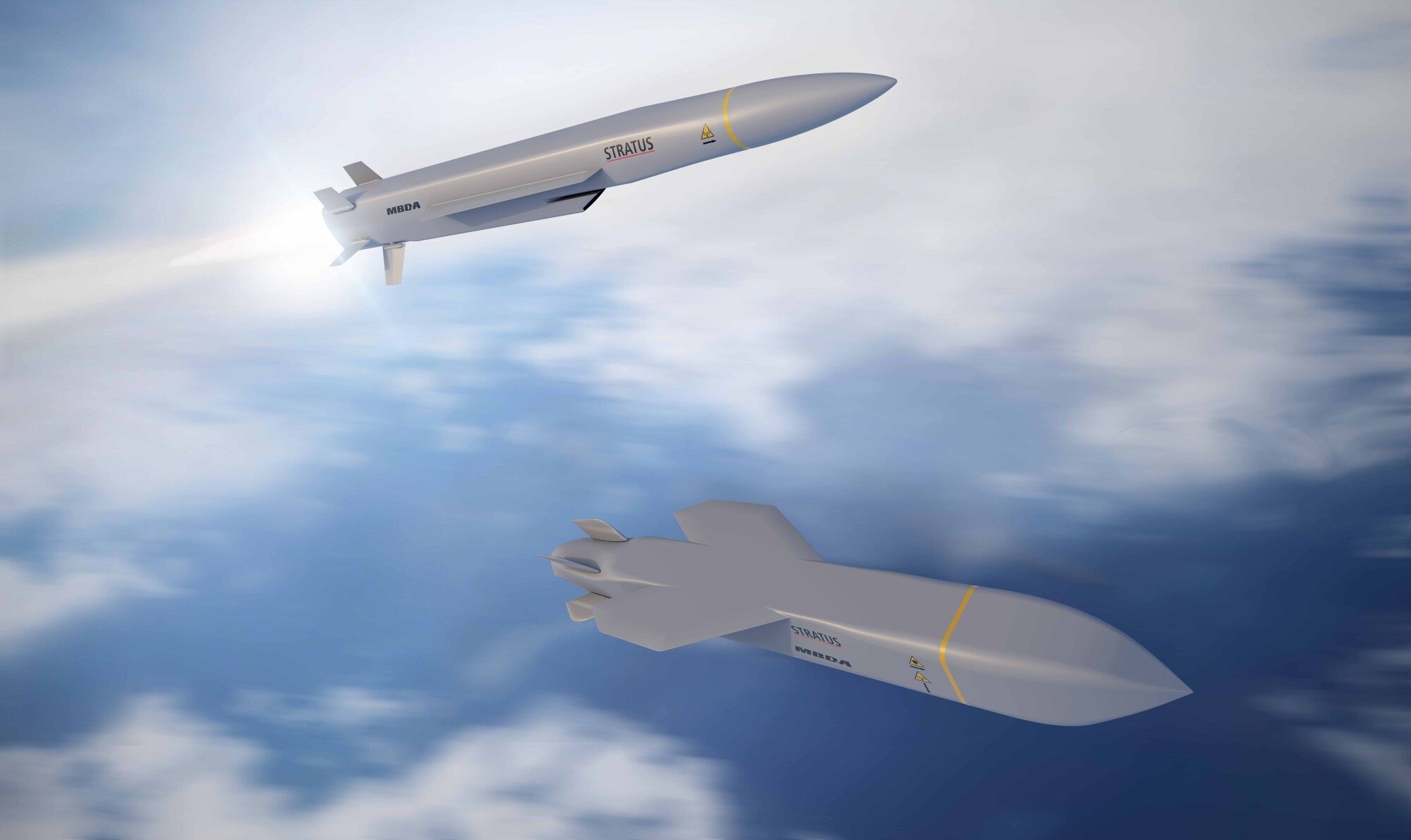 Top: STRATUS RS, bottom: STRATUS LO / Image: MBDA
Analysis
Although the details are not known, MBDA’s contribution to the cooperation with the Ukrainians may be based on the SPEAR 5 cruise missile project, which was transformed into the STRATUS program, previously known as FC/ASW (Future Cruise/Anti-Ship Weapon) or alternatively FMAN/FMC (Le futur missile antinavire/futur missile de croisière), which France, the United Kingdom, and Italy have decided to procure. The system is being developed in two variants: STRATUS LO (Low Observable), previously designated TP15, and STRATUS RS (Rapid Strike), previously known as RJ10.
In the previous decade, DKBB Luch developed the RK-360MC Neptun anti-ship system with the RK-360A missile, with a range of 280 km, which entered service on March 15, 2021, and made its combat debut on April 14, 2022, sinking the Russian cruiser RFS Moskva. Partners in the program included companies belonging to the Ukrainian Defense Industry JSC (UDI; formerly UkrOboronProm) state conglomerate: Pavlohrad Chemical Plant, Orion-Navigation, Impuls, and Visar; the CKB Arsenal company belonging to the State Space Agency of Ukraine; and private sector companies: Radioniks, Telekart-Pribor, UkrInnMash, Ukranian Armor Technology, Motor Sich, and AvtoKrAZ.
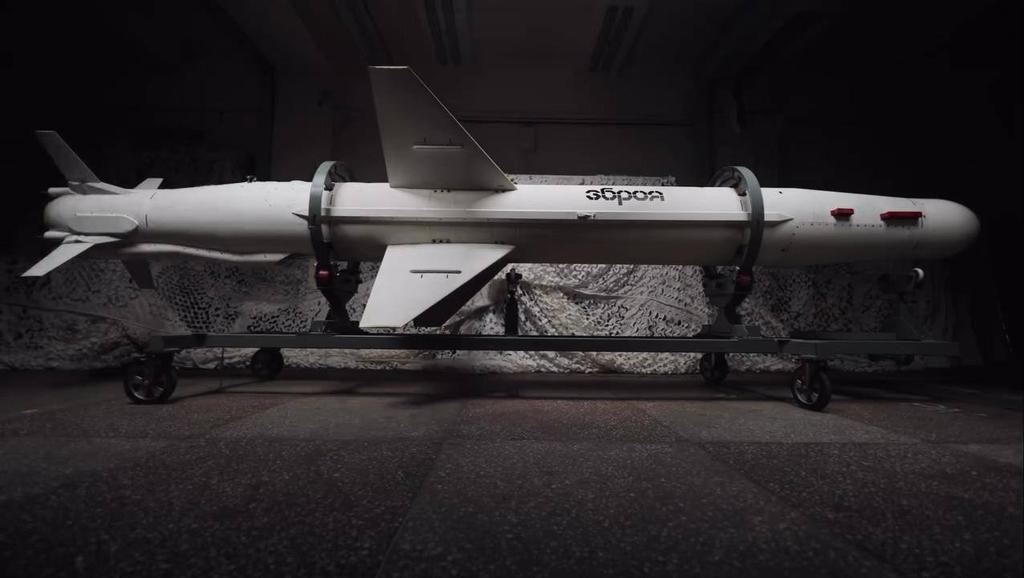 Neptun-MD / Photo: Zbroja
During the course of the war, an improved variant was developed – the Neptun-MD (also known as Long Neptun or Dovhyi Neptun), also intended for striking land targets at ranges of up to 1,000 km. Its combat debut officially took place on June 21, 2024, though the testing phase was completed in March 2025, with the first reports emerging in November 2023. Based on its appearance, which was only revealed on August 25, 2025, it is a new design compared to the RK-360A.
However, the cruise missile with the longest declared range (3,000 km) is the FP-5 Flamingo, developed by private entities Fire Point and Milanion Group Ltd.
