

















On Friday, September 18, 2026, Polish Prime Minister Donald Tusk took part in the first summit of the Carpathian Integration Initiative, held in Ukraine with the participation of eight leaders from countries in the region.
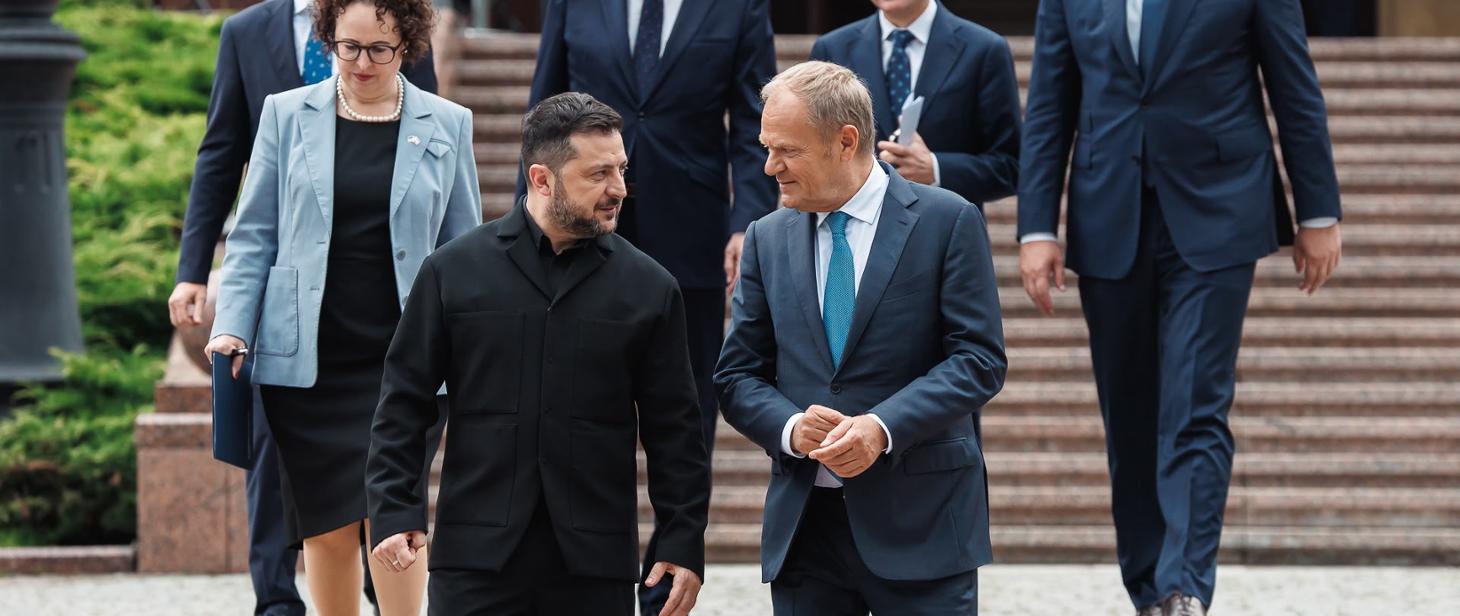 Photo: Chancellery Of The President Of Poland
„We are here to demonstrate our solidarity with Ukraine. This solidarity, both at the regional and European levels, is particularly important today. The Russian threat is a threat to all of us, not only to Ukraine,” Prime Minister Donald Tusk said.
In the face of Russian aggression, Poland and the countries of the region must be prepared for various scenarios and jointly strengthen their security. The head of government also announced that Poland had joined the countries participating in the Anti-Ballistic Missile Defense Coalition. Referring to issues that divide Poles and Ukrainians, the Prime Minister stressed that the truth is always better than a lie, even when it is very painful. Mutual understanding, he added, is the foundation of good relations between the two nations.
Solidarity with Ukraine is in our common interest
„Today, it is Ukraine that is facing Russian aggression. However, we must be prepared for other possible developments. Poland and other countries must be ready for various scenarios. Recent events show that attacks are increasingly being concentrated near the Polish border, which is worrying news, and this is why we will act cautiously,” Prime Minister Donald Tusk said.
The solidarity and cooperation of the countries in the region, as well as the joint presence of their leaders in Ukraine, are of particular importance – both in supporting Ukraine in its fight and in ensuring regional security.
„Against all negative trends, I will always support Ukraine in its fight against Russian aggression, because I am deeply convinced that Ukraine’s sovereignty and security also mean Poland’s sovereignty and security,” the Prime Minister declared.
Russia is carrying out intensive attacks against Ukraine, targeting, among other things, energy infrastructure and Ukrainian industry. According to the head of government, the war of attrition against the Ukrainian economy is entering a decisive phase.
For the time being, the Prime Minister has no doubts that the United States will stand with us in the face of threats such as escalation by Russia.
Mutual understanding is most important
During the summit of the Carpathian Integration Initiative held in Ukraine, Prime Minister Donald Tusk also met with President Volodymyr Zelenskyy to discuss the most important issues in bilateral relations, including Poland’s participation in the Anti-Ballistic Missile Defense Coalition. The leaders agreed on the forms and framework of this cooperation.
„As of today, Poland is part of this major project. (…) In the future – perhaps not today, but certainly tomorrow – this will mean much safer European skies, and therefore also safer Polish skies,” Donald Tusk said.
The Anti-Ballistic Missile Defense Coalition is a group of countries and companies that will work together to provide protection against ballistic missiles. This means closer cooperation in the development of new defense technologies and strengthening the security of Poland and the continent as a whole.
The Prime Minister also addressed issues that divide the two nations.
„I am convinced that we can work toward a future for Poland and Ukraine with the understanding that the truth is always better than a lie, even when it is very painful,” the head of government said.
Volodymyr Zelenskyy stressed that the two countries are strong partners and are able to discuss sensitive issues openly.
„We are friends, and Russia is the enemy. If we begin any kind of dialogue based on the same shared understanding, then I think we will be able to resolve everything,” the Ukrainian president said.
The Prime Minister thanked Ukraine for its willingness to try to understand Polish sensitivities.
Jesteśmy w Koalicji Antybalistycznej. pic.twitter.com/prtqKznHnB
— Donald Tusk (@donaldtusk) September 18, 2026
Cooperation supporting Ukraine’s integration with the EU
The Carpathian Integration Initiative was launched in 2025. It brings together eight countries (Austria, Czechia, Poland, Romania, Serbia, Slovakia, Ukraine, and Hungary) and covers 43 administrative regions. In Poland, these include the Podkarpackie, Małopolskie, and Śląskie voivodeships.
The Carpathian format may help support Ukraine on its path toward membership in the European Union.
„Poland’s experience is clear – interregional cooperation is the best way to implement European rules and cooperation,” Donald Tusk said.
The Prime Minister announced that, as a strong supporter of further enlargement of the European Union, he would treat the initiative very seriously.
The summit involving national leaders also launches a forum bringing together representatives of business, local governments, and civil society organizations from participating countries.
Anti-Ballistic Missile Defense Coalition
It should be recalled that on July 13 of this year, during a summit in Paris, the establishment of the European Anti-Ballistic Missile Defense Coalition was announced, at that time without Poland’s participation, while France announced that it would grant Ukraine licenses to produce key weapon systems and sell Dassault Rafale aircraft.
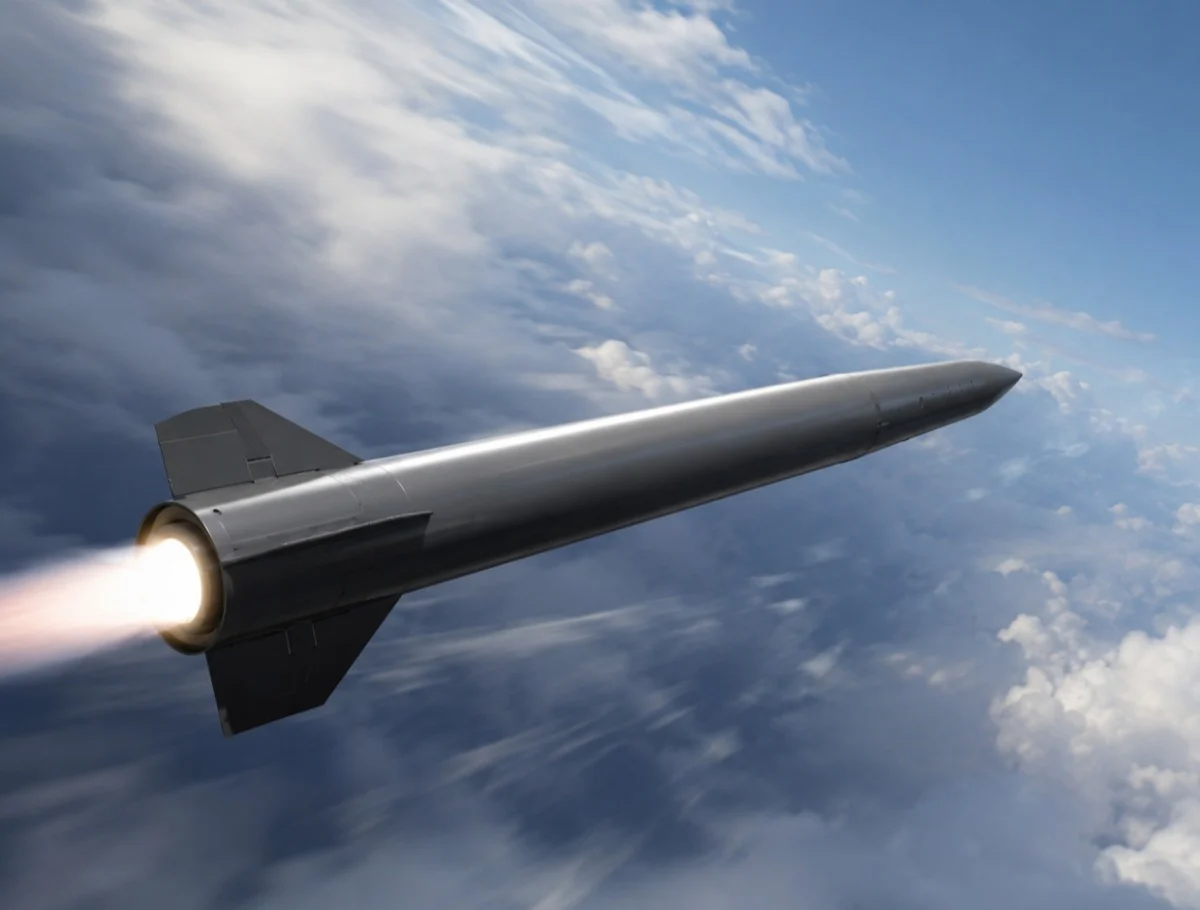
The Integrated Anti-Ballistic Missile Coalition includes Denmark, France, Germany, Italy, the Netherlands, Norway, Spain, Sweden, Ukraine, and the United Kingdom. Its objective is to develop the architecture of a comprehensive pan-European missile defense system based on industrial cooperation and technology transfer. It is intended to complement existing missile defense systems, including sovereign European solutions that have already been acquired or are planned for acquisition by participating countries.
The Coalition members intend to establish common operational requirements, joint technical working groups, clear governance mechanisms, and a roadmap leading to the development of initial operational capabilities. The participating countries will support joint research and development activities under the project, including identifying appropriate financing opportunities and promoting improved data and information sharing. At the same time, the Coalition remains open to additional interested countries.
In parallel, European companies Thales of France, Airbus Defence and Space, Destinus of the Netherlands, MBDA Deutschland of Germany, and Safran Electronics & Defense of France established the Bliksem EXO consortium to jointly develop the architecture of a top-tier missile defense system, including an exoatmospheric interceptor designed to counter medium-range and intermediate-range ballistic missiles.
Under the Bliksem EXO consortium, the participating companies will develop Europe’s first sovereign upper-tier missile defense system, designed for full interoperability with NATO Integrated Air and Missile Defence and the European Sky Shield Initiative.
Earlier, in April this year, Ukraine announced the Freyja missile defense system project. Ukraine’s contribution to the system is expected to include the FP-7.x interceptor developed by Fire Point, NATO STANAG 5516 Link 16 data exchange protocols and ASTERIX data exchange protocols, a Fire Distribution Center (FDC) developed by Norway’s Kongsberg Defence & Aerospace, and optional radar systems such as the Giraffe 8A/4A from Sweden’s Saab Defence and Security and the Ground Master GF300/400 from France’s Thales as surveillance radars, as well as the GFTR-2100/48 from Denmark’s Weibel Scientific A/S or Kronos Land from Italy’s Leonardo as tracking radars.
The aim of the Freyja project is to create a unified air and missile defense system focused on intercepting ballistic missiles and independent of any single component manufacturer. In Paris, it was declared that the system would be developed within 12 months.
What about Polish industry?
Following the establishment of the Ballistic Missile Defense Coalition in July, Polish industry expressed interest in the initiative, particularly after Prime Minister Donald Tusk stated at the time that Poland’s participation would require the involvement of domestic industry.
As early as July 16, the privately owned Niewiadów Polska Grupa Militarna offered its solid-propellant technologies, base-bleed units for long-range ammunition, proprietary warheads, and its industrial research and production base.
On August 13, Polish Armaments Group, with the participation of the Polish Ministry of National Defense and the Ministry of State Assets, organized a meeting at its headquarters bringing together representatives of the state administration, PGZ companies, private enterprises, universities, and research institutes. The meeting focused on consolidating knowledge of existing capabilities and laying the groundwork for the creation of an industrial and scientific team that would serve as the government’s partner in the field of ballistic missile defense.
The cooperation is intended to result in the establishment of a permanent industrial and scientific team that will act as a joint partner for the government and the Polish Ministry of National Defense. The team is expected to develop a common position for Polish industry and determine what capabilities Poland could contribute to the European ballistic missile defense project.
The work will include:
- preparing a detailed map of the capabilities of the public and private defense industry, universities, and research institutes;
- identifying mature technologies and solutions that could be incorporated into the European system;
- identifying areas requiring additional capabilities or further research and development;
- defining the principles of partnership and the division of roles among participants;
- assessing the potential for developing new, jointly created products in the field of ballistic missile defense.
The list of entities participating in the work remains open and will be expanded to include additional partners possessing relevant capabilities.
