


























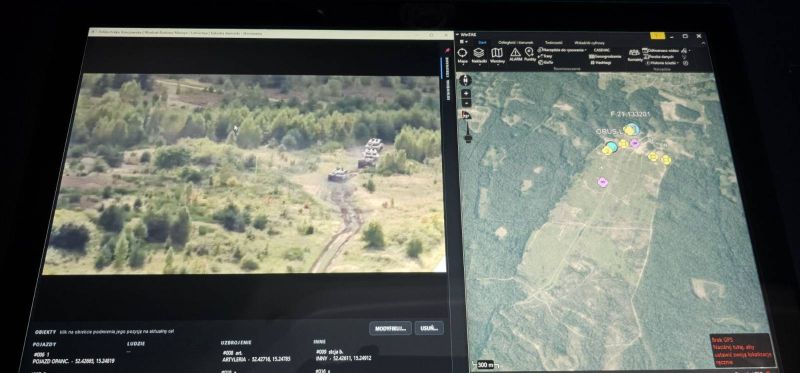
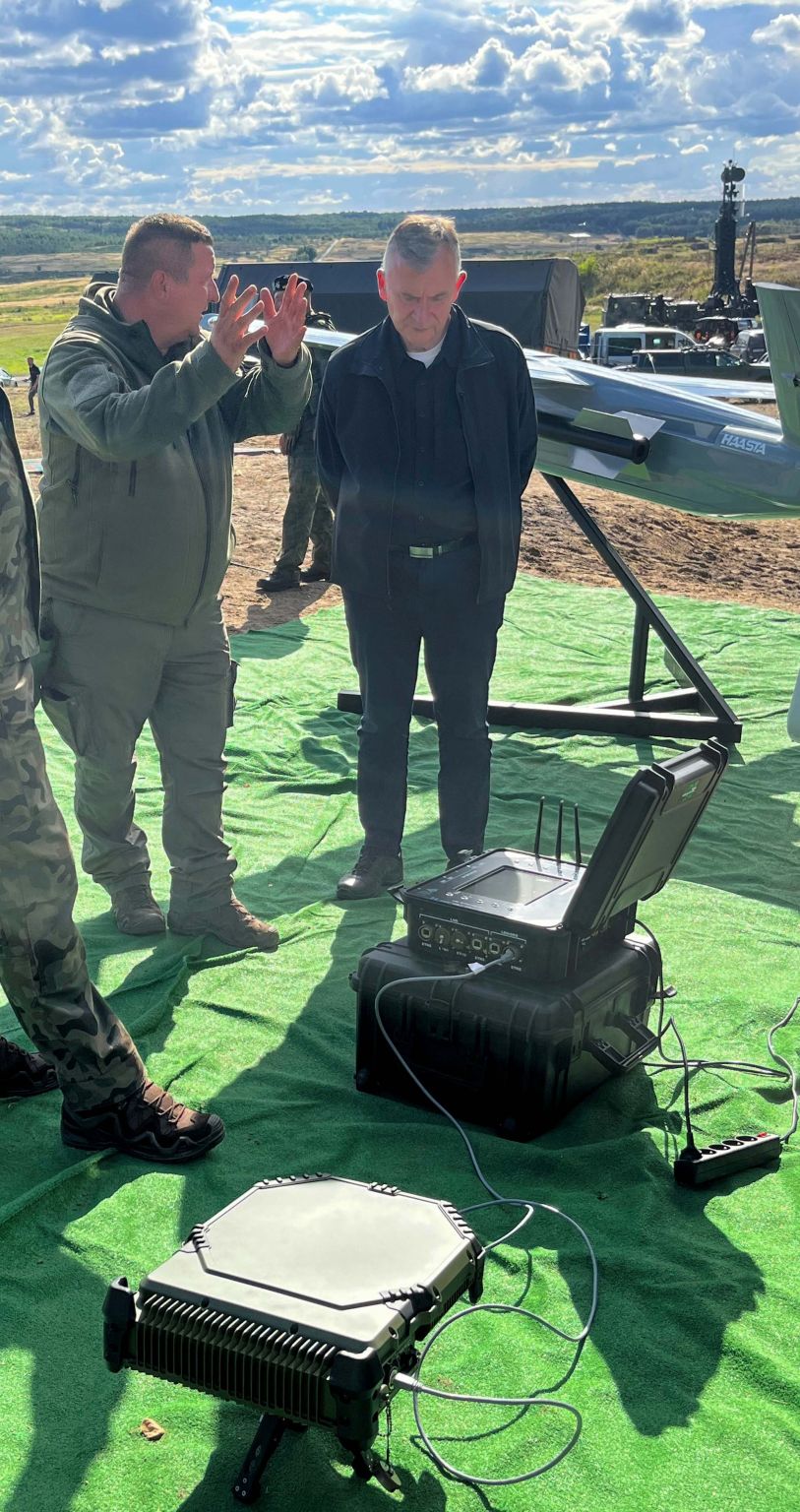
On Friday, September 25, 2026, Wojskowe Zakłady Łączności Nr 1 (WZŁ-1) in Zegrze, part of the Polish Armaments Group (PGZ), announced on LinkedIn that during Exercise Dzielny Bóbr-26 it had conducted combat utility trials of the BASIA passive aerostat-based information and analysis system demonstrator.
Photos: WZŁ-1
“Representatives of the consortium, together with a delegation from Wojskowe Zakłady Łączności Nr 1, took part in combat utility trials of the BASIA system demonstrator. The trials were held at the Land Forces Training Center in Wędrzyn as part of the Dzielny Bóbr 2026 field exercise. The BASIA system is intended to complement the capabilities to be provided by the Barbara reconnaissance system.
For WZŁ-1, the exercise was also an opportunity to demonstrate the capabilities of the Tactical Radio Integrator (TIR) and the LEO OneWeb Intellian OW7MP Manpack satellite terminal as communications links to a higher-level command post or cooperating units. The Tactical Radio Integrator and the Intellian OW7MP satellite terminal are also intended to integrate BASIA ground control stations (GCS) deployed at different locations into a single system.”
Wojskowe Zakłady Łączności Nr 1 via LinkedIn
The BASIA system was developed by the KEZO Research Center of the Polish Academy of Sciences in cooperation with industry and WZŁ-1. It was first demonstrated on March 12 this year.
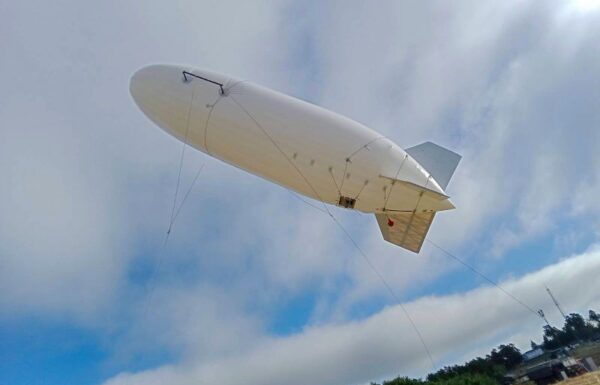
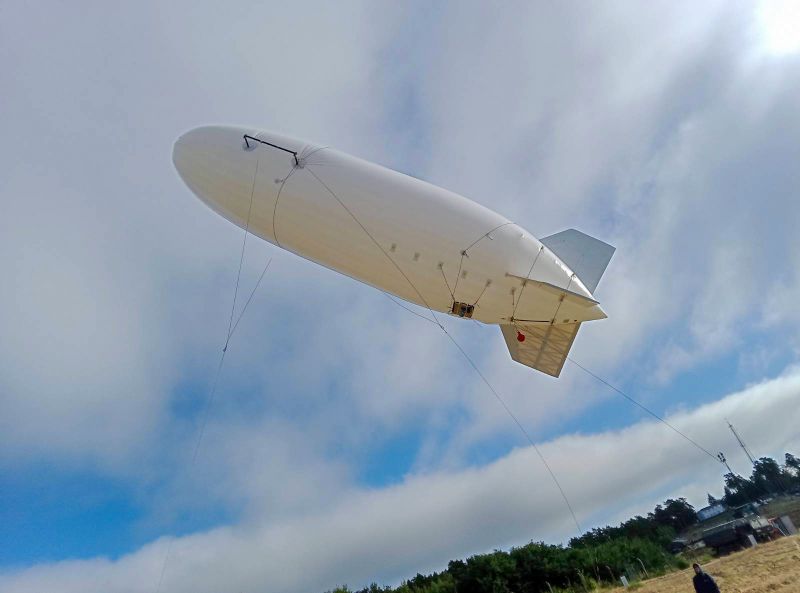
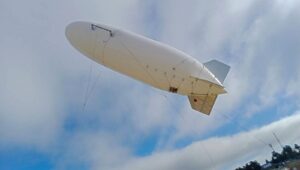
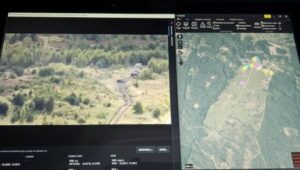
The system is based on an aerostat that carries surveillance sensors above the horizon and is intended to address one of the most serious gaps in airspace monitoring. It can detect not only very low-flying objects, including drones and small unmanned aircraft systems, but also vehicle movement and even individual people.
BASIA is a dual-use solution that can be used by the armed forces and other state services, such as the Border Guard or Police, as well as by industry, for example to monitor the surroundings of strategic energy infrastructure.
The BASIA program is being implemented through cooperation between specialized research and technology teams responsible for individual elements of the system.
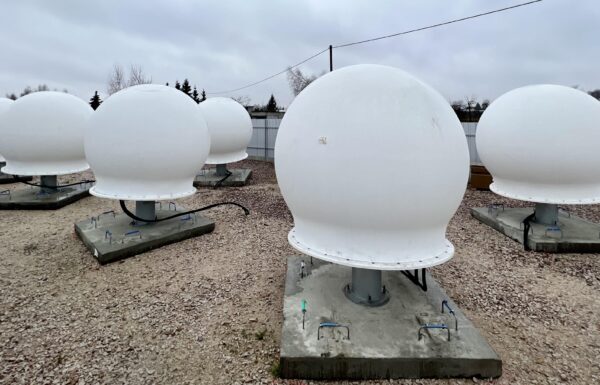
The program is led by Warsaw-based XY-Sensing, which is responsible for developing the system’s key component, a Passive Coherent Location (PCL) radar. This solution forms the basis of BASIA’s detection capabilities, allowing objects to be detected without emitting its own radar signal (MSPO 2026: Eastern border under surveillance – contract for passive radars).
The Institute of Fundamental Technological Research of the Polish Academy of Sciences (IPPT PAN) also plays an important role in the project. It is responsible for work related to the aerostat platform, in particular structural design, development of control and data-analysis algorithms, as well as expert support, consulting, and system testing.
Adaptronica is responsible for manufacturing and conducting practical tests of the platform. The company specializes in advanced mechatronic systems and adaptive technologies.
Another project partner is the Space Research Centre of the Polish Academy of Sciences (CBK PAN), which contributes expertise in optical instruments. The institute is responsible for developing image-processing algorithms, integrating optical systems, and testing them.
Rzeszów University of Technology is also involved in the project and is responsible for developing the ADS-B system as well as analytical algorithms and integration testing.
The central element of the system is an aerostat, or tethered balloon, carrying a sensor suite to an altitude of approximately 300 m. This significantly increases the observation range and reduces so-called dead zones caused by terrain features. The aerostat provides a stable and persistent airborne presence for the surveillance system. At the same time, it remains mobile, as the entire system can be relocated to another site and redeployed within a relatively short period.
For the Polish Armed Forces, BASIA could complement the Barbara system of four reconnaissance aerostats ordered on May 22, 2024, for the equivalent of approximately 960 million USD (3.763 billion PLN). The first U.S.-made ASRR (Airspace and Surface Radar Reconnaissance) aerostat is scheduled for delivery by the end of 2026, with full operational capability expected in the first quarter of 2027. The remaining three aerostats are to be delivered by the end of the third quarter of 2027, with full system readiness planned for the end of 2027.
Each aerostat will be equipped with a suspended radar reconnaissance system. The ground segment will consist of a radar control center, a mooring platform, a weather station, and power-supply containers. The contract also includes a logistics package covering maintenance services, spare parts, technical support, and training for users and instructors.
