





















Photos: Armaments Agency
The agreement will remain in force until 2035. The PCL (Passive Coherent Locator) system being procured is intended for airspace surveillance, with a focus on the covert detection of airborne objects violating Polish airspace, flying at low altitudes and characterized by a low radar cross-section (RCS). It is intended to complement active radar reconnaissance assets.
The Armament Agency’s press release does not specify which particular PCL system from XY-Sensing’s portfolio is covered by the agreement.
XY-Sensing offers passive location systems based on PCL technology, as well as solutions combining PCL with a PET (Passive Emitter Tracking) subsystem:
The mobile XY-PCL-MU (Mobile Unit) is an advanced passive radar mounted on a 5,000 kg vehicle platform. It uses illuminators of opportunity, including DVB-T signals in the 470–862 MHz band and FM signals in the 88–108 MHz band. Its instrumental range is 0.05–300 km, with 360° coverage, an altitude range of 0–15 km and target velocities of 5–1,000 m/s. Processing capacity is up to 10,000 bistatic plots and 1,000 tracks, with a one-second refresh rate. The system generates no emissions of its own, ensuring complete covertness and resistance to jamming, while also reducing its vulnerability to anti-radiation missiles. Applications include military reconnaissance, border protection, support for counter-UAS operations and mobile airspace surveillance.
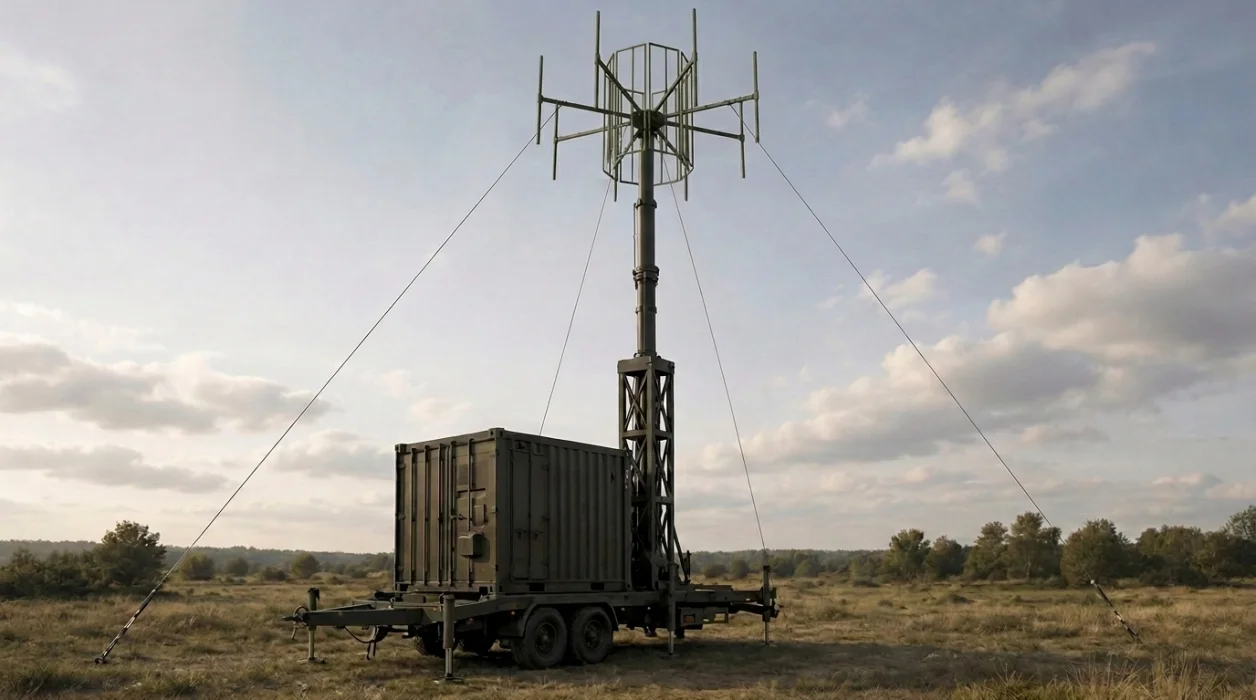
The mobile containerized XY-PCL-C (Containerized) system is designed for wide-area airspace surveillance. It uses the same frequency bands and offers parameters similar to those of the XY-PCL-MU, but is intended for stationary, covert monitoring of large areas.
In addition, the company offers the EtherEye system, developed by a consortium with VORTEX and SkyRad as an advanced situational awareness solution and awarded at the POLSECURE 2026 exhibition. It integrates PCL passive location with a range of up to approximately 250 km with the detection, identification and tracking of radio-frequency emitters using PET technology across the 2 MHz to 40 GHz spectrum. It provides multisensor fusion and the HORUS C2 command-and-control system for real-time threat analysis and target classification. The system can also be integrated with electro-optical/infrared (EO/IR) reconnaissance systems and countermeasures. It is intended for air and maritime domains, border protection, critical infrastructure protection and counter-UAS operations.

It is also worth noting that XY-Sensing supplied the PCL passive radar forming the core of the detection capability of the BASIA Passive Aerostatic Information and Analysis System, developed by the KEZO Research Center of the Polish Academy of Sciences in cooperation with industrial partners. The BASIA system was publicly unveiled on March 12 this year.
Meanwhile, during last year’s MSPO, the Armament Agency signed a 5.7 billion PLN contract with the PGZ-Narew Consortium for the delivery of 46 PET/PCL Passive Location System (SPL) sets, including 28 under the base order and 18 under an option, with deliveries scheduled for 2030–2038. The PET/PCL Passive Location System was developed by PIT-Radwar.
The SPL combines two passive subsystems: PCL and PET, enabling multistatic operations across a very broad frequency spectrum. The system consists of four Passive Location Radars that are identical in terms of hardware and software. A key factor behind the system’s high effectiveness is the fusion module, which combines bistatic plots generated by both subsystems. Turkey has expressed interest in the SPL PET/PCL system.
Właśnie podpisaliśmy dwie ważne umowy dla #WojskoPolskie.
✅️ Zdalnie inicjowane podwodne ładunki wybuchowe TOCZEK – umowa z Ośrodkiem Badawczo-Rozwojowym Centrum Techniki Morskiej S.A. przewiduje dostawę ponad tysiąca ładunków do niszczenia min morskich.
✅️ Radary pasywnej… pic.twitter.com/ArcJCS58AL
— Agencja Uzbrojenia (@AgencjaUzbr) September 9, 2026
