


























On Thursday, September 24, 2026, the Ministry of Defence of the Kingdom of the Netherlands announced that earlier this week, State Secretary for Defence Derk Boswijk had signed a Letter of Intent (LoI) with Australian company Electro Optic Systems (EOS) on the development of High Energy Laser Weapon (HELW) systems for military use against drone threats (C-UAS).
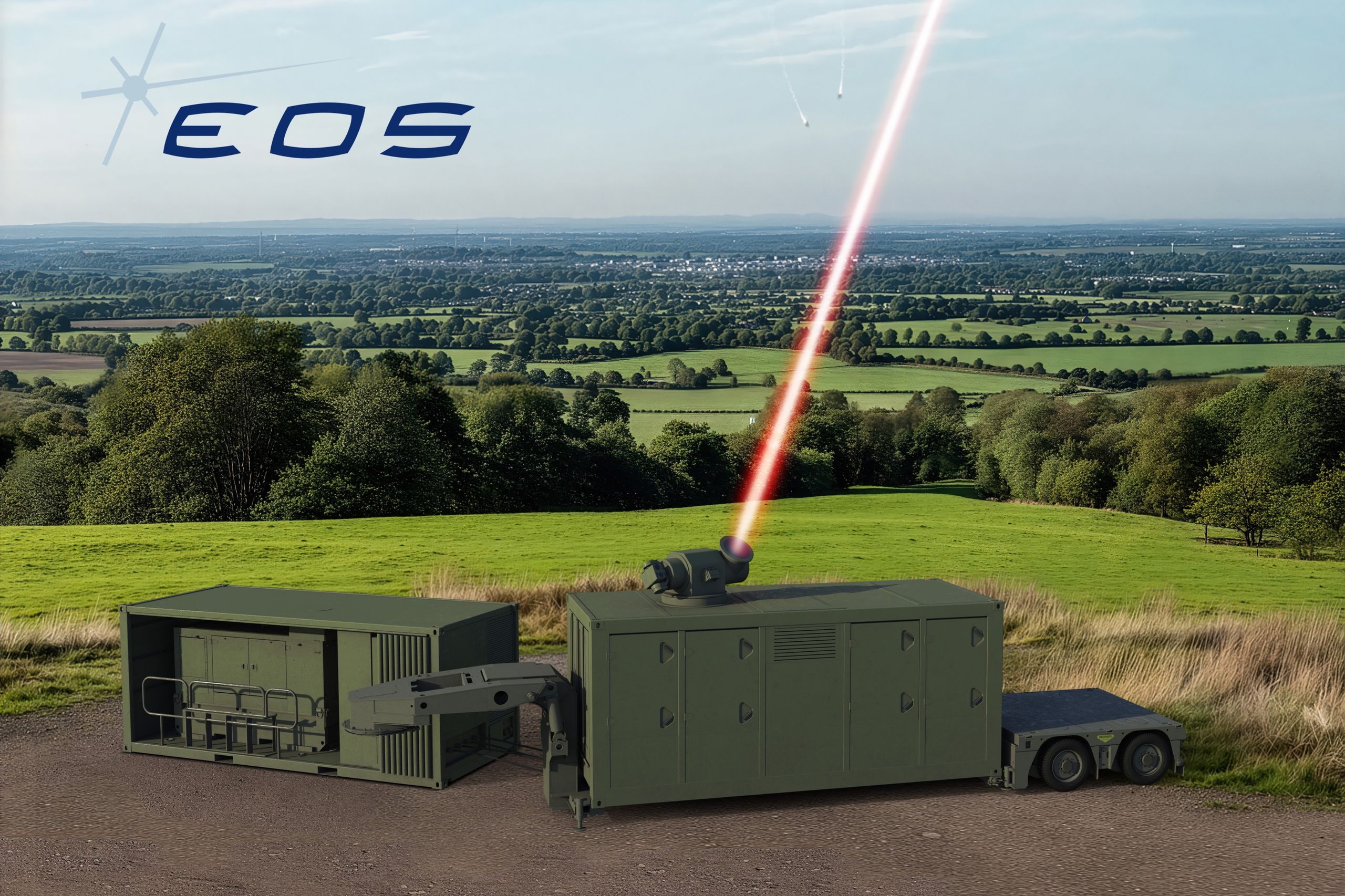 Image: EOS
The Ministry of Defence of the Kingdom of the Netherlands and EOS intend to further develop the high-energy laser into a fully operational weapon system. The two sides will also explore the possibility of establishing a production facility supported by a European supply chain led by the Netherlands. The Australian company intends to conduct development work and production in the country, making the Netherlands EOS’s European base.
If further development is successful, the Netherlands plans to procure a number of laser systems.
It is worth noting that on August 5, 2025, EOS announced that it had secured its first export contract for the 100 kW-class Apollo laser weapon. An undisclosed European NATO government purchased the system for 71.4 million EUR/125 million AUD, with deliveries due by 2028. According to Reuters, which reported in February this year on the opening of an EOS production hub in Singapore, that customer was the Netherlands.
According to EOS, the Apollo laser weapon system can be scaled from 100 kW to between 50 and 150 kW, depending on customer requirements. It can burn through unmanned aircraft at ranges of up to 3 km and dazzle their electro-optical sensors at distances of up to 15 km. During live-fire testing, the system achieved reaction times of between 700 milliseconds and 1.5 seconds.
The system is intended to defend against micro and medium-sized drones weighing up to 600 kg, corresponding to Groups 1-3 under U.S. Department of Defense nomenclature. It is designed to destroy more than 20 small drones weighing less than 9 kg per minute.
The system is housed in a standard 20-foot ISO container. All Apollo technologies are free from U.S. International Traffic in Arms Regulations (ITAR) restrictions, and the laser can be integrated with NATO-standard command-and-control systems. The first prototype demonstrations were conducted in Australia in 2022.
In December 2025, EOS subsequently signed a conditional USD 80 million agreement with the Republic of Korea covering the production and delivery of a 100 kW system. The arrangement also envisages a joint venture with Korean partner Goldrone, technology transfer, local production, and support for the Korean market. Production was initially planned for EOS’s new facility in Singapore, although production of the first unit in South Korea was also being considered this year. If the agreement becomes unconditional, deliveries are expected to begin in late 2027.
EOS is also in talks with additional countries, including customers in Europe, the Middle East, and India, and expected further contracts in 2026. In June this year, reports emerged of a joint venture in the Middle East, including cooperation with Generation 5 in the United Arab Emirates, covering both existing 100-150 kW systems and development of a new generation of 200-300 kW weapons.
On January 30 this year, EOS Chief Executive Officer Andreas Schwer told Reuters that the company was very likely to move its headquarters from Symonston, Canberra, Australia, to Europe. It is now clear that the Netherlands will become that European center, although this will not be a complete relocation so much as an expansion of the company’s organizational structure.
Defensie en het Australische EOS gaan samenwerken aan de verdere ontwikkeling van een High Energy Laser tegen drones. Ook wordt onderzocht of ontwikkeling en productie in Nederland kunnen plaatsvinden.
Lees meer: https://t.co/sLm2IXnSQE pic.twitter.com/mBCw9EOqxf
— Ministerie van Defensie (@Defensie) September 24, 2026
