























Offering for the San program
The first of these products is 35 mm programmable ammunition. Developed under the 35 mm Programmable Ammunition System for the OSU-35K Naval Weapon System/SAP-35 program, it will be one of the primary effectors of the San system, which will include 18 SA-35 35 mm self-propelled anti-aircraft guns.
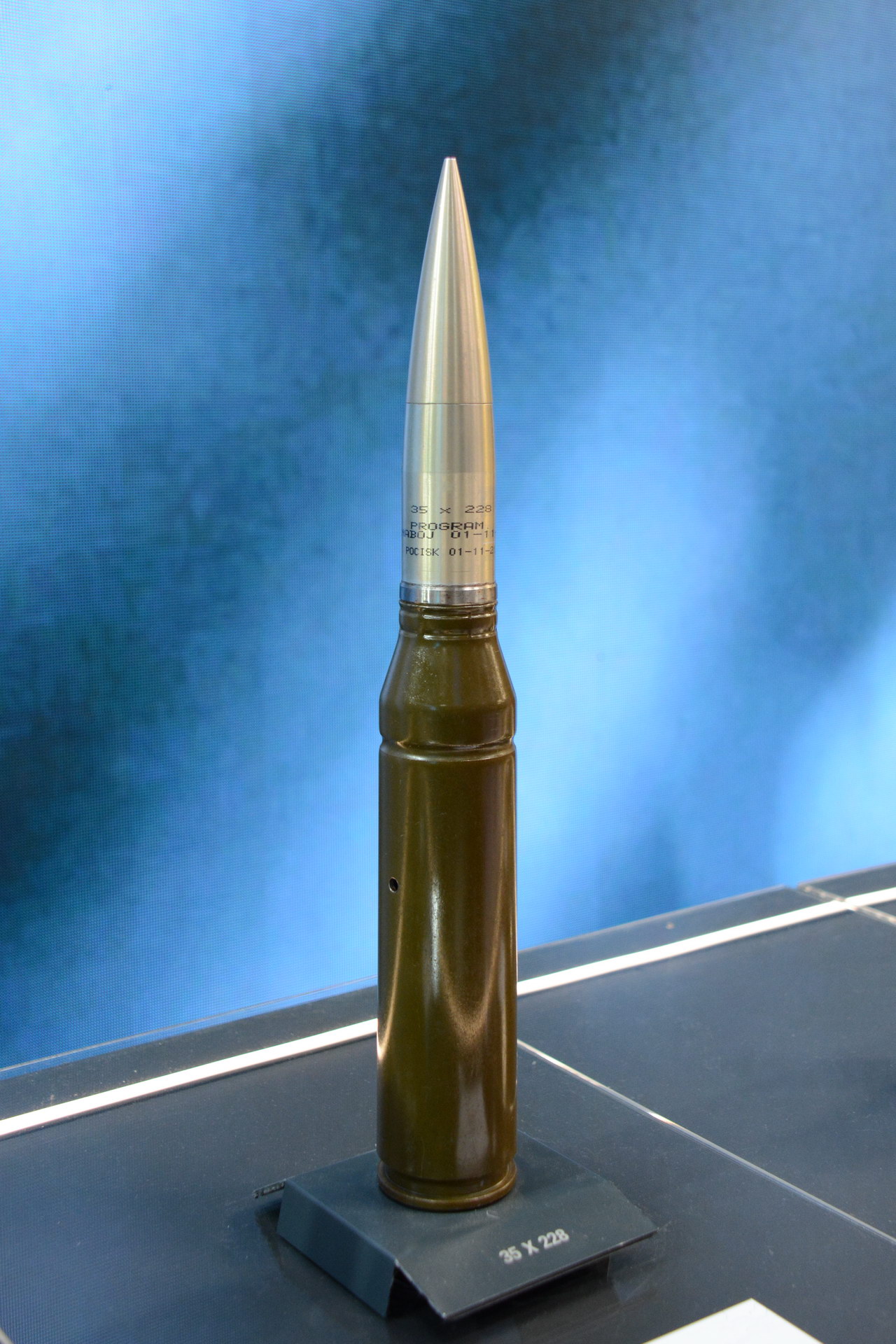 The 35 mm programmable round being developed under the SAP-35 program is in the final stage of development. The last live-fire trials were completed in the week preceding MSPO / Photos: Przemysław Gurgurewicz, MILMAG
This type of ammunition will play a key role in the San system’s ability to engage small aerial targets such as drones.
As Mesko Missile Division Director Zbigniew Drabik told MILMAG:
“At present, we are completing the acceptance testing phase. Last week, the final live-fire tests involving this programmable ammunition were completed, and the initial information we received from the proving ground indicates 100% compliance for the ammunition. Once these trials are complete, further firing tests will be conducted using the gun with basic programming, and after those tests we will be ready to begin ammunition production and deliveries to customers.”
According to Drabik, production could begin immediately, as preparations have been underway for many years. At present, in the context of expected demand from the San program, which is set to generate the largest requirement for this ammunition, the company says that the production lines are already essentially ready.
As a reminder, the research and development project, co-financed by the National Centre for Research and Development under Agreement No. DOB-BIO-12-02-001-2022 of December 20, 2022, is being carried out by a consortium comprising the Military University of Technology as leader, Mesko, and PIT-Radwar. Work was originally scheduled for the period from December 20, 2022, to June 20, 2025. The deadline was subsequently extended, and the most recently published completion date is August 20, 2026.
The SAP-35 consists of three main elements:
- a programmable fragmenting projectile,
- a gun muzzle device with a measurement and programming unit,
- a dedicated projectile velocity measurement and programming computer interfaced with the gun’s fire-control system.
The introduction of programmable ammunition significantly increases the effectiveness of 35 mm guns against small aerial targets. Based on data from the target detector, the algorithms used allow precise programming of fuze activation time and projectile fragmentation in a way that increases the probability of hitting the target. The use of preformed fragments makes it possible to achieve a repeatable lethal zone with a high spatial density of energetically effective fragments. The effective engagement range of the new projectiles is expected to be between 250 and 3,500 m.
As indicated by the full name of the SAP-35 program, in addition to the San system, the new ammunition will naturally also be used in 35 mm guns forming part of the OSU-35K naval weapon system. At present, the Polish Navy operates three guns of this type aboard ships: two AM-35K guns on the Project 258 Kormoran II mine countermeasure vessels ORP Albatros and ORP Mewa, as well as a test AM-35 Tryton gun aboard the corvette ORP Kaszub. Under current plans, Polish Navy vessels are ultimately expected to carry at least 11 AM-35K guns: five on serial Project 258 Kormoran II mine countermeasure vessels and a further six on three Project 106 Miecznik frigates, with two guns per ship.
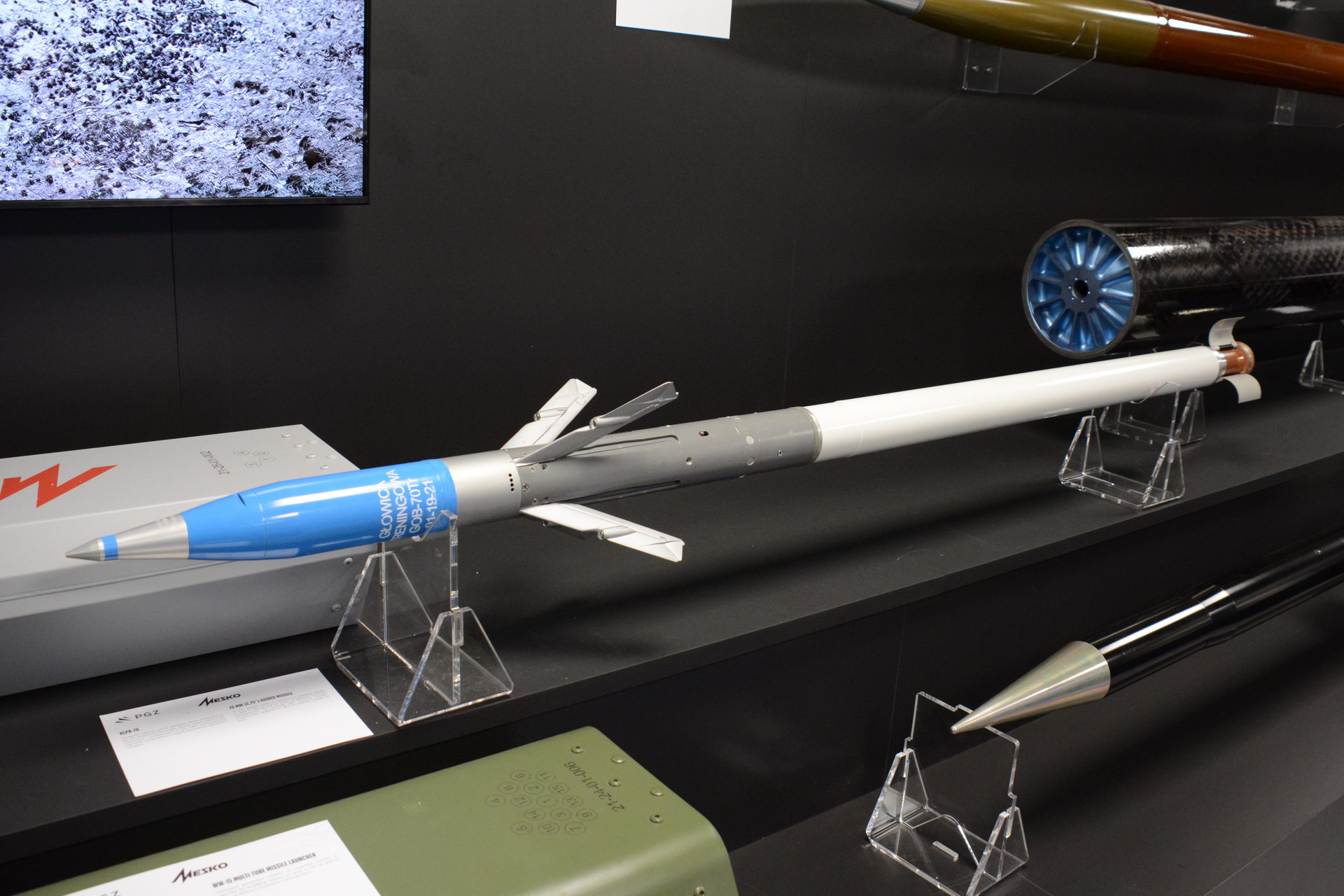 KLPR-70 is the guided variant of the NPLR-70 produced by Mesko. Fitted with a BAE Systems guidance module using a laser homing system, it is intended to become one of the effectors of the San system, for which 54 launchers for 70 mm rockets have been ordered.
The second San-related product is the 70 mm guided rocket. Each of the 54 ordered platoons is to include one Kongsberg self-propelled launcher for these rockets mounted on a Legwan vehicle chassis. Mesko currently produces NPLR-70 unguided rockets, which can be converted into a guided variant by installing a guidance module with a laser homing system similar to that used in the AGR-20 APKWS II.
As Mesko Missile Division Director Zbigniew Drabik told MILMAG:
“We are currently in talks and working out the schedule for tests and trials together with Kongsberg and BAE Systems. Since the beginning of the year, we have been discussing with BAE Systems the direct application of APKWS to the NPLR-70. We plan to conduct the first tests of 70 mm rockets fired from Kongsberg launchers at the beginning of next year. Then, around mid-year, we plan live-fire trials using the final configuration of the Kongsberg launcher and our 70 mm rockets fitted with APKWS.”
Drabik also added that Mesko’s goal is to certify its rocket for use within the San system so that the missile, designated KLPR-70, with the “K” standing for kierowany (“guided”), becomes the primary 70 mm ammunition type used by the Polish system.
Piorun – Mesko’s flagship air-defense system
Mesko’s flagship air-defense product, the Piorun man-portable air-defense system, was also prominently displayed at the company’s stand. On the final day of MSPO, the Armament Agency and Mesko signed an implementation contract for the procurement of these systems under the SAFE instrument. The contract is worth approximately 3 billion PLN net, while deliveries of an unspecified number of launch mechanisms and missiles are scheduled for 2026–2030 (MSPO 2026: Another contract for Piorun systems under SAFE program).
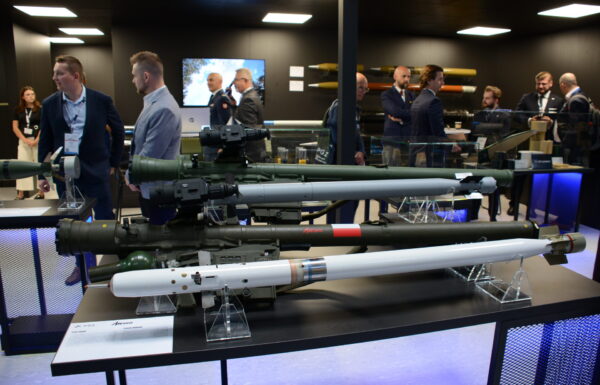
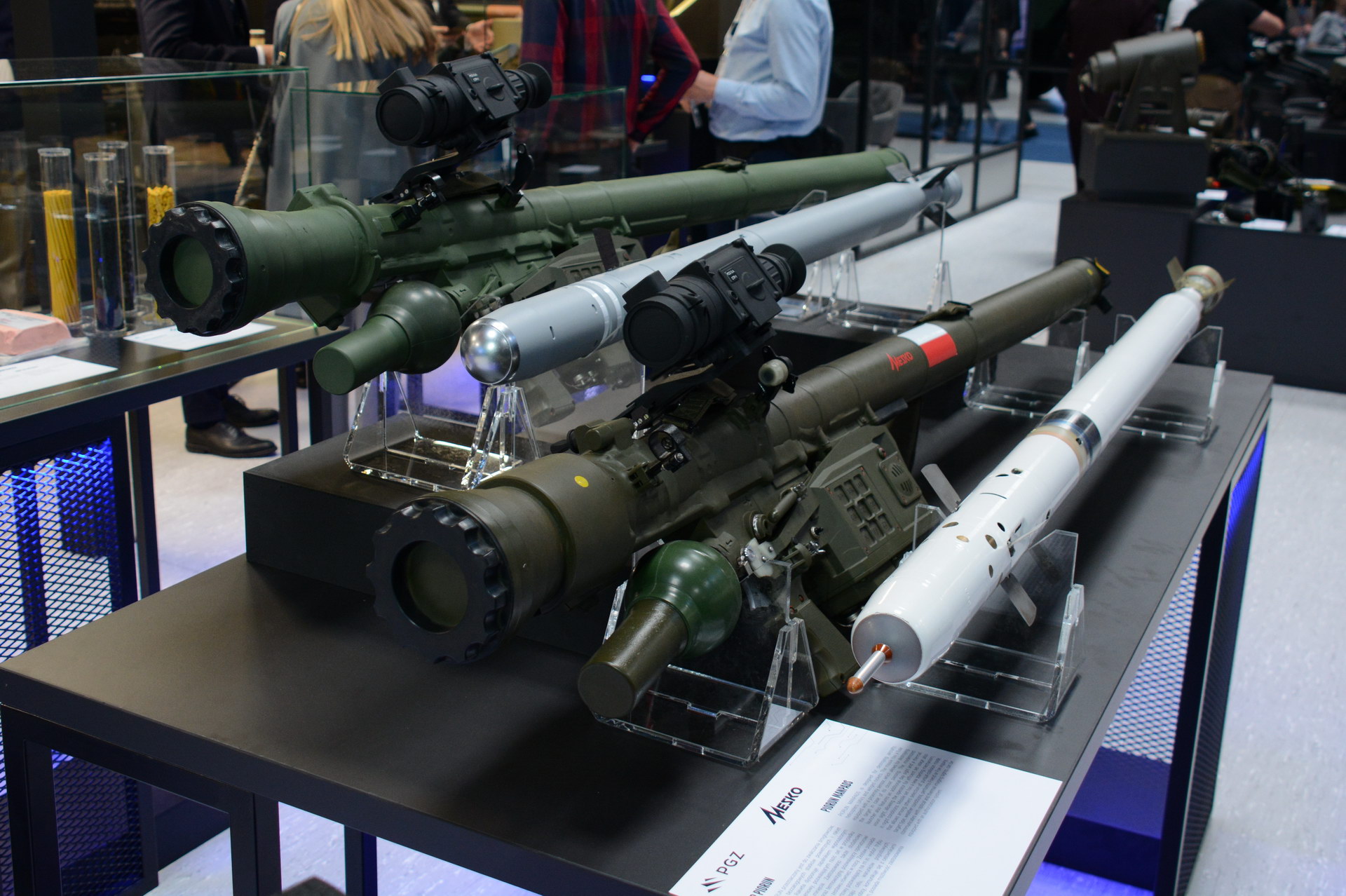 The Piorun man-portable air-defense system in two configurations. Below are the complete system and the missile of the currently produced variant; above is the upgraded Piorun 2 system together with a missile mock-up
Mesko is continuously developing the system and working on further improvements that could lead to an upgraded missile designated Piorun 2. “Could,” because it has still not been decided how the modernization will be implemented – whether the current missile will be replaced by a new variant or whether improvements will be introduced gradually into missiles already in production. As MILMAG learned from Director Drabik, both options are currently under consideration.
Modernization work is being carried out in three areas. The first concerns modifications to the seeker in order to increase its sensitivity. At present, against a high-radiation target, such as a turbine engine, the Piorun seeker can detect the target at a range of 8 km. The plan is to increase this figure to 9–10 km. At the same time, the minimum altitude at which a target can be detected is to be reduced from the current 10 meters to virtually zero.
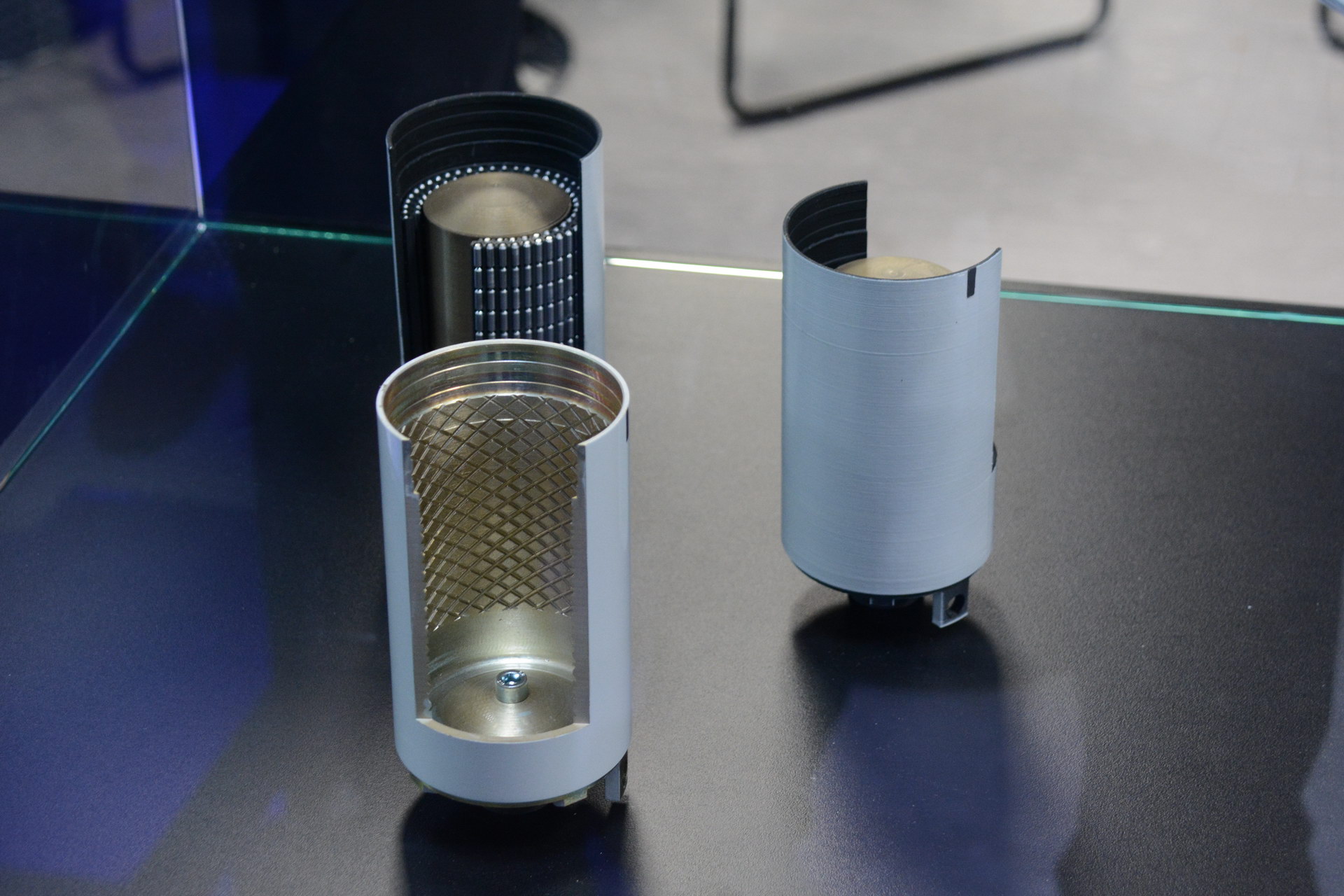 New, more effective warheads with controlled fragmentation are also being developed for Piorun. Work is currently underway on three alternative solutions: a warhead with a scored casing, a warhead using a fragmentation liner made of tungsten cylinders, and a warhead using a fragmentation liner made of tungsten balls. The solution producing the highest number of effective fragments will be selected
Modernization of the seeker is also proceeding along two parallel paths. One option being considered is the addition of a third detection channel to the currently used near- and mid-infrared channels. The other involves improving the performance of the existing channels through the use of more precise components and by reducing background noise.
The second area concerns modification of the missile’s control-fin section. The planned new control unit will use electric actuators allowing smooth adjustment of the fin positions. This is expected to optimize and straighten the missile’s flight path, reducing speed loss during maneuvering. As a result, the missile’s engagement range and altitude are expected to increase.
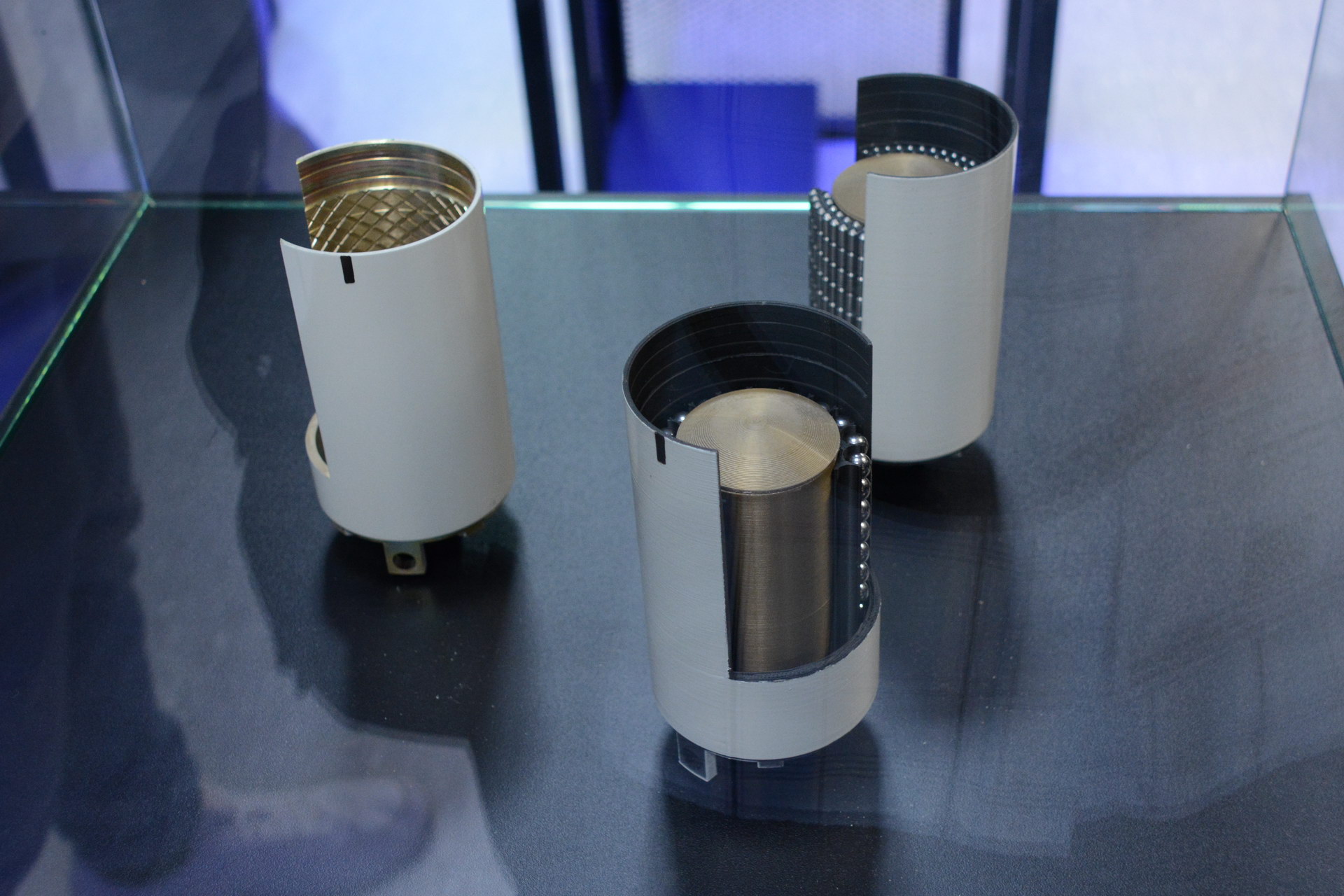
The third area involves a new, more effective warhead with controlled fragmentation. Three alternative solutions currently under development were presented:
- a warhead with a scored casing;
- a warhead with a fragmentation liner made of tungsten cylinders;
- a warhead with a fragmentation liner made of tungsten balls.
All three solutions are currently being tested, and the one that provides the greatest increase in the number of effective fragments will be selected.
Director Drabik also told MILMAG that Mesko is considering the development of a new, larger missile with improved performance. In this case, however, it would be a heavier weapon intended primarily for use from a vehicle-mounted or tripod launcher rather than a shoulder-fired launcher, making it conceptually closer to the French Mistral system.
