

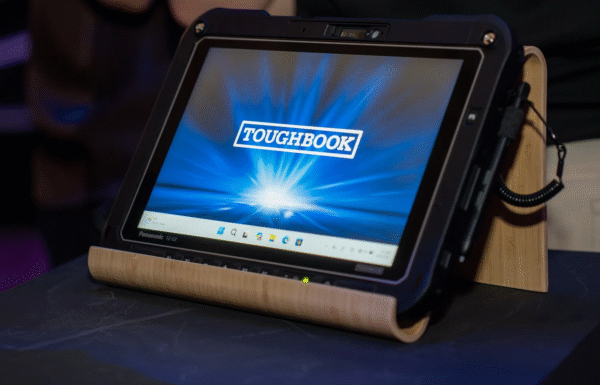



























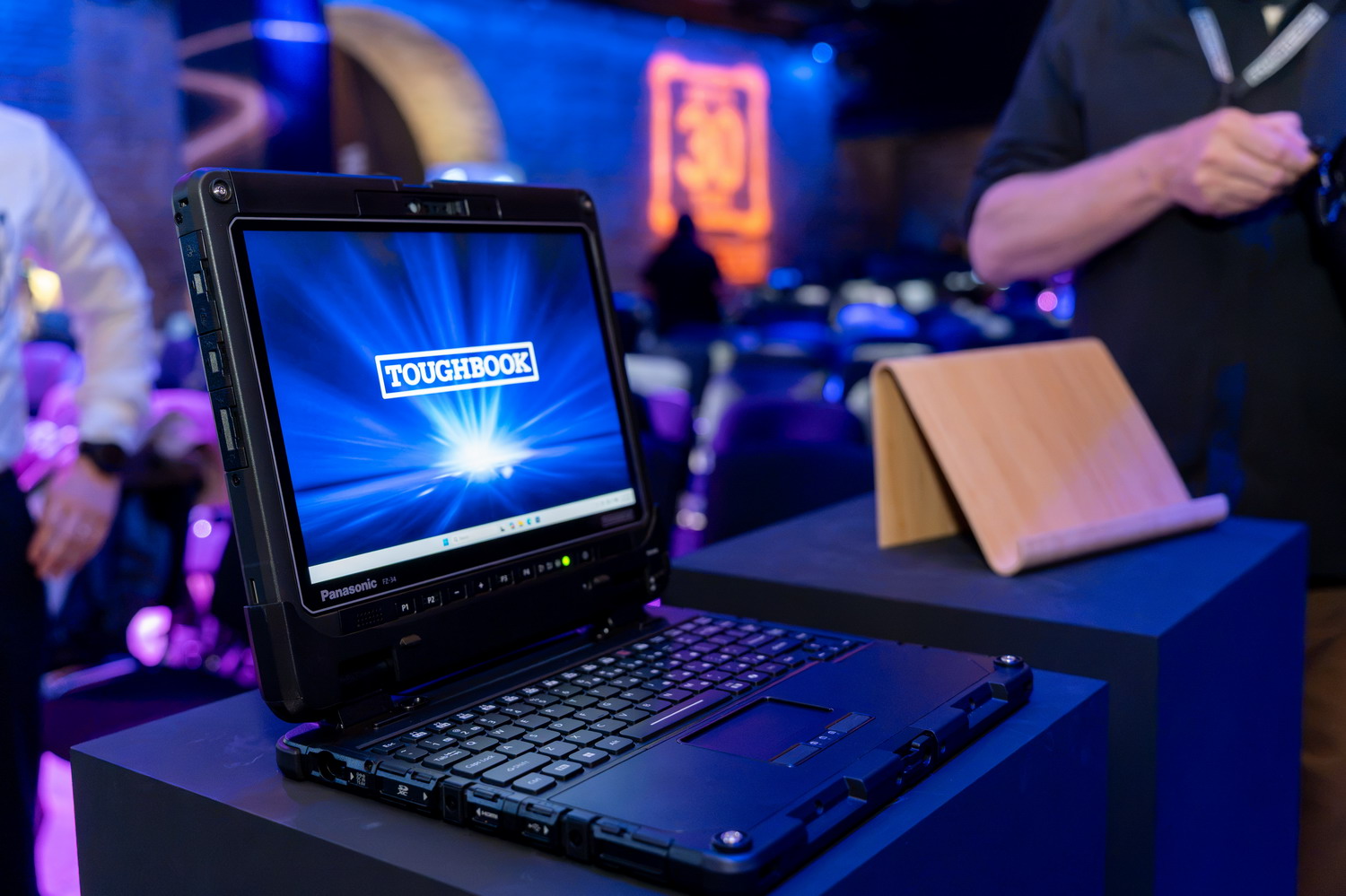
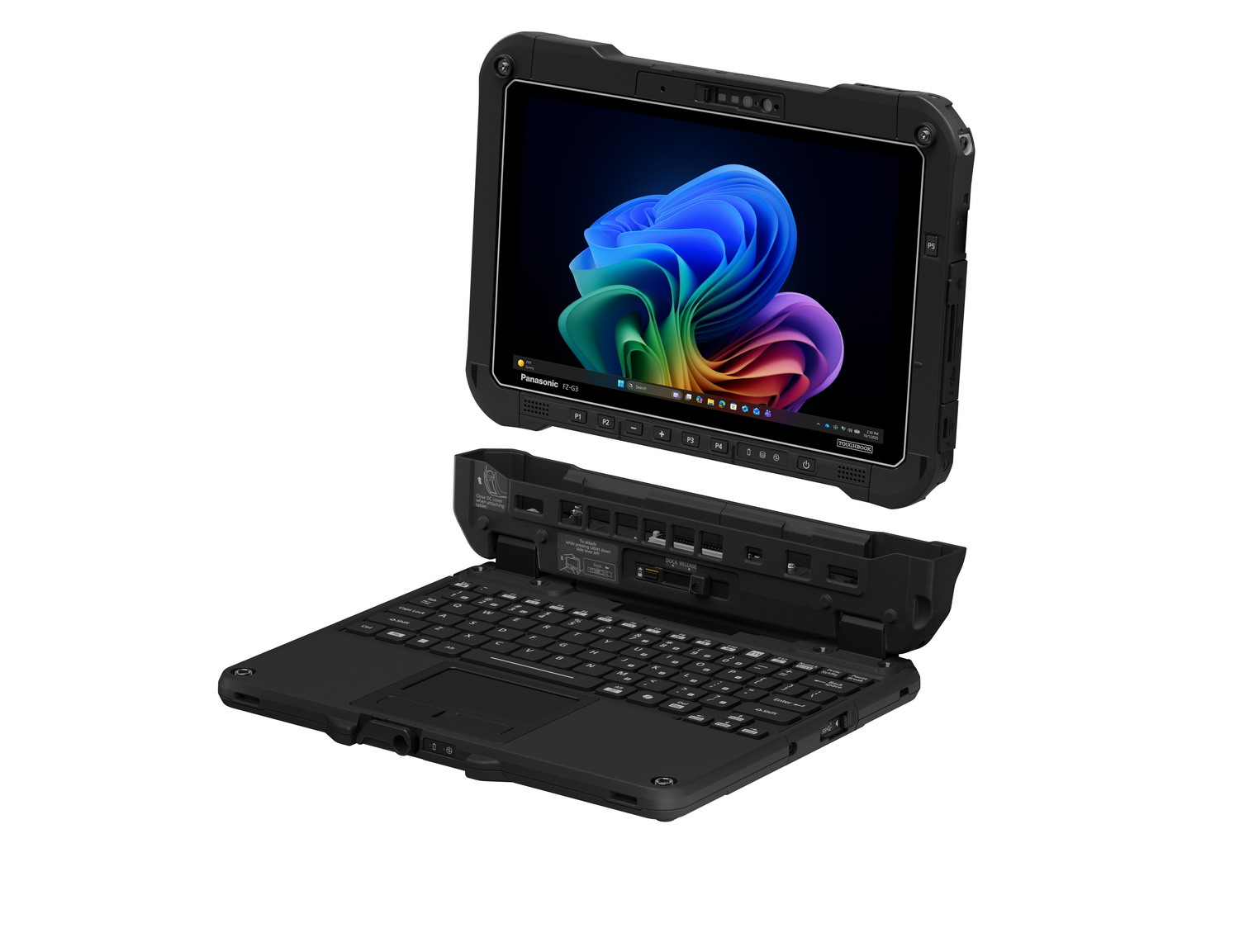
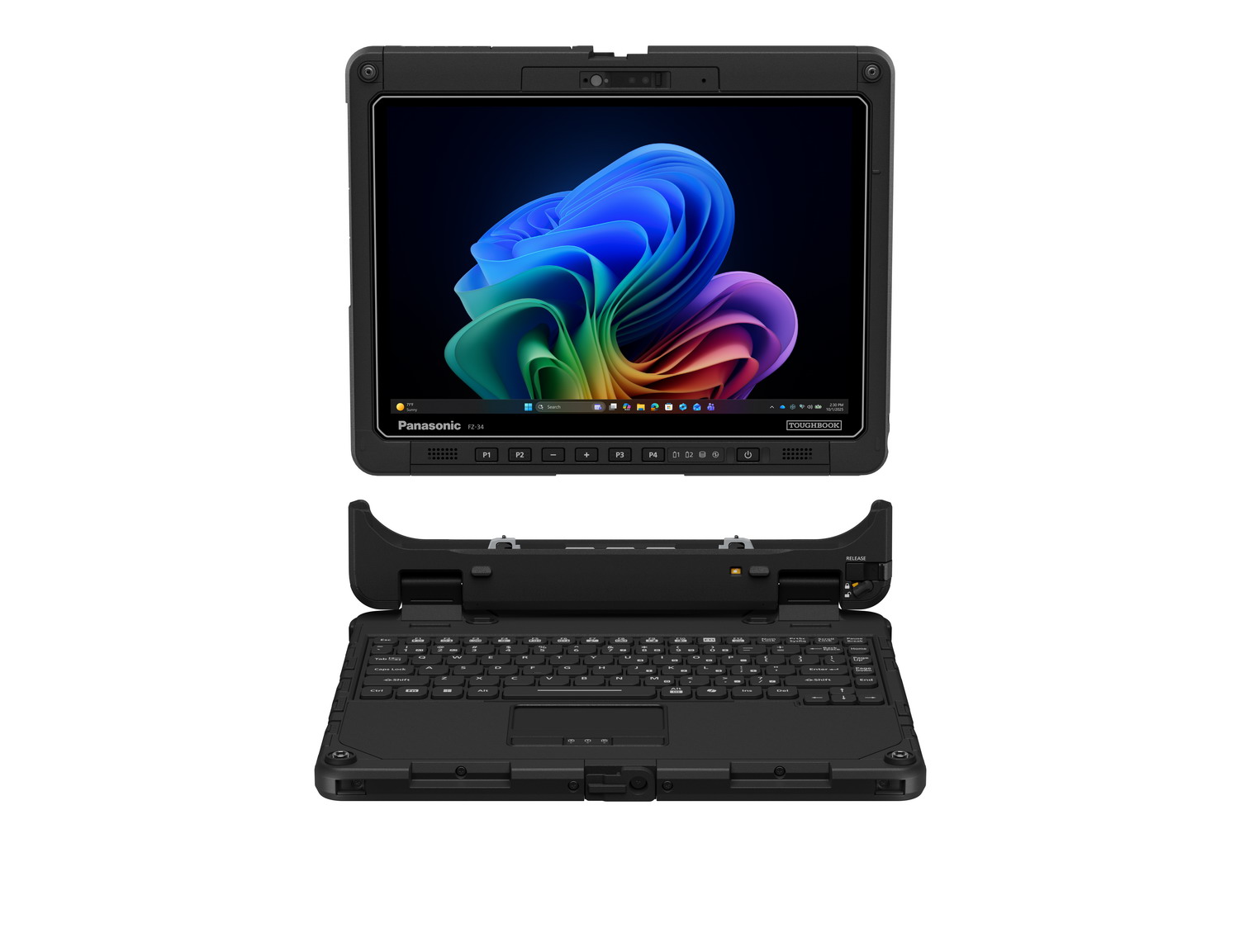
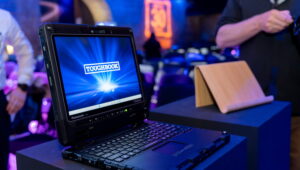
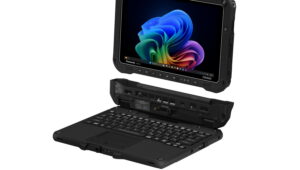
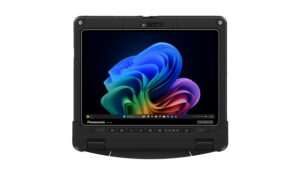
Panasonic Connect presented new devices from the TOUGHBOOK family. The TOUGHBOOK 34 is a larger, 12.4-inch 2-in-1 device, while the G3 remains a conventional compact rugged tablet with a 10.1-inch display. Both models use a similar hardware architecture and a modular design that allows the devices to be configured for specific applications.
TOUGHBOOK 34 – larger display and 2-in-1 configuration
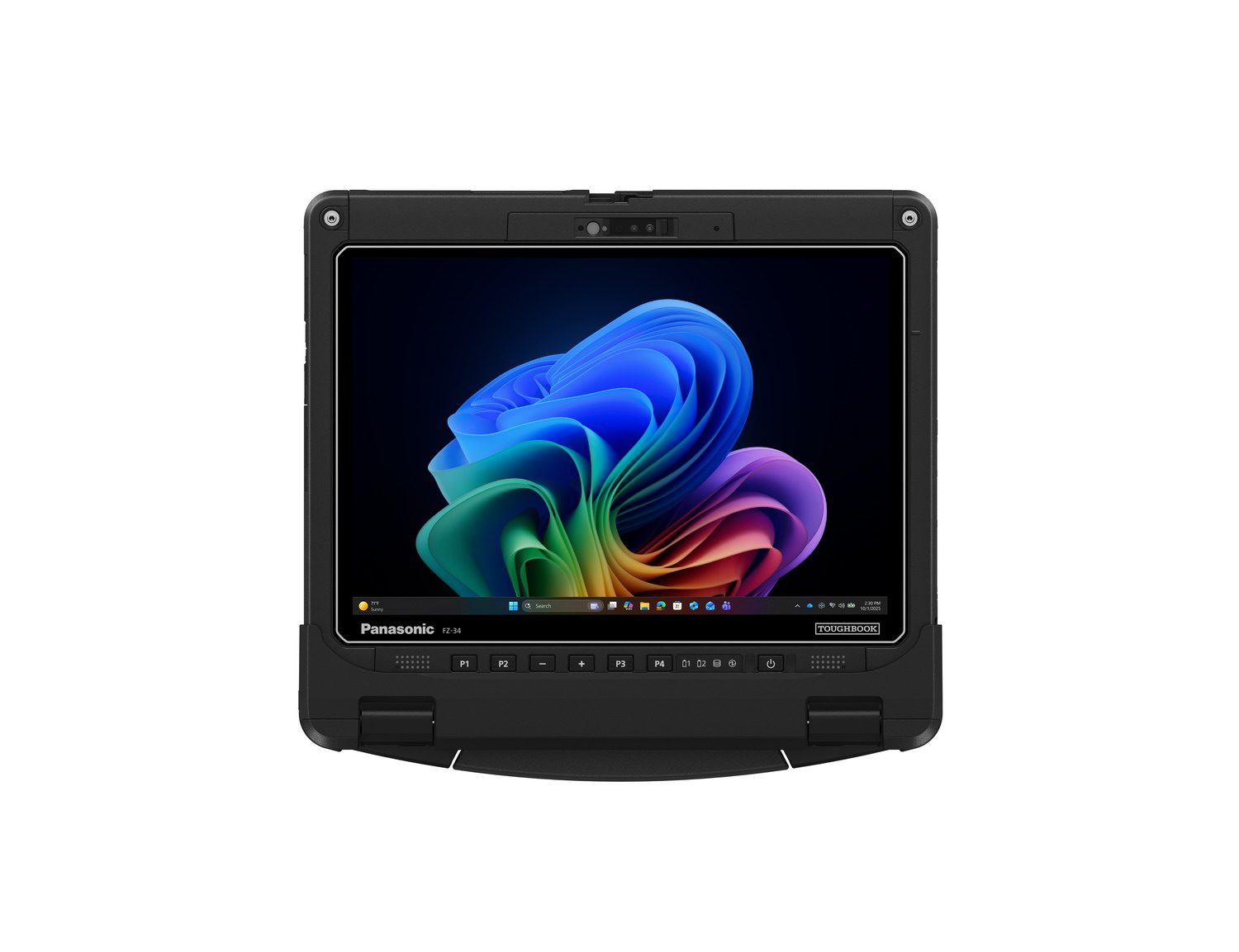
The TOUGHBOOK 34 is equipped with a 12.4-inch display with a resolution of 1920 × 1280 pixels. The panel offers brightness of up to 1,000 cd/m² and supports finger input, gloved operation and a digitizer. Panasonic expects the larger display to be particularly useful in applications where users need to view large amounts of information at the same time, including maps, plans, technical documentation, sensor data, or command-and-control applications.
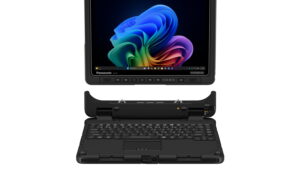
The device can operate as a tablet or, when connected to an optional keyboard, as a laptop-style computer. The main unit weighs from 1.36 kg, while the complete system with keyboard starts at 2.57 kg. The tablet measures 308 × 243.6 × 25 mm.
The TOUGHBOOK 34 can be equipped with either an Intel Core Ultra 5 335 vPro or a Core Ultra X7 368H vPro processor. In the latter configuration, an integrated Intel Arc B390 GPU is also available. RAM capacity ranges from 16 to 64 GB of DDR5 memory, while the standard storage device is a removable 512 GB OPAL NVMe SSD, with capacities of up to 2 TB available as an option.
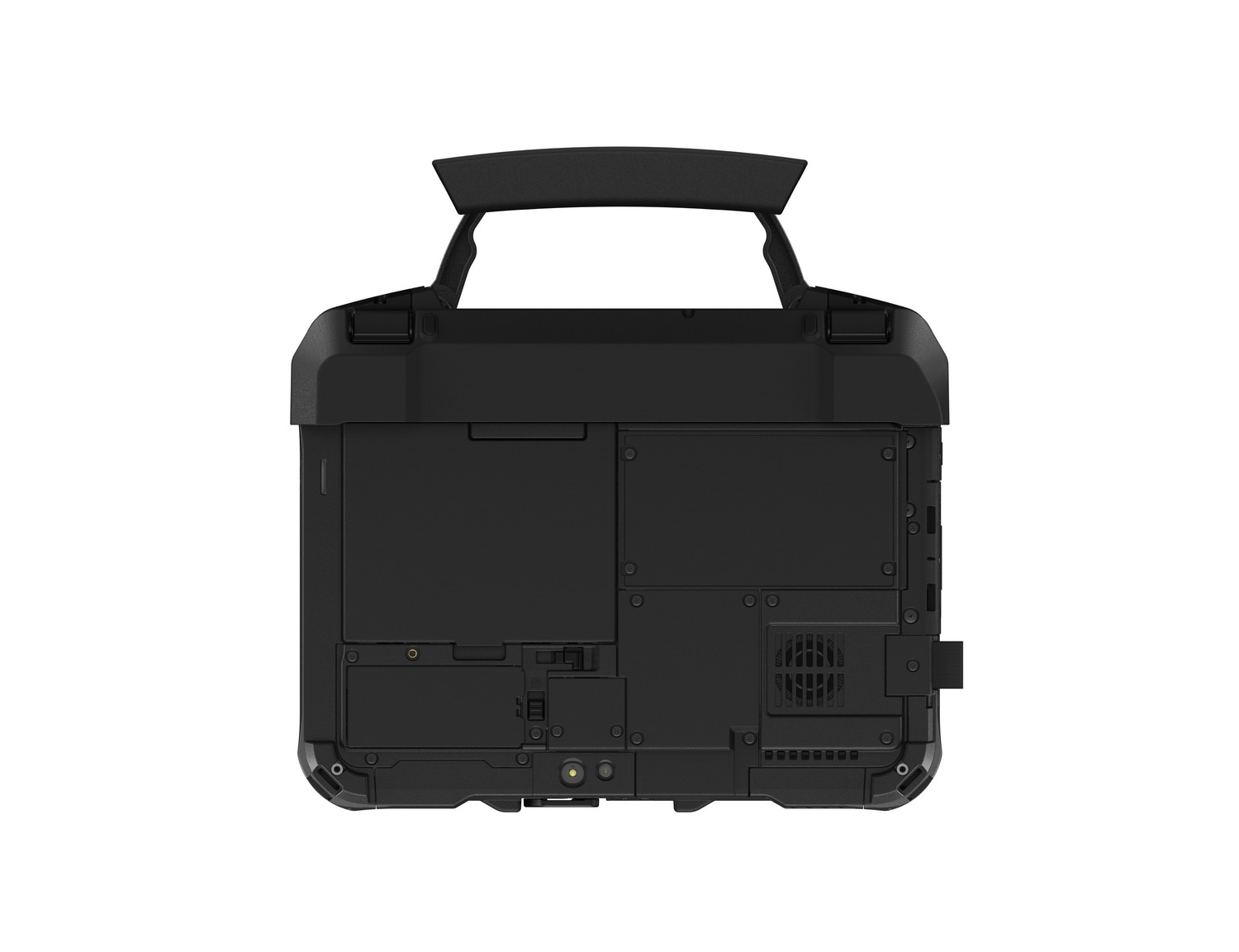
An important element of the design is the ability to install additional modules. The rear expansion bay can accommodate, among other options, a Smart Card reader, HF-RFID/NFC reader or fingerprint reader. The upper expansion bay can be fitted with a native serial port, 2D barcode reader, USB-A port or HDMI. Individual modules can be replaced by the user.
For military and specialist applications, the availability of wired interfaces is also significant. Standard interfaces include two Thunderbolt 4 ports, one USB-A 3.2 port and 1 Gb Ethernet. Optional equipment includes 4G or 5G connectivity with SIM and eSIM support, as well as a u-blox NEO-M9N receiver supporting GPS, GLONASS, BeiDou and Galileo. Local wireless connectivity is provided by Wi-Fi 7 and Bluetooth 5.4.
Power supply and vehicle use
The TOUGHBOOK 34 can use two 40 Wh batteries. According to MobileMark 30 testing, a single battery provides approximately nine hours of operation, while two batteries extend this to around 18 hours. With the second battery installed, hot swapping is available, allowing one battery to be replaced without shutting the device down.
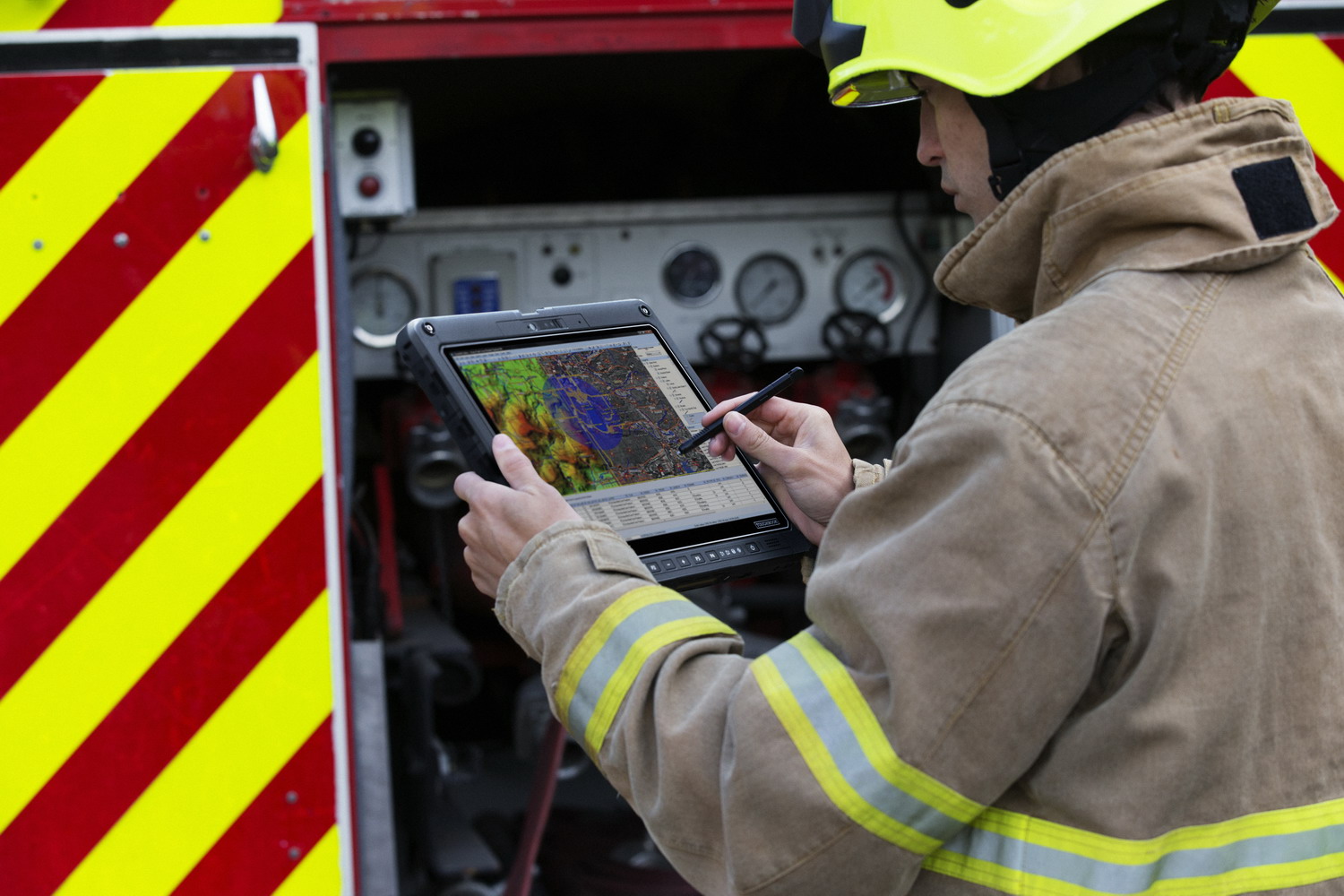
This configuration is particularly relevant for users working full shifts away from permanent power sources, as well as for vehicle-mounted applications. Panasonic cites, among other examples, the use of the TOUGHBOOK 34 as a mobile data terminal in fire service vehicles. Compatibility with a range of docking stations and accessories from earlier generations is also important, as it allows the computer itself to be replaced without rebuilding the entire vehicle installation.
TOUGHBOOK G3 – a smaller tablet for mobile operations
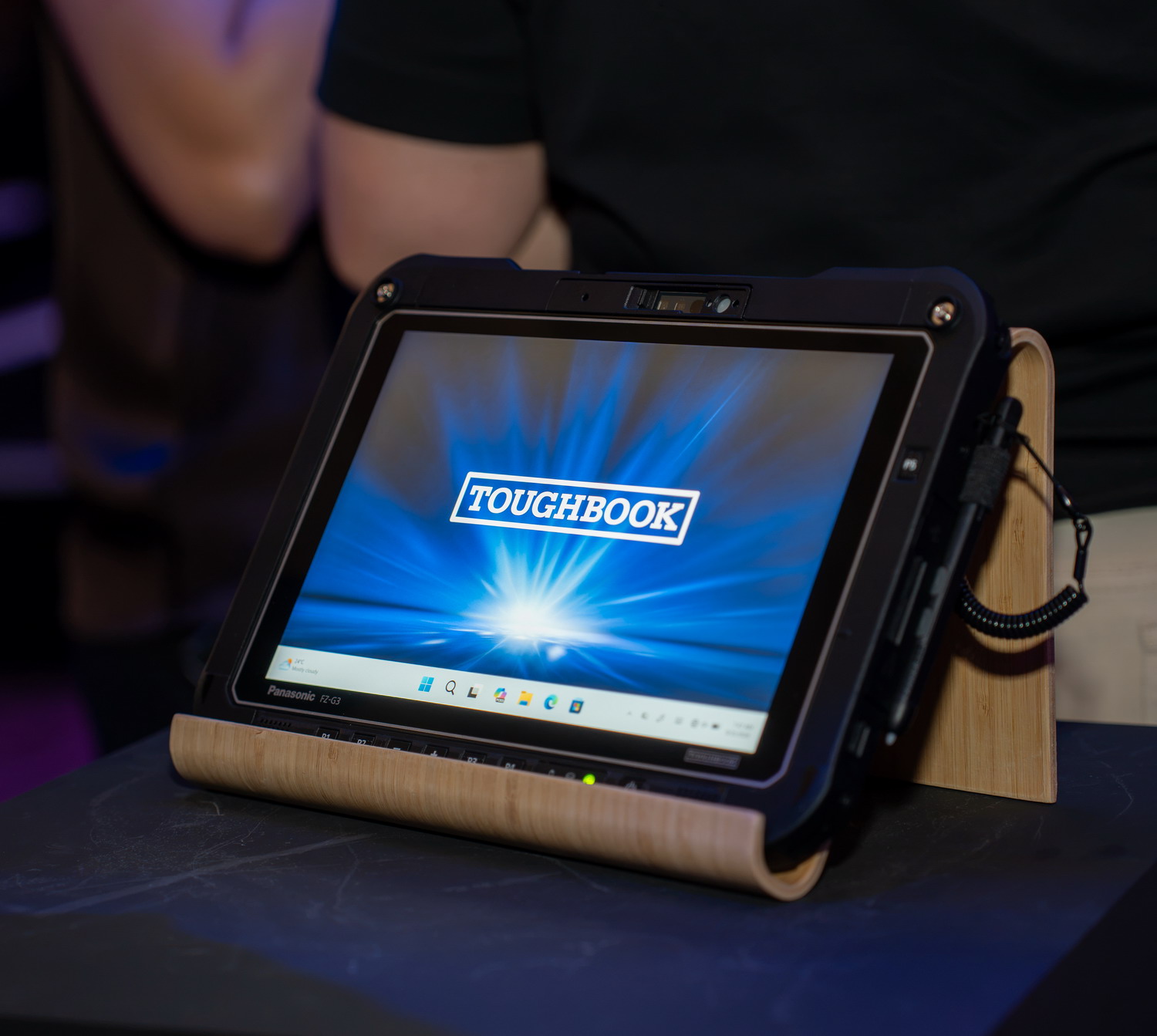
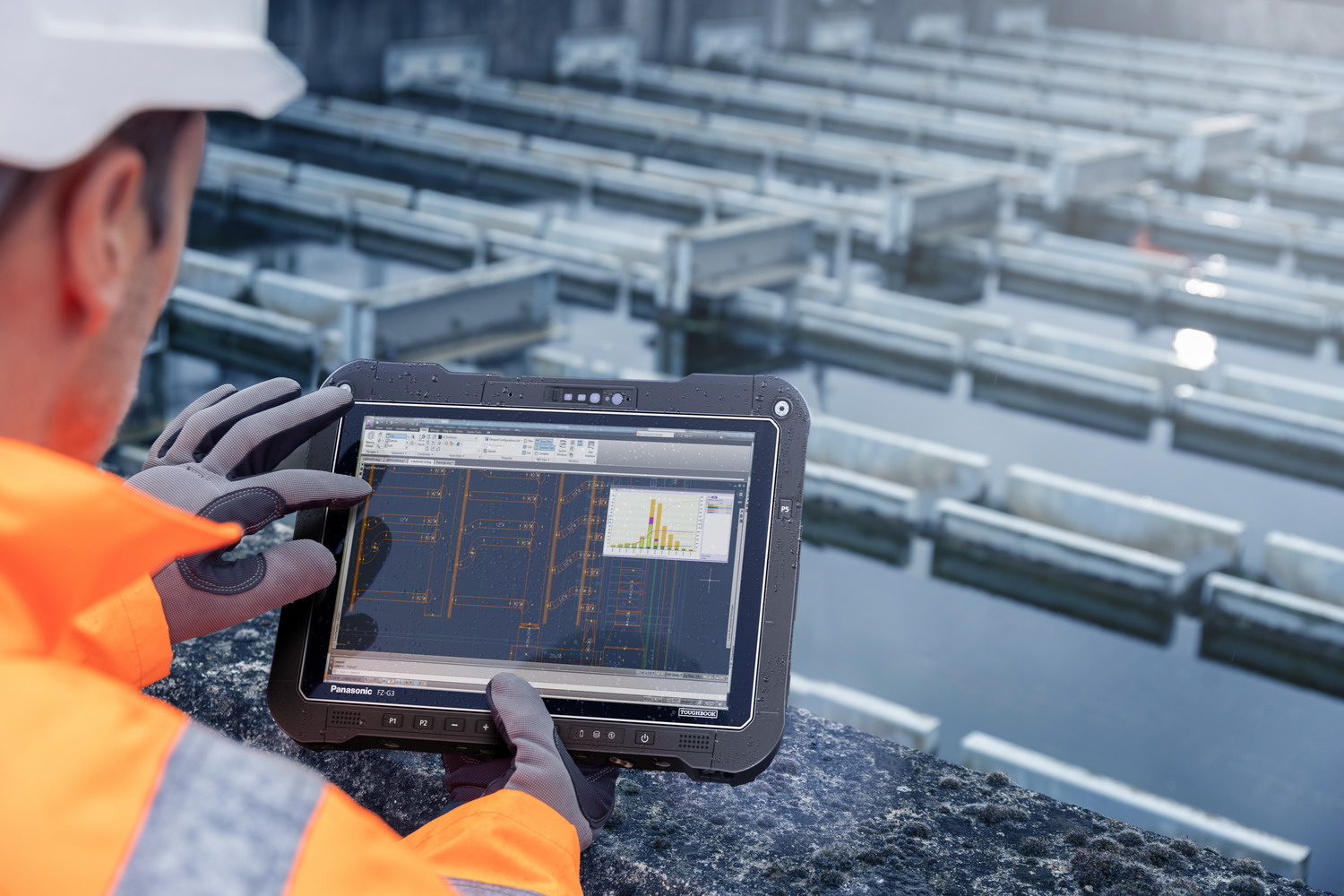
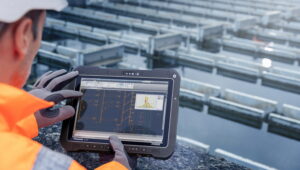
The second new model, the TOUGHBOOK G3, has a 10.1-inch display with a resolution of 1920 × 1200 pixels. As with the TOUGHBOOK 34, the panel provides brightness of up to 1,000 cd/m² and can be operated while wearing gloves or with a digitizer. The G3 is, however, more clearly optimized for users operating on foot, in confined spaces or with the device mounted in a vehicle.
In its lightest configuration, the tablet weighs from 1.07 kg with the smallest battery. With the standard battery, weight increases to 1.20 kg, while the largest battery brings it to 1.36 kg. With the keyboard attached, total weight ranges from 1.99 to 2.28 kg. The main unit measures 279 × 188 × 23.5 mm, increasing to 31.3 mm in thickness with the largest battery.
The G3 uses the same processor family as the TOUGHBOOK 34: either the Core Ultra 5 335 vPro or Core Ultra X7 368H vPro. It can be configured with up to 64 GB of LPDDR5x memory and an OPAL NVMe SSD with a capacity of up to 2 TB. In configurations with appropriate memory, the X7 processor is paired with an integrated Intel Arc B390 GPU.
Three battery options
One of the main differences between the G3 and the larger TOUGHBOOK 34 is its power system. The G3 can be fitted with one of three batteries: 35 Wh, 70 Wh or 99 Wh. According to MobileMark 30, these provide approximately 8.5, 17 and 24 hours of operation respectively.
The device can also be equipped with a Bridge Battery, an auxiliary battery that allows the main battery to be replaced without shutting the tablet down. This is particularly relevant during long shifts, patrols, field servicing or operation of vehicle-mounted systems and command-and-control equipment, where restarting the device during a battery change is undesirable.
Modularity instead of a single fixed configuration
The G3 also features two expansion areas. The rear section can accommodate a Smart Card reader, HF-RFID/NFC reader, fingerprint reader or Bridge Battery. The upper expansion area can be fitted with a native serial port, 2D barcode reader, USB-A port, headset connector, microSD card slot or a second LAN port.
In practice, this allows several different configurations to be built around the same basic device. A tablet intended for paramedics can therefore be configured differently from a unit used by a command-and-control operator, a vehicle technician or a warehouse operator.
The G3 also has five programmable buttons, which can support up to ten configurable shortcuts by distinguishing between short and long presses. In field applications, this allows key functions to be activated without relying on the touchscreen.
Connectivity and military applications
Both devices support Wi-Fi 7, Bluetooth 5.4 and optional 4G or 5G modems. The G3 also includes a standard 1 Gb Ethernet port and can be configured with a second LAN port. An optional multi-constellation GNSS receiver is also available.
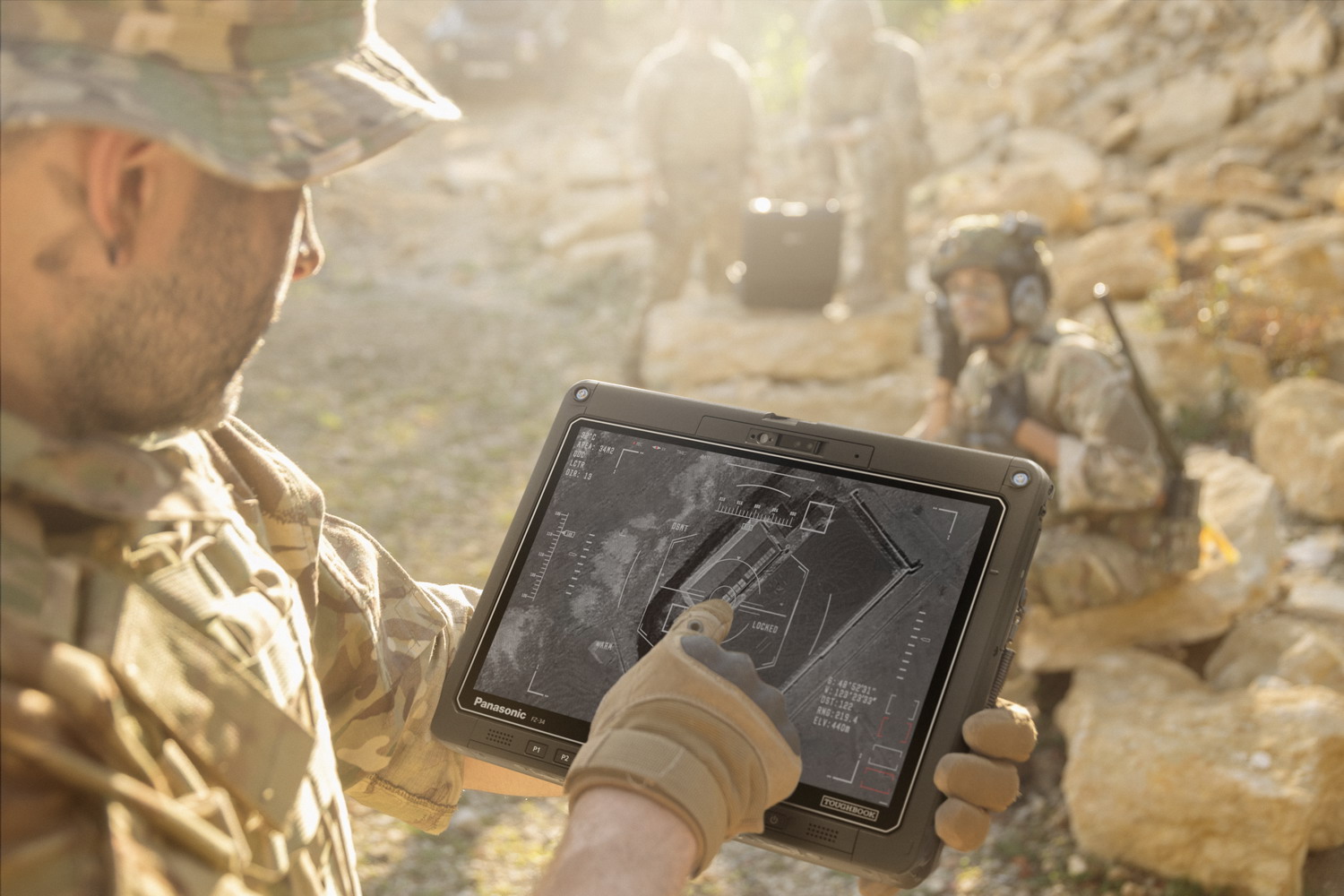
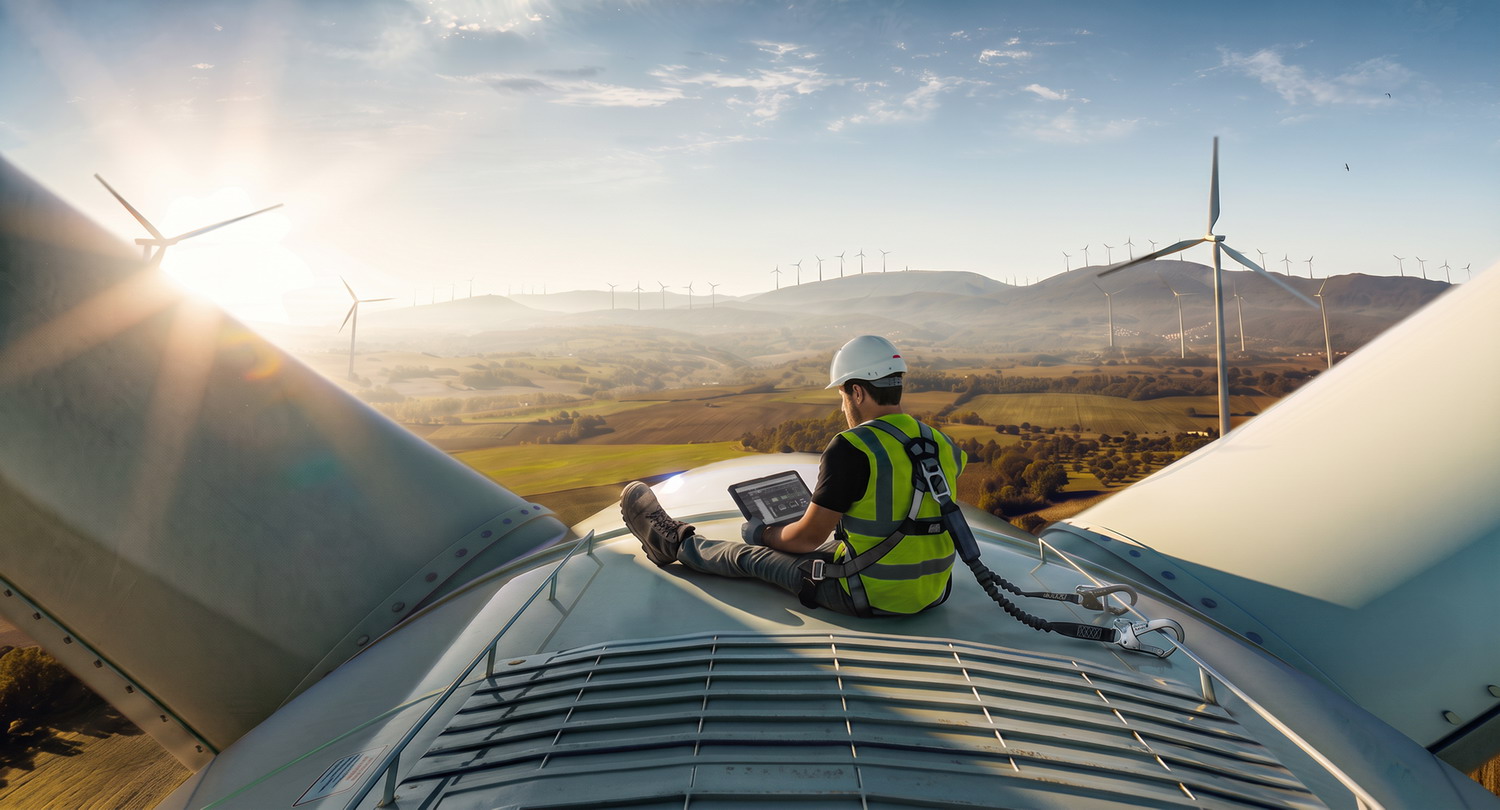
Panasonic identifies tactical command-and-control tools as one of the potential applications for the G3. In this role, the device can serve as an end-user terminal for a C2 system, both inside a vehicle and in dismounted use. The company also lists emergency services, utilities, surveying, manufacturing and logistics among the intended applications.
Certification for Red Hat Enterprise Linux 10 is also relevant for the defense market. Both models can therefore operate with either Windows 11 Pro or RHEL-based environments, which may be important in systems where users seek to reduce dependence on standard commercial Windows images and maintain software over long service cycles.
Environmental resistance
Both models are designed as fully rugged devices. According to their specifications, they can operate in temperatures from -29°C to 60°C and have been tested in accordance with MIL-STD-810H. Declared drop resistance is 1.8 m. The housings also meet IP6x dust-resistance and IPx6 water-resistance requirements.
In the case of the G3, however, Panasonic’s press materials specify that at the time of launch the device was certified to IP65, with IP66 test results expected in the fourth quarter of 2026. This is an important qualification when describing the model as IP66 at launch.
Two devices built around the same concept
From the perspective of professional applications, the main difference between the G3 and the TOUGHBOOK 34 lies in how they are intended to be used.
The G3 is a more mobile terminal for users who frequently carry the device, work inside vehicles or in confined spaces, and may require up to 24 hours of operation on a single battery. The TOUGHBOOK 34, on the other hand, provides a larger workspace and is better suited to tasks requiring simultaneous access to maps, documents, sensor data or C2 applications.
Both devices share Intel Core Ultra processors, modular interfaces, removable OPAL NVMe SSDs, Windows and RHEL support, optional 4G/5G and GNSS connectivity, and a design intended for further integration with vehicles and specialist systems.
The most significant development in the new TOUGHBOOK generation is therefore not the processor specification itself, but the modular architecture. Panasonic is clearly moving toward a model in which one basic hardware platform can be adapted to different groups of users through changes to expansion modules, interfaces, battery systems and mounting arrangements.
