



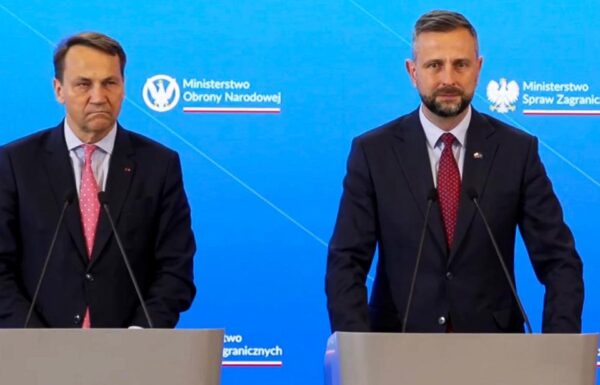











The presentation was attended by Prime Minister Donald Tusk; Deputy Prime Minister and Minister of National Defence Władysław Kosiniak-Kamysz; Minister of the Interior and Administration Marcin Kierwiński; the Government Plenipotentiary for the European Security Enhancement Instrument, Magdalena Sobkowiak-Czarnecka; Chief of the General Staff of the Polish Armed Forces Gen. Wiesław Kukuła; Deputy Minister of National Defense Cezary Tomczyk; and Commander-in-Chief of the Police, Inspector General Marek Boroń.
 According to Prime Minister Donald Tusk, only 0.37% of the funds under SAFE will go to the German-Swedish company. / Photos: Krzysztof Niedziela / Ministry of National Defense
“A well-armed, self-reliant Poland that cooperates wisely with its allies is our number one priority. That is why my government has moved with such determination to design this major program, SAFE. There is no more important issue today. Every day and every hour will affect Poland’s security. That is why our own defense capabilities are crucial,” said Prime Minister Donald Tusk during the event.
“Only SAFE provides a guarantee of security and development. It frees up funds in the budget of the Ministry of National Defence and enables purchases from our key partners – in the United States and in the highly attractive Korean market. It allows us to meet our commitments to our principal partner in the North Atlantic Alliance – the United States – where we already have planned expenditures of approximately 120 billion PLN through 2035. To accomplish all this, and to ensure that developing units also have the appropriate infrastructure, we need budgetary flexibility. SAFE provides that. This is a very important part of the project – it releases a significant portion of funds, allowing us to purchase materially more equipment for the same amount of money,” emphasized Deputy Prime Minister Władysław Kosiniak-Kamysz.
“An important aspect of the use of SAFE funds involves unmanned systems. The dronization of the battlefield has become an absolute priority. For many months, the Polish Armed Forces have been developing dedicated drone forces. The hundreds of drones already being delivered to units are only a prelude to the broader program under discussion. The program includes, among other things: drone strike modules, unmanned reconnaissance-strike systems, intelligent fire control systems, mini-class UAVs, and unmanned naval weapons systems. Another key element of battlefield dronization is the capability to counter them. Counter-drone systems are already part of the Polish Armed Forces’ equipment, and the entire air defense segment against UAVs is becoming one of the pillars of modernization,” noted Deputy Minister of National Defense Cezary Tomczyk.
“The majority of the program’s funding – as much as 89% – will be directed straight to domestic defense companies. These investments are intended not only to meet the armed forces’ current needs but also to provide tangible support to the Police and the Border Guard, as well as to strengthen the protection of Poland’s cyberspace. Funds from the SAFE mechanism in Poland will not be allocated solely to the defense industry. Approximately 170 billion PLN will go to projects directly related to defense. More than 9 billion PLN will be allocated to military mobility projects – that is, infrastructure of strategic importance. Over 7 billion PLN will support projects concerning the Police, the Border Guard, and the State Protection Service. These are concrete figures and concrete investments. These are not declarations, but real funds directed toward state security – both in the military and internal dimensions,” emphasized Magdalena Sobkowiak-Czarnecka, the Government Plenipotentiary for the European Security Enhancement Instrument.
Detailed Breakdown
Funds under the SAFE program total 43,734,100,805 EUR, equivalent to 186.3 billion PLN, including: PLN 170 billion for deterrence, 9.2 billion PLN for military mobility, and 7.1 billion PLN for resilience.
SAFE Allocation for the Ministry of National Defence:
- 28% – 47.6 billion PLN for artillery systems;
- 26% – 44.2 billion PLN for air and missile defense, including counter-drone systems;
- 19% – 32.3 billion PLN for land combat and support systems;
- 14% – 23.8 billion PLN for ammunition and missile systems;
- 8% – 13.6 billion PLN for strategic airlift and space-based assets;
- 3% – 5.1 billion PLN for advanced technologies (cyber, AI, electronic warfare);
- 2% – 3.4 billion PLN for the “Secure Baltic” program.
According to estimates by the Armament Agency, 89% of the funds will be spent in Poland, while 11% will be allocated abroad.
Tasks and Projects of the Ministry of National Defense
- National Deterrence and Defence Program – “East Shield”
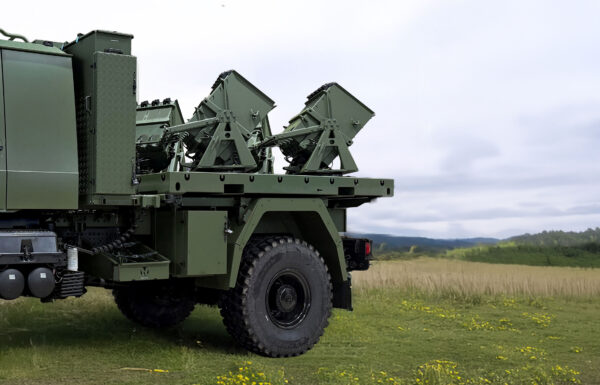
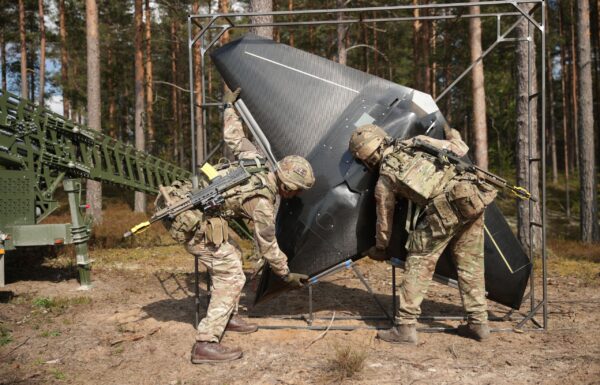
- San counter-drone system (Polish industry + foreign partners)
- SA-35 gun system (Poland)
- 12.7 mm WLKM heavy machine gun (Poland)
- 30 mm cannon (Norway + USA)
- APKWS launcher (USA)
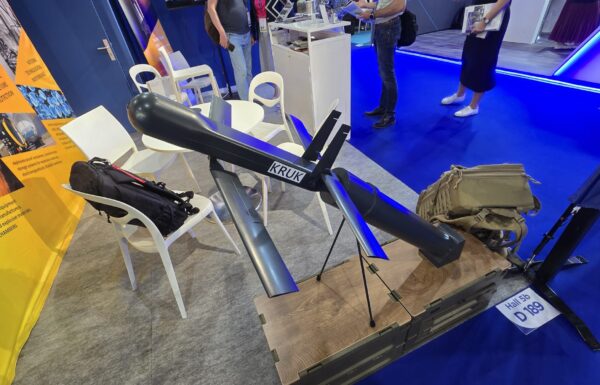
- MEROPS loitering munition (USA)
- ULTA and FOLLOW radars (Poland) and Xenta-M (Denmark)
- Electronic warfare vehicles (Polish industry + foreign partners)
- FlyEye mini-UAV systems (Polish industry) miniaturowe BSP typu FlyEye (polski przemysł)
- Gladius unmanned reconnaissance-strike system (Polish industry)
- Baobab-K scatterable mine-laying vehicles (Polish industry)
- Medium satellite terminals (Polish industry)
- Mine-laying systems (Polish industry)
- San counter-drone system (Polish industry + foreign partners)
- Engineering and barrier systems (Poland)
- Controlled demolition charge system (Poland)
- Guided anti-tank mine system (Poland)
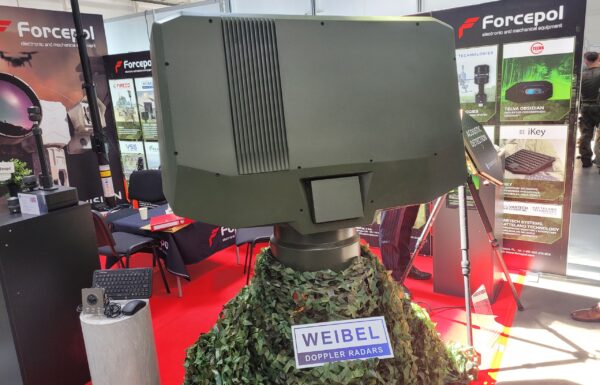
- Battlefield surveillance radars (foreign industry)
- Unmanned naval weapons systems (foreign industry with Polish participation)
- Additional Carl Gustaf M4 anti-tank grenade launchers (foreign industry) kolejne granatniki przeciwpancerne Carl Gustaf M4 (przemysł zagraniczny)
- Helmets, body armor, and MSBS Grot rifles (Poland)
- ELINT electronic intelligence systems (foreign industry)
- Armored Vehicles and Artillery:
- M120K Rak company fire modules (Poland)
- Regina division fire modules with 155 mm Krab self-propelled howitzers (Poland)
- Borsuk infantry fighting vehicles (Poland)
- Rosomak wheeled armored personnel carriers (Poland)
- Medical evacuation vehicles based on the Rosomak platform (Poland)
- BAR radiosonde atmospheric sounding systems (Poland)
- Kleszcz Light Armored Reconnaissance Transporters (Poland)
- 155 mm artillery ammunition (Poland)
- Air and Missile Defense:
- Piorun man-portable air defense systems (Poland)
- Sajna multifunction fire-control radars for short-range air defense systems (Poland)
- Optoelectronic sensors for short-range air defense systems (Poland)
- Mobile communication nodes for short- and medium-range air defense systems (Poland)
- Air Force and Space Assets:
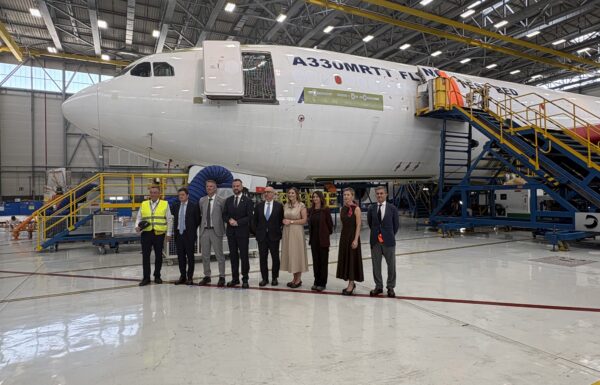
- MRTT aircraft: aerial refueling tankers and military transport aircraft (foreign industry)
- Training-combat helicopters (foreign industry with Polish participation)
- Satellite terminals operating in C, Ku, X, and Mil-Ka bands (Poland)
- SAR Earth Observation system (with participation of Polish industry)
- Medium satellite terminals (Poland)
- Reconnaissance Systems Integrator (Poland)
- GEO geostationary satellite (with participation of Polish industry)
- Cybersecurity, Artificial Intelligence, and Electronic Warfare:
- Secure data exchange systems between automated command systems across different classification levels (Poland)
- Mobile cryptography management center for cyber operations (Poland)
- Next-generation post-quantum IP encryptor for identification friend-or-foe (IFF) systems (Poland)
- High-assurance cryptographic system for application-layer communication protection (Poland)
- Tactical environment for dynamic generation and management of cryptographic keys (Poland)
- Modular containerized server rooms (Poland)
- Satellite terminals operating in C, Ku, X, and Mil-Ka bands (Poland)
- Mobile cybersecurity laboratories (Poland)
- Secure Baltic:
- Ratownik rescue vessel (Poland)
- Hydrograf hydrographic vessel (Poland)
- Kormoran II mine-hunting vessels (Poland)
- Military Mobility:
- Modernization and adaptation of key cross-border rail links with Germany and the Czech Republic, and road connections with Germany and Lithuania, to meet military mobility requirements
- Projects implemented by national transport infrastructure managers
Tasks and Projects of the Ministry of the Interior and Administration
- A total of 42 projects worth over PLN 7.1 billion, including: 21 projects for the State Protection Service (SOP), 10 projects for the Police, and 11 projects for the Border Guard.
- Police (3.3 billion PLN, of which 77.2% with participation of Polish industry)
- Drone detection and neutralization systems and drones for public space monitoring: Unmanned aerial vehicles and a nationwide counter-drone system designed to detect and neutralize UAVs.
- Transport equipment: Light armored transporters (LTO), vehicles for transporting explosives, and RIB boats.
- Weapons, personal and protective equipment: Submachine guns, support carbines, machine guns, body armor, helmets, and gas masks.
- ICT systems and software: This project includes the purchase of a large-scale artificial intelligence system to automate Police operations, as well as a secure internal police email system.
- Border Guard (3.2 billion PLN, of which 81% with participation of Polish industry)
- Systems for the land and maritime sections of the state border for UAV surveillance, detection, and neutralization:
- Passive and active radars, as well as radio scanners installed on existing observation towers for UAV detection
- Stationary electronic neutralizers designed for radio-frequency disruption of UAVs
- Kinetic neutralizers in the form of interceptor drones for physical neutralization of UAVs
- Long-range optoelectronic observation devices
- Communication and data transmission equipment
- Equipment and systems for the protection of critical infrastructure:
- Kinetic neutralizers in the form of heavy machine guns mounted on armored off-road vehicles for physical UAV neutralization and critical infrastructure protection
- Ammunition for heavy machine guns
- Day-and-night cameras using artificial intelligence for object detection
- Thermal imaging cameras using artificial intelligence for object detection
- Aircraft and vessels – including in particular the purchase of:
- Modern multi-role, multi-engine turbine-powered helicopters for defense operations, along with onboard weapons and technical equipment
- Patrol and pursuit vessels, along with onboard weapons and technical equipment
- Weapons, personal and protective equipment:
- Machine guns, carbines, grenade launchers, ballistic helmets, body armor, ballistic plates, gas masks, protective clothing, thermal imaging cameras, thermal monoculars, and night vision goggles.
- Ammunition for the Border Guard, Police, and SOP
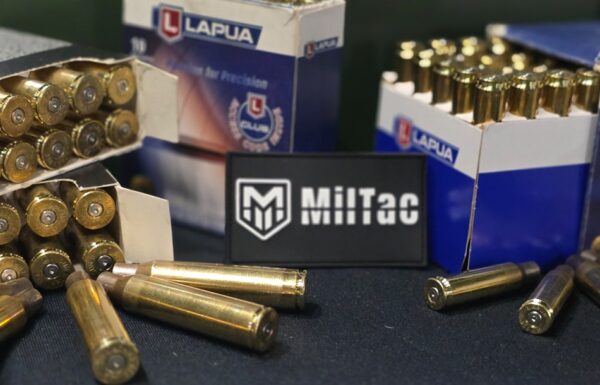
- The project includes the purchase of 9×19 mm Parabellum ammunition.
- Systems for the land and maritime sections of the state border for UAV surveillance, detection, and neutralization:
- State Protection Service (SOP) (643 million PLN, of which 80.7% with participation of Polish industry)
- Threat detection systems, including UAV detection and counter-UAV capabilities
- Mobile shelters and decontamination posts
- Systems for reconnaissance, analysis, and blocking of telecommunications and radio networks and transmissions
- Weapons, personal and protective equipment
- Carbines, machine guns, grenade launchers
- Ballistic helmets and body armor
- Night vision and thermal imaging equipment
- Explosive ordnance disposal (EOD) equipment:
- Reconnaissance robots
- Detection and warning devices, including spectrometers
- Mobile decontamination units/points
- Protective suits for EOD and radiological operations
-
- Transport equipment:
- Armored off-road vehicles
- Trucks and passenger off-road vehicles
- Specialized vehicles, including those designed for transporting explosives
- Transport equipment:
Following the presentation, the Chief of the General Staff of the Polish Armed Forces, Gen. Wiesław Kukuła, emphasized that the SAFE loan will free up additional funds for the procurement of systems that were originally planned to be acquired after 2030. These include high-end and low-cost long-range strike capabilities, additional fifth-generation multirole aircraft (F-35 Husarz – editor’s note), and heavy transport helicopters. According to analyses by the General Staff, the entry into force of the SAFE instrument will provide the Polish Armed Forces with an additional 30 billion PLN in 2027–2030, made available as a result of the mechanism.


