



















This required rapid decision-making given the tight implementation schedule. As a result, the contract, signed on January 30 of this year between the Armament Agency and a consortium composed of the Polish Armaments Group and Norway’s Kongsberg Defence & Aerospace, is to be completed within just 24 months from the date of signing (San Program: 18 Counter-Drone System Battery Modules to Be Delivered to the Polish Armed Forces).
 Photo: corporal Wojciech Król/MOND
The San system combines a range of air defense assets with electronic warfare capabilities, forming the lowest layer of integrated air defense. The selection of components strongly positions San within what are referred to in English as C-UAS (Counter Unmanned Aerial System), commonly known as counter-drone systems. However, this is not its sole function. The weapon systems included, particularly the artillery components, fully retain the capability to engage conventional aerial targets such as aircraft, helicopters, and cruise missiles.
The primary engagement assets within the San system will be artillery-based air defense systems: the 30 mm Mk 44S Bushmaster II anti-aircraft cannon, the 35 mm SA-35 anti-aircraft cannon (based on the Oerlikon KDA gun) developed by PIT-RADWAR, and the 12.7 mm WLKM heavy machine gun designed by Zakłady Mechaniczne Tarnów (ZM Tarnów). These will be complemented by additional counter-air capabilities, including APKWS II guided rocket launchers, MEROPS counter-drone unmanned systems, and electronic warfare assets designed to disrupt unmanned aerial vehicles.
Organizationally, San components will form batteries composed of three firing platoons and one support platoon, the latter combining command and logistics functions. In total, the contract covers 18 batteries, comprising 54 firing platoons and 18 support platoons. A notable feature is the high degree of autonomy assigned to each firing platoon, reflected in its structure. Each platoon will have its own command and control post, three APS FIELDctrl family radars (one Ultra and two Follow variants), and five of the six previously mentioned engagement assets, one of each type. The exception concerns the heavy machine gun: in each battery, two firing platoons will be equipped with the 12.7 mm WLKM, while the third platoon will instead field the 35 mm SA-35 cannon.
Each firing platoon will also include an ammunition vehicle consisting of a Jelcz 6×6 cargo truck with a trailer.
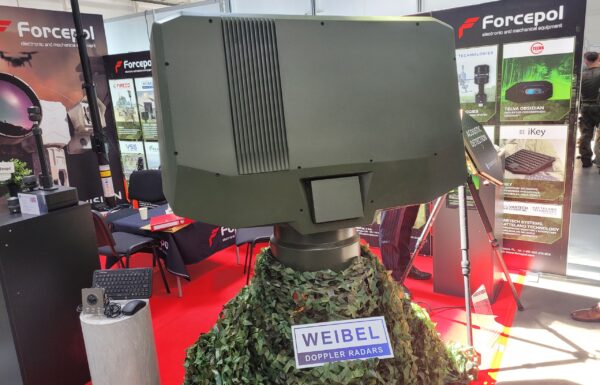
Command of the firing platoons will be exercised from the battery-level command post, using solutions from the Pilica system. It will be equipped with a Weibel Xenta-M radar, providing the battery commander with a broader and higher-altitude air picture than that available from the APS FIELDctrl radars at the platoon level. A Legwan reconnaissance vehicle will also operate at the battery level.
Command and reconnaissance assets will be supported by a logistics component, mounted on Jelcz 6×6 chassis, including:
- an artillery workshop vehicle,
- a radar workshop vehicle,
- a fuel tanker,
- two transport vehicles.
According to the Armament Agency, the majority of the 18 San batteries will be assigned to four Land Forces anti-aircraft regiments. Sixteen batteries will reinforce these units, forming four-battery battalions within each regiment. The remaining two batteries will be assigned to the 3rd Warsaw Air Defense Missile Brigade, where they will be subordinated to the Pilica+ system, jointly creating a layered shield for the Wisła medium-range air defense system.
The planned placement of San within Poland’s air defense architecture indicates that it should primarily be regarded as the lowest layer of Land Forces air defense. The four existing divisions each operate one anti-aircraft regiment, all of which are scheduled to receive the San system within the next two years. These are:
- The 4th Zielona Góra Anti-Aircraft Regiment (Czerwieńsk/Leszno), part of the 11th Lubusz Armored Cavalry Division;
- The 8th Koszalin Anti-Aircraft Regiment (Koszalin), part of the 12th Szczecin Mechanized Division;
- The 15th Gołdap Anti-Aircraft Regiment (Gołdap/Elbląg), part of the 16th Pomeranian Mechanized Division;
- The 18th Zamość Anti-Aircraft Regiment (Zamość), part of the 18th Mechanized Division
Currently, anti-aircraft regiments field three types of battalions:
- Units equipped with 2K12 Kub surface-to-air missile systems – four battalions in total (4th Regiment: 1; 8th Regiment: 1; 15th Regiment: 2);
- Units equipped with 9K33 Osa-AK/AKM surface-to-air missile systems – two battalions each in the 4th and 8th Regiments;
- Units equipped with Poprad self-propelled short-range air defense systems, ZUR-23-2KG gun-missile systems, and Grom and Piorun man-portable air defense systems – one such battalion in each regiment.
Additionally, both the 15th and 18th Regiments each operate one battery of the Mała Narew system armed with CAMM missiles, serving as an interim solution pending delivery of the target Narew systems equipped with CAMM-ER missiles. By the end of 2025, both regiments were also scheduled to receive four MEROPS counter-drone systems.
According to statements by Gen. Marciniak, San will replace or complement the existing equipment in battalions currently operating Poprad, ZUR-23KG, and Grom/Piorun systems. These are tactical fire units responsible for direct air defense of troops and facilities in tactical operations, countering aircraft, helicopters, and UAVs approaching from all directions at low and medium altitudes. San is most likely intended to fulfill precisely these roles.
As the Kub and Osa missile-equipped battalions are expected to be reequipped in the future with the new Narew short-range systems, the Land Forces’ anti-aircraft regiments will ultimately consist of battalions armed with Narew, San, and Piorun systems.
How San Is Built
The core of the San system will be the SanView C2 command-and-control system developed by Advanced Protection Systems (APS). Its role will be to integrate all constituent elements and manage the system as a whole. It will also fuse data from all sensors to generate a Local Air Picture (LAP). The firing platoon command post, mounted on a Jelcz 442.32 vehicle and based on the SanView C2 software, will collect data from the platoon’s sensors: one APS FIELDctrl Ultra radar, two APS FIELDctrl Follow radars, an electronic intelligence system, and optoelectronic devices, ensuring data fusion and the distribution of information to effectors.
 FIELDctrl Ultra / Photo: APS
In total, the San system will include 54 firing platoon command vehicles based on the Jelcz 442.32 platform.
The aforementioned APS radars will provide radar information at this level. Devices from the FIELDctrl family are designed to detect very small aerial targets. They operate using continuous wave transmission at 9.7–10 GHz (X-band). Their software classifies detected targets using more than 20 predefined classification categories. This enables operators to determine the nature of detected objects and assess whether they pose a threat, and of what type, or whether the object is, for example, a bird.
The FIELDctrl Ultra radar operates at 200 W, enabling it to detect a target with a radar cross-section of 0.01 m² at a distance of 6 km. It will be mounted on a Legwan vehicle and serve at the platoon level as a 360-degree surveillance and tracking radar.
 FIELDctrl Follow / Photo: corporal Wojciech Król/MOND
The two FIELDctrl Follow radars will be used to designate targets for the effectors. Detailed technical parameters of this radar have not been publicly disclosed beyond its instrumental range of 50 km. The system was developed in response to requirements formulated by the Ukrainian Armed Forces, based on their battlefield experience. Due to its operational use in Ukraine, precise performance data have not been released, although its parameters are likely comparable to those of other radars in the same family. In total, 54 APS FIELDctrl Ultra radars and 108 FIELDctrl Follow radars will be procured. All will be mounted on Legwan vehicles.
Detected targets may be engaged by each platoon using five different types of effectors. As noted earlier, their configuration will vary. Each of the 54 firing platoons will be equipped with:
- a 30 mm Mk44S Bushmaster II cannon,
- an APKWS II rocket launcher,
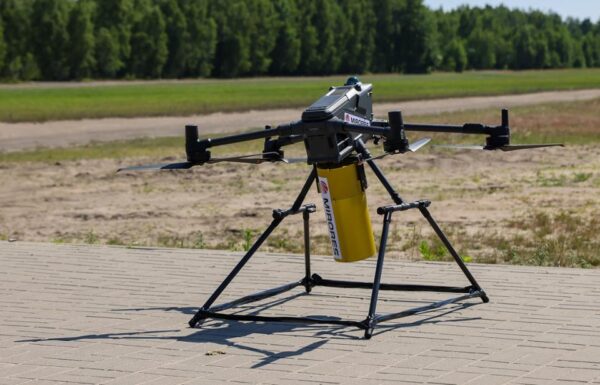
- a MEROPS counter-drone launcher,
- a jamming device.
In the case of the 35 mm SA-35 cannon and the 12.7 mm WLKM heavy machine gun, these two systems will be used interchangeably. The first and second platoons in each battery will be equipped with the WLKM, while the third platoon will field the SA-35 cannon.
MEROPS
The MEROPS counter-drone (interceptor) system was delivered to Poland in early November 2025 (the Minister of National Defence announced this on November 7 of last year). In the same month, it underwent trials at the Nowa Dęba training range. A total of four systems were received and assigned to the 15th Anti-Aircraft Regiment of the 16th Mechanized Division and the 18th Anti-Aircraft Regiment of the 18th Mechanized Division, units stationed along Poland’s eastern and northern borders.
 Photo: major Agnieszka Wróblewska, DG RSZ
In the version delivered last year, a single MEROPS system was operated by six soldiers and transported using three vehicles: one carrying the command post, a second transporting a Leonardo (formerly Rada) MHR (Multi-Mission Hemispheric Radar), and a third, a Ford Ranger equipped with a launcher for the AS3 Surveyor counter-drone interceptor.
In the San-integrated version, the MEROPS launcher, together with its guidance antenna, will be mounted on a Legwan vehicle. For target detection and guidance, the Polish APS FIELDctrl Follow radar will be used instead of the Leonardo MHR radar.

The inclusion of MEROPS within San may raise questions, as Deputy Chief of the General Staff Lt. Gen. Stanisław Czosnek previously emphasized that it was intended as a temporary solution and that Poland was developing its own domestic counter-drone system to eventually replace the American one. He also noted that the military did not wish to procure equipment in quantities that would simply sit on shelves. However, by integrating MEROPS into San, Poland is effectively acquiring as many as 54 such systems, which appears to contradict the general’s earlier remarks.
Based on limited available data, MEROPS has reportedly been successfully used in combat in Ukraine, with artificial intelligence algorithms employed in the guidance process. Without more detailed information, it is difficult to assess how mature the system is and whether it will remain relevant by the time it enters service as part of San. During the ongoing war in Ukraine, UAVs and counter-UAV measures have been evolving rapidly, with current methods and solutions sometimes becoming outdated or even ineffective within a matter of months. The concept of using unmanned systems to counter aerial targets initially emerged out of necessity. The mass deployment of reconnaissance UAVs by Russian forces, combined with the inability to provide sufficient numbers of traditional air defense systems to counter such volumes of targets, forced the search for alternative solutions. Initially, standard FPV drones, the same types used for ground attacks, were employed against UAVs. The first publicly known shootdown of a reconnaissance drone using an FPV system occurred in February 2024, carried out by an operator from the 126th Territorial Defense Brigade. Over time, specialized designs capable of speeds approaching, or even exceeding, 300 km/h were developed. The AS3 Surveyor used in MEROPS is one such example.
Undoubtedly, this method of countering hostile UAVs holds significant potential. Its relatively low cost, approximately 15,000 USD in the case of the AS3 Surveyor (Ukrainian designs are reportedly several times cheaper), allows for economically viable engagement of low-cost aerial threats deployed by Russia. However, the development of such systems is still in its early stages, and progress in this field is often extremely rapid.
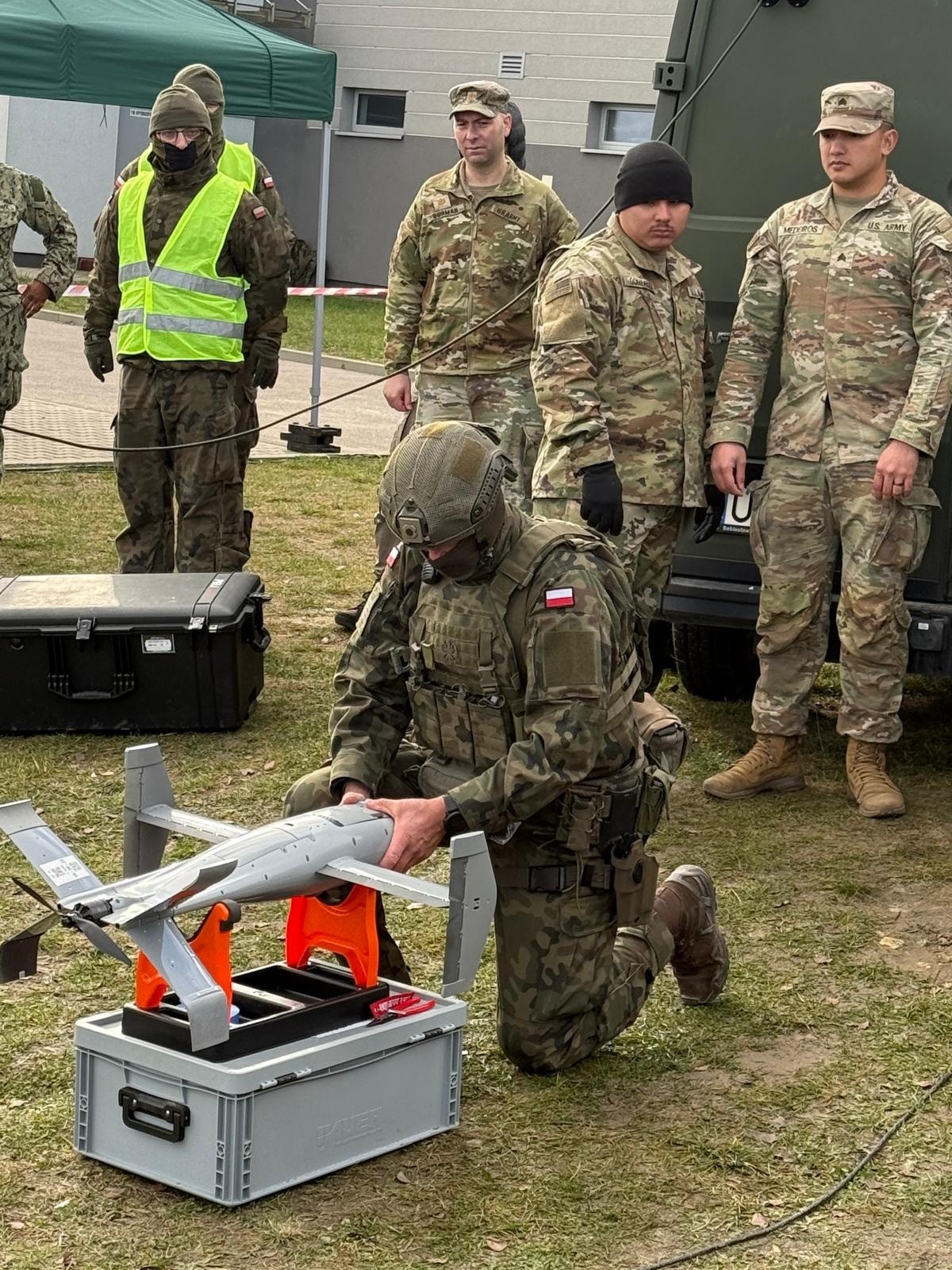
Ukrainian air defense units employing these systems (with some regiments already forming dedicated interceptor drone battalions) report both advantages and drawbacks. Clear advantages include low cost and relatively extended operational range – targets are now being engaged at distances exceeding 25 km from the launch point. On the other hand, these systems are currently single-channel (one operator per target) and feature a relatively long guidance cycle due to their limited speed. The predominantly optical guidance method also imposes significant constraints, particularly in adverse weather conditions. According to many users, until greater automation is introduced and a single operator can simultaneously control multiple interceptors, such systems will face substantial limitations and remain supplementary to traditional air defense assets.
To what extent these observations apply specifically to MEROPS remains unclear. While there is little doubt that such systems should be procured and tested, introducing a specific model on a large scale appears to carry inherent risk. By the time deliveries begin, newer and more advanced solutions may already exist – and the systems just entering service could prove comparatively less effective.
APKWS II
Another solution that has already seen operational use in Ukraine is the AGR-20 APKWS II (Advanced Precision Kill Weapon System) guided rocket. These are 70 mm Hydra 70 unguided rockets fitted with a WGU-59/B laser guidance module. Originally intended for precision engagement of ground targets from airborne platforms, they were delivered to Ukraine in a configuration adapted for countering aerial targets. In this variant, an L3Harris VAMPIRE (Vehicle-Agnostic Modular Palletized ISR Rocket Equipment) targeting system, along with a four-rail Arnold Defense Land-LGR4 launcher, was mounted on an M1152A1 Humvee vehicle.
 Photo: L3Harris Technologies
This solution, too, was largely driven by shortages of conventional air defense munitions and the need for cost-effective means to counter large numbers of inexpensive UAVs. The effective range against aerial targets is relatively limited and does not exceed a few kilometers (likely around 4 km; when launched from a helicopter, APKWS II has a range of approximately 5–6 km). The engagement ceiling using the current ammunition configuration will also be modest. The principal advantage of this solution lies in the low cost of the rockets. In the most recent large procurement, a single WGU-59/B guidance module cost approximately 31,700 USD, while the Hydra 70 rocket itself costs under 3,000 USD. In Poland, Mesko produces the 70 mm NLPR-70 rocket, which could also be converted into guided variants. However, as of the publication date of this article, the MILMAG editorial team had not received an official statement from Mesko regarding the possible production of rockets for the San system.
 Image: BAE Systems
Within San, 54 launchers will be mounted on Legwan vehicles. Each system will consist of an optoelectronic targeting head and a launcher with an unspecified number of rails. Military requirements call for a minimum of 4 rails, although a 16-rail launcher is reportedly under consideration.
30 mm Cannon
The most widely used artillery asset within the San system will be the 30 mm Mk 44S Bushmaster II cannon mounted in the Kongsberg MCT-30 turret. It will be installed on a 20-foot containerized platform. In addition to the turret and cannon, the platform will house power supply components, communication systems, and cabling. It will be transported by a Jelcz 6×6 truck. Conceptually, the artillery platform resembles solutions used in the SA-35 system and the Terrahawk Paladin developed by MSI Defence Systems. It is not yet clear whether the San platform can fire directly from the transport vehicle’s chassis or only when deployed on the ground (Kongsberg Defence & Aerospace on Its Participation in the San Program).
 Photo: KDA
The cannon can employ Mk 310 PABM-T programmable airburst ammunition, a feature particularly valuable when engaging small aerial targets. Its effective range with this ammunition is approximately 2 km. When using FAPDS-T sub-caliber ammunition, the effective engagement range against aerial targets increases to 3.5 km, enabling the engagement of larger, lightly armored targets (such as helicopters). Both types of ammunition are intended to be manufactured by Mesko (currently, only the sub-caliber variant is in production).
35 mm SA-35 Cannon
The second artillery asset within the San system is to be the 35 mm SA-35 cannon developed by PIT-RADWAR. It was created by mounting the naval AM-35K gun on a platform the size of a standard 20-foot container, which was then installed on the chassis of a prototype Jelcz P663.45 T60 vehicle. The design was developed on the company’s own initiative as a demonstration of its ability to deliver a product based on existing solutions, thereby minimizing the time between contract award and delivery. For this reason, no formal, even preliminary, tactical or technical requirements were issued by the Ministry of National Defence. As such, the SA-35 should be regarded as a technology demonstrator rather than a fully mature, ready-for-service product.
 SA-35 / Photo: Jakub Link-Lenczowski, MILMAG
It therefore remains unclear whether the SA-35 will enter the San system in its current configuration or whether the military will define detailed tactical and technical requirements. The tight implementation schedule leaves little room for design modifications, and the serial production of the ordered guns will pose an additional challenge. These factors may explain why only one-third of San firing platoons will be equipped with the SA-35, meaning only 18 units will be procured (Polish 35 mm SA-35 Self-Propelled Anti-Aircraft Gun with PIT-Radwar).
The Oerlikon KDA cannon used in the SA-35 is the most capable artillery system selected for San. When employing existing programmable ammunition, its effective engagement range is approximately 3 km (although some manufacturers cite up to 4 km for comparable systems), representing at least a 50% increase over the Mk 44S Bushmaster II. A Polish programmable round is also under development under the SAP-35 program. While not yet complete – the R&D phase has been extended until the end of the current year – there is a growing recognition that larger calibers offer enhanced effectiveness against small aerial targets. Programmable airburst rounds of greater mass provide an increased lethal radius, thereby improving the probability of fragmentation-based target neutralization. The difference between 35×228 mm and 30×173 mm ammunition is significant: 750 grams versus 360 grams. In the context of such threats, larger calibers appear to offer certain advantages, despite their greater weight and reduced ammunition capacity.
At the most recent edition of the International Defence Industry Exhibition (MSPO) in Kielce, the SA-35 was presented with the integrated Tuga X-band radar. A single antenna module can be used for fire control of the 35 mm gun, while four antennas can provide 360-degree coverage around the vehicle. In response to a question from the MILMAG editorial team, the Armament Agency stated: “In accordance with the assumptions, the SAN system is to utilize products that have reached at least Technology Readiness Level (TRL) 8. However, the open architecture of the C2 system allows for future modifications of the battery in line with the needs of the Polish Armed Forces.” This indicates that the military does not rule out future integration of the Tuga radar within the San system (MSPO 2025: Another variant of the Tuga radar from PIT-Radwar).
12.7 mm WLKM Multi-Barrel Heavy Machine Gun
Another fire asset intended to complement the 30 mm Mk 44S Bushmaster II cannon is the four-barrel 12.7 mm WLKM heavy machine gun developed by Zakłady Mechaniczne Tarnów (ZM Tarnów). Two of the three platoons in each battery are to be equipped with this weapon. Without more detailed information about its intended role within the platoon structure, it is difficult to assess the rationale for its selection. The limited effective range of this type of weapon, generally not exceeding several hundred meters, effectively restricts its role to close-in self-defense of the platoon’s position. If that is the case, however, its absence from the third platoons, equipped only with 35 mm and 30 mm cannons, raises questions.
 12.7 mm WLKM on Legwana / Photo: corporal Wojciech Król/MOND
The 12.7 mm WLKM remains the most enigmatic component of the system. While the 35 mm and 30 mm cannons have undergone extensive testing and are already in service with the Polish Armed Forces, the multi-barrel machine gun, sometimes referred to in the media as the ‘Monster from Tarnów,’ is still under development by the manufacturer. When asked about the maturity level of the WLKM, the Armament Agency stated: “During negotiations, the contractor declared that the WLKM had achieved Technology Readiness Level (TRL) 8. The Armed Forces analyzed the capabilities and durability of the main components of all SAN system elements, and the contract includes the necessary quantities of spare parts.”
This was confirmed to MILMAG by the Polish Armaments Group, which declared: “The 12.7 mm WLKM machine gun has entered serial production. The 12.7 mm machine gun has completed factory testing, and preparatory work has commenced for extended factory trials (resulting from the full configuration of the 12.7 mm WLKM firing unit under the ‘SAN’ program), which will precede military qualification trials. Deliveries under the ‘SAN’ program are currently scheduled for 2026–2027. Additionally, capabilities and opportunities for offering the system on export markets from 2027 onward, as well as further development of the design, are being analyzed.”
 12.7 mm WLKM / Photo: corporal Wojciech Król/MOND
Zakłady Mechaniczne Tarnów itself stated only that detailed requirements and technical and configuration information regarding components delivered under the SAN program are subject to formal restrictions and cannot be disclosed publicly or used in media publications.
Reconnaissance and Electronic Warfare Assets
Battery-Level Command and Control
The firing platoons will be managed from the battery command level. The command post will be housed in a container transported on a Jelcz 6×6 chassis. This solution will integrate the platoon-level command system based on APS SanView C2 software with the system developed by PIT-RADWAR for the Pilica+ system. By supporting standardized ASTERIX and JREAP-C data exchange protocols, the San command structure will be integrated into Poland’s Integrated Air Defense System. In addition to receiving information from higher command echelons, namely the battalion command post (currently equipped with the Łowcza-3 system), the battery command post will collect radar data from subordinate platoons and its own radar system.
 Xenta-M / Photo: Weibel
This organic detection asset will be the Danish Weibel Xenta-M radar mounted on a mast and transported on a Jelcz-produced trailer. Like the FIELDctrl radars at the platoon level, it operates in the X-band using continuous-wave transmission. However, it differs in having greater power – 240 W – and a longer instrumental range of 75 km. This will allow the battery commander to detect larger radar cross-section targets at greater distances and at earlier stages.
According to information provided to the MILMAG editorial team by the Armament Agency, the composition of individual San platoons is expected to be as follows:
Pluton wsparcia

Pluton ogniowy

Note: Item 8 is configured alternatively:
8a – one 35 mm SA-35 cannon in one platoon per battery;
8b – one 12.7 mm WLKM heavy machine gun in two platoons per battery.
In total, the entire San system will require 666 vehicles: 234 Jelcz 6×6 trucks, 54 Jelcz 442 vehicles, 378 Legwan vehicles, and 72 specialized trailers—18 for transporting radars and 54 for transporting ammunition.
What San Will Be
In many statements, San is presented primarily as a system intended to counter drones, including as a response to threats arising from the mass use of aerial attack assets such as Russia’s widely deployed Geran (Shahed) family. However, the logic behind assigning batteries to specific military units suggests that this is only partially true. Fundamentally, San will serve as a means of protecting own forces against aerial attack assets, including, of course, the increasingly dangerous and numerous unmanned systems commonly referred to as drones.
It is important to clarify that the term drone is highly imprecise, encompassing platforms that differ significantly in purpose, performance parameters, and size. NATO classifies unmanned aerial vehicles into three categories:
– Class I – up to 150 kg, including:
a) Small: 15–150 kg
b) Mini: 2–15 kg
c) Micro: below 2 kg
– Class II – Tactical: 150–600 kg
– Class III – Operational/strategic: above 600 kg
Thus, the general term covers systems ranging from Class I reconnaissance UAVs, micro platforms such as the DJI Mavic, mini systems such as the Zala 421-16, to Class III systems such as the Orion UAV, weighing over 1,000 kg.
A separate category includes so-called “kamikaze drones,” which in functional terms are essentially guided munitions. At present, these are mainly found within Class I (numerous FPV designs) and Class II (Geran/Shahed).
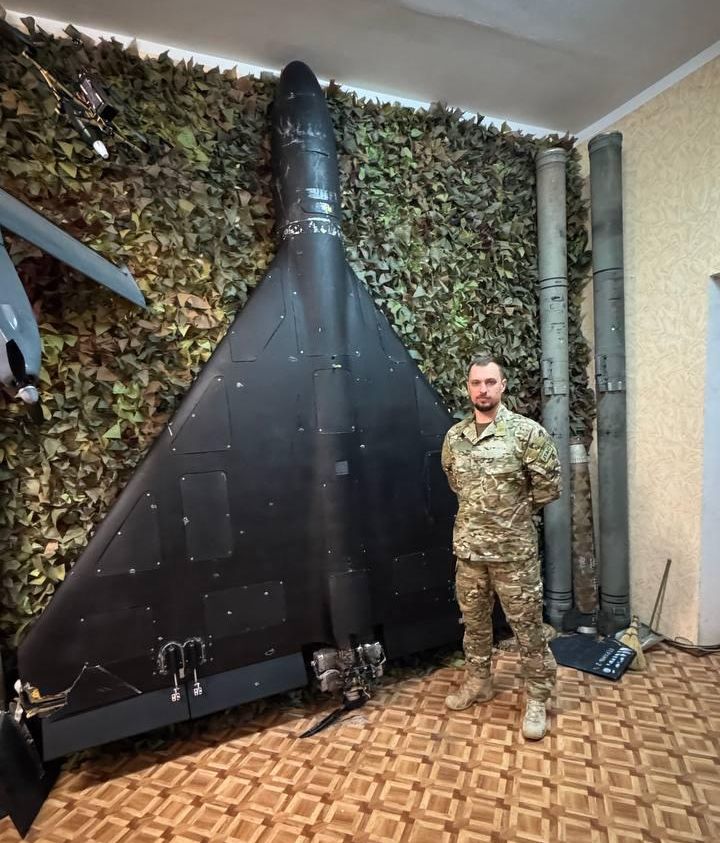 Geran-2 (Shahed-136) / Photo: YT29JTacRomeo via Telegram
San’s technical parameters will primarily enable it to engage Class I UAVs and, to a limited extent, Class II platforms. The characteristics of targets in these two categories differ sufficiently that, in many cases, they may require distinct countermeasures. In particular, Class II UAVs already possess flight ceilings exceeding the capabilities of very short-range air defense systems, the category to which San belongs. The widely used Geran systems can reach altitudes above 4,000 meters (during the May 25, 2025, attack, a record 4,900 meters was reached), placing them beyond the reach of most artillery-based air defense assets during cruise flight.
The principal mission of anti-aircraft regiments within combined-arms divisions is likely to remain unchanged: protecting high-value elements of the divisional formation, command posts, artillery units, and logistical support components. Defense of national infrastructure, let alone the entire country, will only be possible if a given facility falls within the unit’s area of responsibility or if an aerial threat passes through that zone.
The same applies to the two batteries designated for the 3rd Warsaw Air Defense Missile Brigade. Their role will be to protect the Wisła medium-range air and missile defense systems, not to provide broad-area infrastructure defense.
Attributing to San a special role in nationwide defense or in building an “anti-drone wall on the border” is therefore more journalistic rhetoric than operational reality. Technically, San could perform well in point defense of key infrastructure such as airports, bridges, major industrial facilities, or energy infrastructure. However, it cannot effectively secure national airspace against UAV incursions on a territorial scale. Establishing area defense using very short-range fire systems would be entirely inefficient – both in terms of cost and in terms of their ability to counter a concentrated, mass aerial attack. Moreover, the tactical and technical characteristics of potential threats are evolving. The growing adoption of low-cost jet engines in UAVs is increasing their speed and ceiling, even in mass-produced, relatively inexpensive models, pushing them beyond the reach of existing systems.
San was identified by the General Staff of the Polish Armed Forces as an urgent operational requirement. This largely defined its composition, as the short delivery timeline necessitated a procurement-with-adaptation approach. The system had to be configured using existing solutions at least at Technology Readiness Level 8, meaning that development is complete, parameters have been verified through testing, and operational suitability has been confirmed.
In other words, individual components were procured “off the shelf,” with their integration into the final system planned afterward. Very little time has been allocated for this process. According to Gen. Marciniak’s timeline, all testing is to be conducted this year. The first phase will verify manufacturers’ declared performance parameters. The next phase will test integrated components at platoon level, and the final phase will test full battery-level integration. In the second half of 2026, tests are scheduled at the Central Air Force Training Range in Ustka and are expected to be completed by the end of the year. Serial deliveries are planned for 2027. Only toward the end of the current year—once parameters and interoperability have been validated—will it become clear whether the announced system composition proves viable in practice.
The compressed timeline likely influenced the system’s configuration. The current structure of a San firing platoon resembles an experimental subunit incorporating various available fire assets for evaluation. The result is unprecedented in Polish practice. Three radars of two types, five different kinetic engagement systems (including three artillery types), plus reconnaissance and electronic warfare assets, all at platoon level, create extraordinary complexity. Traditionally, the platoon level operated essentially one type of weapon system (occasionally two, as in the ZUR-23-2KG gun-missile system). A San platoon more closely resembles a traditional battery, or in some respects even a battalion.
This configuration will likely pose logistical challenges (three different types of small-arms/artillery ammunition) and personnel challenges. Most components appear only once per platoon, complicating replacements in the event of losses. It is unrealistic to expect every soldier to be proficient across such a wide array of systems. Whether this structure will function effectively remains to be seen, and with 15 billion PLN invested, it would be prudent to ensure the funds are optimally allocated.
Some of the solutions incorporated into San have been tested in Ukraine; others remain prototype designs with uncertain effectiveness. Time pressure significantly complicates verification. As an open system, San is intended to allow future expansion. It might therefore have been more prudent first to establish a robust command, control, and detection backbone and only subsequently integrate engagement assets optimized for evolving threats. However, the SAFE program’s deadlines require immediate procurement decisions.
In summary, San will not create an “anti-drone wall on the border,” nor is that the purpose of the anti-aircraft units to which it will belong. It will not be able to prevent every incursion into Polish airspace, nor halt a massed attack by systems such as Russian Gerans. Countering large-scale UAV raids effectively and economically can only be accomplished by air power, capable of rapid maneuver and concentration of force. In this context, equipping aircraft with cost-effective UAV engagement tools, such as APKWS II rockets, may prove more significant in repelling mass attacks than San, whose core mission remains direct air defense protection of forces and facilities in tactical operations. Gen. Marciniak indirectly confirmed this, stating: “This is undoubtedly only the beginning of building full counter-drone capabilities in Poland.”
It must also be acknowledged that there is practically no air defense system capable of providing complete protection against this type of threat. Even Russia’s extensive and layered air defense network has been unable to fully shield its infrastructure from effective Ukrainian UAV attacks, including systems such as the An-196 and FP-1/FP-2.
For this reason, unrealistic expectations should not be placed upon San. Every system within an integrated air defense architecture has defined tasks; what matters is that it performs them effectively. Portraying San as a panacea, even rhetorically, risks doing more harm than good.
See also:
- Poland: National Security Council Meeting – SAFE Among the Topics
- Polish Minister of Defence: SAFE Strengthens Our Country’s Defense and Industrial Potential
- Innovations for Poland’s East Shield Program: Over 660 Submissions, Field Tests and Deployments
- Romania Reveals Procurement List Under the SAFE Loan Program
- The European Commission approved Poland’s applications for SAFE program