
























The Tuga radar, developed by PIT-Radwar’s Gdańsk branch, is a compact system designed for the detection and tracking of aerial targets: aircraft, helicopters, and unmanned aerial vehicles. It made its debut last year, while at this year’s MSPO two additional application variants were presented (PIT-Radwar’s new products at MSPO 2024: Warta, Sajna, and Tuga).
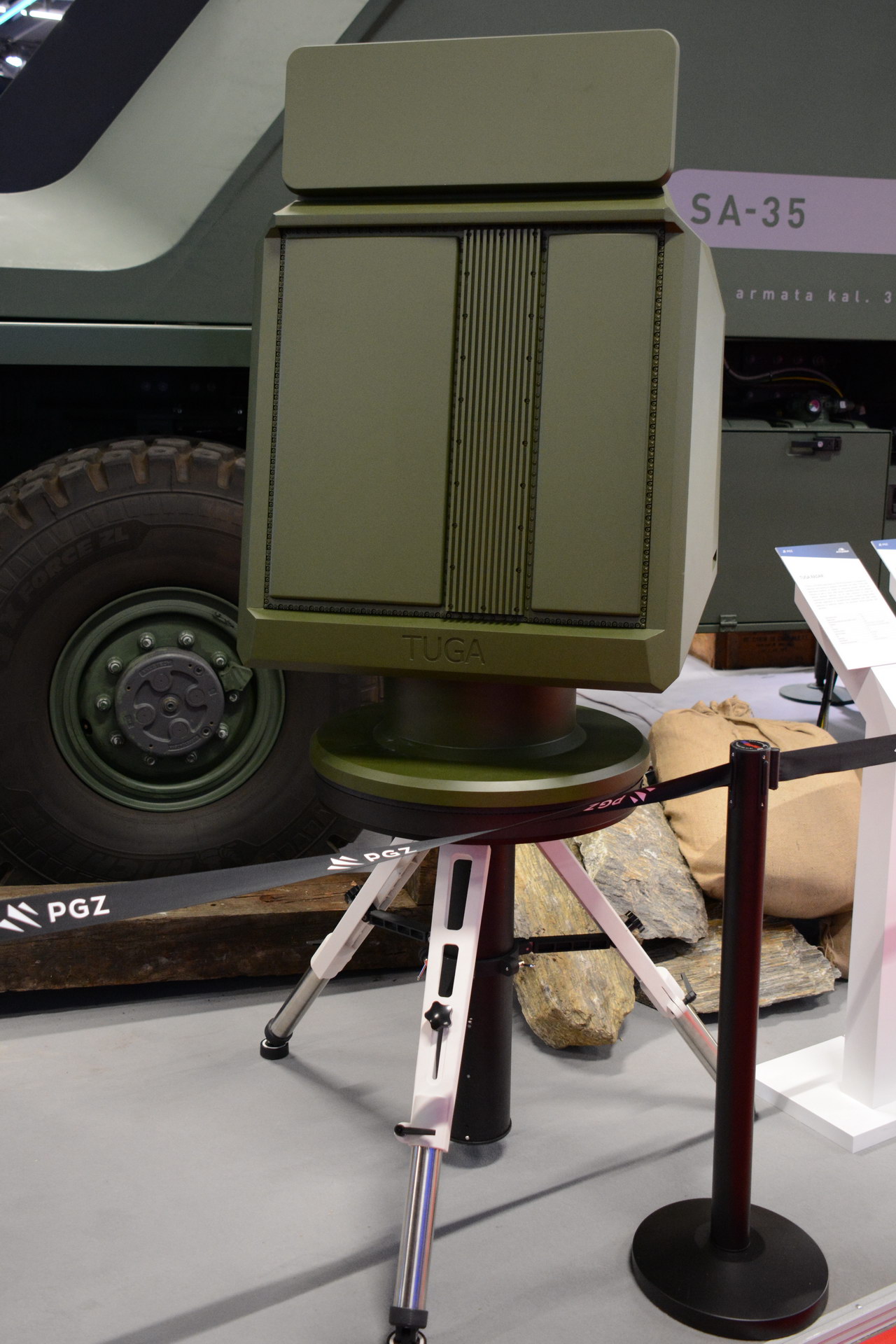
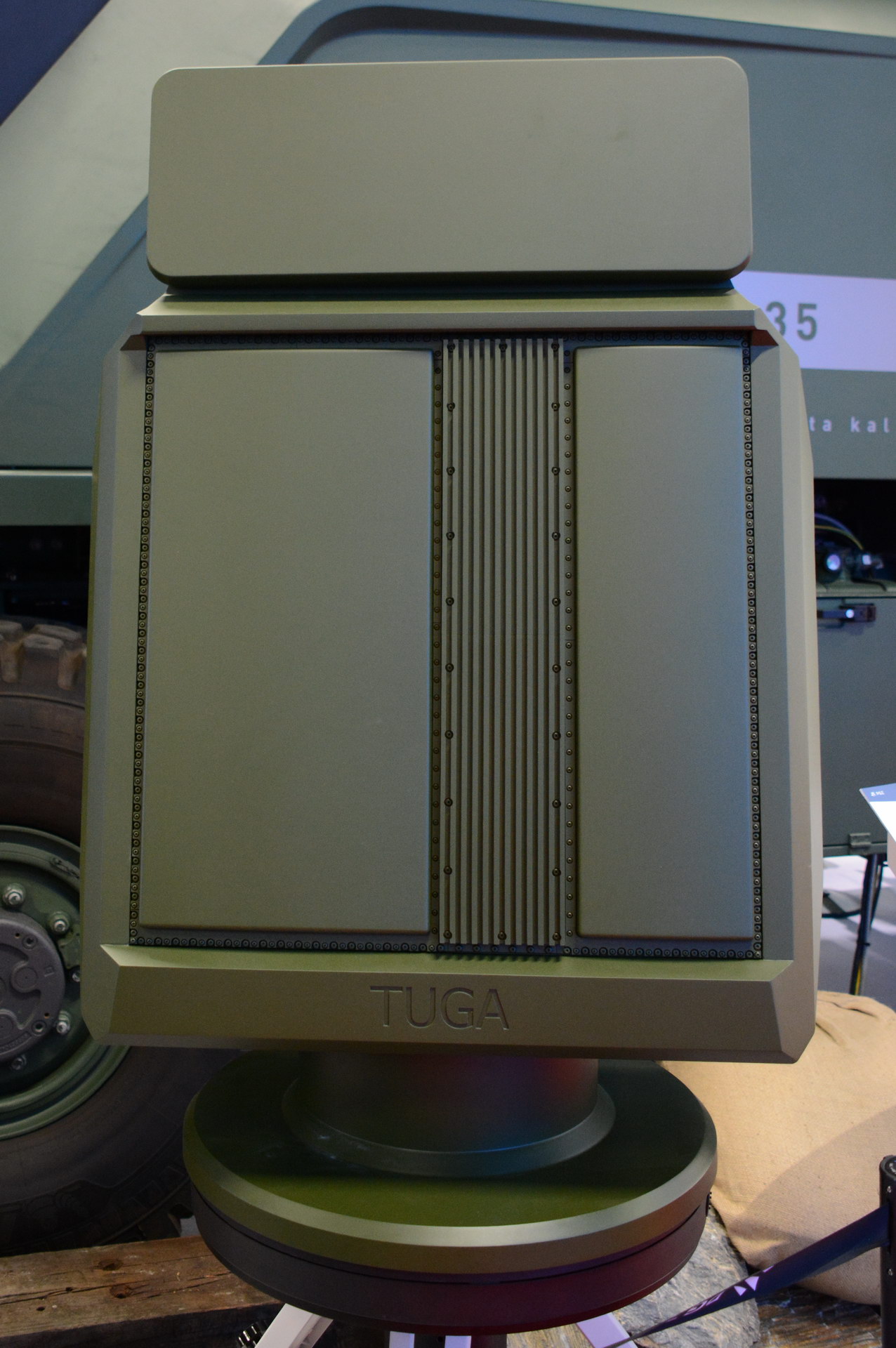 In the portable variant, the radar has been supplemented with an IFF antenna / Photos: Przemysław Gurgurewicz, MILMAG
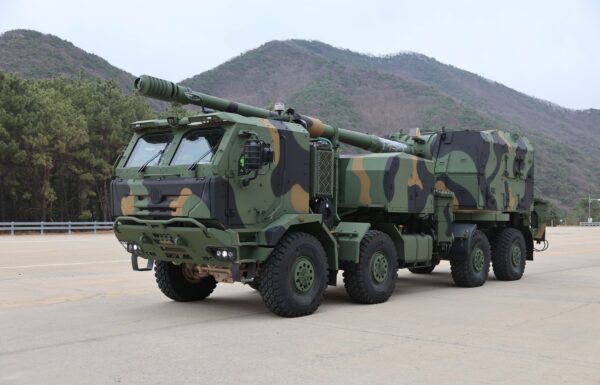
In addition to the separately described solution consisting of four antennas mounted on the self-propelled SA-35 gun, a proposal for a portable version with a single rotating antenna mounted on a tripod was also presented.
The technical parameters have not changed. Operating in the X-band (8–12 GHz) with continuous wave transmission, the system has an instrumental range of 50 km, while the declared detection range for targets with a radar cross-section of 0.01 m², typical for micro-UAV-class targets, has been specified as exceeding 5 km. The minimum detection range is 50 m.
The antenna block, measuring 700×700 mm, consists of two antennas—one transmitting and one receiving. These are active electronically scanned array (AESA) devices. The transmit channel is built using gallium nitride (GaN)-based semiconductors.
Tuga provides surveillance coverage of 33° in elevation and 90° in azimuth. It is a 4D radar, meaning it measures three spatial coordinates of a target’s position as well as its radial velocity.
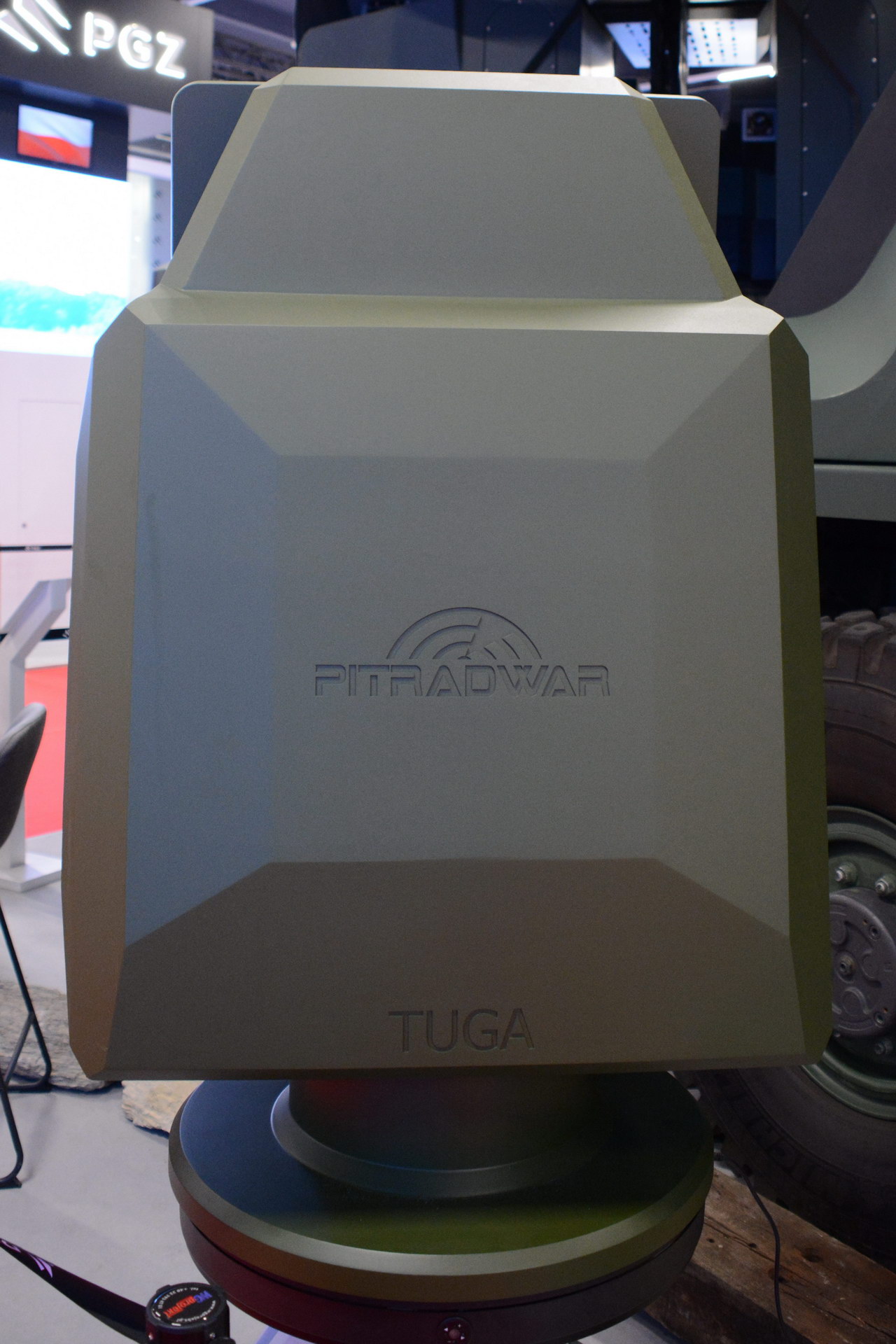 Rear view of the antenna assembly
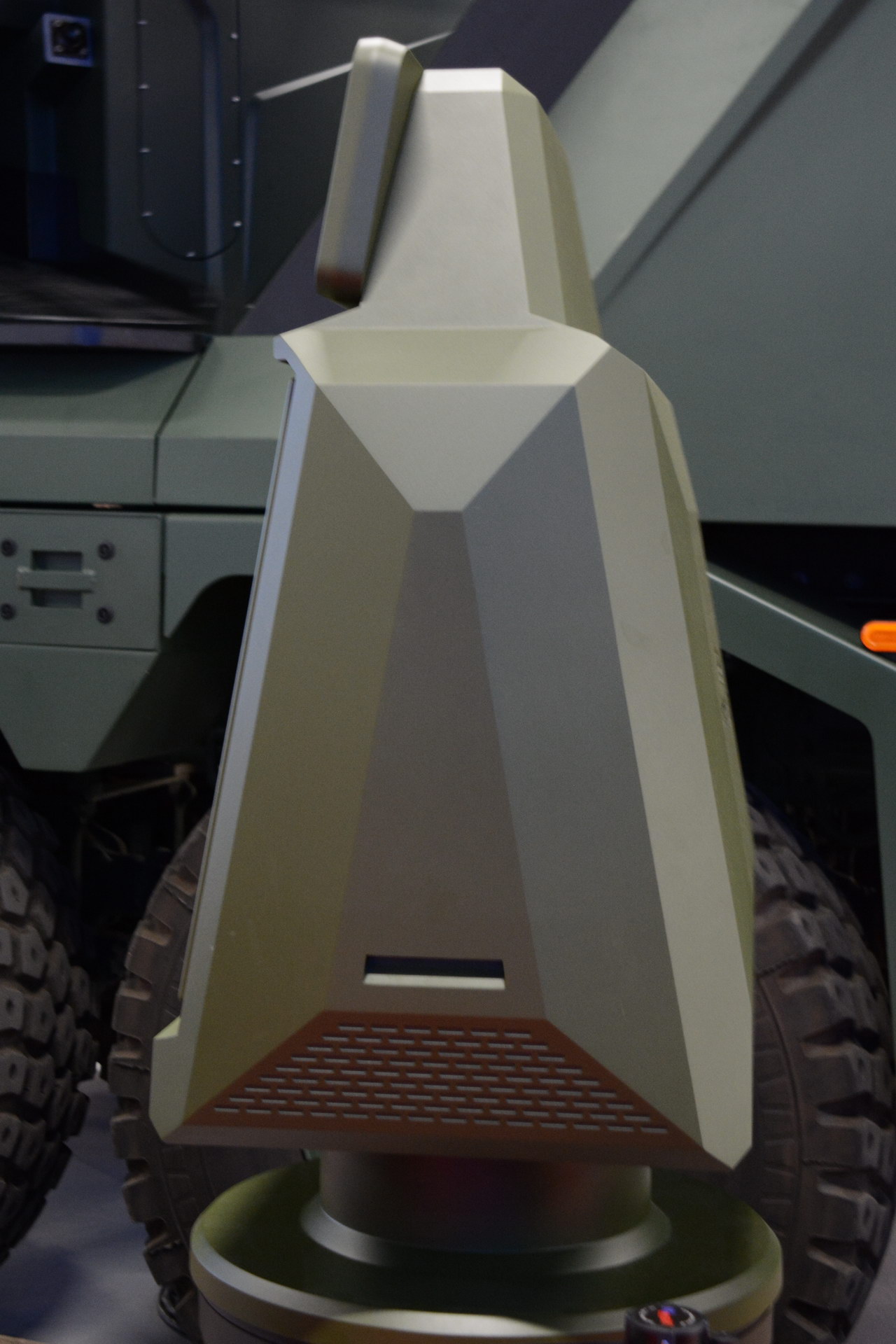 Side view of the portable Tuga