

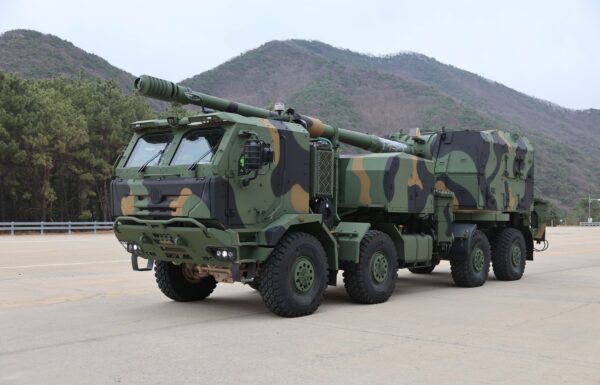
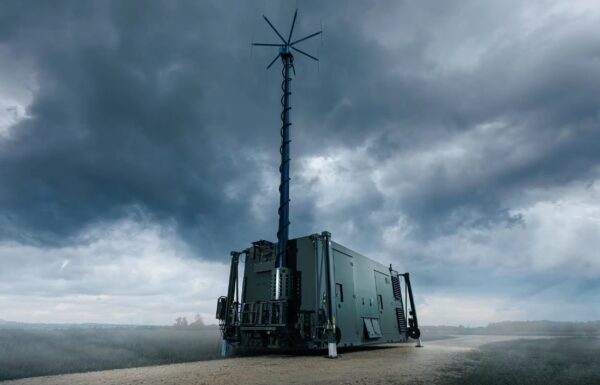




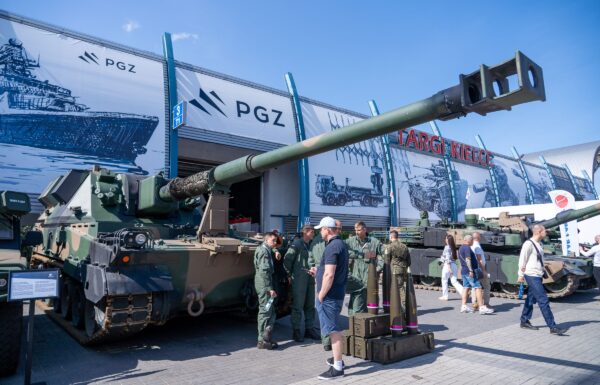


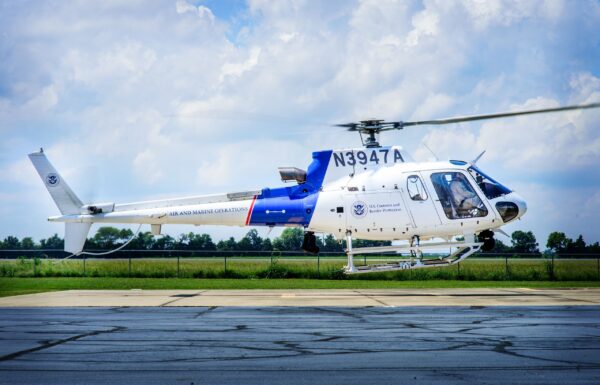

















On Friday, January 30, 2026, the Norwegian company Kongsberg Defence & Aerospace (KDA) announced that it had received a contract worth 16 billion NOK under the Polish program for battery modules of air defense systems with the capability to counter unmanned aerial systems, codenamed San.
 Photo: KDA
Yesterday, at the PIT-Radwar facilities in Kobyłka, in the presence of Prime Minister Donald Tusk, Deputy Prime Minister and Minister of National Defence Władysław Kosiniak-Kamysz, and Secretary of State at the Ministry of National Defence Paweł Bejda, a contract under the San program was signed, valued at approximately 15 billion PLN net (18.45 billion PLN gross). The contractor is a consortium comprising Polish Armaments Group (leader) and Kongsberg Defence & Aerospace (KDA), with the Polish company Advanced Protection Systems (APS) as a key subcontractor (San Program: 18 Counter-Drone System Battery Modules to Be Delivered to the Polish Armed Forces).
“This programme confirms Poland’s position as a regional hub for counter-drone innovation and strengthens KONGSBERGs’ positions as one of Europe’s leading providers of anti-drone solutions,” said Eirik Lie, President of Kongsberg Defence & Aerospace. “The collaboration between KONGSBERG and PGZ demonstrates the companies’ commitment and support to NATO-aligned industrial cooperation to strengthen the European security landscape and anti-drone shield.”
As part of the deliveries, Kongsberg is preparing to invest in expanding its production capacity and capabilities in Poland, thereby strengthening the company’s ability to deliver a larger number of defense systems and technologies. By way of reminder, on July 28, 2025, the Norwegian company signed a partnership agreement with Advanced Protection Systems to jointly develop and deliver advanced counter-unmanned aerial system solutions (Advanced Protection Systems and Kongsberg Form Polish-Norwegian Partnership for Countering Drones).
Under the San program, Kongsberg will supply remotely operated turret systems of the Protector MCT-30 (Medium Caliber Turret) type, along with Remote Weapon Stations (RWS). As emphasized by KDA, the MCT-30 is in large-scale serial production; for example, it is being delivered to the U.S. Marine Corps (USMC) for the BAE Systems ACV-30 Amphibious Combat Vehicle. It was further noted that the turret’s design features, unmanned, lightweight, and fully digital, make it particularly well suited to a counter-drone role.
The MCT-30 can be integrated with the following Northrop Grumman automatic cannons:
- Mk 44 Bushmaster II (30×173 mm);
- the XM813 variant (upgraded, heavier, used among others on the Stryker ICV-D and ACV-30);
- the lighter Mk 44S variant (a 40 mm version has also been tested).
The flexibility of KDA’s remote weapon systems enables the integration of various counter-drone effectors. Within the San program, the primary armament for the RWS will be 70 mm Hydra rockets fitted with BAE Systems WGU-59/B APKWS II (Advanced Precision Kill Weapon System) laser guidance modules. In addition, KDA will work closely with APS and PGZ to deliver flexible platforms for integrating sensors and effectors into subsystems and vehicles, enabling distributed sensor-effector operations.
All remote weapon systems of the Protector family are designed to provide counter-drone capabilities. To date, KDA has delivered more than 20,000 Protector systems to over 30 countries.
See also: