



















For years, one could get the impression that the Polish Armed Forces existed in two parallel worlds. In one were the soldiers, airmen, and sailors performing their daily service. In the other were society and politicians, who tended to remember the military mainly on the occasion of national holidays, parades, or security crises.
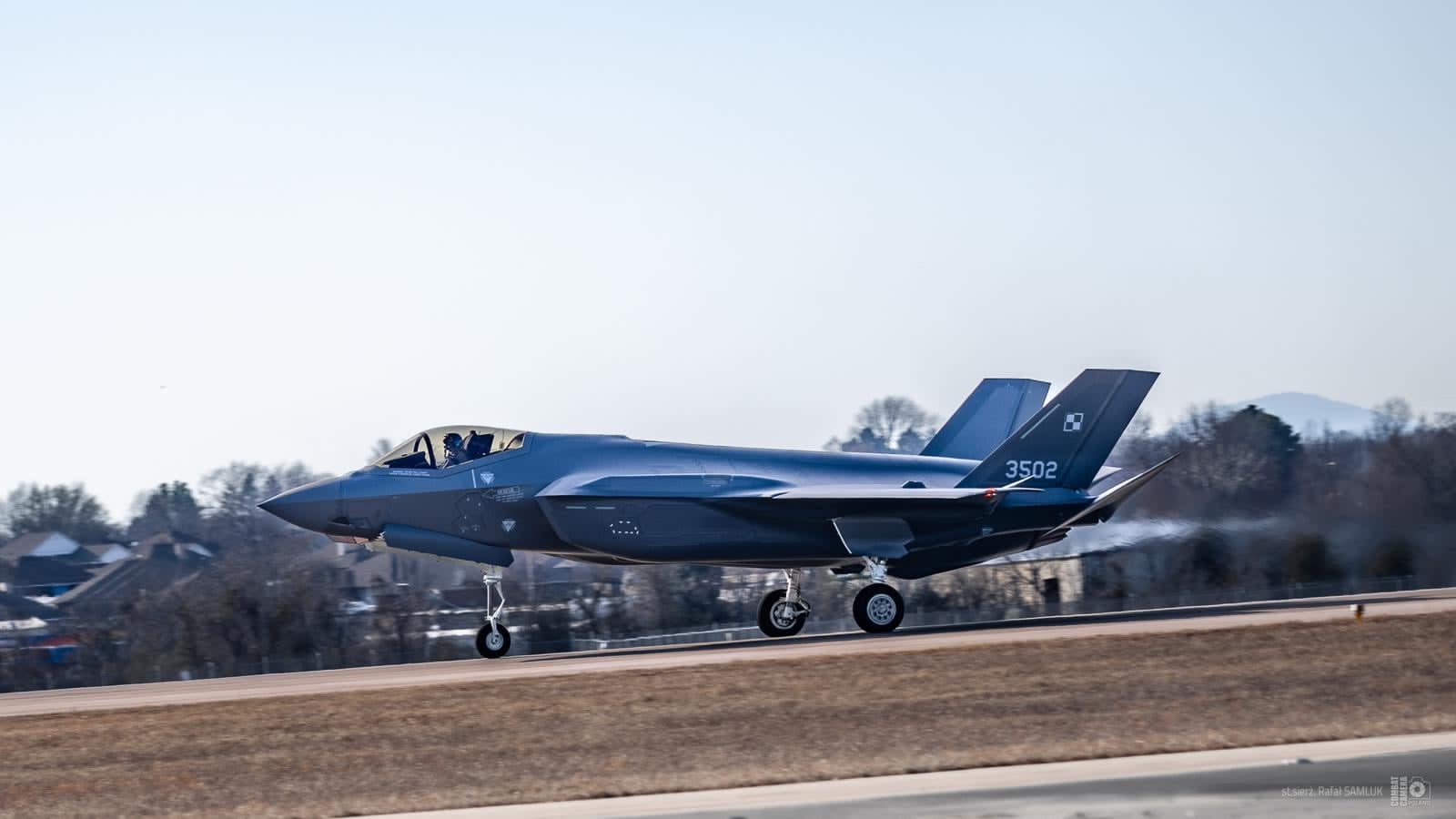 Photos: senior sergant Rafał Samluk/DO RSZ
That is why any initiative that brings the armed forces closer to citizens deserves a positive assessment. This applies to air shows, unit open days, equipment exhibitions, and flyovers by the latest aircraft. For many young people, such contact may be the first impulse to take an interest in military aviation, professional service, or defense issues.
There is nothing wrong with the military showing its achievements. On the contrary. The state spends enormous public funds on defense. Citizens have the right to see the results of that spending and to feel that they are part of a larger undertaking: building the country’s defense potential.
But without a political spectacle.
A political battle
The history of recent years shows that in Poland almost every major military investment becomes part of the current political dispute. This has applied to tanks, howitzers, helicopters, air-defense systems, and, of course, the F-35. More recently, it has also applied to SAFE. Meanwhile, national security should not be held hostage to election calendars and short-term political games. Unfortunately, it is.
If an aircraft appears over a city so that residents can see it, that is very good. But if the event starts to resemble a traveling rally, it quickly loses its value. People can clearly sense the difference between a presentation of military equipment and a campaign in different packaging.
The military enjoys a high level of trust in Poland precisely because most citizens see it as an institution standing above current disputes and as apolitical. That capital should not be wasted, and during the most recent election campaign it came dangerously close to happening.
Time to readiness
There is one more aspect worth remembering. An F-35 flyover may stir emotions, but by itself it does not increase combat readiness. Many oversimplifications have grown up around the F-35 program. Some people treat the aircraft almost like a wonder weapon that will automatically solve all the problems of Polish aviation. The reality is different.
A modern aircraft is only one element of a larger whole. What is needed are properly trained pilots, technicians, infrastructure, logistics support, command systems, reconnaissance, electronic warfare capabilities, and an efficient flow of information. There is also the complex process of certifying all of it. Only the combination of these elements provides real combat value.
In the case of the F-35, this process will take years. The first aircraft are an important step, but not the end of the road. Quite the opposite: the hardest part is only beginning. The history of many aviation programs shows that achieving full operational capability requires time, patience, and consistent training. This has been true both for U.S. F-35 users and for European countries that have introduced these aircraft into service.
Defense education is needed
That is why displays should be accompanied by awareness-building efforts. This is not about propaganda or aggressively persuading anyone to adopt specific views. It is about basic knowledge. Poles should understand why the state is investing billions of zlotys in aviation, the navy, and air defense. They should know the difference between a training aircraft and a multirole aircraft, why reservist exercises are needed, and how cooperation within NATO works.
This kind of knowledge builds social resilience much more effectively than even the most spectacular flyover. A person who understands the role of the armed forces more easily accepts the costs associated with maintaining them. They are also better able to assess information appearing in the media and online.
In recent years, security has ceased to be an abstraction. The war beyond Poland’s eastern border has reminded Europeans that peace is not a state guaranteed once and for all. In such conditions, defense education becomes just as important as the purchase of new equipment.
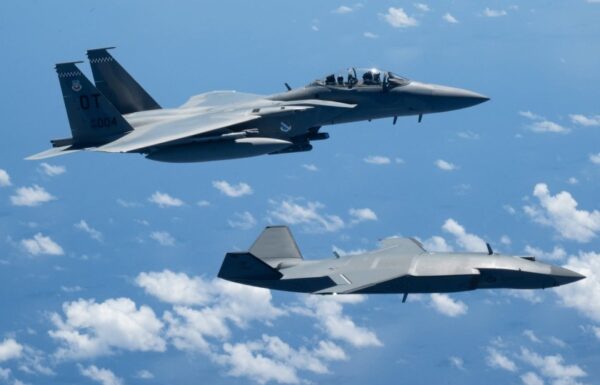
Even so, it is worth taking satisfaction in the presence of F-35s in Polish skies. It is worth taking photos, bringing children to air shows, and talking about aviation. But it must be remembered that national security is not created during a flyover lasting a few minutes. It is built every day, in hangars, lecture rooms, training centers, and during exercises.
A display can be the beginning of an interest in defense. It should not, however, be the end of the conversation about why Poland needs modern armed forces and how much effort is required for new equipment to become a real combat capability. That path is the most important one, even if it is far less spectacular than a flyover by the world’s most advanced fighter.