














Security Action for Europe (SAFE) is not a specific, standalone EU programme, but a financial instrument created to enable EU Member States to finance procurement aimed at supplementing identified shortfalls. The objective is to fill capability gaps previously identified by the armed forces of each country. In fact, the fundamental justification for launching SAFE was the need to strengthen European defence companies. The mechanism targets enterprises delivering specific solutions. SAFE is an instrument for European industry, which follows quite clearly from the wording of the preamble to the regulation.
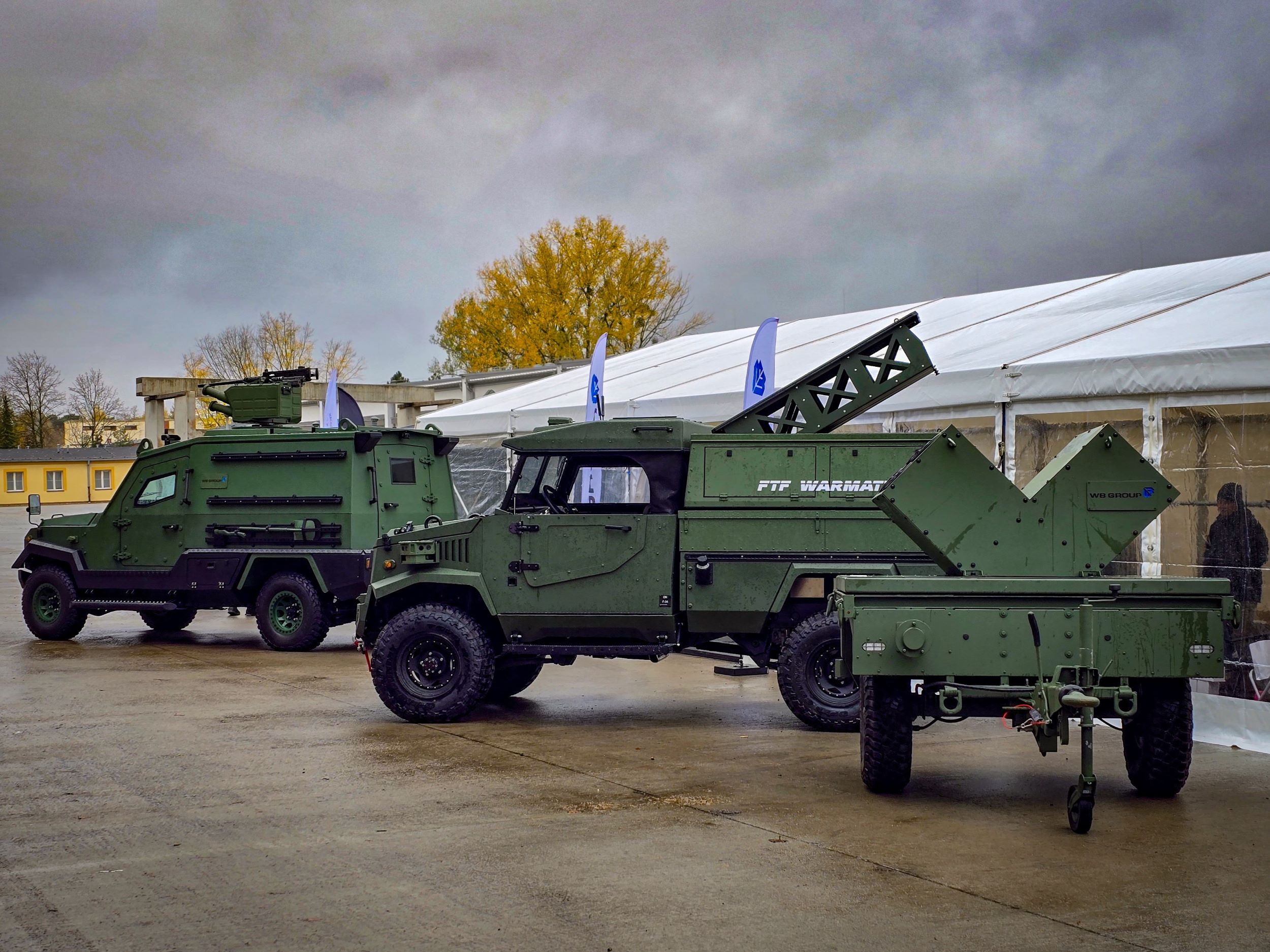 Photo: WB Group
Where did the idea for such a support mechanism come from?
The entire idea stems from the fact that the European Commission, as is consistently emphasised, does not have competences in the armaments policy of Member States. Its competences concern industry, and the Commission’s actions are directed at its development. The basic condition for the development of companies is sales, which stimulate investment in their own industrial capacities.
This is precisely what the SAFE instrument serves, as it constitutes an extraordinary intervention by the European Commission and therefore may be used for projects with specific parameters — both with regard to the subject matter (the product) and the entity (the supplier).
The fundamental criterion for selecting the sought military equipment is real need. SAFE was created in response to capability gaps in the armed forces of Member States, which were identified within the framework of their cooperation coordinated by the European Defence Agency (EDA). Hence the categories of products eligible under SAFE. At the implementation stage of the Instrument, individual armed forces specified exactly which products they intended to purchase. This is how the so-called “SAFE lists” were created.
Such targeted purchases are intended to stimulate investment by companies capable of responding to the requirements of the armed forces, which are necessary to achieve readiness for deterrence and defence.
Will this bring to an end the support processes for European industry?
Security Action for Europe is part of a broader programme aimed at mobilising capital, including private capital, for investment in the European defence industry. This programme, together with SAFE, is expected to amount to EUR 800 billion. It refers to ReArm Europe 2030, announced in March 2025.
SAFE is intended to unlock these investments and to become — for specific companies benefiting from the instrument — a kind of gateway to larger development funds. It is also meant to open the way for participation in major capability projects based on European companies. These are referred to as European Defence Projects of Common Interest (abbreviated as EDPCI).
Among them will be the “Eastern Flank Watch” project, an element of which may include the SAN air defence system, or the “European Drone Defence Initiative,” within which projects based on Polish unmanned systems may be included.
These projects will be financed under the new financial perspective, according to principles currently known from infrastructure projects.
So SAFE is not the only project? Could the lack of participation in the mechanism in some way block the further development of Polish defence enterprises?
It is a major mistake to attempt to assess the SAFE instrument — in terms of debt costs and purpose — in isolation from the broader context of the development strategy and new instruments for industry. Decisions taken based on such a narrow assessment may have very significant consequences for industry and the economy.
Especially when one remembers that until now only 20 percent of procurement expenditure reached Polish companies. Now the discussion concerns 80 percent for domestic entities. Money directed to domestic firms is money for the Polish economy, and indirectly for the Polish state budget.
Defence expenditures were previously outside control in terms of economic effects. Political considerations and security needs, which as they say “have no price,” were decisive. SAFE represents a step toward transparency, accountability, and increased efficiency of procurement from the perspective of the economy.
Who defined the framework of such an industrial support strategy in Europe?
SAFE is a tool for implementing the “European Defence Industrial Strategy,” adopted in 2024. The Strategy was the result of many years of analytical work carried out within the European Defence Agency, but also a response to dynamically increasing security threats to the Union and its Member States.
The Strategy itself does not have financing, but it provides the foundation for creating financial instruments dedicated to established priorities. The ReArm Europe programme, including SAFE, constitutes the first package of instruments aimed at developing European industry.
A key role in this work was played by the European Defence Agency, which is accountable not to the European Commission but to the Council of the European Union and the High Representative of the Union. Since its establishment in 2004 — almost two decades before the creation of the Directorate-General for Defence Industry and Space — the EDA has analysed the potential of the European defence industry, its structure and supply chains, international dependencies, and innovativeness.
It was within the European Defence Agency that the concept of the European Defence Technological and Industrial Base (EDTIB) was created, as a kind of map of capabilities for the production and development of armaments within the European Union.
These analyses made it possible to calculate the distribution and efficiency of Member States’ defence expenditures, the share of non-European companies in European defence spending, to identify gaps in European production, and to determine those areas that require strengthening.
The European Commission was not interested for a long time in the significance of the defence industry for the economy. When did that change?
It was from 2004 that defence industrial policy in the European Union began to take shape. However, it had one flaw — lack of financing. There were various ideas on how to strengthen the defence industry in the European Union, but there were no real funds for this purpose.
Instruments such as EDIRPA (EU Defence Industry Reinforcement Through Common Procurement Act) appeared, and earlier ASAP (Act in Support of Ammunition Production), but these were targeted, limited funding mechanisms. They were not sufficient to enable the industrial policy to be realistically implemented.
And of course the SAFE instrument — launched under the already mentioned ReArm Europe 2030 programme — was a direct response not only to the war in Ukraine, but above all to the destabilisation of international alliances that occurred after the change of administration in the United States.
You describe a vast ecosystem of support for states, security and enterprises, yet in Poland we are still discussing only one of its aspects, and the first one at that. Is that justified?
I regret that we are focusing solely on the SAFE instrument, without understanding the broader context. It is taking the easy way out and seeking sensation.
The essence of the mechanism is not incidental purchases. They are merely a necessary element to initiate cooperation between Member States. They are intended to enable companies to invest in production capacities and — most importantly from the perspective of industry — to create the prospect of at least several years of procurement and long-term cooperation with the armed forces.
Above all, the aim is to strengthen those companies that can genuinely deliver the missing solutions, especially in the area of so-called “high technologies.” Even if these entities are not giants, they have demonstrated their potential and have opportunities to scale their products within the Union.
Is it somewhat like starting a large European engine supporting defence?
Yes, it is somewhat like starting a large European defence engine. But we should not think that a pan-European industrial structure will be created. That is unattainable. The interests of individual players and the states behind them are often, and even usually, divergent — one only needs to look at the attempts to organise cooperation between Airbus and Dassault on the “Future Combat Air System.”
So would each cylinder of this engine be located in a different country?
In principle, yes. The intended effect should be an evenly distributed industrial capability structure, adequate to meet the needs of the armed forces of Member States. That is, of course, the desired, ideal state. It is clear that the final outcome will depend on many factors and one should not expect that this European cake will be divided harmoniously. Individual companies, supported by their states, are fighting for their share.
How the SAFE instrument will be used and what processes it will initiate in Poland will depend primarily on procurement decisions of the Ministry of National Defence and on the ability to incorporate Polish companies’ products into joint procurement. This is the starting point for thinking about more serious capability projects like European Defence Projects of Common Interest. At the same time, the Ministry of National Defence should ensure that these products are incorporated into international cooperation and into projects that will form part of EDPCI. Projects important for Polish industry should be adopted by the EU Council this year.
The outcome will depend, on the one hand, on the willingness of the Ministry of National Defence to promote domestic companies as leaders or key participants in capability projects and operational cooperation of armed forces within the EU, and on the other hand on the effectiveness of these actions, in cooperation with Polish companies. At the same time, enterprises must demonstrate the ability to deliver products meeting military requirements and the ability to navigate the complexities of the rules shaping this policy and its instruments.
However, some states have not decided to participate in the SAFE mechanism. Will that not disrupt the entire process?
The fact that some states did not join SAFE is a political but also an economic decision. They decided to finance procurement and the development of their industry in another way, probably with even stronger preferences for their own companies than those planned by the Polish government.
Would withdrawal from SAFE mean that Poland would prefer Polish companies even more strongly?
Experience suggests otherwise. However, it does not exclude those states from participation in joint procurement, nor their companies from participation in joint procurement.
From the perspective of the future of the defence industry, even more important is the EDIP programme (European Defence Industry Programme), which may be partially allocated later this year. It will favour cooperation between companies and joint procurement.
Without the SAFE programme, it is unlikely — or even not likely at all — that Polish companies will be able to compete effectively within EDIP. This would exclude them from financing and participation in subsequent European projects.
We have seen what the effects may be in the case of the ASAP programme for financing production capacities, under which the Polish company Dezamet from PGZ obtained a grant of only EUR 2.13 million, while the German Rheinmetall received as much as EUR 130 million to build factories in Germany, Hungary, Romania and Spain within consortia.
So we focused on a kind of introduction, while behind it there is a larger mechanism…
There is a larger mechanism ahead, but also behind there is a large mechanism in which Poland has not participated so far. We must say honestly: we have a significant backlog in navigating European industrial policy, resulting partly from lack of knowledge or neglect, but also probably from a lack of appropriate competences and knowledge regarding the defence industry. As well as from the absence of our own industrial policy and priorities concerning the defence industry.
For Poland, is this like a major invitation to enter the European salons, both for the military and for industry?
Yes, exactly. For Polish companies it is an opening of opportunities — which must be used skilfully. First, participation in procurement on the European market, which is extremely difficult. Second, an opportunity for the Polish military, which has measurable successes in introducing innovative products co-developed with domestic companies. Especially those innovative ones.
Please note that the SAFE instrument is largely directed at solutions such as unmanned systems, loitering munitions, anti-drone systems. These are precisely solutions that are relatively new in the armed forces. These products could now become subject to standardisation and increased interoperability among allied forces. They could be further developed within long-term, multi-year cooperation.
At present, armed forces use various weapons systems, which results in fragmentation of industry, high production costs, inefficiency of procurement, and also obstacles in operational cooperation and response in the event of threat and actual conflict.
But are we speaking about strengthening what already exists in Europe? Do we want to strengthen the strong, or allow the strengthening of weaker or medium-sized entities? What should it look like?
Certainly, the key interlocutors for the European Commission are large entities. The Commission cooperates with large companies to develop mechanisms for new programmes, but it also listens to smaller companies. This is, of course, the result of the work of large entities, which operate under entirely different conditions, but also an opening of the market to new companies — so-called mid-caps, small and medium-sized enterprises, as well as startups.
It is worth noting that EU documents refer to a category of entity called a “technological leader.” Thus, the criterion is not only whether a company is large or small, established or new on the market, but the intention to create technological leaders in their respective fields. We live in times of dynamic technological transformation, which has clearly accelerated in recent years.
It is known that new solutions exist and will continue to develop, often in surprising directions. Here, entities that are not large corporations, but rather new, innovative companies, may be better suited. And it is precisely on them that the attention of decision-makers is or should be focused.
But what time horizon are we talking about? We know the time horizon for SAFE. What about the further stage — is anything already defined?
The SAFE instrument and procurement within its framework will be defined this year, in 2026. Also this year, very important decisions will be taken at the European level. The aforementioned EDPCI projects will be approved. These will be flagship projects around which attention and investments will concentrate. These are new types of industrial cooperation programmes — European projects of common interest — which will in a certain way define the division of capabilities or even a kind of market division.
So someone who does not join today loses not only several years, but perhaps their entire future?
Someone who does not join today may not lose everything abruptly, but will certainly lose position and possibly market share in the future. This is because attention will be focused precisely around “technological leaders.” They will cooperate with their users in further development.
So not only the state and the armed forces, but also companies from a given country may become second-category entities?
Yes. There is no need to nuance this. That is exactly what may happen. It also means that cooperation formulas will be diverse. Large companies will cooperate under what we call public-private partnership — they will be designated to cooperate with the Member State. In practical terms: they will not compete in tenders.
Smaller companies — depending on how they position themselves within the ecosystem — if they offer solutions facing significant competition, will compete in public procurement procedures.
This is a somewhat extreme picture: large companies designated as technological partners and other companies competing in tenders.
When we speak of entities from a given state, how should this be understood? Are these entities with capital from that state? Or entities located in that state? Who will benefit? Could, for example, non-European states benefit by establishing a subsidiary here?
Regarding those who may benefit from SAFE or other instruments soon to be introduced, “eligibility criteria” have been established.
I would describe it metaphorically as a European equivalent of the American approach, with all its advantages and disadvantages. However, the objective is the same: that funds spent by EU Member States remain within the European Union.
Accordingly, criteria concern both products — which must be at least 65 percent European — and entities. Companies should also be controlled within the territory of the European Union or Ukraine, as there is also a Ukrainian aspect.
What is the Ukrainian aspect? Will EU taxpayers support Ukrainian companies?
A decision has been taken that the European Union aims to integrate the Ukrainian industry into the European one. Therefore, Ukrainian companies and products have similar eligibility criteria.
To what extent can requirements regarding component origin and supply chain control realistically strengthen domestic production in each European state?
From the perspective of players who create innovative solutions themselves and hold intellectual property domestically — for example in Poland — and who are true innovators rather than mere distributors, this is a tremendous opportunity.
Never before have we been able to discuss industrial policy in terms of preferring companies that generate value locally. SAFE, as part of a broader framework, aims to promote retention of added value within the European Union — meaning intellectual property and innovation.
How this will materialise depends on market participants — the companies themselves: whether they are capable of taking advantage of it and navigating the complexities involved. Much also depends on the military, and whether it will provide stable and secure conditions for cooperation with industry.
The criteria for the success of SAFE and other EU instruments include creating a secure legal and administrative ecosystem for participants. For business, there is nothing worse than instability.
You describe a major experiment and its mechanisms. You highlight the advantages of joining, but also the challenges. Yet the project has generated strong emotions in Poland.
Controversies around SAFE stem primarily from lack of understanding of the broader context. One may criticise various European-level proposals as allegedly “undermining sovereignty,” but that is a false framing. These are coherent and logical solutions. We have no guarantee that alternative approaches would be better. There is a system for developing European potential — but it must be understood and navigated effectively.
It seems like an enormous challenge for the military, administration and companies. Must all three cooperate closely?
Yes. It is a challenge for all participating entities — companies, the military and the administration. But one must also consider not only the military or industrial aspect, but also economic benefits.
If EU funds reach Polish companies and domestic projects, they will be carefully assessed. Analysis will cover taxes paid, employment generated, innovation development, R&D activities, and export capacity growth. Only then will loans under SAFE make sense — as investments with real economic impact.
This perspective should apply to all public expenditure. We should debate whether to focus solely on procurement, or to understand that larger projects genuinely build national economic strength.
What would happen if Poland did not join SAFE? Would it affect other ongoing programmes?
We do not know exactly, but it would certainly cause major disruptions. It would likely require a complete revision of armed forces procurement plans, including programmes not included under SAFE.
One immediate example is the Orka submarine acquisition programme. It is not financed under SAFE, but if SAFE funds are unavailable for other planned capabilities, Orka may also need reassessment in terms of priority.
The benefit of SAFE is that it gives Polish industry development momentum critical for national security.
But investing in SAFE or EDIP does not prevent other purchases, correct?
We can purchase whatever we wish and can afford. However, time and building domestic capabilities are critical. Investments should not be mere costs increasing long-term debt, but impulses for economic growth.
Controversies around SAFE do not help. The solution would be to adopt development priorities for Polish industry, designate domestic technological leaders, and implement supportive measures.
At the same time, we must assume that every public purchase and investment translates into tangible economic benefits. These should contribute, in short, medium and long term, to returning investment to the state budget — enabling debt repayment, maintenance of systems, and covering personnel costs, including officials making decisions today.
This should be the starting point for all decisions — strategic and project-level. Strategically, I have no doubt SAFE is a good solution, but it must be followed by further actions that do not squander the development potential of Polish industry.
Thank you for the interview.
Read also:
- Portugal to Acquire GTK Boxer Armored Vehicles Under SAFE Program
- Poland: National Security Council Meeting – SAFE Among the Topics
- Polish Minister of Defence: SAFE Strengthens Our Country’s Defense and Industrial Potential
- The European Commission approved Poland’s applications for SAFE program
- Romania Reveals Procurement List Under the SAFE Loan Program
- A New Player in the 155 mm Market: WB Group Announces Shell Production