





















On Thursday, January 29, 2026, the German group Rheinmetall AG announced that, together with Germany’s armed forces, it had tested the Luna NG reconnaissance unmanned aerial system operating in a swarm. The demonstration took place at the Army Combat Training Center (Gefechtsübungszentrum Heer, GÜZ) in Saxony-Anhalt.
 Photo: Rheinmetall AG
The tests focused on building an intelligence network for operational forces. From target detection to counteraction, only unmanned systems were used, including drones and loitering munitions. As emphasized by Rheinmetall AG, drone swarms are regarded worldwide as a novelty and, so far, an unproven technology in the context of future methods of warfare for modern armed forces (although attempts by Russia and Iran have already been observed – editor’s note).
Within the Bundeswehr, the Luna NG reconnaissance drone is known as the HUSAR project (High-Efficiency Unmanned System for Medium-Range Reconnaissance). During the tests at the Gefechtsübungszentrum Heer (GÜZ), the Rheinmetall Group successfully integrated the system with the Bundeswehr’s Unmanned Command and Control Management System (C2-UMS Bw). This enables Luna NG to operate within reconnaissance and operational networks, cooperating with other drones or loitering munitions. Key system features include an endurance exceeding 12 hours and a maximum operating altitude of up to 5,000 meters.
Overall, the GÜZ test was characterized by a high level of digitalization and networking. It demonstrated that the interaction between reconnaissance and operational networks significantly reduces the time required to detect, designate, and counter a target.
During the trials, Luna NG reliably carried out short-notice missions, showcasing its outstanding reconnaissance capabilities. The system also demonstrated high endurance and quiet operation at high altitudes.
Other participants connected to the C2-UMS Bw system received, via Luna NG, tactical situational awareness over a large operational area, as well as high-resolution target information. In addition, sensor data was available in real time, providing ground units with a comprehensive operational picture.
It is worth recalling that on September 28, 2023, Rheinmetall AG concluded a contract worth more than 200 million EUR net with Germany’s Bundeswehr procurement authority, BAAINBw (Bundesamt für Ausrüstung, Informationstechnik und Nutzung der Bundeswehr), for the delivery of 200 Luna NG systems starting in 2025. This agreement was an amendment to the original 2022 contract.
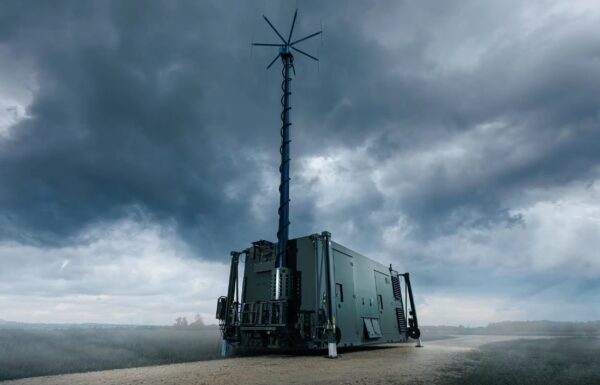
Each system set consists of five reconnaissance drones, two ground control systems, two vehicles with pneumatic launchers, two antenna masts, a repair workshop, and three transport platforms. Luna NG has a maximum takeoff weight of over 110 kg, an operational range exceeding 100 km, is controlled via a data-link, offers an endurance of more than 12 hours, and can provide imaging coverage of an area exceeding 30,000 km².
Thanks to its modular design, the unmanned aircraft can carry various payloads with a maximum weight of over 30 kg. These include electro-optical and infrared ground observation systems, acoustic and electromagnetic spectrum analysis systems, LTE network communication modules, communications relays and links to command posts, satellite communications systems, and IMEI (cellular) tracking capabilities. In addition, operators are supported by an AI-assisted data evaluation system, sensor-to-shooter loop integration with other assets, and an electronic support measures (ESM) system.
Luna NG is a development of the earlier Luna system, originally designed for the Bundeswehr by EMT Ingenieurgesellschaft Dipl.-Ing. Hartmut Euer, based in Penzberg, Bavaria. The company went bankrupt and was acquired by Rheinmetall AG at the turn of 2021 and 2022.
Until its insolvency announcement in December 2020, EMT produced unmanned aerial systems such as Aladin, Luna, Luna NG, and Luna NG VTOL with ranges of up to 100 km. Luna aircraft have been used by the Bundeswehr since 2000 in Kosovo, North Macedonia, and Afghanistan, and since 2016 also in Mali. In the meantime, the Luna NG system discussed here was developed.
#Rheinmetall #drone #LunaNG demonstrates its capabilities in the #Bundeswehr’s new #reconnaissance and operational network https://t.co/0wuAQg54q7 pic.twitter.com/sMvdfifDuh
— Rheinmetall (@RheinmetallAG) January 29, 2026
See also: