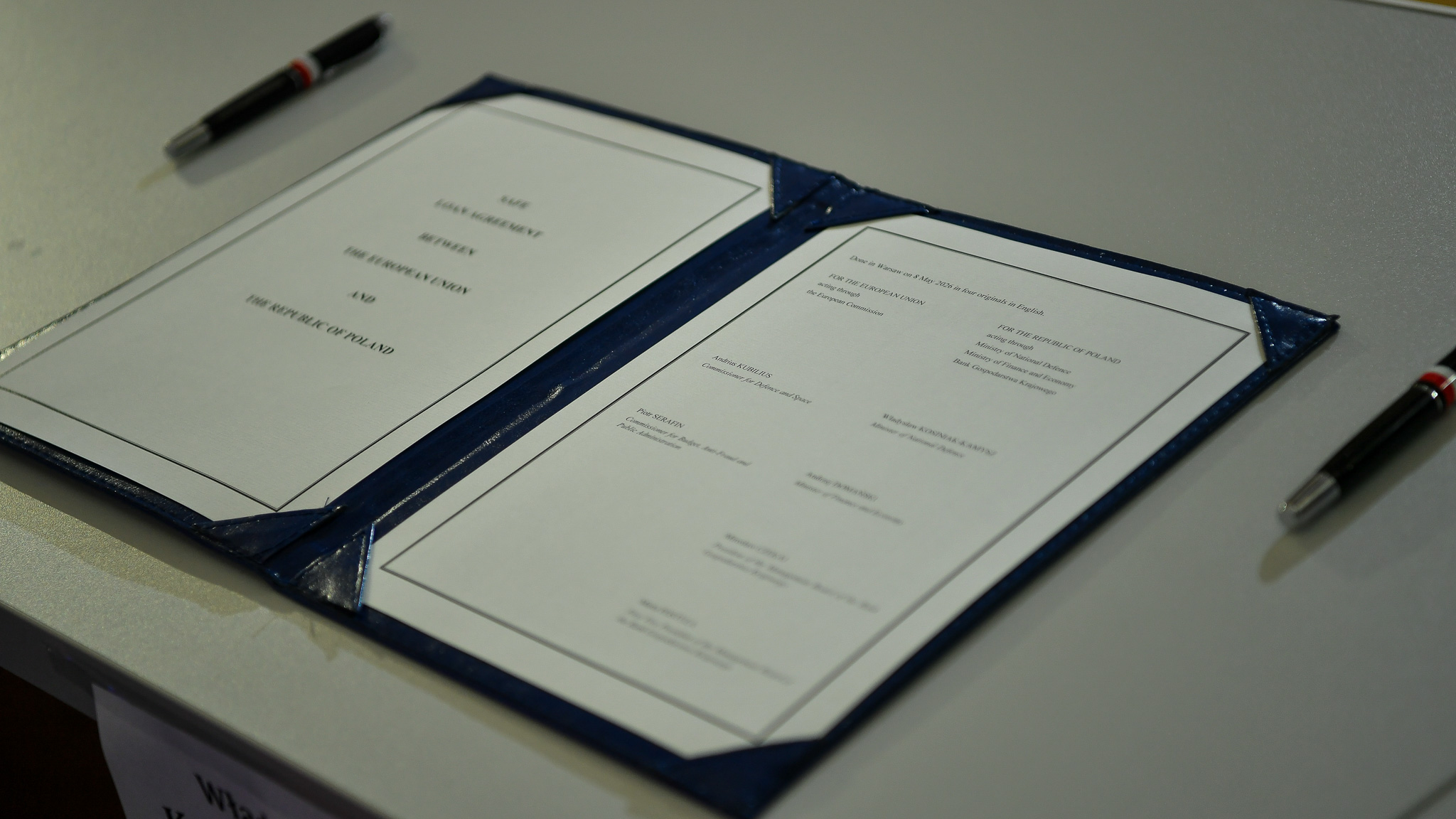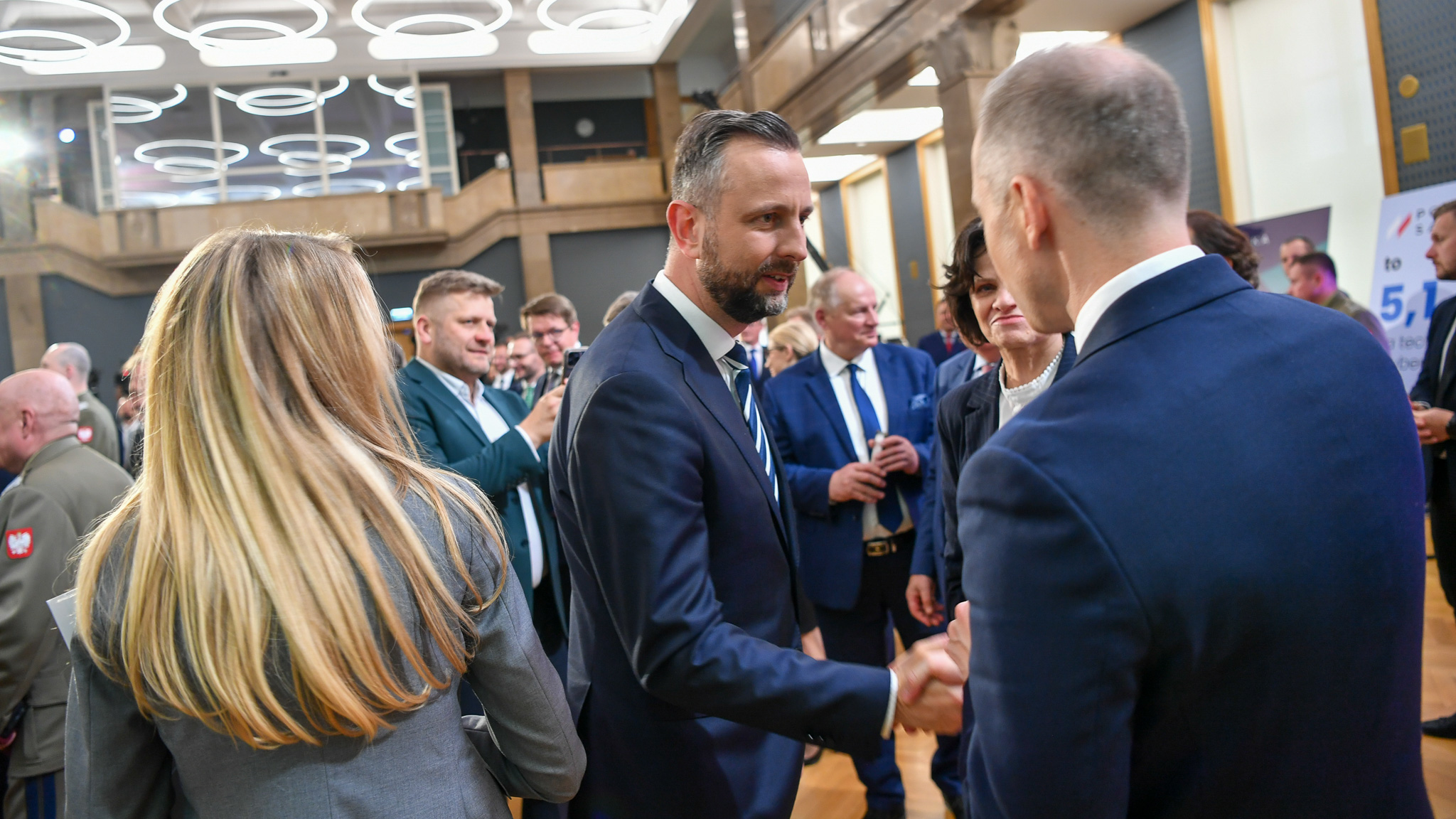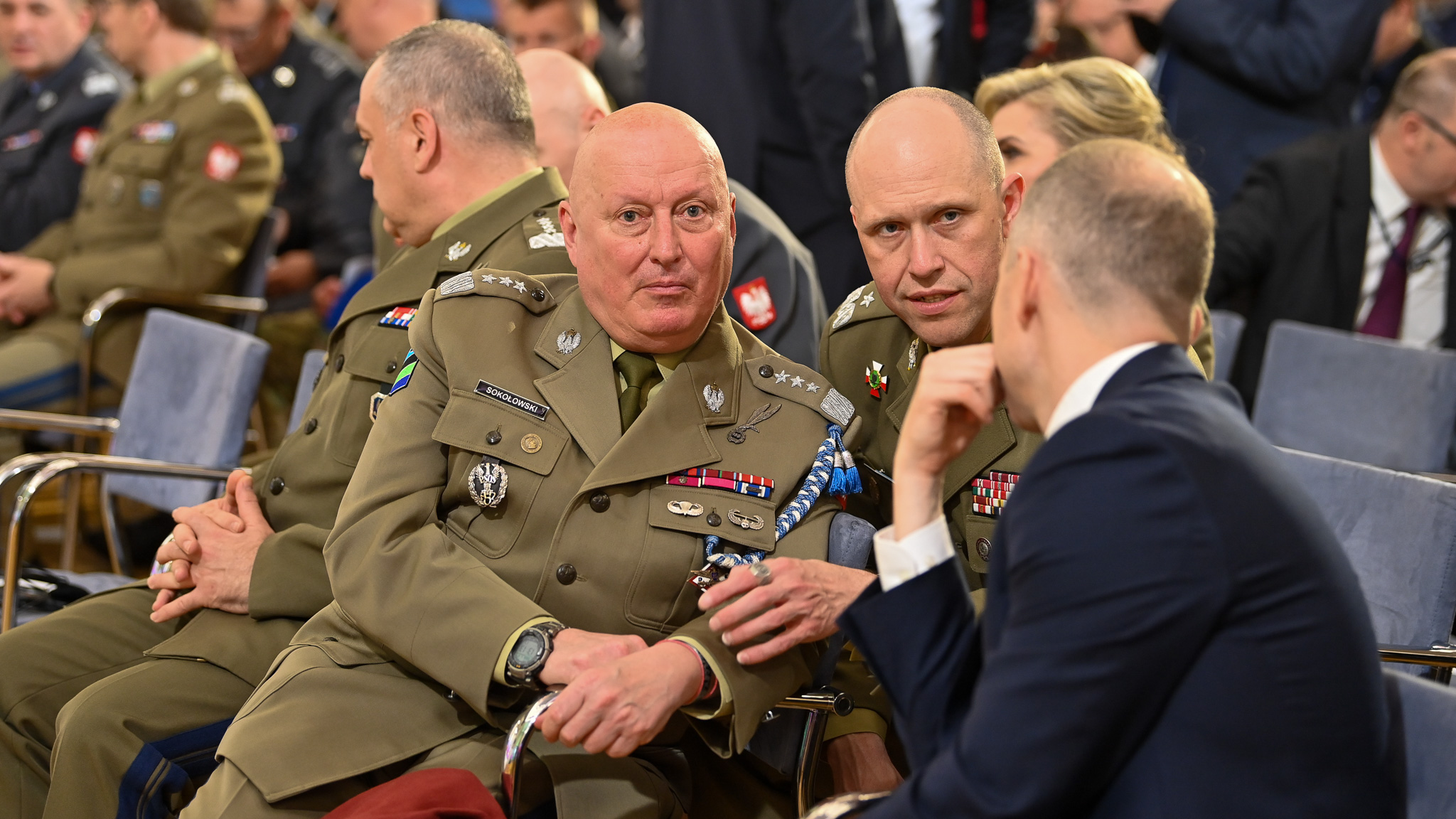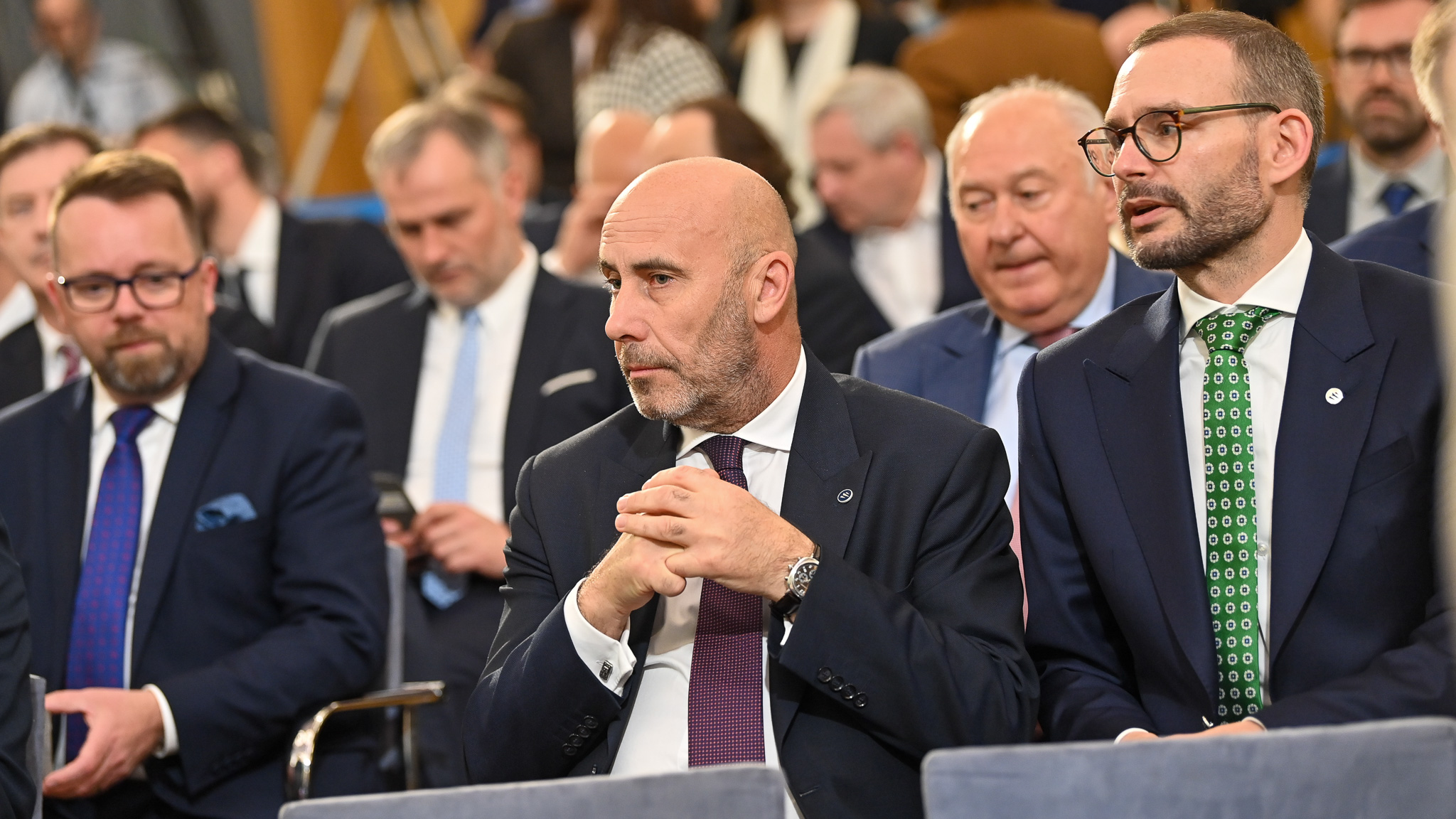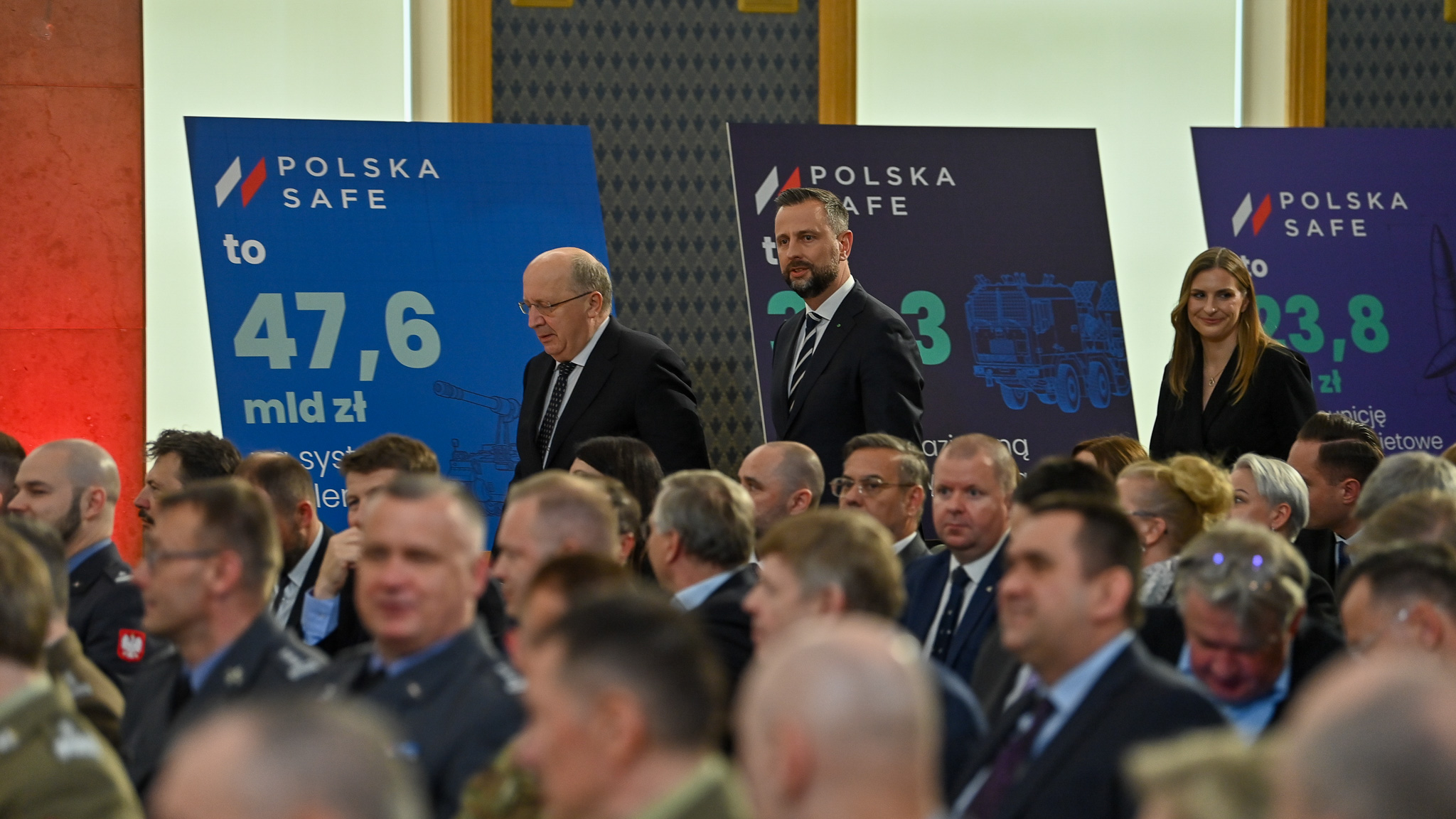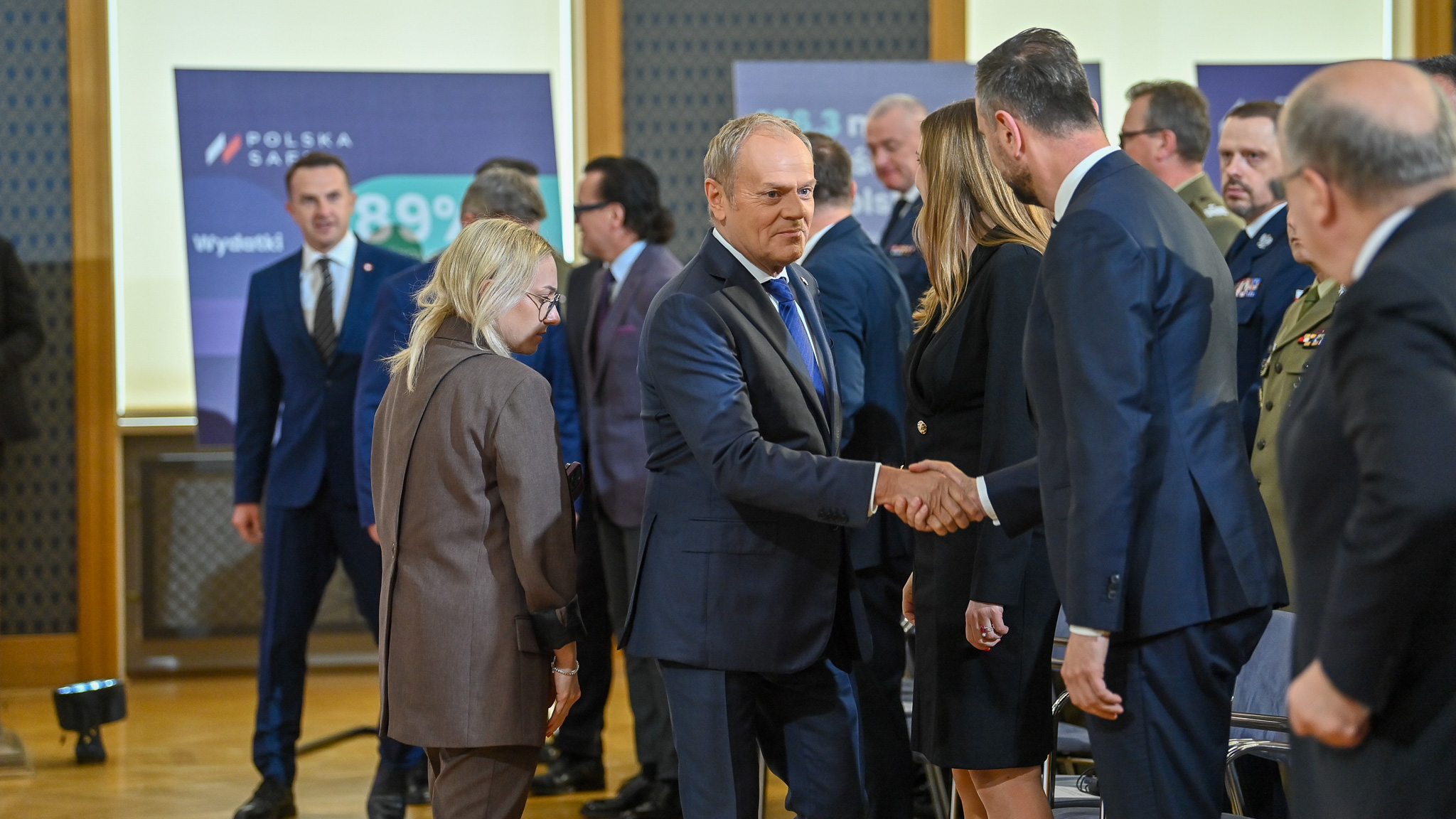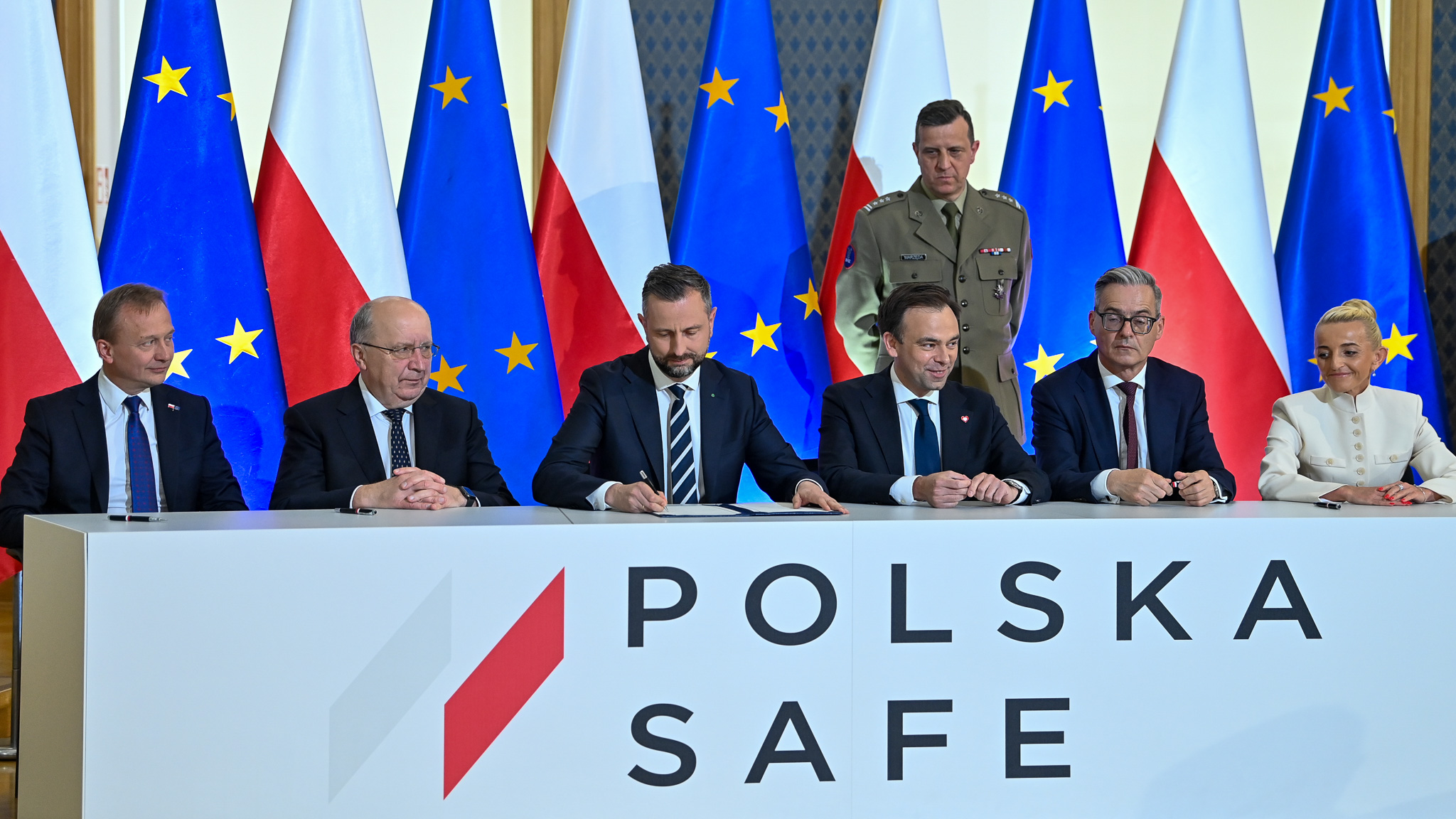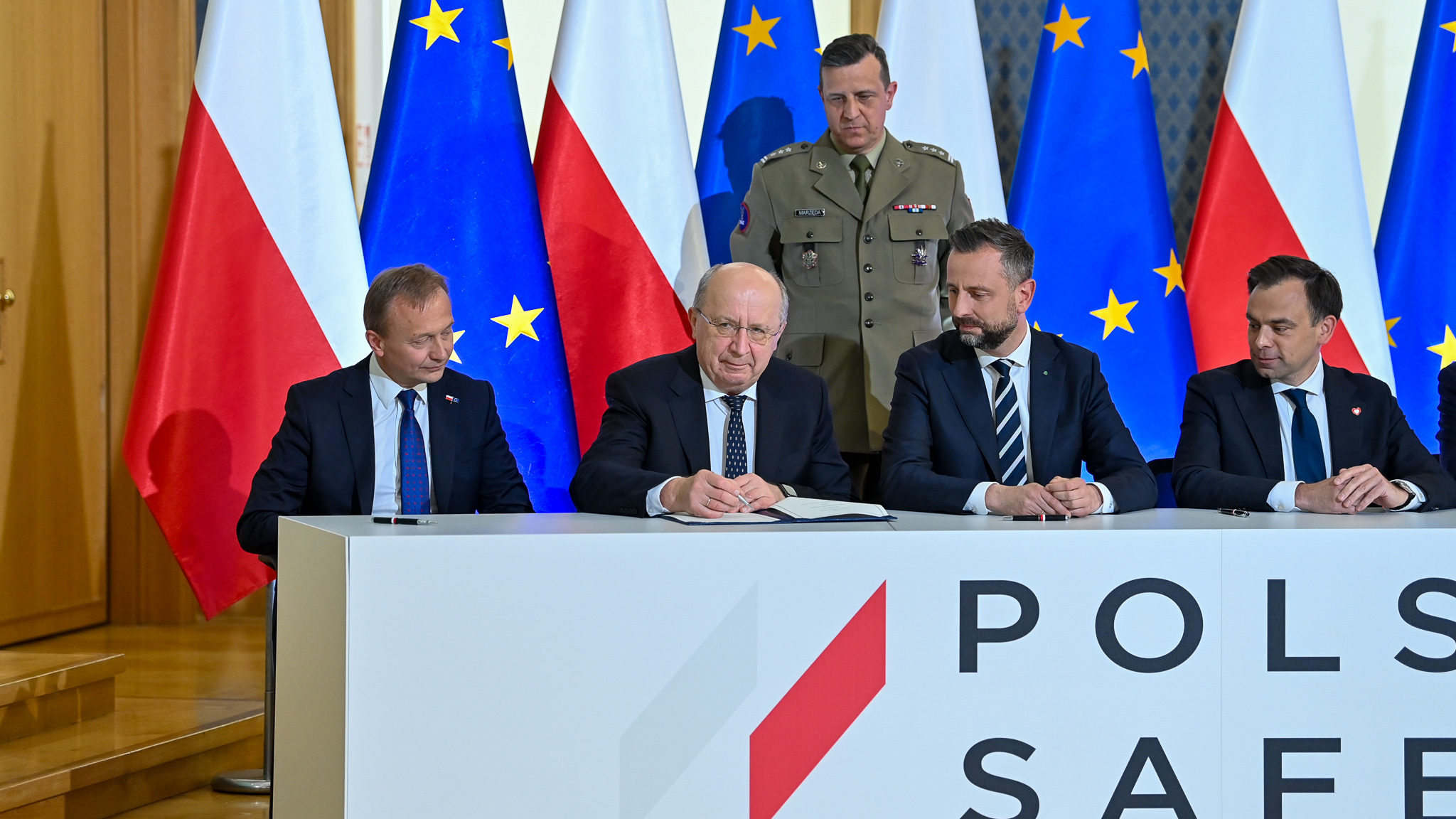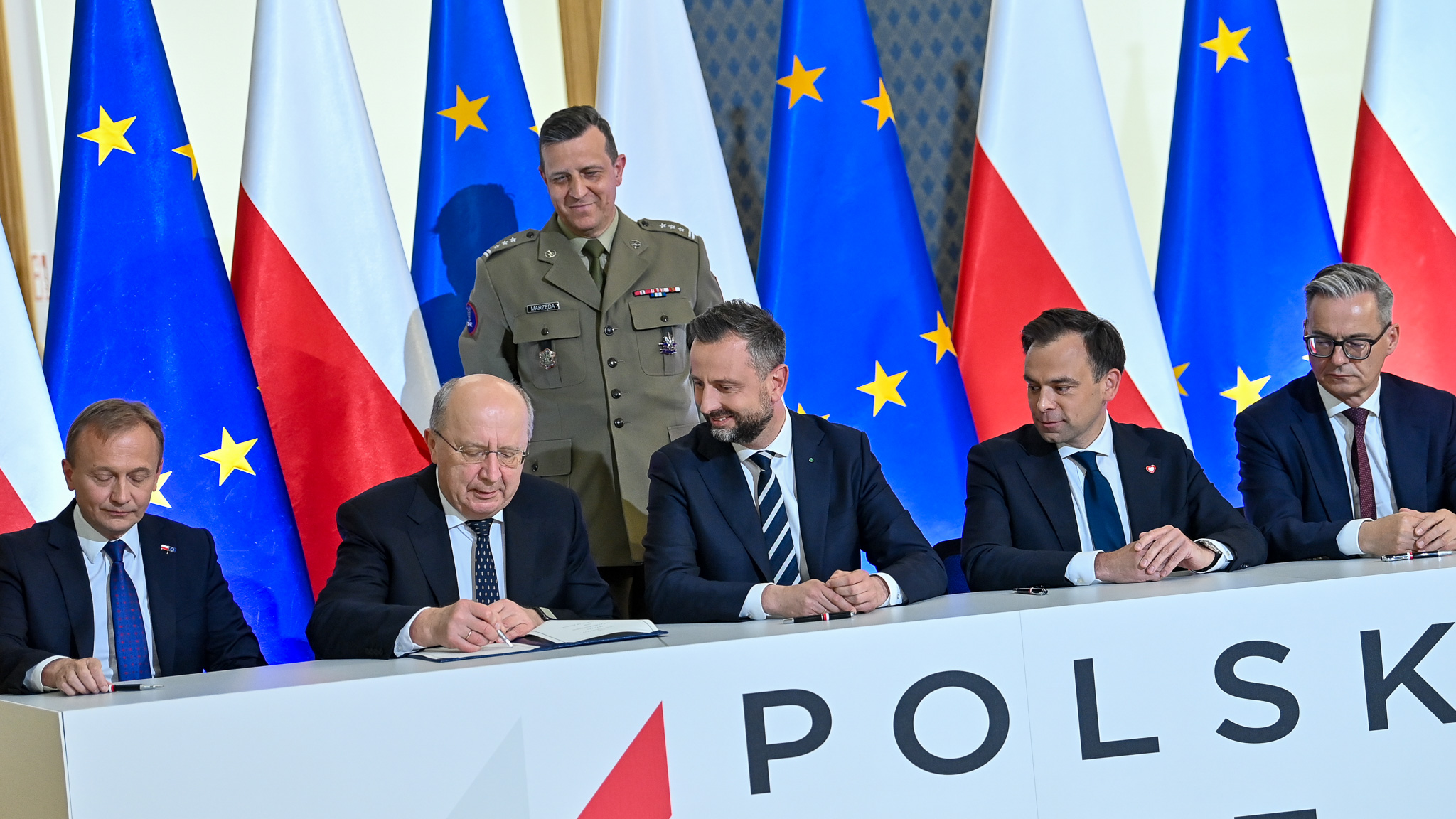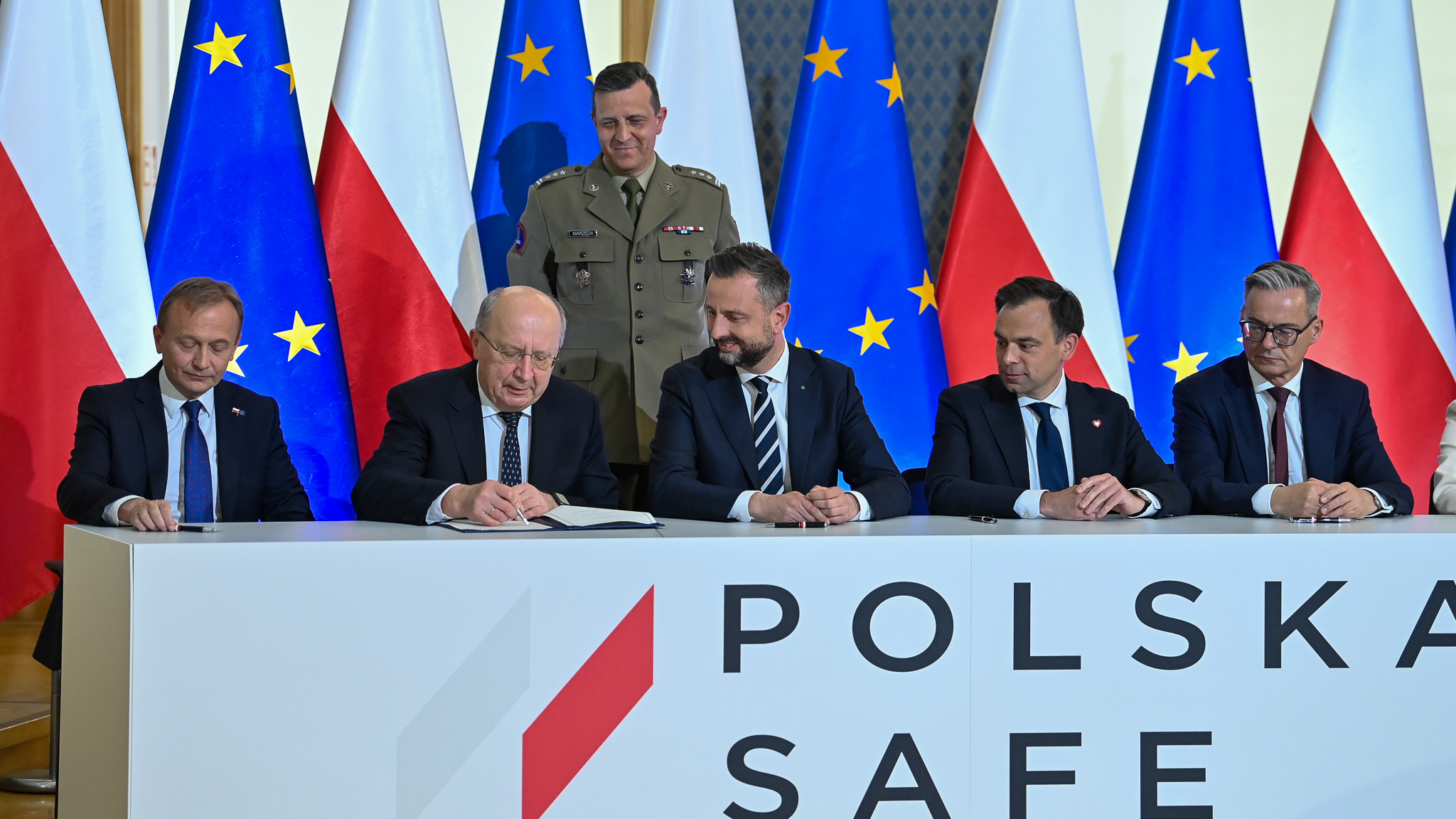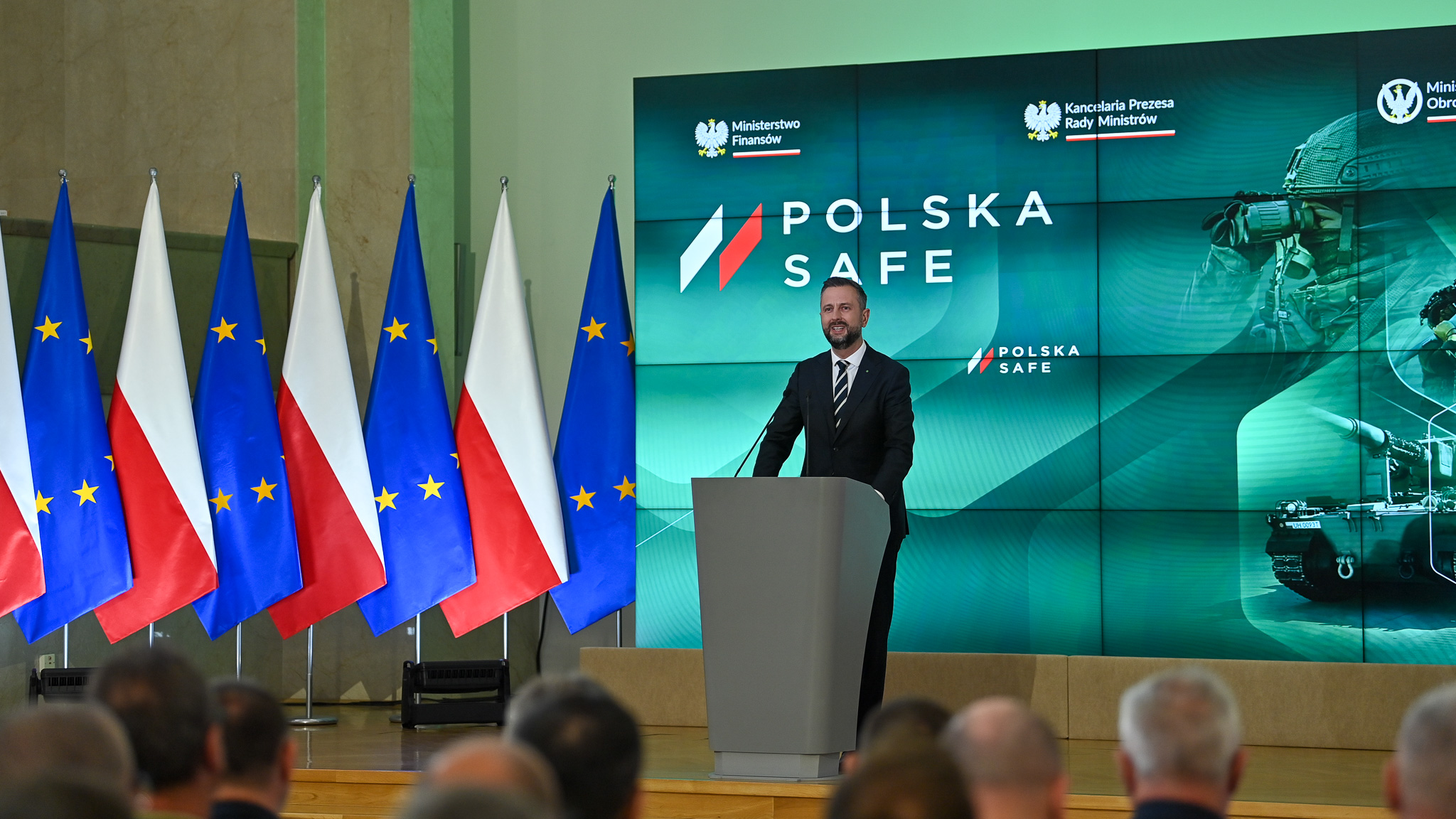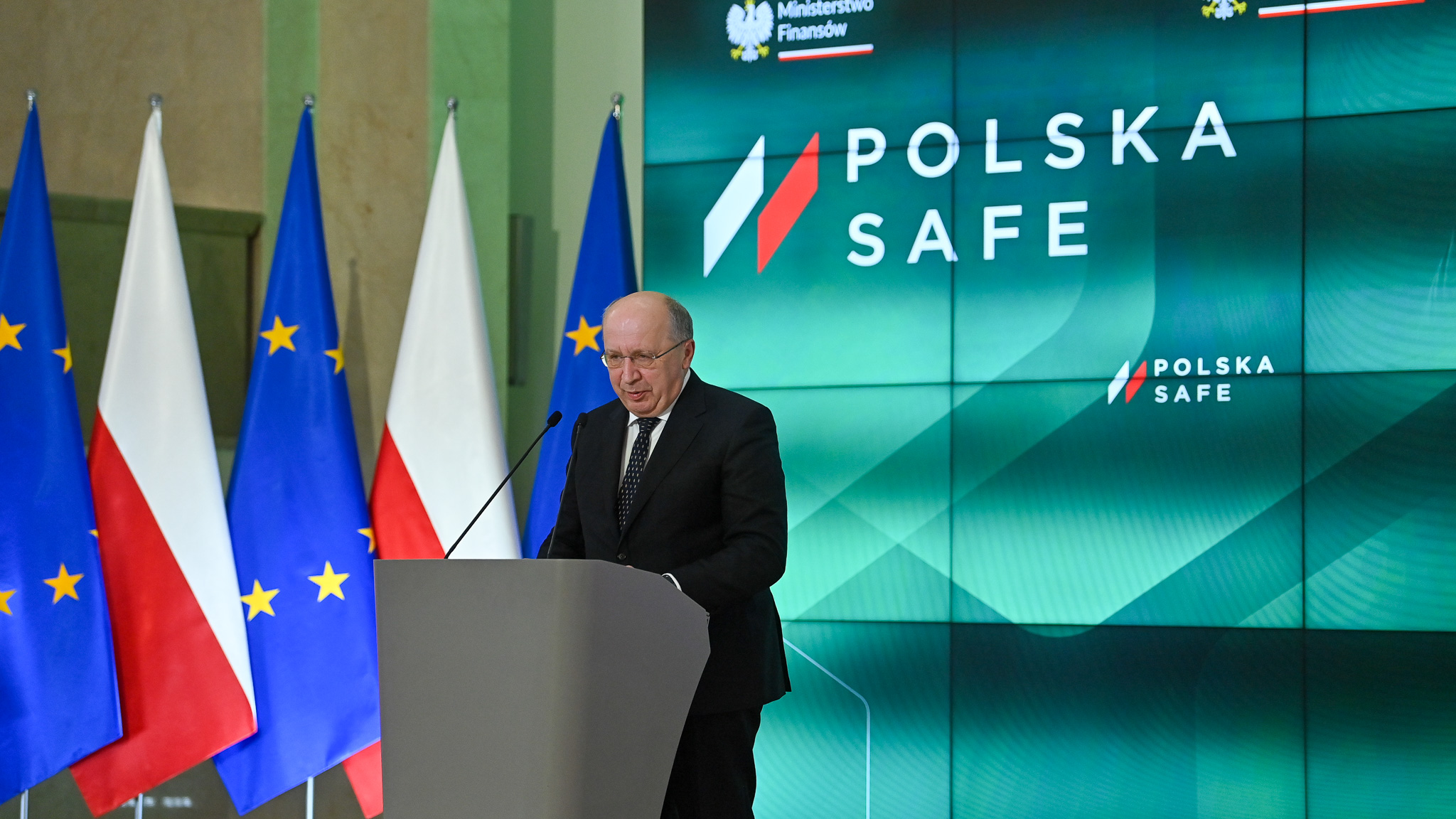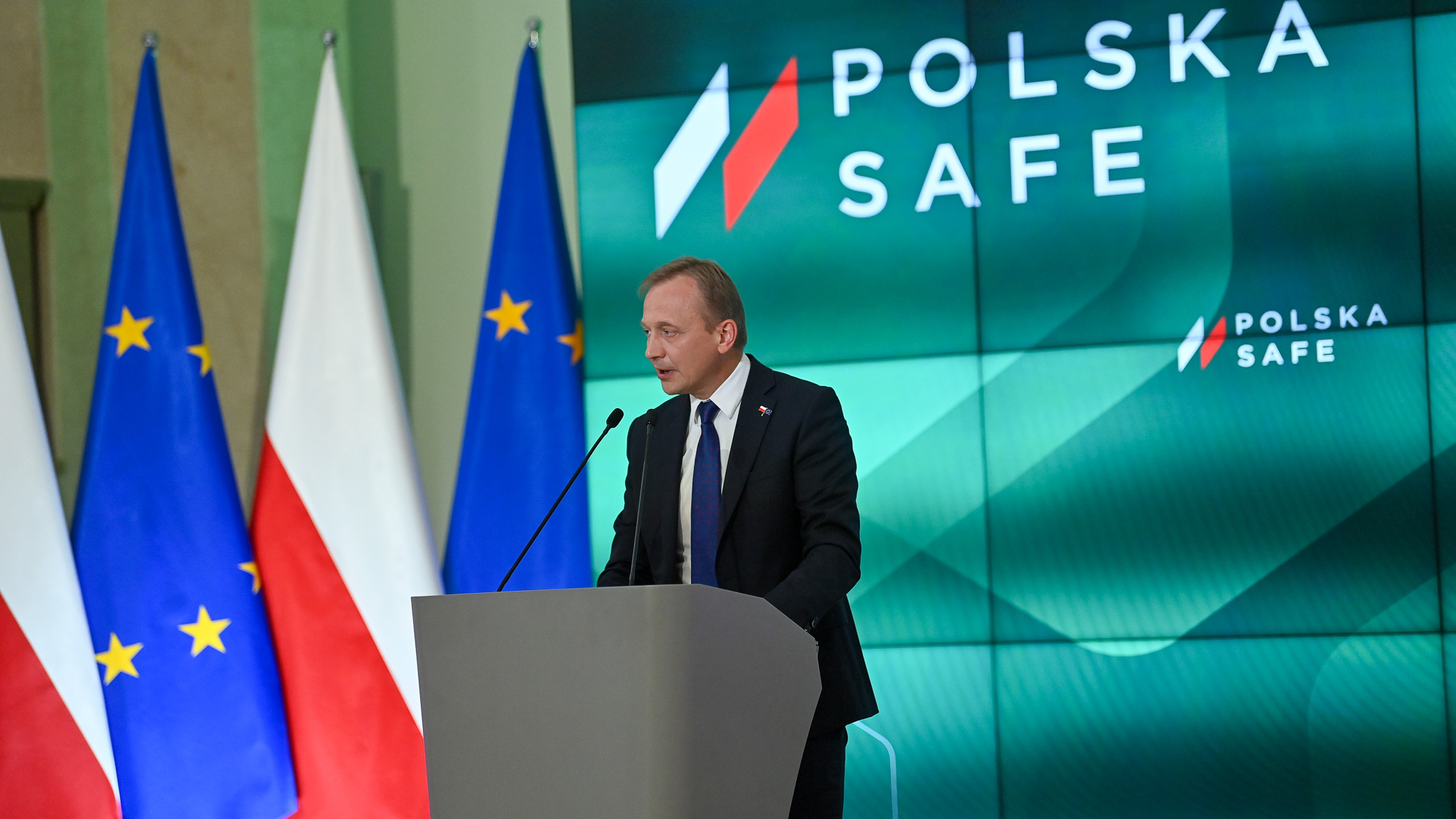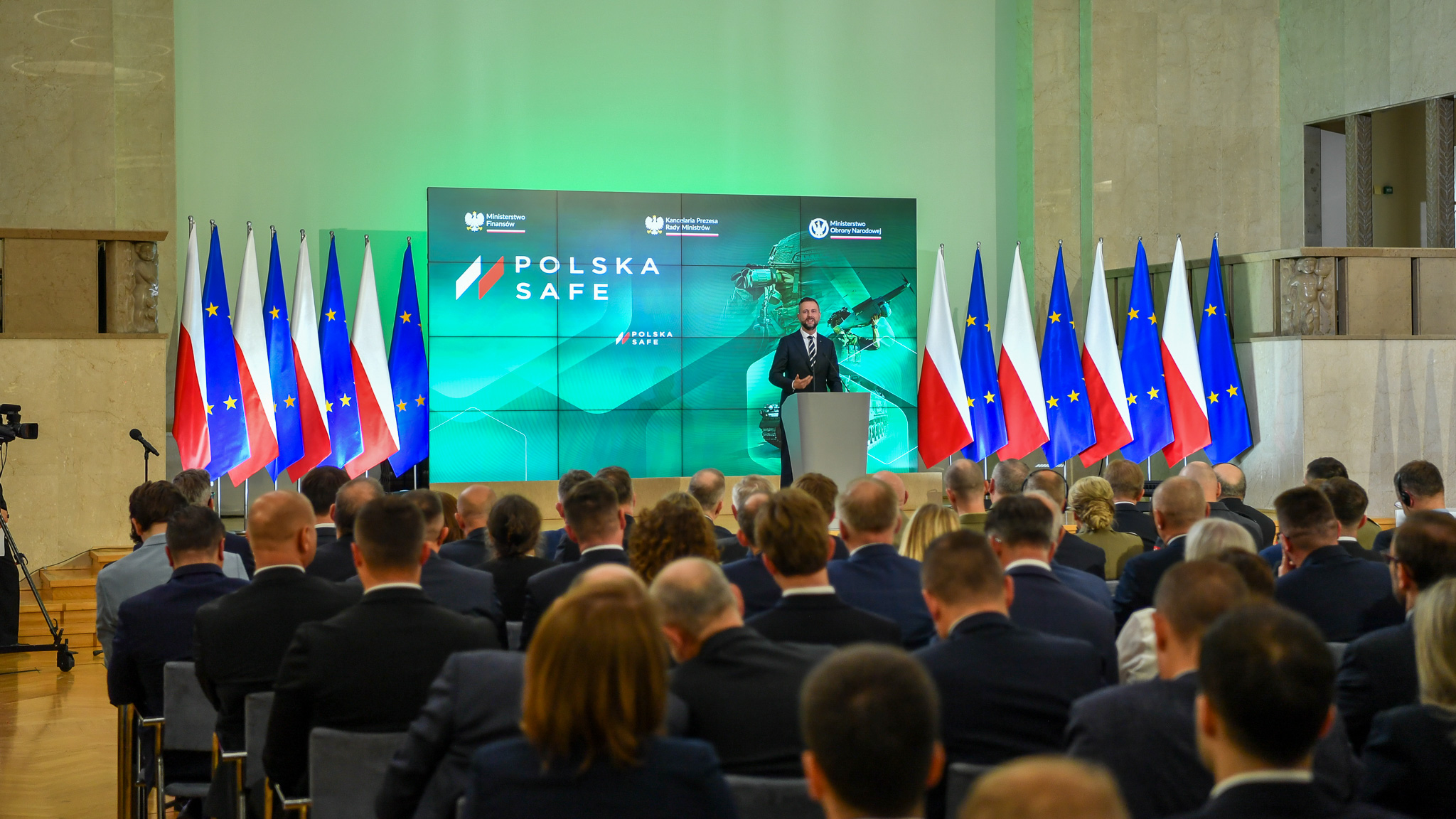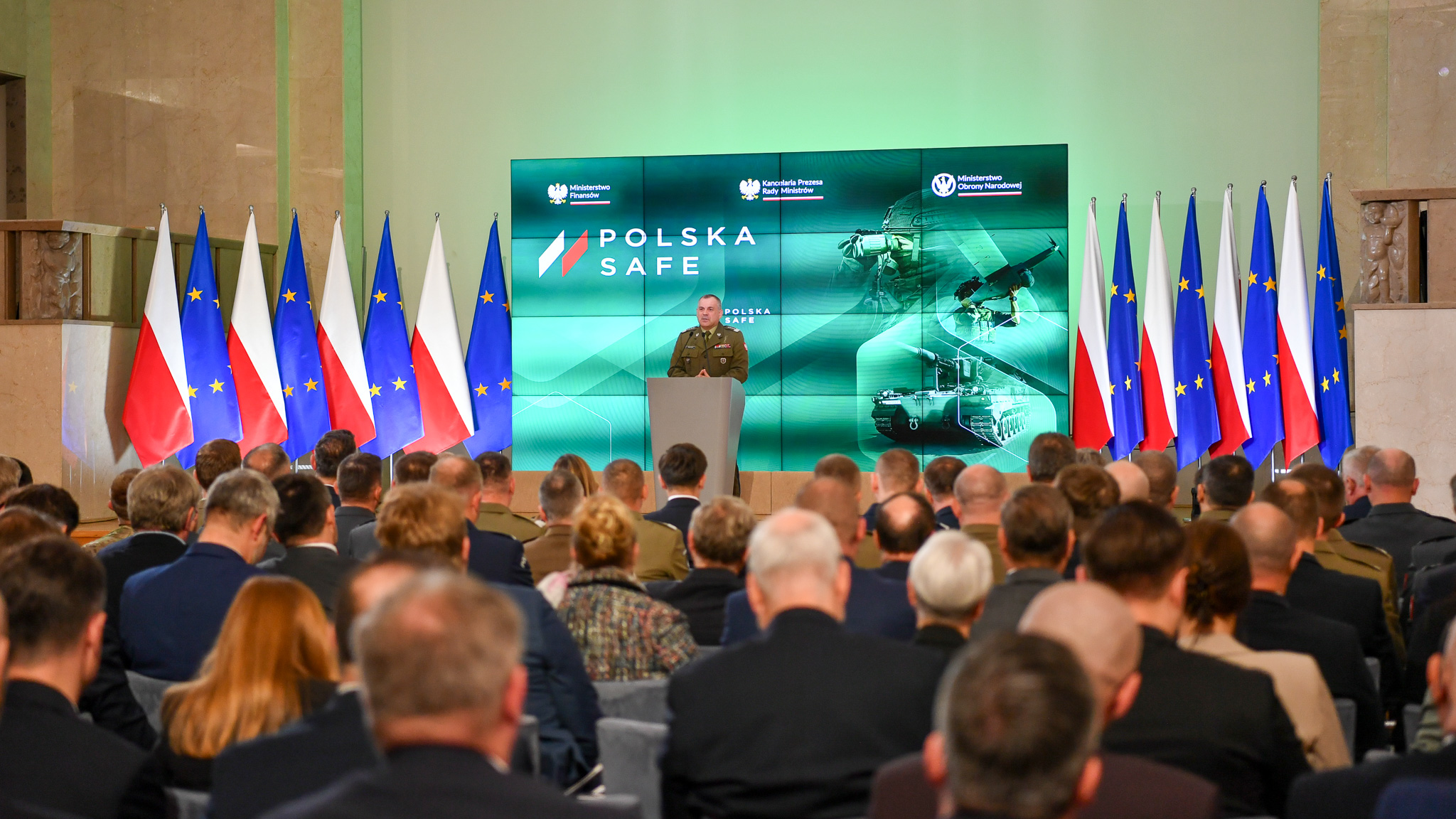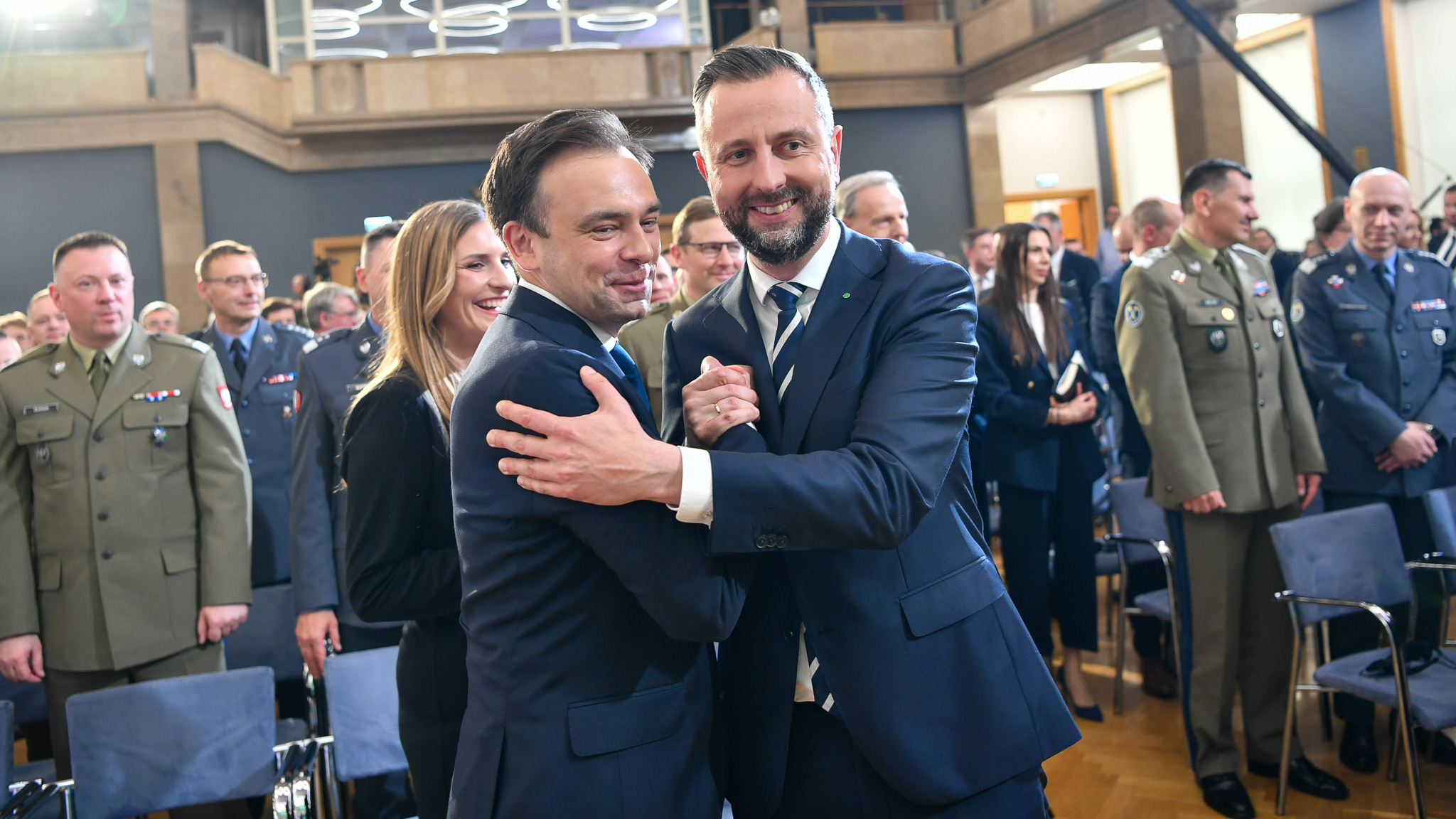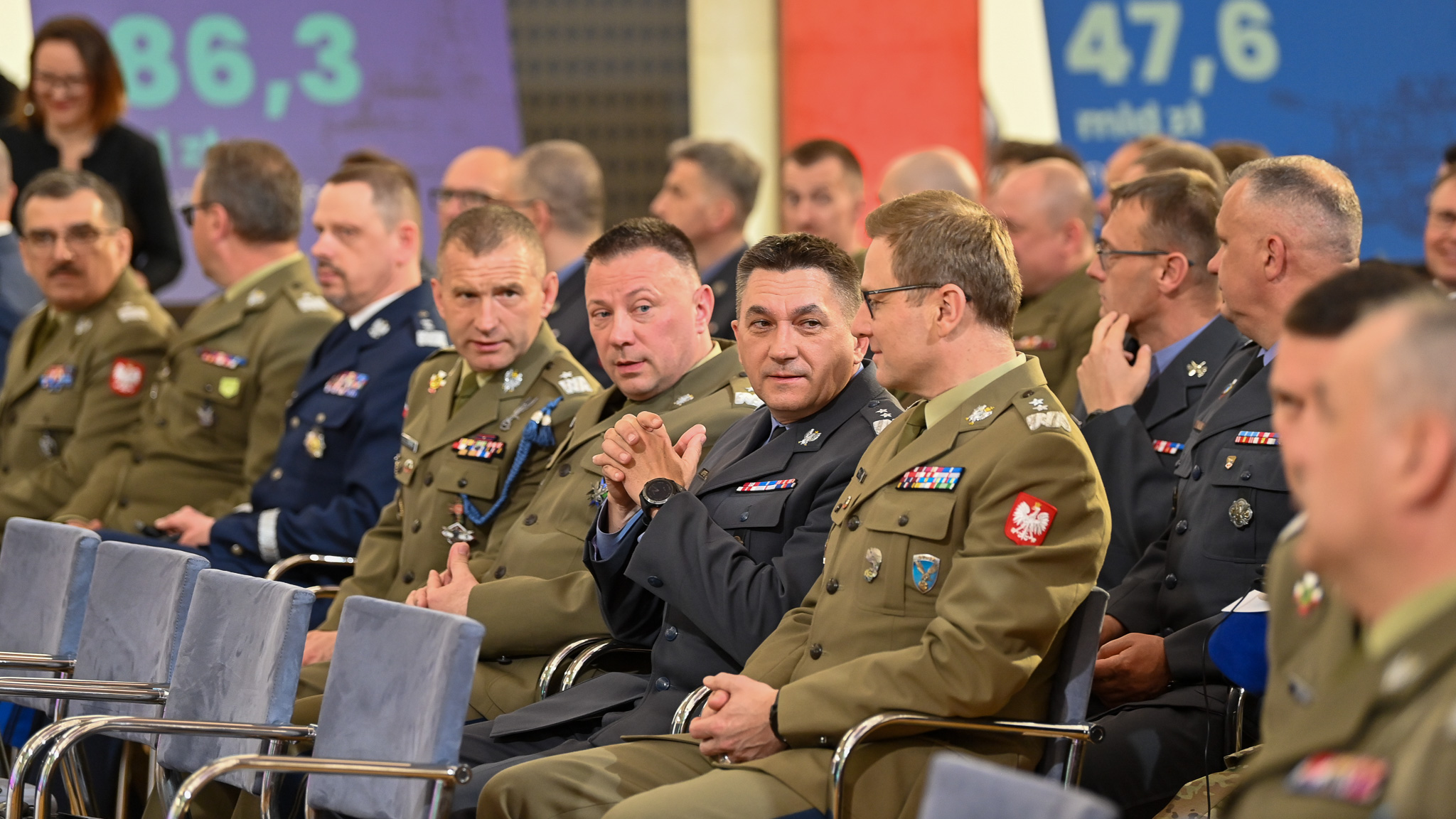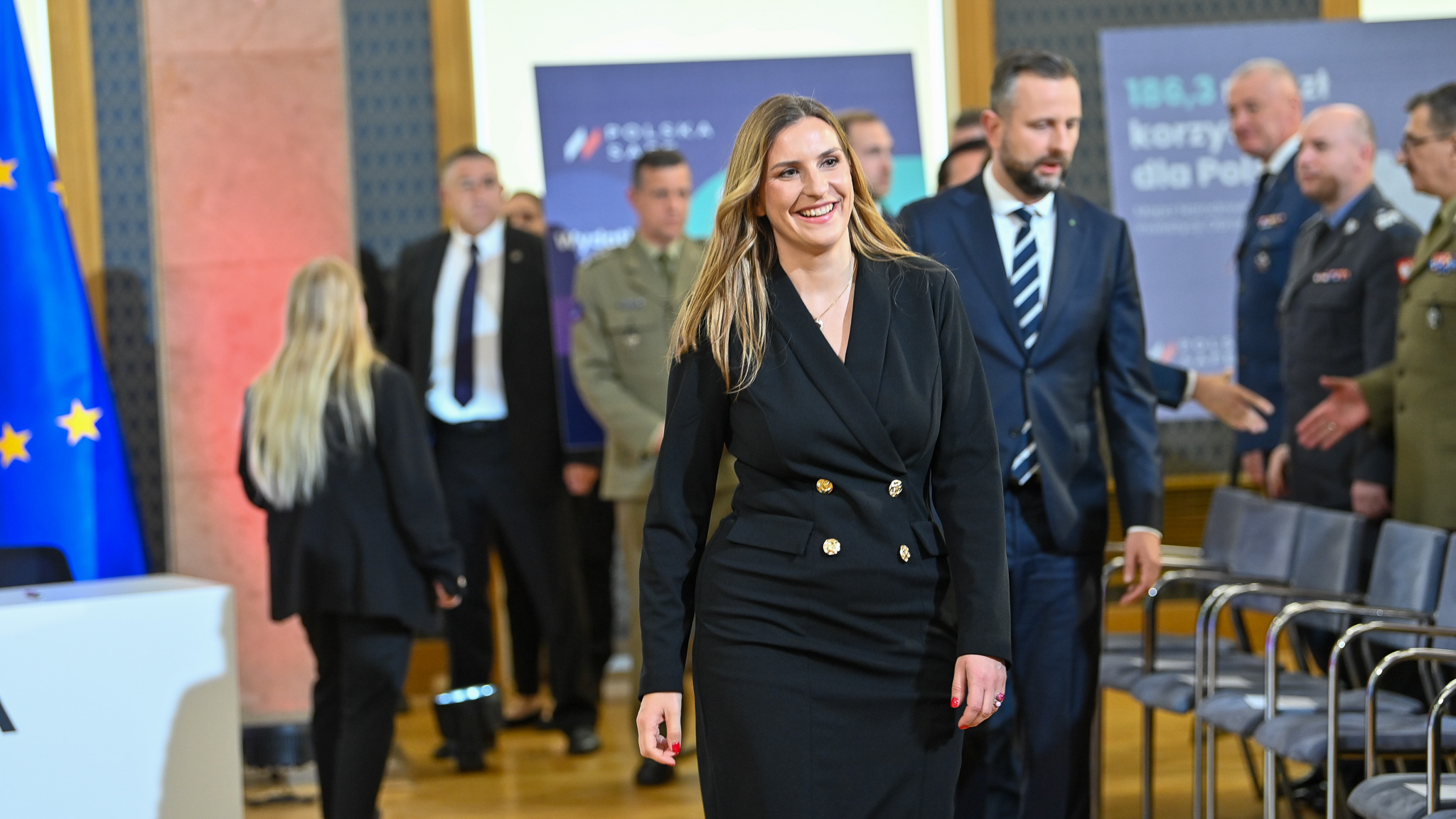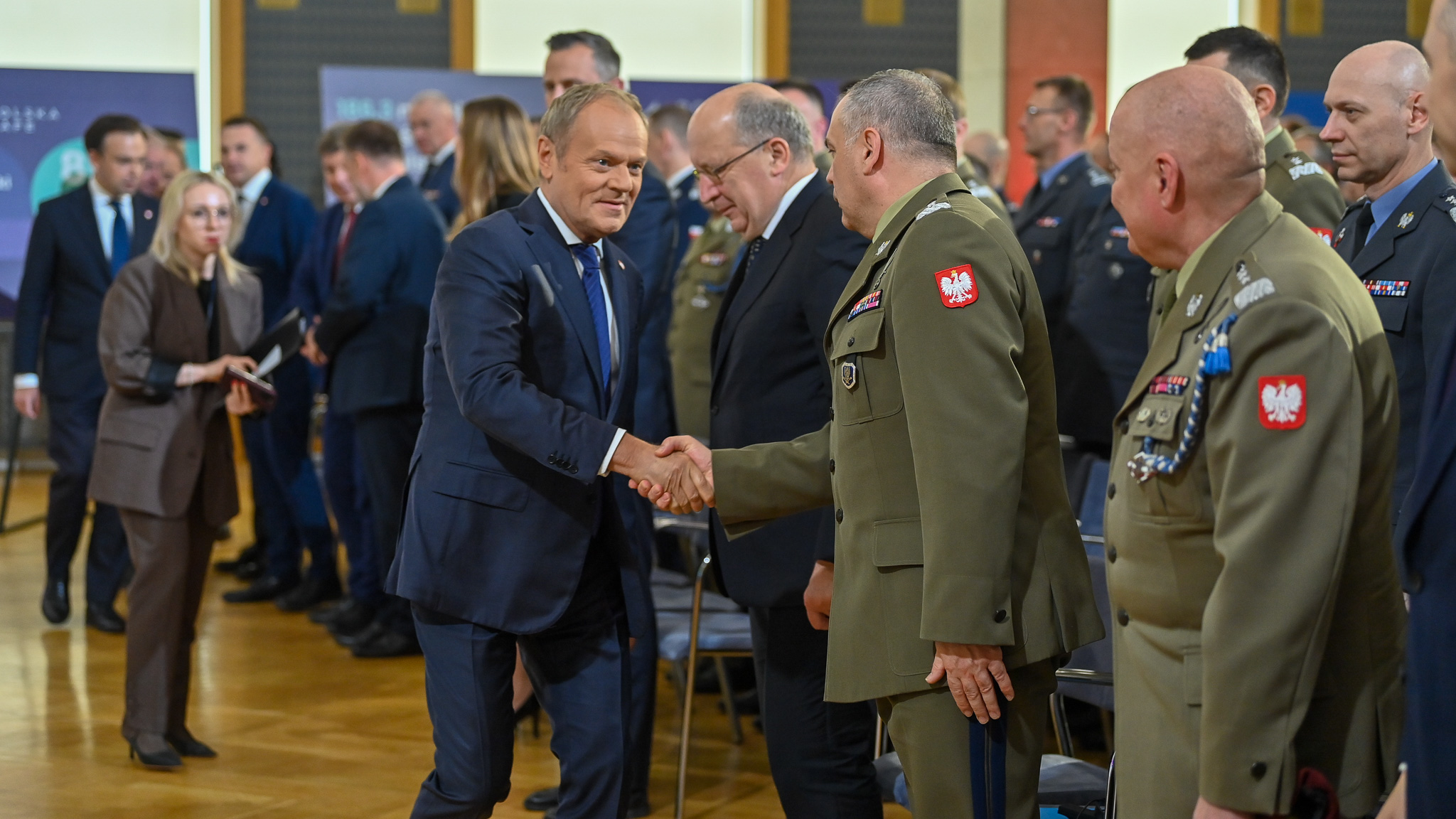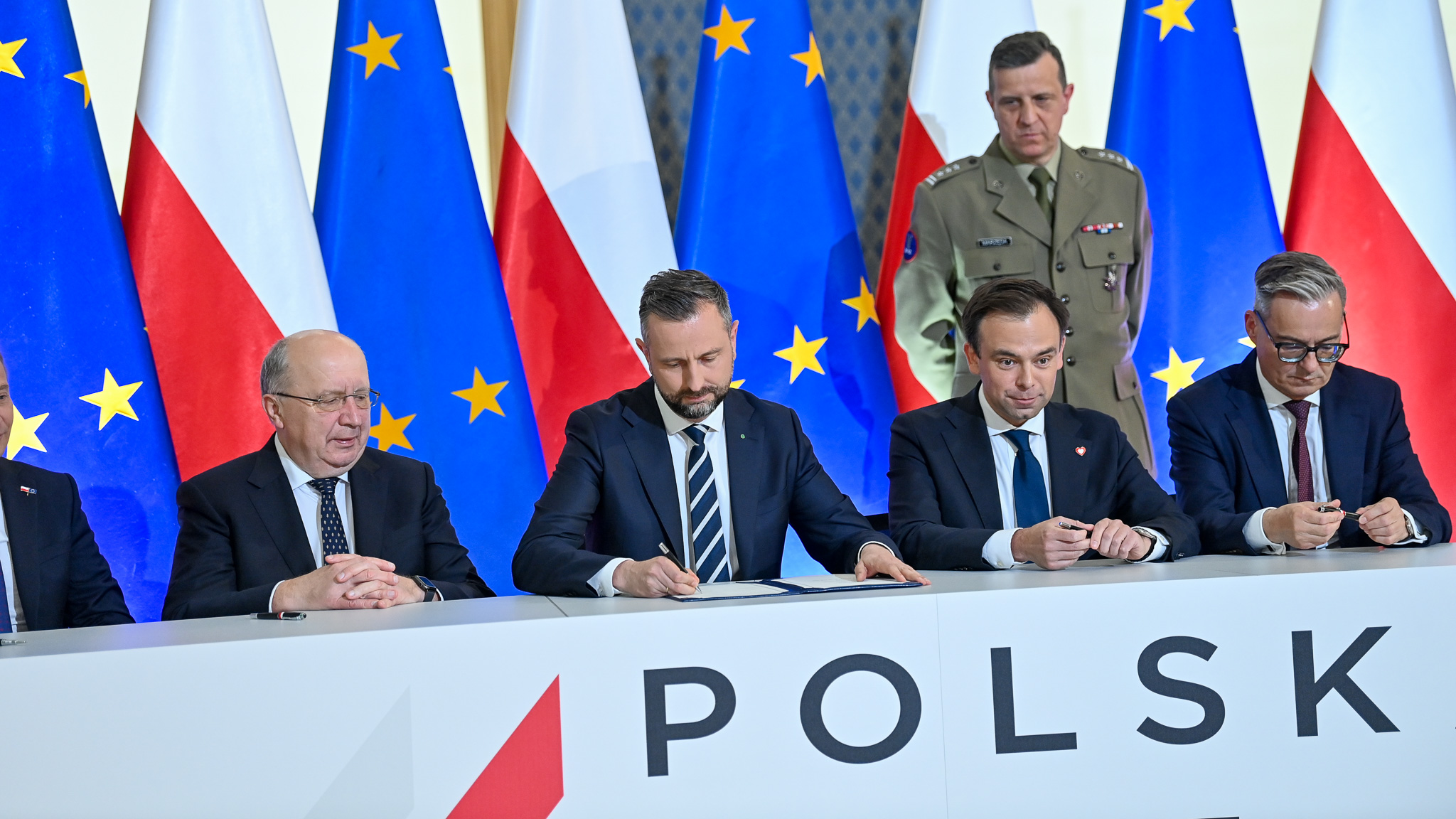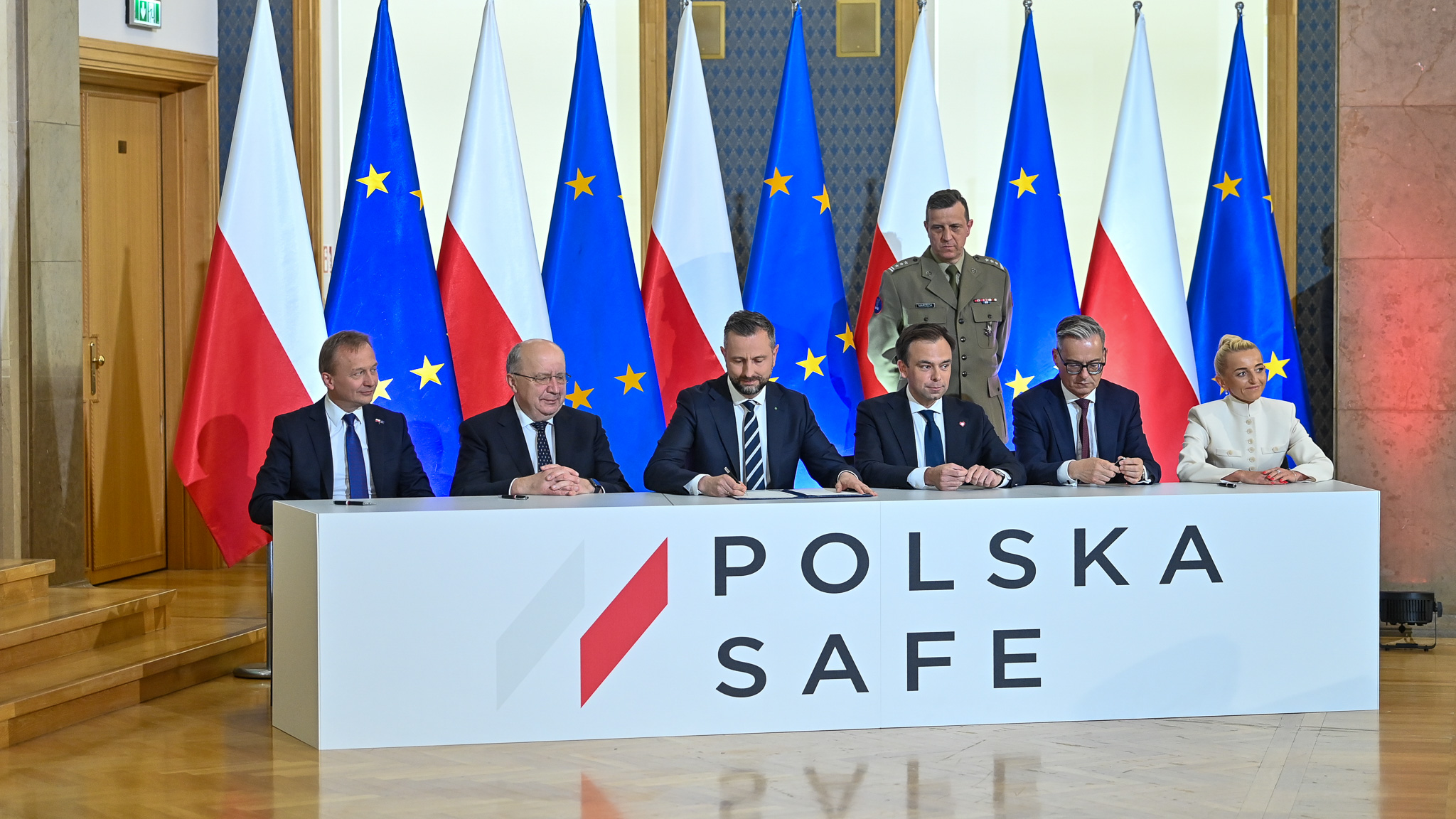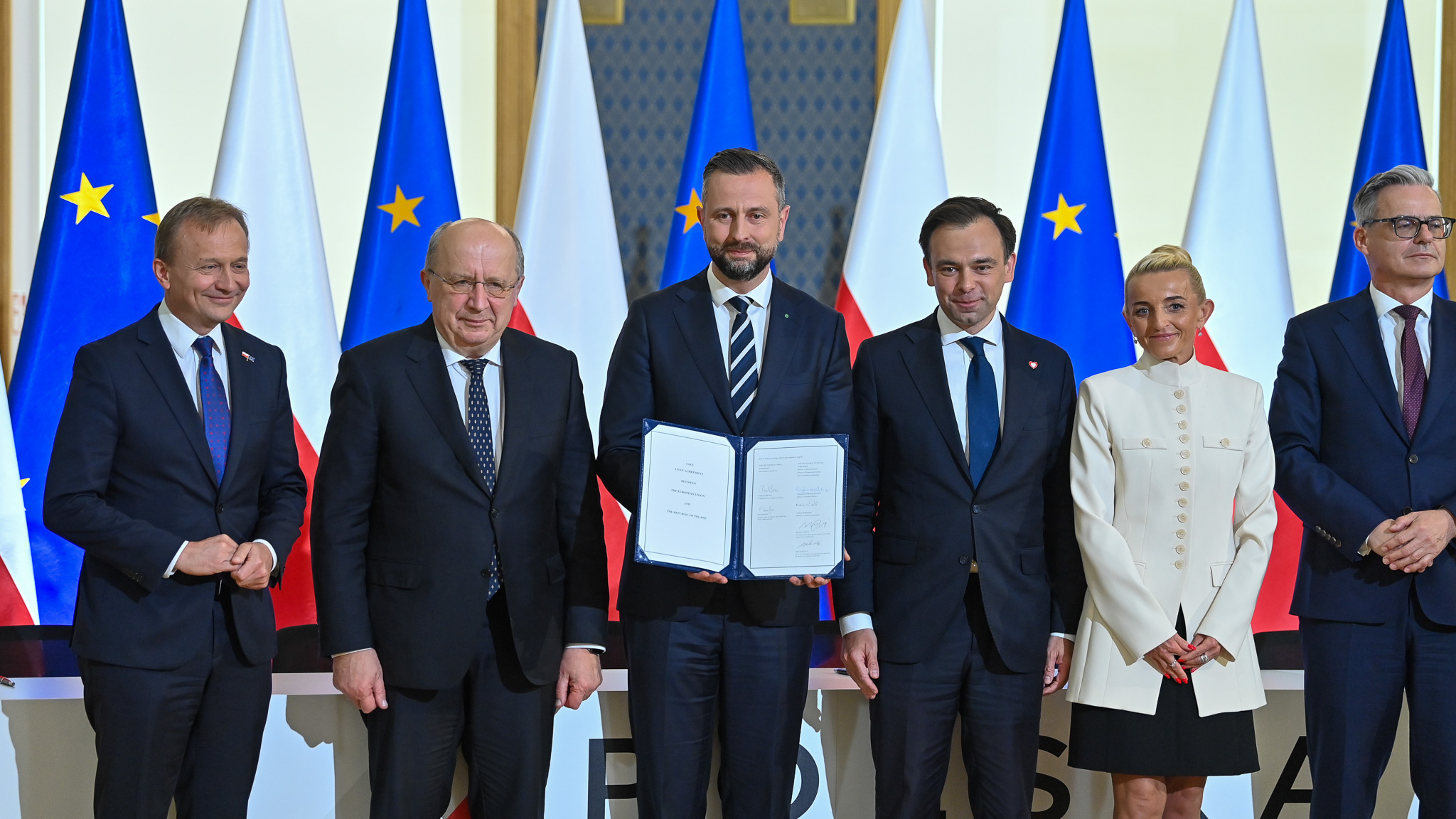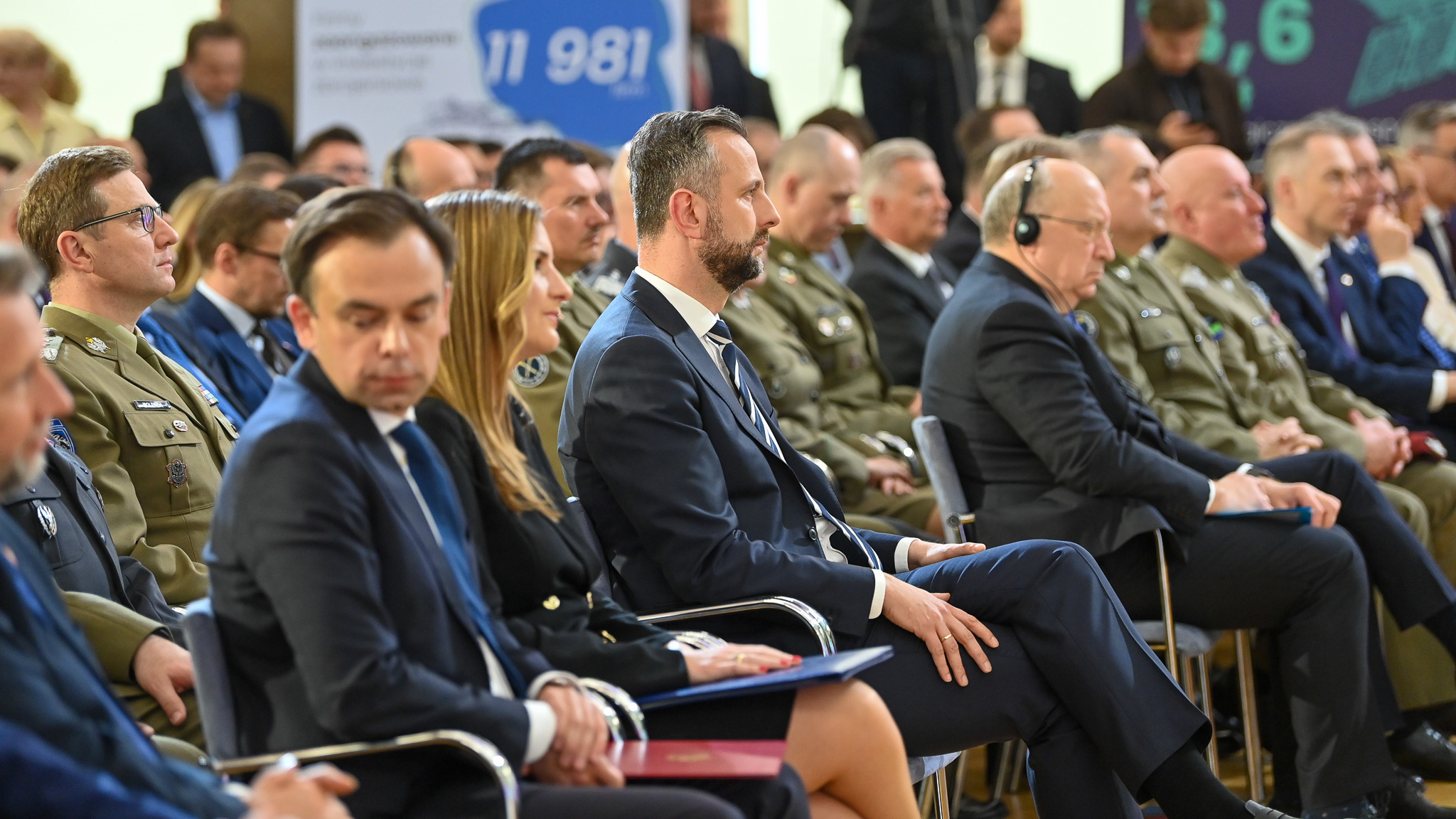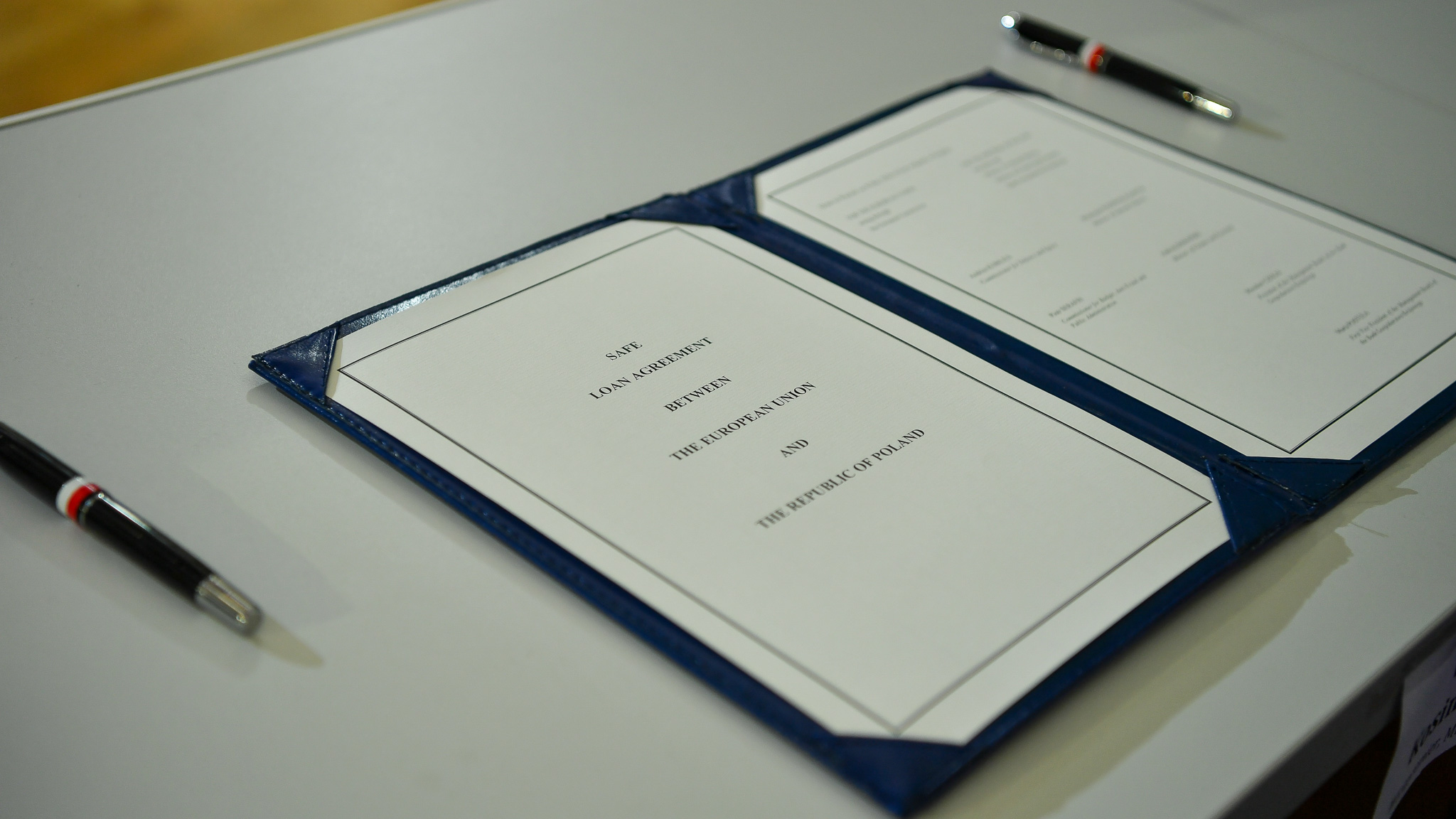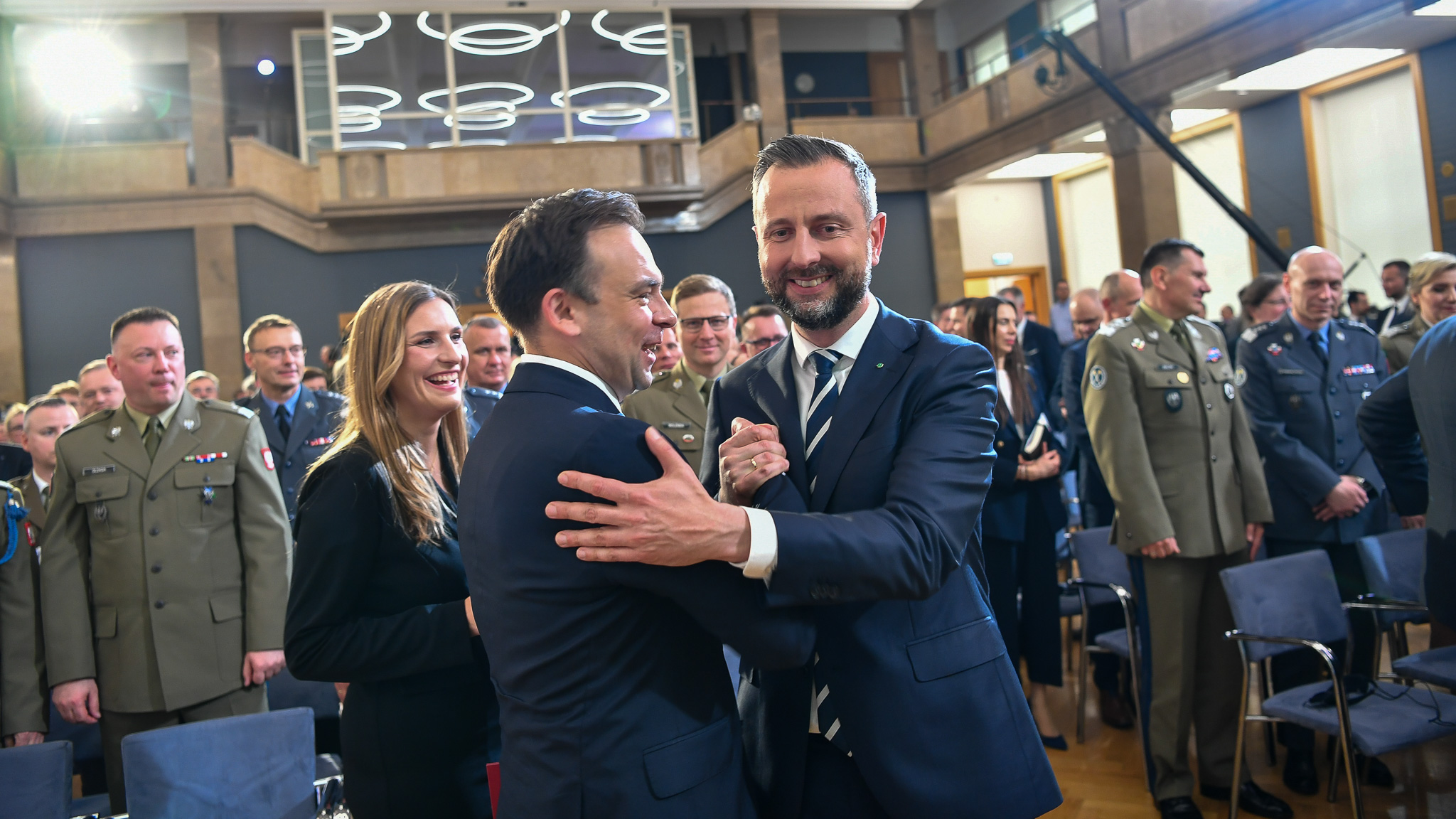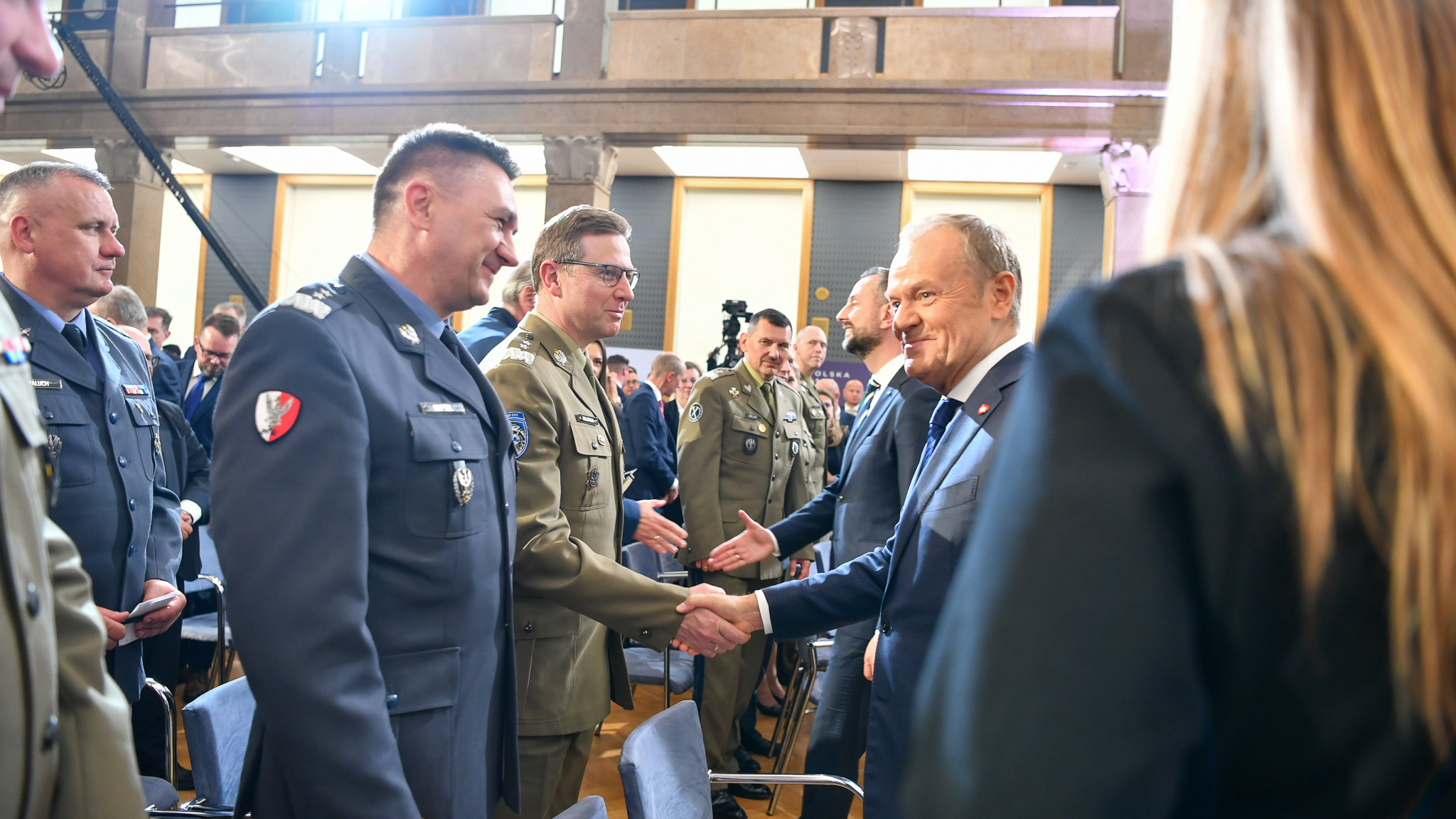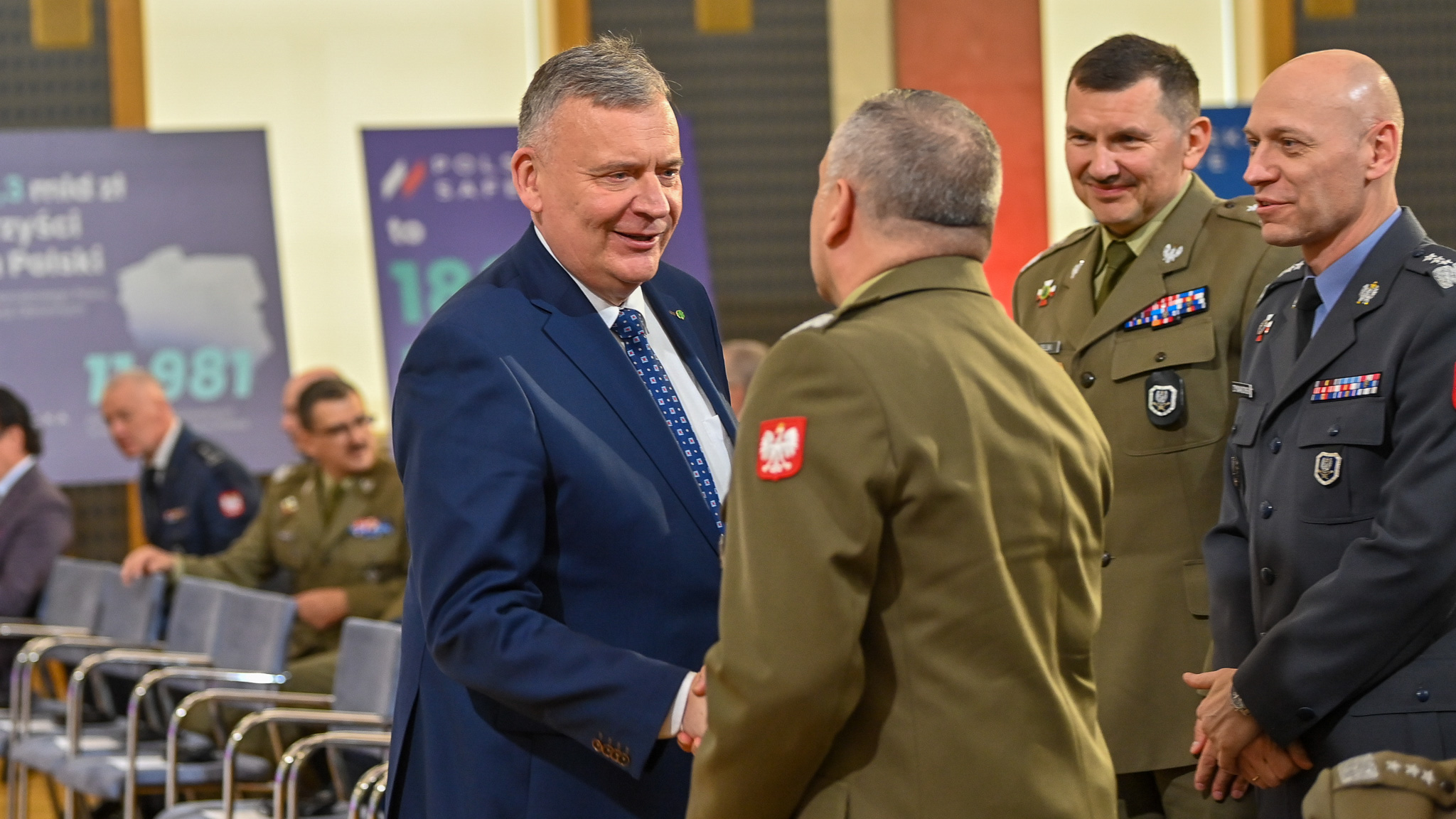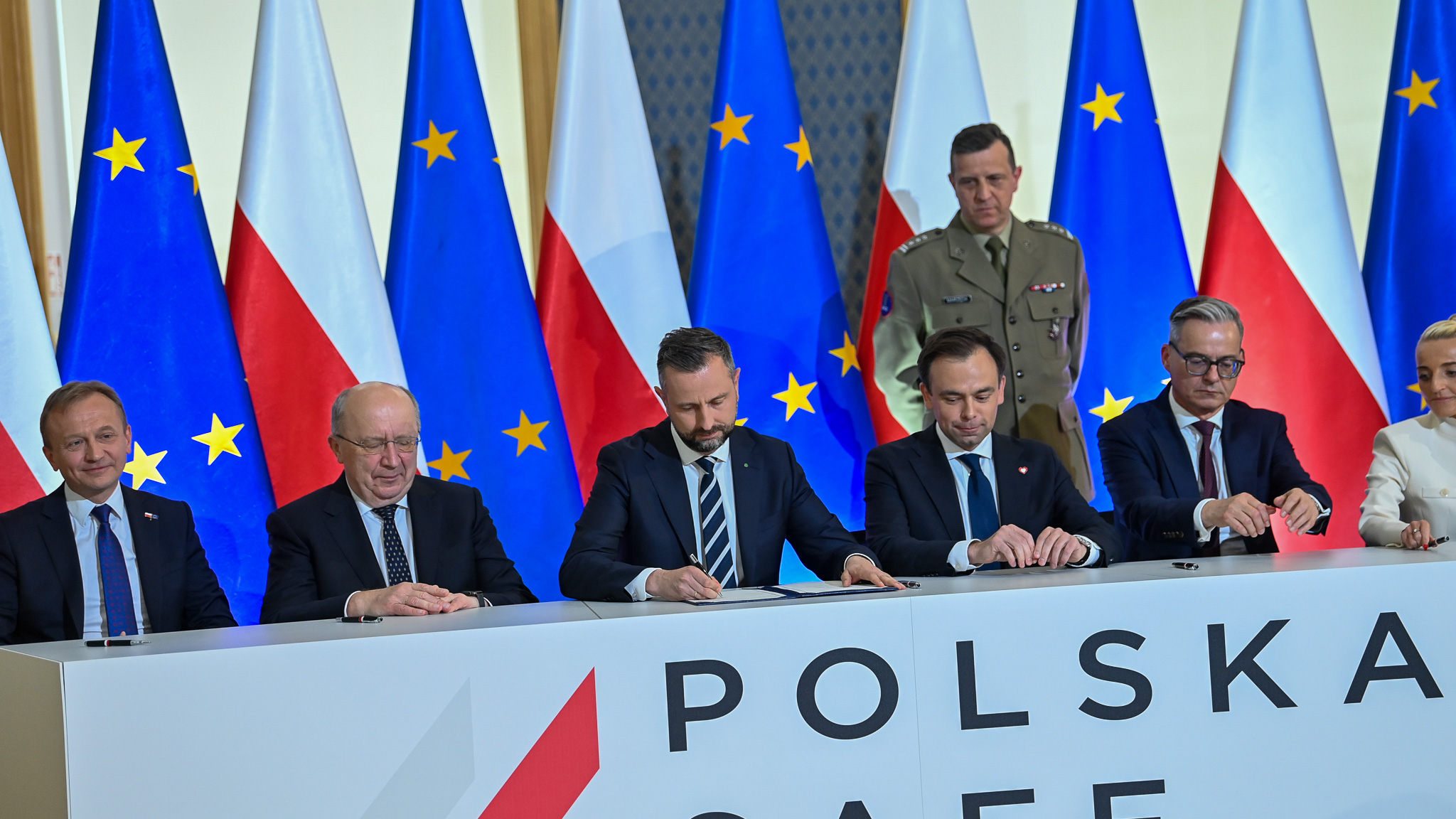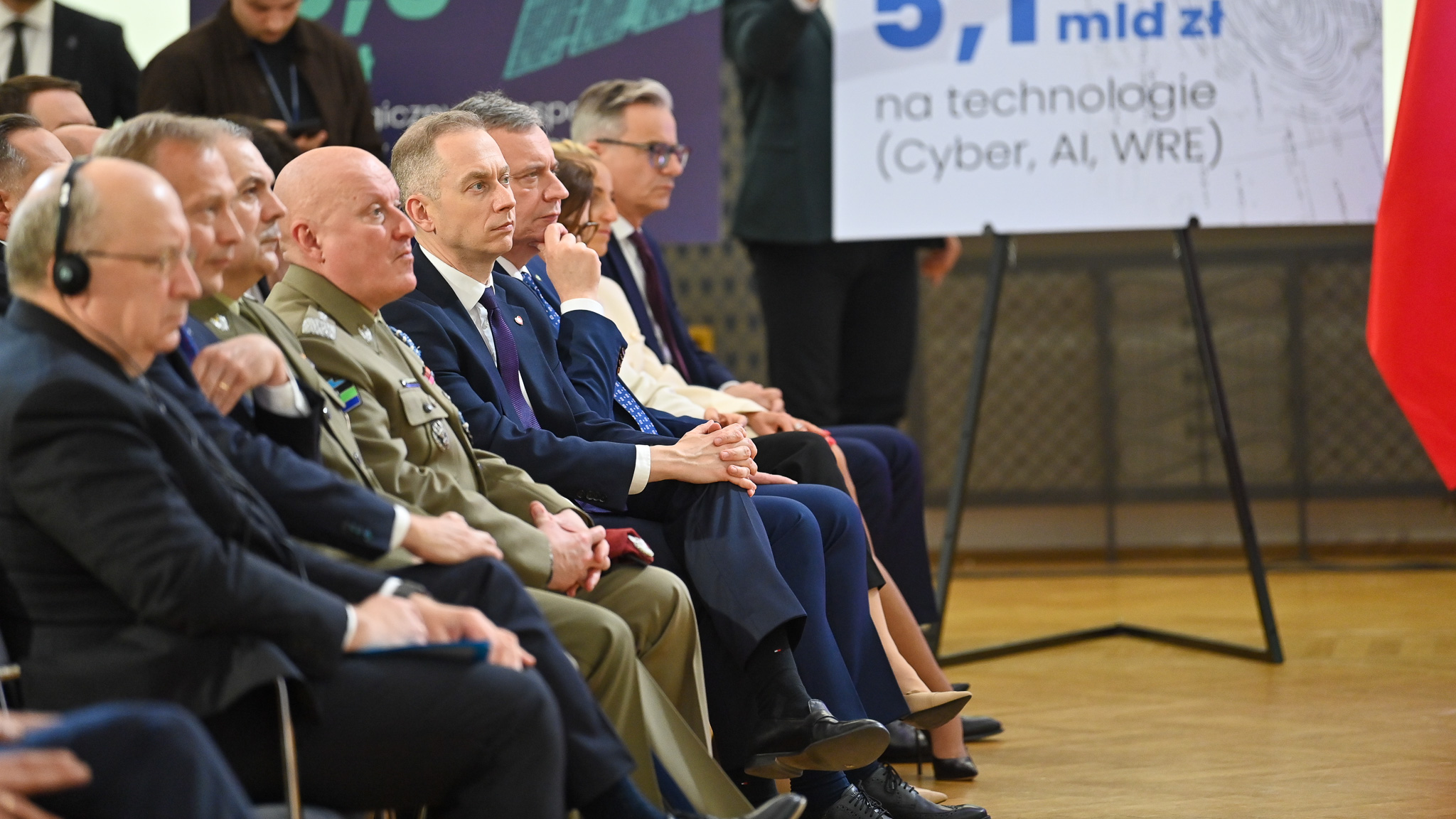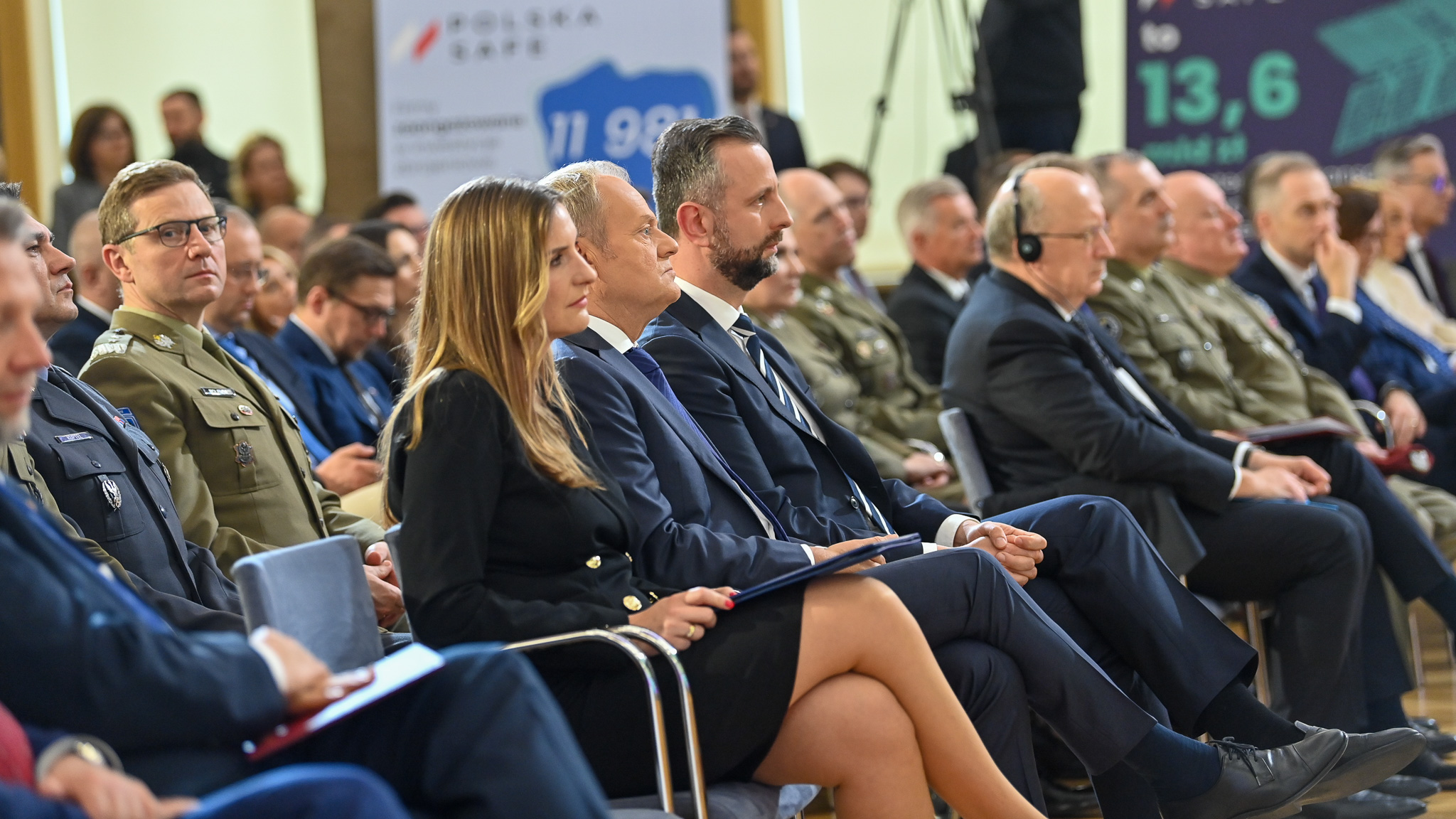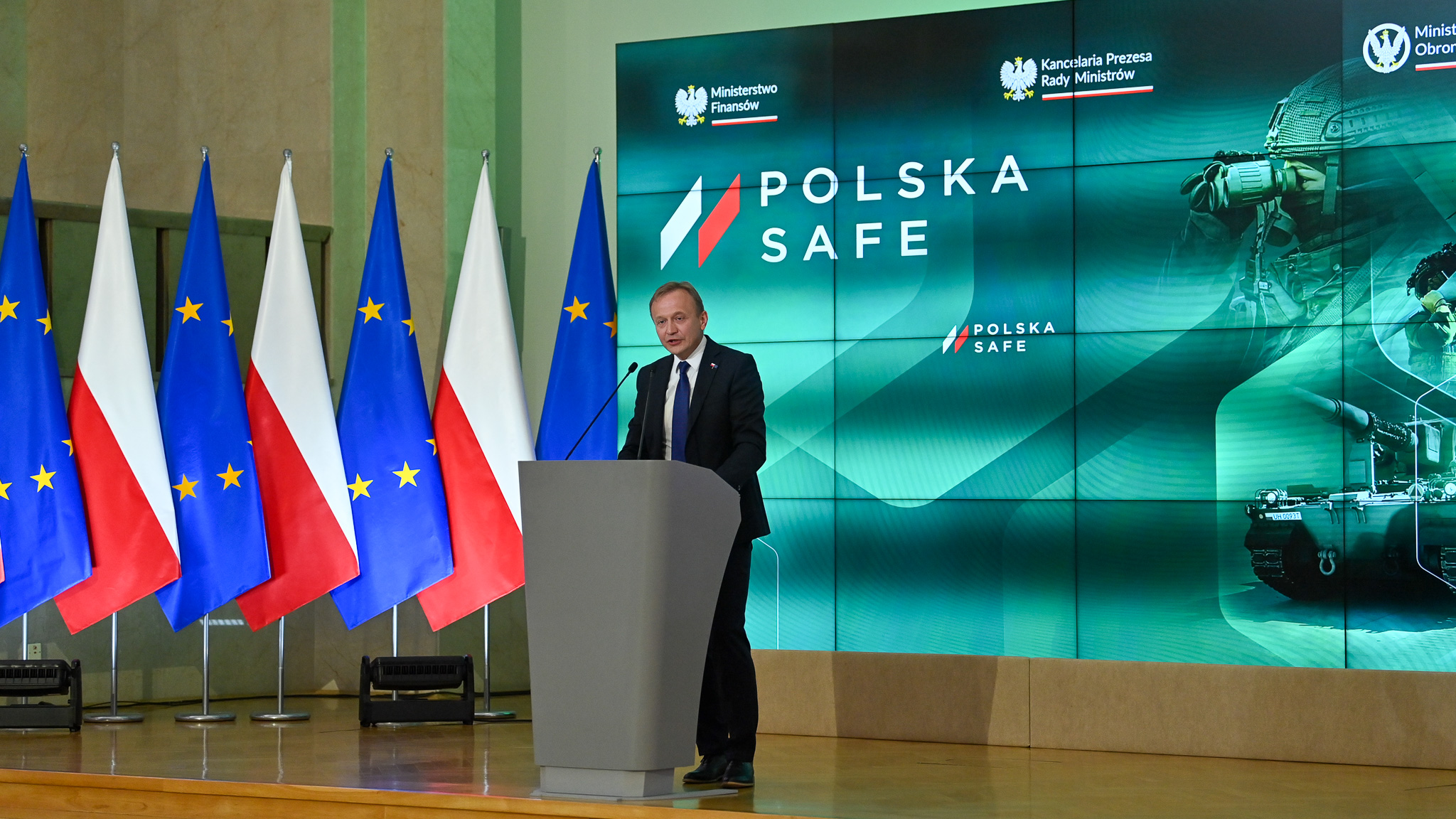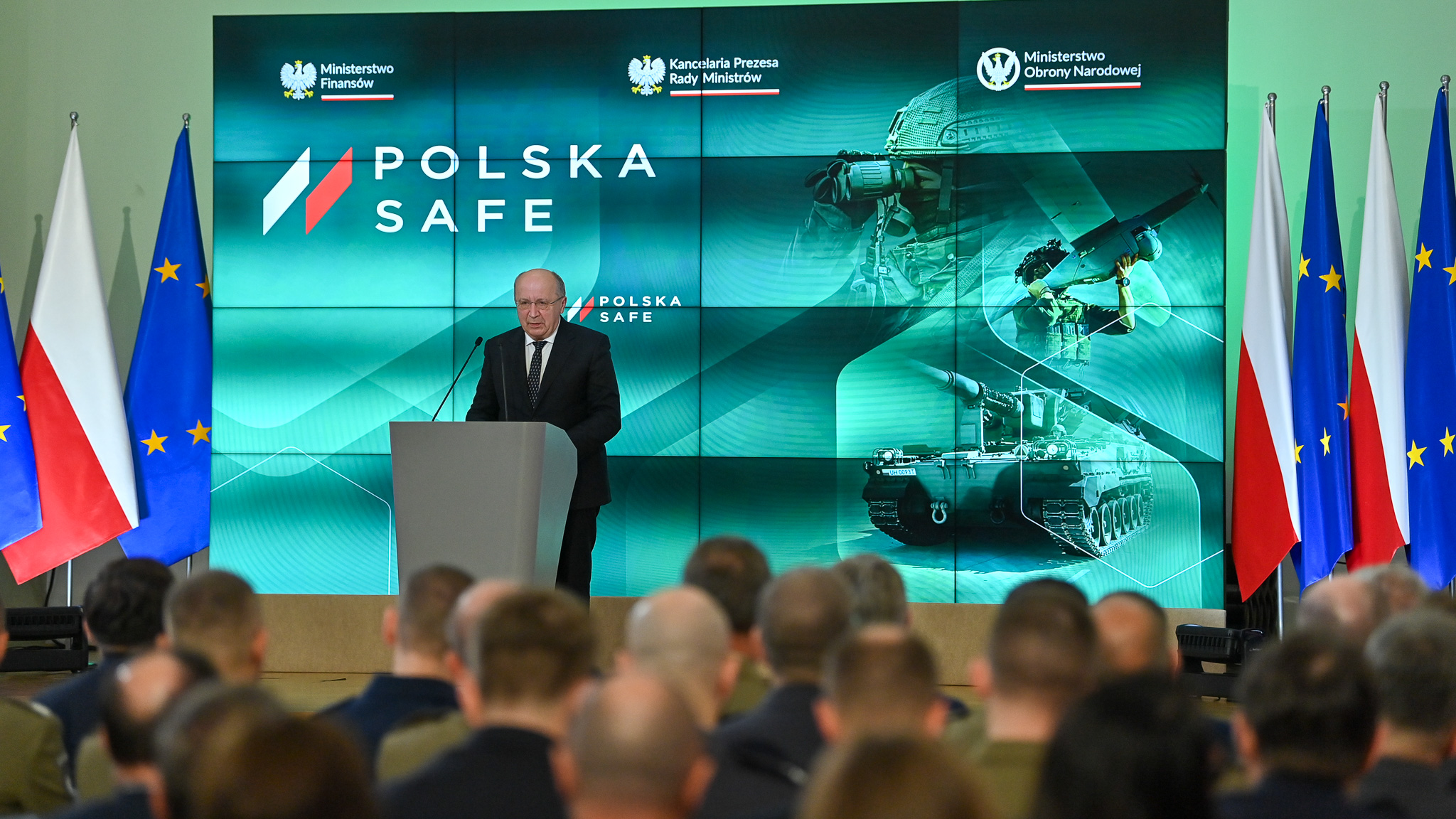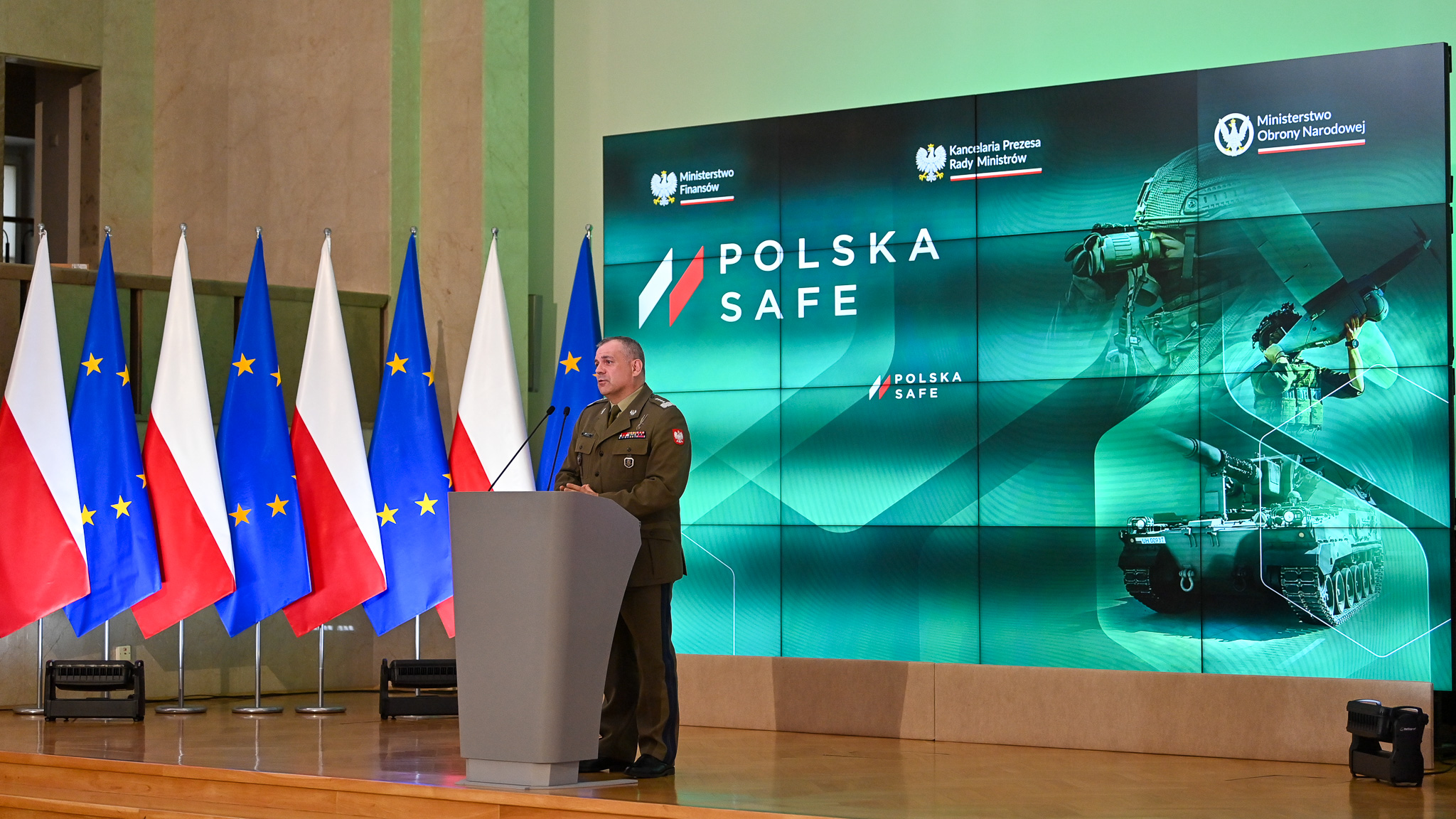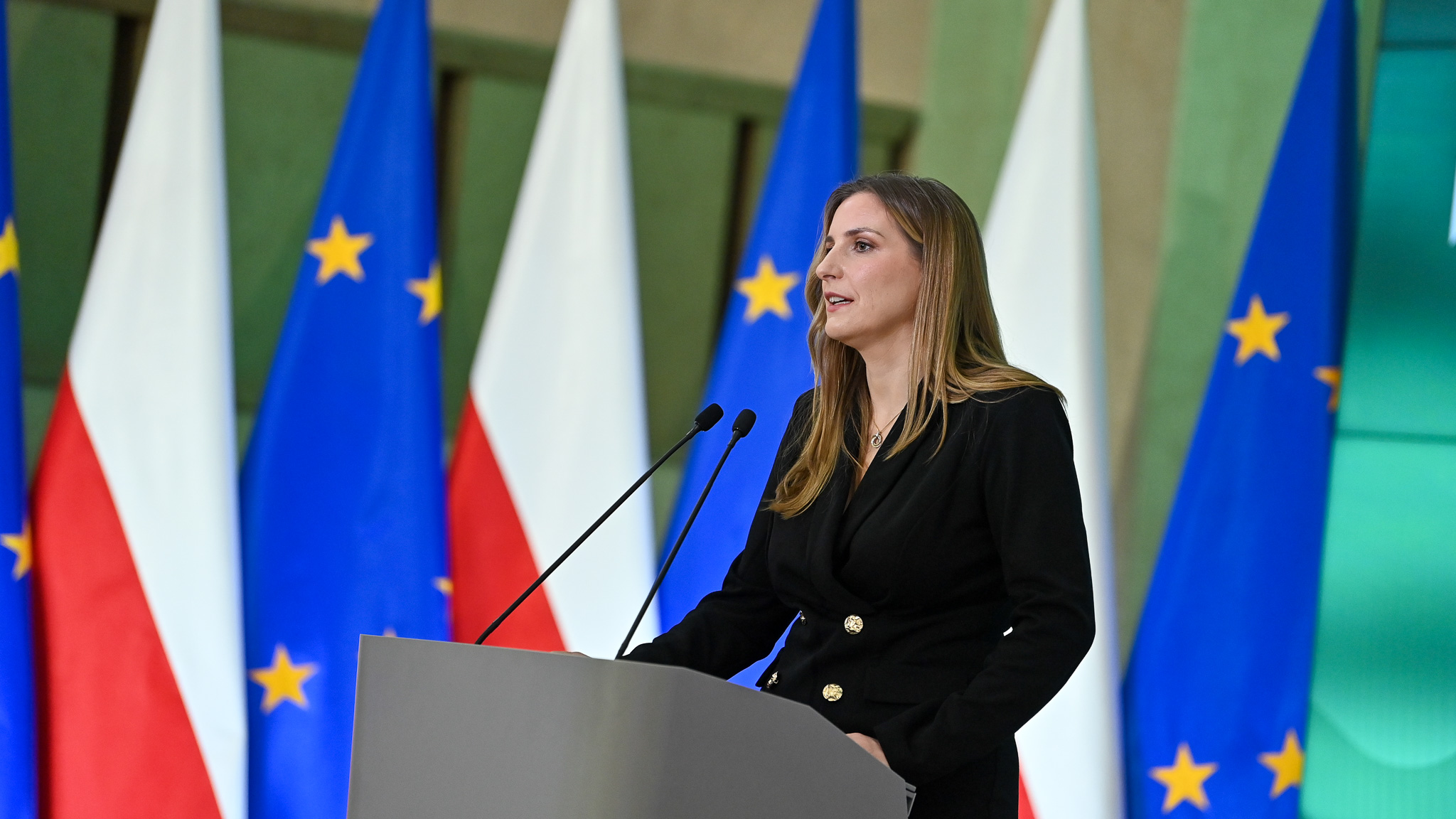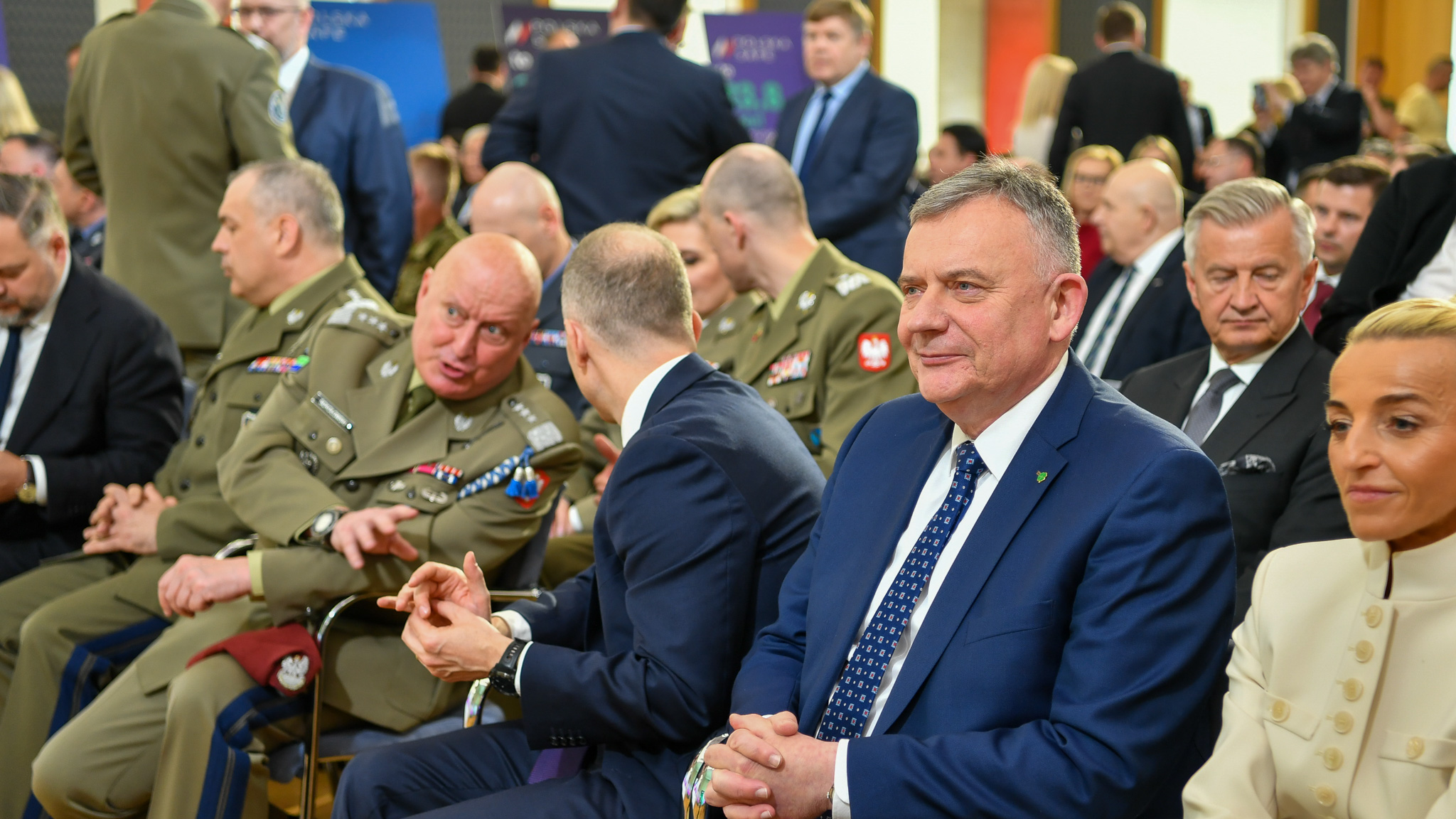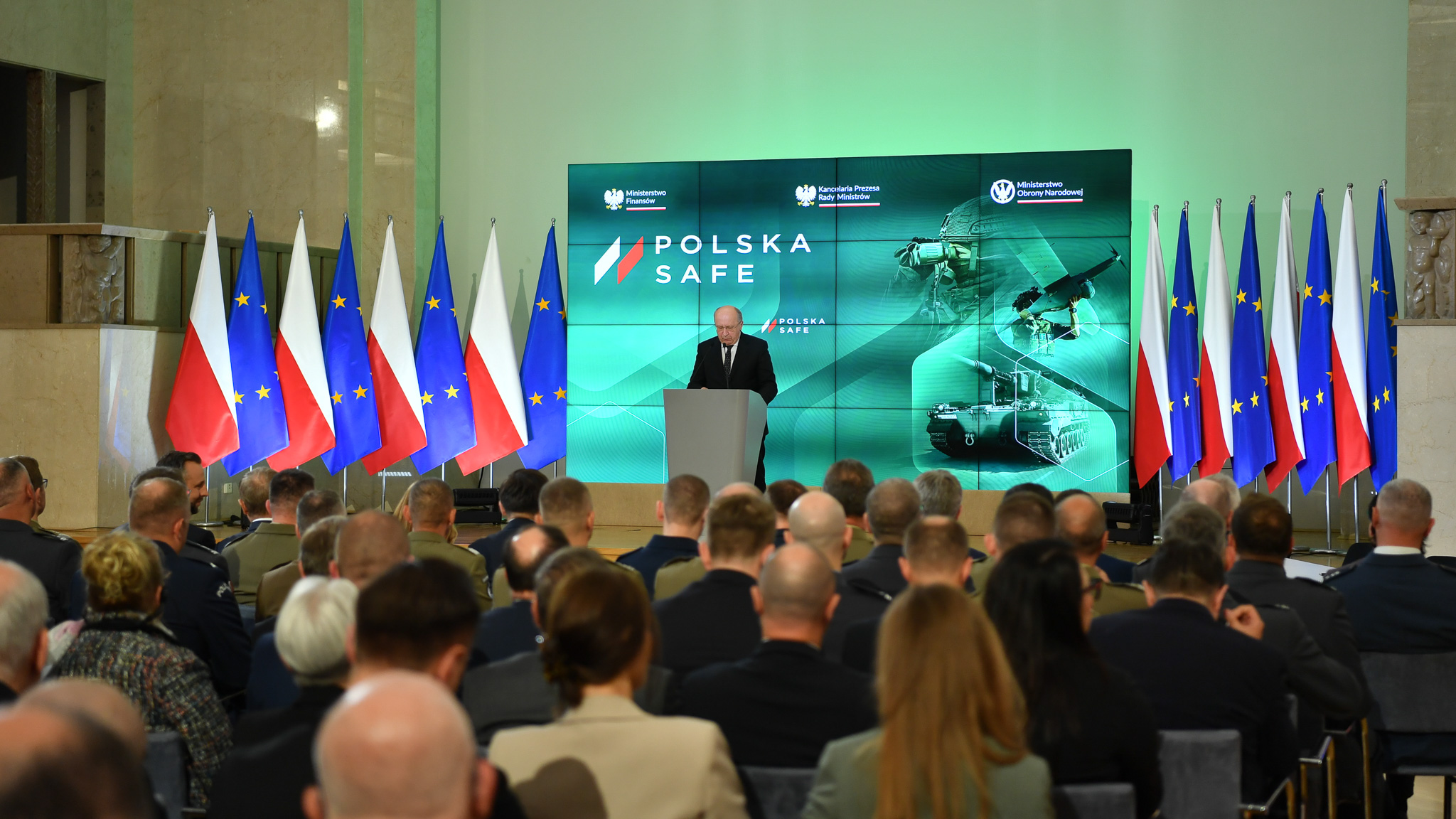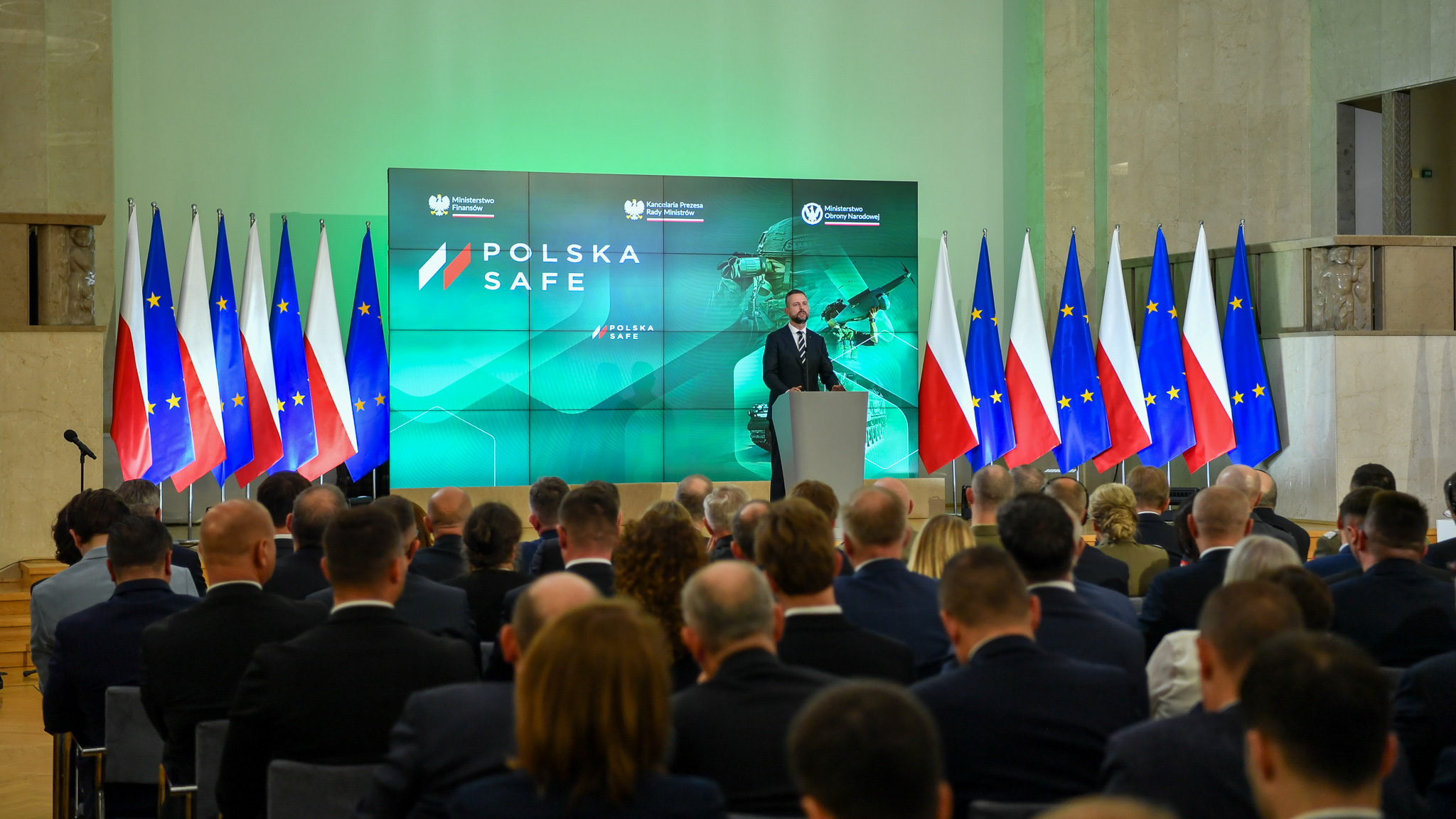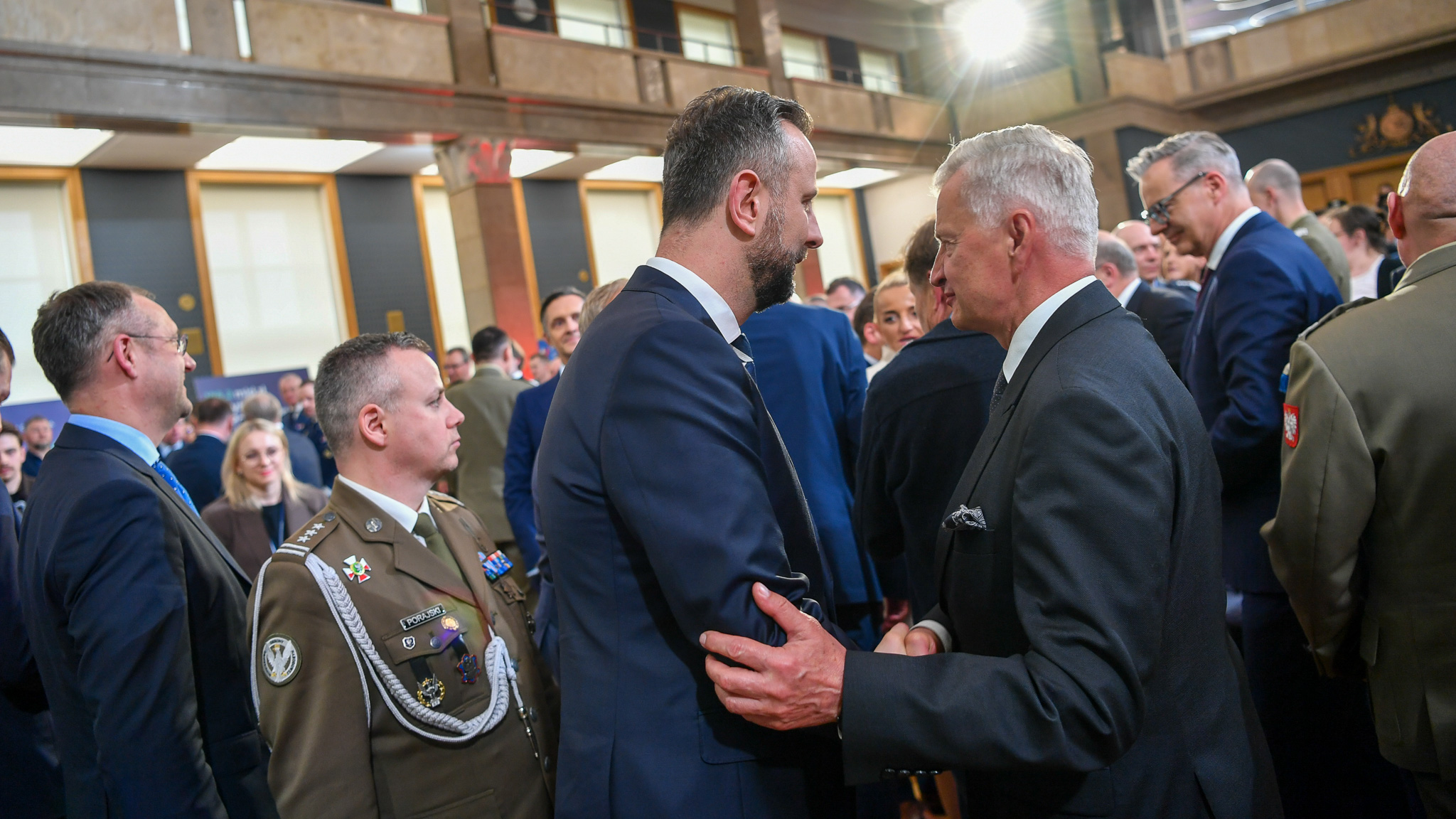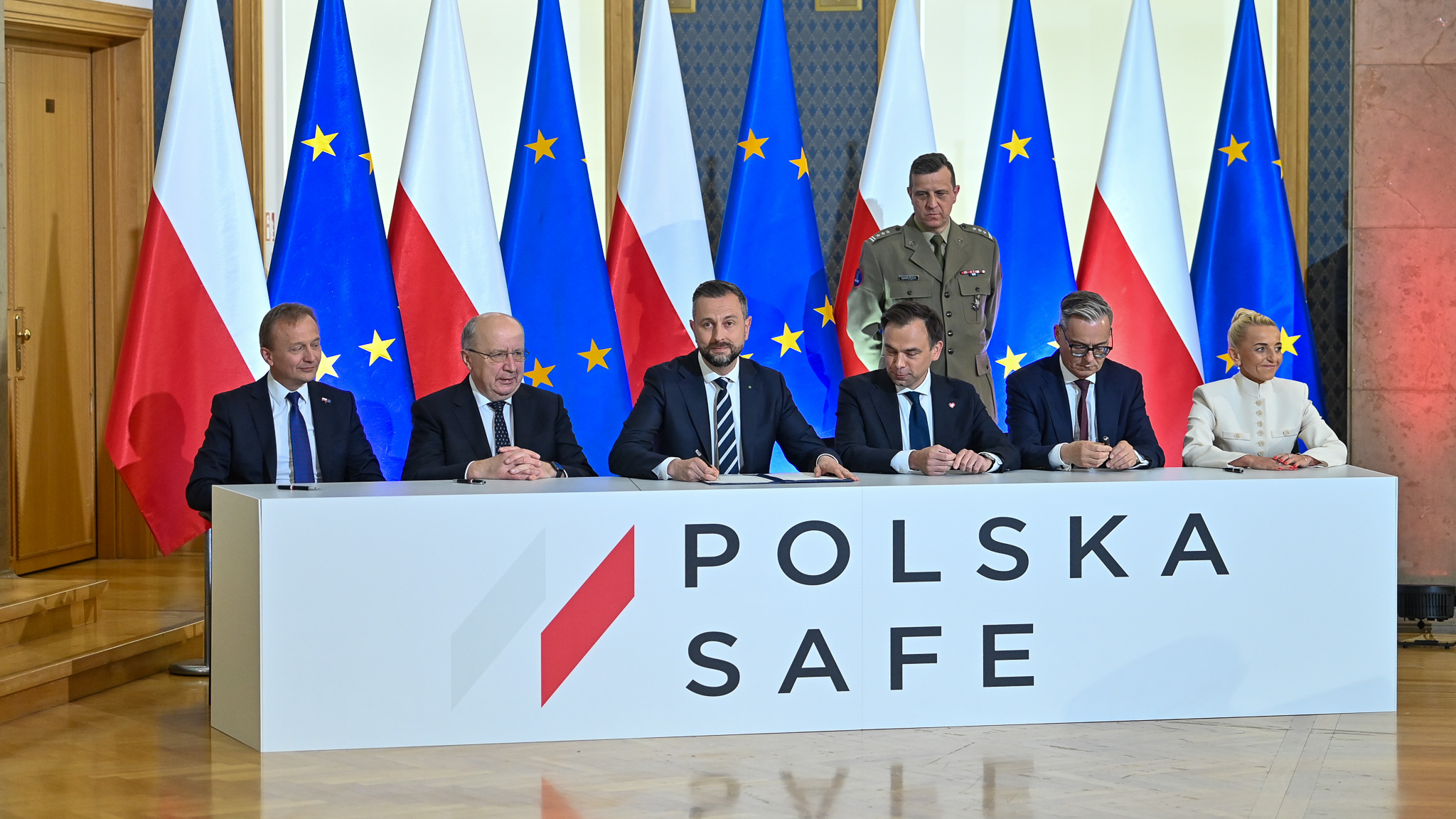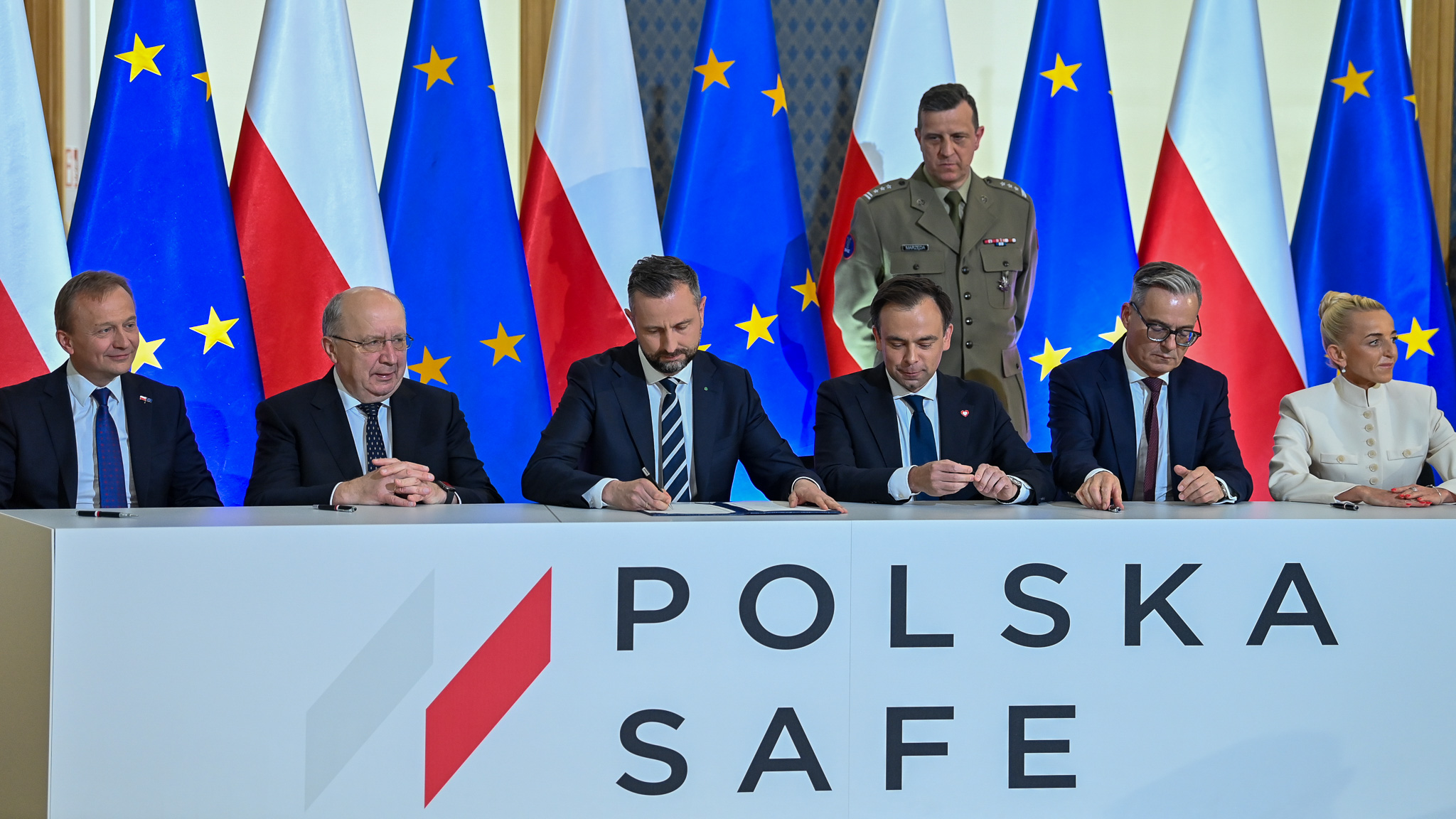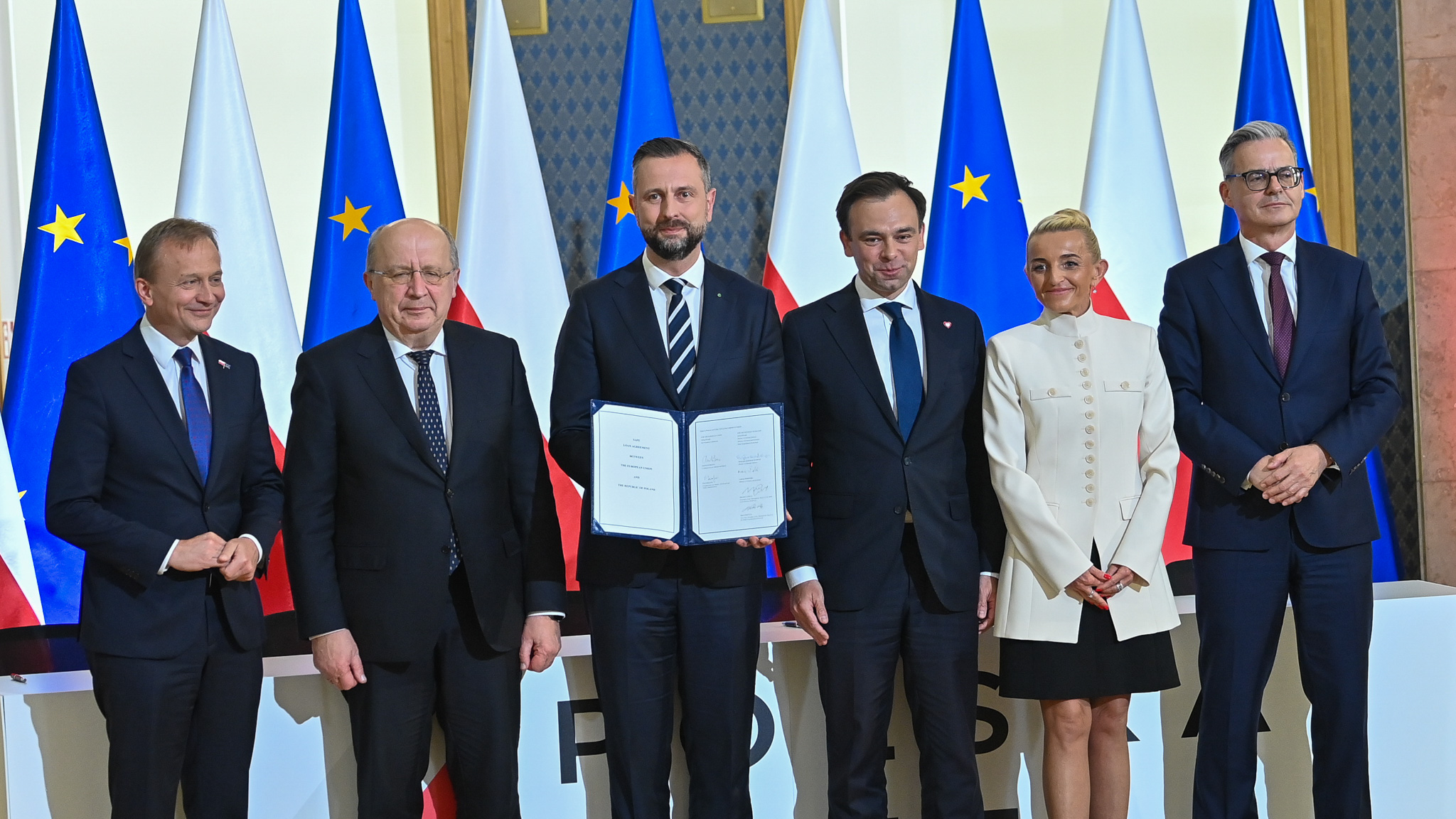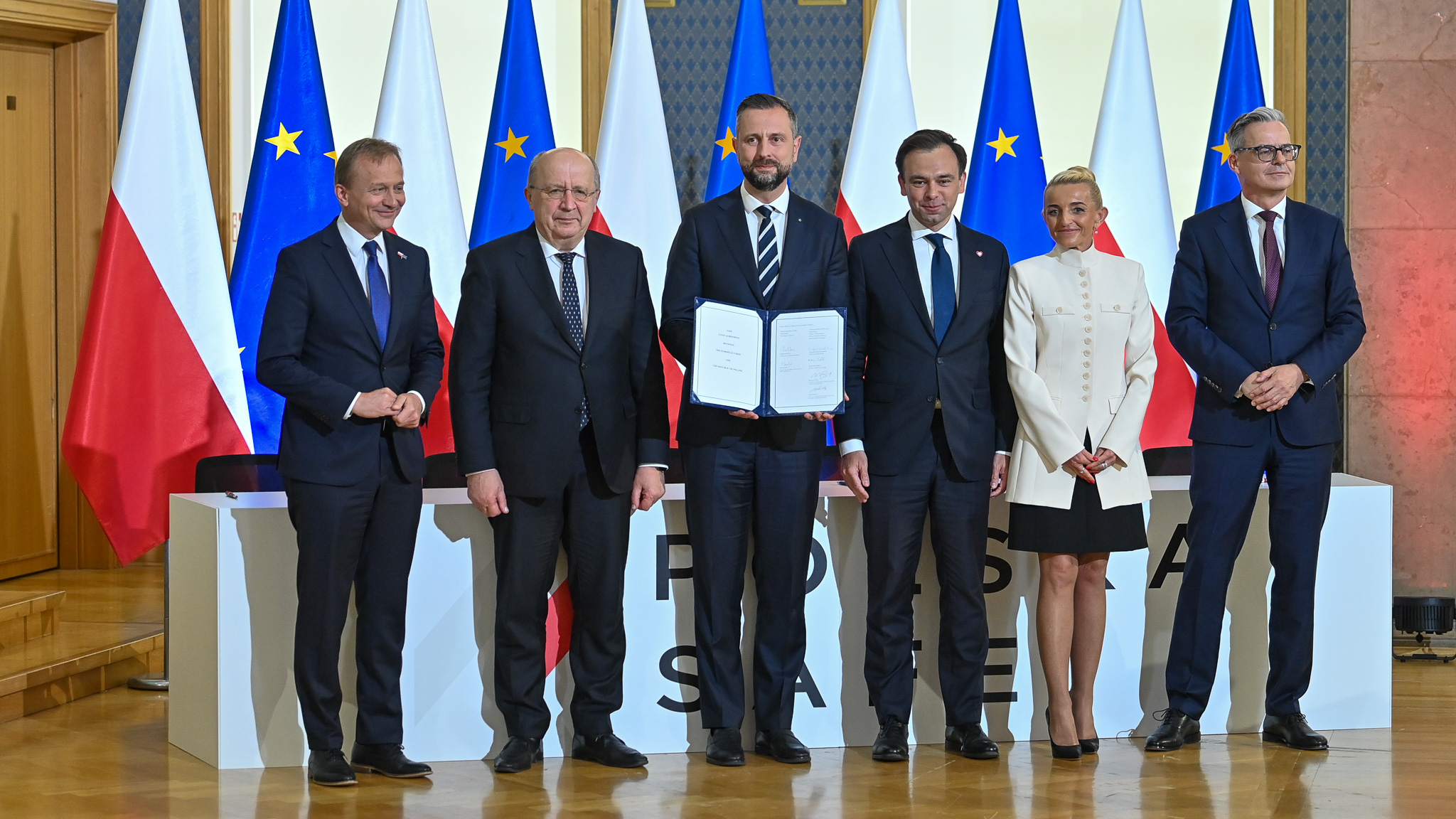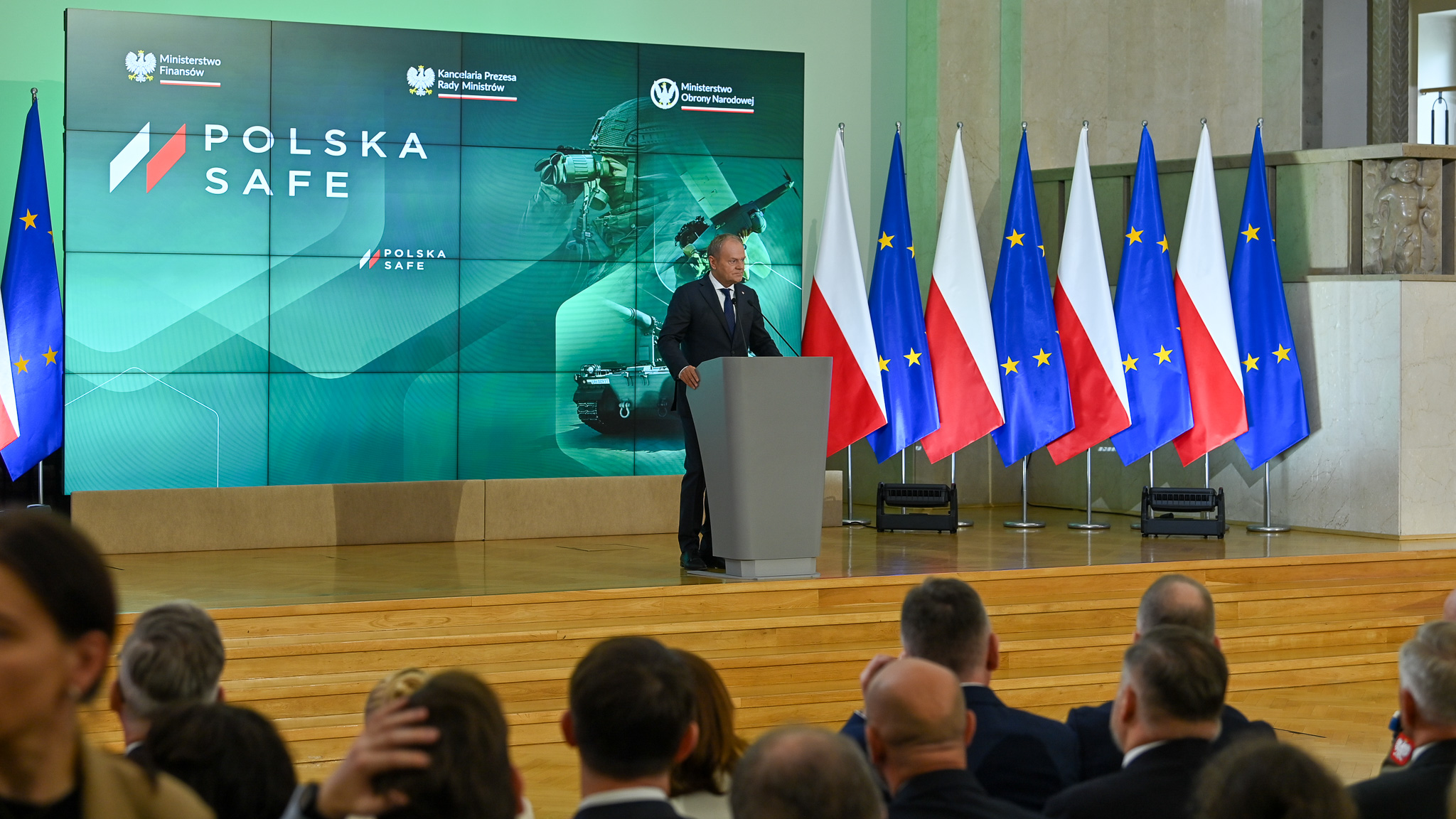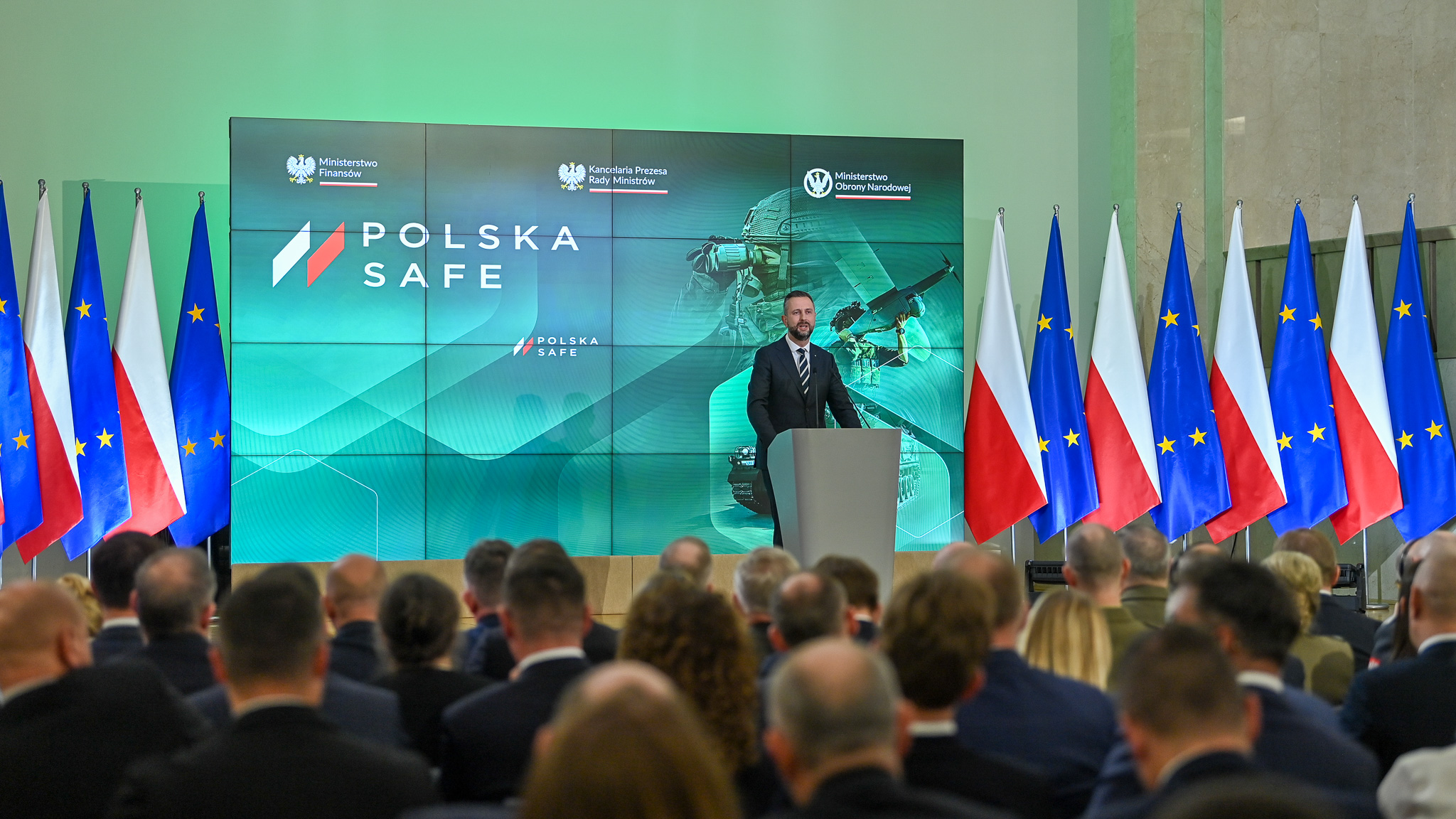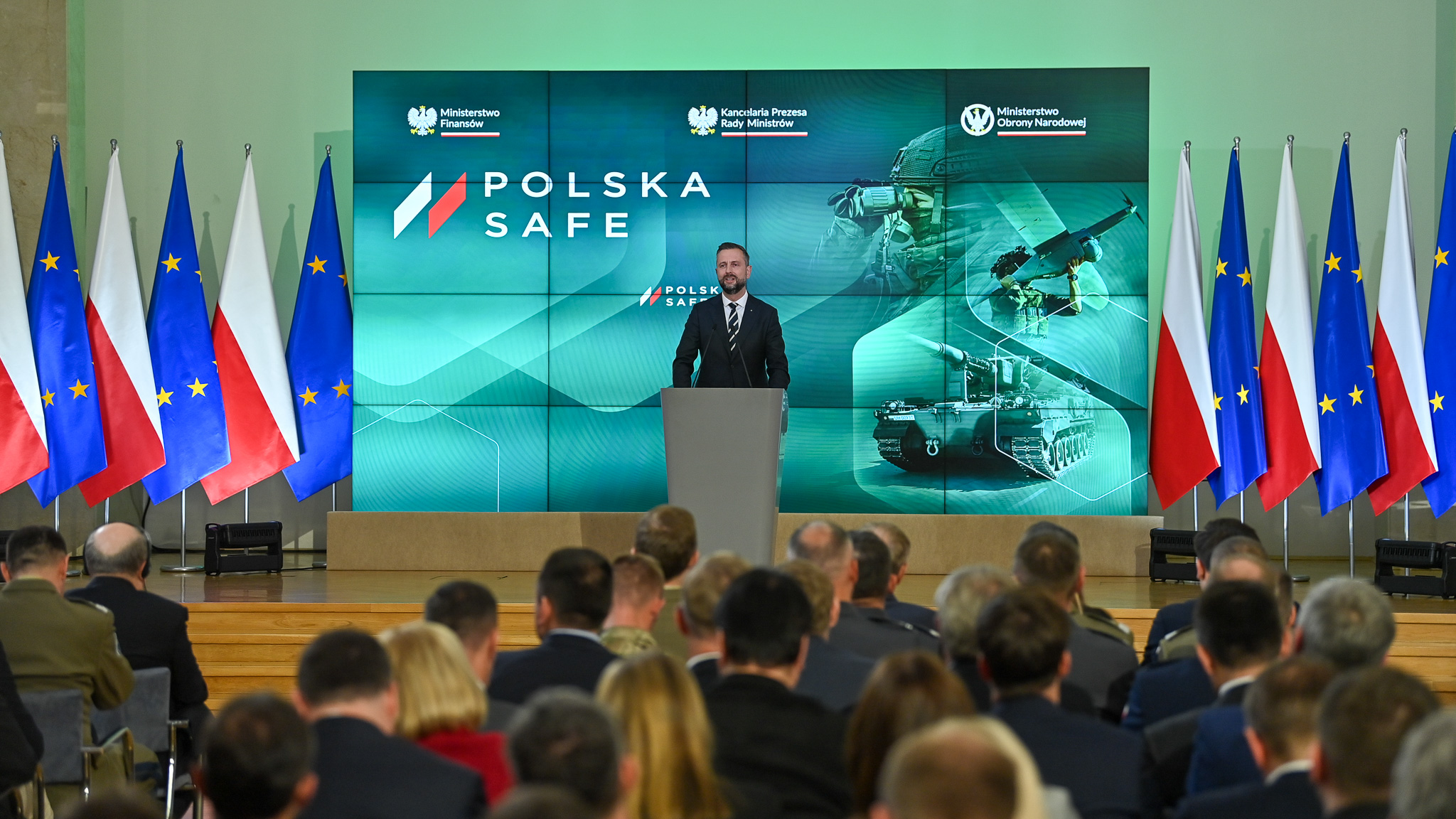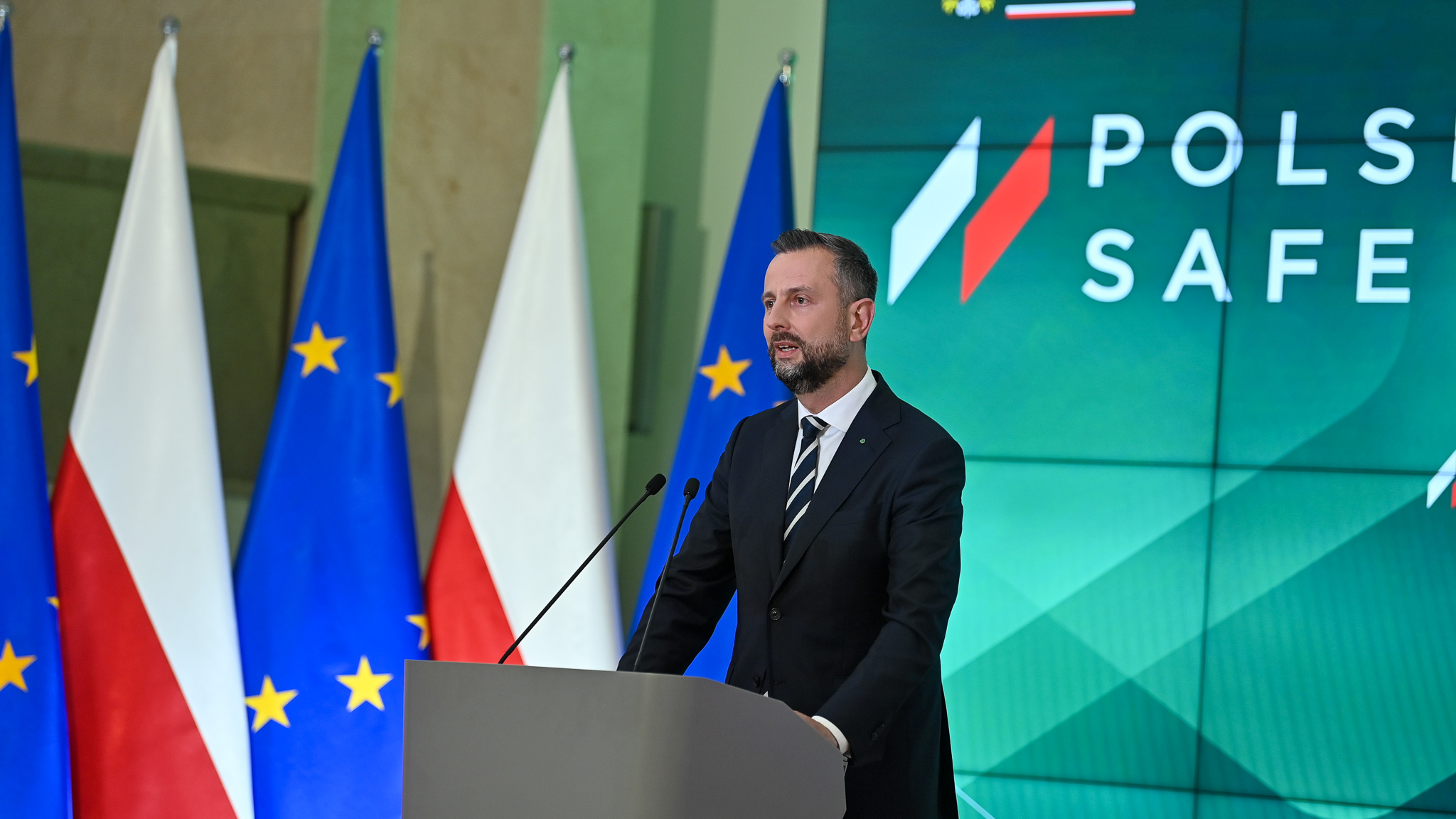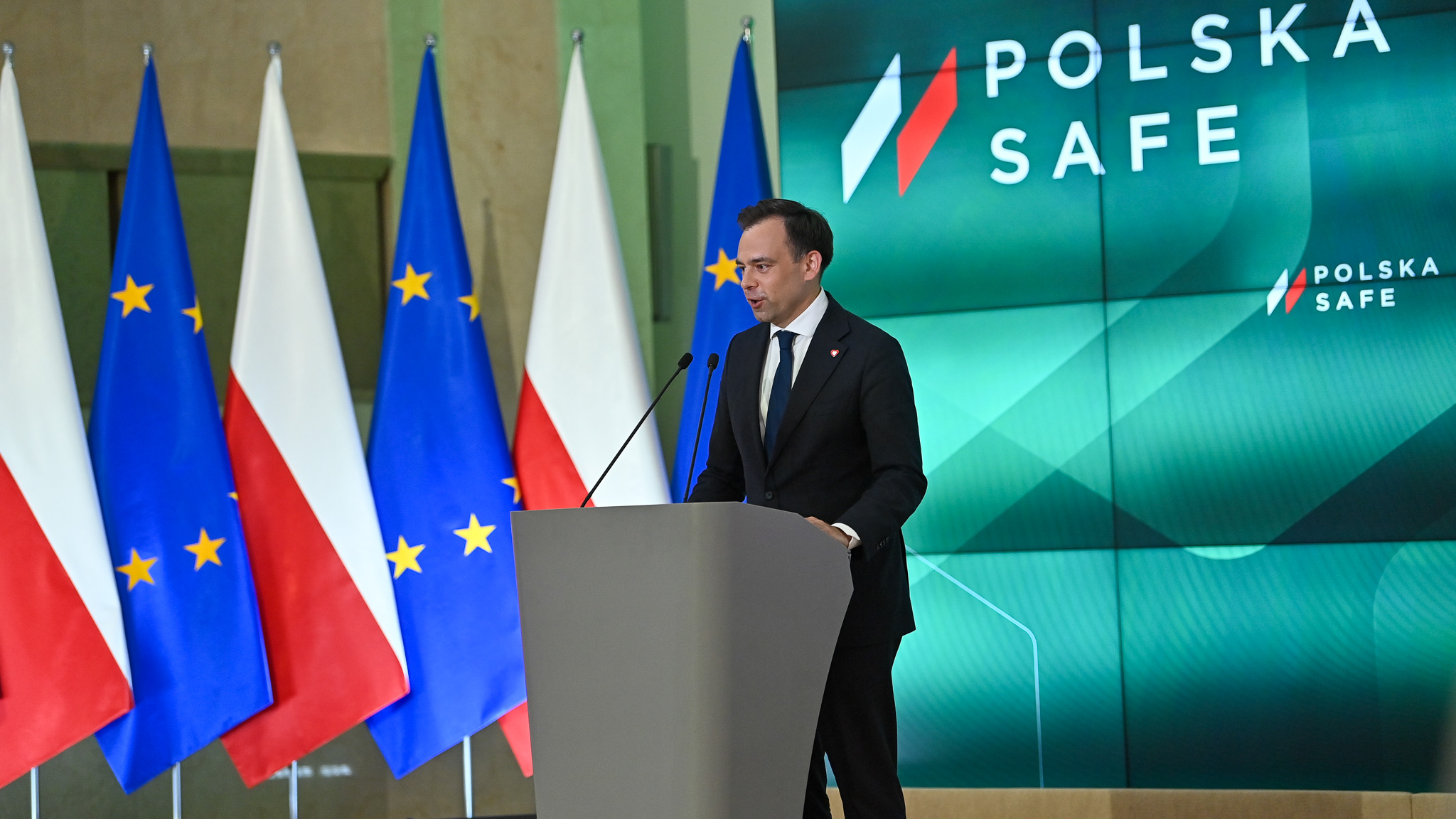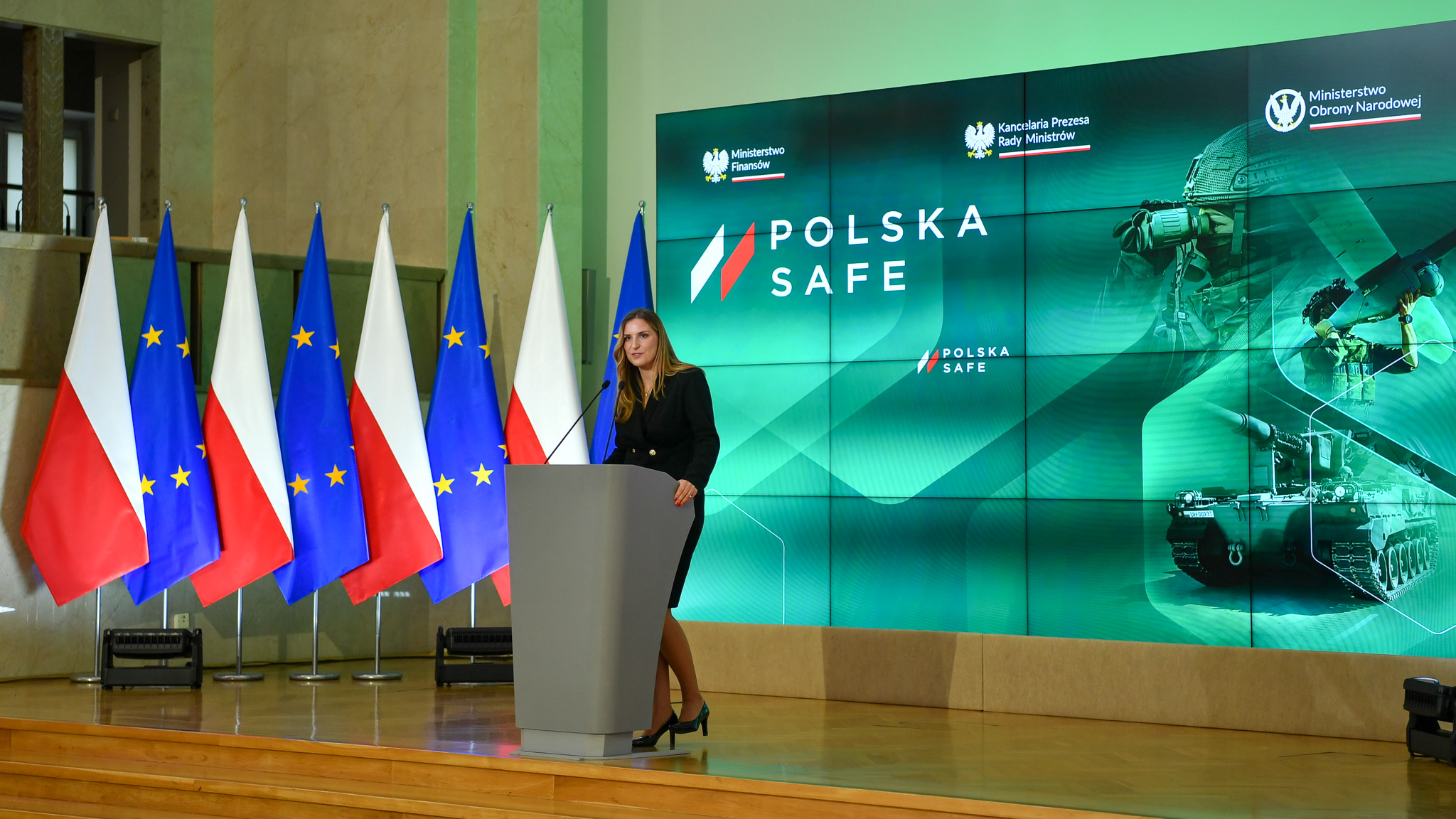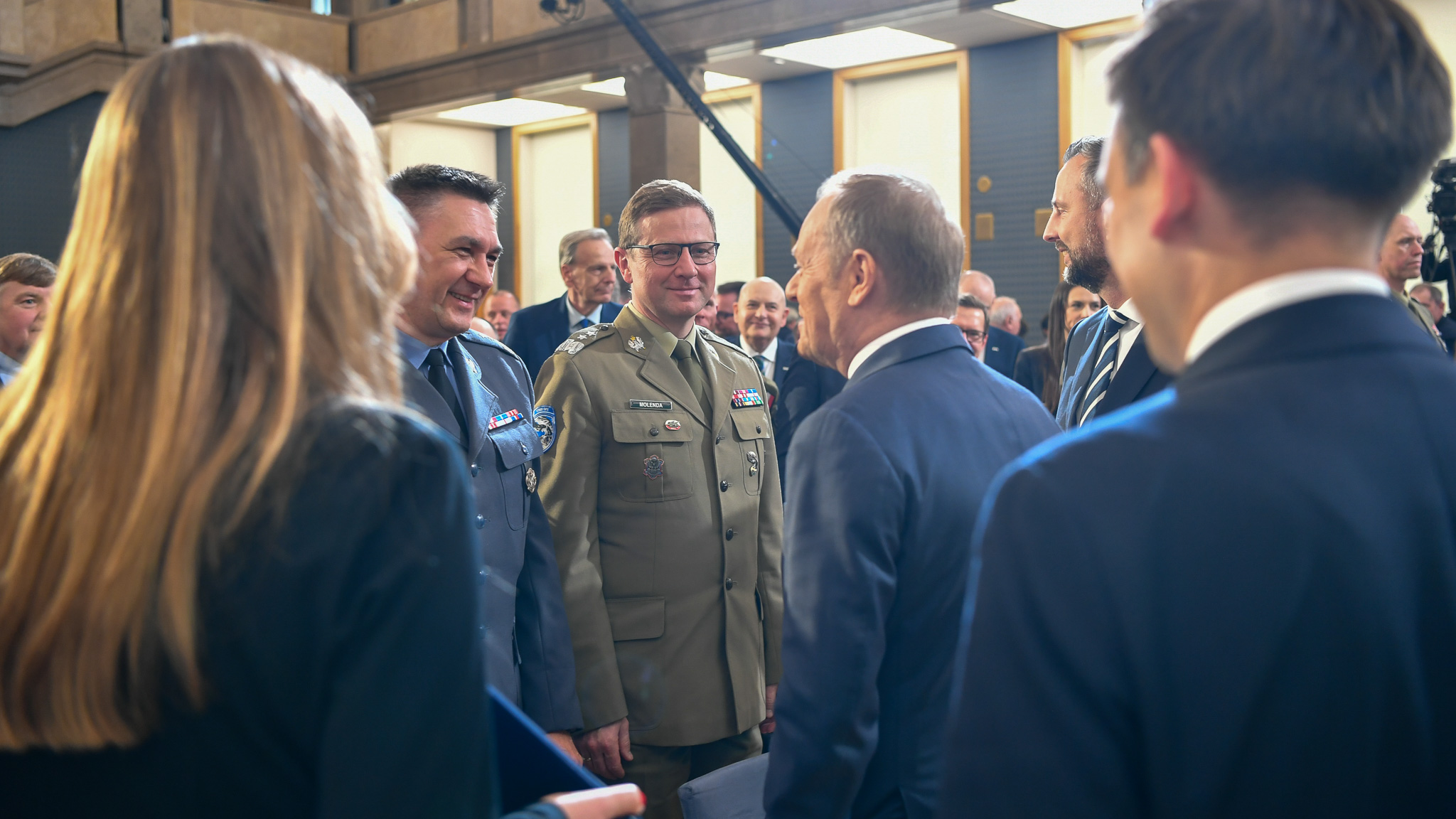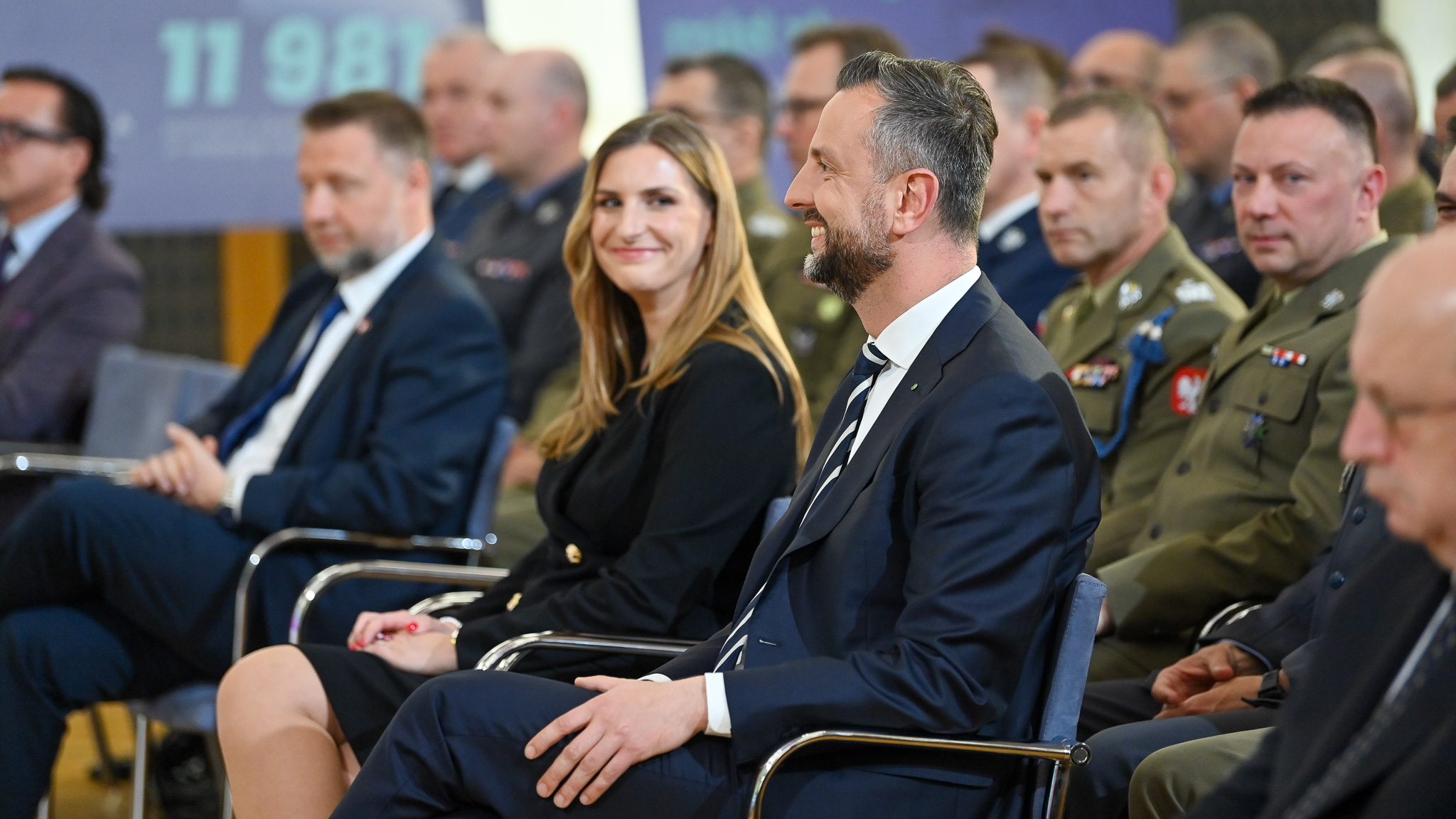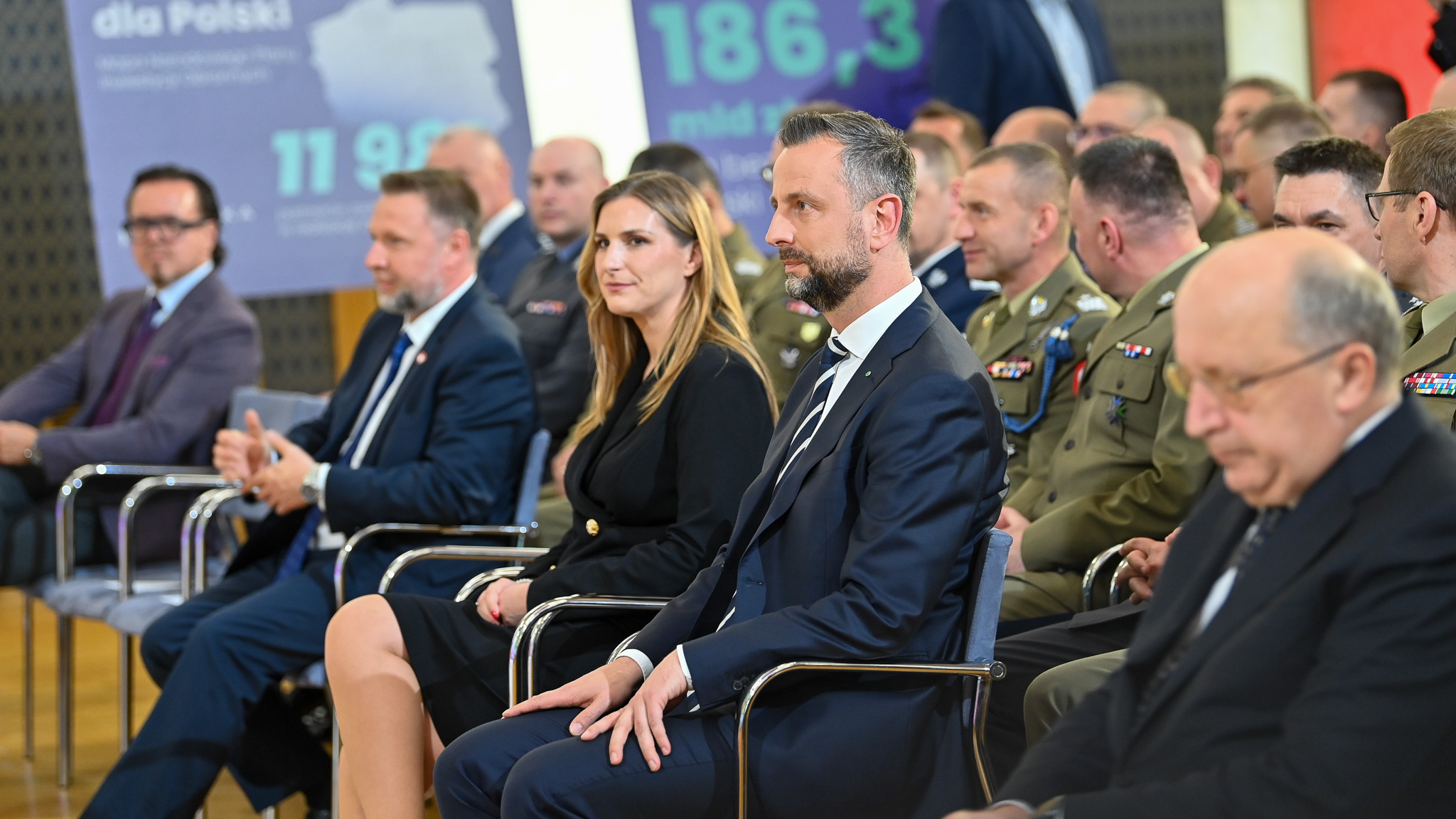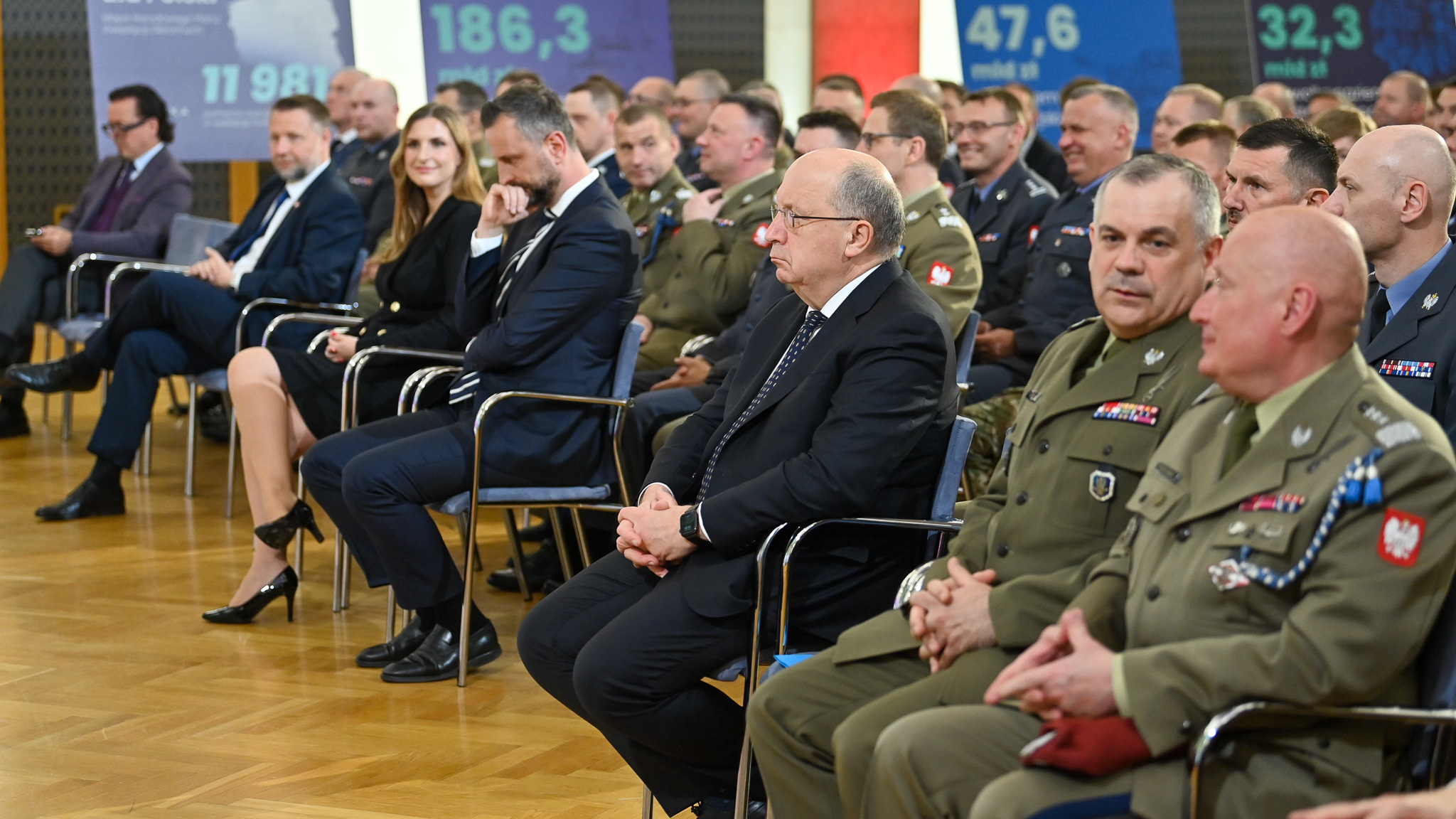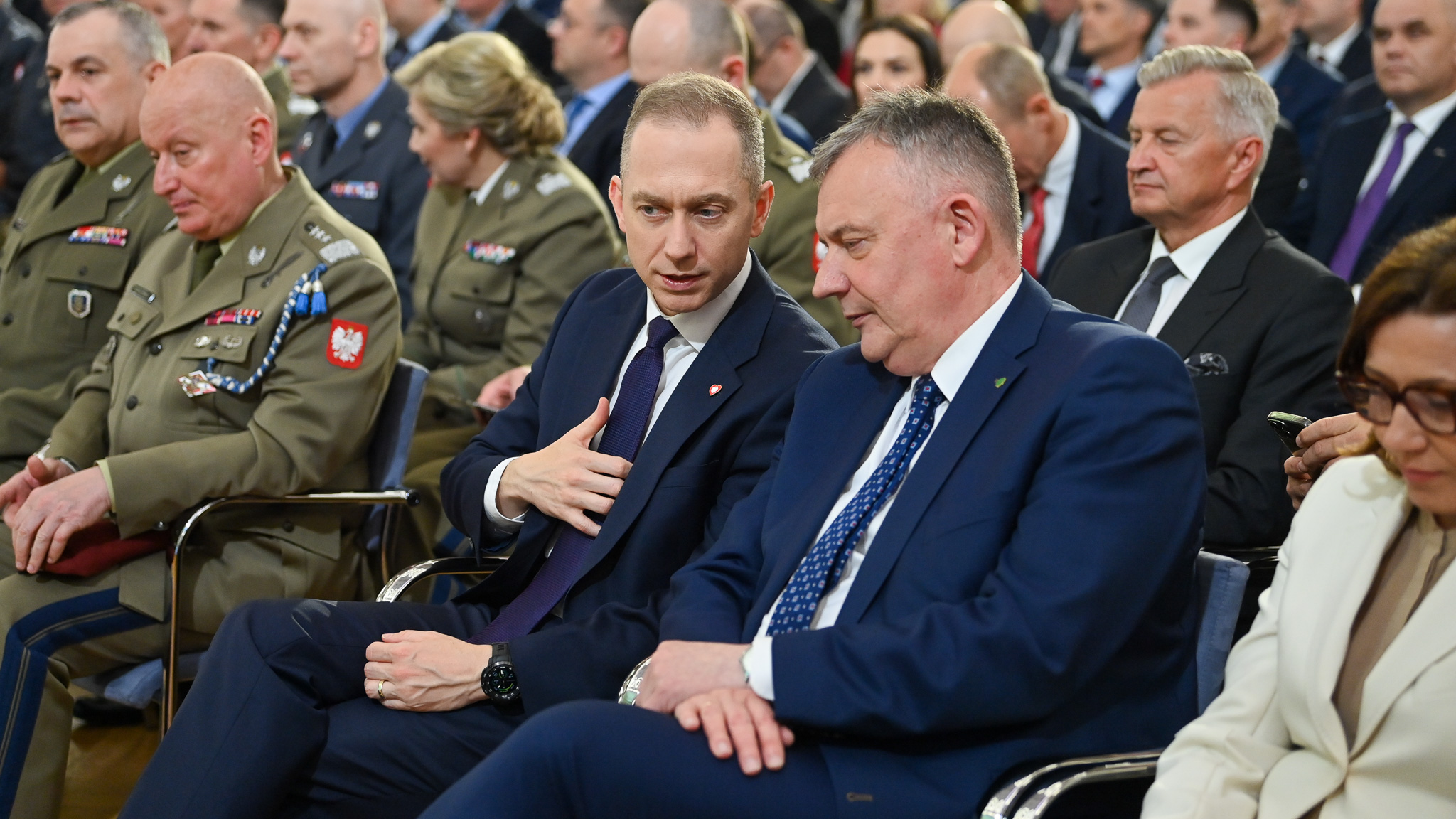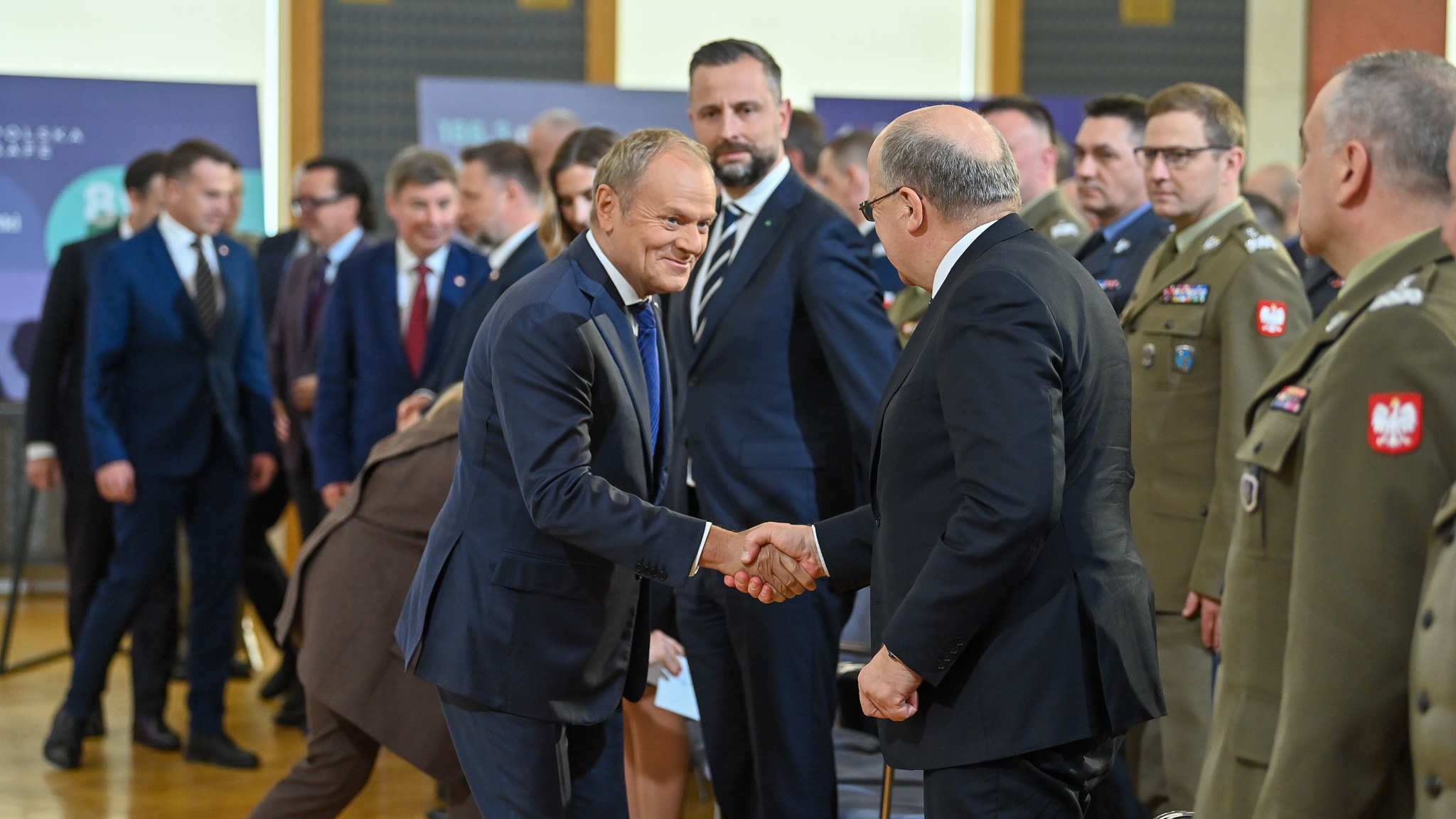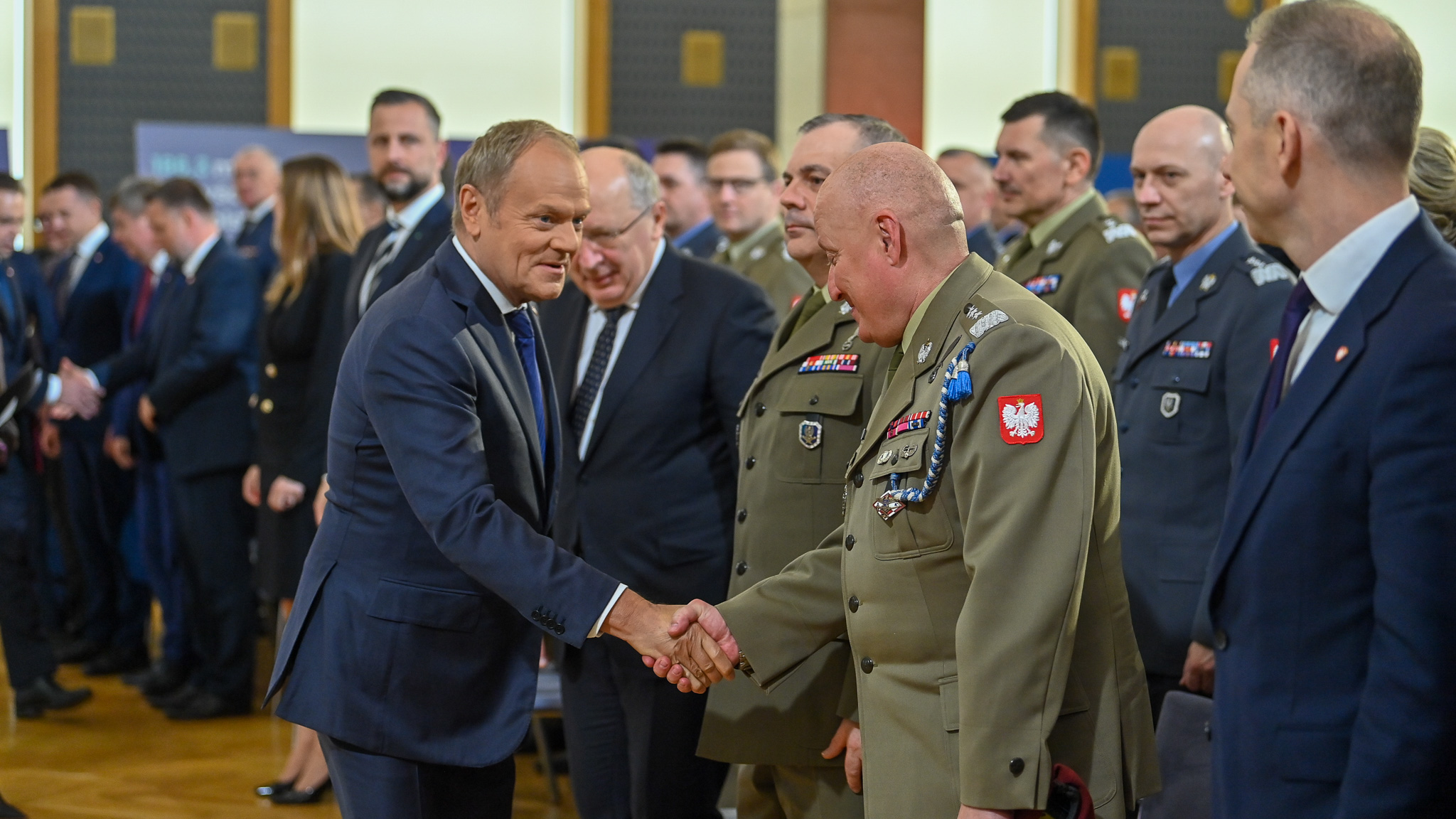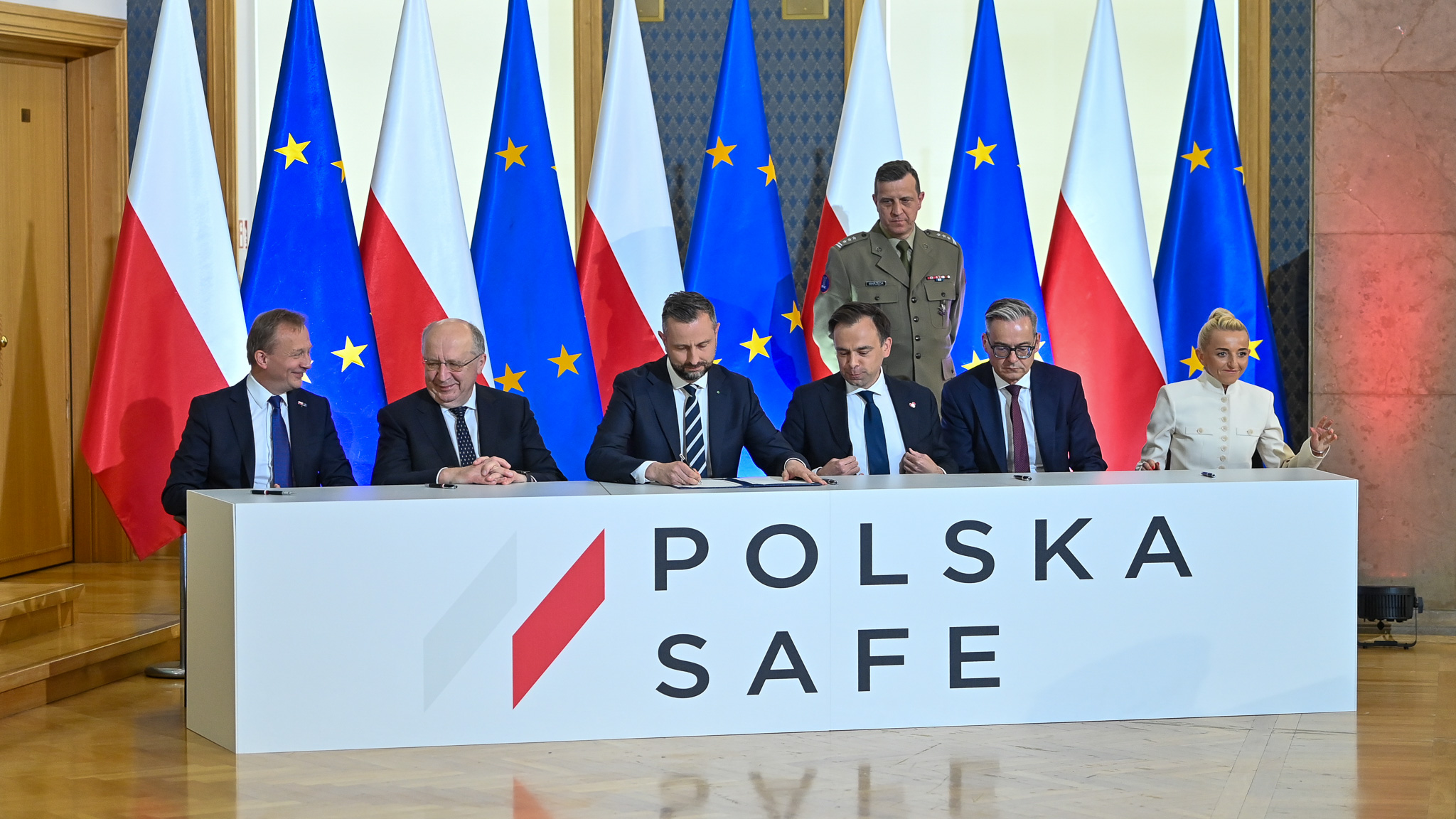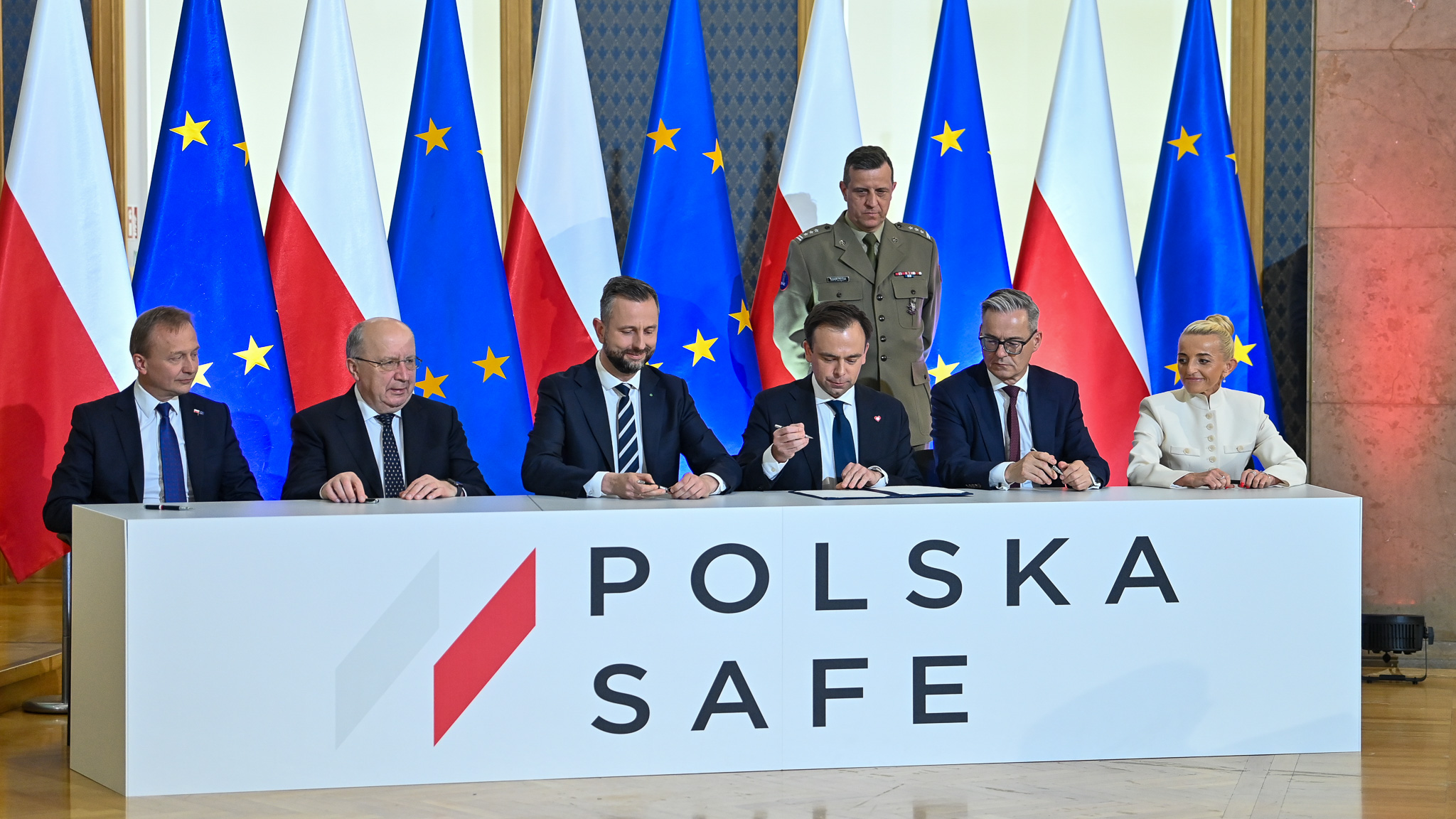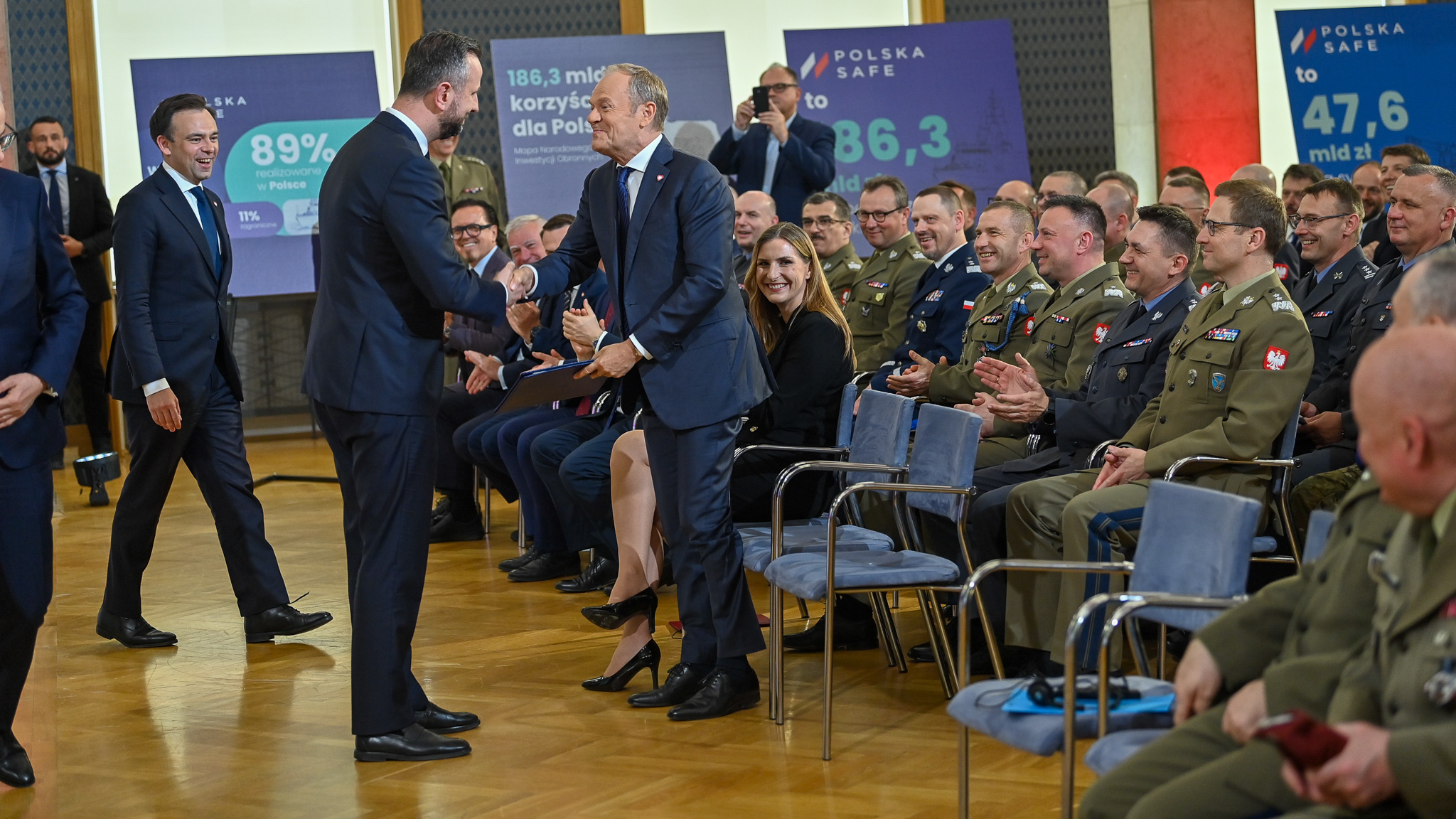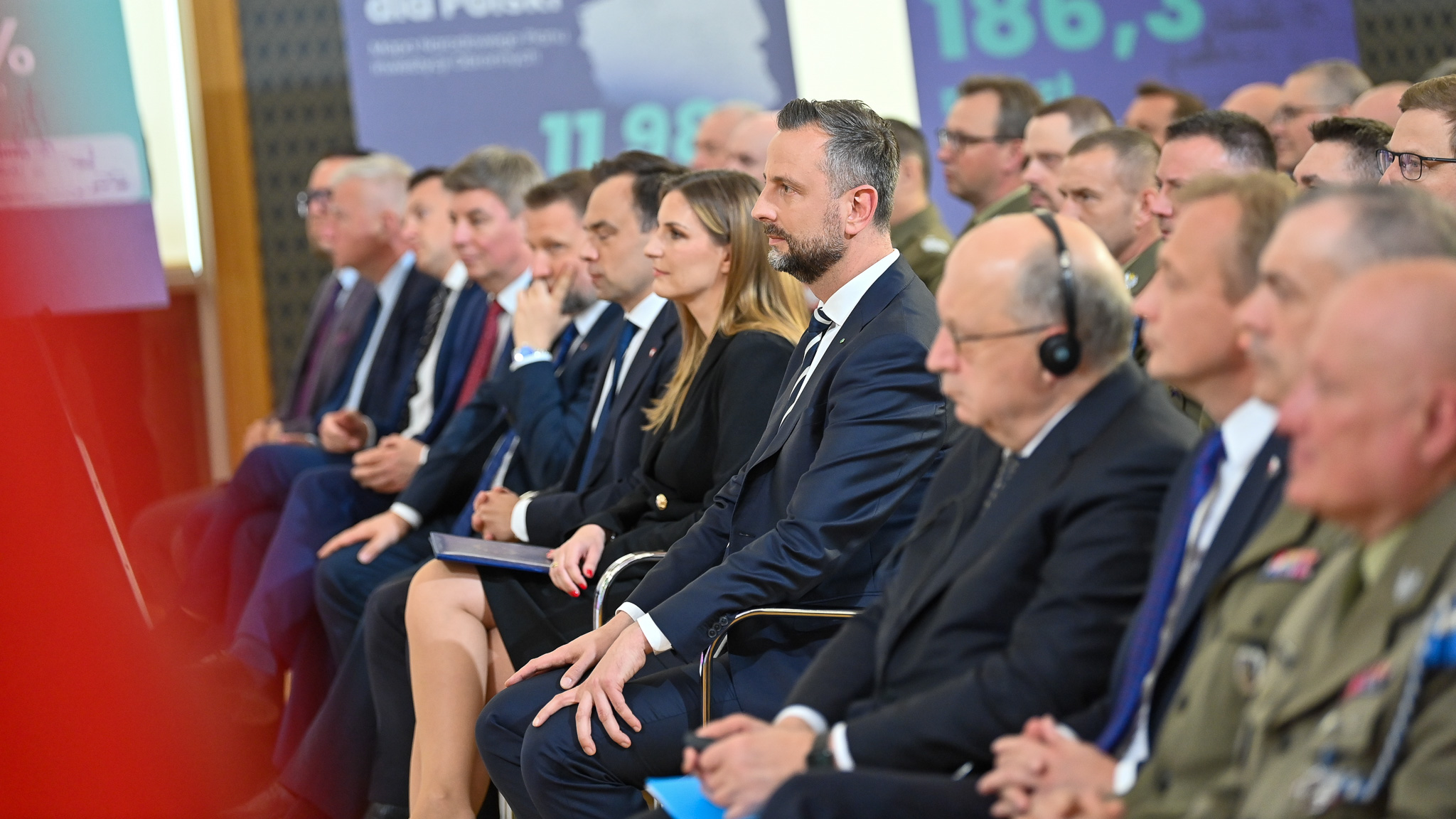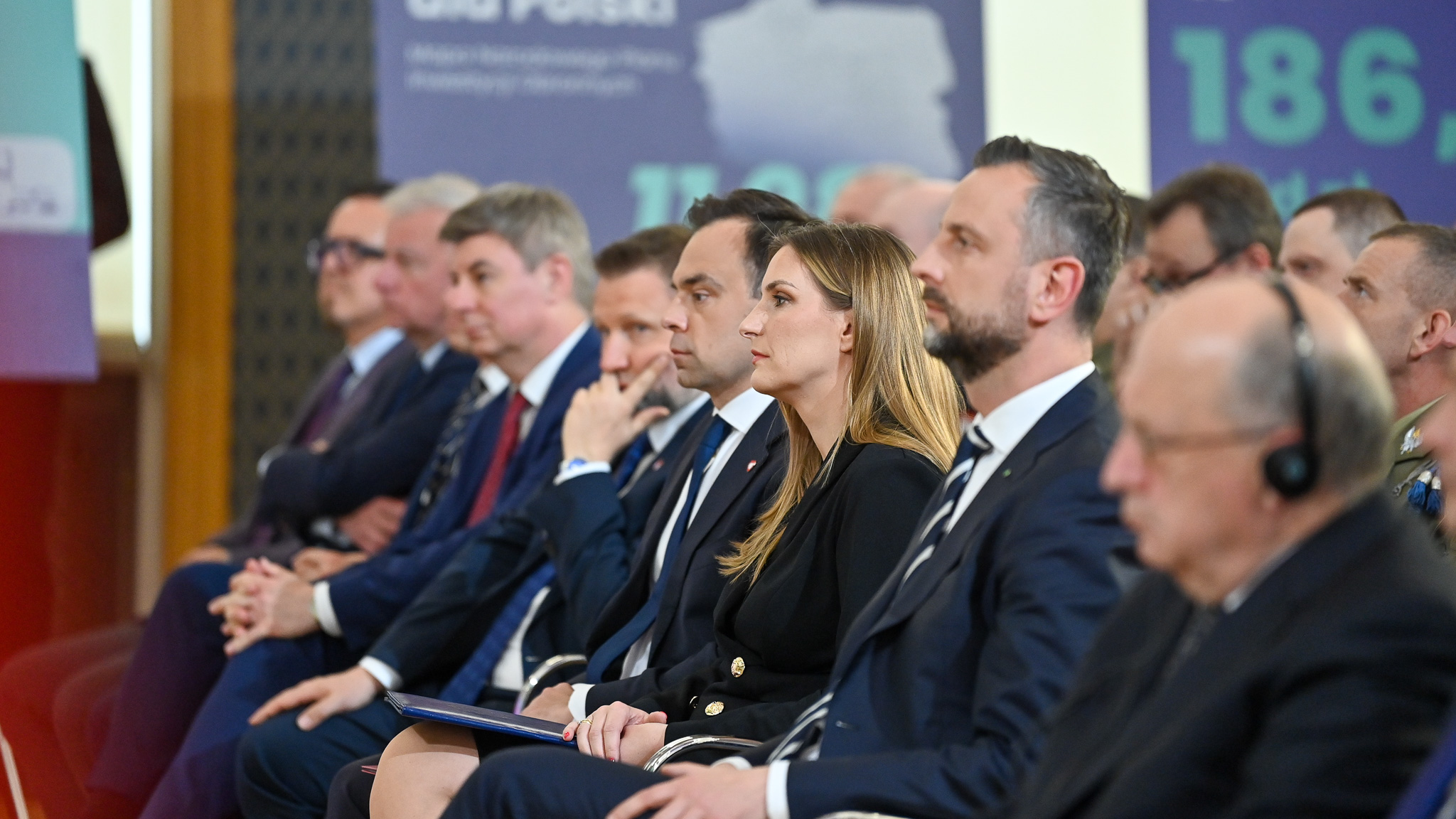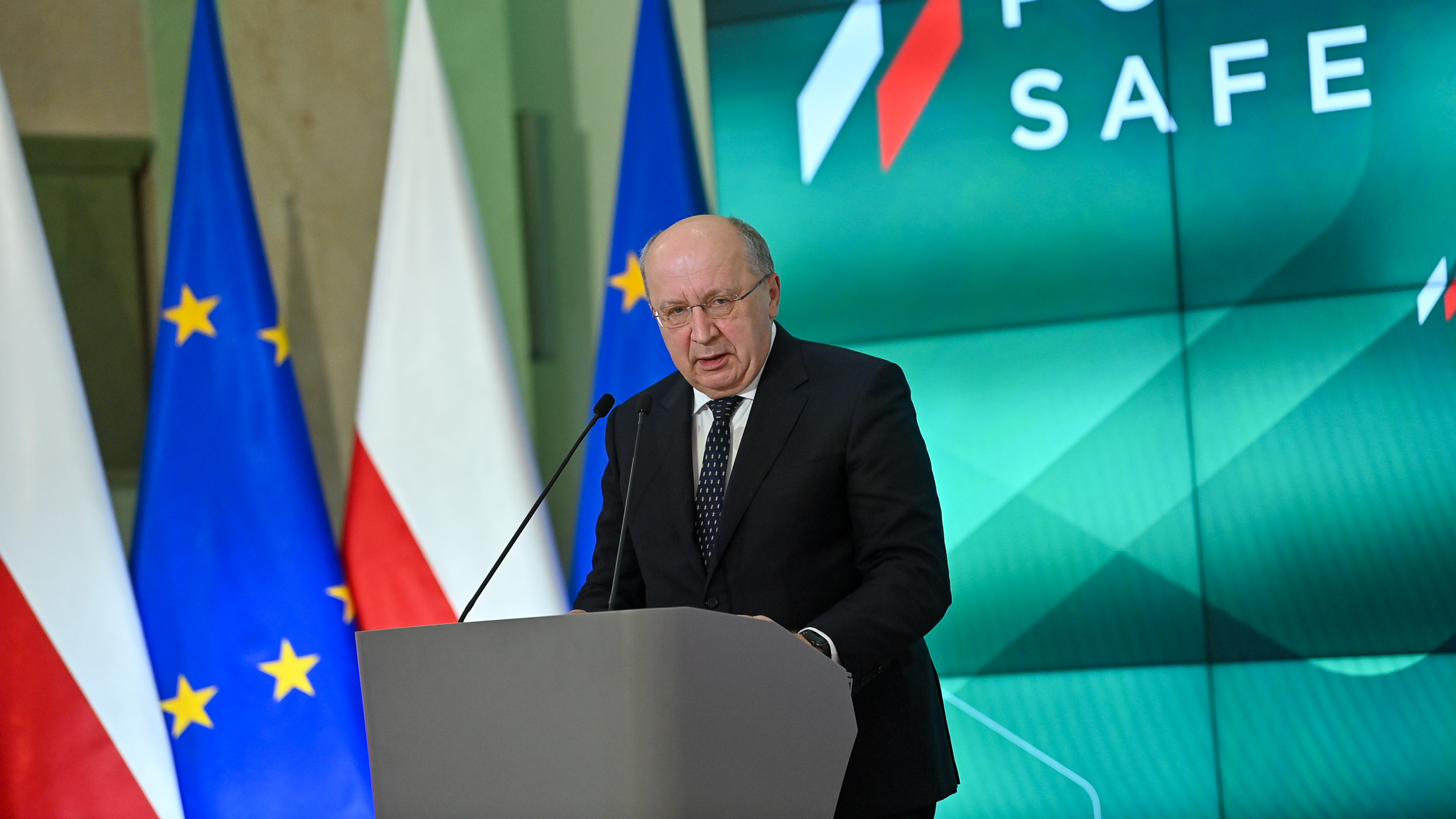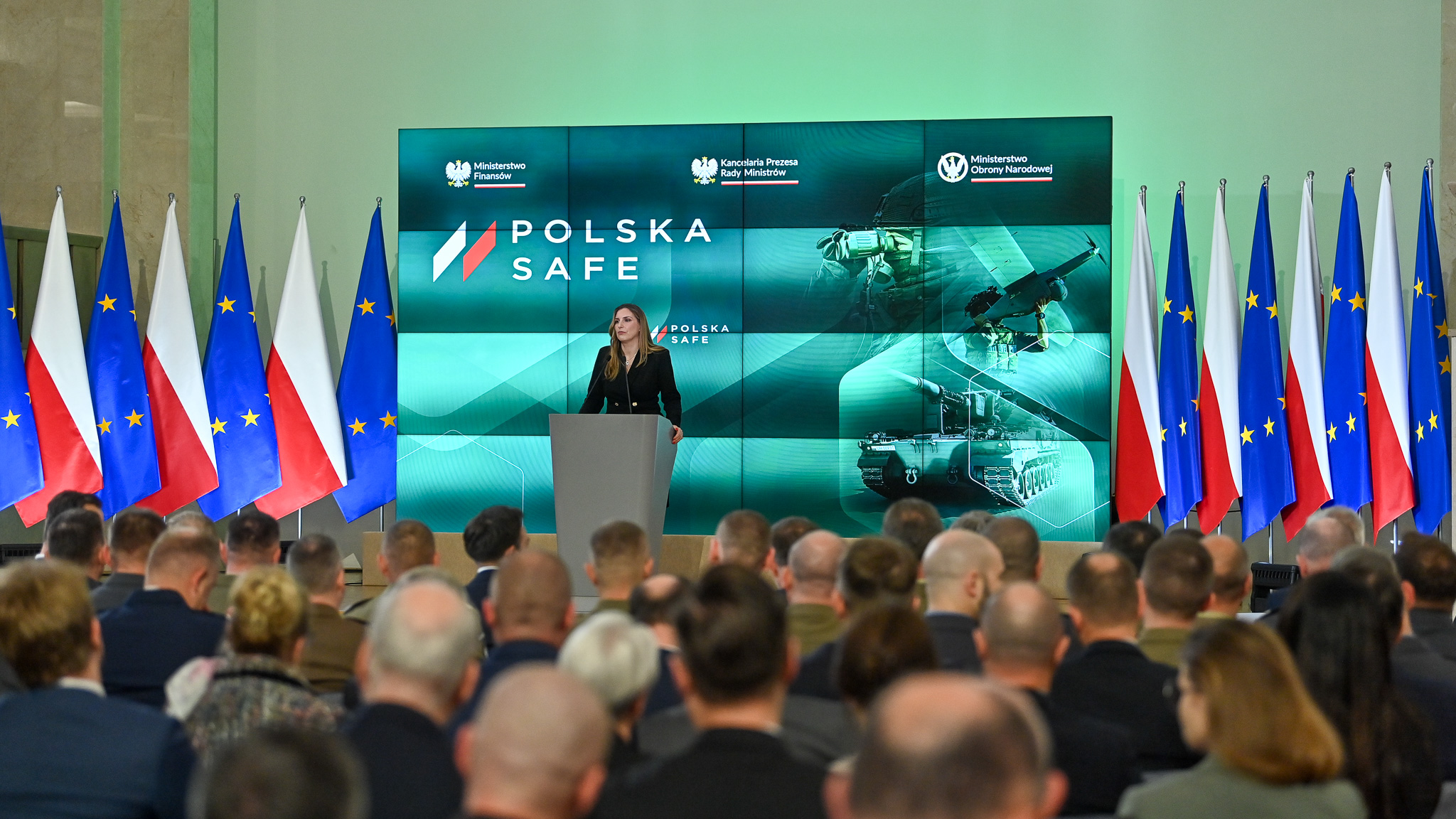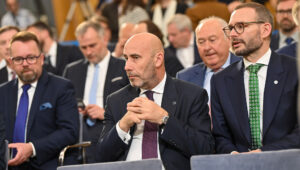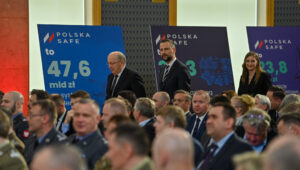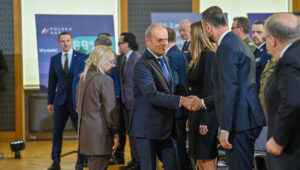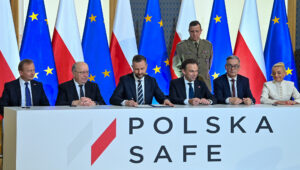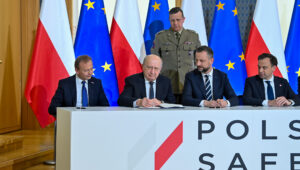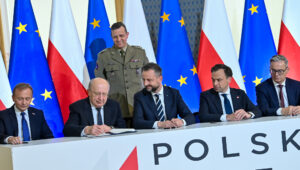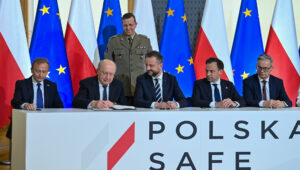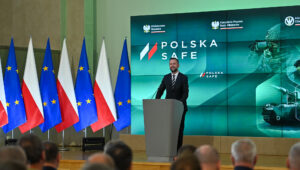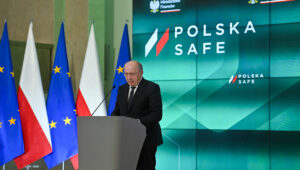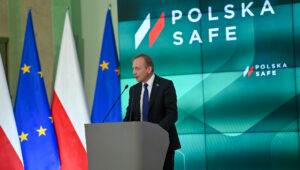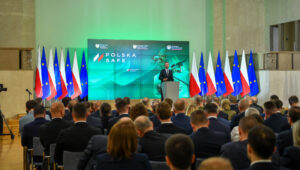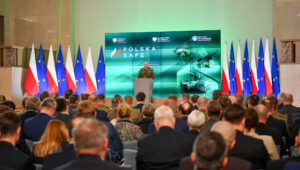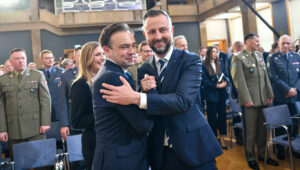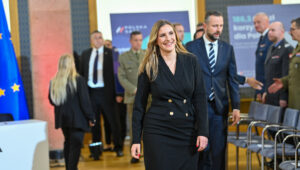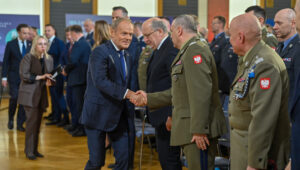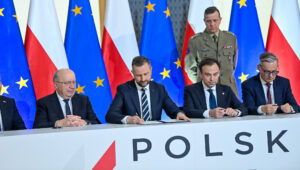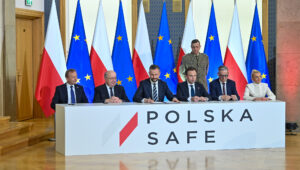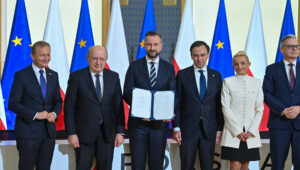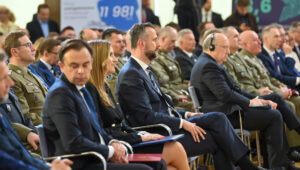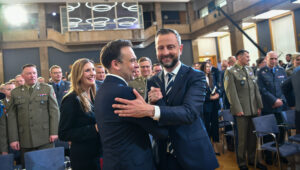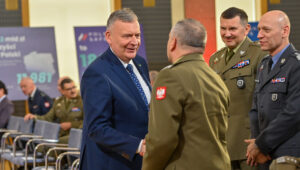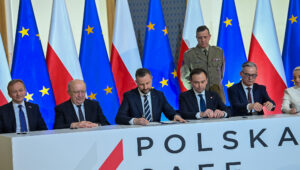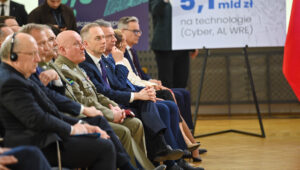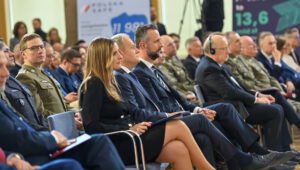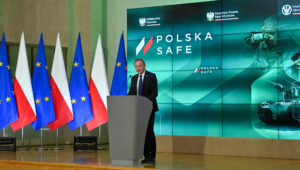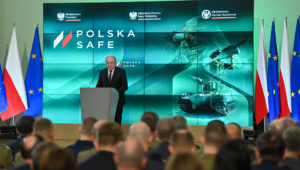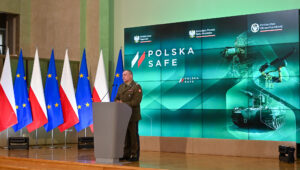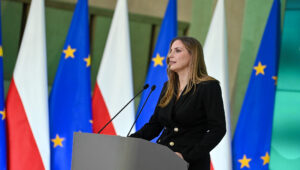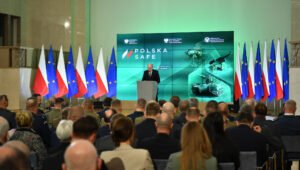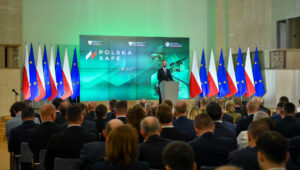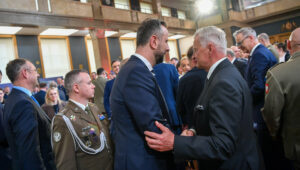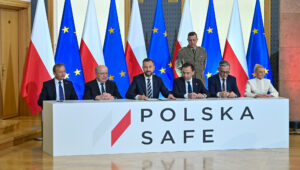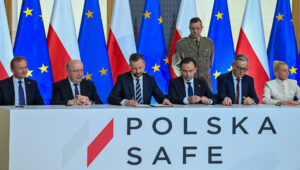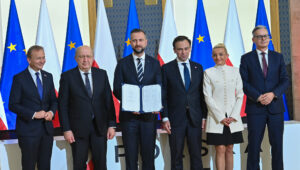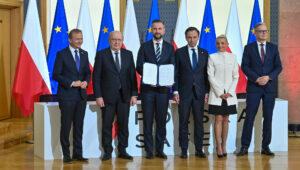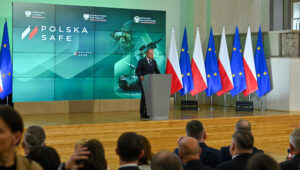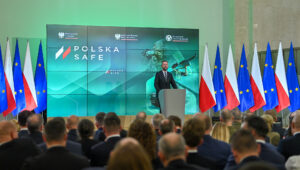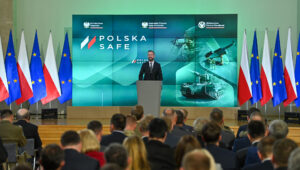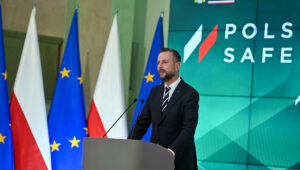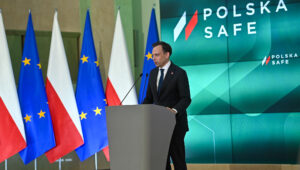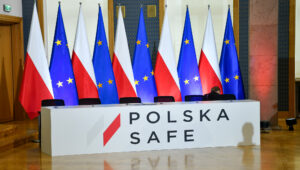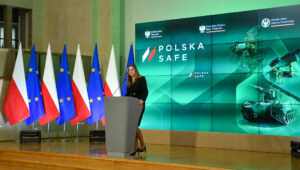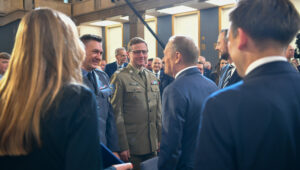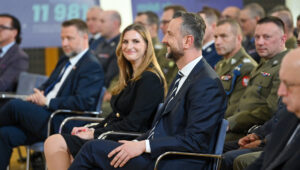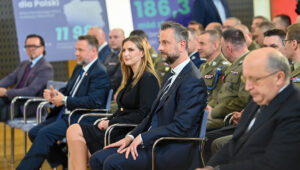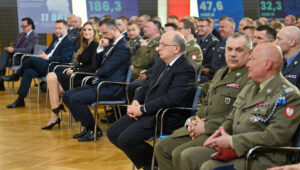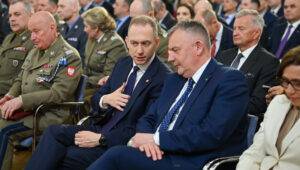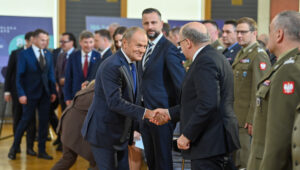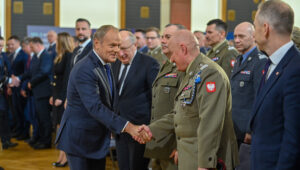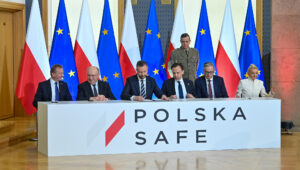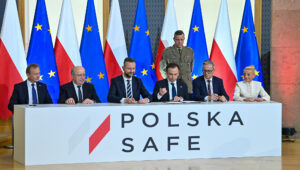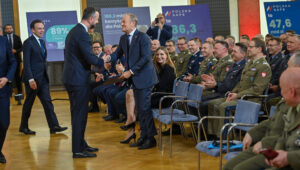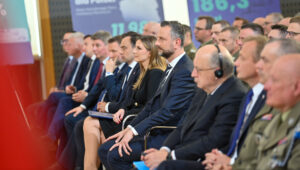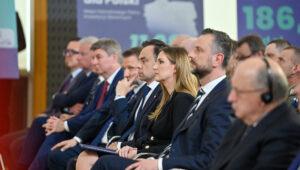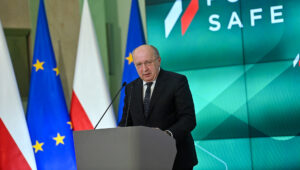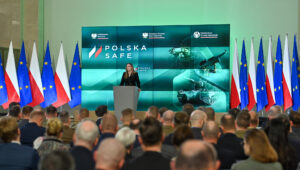












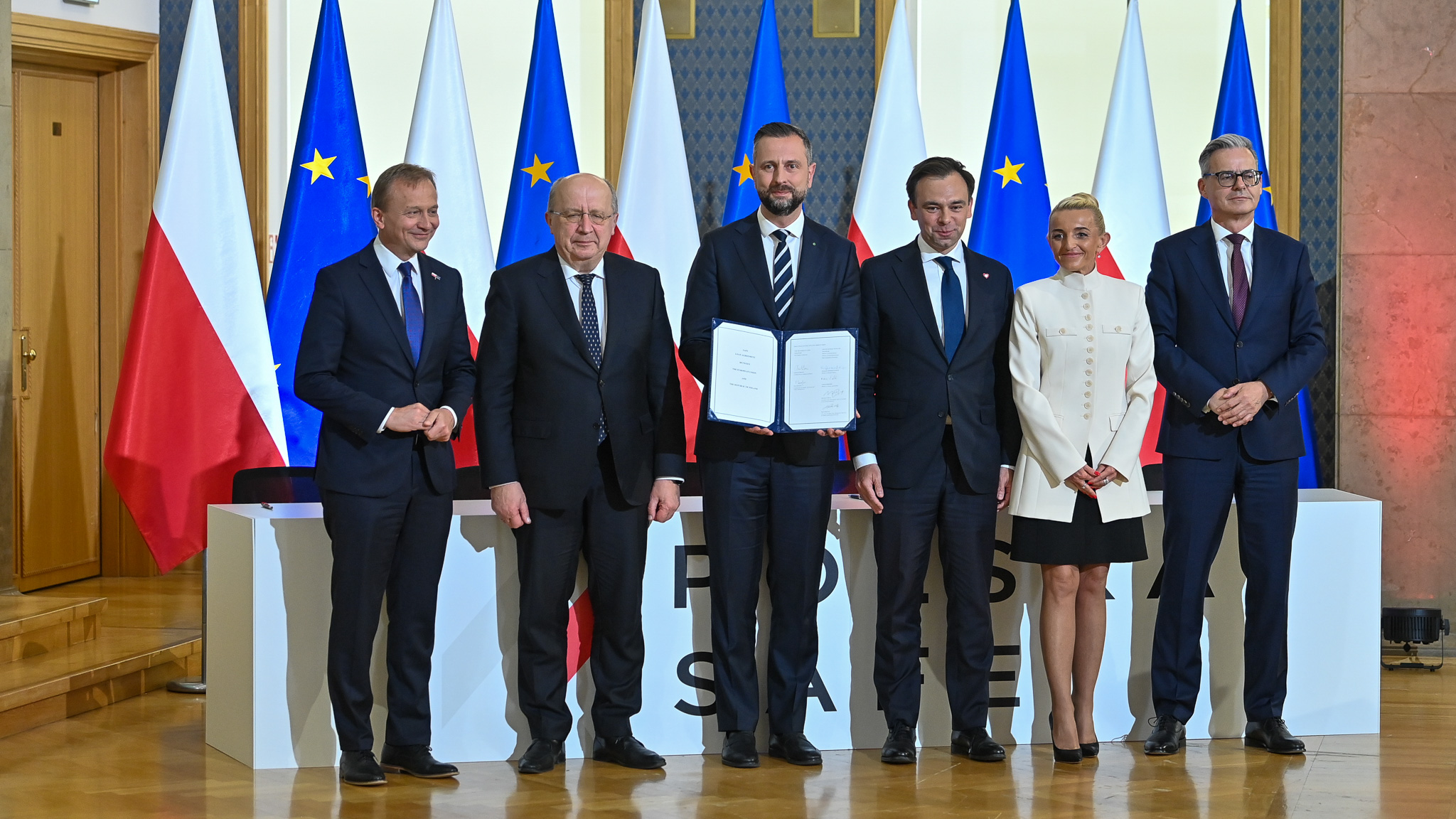
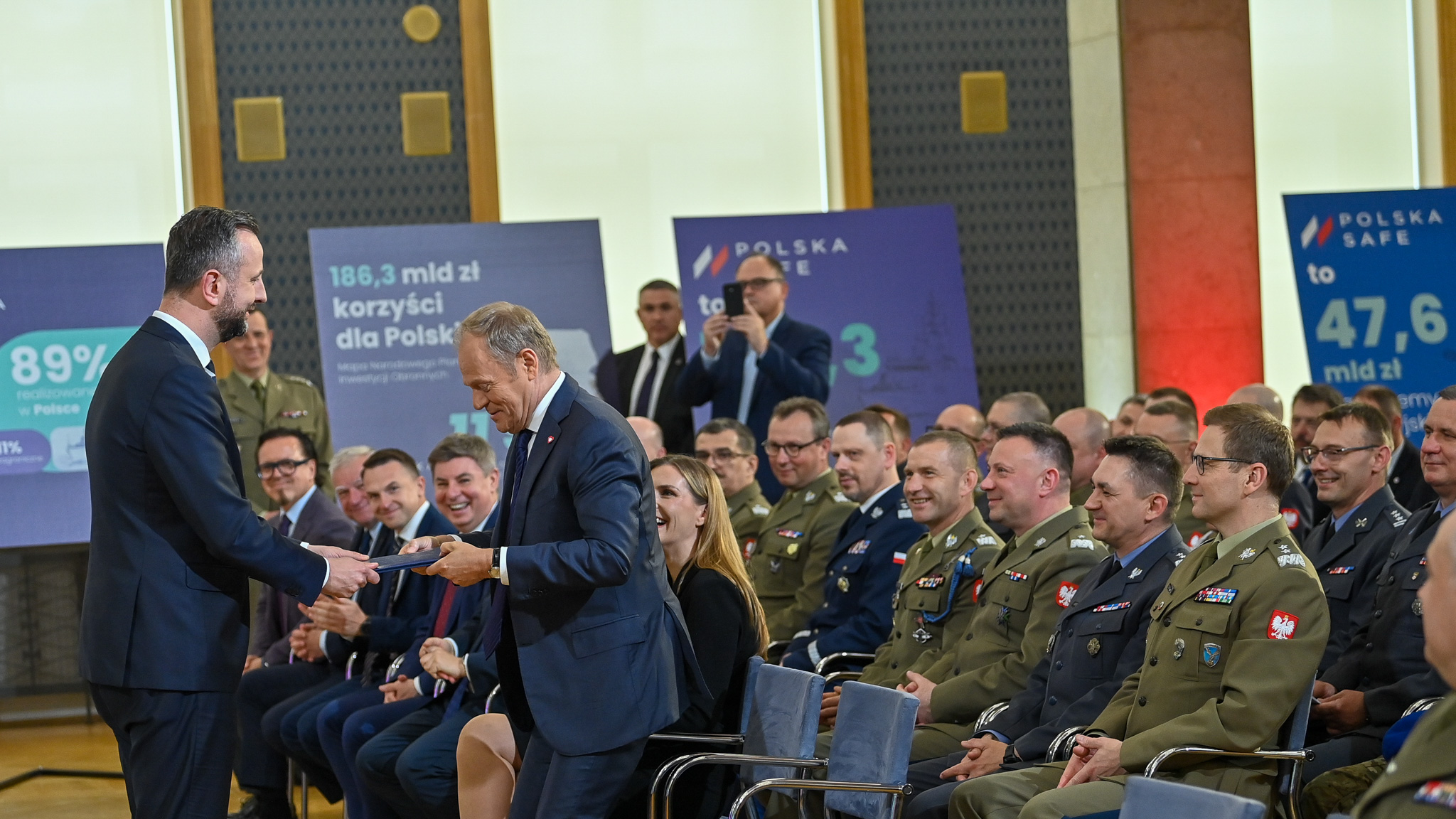
The event took place on Friday, May 8, 2026, with the participation of Prime Minister Donald Tusk; Deputy Prime Minister and Minister of National Defence Władysław Kosiniak-Kamysz; Minister of Finance and Economy Andrzej Domański; EU Commissioner for Defence and Space Andrius Kubilius; EU Commissioner for Budget, Anti-Fraud and Public Administration Piotr Serafin; Government Plenipotentiary for the Security Action for Europe instrument Magdalena Sobkowiak-Czarnecka; and Chief of the General Staff of the Polish Armed Forces Gen. Wiesław Kukuła.
 Photos: corporal Wojciech Król/MON
“This is a great moment for Poland, for Europe, for security. This is a great moment for the whole community working towards peace, good, justice and beauty – the principles which we serve in Poland, constitutional rules described very precisely in our preamble .Poland receives the largest support from the European Union, almost 44 billion euro, and Poland is the first to sign the agreement. All Poles can be proud of each other, regardless of who they voted for, because for our government, for the Prime Minister, for all of us the cooperation and working towards security has no political colours, no political emotions, no worldviews.” – said W. Kosiniak-Kamysz after the signing of the SAFE agreement.
“The three pillars of security that we have established at the beginning of our term. A strong military, strong alliances and a strong society. SAFE strengthens all these three pillars, builds all of them. A strong military – we receive the most in Europe. This equipment that we will buy, and 40 contracts await signing in May alone, as well as annexing those already sent. We also need to add the actions that build cybersecurity. Modern equipment will be sent to every type of military force. These will be the Land Forces, with Borsuk as the symbol, the Navy with the hydrographic vessel. This will be the Air Force, strengthened by air refuelling and transport aircraft.” – enumerated the Deputy Prime Minister W. Kosiniak-Kamysz during the event.
Polska SAFE is a program for the modernization and expansion of the Polish Armed Forces, adopted by a resolution of the Council of Ministers. Polska SAFE represents the largest investment funding for security and the military in Poland’s history. The program was created in response to the difficult geopolitical situation along Europe’s borders. Its financial basis is the European SAFE instrument, from which funds will be transferred to Bank Gospodarstwa Krajowego for the Armed Forces Support Fund.
“89% of all contracts will go to Polish companies. This is economic growth and development, building societal strength and unity, as I think that regardless of how some people view this programme now, how hostile their attitude is, at the end of the road they will admit that we were right, that building a secure Poland can have no bounds. (…) When it comes to the strength of alliances, then this proof that the European Union invests so much for the first time is the answer for the destructive policies of the Russian Federation. It aims to do the following things: sow discord in Europe, break apart national unity, destroy European unity. Nothing will unite us more than investing in many European Union countries for the purposes of strong Armed Forces. I would like to thank everyone. All those who have contributed to history happening today and it happens with us in it, that we are building a strong and secure Poland.” – added the Minister of National Defence.
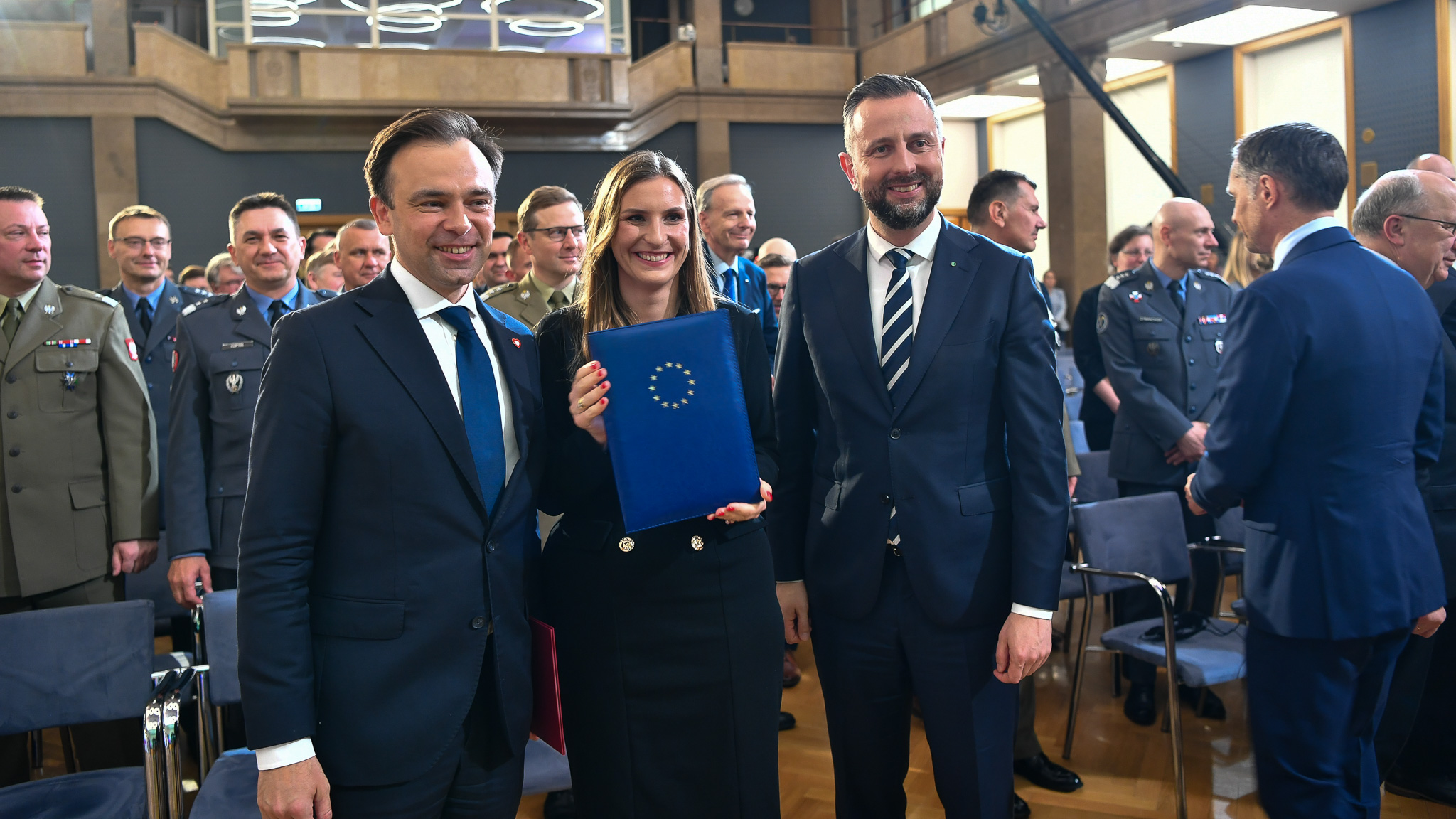
The Polska SAFE program serves three objectives: strengthening the combat potential and deterrence capabilities of the Polish Armed Forces, supporting the domestic defense industry, and increasing internal security.
“This is a crucial moment in the history of Poland and the European Union, but this moment is not about solemn ceremonies. It is about the essence of this breakthrough. Poland will be more secure in these difficult, risky times. This is a massive amount of money that will be invested directly into Polish security, Polish defence industry, Polish companies that cooperate with the defence industry, in our technological capabilities. (…) We are all hopeful that we will not have to contend with open conflict, but we know the time and place we live in, so we want to make sure that our Armed Forces and the Polish defence industry will be able to meet any challenge. (…) I want to strongly state that everything we do, including the SAFE programme, serves first and foremost the idea important for all Polish men and women, which is a strong Poland in a strong Europe. (…). I wish you all good tidings. I wish you all well in your work for Poland, for Europe.” – said the Polish Prime Minister, Donald Tusk.
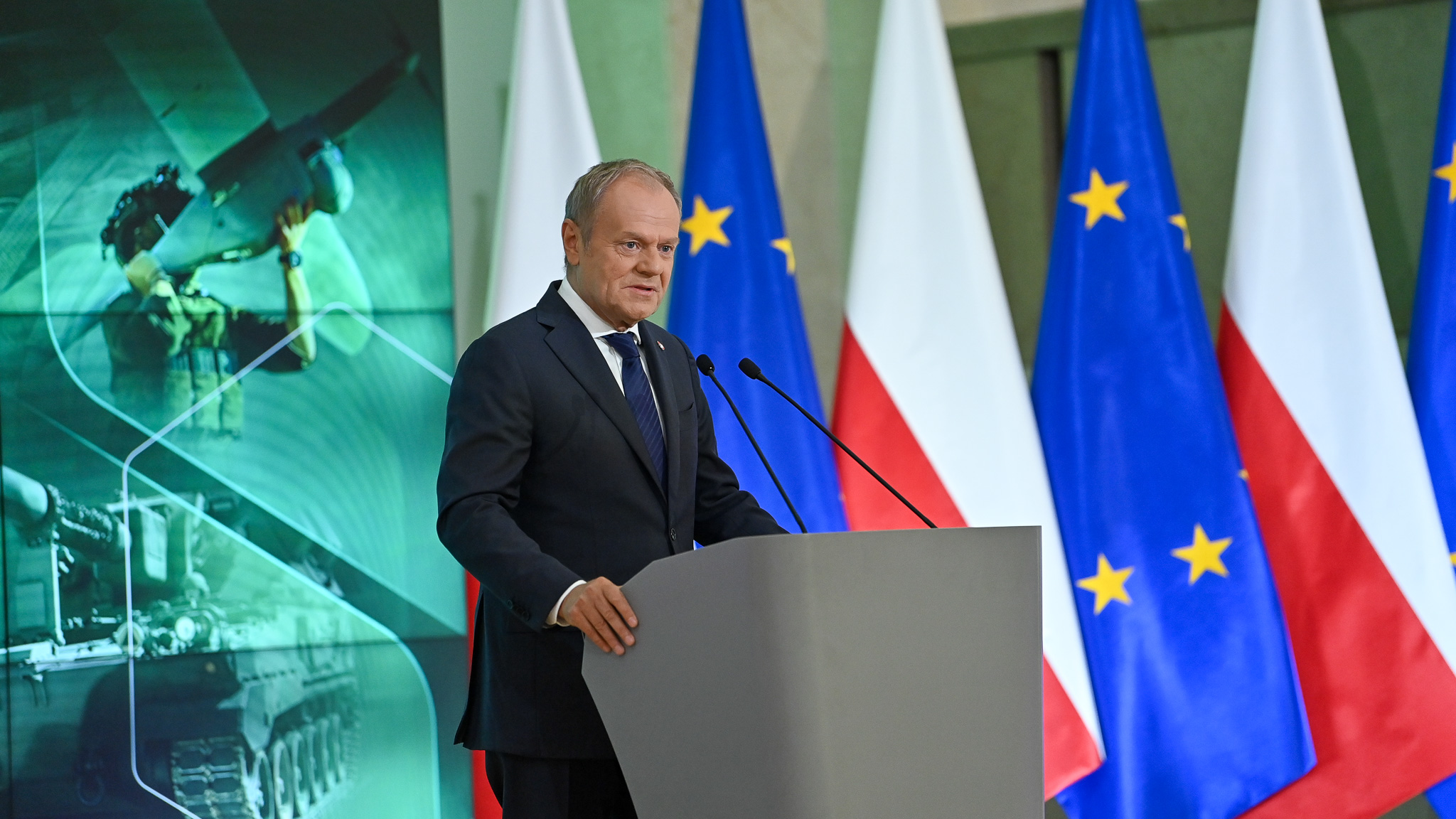
The program’s priority is to support the Polish defense industry. A significant portion of the orders will go directly to domestic production facilities. A total of 11,981 partners across the country are involved in implementing the program.
“This is an extraordinary day, this is how history is written. Today we are changing the history of Poland the history of the European Union. SAFE is first and foremost a relay. It all began with the Prime Minister’s idea, then the Polish presidency and concrete decisions. (…) Today we are only finishing one of the stages. The agreement is signed. The money is available. Not virtual, but real. The money is there. Now the greatest role goes to the Armament Agency, general Kuptel. This is the time for you to enter the fray. 40 contracts will be signed by the end of May.” – Magdalena Sobkowiak-Czarnecka, the Government Representative for the Security Action for Europe Instrument, noted.
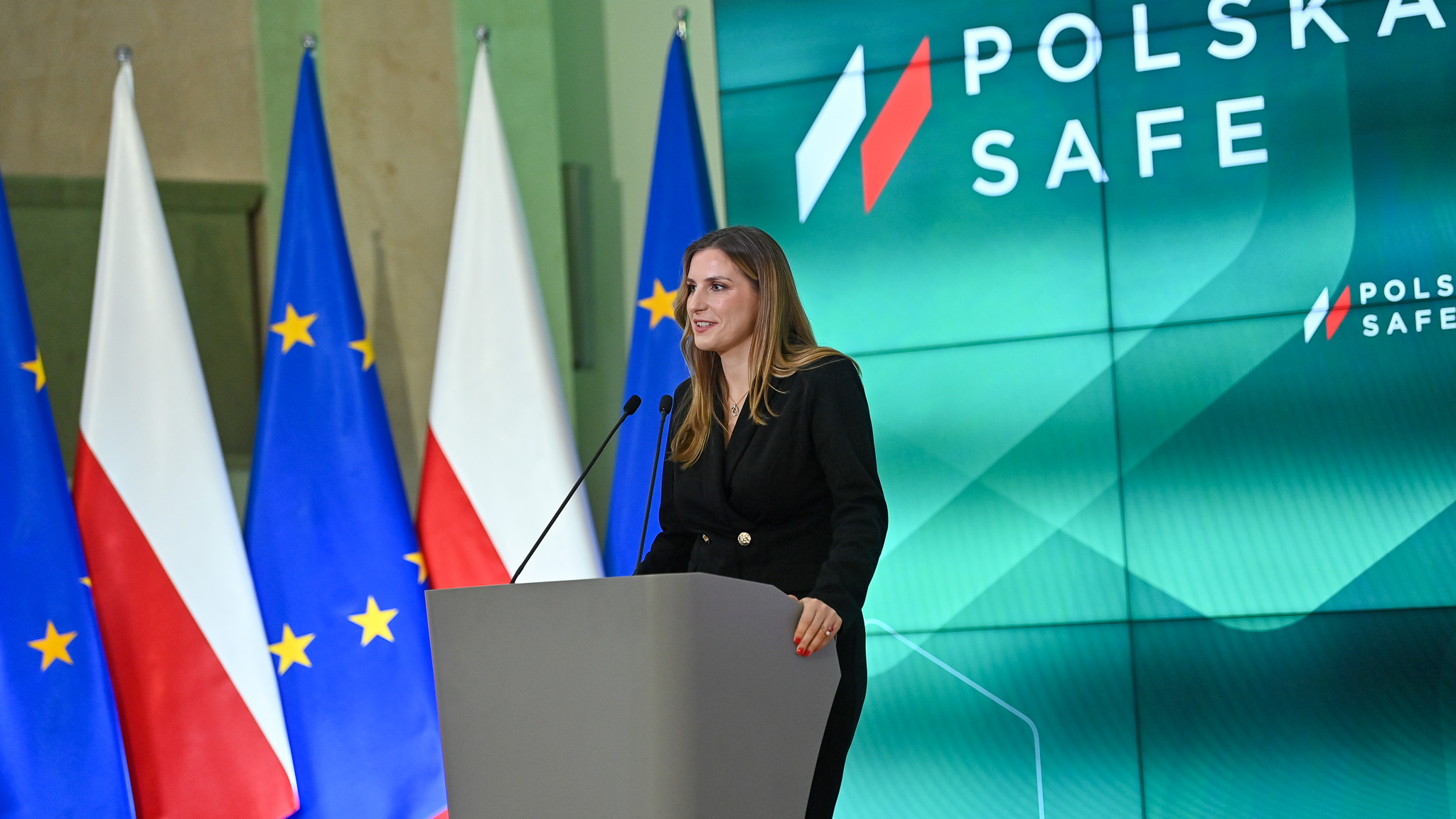
“I stand before you today with a very simple message. I would like to assure all of you in the name of the Polish Armed Forces, that both the General Staff and the entire Armed Forces will do everything in their power to convert every Polish złoty that we will receive into real capabilities as quickly and as effectively as possible. It will be to give the appropriate level of deterrence for the glory of our great nation, but also for the security of the eastern flank of the North Atlantic Alliance and the European Union.” – noted the Chief of General Staff, general Wiesław Kukuła, who took part in the ceremony of signing the SAFE agreement
The SAFE program was created in response to the ongoing war in Ukraine and the radical change in the security situation in Europe. Poland, as a country bordering Ukraine, Belarus, and Russia through the Kaliningrad Oblast, has found itself in a particularly exposed geopolitical position. Defense investments are deterrent in nature: a strengthened military reduces the risk of conflict and increases Poland’s credibility as a NATO ally.
SAFE Program
On January 26 this year, the European Commission issued a positive opinion on Poland’s applications to finance 139 defense-related tasks worth 43,734,100,805 EUR under the SAFE loan program. They were submitted to Brussels on November 29, 2025. The list of tasks was published by the government on February 27 this year during a presentation at PIT-Radwar’s facilities in Kobyłka near Warsaw. The list is dominated by the Polish defense industry, both state-owned and private. The first contract concerns 18 battery modules of air defense systems, with the capability to counter unmanned aerial systems, being procured under the San program for around 15 billion PLN, and concluded with Polish, Norwegian, and Danish industry.
On March 10, President Karol Nawrocki announced an alternative draft law on the Polish Defense Investment Fund concerning the implementation of the “Polish SAFE 0%” concept. Then, on March 12, he vetoed the draft law on the SAFE Financial Instrument for Increasing Security, which was intended to introduce the legal framework for the orderly use of funds from the European SAFE instrument.
A day later, Prime Minister Donald Tusk announced the Armed Poland program, intended to offset the effects of the presidential veto. In turn, on March 24, a group of MPs from the Polish People’s Party–Third Way submitted a parliamentary draft law on the Polish Defense Investment Fund to the Sejm, which, as intended, is meant to correct errors in the president’s draft.
On April 23 this year, during a two-day informal meeting of the heads of state and government of the European Union in Nicosia, Cyprus, the European Commission announced that agreements had been submitted for 18 countries under the SAFE program.