






















On Wednesday, April 22, 2026, the U.S. Department of State approved the potential sale to the Republic of Lithuania of another batch of 168 AIM-9X Block II Sidewinder missiles in a package worth up to 214 million USD.
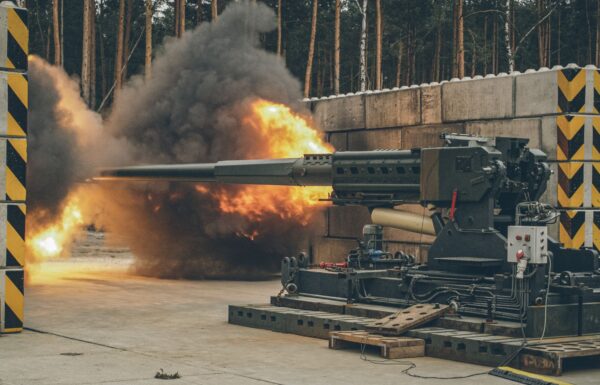
 Photo: Kongsberg Defence & Aerospace
According to the published information, the government in Vilnius requested 152 live missiles, 8 guidance units, 6 training missiles, U.S. government and contractor engineering, technical and logistics support services – the contractor being RTX Corporation – as well as other related elements of logistics and program support, to be added to a previously implemented case whose value was below the congressional notification threshold.
Initially, the Lithuanians requested a package valued at up to 19.5 million USD, which included 16 live missiles and 2 guidance units, as well as training, weapon system support, training aids and devices, spare parts, and other related elements of logistics and program support. The package has therefore been increased to 168 live missiles, 10 guidance units, and 6 training missiles.
The request also included the following non-MDE (Major Defense Equipment) items: training, weapon system support, training aids and devices; spare parts; U.S. government and contractor engineering, technical, and logistics support services; and other related elements of logistics and program support.
Analysis
The missiles will arm three batteries of the NASAMS III air defense system (National Advanced Surface to Air Missile System, upgraded NASAMS II), including two delivered in 2020 and a third whose deliveries have just begun. They are also armed with AIM-120C-8 AMRAAM missiles, while extended-range AMRAAM-ER missiles will be delivered in the future.
The systems were assigned to the Air Defense Battalion of the Land Forces (Oro gynybos batalionas, OGB; Lithuanian Land Forces).
On June 28, 2023, Lithuanian President Gitanas Nausėda reported on social media that the government had purchased two NASAMS launchers, which were then transferred to embattled Ukraine. Norway, in turn, provided optional equipment for those launchers.
A NASAMS battery consists of six launchers, an AN/MPQ-64F1 Improved Sentinel three-dimensional radar, a command-and-fire-control vehicle with a Link 16 data transmission system, and a vehicle fitted with an electro-optical observation and targeting head. A single battery, operating as part of an integrated air defense system, can engage up to 36 aerial targets simultaneously, such as aircraft, helicopters, and cruise missiles.
Lithuania’s NASAMS III systems are complemented by RBS 70 NG air defense systems, Grom man-portable air defense systems (to be replaced in the future by Piorun systems), and, in the future, three MSHORAD system sets equipped with the aforementioned RBS 70 NG missiles. In the meantime, FIM-92 Stinger systems have been transferred to embattled Ukraine.
Following the outbreak of Russia’s full-scale war against Ukraine, Lithuania has been investing, among other areas, in its air defense segment. Examples include U.S.-made Lockheed Martin AN/TPS-77 radars, Dutch Thales GM200 MM/C radars, and interest in the German Diehl Defence IRIS-T (Infra-Red Imaging System Tail) air defense system as a medium-range system. Meanwhile, the purchase of MEROPS AS-3 Surveyor counter-drone systems was announced recently.
