



























On Wednesday, April 15, 2026, the Weapons Superiority Contracting Branch of the Air Force Life Cycle Management Center (AFLCMC) at Robins Air Force Base, Georgia, acting on behalf of the U.S. Department of Defense, announced the award on April 14 of a 234,757,000 USD contract to Raytheon (part of RTX) for the full-rate production of improved extended-range AMRAAM-ER (Advanced Medium-Range Air-to-Air Missile – Extended Range) surface-to-air missiles for export customers.
 Photo: RTX
The contract covers the activities required to transition AMRAAM-ER missiles into full-rate production (FRP). Work will be carried out at Raytheon’s facilities in Tucson, Arizona, and is scheduled for completion by April 13, 2030. The contract covers the Foreign Military Sales (FMS) program for Hungary, Kuwait, Lithuania, the Kingdom of the Netherlands, Norway, and Taiwan. The contract was awarded on a sole-source basis. The initial FMS funds obligated amount to 61,569,156 USD.
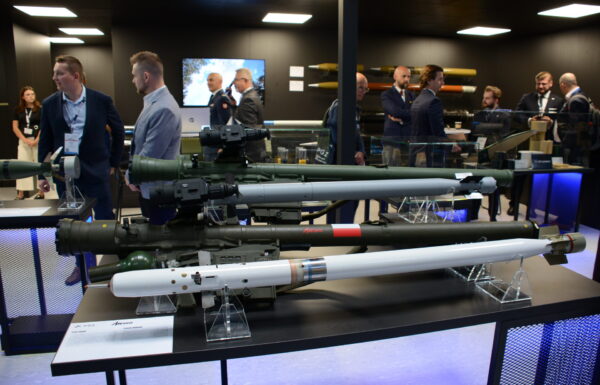
AMRAAM-ER is a variant intended for the ground-based NASAMS (National Advanced Surface-to-Air Missile System) air defense system. Based on previously disclosed information, it was known that Norway (100 units), the Kingdom of the Netherlands (174 units), Kuwait (63 units), Hungary (60 units), Egypt (100 units), Taiwan (123 units), and most recently Denmark (236 units) had decided to purchase AMRAAM-ER missiles. Lithuania is therefore a new customer.
On February 27, 2024, the U.S. company Raytheon (part of RTX) and Norway’s Kongsberg Defence & Aerospace, with support from the Norwegian Ministry of Defence and the Norwegian Armed Forces, successfully completed flight tests of an improved missile of this type, demonstrating enhanced capabilities.
The latest AMRAAM-ER variant tested at that time was the first configuration of its kind to include a guidance section from the newest air-to-air missile version, the AIM-120C-8 AMRAAM. It also received a more powerful 10-inch rocket motor from Norway’s Nammo and a 10-inch actuator control system from Kongsberg Defence & Aerospace, known as the Norwegian Propulsion Stack, for which the Norwegian Ministry of Defence is an industry partner.
It should be recalled that the previous AMRAAM-ER variant was equipped with the sustainer motor from the RIM-162 Evolved Sea Sparrow Missile (ESSM), while its guidance system used more accurate algorithms. This made it possible to improve maneuverability, double the range from 40 to 80 km, and increase the ceiling by 70 percent, from 14 to 24 km. At the time, RTX did not specify in its press release what tactical and technical parameters had been achieved with the Norwegian propulsion system.
Joint work on the AMRAAM-ER with KDA began in 2014. The project was not publicly disclosed until February 22, 2015. In October 2016, the first test launch of the prototype from a NASAMS launcher was carried out. According to the original schedule, low-rate initial production was to begin in 2019. However, it was only in May 2021 that the start of launcher trials from the NASAMS system was announced, and those trials were completed in 2024.
