




















The SAFE program was supposed to be a straightforward mechanism: add money and accelerate procurement in areas where the military already knows what it needs. The problem is that it is increasingly being treated the opposite way – as a convenient method for substitute financing of what had already been planned. This leads to a situation in which, instead of acceleration, there is stagnation.
 Photos: Jakub Link-Lenczowski, MILMAG
SAFE was not created to replace existing modernization programs. Its purpose is different: to increase the scale of procurement, accelerate deliveries, and close capability gaps. It should be an extension of previously adopted plans, not an alternative to them. It should also be an opportunity for Poland’s defense industry to move into broader European markets.
If the military planned to buy a certain number of rifles, SAFE should make it possible to buy more of them, and faster, so that the necessary equipment reserve can be created. If further tranches of weapons were planned, they should be implemented in parallel, not postponed because a new program has appeared. In practice, however, things are starting to look different.
Grot: Announced, but Still Without Clear Procurement Plans
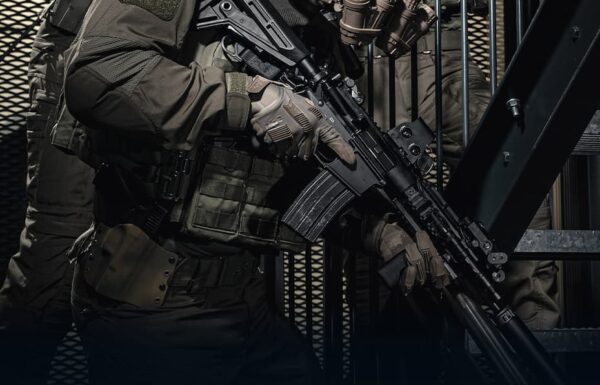
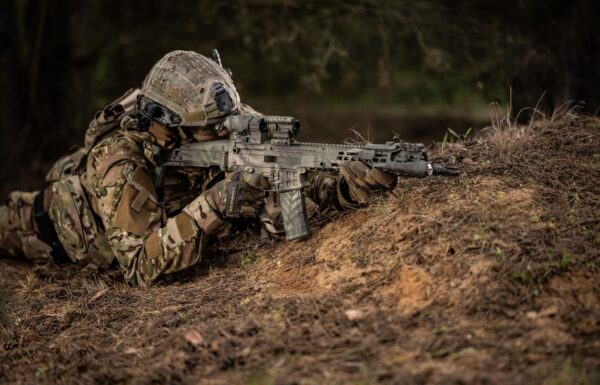
The story of the MSBS Grot rifle illustrates this problem well. Even before SAFE appeared, there was open talk of further purchases and the continued rearmament of the military with the latest variants of the Radom-made weapon. There was a clear path, covering the development of the design and the gradual increase of orders. Today, that path has become blurred.
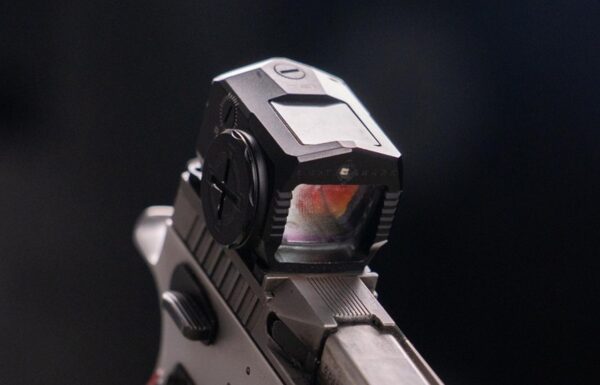
On the one hand, there are announcements from December last year that production of the MSBS Grot A3 version is to begin in 2026, as announced during last year’s “Grotowisko 2025” conference. The new upgrade package includes design improvements, a shorter barrel, and a redesigned upper receiver. In other words, exactly what users had been expecting.
Chief of the General Staff Gen. Wiesław Kukuła has said directly that this is now the level appropriate for a weapon of this class. However, the military wants to buy not just the rifle itself, but a complete package, including optics and additional equipment. And this is where everything comes to a halt.

The problem is not that the Grot A3 does not exist or fails to meet requirements. The problem is that there has been no decision to order it at the scale, and with the equipment, discussed just a few years ago. Fabryka Broni “Łucznik” has steadily increased its production capacity, investing more than PLN 30 million in a new hall. It is ready to produce much more. Today, it is completing earlier contracts. And waiting.
Trade unionists are warning that more than 140 jobs could be lost. Not because of a lack of expertise or technology, but because of a lack of orders. One sentence being heard in this context sounds particularly sober: the factory does not need support; it needs contracts. This is the moment when SAFE should come into play. Not instead of those orders, but alongside them. It should increase their scale, accelerate deliveries, and ensure production continuity. It should seek foreign customers and opportunities on civilian markets. But instead, there is silence.
SAFE Will Not Do the Minister’s Job for Him
This brings us back to the starting point. SAFE is not a tool that will make decisions for the ministry’s leadership. It will not look for foreign customers to preserve production continuity for years to come. It can help implement decisions, but it cannot replace them.
Władysław Kosiniak-Kamysz does not currently have a problem with a lack of concepts. The problem is that these concepts are not translating into orders. The military knows it wants the Grot in the A3 version, and even wants to order rifles in a bullpup variant. Industry is ready to produce it. The money, at least in theory, is there. What is missing are decisions and government support on international markets. The remaining question is whether and when to order Grots in order to build mobilization reserves. To put it bluntly, the front in Ukraine was held not by 96 attack helicopters, but by 800,000 soldiers, each armed with a rifle…
SAFE was meant to accelerate modernization. And it still can. But only if it is treated as an extension of existing plans, not as their substitute. If it becomes an excuse, we will see more stories like Grot: equipment ready, factory prepared, military interested, and yet no contract or probing of other markets. Because Fabryka Broni cannot survive forever on military orders alone.
But at the end of this puzzle there is always the soldier. The same as several years ago. Except still waiting for equipment that should long ago have been in service.
See also: