
























Wisła
Under Phase I of the Wisła program, the Polish Air Force operates two batteries, composed of four fire units, of the Wisła/MIM-104F Patriot PAC-3+ medium-range air and missile defense system (Post-Deployment Build 8, PDB-8), integrated with the Integrated Battle Command System (IBCS).
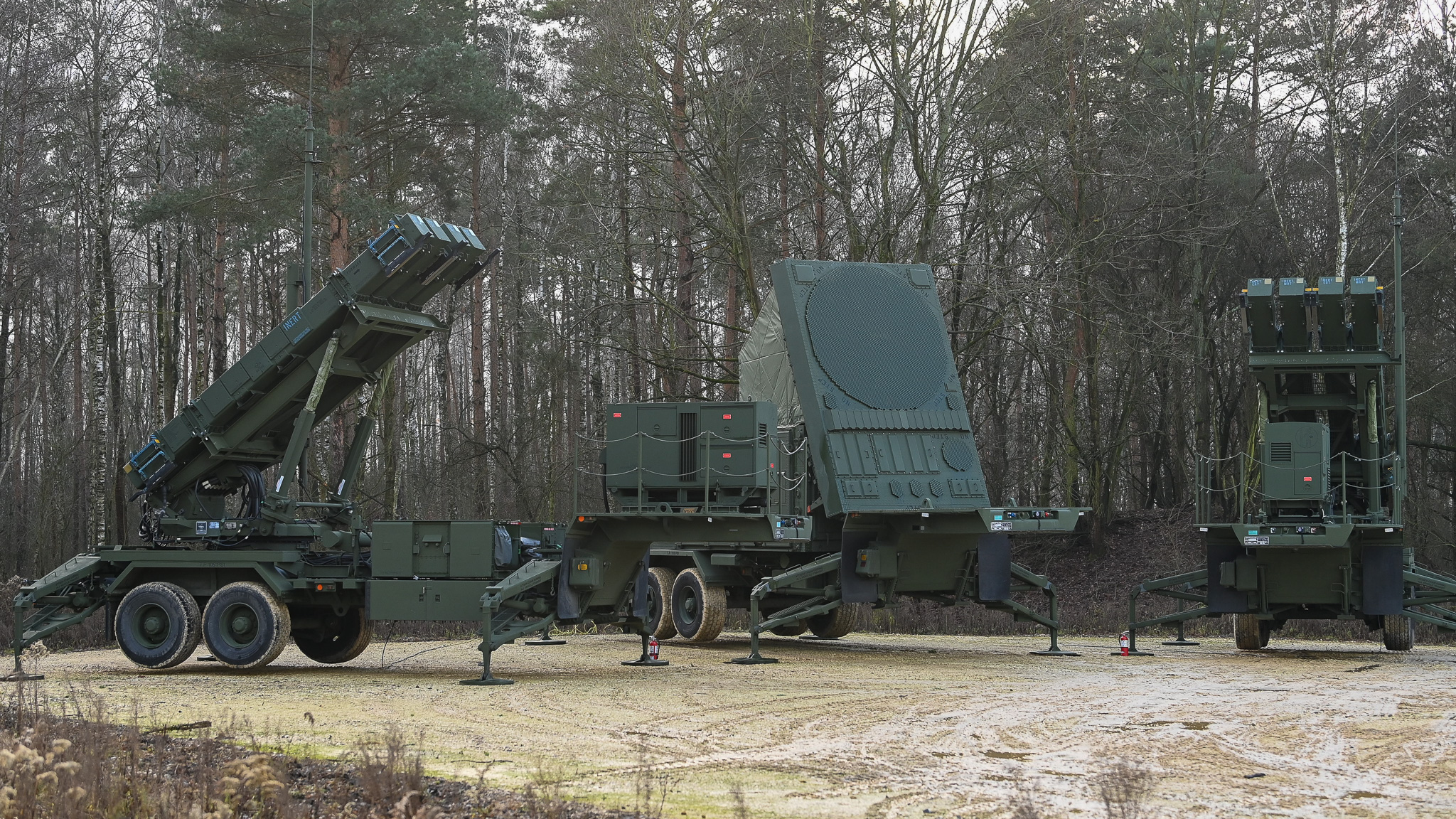 Photo: corporal Wojciech Król/CO MON
The first battery of the 37th Air Defense Missile Squadron of the 3rd Warsaw Air Defense Missile Brigade achieved Basic Operational Capability (BOC) on September 11, 2023, following a series of comprehensive tests and integration activities to verify the performance of the IBCS system. The next key milestone was the squadron reaching Initial Operational Capability (IOC) on December 18, 2024, marking the completion of the first phase of training and combat integration of platoon-level subunits and command sections using the IBCS command system for individual fire units. On September 16, 2025, the first live firing took place at the Central Air Force Training Range in Ustka.
The primary interceptor of the Wisła system is the PAC-3 MSE (Patriot Advanced Capability-3 Missile Segment Enhancement) interceptor missile, of which 208 units were ordered (plus 8 for testing). It is worth noting that, under the Phase II contract of the Wisła program, an undisclosed number of additional missiles was ordered, although the approval covered 644 missiles for six additional Wisła/IBCS batteries, where next-generation LTAMDS (Lower Tier Air and Missile Defense Sensor) medium-range radars will replace the older AN/MPQ-65 radars.
The PAC-3 MSE missiles, developed as an evolution of the CRI (Cost Reduction Initiative) variant, were designed to enhance the MIM-104 Patriot system’s capability to intercept ballistic missiles. As part of the upgrade, they received more powerful rocket motors and improved performance parameters, such as interception range and altitude. PAC-3 MSE missiles can also be used to destroy maneuvering targets, including cruise missiles as well as manned and unmanned aircraft. They do not carry a traditional explosive warhead, instead destroying targets using kinetic energy (hit-to-kill).
The second interceptor is to be the less expensive PAC-2 GEM-T missile (a small batch was purchased for the September tests), with plans to acquire 788 missiles, which is currently under consideration in the U.S. Congress.
The PAC-2 GEM-T interceptor, also designated TBM (Theater Ballistic Missile), entered service with the U.S. Army in 2006, although deliveries of 230 out of the 376 ordered missiles began a year earlier. As the TBM designation indicates, the missile is intended primarily to counter short- to medium-range ballistic missiles (tactical-operational), such as the Iskander-M, while the PAC-2 GEM-C variant is also capable of engaging cruise missiles and aircraft.
The GEM-T/C is a deeply modernized version of the MIM-104C/D (PAC-2) missile. It received a proximity fuze, a new radar receiver with improved accuracy, and new solid-state electronic components. In 2018, the missiles were equipped with a more durable digital transmitter using gallium nitride (GaN) technology, which is expected to reduce operational costs.
In addition, consideration is being given, over the course of the next decade, to the CAMM-MR medium-range missile, being developed by MBDA UK and the Polish Armaments Group (PGZ), initially intended for the Narew and Miecznik programs.
Little Narew
Two Little Narew air defense systems constitute an interim capability, acquired prior to the introduction of the target short-range air defense missile systems (SHORAD) under the Narew program. The Little Narew systems were delivered on October 4, 2022, to the 18th Air Defense Regiment in Zamość, and on September 15, 2023, to the 15th Gołdap Air Defense Regiment.
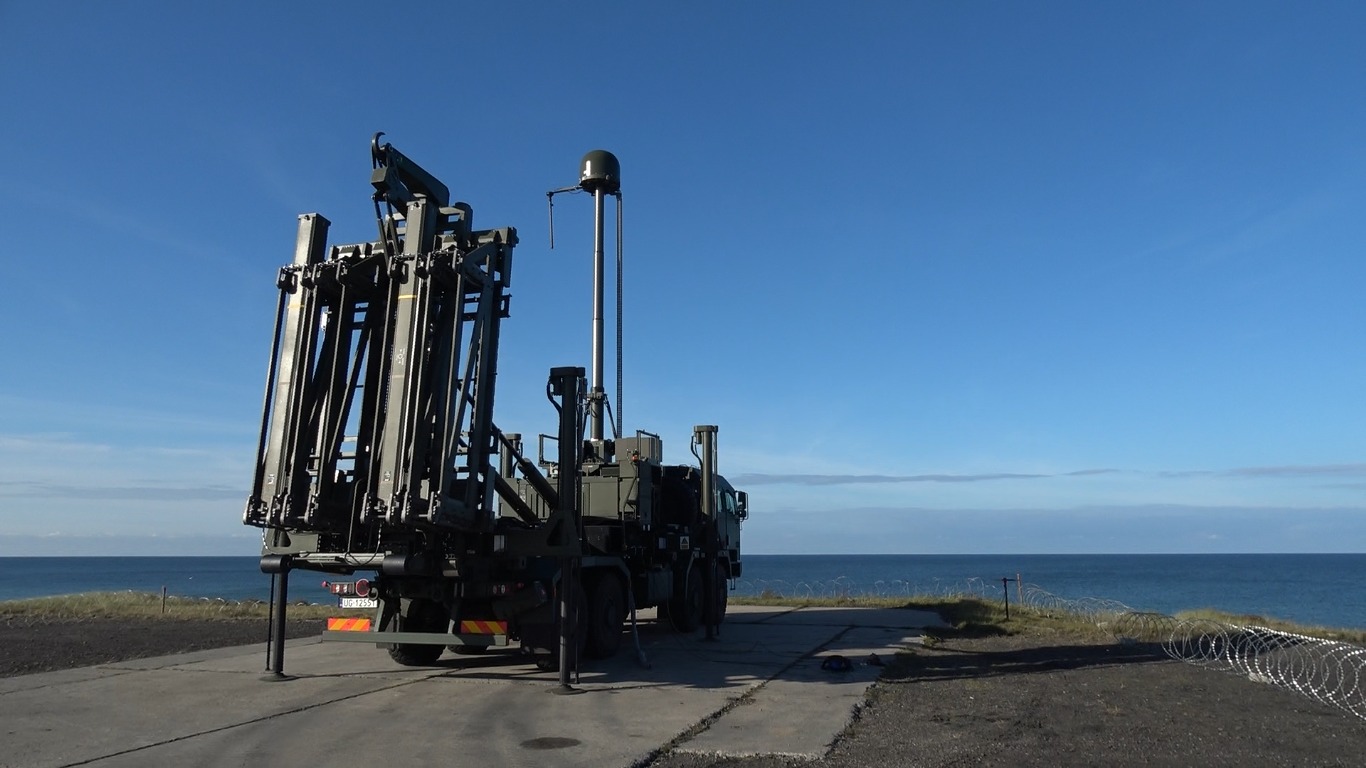 Photo: 15th Gołdap Air Defense Regiment
One system consists of:
- a Soła-M radar, upgraded to cooperate with British launchers and missiles,
- the Zenit-M automated command system mounted on a Jelcz 442.32 vehicle chassis,
- three iLauncher launchers mounted on Jelcz 882.57 T21 TS DOW trucks, armed with CAMM missiles,
- two PA1 transport and loading vehicles on Jelcz 442.32 S02 chassis.
The CAMM missile has an interception range of 1 to over 25 km. Traveling at Mach 3, it is capable of intercepting supersonic anti-ship missiles, aircraft, helicopters, and unmanned aerial vehicles, as well as engaging fast assault boats within an area of about 1,300 km². CAMM missiles can intercept multiple targets during saturation attacks within a 360-degree coverage area around the launcher. The missile is 3.2 m long and has a launch weight of 99 kg.
The iLauncher launchers will also be used in the aforementioned Narew systems (138 launchers and more than 1,000 CAMM-ER missiles) as well as in the upgraded Pilica+ systems (44 launchers and several hundred CAMM missiles). Lower tiers of air defense are provided by the Poprad and Piorun/Grom systems, followed by the San counter-drone system. An important component of air defense will also be the three Project 106 Miecznik missile frigates, which will be armed with CAMM-ER missiles and, in the future, CAMM-MR.
