








EDC25 and EDC 29 – made for EDC
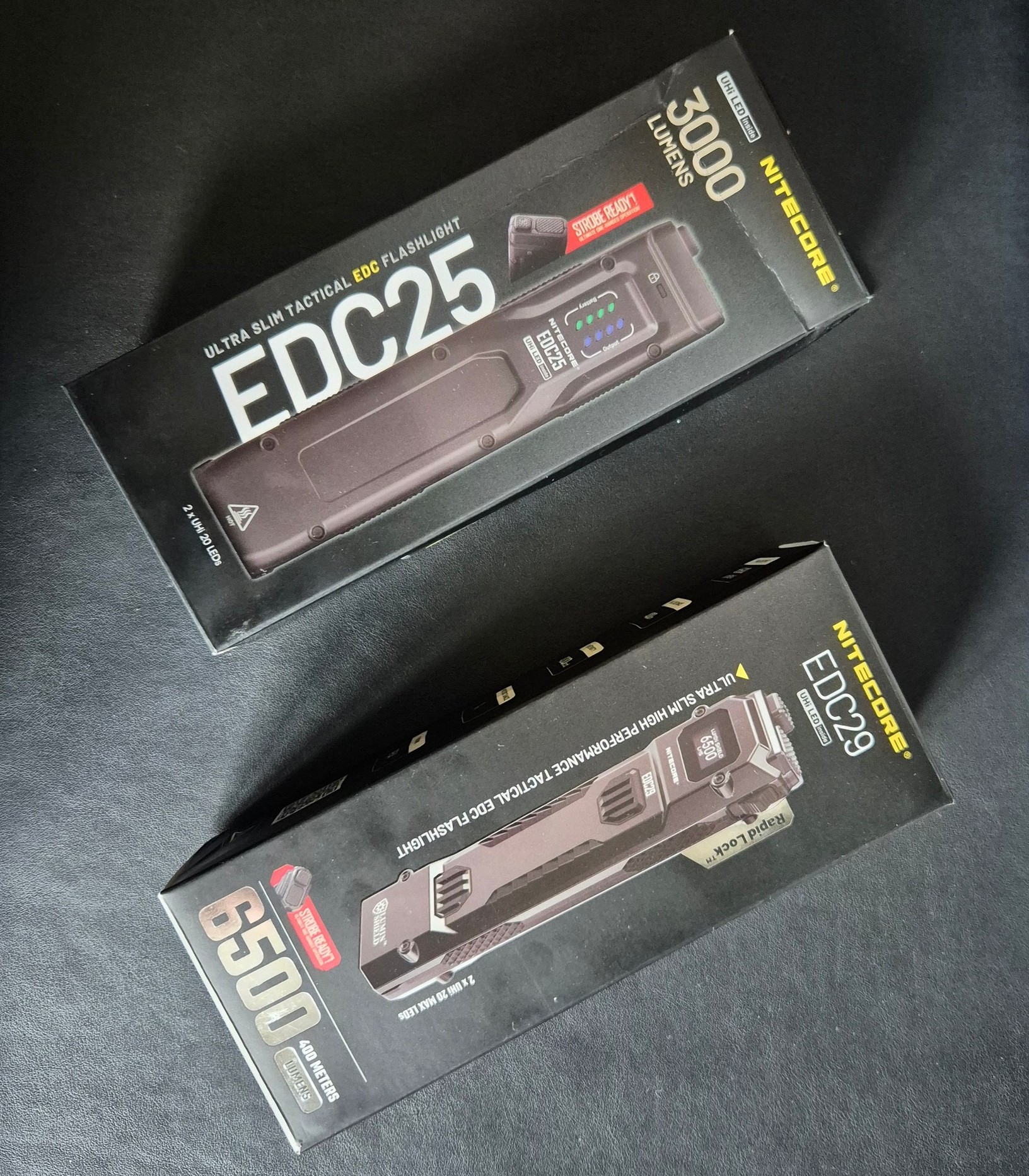
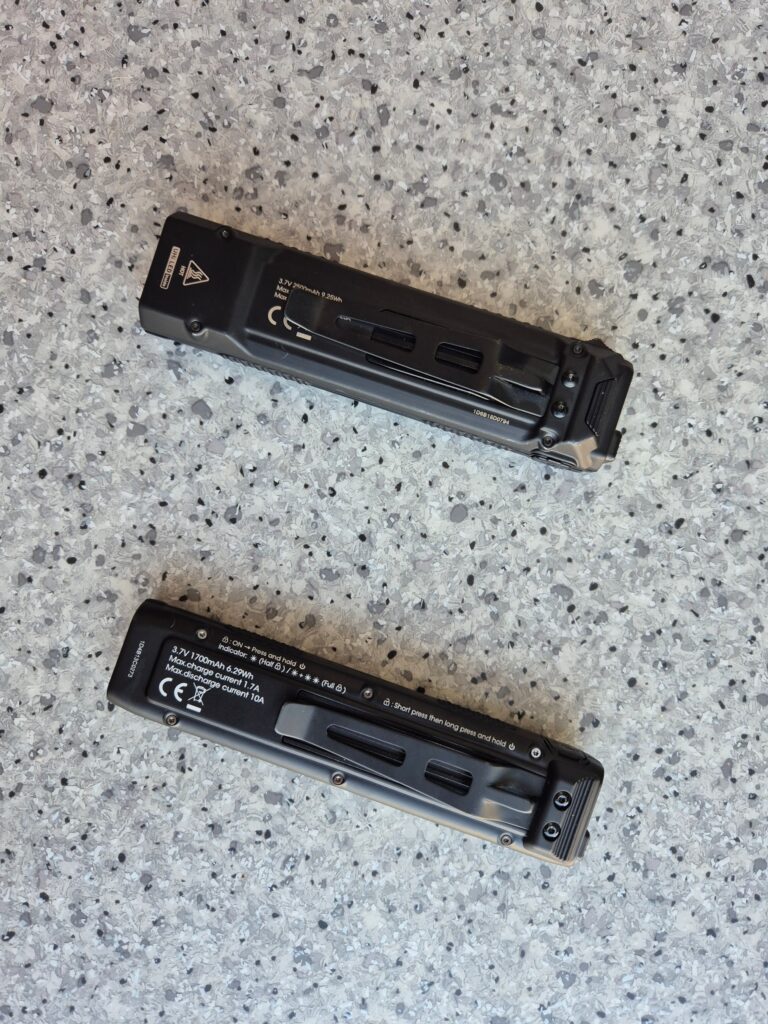
The little lights that landed on my desk are Nitecore products from the EDC series. The EDC25 and EDC29 models, the ones I want to tell you about, look very similar. However, as we all know, in the case of flashlights, it’s not the housing that defines their performance. But let’s start from the very beginning.
The idea behind this particular shape is to address the everyday challenge of carrying high-powered flashlights. The size of the cell inside always dictates the shape of a flashlight’s body, and for popular lights used in “the community,” that usually means two CR123 batteries or a single 18650 cell. Because of their shape, these flashlights would bulge in your pockets, cause discomfort if carried in a back pocket, and often end up left at home, simply to avoid their bulk. And then, of course, we’d all end up lighting our way with the weak LED on our phones. Nitecore’s flashlights make the decision to take them along much easier. Why? Because they’re comfortable.
Both flashlights arrived in eye-pleasing boxes. Inside, apart from the flashlights themselves, we found decent-quality USB-C charging cables, braided paracord lanyards with a carabiner, and user manuals, quite extensive ones, since the flashlights have several functions accessible via button combinations.
EDC25 – discreet pocket torch
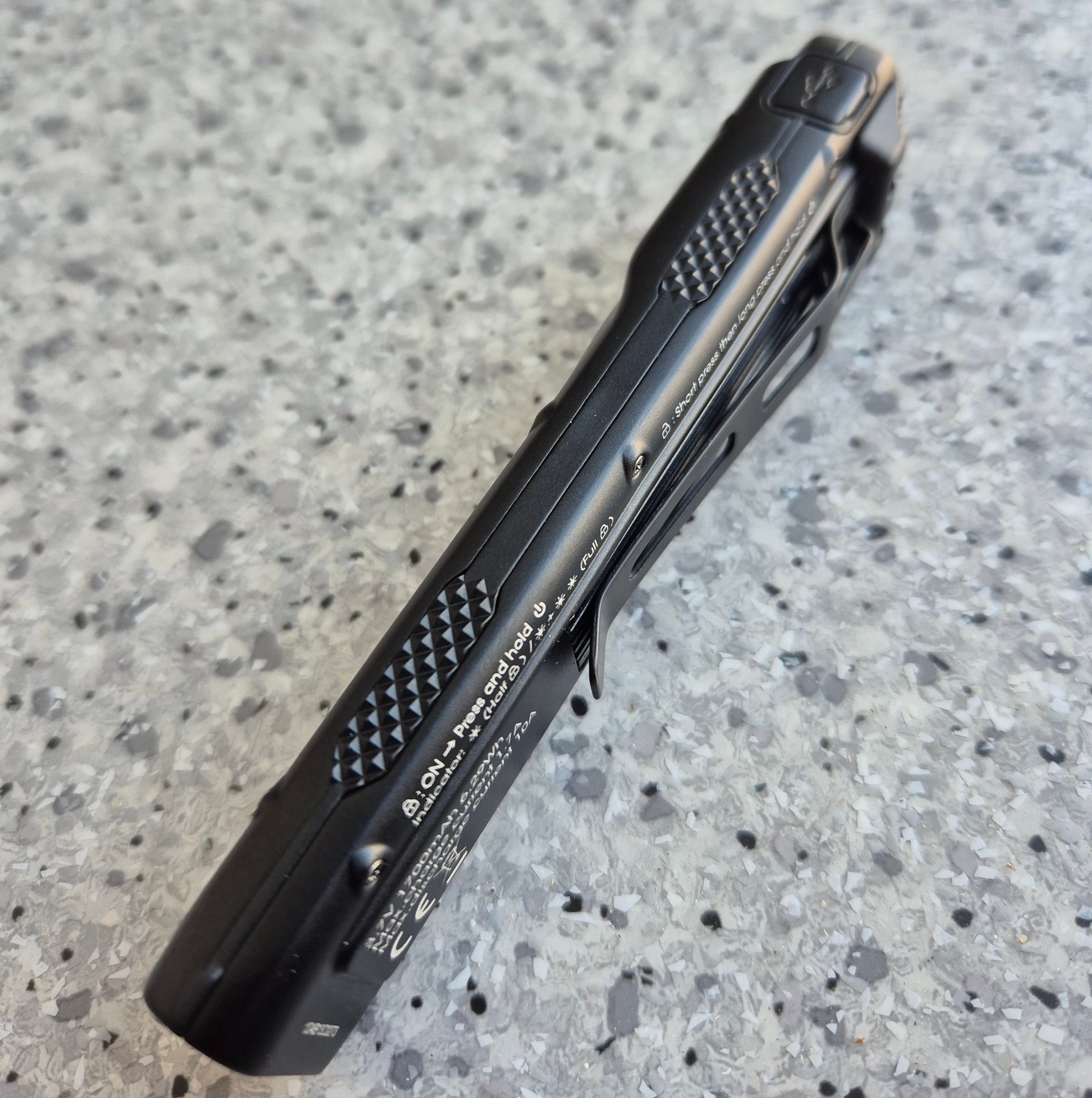
The EDC25 model impresses with its remarkably low weight, at just 104 grams, making it easy to forget you’re even carrying it in your pocket. Well, it would be easy, if not for the nearly 140 mm body length, which, when poorly positioned, can unpleasantly dig into your groin. Fortunately, the flashlight is equipped with a sturdy clip that securely holds the body at the edge of a pocket. A nice touch is the thumb rest, allowing you to push the flashlight into place, whether on the clip or in your hand, without pressing any buttons.
The flashlight’s body is flat, measuring just 13.7 mm thick, only slightly more than the folding knives we so often carry in the same pocket. At the top edge, right next to the buttons, there’s a charging port protected by a cover.
The flashlight should withstand a one-meter drop onto a hard surface, and its construction meets the IP54 standard, so you probably shouldn’t submerge it in water, but it will handle rain without issue.
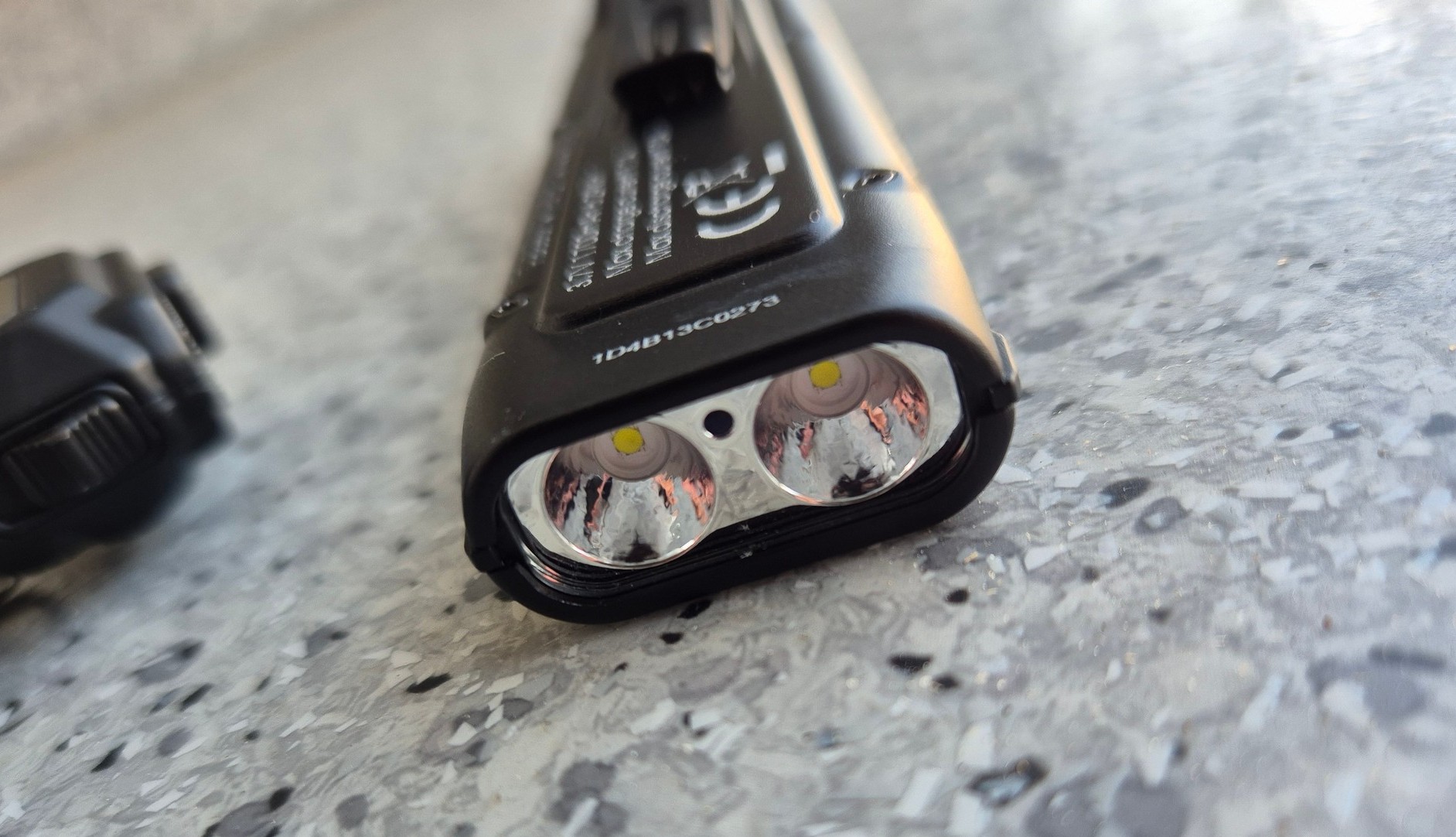
The bottom edge of the flashlight houses the LEDs, specifically, two UHi 20 diodes placed in separate reflectors. The maximum light output is 3,000 lumens, but fortunately, the flashlight allows for easy switching between modes, which I’ll discuss in just a moment.
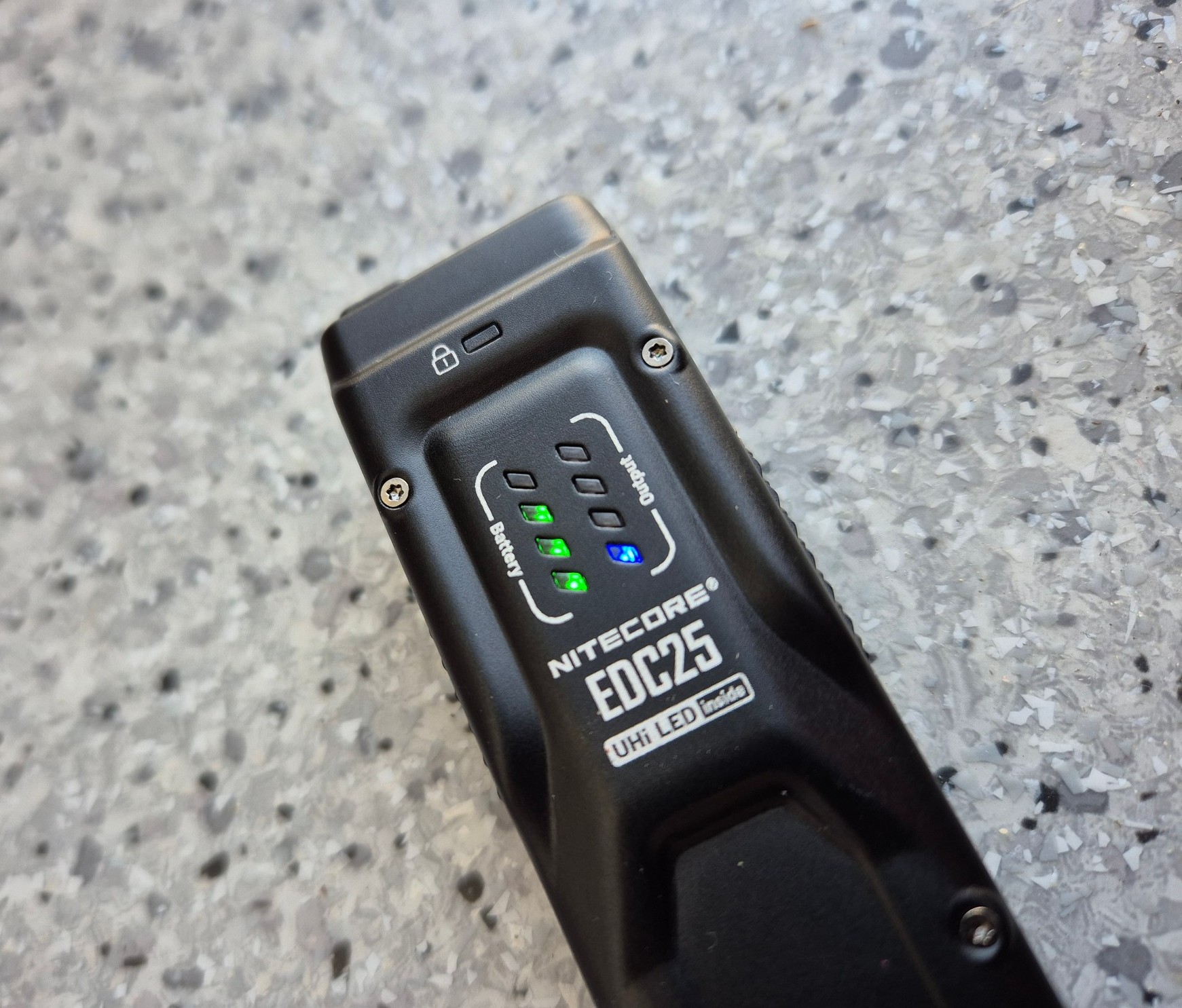
On the front panel, there’s an 8-LED indicator showing the current mode and battery level. Above it is an LED that indicates the button lock status. Despite its simplicity, the display shows the currently active mode and the battery’s charge level.
As for the lighting modes, I figured it would be more convenient for you to see them in a table format.
Mode | Lumens | candelas | Max operation time |
|---|---|---|---|
| Turbo | 3000 | 22500 | 10 seconds |
| High | 1000 | 8100 | 1h 30m |
| Mid | 200 | 2000 | 4h 15m |
| Low | 65 | 680 | 14h |
| Min | 15 | 145 | 55h |
As you can see, the Turbo mode allows for just 10 seconds of illumination, which is due to the automatic overheating protection.
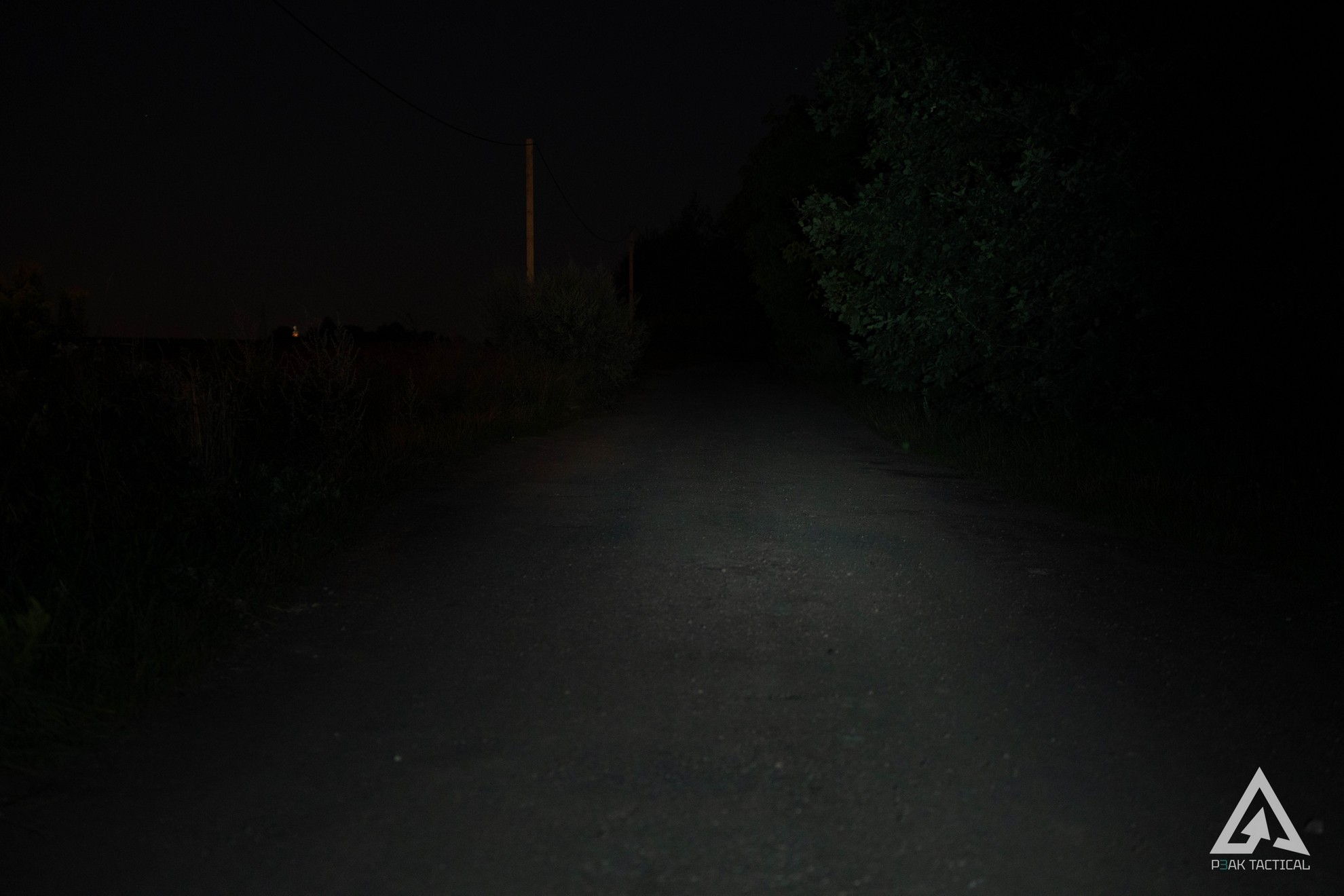
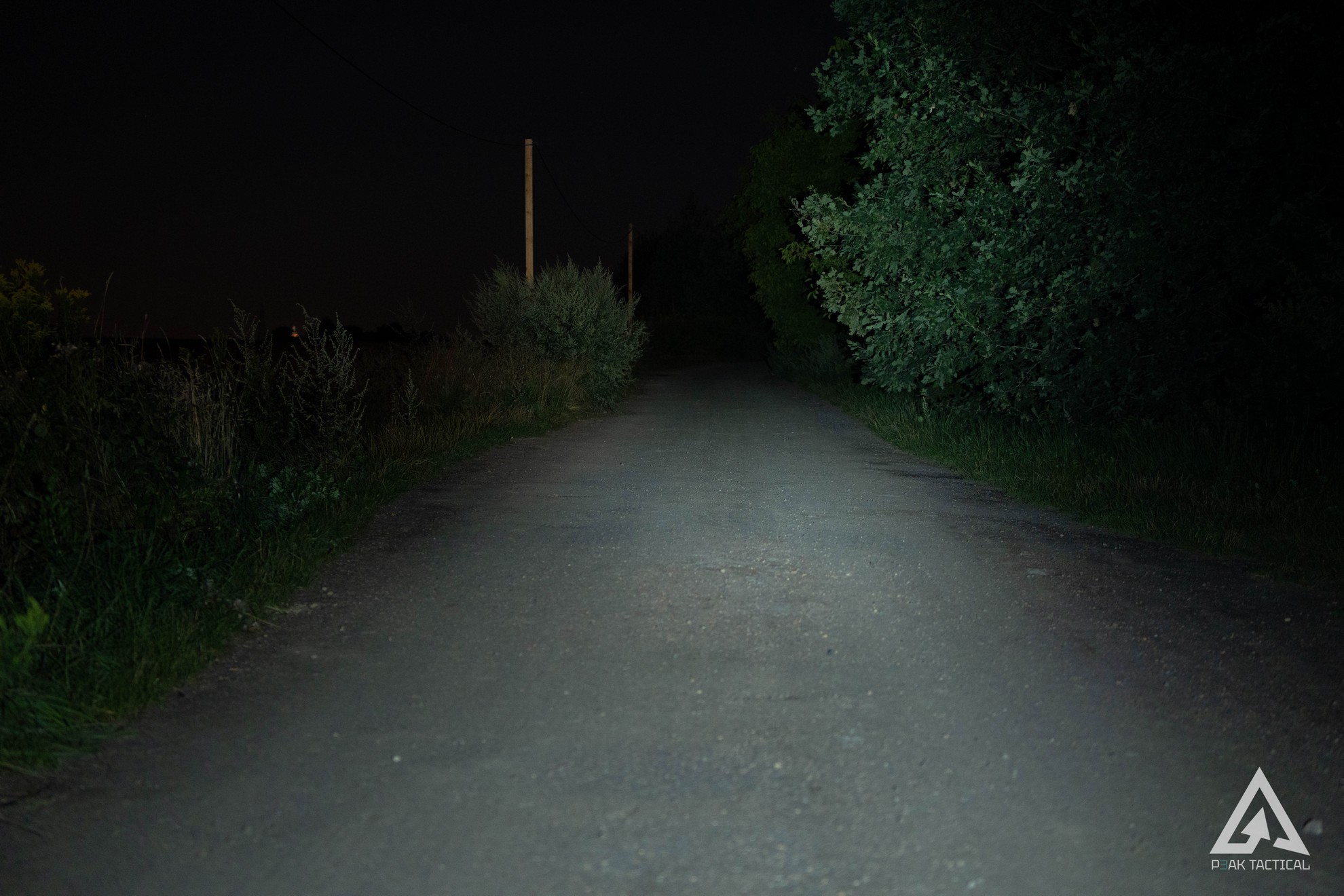
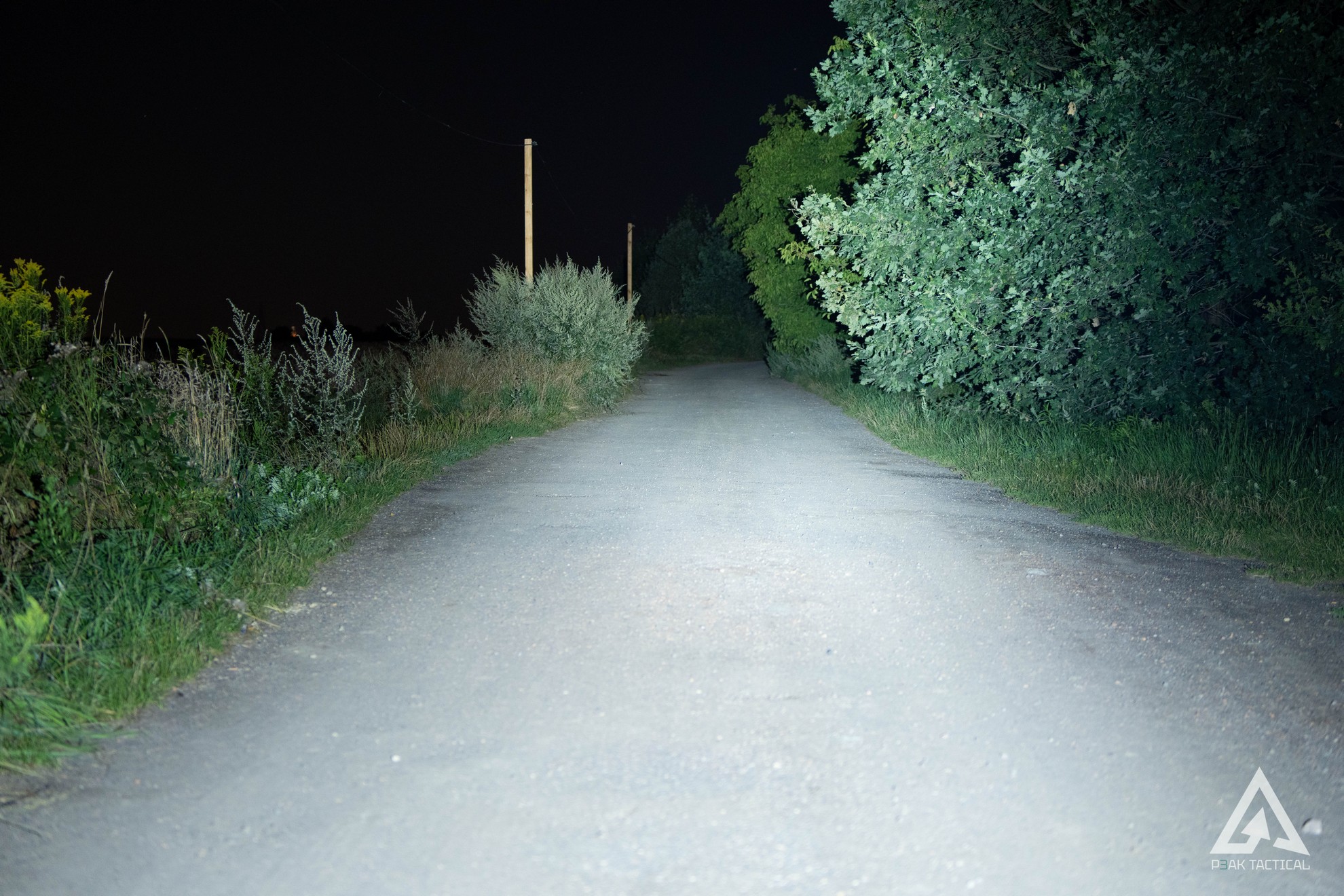
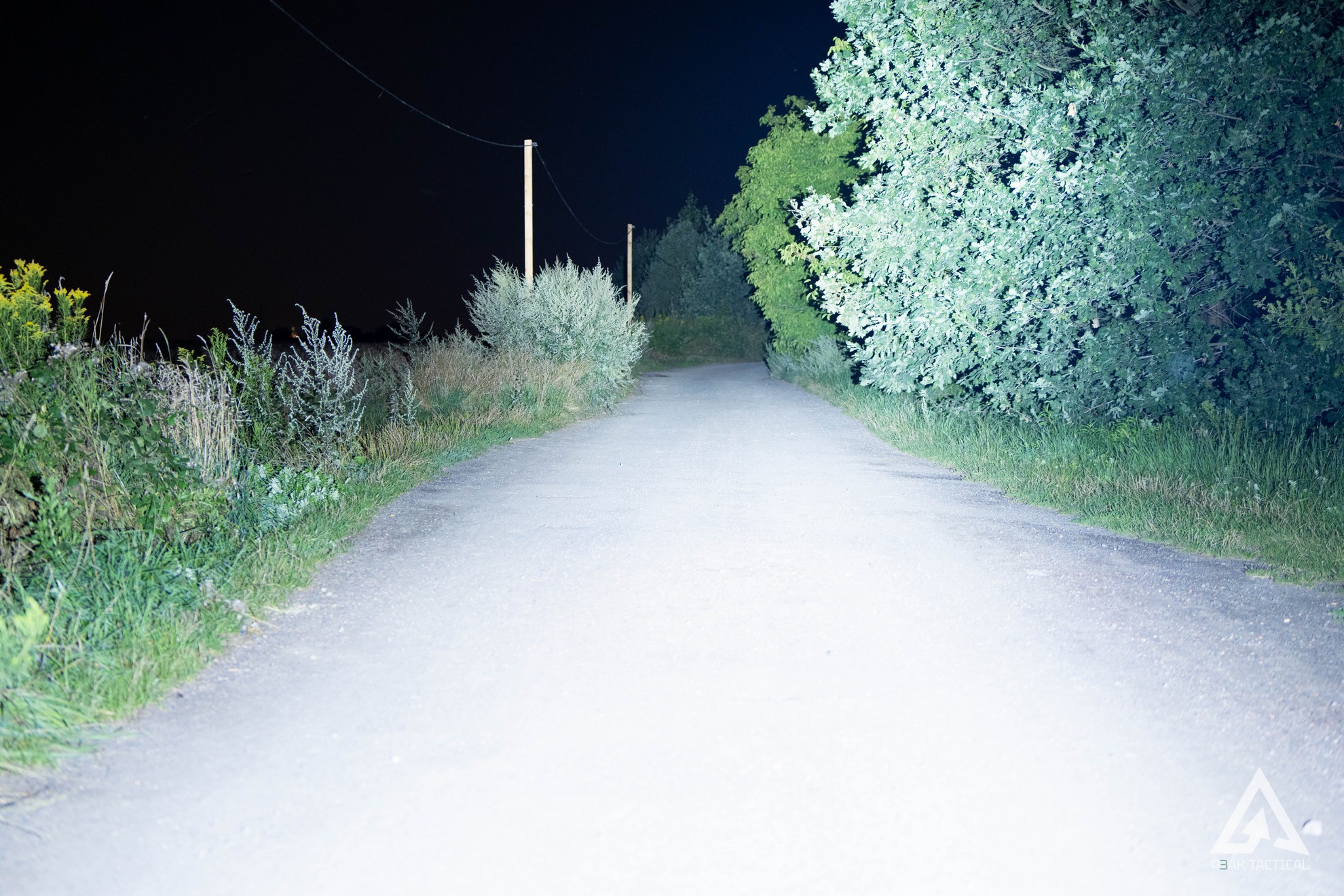
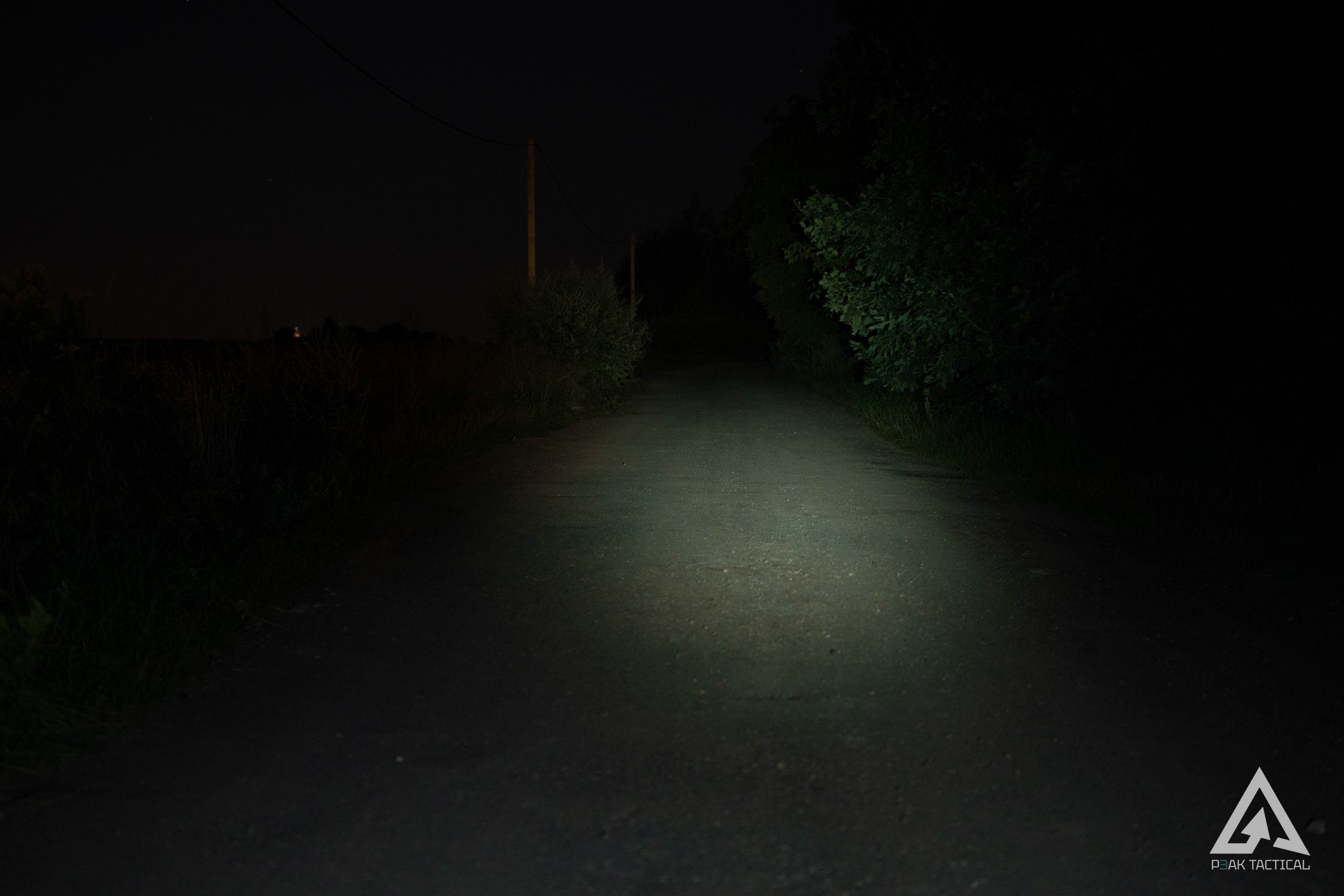
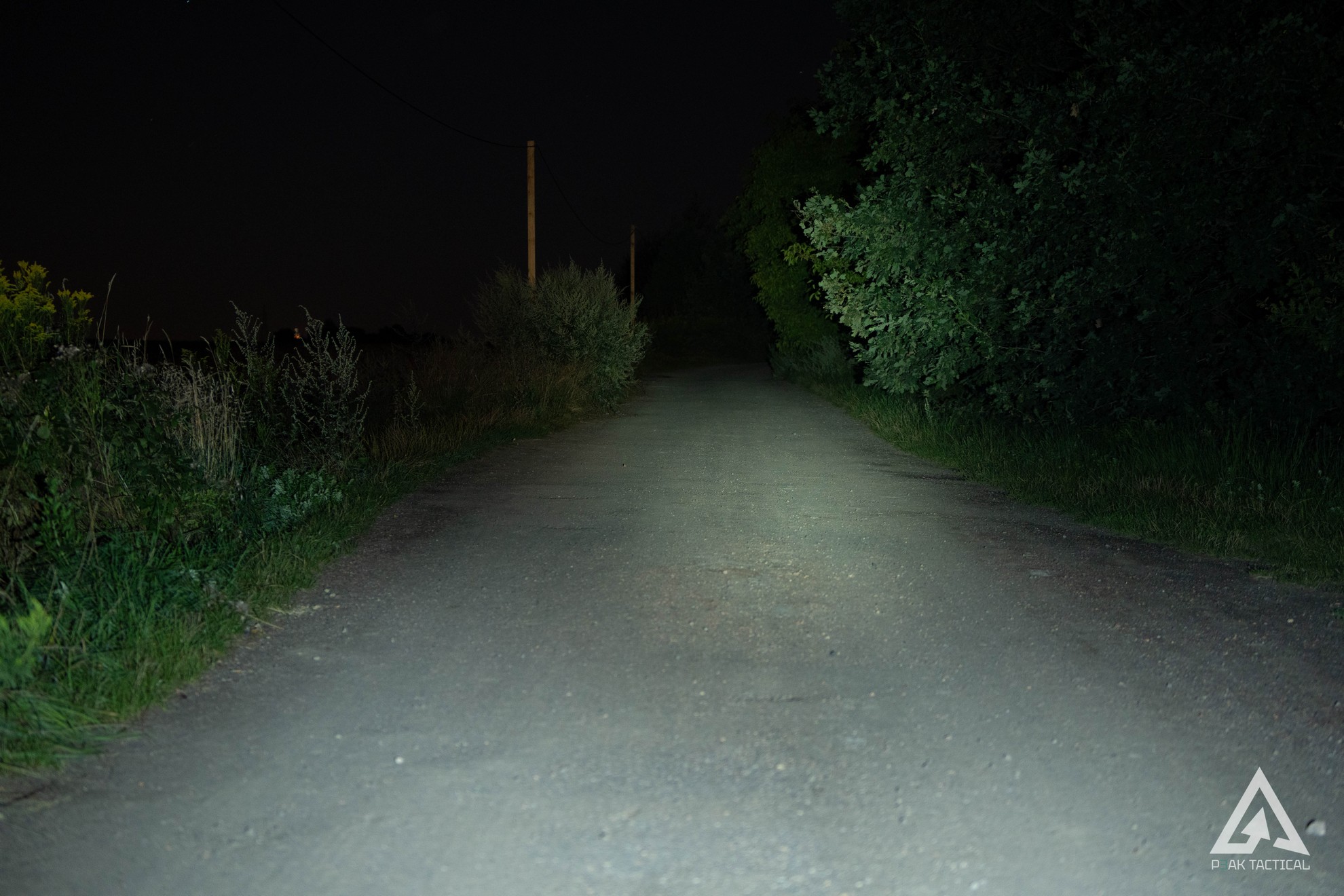
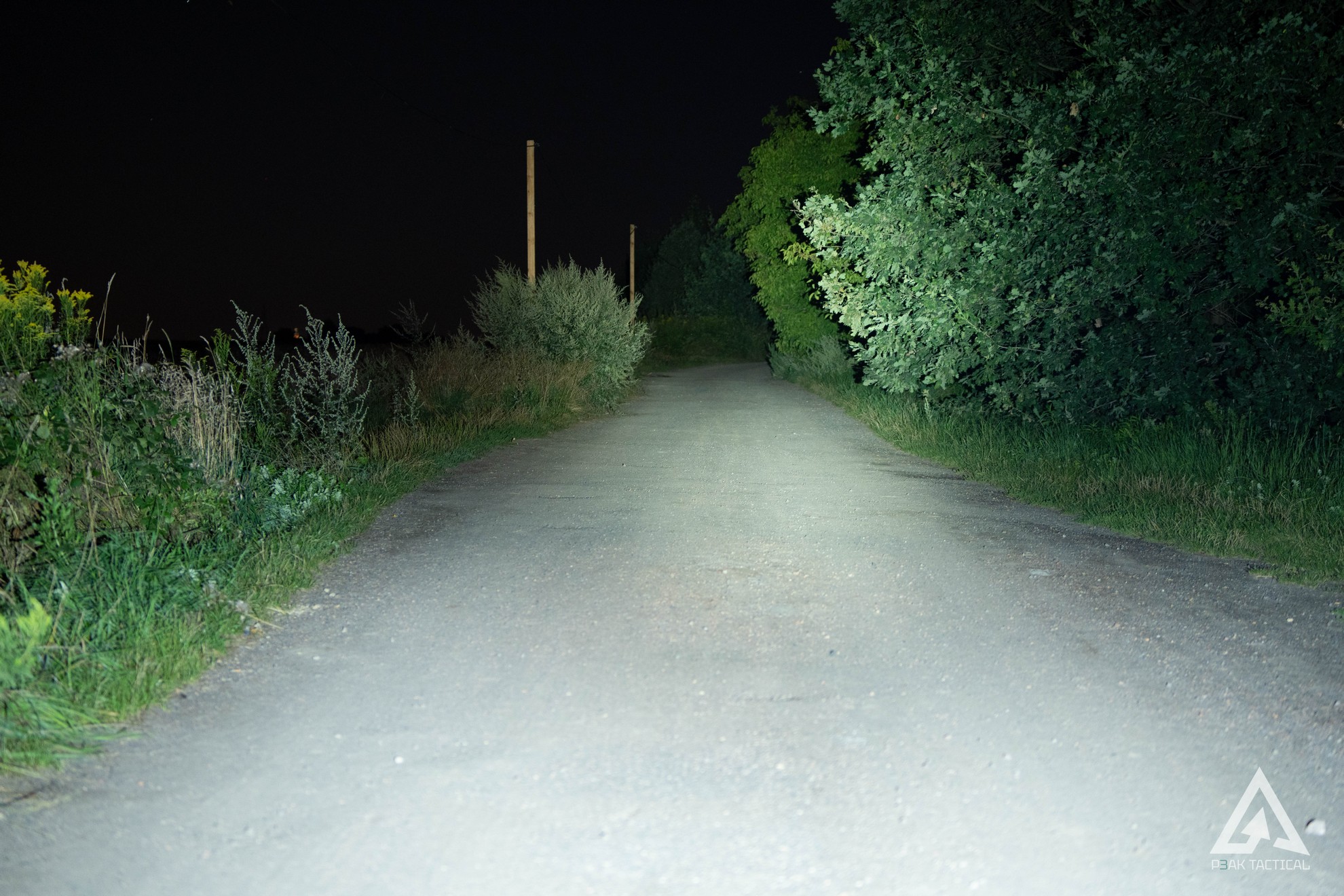
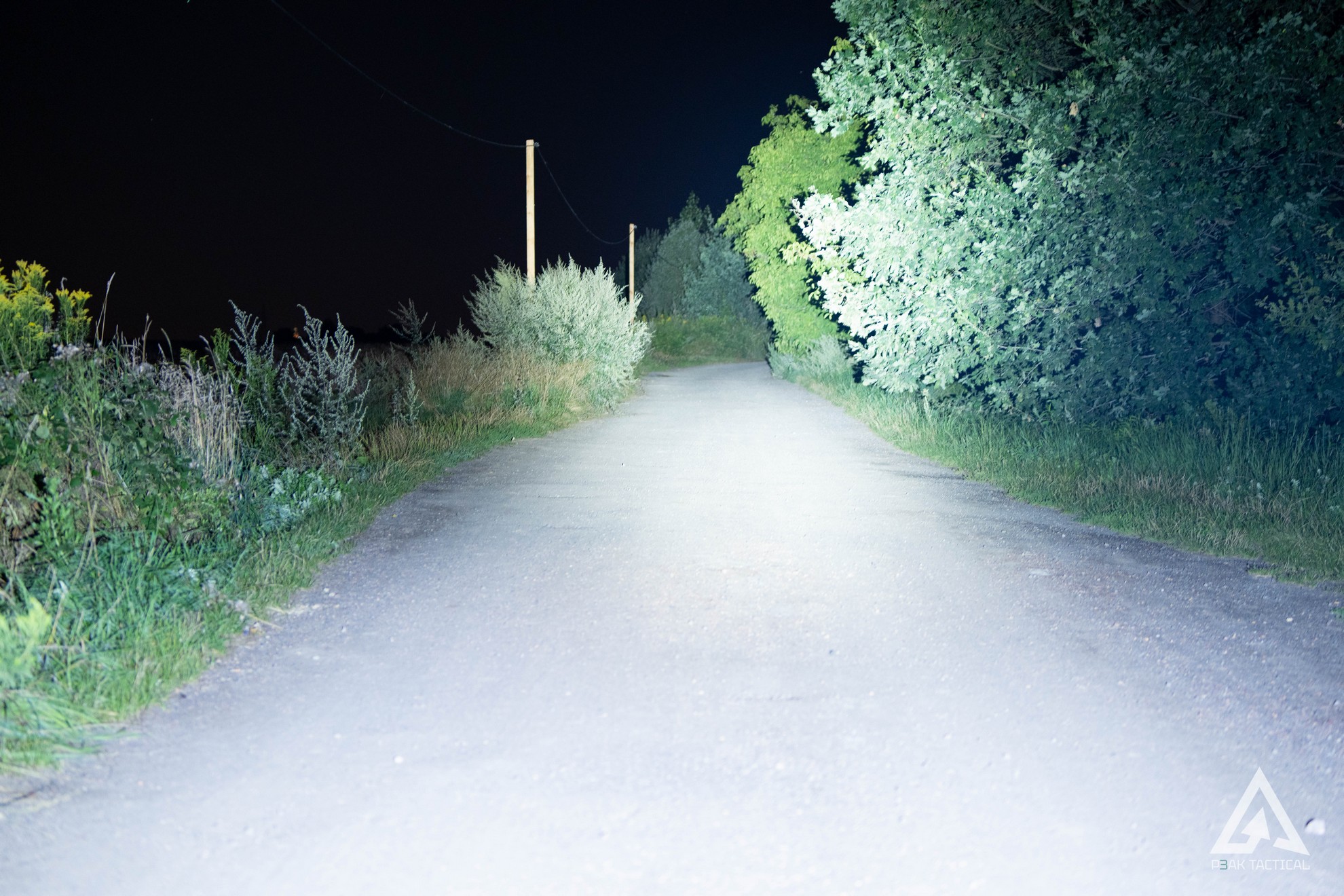
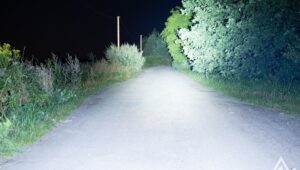
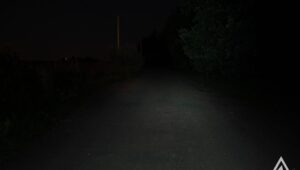
Nitecore EDC25 – successive modes in complete darkness, with the exact same camera settings.
The Li-Ion cell’s performance is excellent. The runtimes stated by the manufacturer don’t differ much from what I observed during use. Of course, in everyday use, you don’t just turn on a single mode to check if it really runs for 55 hours. Still, over the two months I’ve used the flashlight for several hours, mainly in Mid and Low modes (and, of course, Turbo, if only for taking photos for this article), I’ve only had to charge it once.
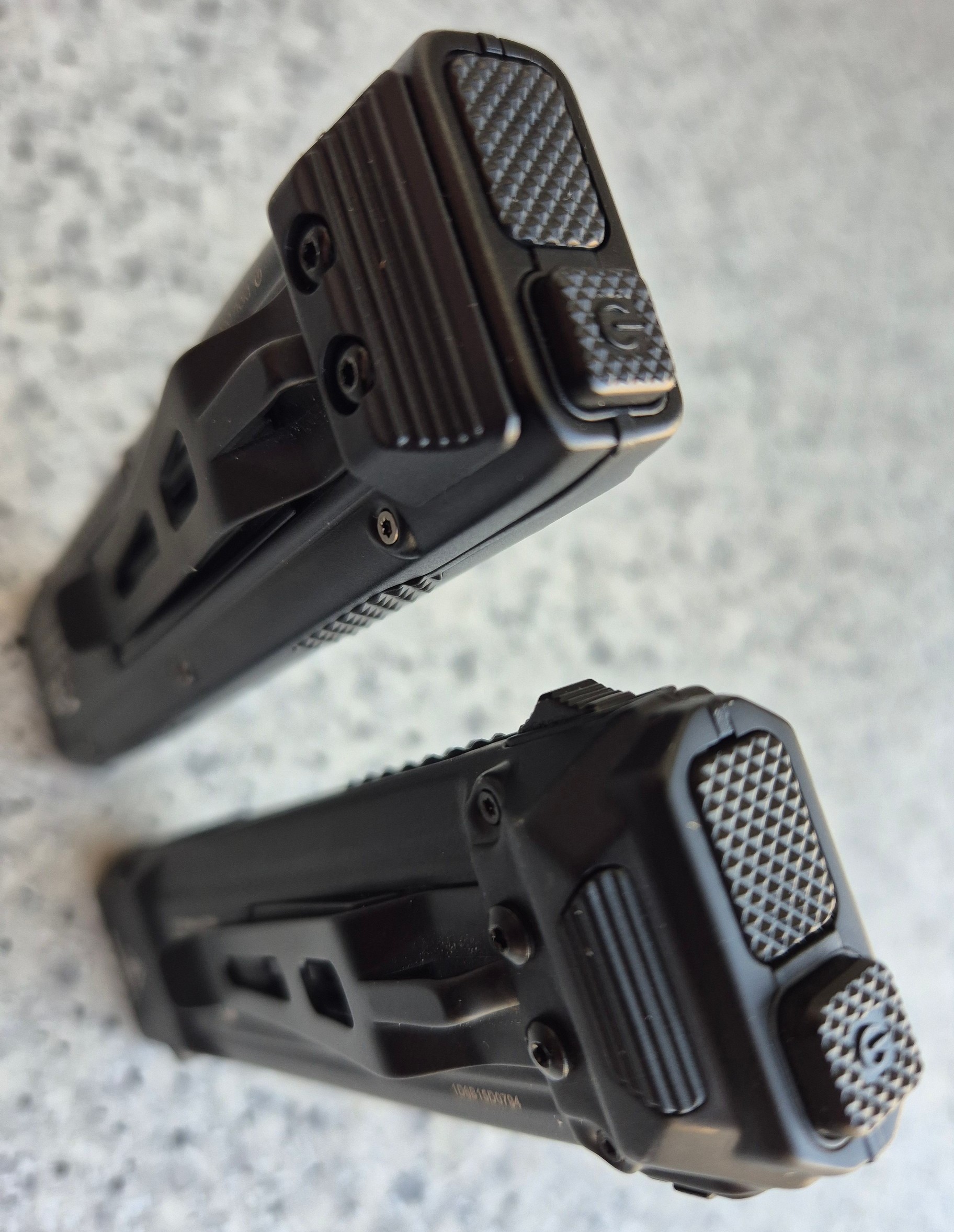
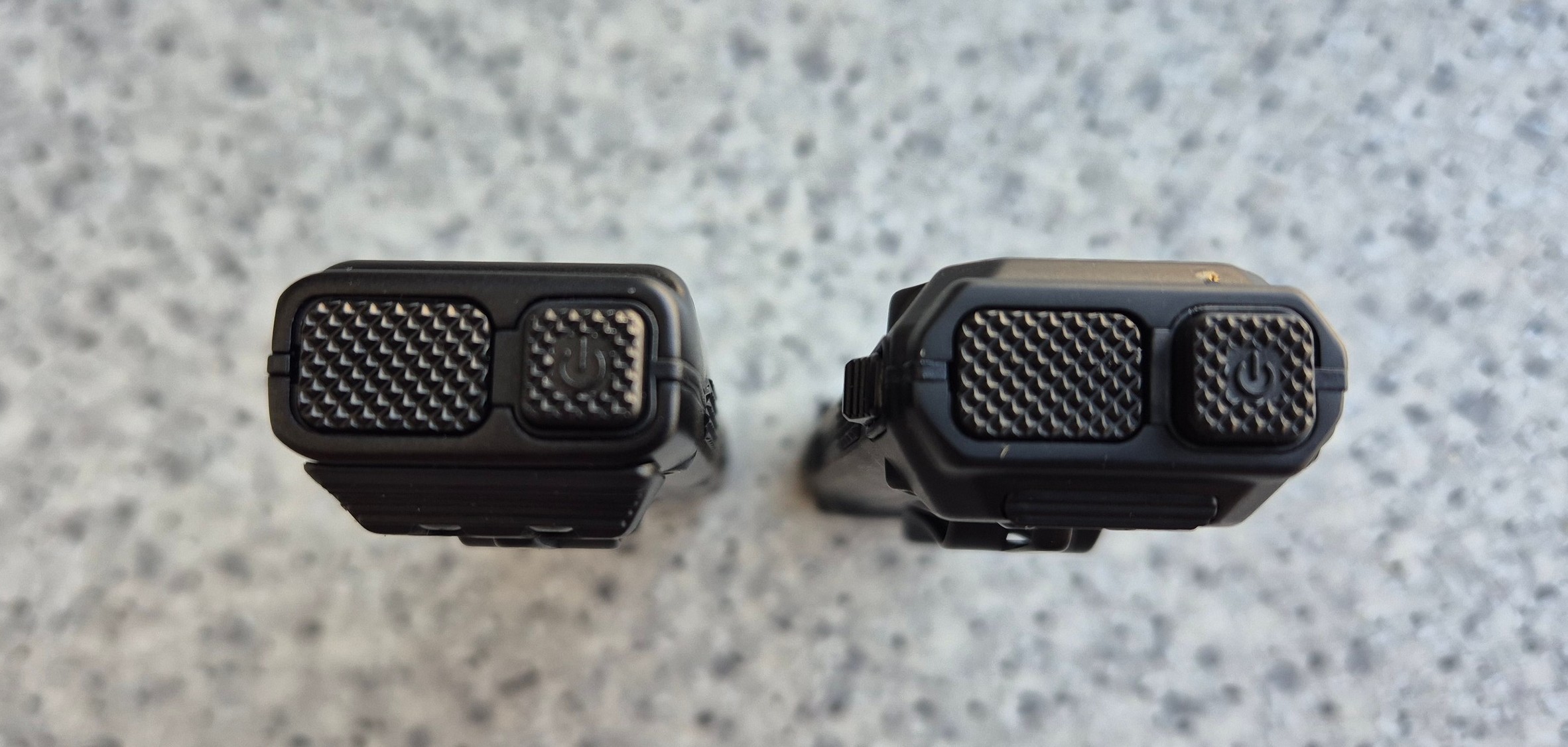
Two buttons on the top panel give you complete control over the flashlight. You can turn it on, change the lighting mode while it’s on, activate Turbo mode, and lock the buttons in two different ways, either to prevent the flashlight from turning on accidentally or to lock it in Turbo mode only.
There’s no way to pre-select a mode before switching it on to avoid blinding yourself with too much light. Still, a workaround is to hold down the mode button, which gives you a momentary MIN mode (15 lumens). The flashlight, of course, is in line with the “tactical” trend, featuring a strobe mode; thankfully, it can be completely disabled with the right button combination.
The light is cool in tone, with strong edge definition and high contrast, which is no surprise given the LEDs used. During operation, the flashlight heats up significantly, but the metal body effectively distributes the heat throughout the entire structure. This certainly helps protect the internal components, though it also warms the user’s hands significantly.
EDC29 – a candy bar full of light
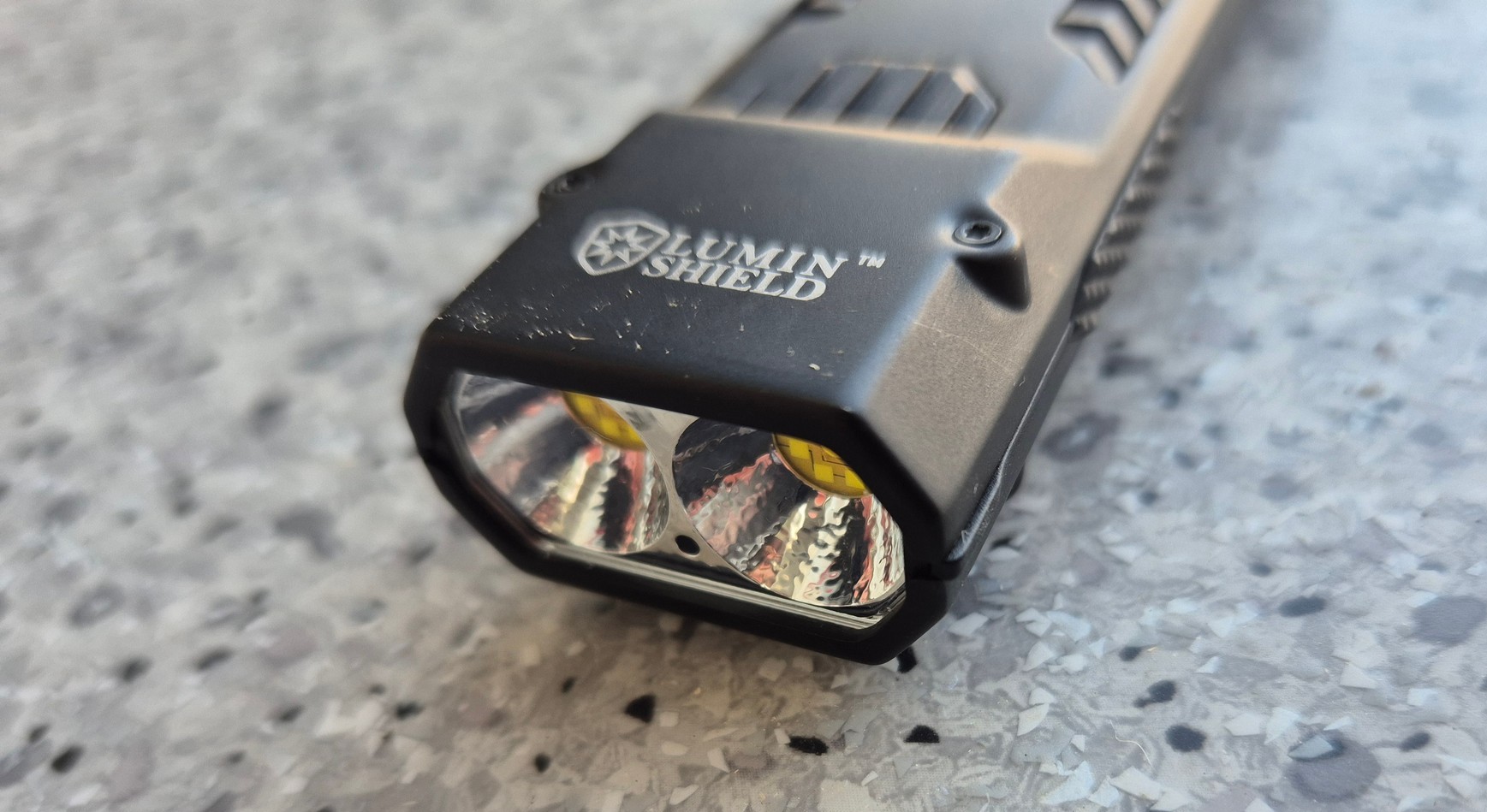
As you might suspect, the EDC29 model differs slightly from its lighter sibling. Its 160 grams of weight come from a larger battery, bigger LEDs, and a stainless steel body coated with titanium. Just like the EDC25, it features a pocket clip and the previously mentioned thumb rest. It’s clear both flashlights come from the same manufacturer, and this consistency is definitely an advantage.
The flashlight’s body has bulked up a bit. At its thickest point, it’s nearly 20 mm thick. It’s also half a centimeter wider, but just as much shorter compared to the EDC25.
The EDC29 is equipped with two UHi 20 MAX diodes, capable of producing a surprisingly powerful beam of light for such a compact design, 6,500 lumens (delivered in LUMINSHIELD mode, which runs all LED cores at 100% for a short period). Naturally, the other modes are somewhat less bright, but they allow for more extended use of the flashlight.
Mode | Lumens | Candelas | Max operation time |
|---|---|---|---|
| LUMINSHIELD | 6500 | 35360 | 8 seconds |
| SEARCH | 3000 | 40230 | 8 seconds |
| High | 1200 | 8952 | 2h |
| Mid | 400 | 2496 | 3h |
| Low | 100 | 1158 | 13h |
| Min | 15 | 230 | 61h |
As you can see, the Search and LuminShield modes operate for less than 10 seconds. The flashlight also heats up extremely quickly when using it, so this limit is due to the device’s thermal protection system.
Nitecore EDC29 – successive modes in complete darkness, with the exact same camera settings. The LuminShield mode is not shown in the photos. The flashlight’s light has a slight greenish tint and is more focused than that of the EDC25 model.
The flashlight’s design, as I mentioned earlier, appears to be an evolution of the weaker model’s form. Each side features ribbing intended to help dissipate heat while also improving grip. The buttons work very similarly to those on the EDC25. There’s a power button that changes modes with a “half” press, and a momentary high-mode button. Since we have both the Search and LuminShield modes, it’s a two-stage process. However, I find this two-stage action not quite distinct enough. The LuminShield mode engages simply by pressing deeper, without a clear tactile step. More than once, I’ve accidentally switched off LuminShield by slightly loosening my grip. On the other hand, this mode is theoretically intended for use in emergencies, when adrenaline levels are high. But shouldn’t we have a clear click even then? I suppose that’s a matter of preference.
The flashlight also allows you to select the mode it will turn on each time you press the button. This handy feature helps avoid blinding yourself in many situations.
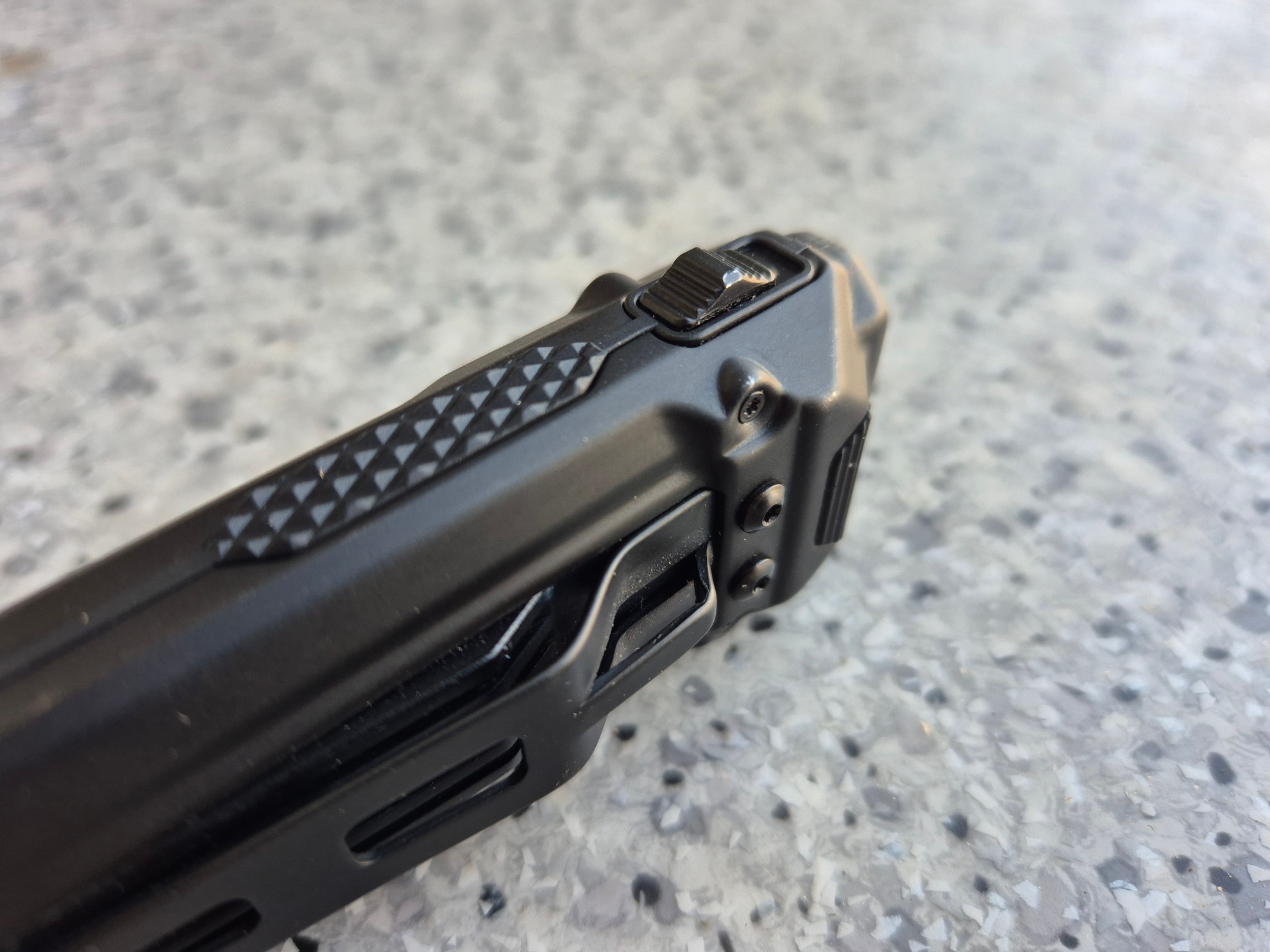
An additional switch on the flashlight is a mechanical lock, operated via a slider with the proprietary name Rapid Lock. You can set it to lock both buttons or allow the Search mode to be activated even when the lock is engaged. The configuration sequence is so convoluted that I managed to change the lock setting only once, despite many attempts to repeat the magic sequence of clicks. The slider itself, however, works very securely and is an excellent locking mechanism.
The flashlight should withstand a one-meter drop onto a hard surface and meets the IP54 standard, which means it is not resistant to submersion. A pity, considering the ruggedness of its construction. That said, it works perfectly well in heavy rain – I confirmed this firsthand during a nighttime mountain storm.
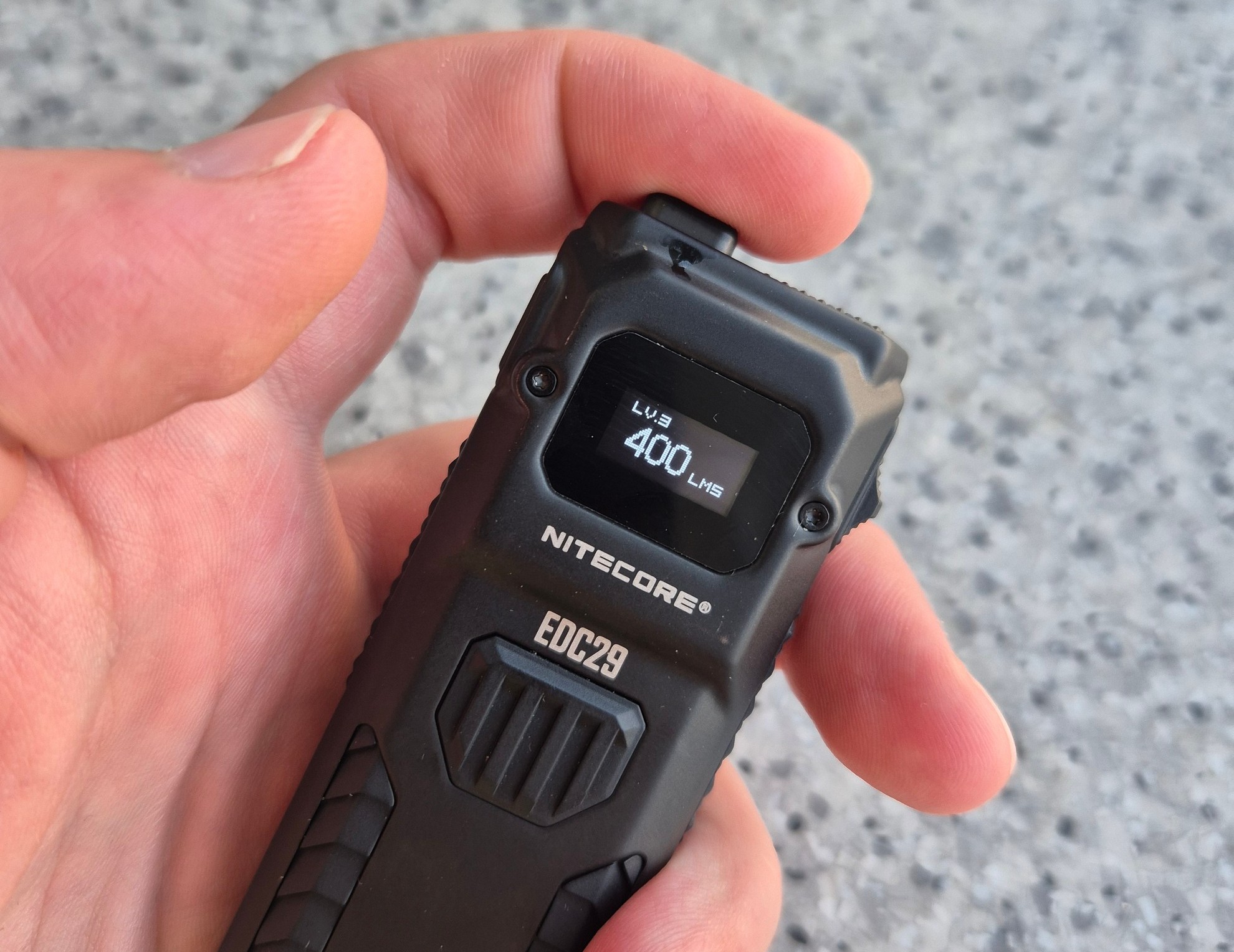
In theory, the big change here is the addition of an OLED screen on the front of the flashlight. The screen cycles through various views, showing the battery voltage, lock status, the currently selected mode along with its lumen output, the estimated runtime for the selected mode, or a time bar counting down until the high-output modes switch off.
It’s a very nice addition, but realistically, apart from the precise runtime estimates, all the other functions are handled just as well by the 8 LEDs on the EDC25 model. Nevertheless, since the EDC29 is positioned in a higher segment, I understand that the screen adds to the premium feel of the product – and it does this job very effectively.
Which one to choose?
Choosing the EDC25 as a daily companion seems the more logical option. It offers excellent lighting while keeping the weight surprisingly low. Securely clipped in a pocket, it can live comfortably alongside your favorite folding knife, always within easy reach. On the downside, the lack of a pre-selectable lighting mode before switching it on is a bit annoying. Another potential issue is the lock, which, once engaged, requires a long sequence to disengage, something that could be critical in certain situations.
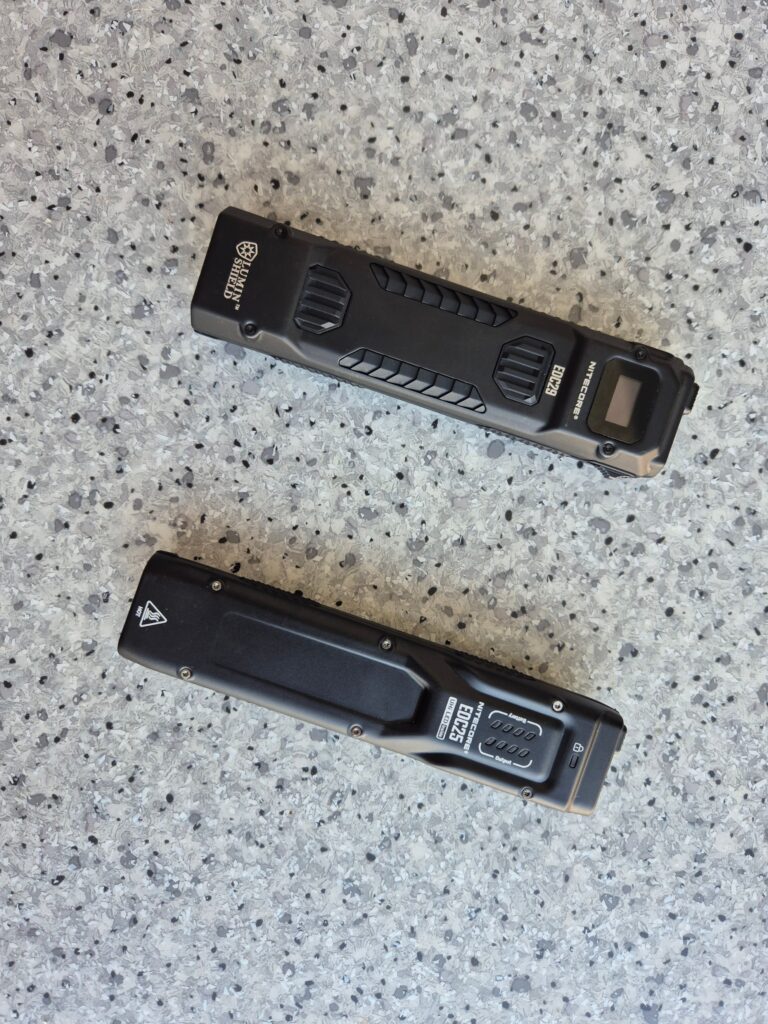
Both flashlights are compact, and their build quality leaves no doubt about the product’s durability.
The EDC29 is, in theory, a solution to the EDC25’s shortcomings. The convenient slider lock and the ability to preselect the lighting mode are desirable features. However, the EDC29 is much heavier and bulkier, meaning there’s sometimes simply no room for it in your pocket. In everyday use, the differences in light quality are practically negligible; the EDC29 only gains an edge in Turbo, Search, and LuminShield modes. If you always wear cargo pants with huge pockets or are accustomed to carrying a lot in your pockets, the EDC29 will likely be a good choice, as weight is its biggest drawback.
From my perspective, both products have their place. I’m far from taking an uncritical approach to practical testing. I could, of course, include the manufacturer’s dry data about ultra-stable LED frequency, metal reflector finishes, and patented overheating protection technology. But that doesn’t really matter much to us, the users.
Both the EDC25 and EDC29 are solid designs that aim to solve the problem of “a great flashlight you didn’t happen to bring,” and they do it quite well.
Our thanks to NITECORE for providing the EDC25 and EDC29 flashlights for testing.
Sponsored collaboration. Product testing is conducted independently, and all opinions are solely those of the author. The advertiser has no influence over the content of the review.