














Border Patrolling
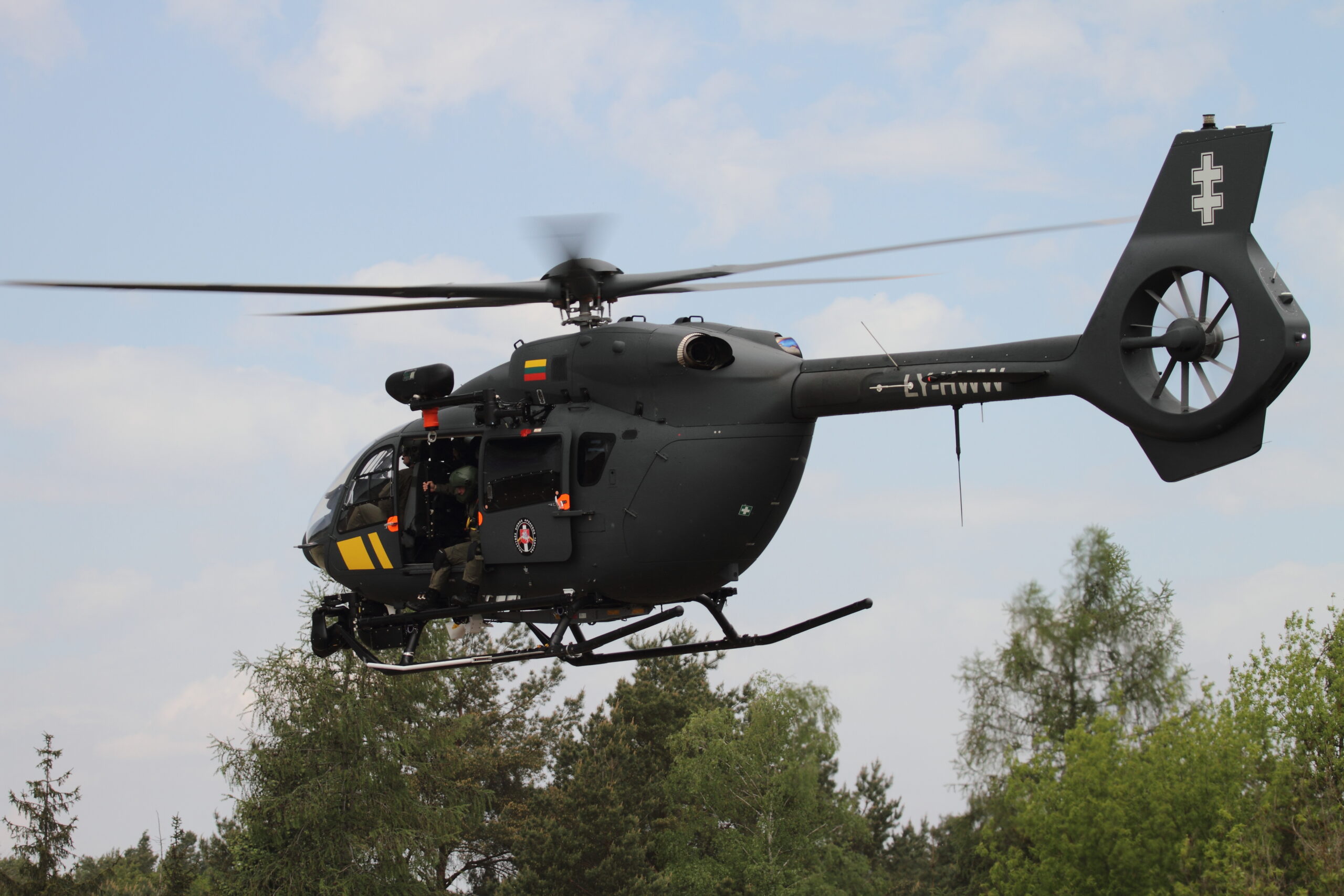
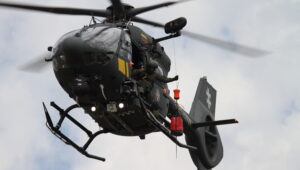
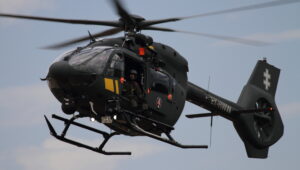
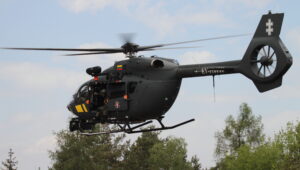
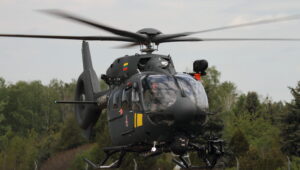
Due to their limited resources, Lithuanian services try to make maximum use of the capabilities of the equipment they have. A good example of this is the H145M operated by Lithuanian border guards. The helicopter’s equipment includes many components that enable it to carry out a wide variety of missions extending beyond standard VSAT operations.
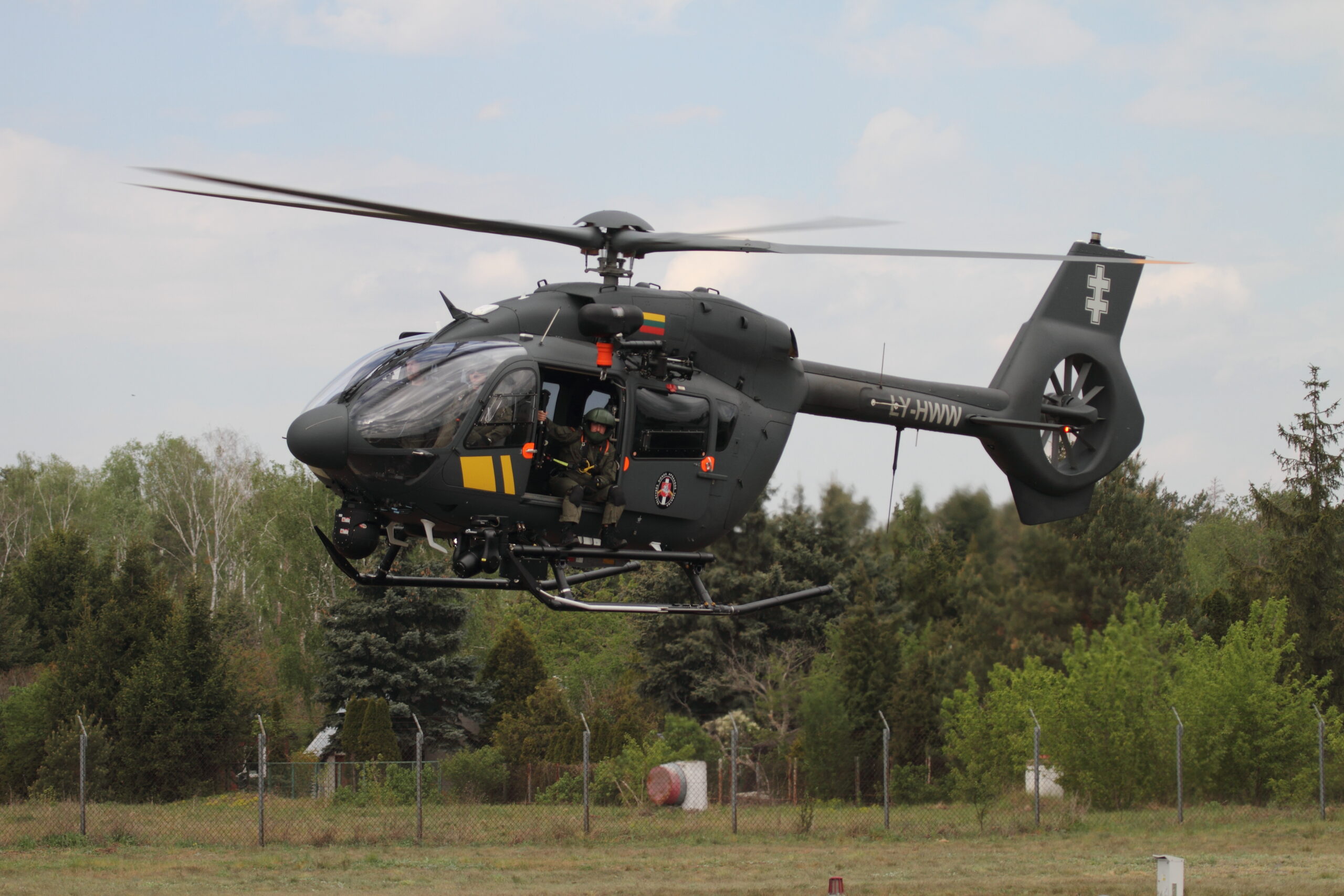
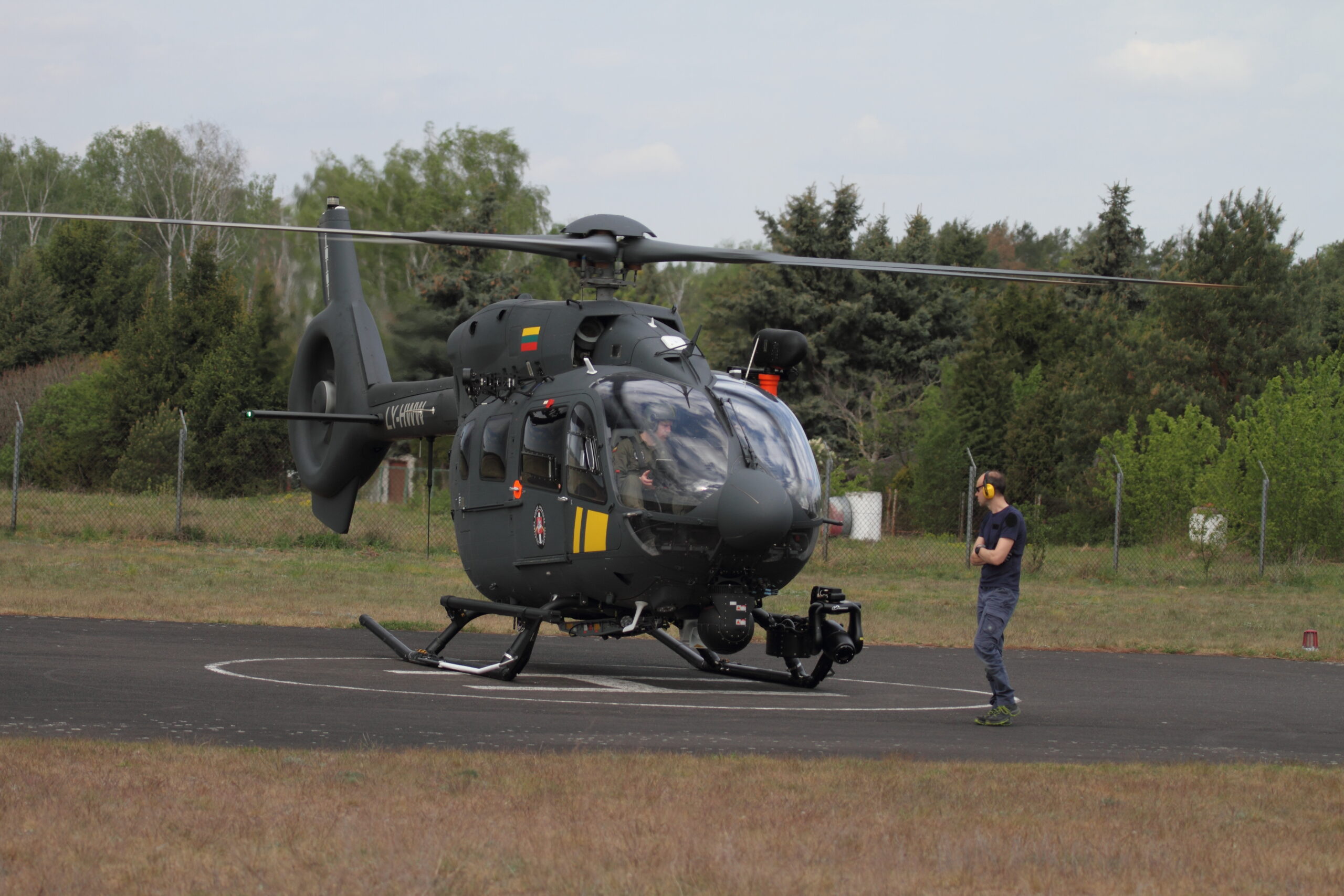
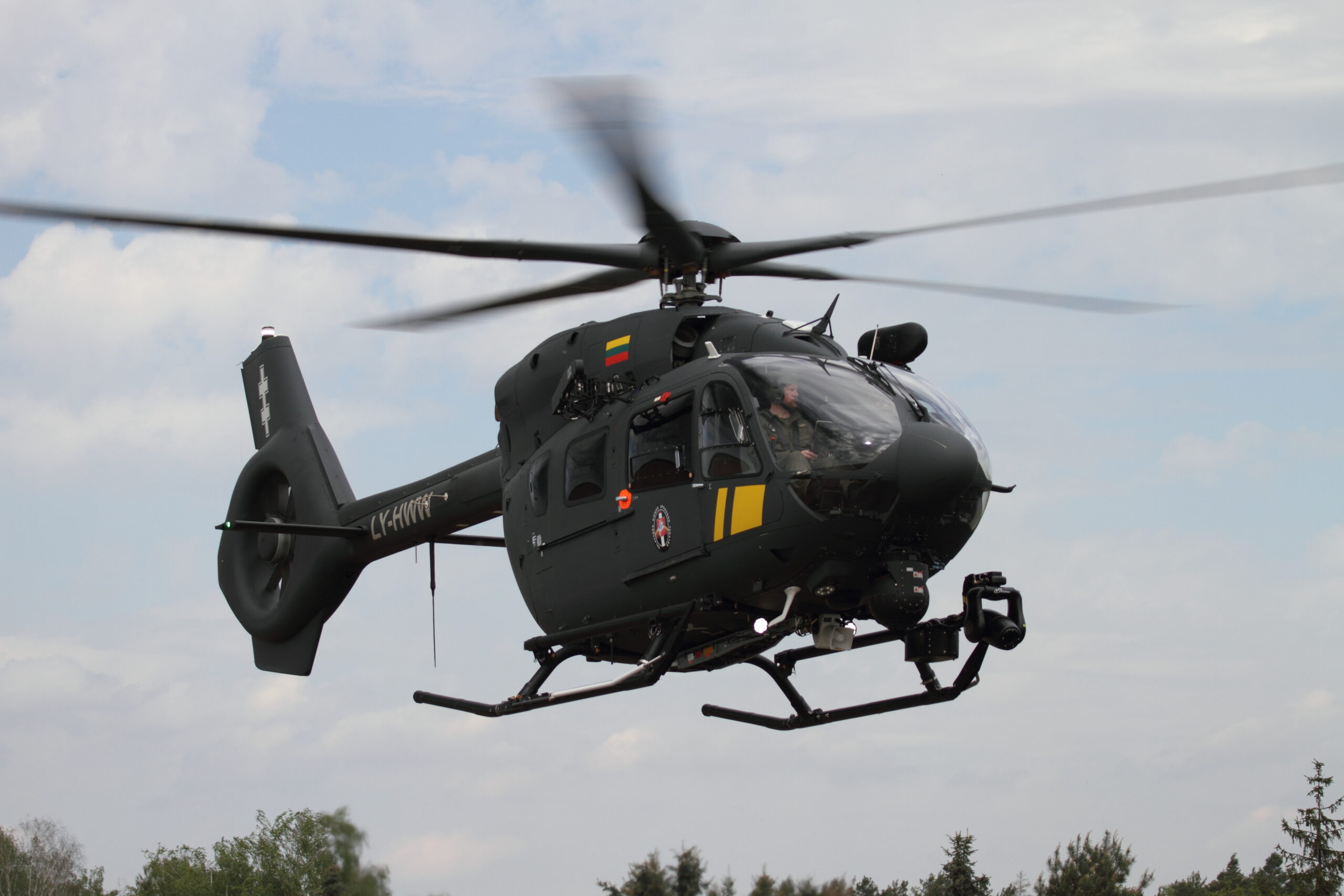
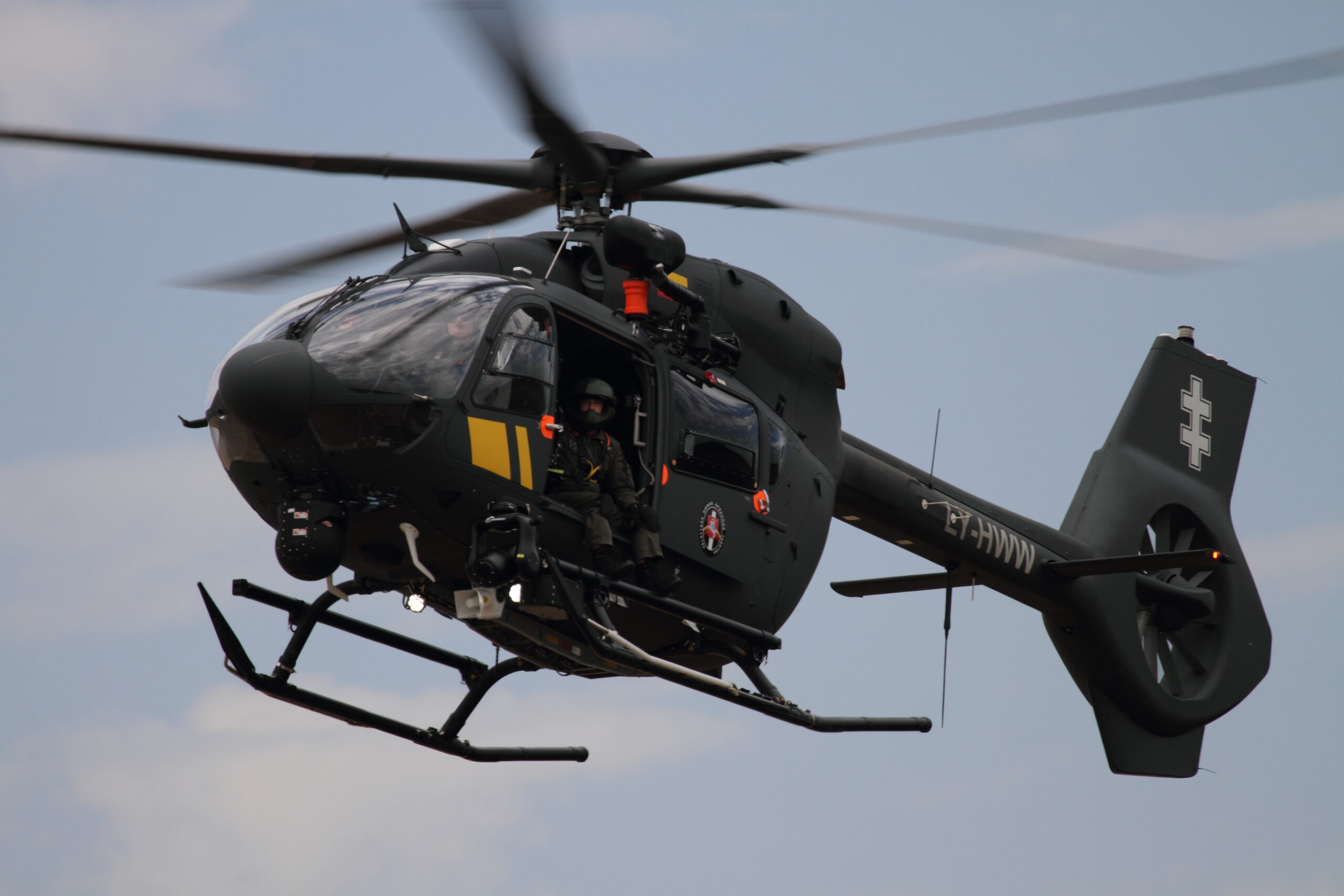
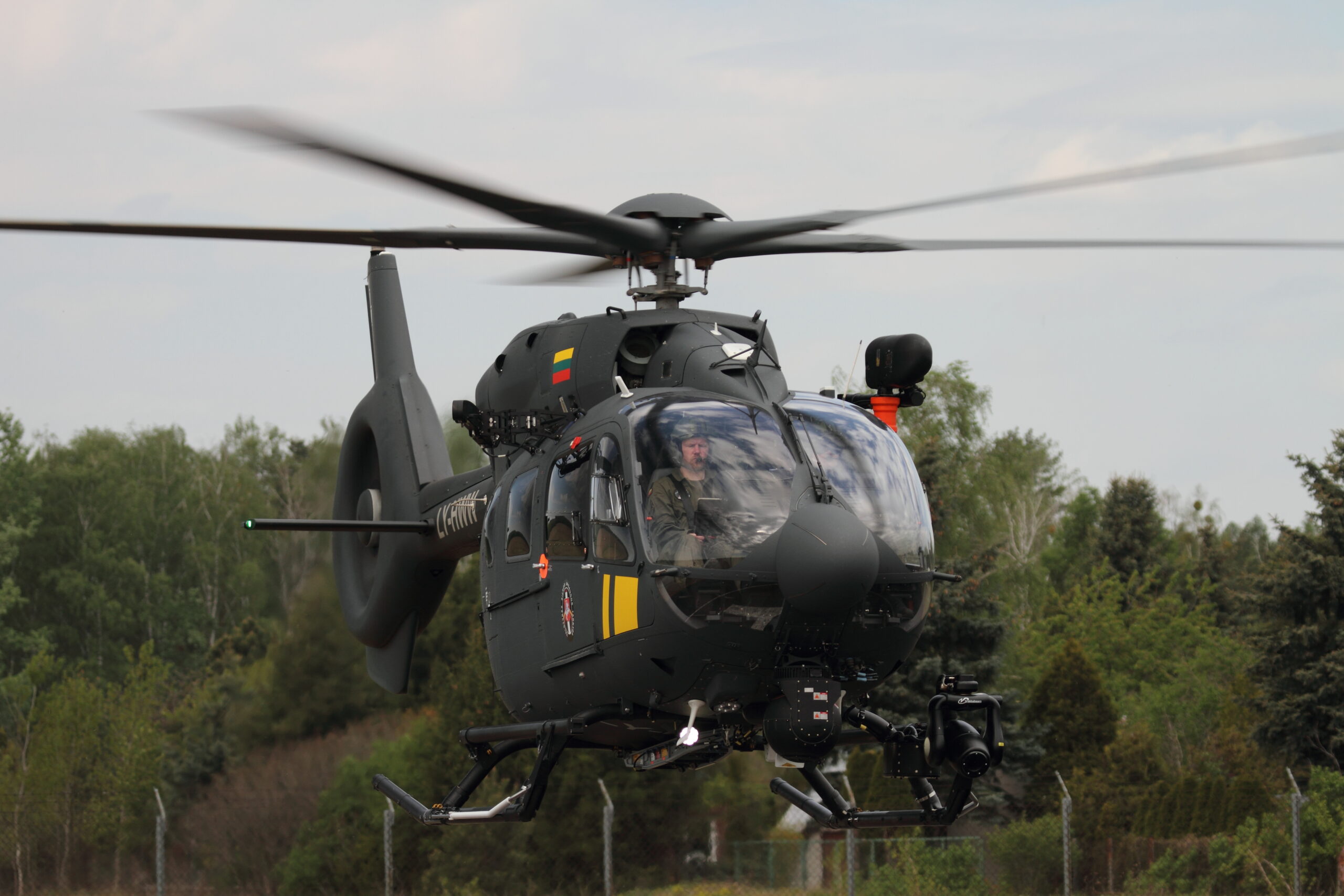
H145M helicopter belonging to Valstybės Sienos Apsaugos Tarnyba, the Lithuanian State Border Guard Service
The Lithuanian State Border Guard Service has three H145M helicopters in the latest version, with a Fenestron and a new main rotor, as well as one slightly older aircraft with a conventional tail rotor. The main task assigned to the H145M is, of course, patrolling state borders. For this purpose, each helicopter is equipped with a FLIR turret mounted under the forward fuselage, allowing observation at any time of day and in various weather conditions. Additional equipment also includes a searchlight mounted on the left landing gear. This is complemented by a loudspeaker enabling one-way communication with people on the ground, for example to issue instructions to individuals crossing the border illegally.
Non-Standard Tasks for Border Guards
The Lithuanian Border Guard’s H145M helicopters perform many more functions, however. One of them is VIP transport. Among the more interesting missions carried out by these helicopters are spectrometric flights conducted to measure gamma radiation. These are performed in the area of the nuclear power plant near Ignalina, which is currently being decommissioned. Spectrometers used for radiation measurements are then installed in the cargo cabin. Another unusual task for Border Guard helicopters is the transport of organs for transplantation.
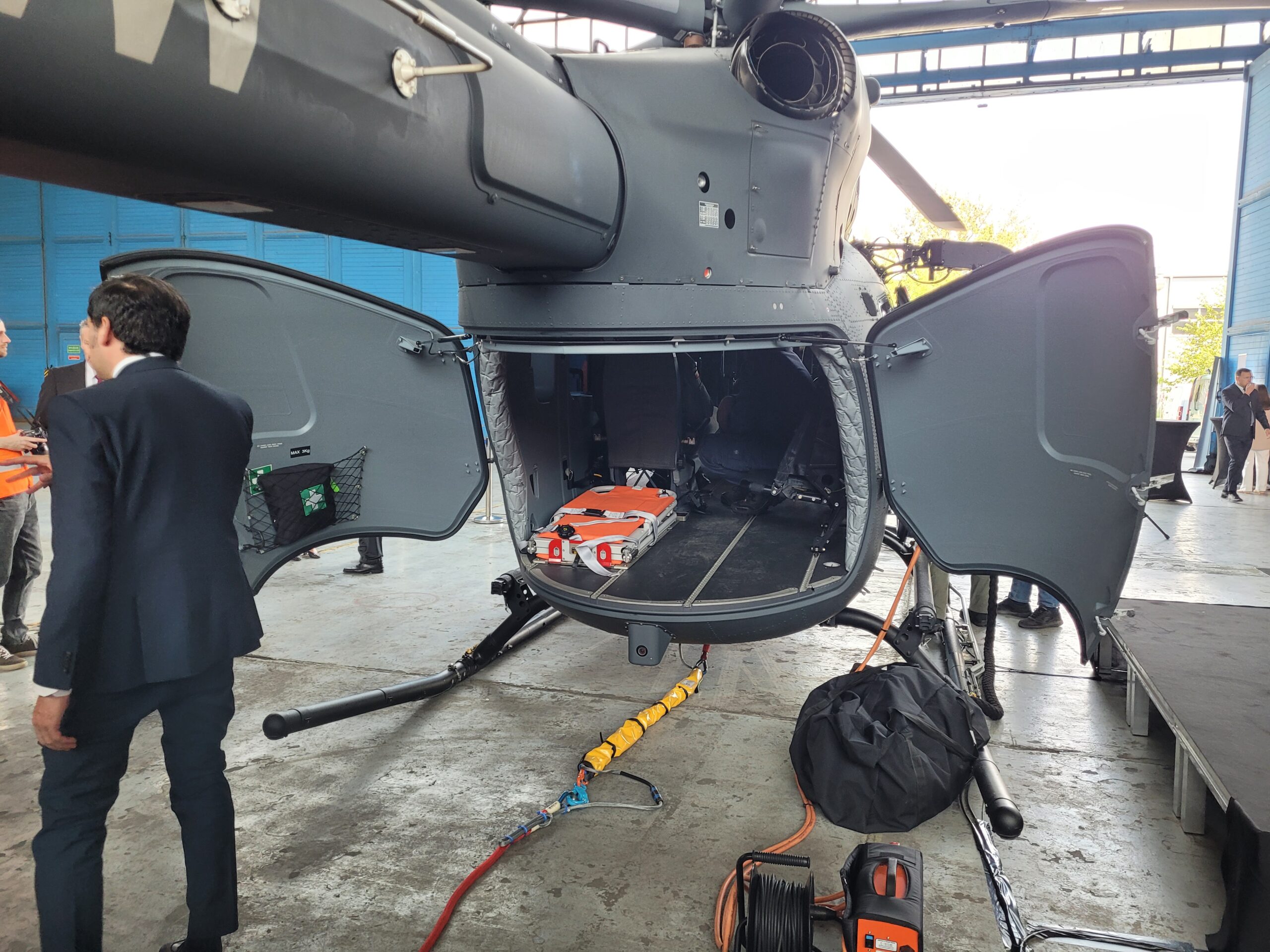
Doors in the rear section of the fuselage provide easy access to the rear part of the helicopter’s cargo cabin
A Wide Range of Rescue Missions
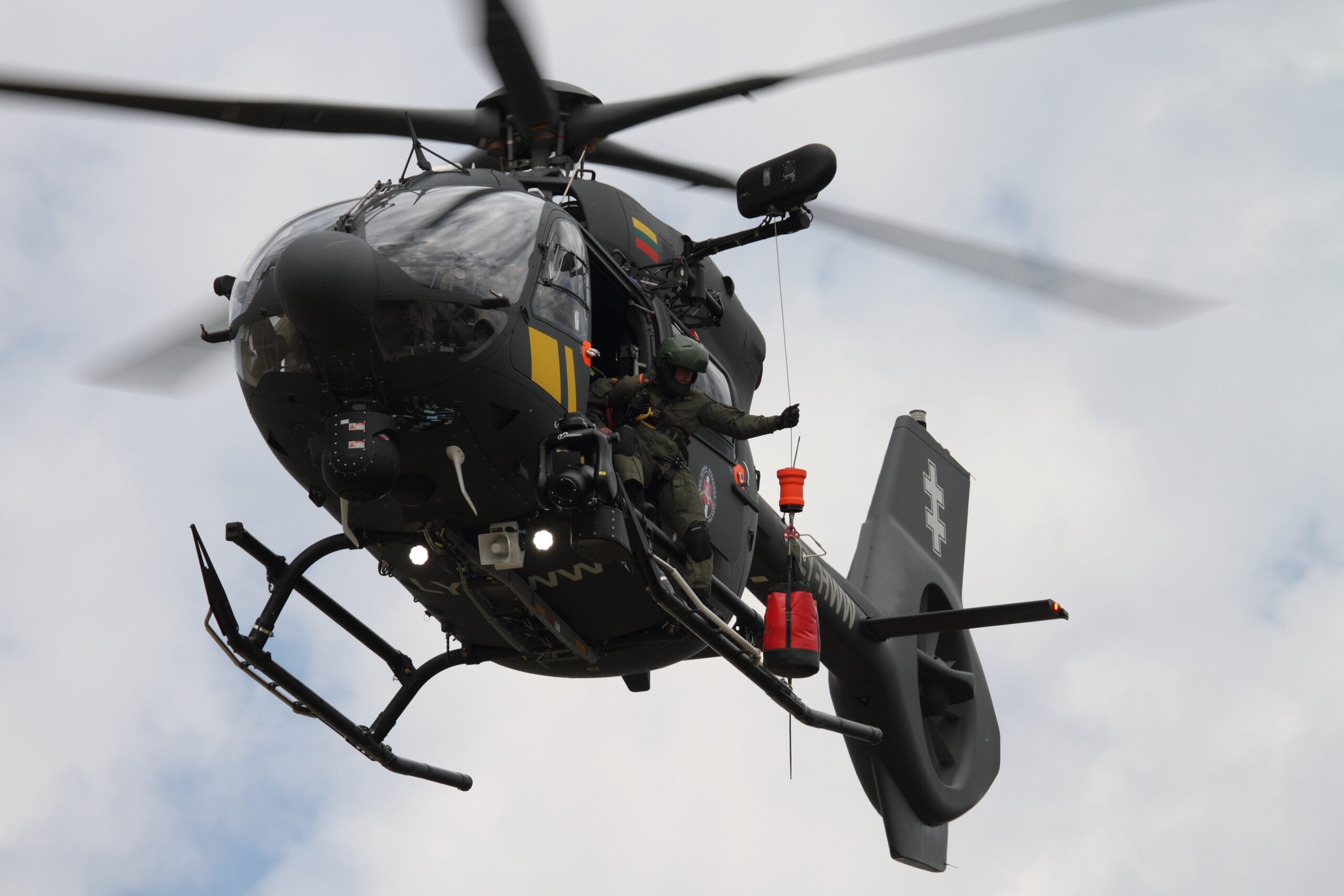
Lithuanian border guards also use their H145M helicopters for rescue missions. SAR missions are conducted both at sea and over land. The FLIR turret is invaluable in these tasks. The helicopter can also be equipped with a fast-rope system and a hoist.
As Lithuanian pilots emphasize, their role is mainly limited to searching for missing persons, castaways, or people injured in accidents. They do not provide assistance to casualties. The limitation, however, is not the helicopter’s capabilities, but the fact that VSAT helicopter crews do not include paramedics, meaning there would be no one to provide medical assistance to a casualty picked up by the helicopter.
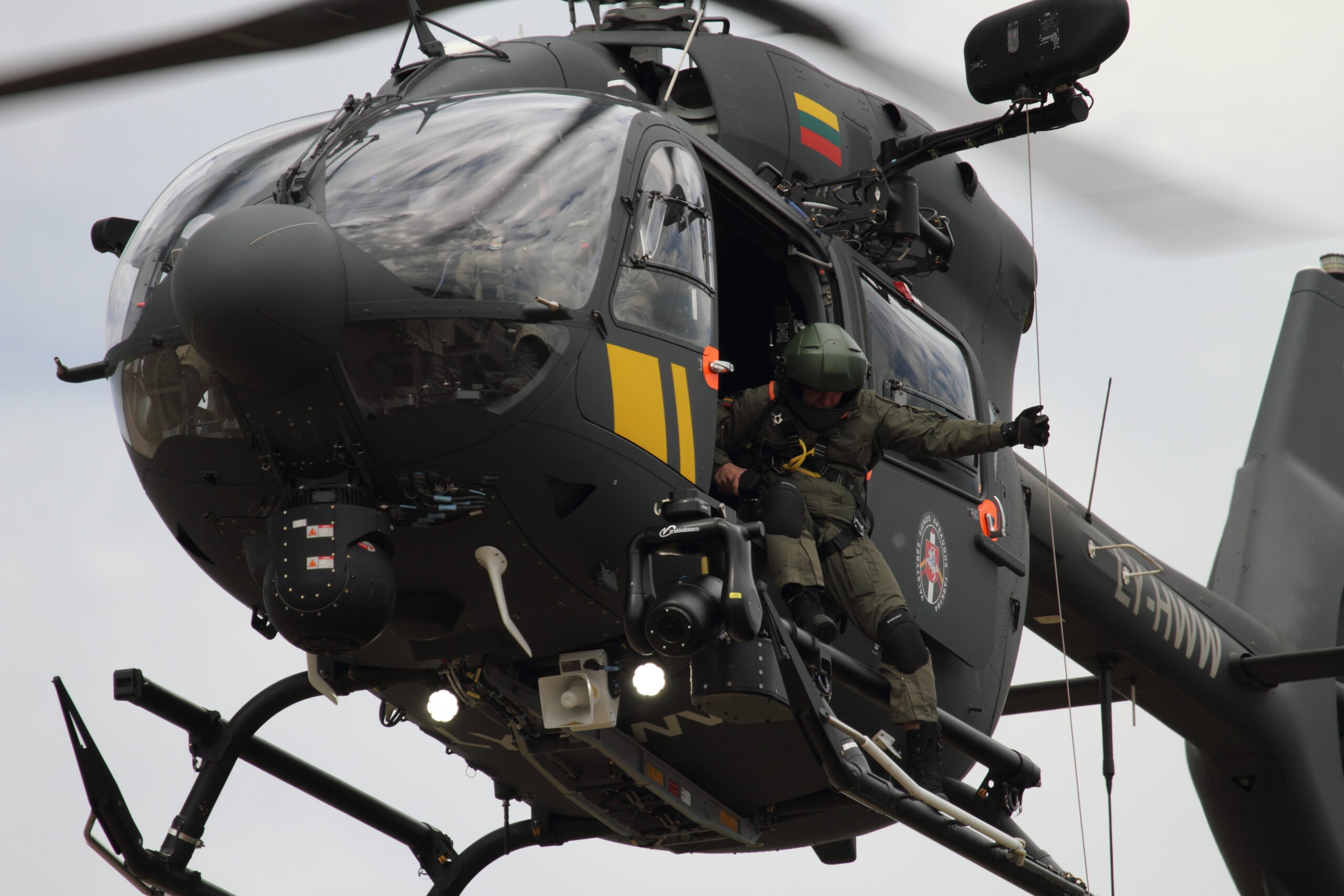
A special beam is mounted under the fuselage of the H145M helicopter to carry external loads
For patrol missions, the H145M helicopter can be equipped with an additional fuel tank placed in the cargo cabin. The tank is inserted through the doors in the rear section of the fuselage. The additional fuel increases flight endurance by one hour.
The H145M can carry loads on an external hook. For this purpose, a special additional beam is installed under the fuselage, to which the hook is attached. VSAT aviators use this system, among other things, to carry a so-called Bambi Bucket, a flexible water container used for firefighting. Lithuanian border guards also carry out firefighting missions.
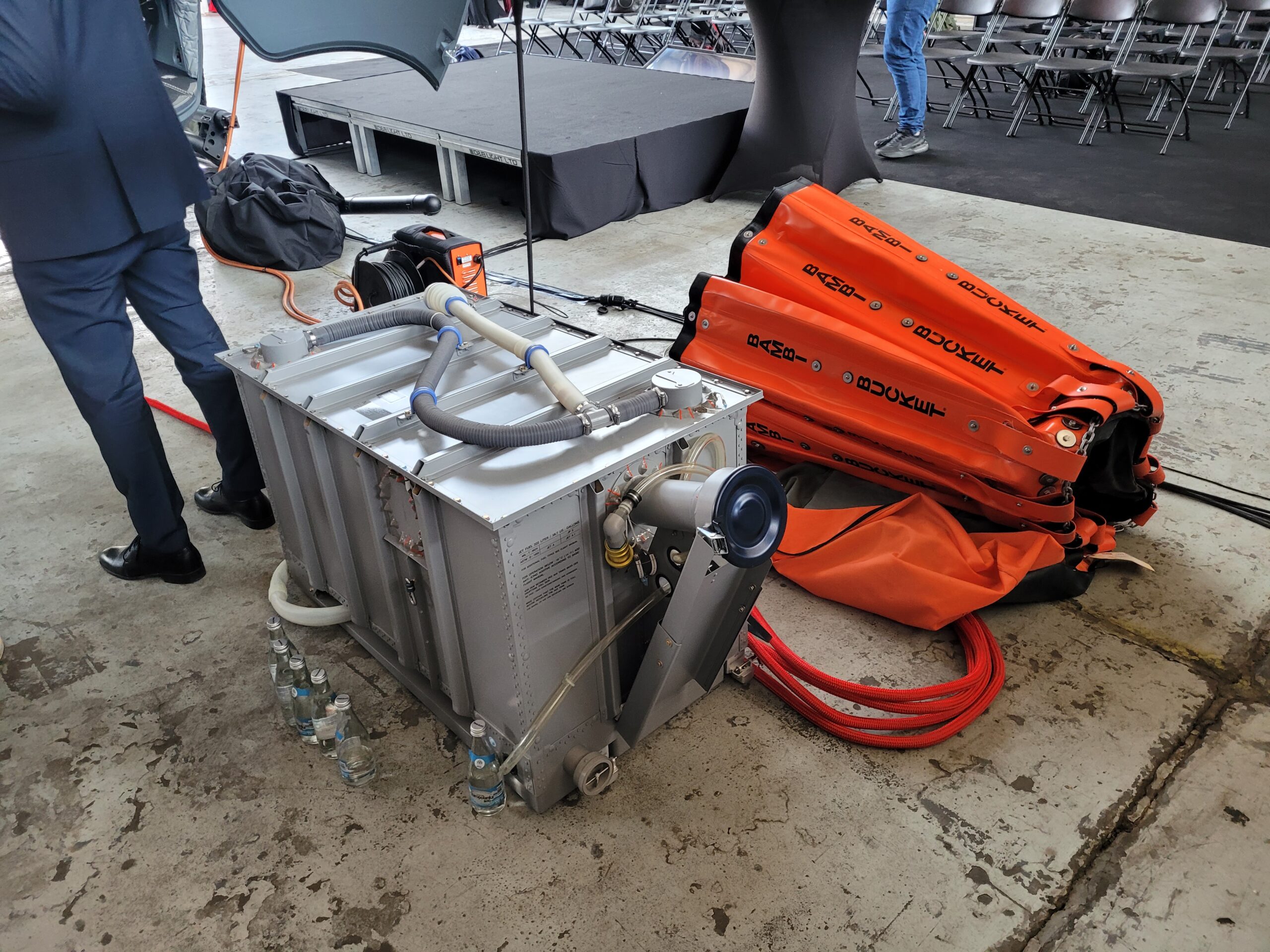
Additional equipment increasing the helicopter’s versatility: an auxiliary fuel tank for installation in the cargo cabin and a flexible water container for firefighting, the so-called Bambi Bucket
Support for Special Operations Units
Lithuanian H145Ms are also used to support public order operations. In addition to patrolling designated areas, the helicopters are used to transport special operations unit operators. This includes both law enforcement personnel and military special operations operators. For this purpose, a fast-rope system for insertion from the helicopter is a useful piece of equipment. Since different formations operate in teams of varying sizes, the inserted element usually consists of four to six soldiers or officers.
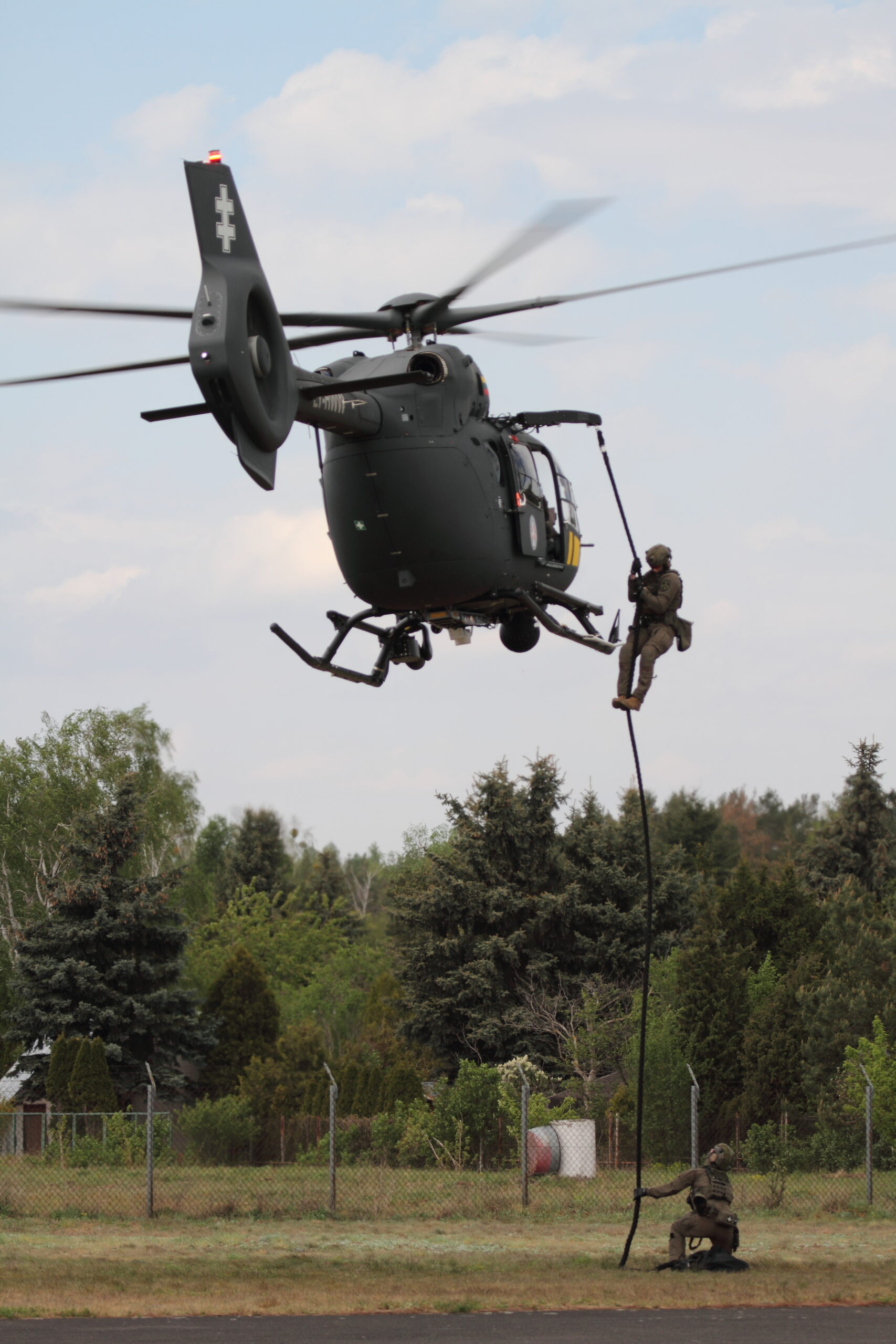
Fast-rope insertion
Lithuanian H145Ms can also carry weapons on external hardpoints mounted on the sides of the fuselage. Helicopters of this type can be armed with air-to-ground guided missiles, laser-guided rockets, or missiles for engaging aerial targets. They can also be fitted with pods containing 12.7 mm machine guns or 20 mm cannon, as well as pods with 68/70 mm unguided rockets. According to the mechanics who service VSAT helicopters, installing the weapon hardpoints takes about one hour.
Pilot Assistance
Pilots emphasize the advantages of the H145M helicopter, including the many useful functions of its automatic flight control system. It assists pilots in many standard phases of flight by automating certain tasks, such as maintaining a hover. Pilots also highlight the intuitive data display system using multifunction liquid-crystal displays. Flight parameters are presented in such a way that, for example, the pilot does not have to continuously monitor the detailed values of engine or transmission system parameters. The data are displayed in colors corresponding to the operating ranges of the helicopter’s components.
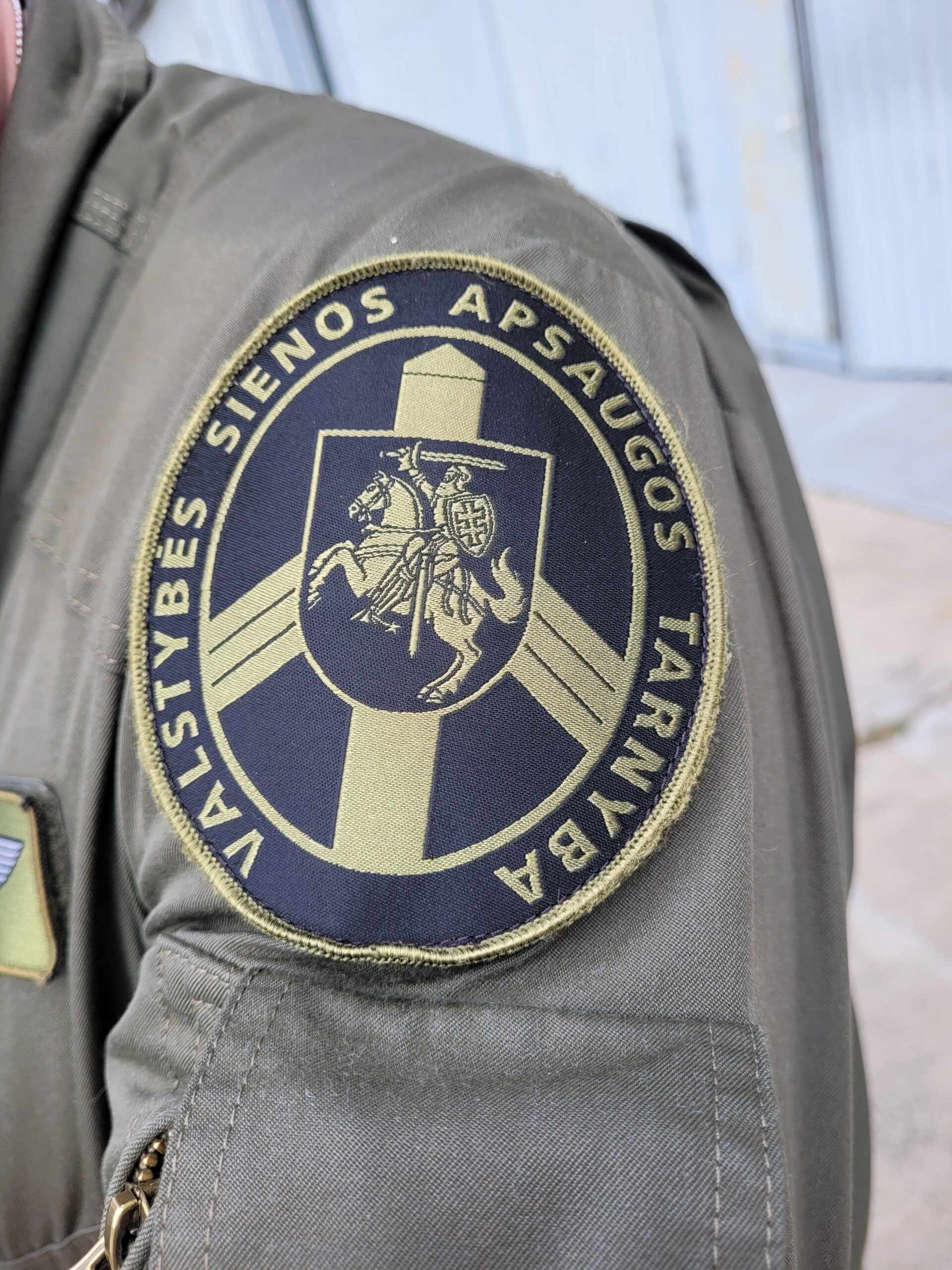
Patch worn by the flying personnel of the Lithuanian State Border Guard Service
H145M helicopter cockpit
Depending on the complexity of the tasks, VSAT conducts flights with either one or two pilots. During routine operations, the H145M can easily be flown by a single pilot, even under IFR procedures, meaning flights without visual reference to the ground. However, due to the high complexity of certain missions, when pilots must not only fly the helicopter itself but also coordinate with the ground component of the mission, the crew includes two pilots.
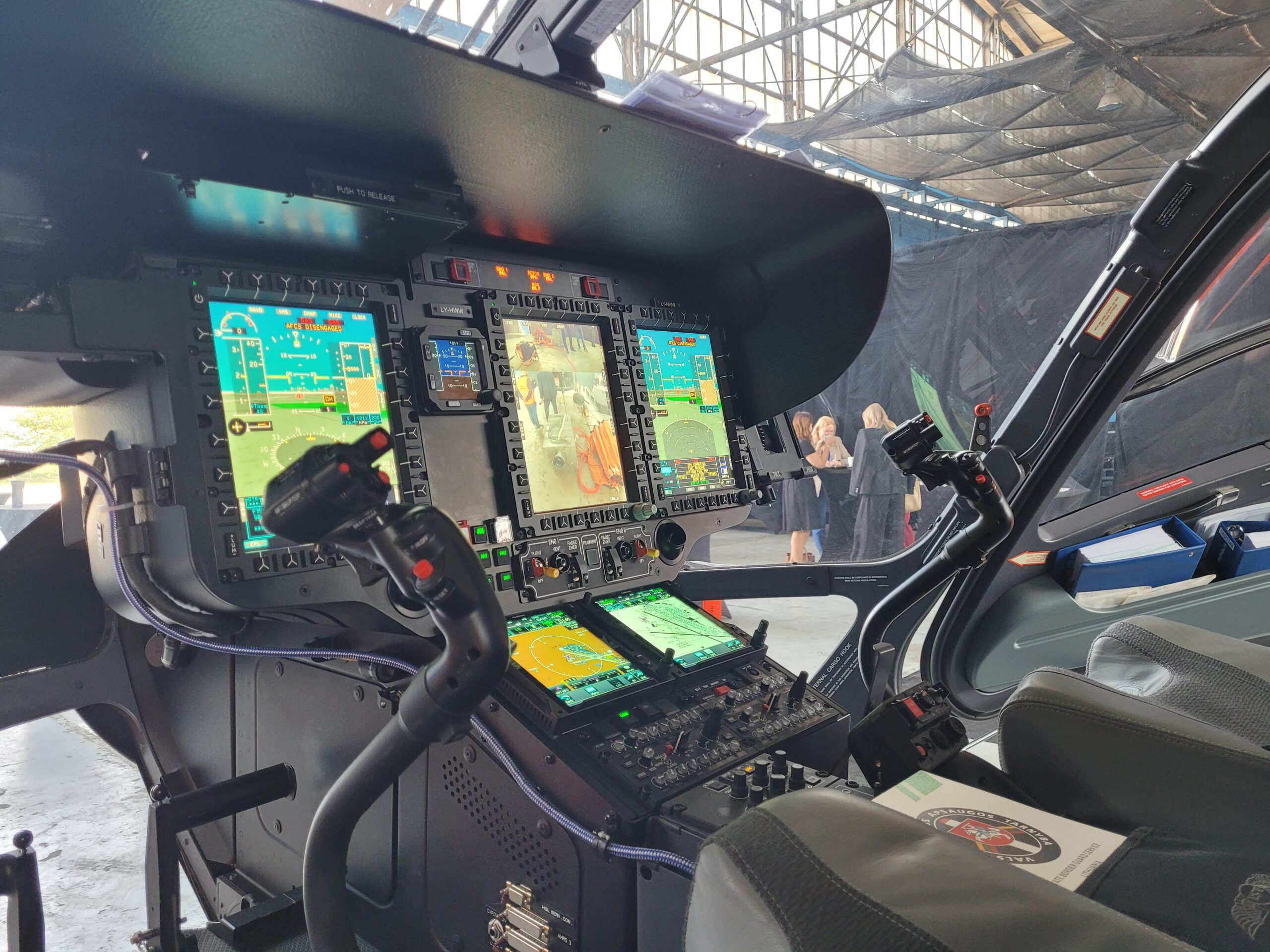
H145M helicopter cockpit equipped with multifunction liquid-crystal displays / Photos: Grzegorz Sobczak, MILMAG