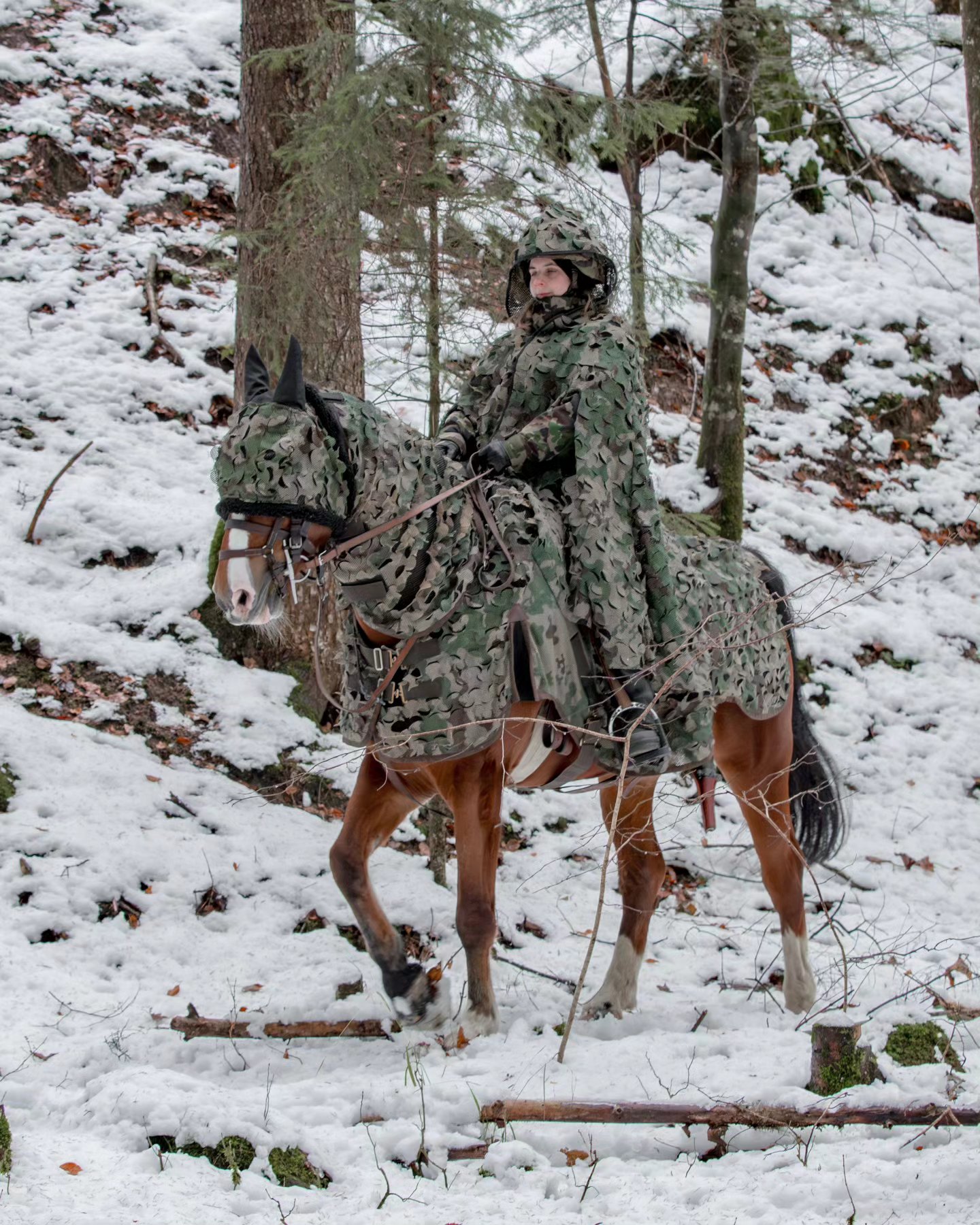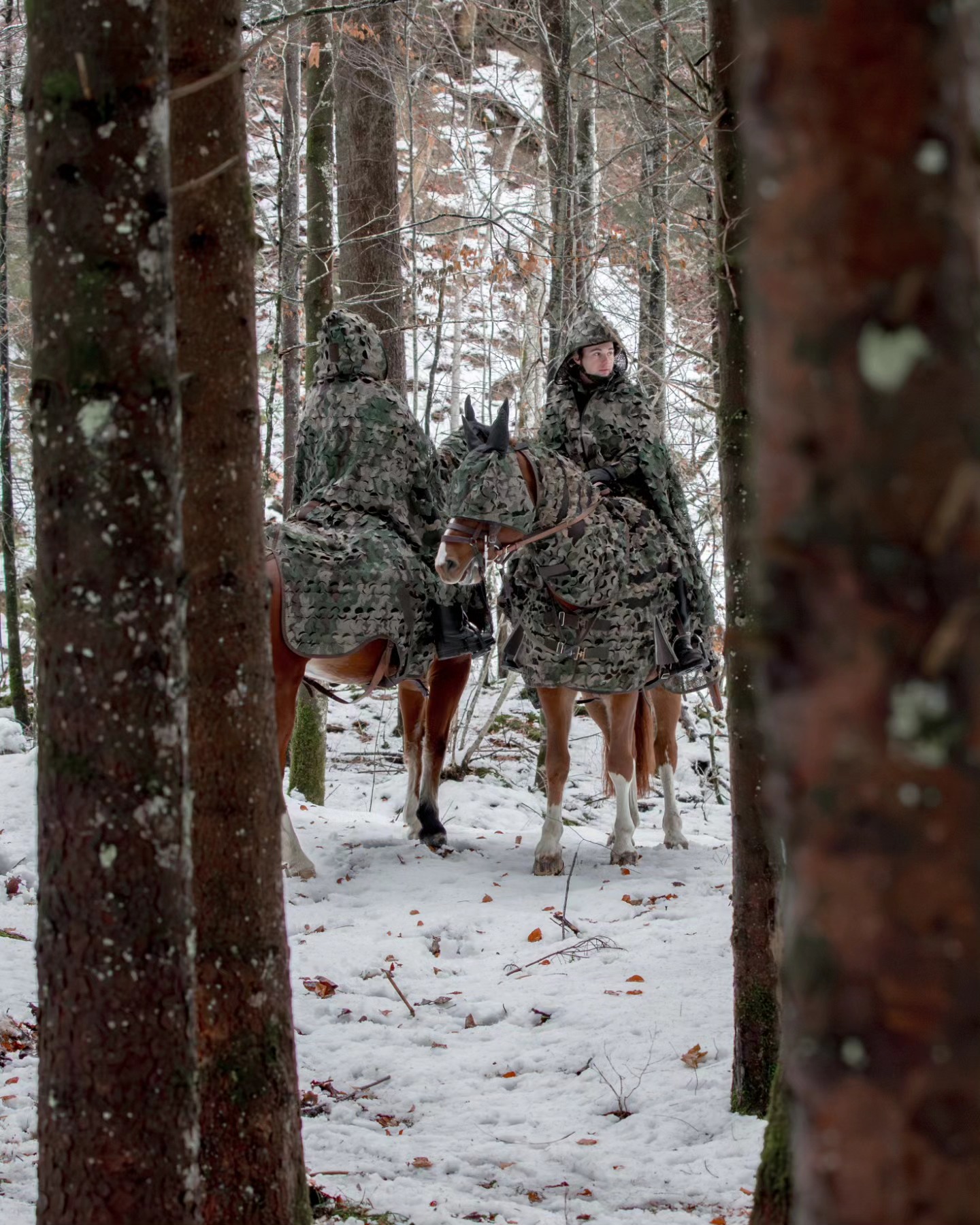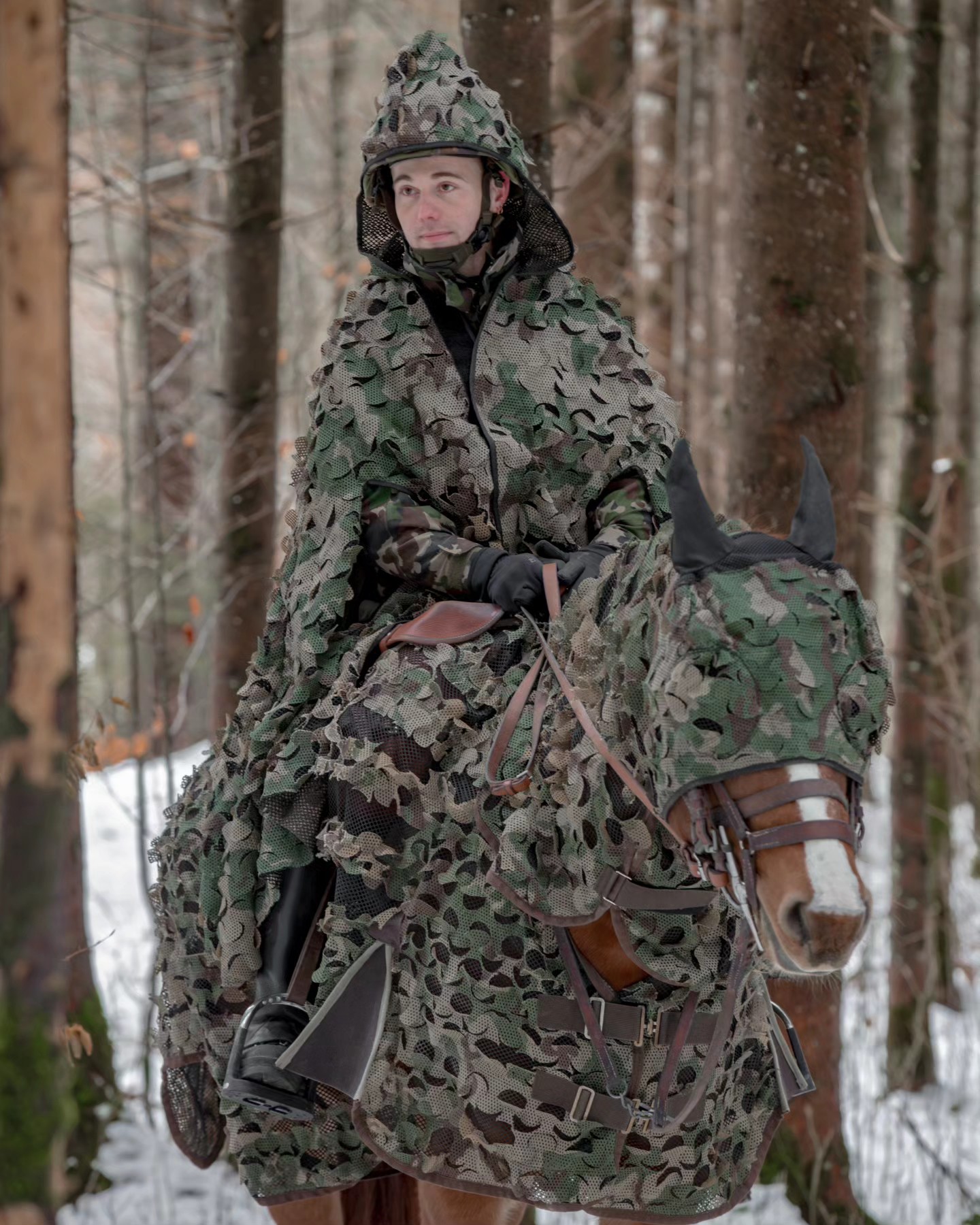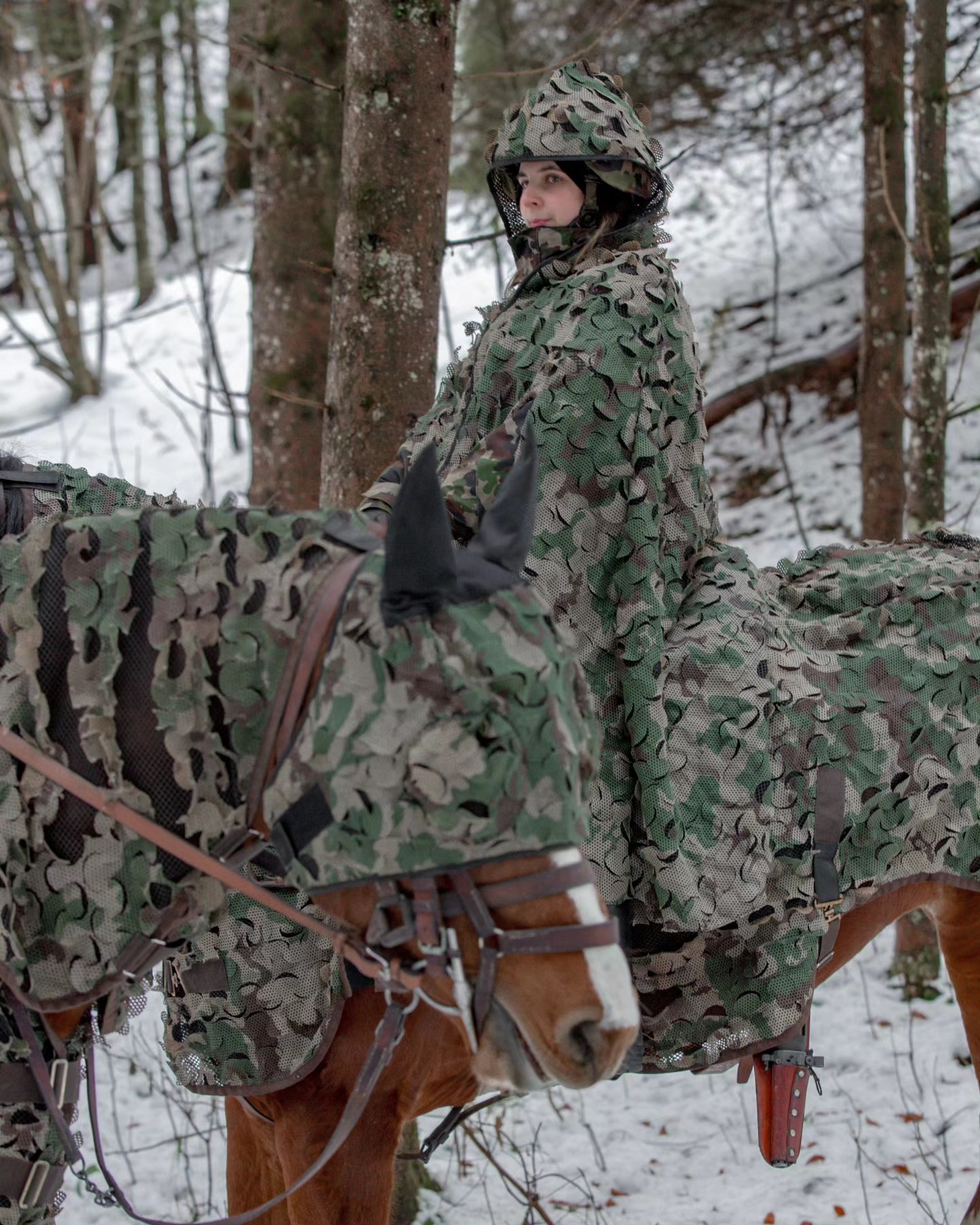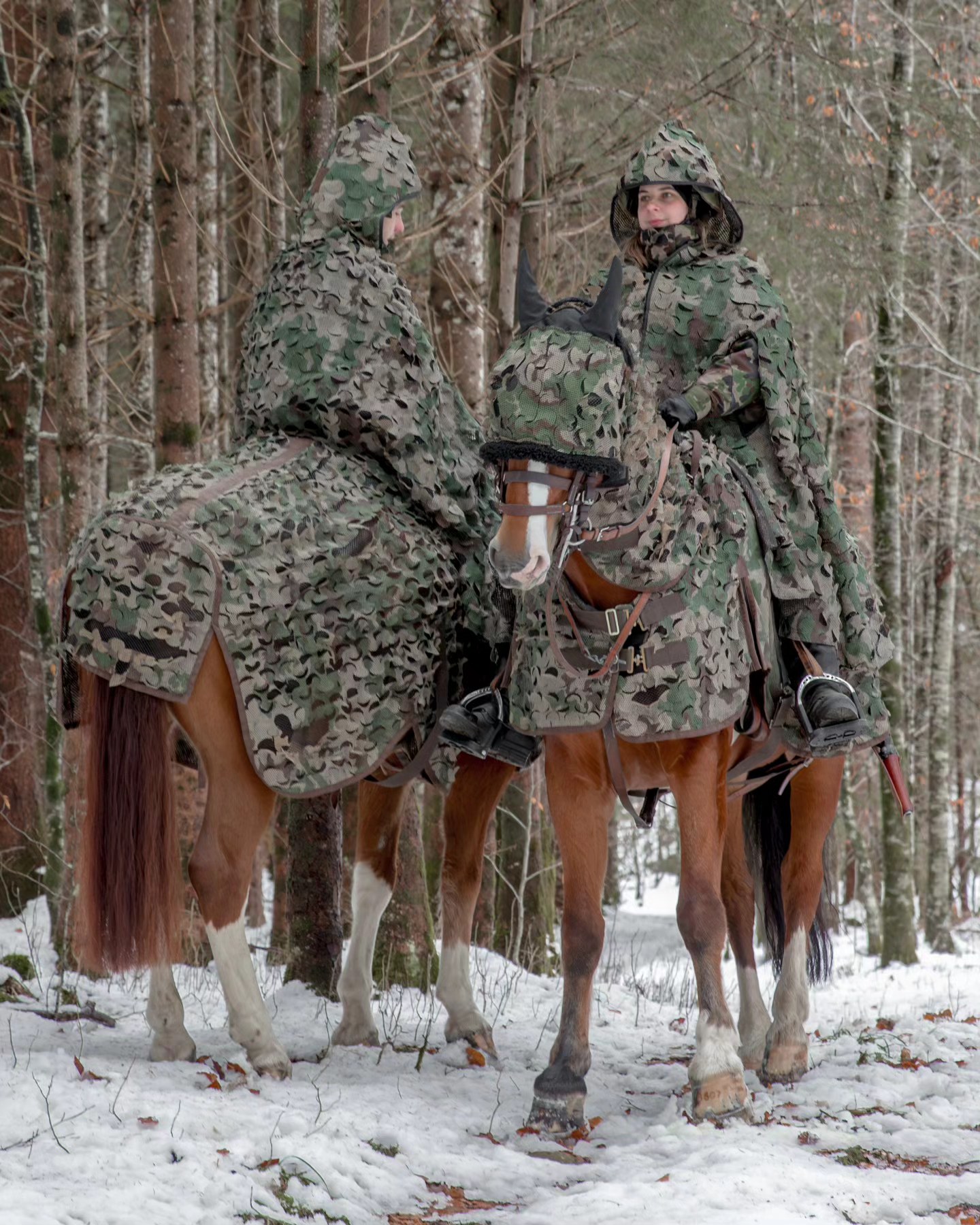














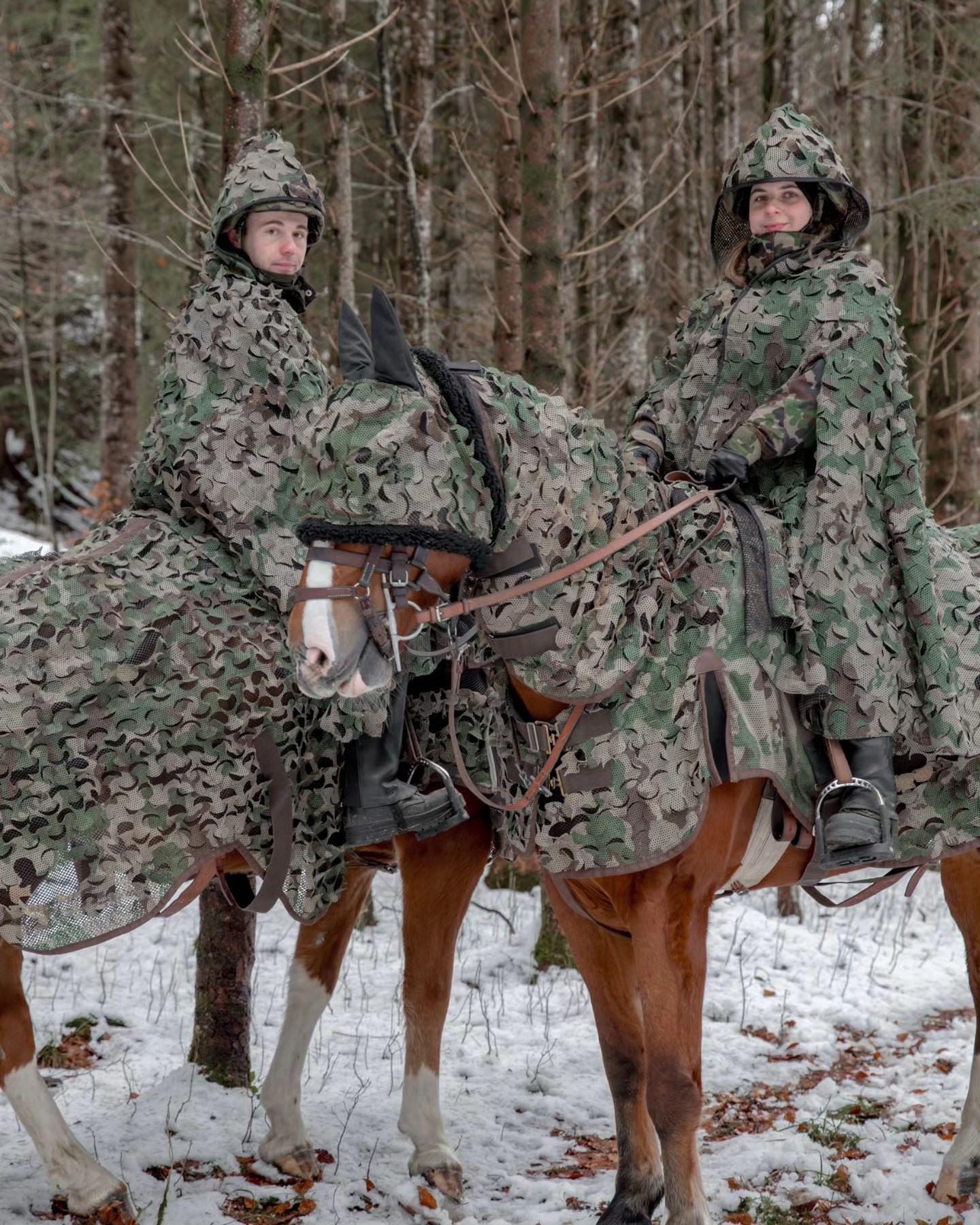
On Friday, 13 February 2026, the social media profile of the 13th Veterinary and Military Animals Unit of the Swiss Armed Forces (Veterinär- und Armeetiereabteilung 13, Vet u A Tiere Abt 13) presented a new multispectral camouflage system, Tarndecken, for patrol horses and their riders.
 Photos: Vet u A Tiere Abt 13 via Facebook
“To see without being seen. That is also one of the distinctive features of patrol riders! Thanks to the multispectral camouflage blanket, it is possible to conceal oneself both from unwanted observers and from thermal imaging cameras,” says a short note on Facebook.
According to the published photographs, mounted patrols (Patrouillenreiter) and mules have been equipped with extended saddle blankets (camouflage covers) protecting the torso, neck and head, except for the muzzle, with cut-outs for the eyes. The legs, bellies and parts of the tails, apart from the base, remain uncovered. The soldier-riders, in turn, received hooded capes covering almost the entire silhouette, except for the face, hands and riding boots.
Importantly, the sets are made of knitted fabric providing protection across multiple spectra – visible light, thermal imaging and night vision. The presented camouflage matches an alpine forest/mountain pattern, though not a winter one, despite the current season.
This forms part of the broader Multispectral Camouflage System (MSTS, Multispektrales Tarnsystem) being introduced by the Federal Office for Defence Procurement armasuisse under a contract concluded in November 2025.
As for the use of horses and mules in the armed forces, Switzerland remains one of the few countries maintaining specialized animal units, reflecting the country’s predominantly mountainous terrain. In 2024–2025, new animals were acquired: 26 horses and 2 mules, selected after rigorous testing of around 75 animals at the National Horse Centre in Bern. Training lasts 12 weeks.
Within the Schweizer Armee, pack animals are used to transport supplies, ammunition and equipment, as well as to evacuate casualties in the high Alps – areas inaccessible to helicopters, off-road vehicles, ATVs or bicycles – supporting mountain logistics units (Gebirgstruppen, Traintruppen). The most commonly selected breeds include the Freiberger (Franches-Montagnes), a light mountain draft horse known for endurance and calm temperament, the Swiss Warmblood, and mules, which are particularly resilient in harsh conditions.
It is worth noting that Poland’s Territorial Defence Forces have also established mounted subunits, which proved particularly effective during patrols along the eastern border, in the marshy areas of the Bug River, especially within the 19th Nadbużańska Brigade and the 2nd Lublin Brigade.
Beyond Switzerland and Poland, horses and mules are also employed in difficult mountainous terrain by the armed forces of Austria, Chile, China, India, Germany, Russia (including recently on the Ukrainian front), the United States and the United Kingdom.
Photo Gallery