

































Medium Satellite Terminals
The Medium Satellite Terminals will be used to secure communications and IT systems for the purposes of directing national defense and the wartime command system, as well as to meet the needs of the Polish Armed Forces in the field of satellite communications supporting the operation of Polish Military Contingents, EU Battlegroups and the SON.
The Medium Satellite Terminals will be intended to provide satellite communications using FDMA (SCPC) and TDMA (MF-TDMA) techniques in full-mesh, star, hub-and-spoke and mixed-topology networks, as well as point-to-point terminal links to maintain inter-node communications.
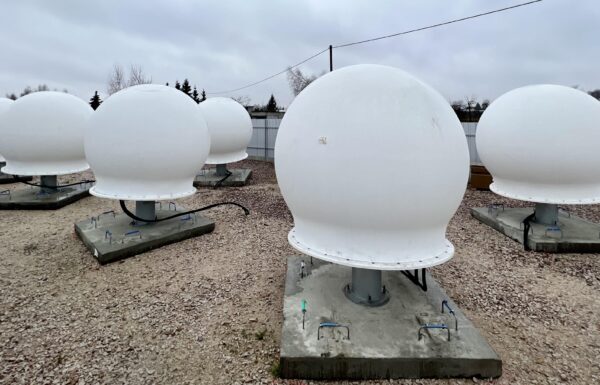
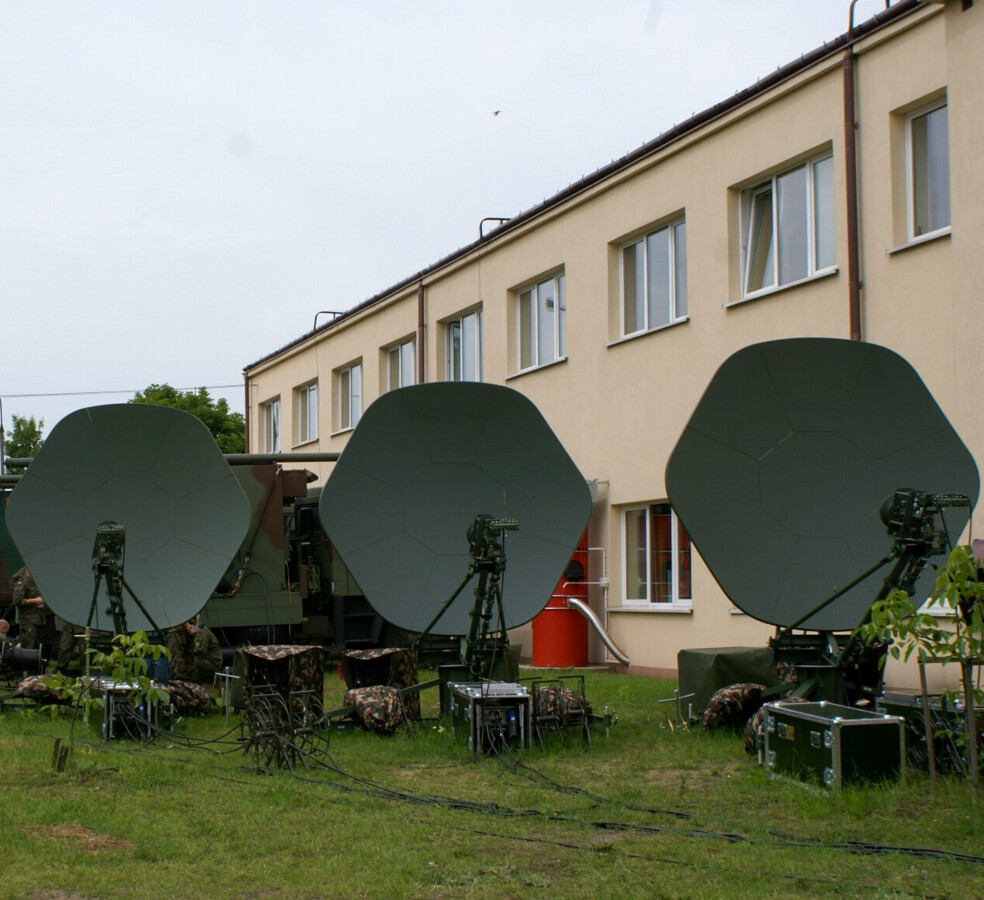 Portable And Transportable Satellite Terminal PPTS-1.8 v.2 / Illustrative Photo: Wojskowe Zakłady Łączności No. 1
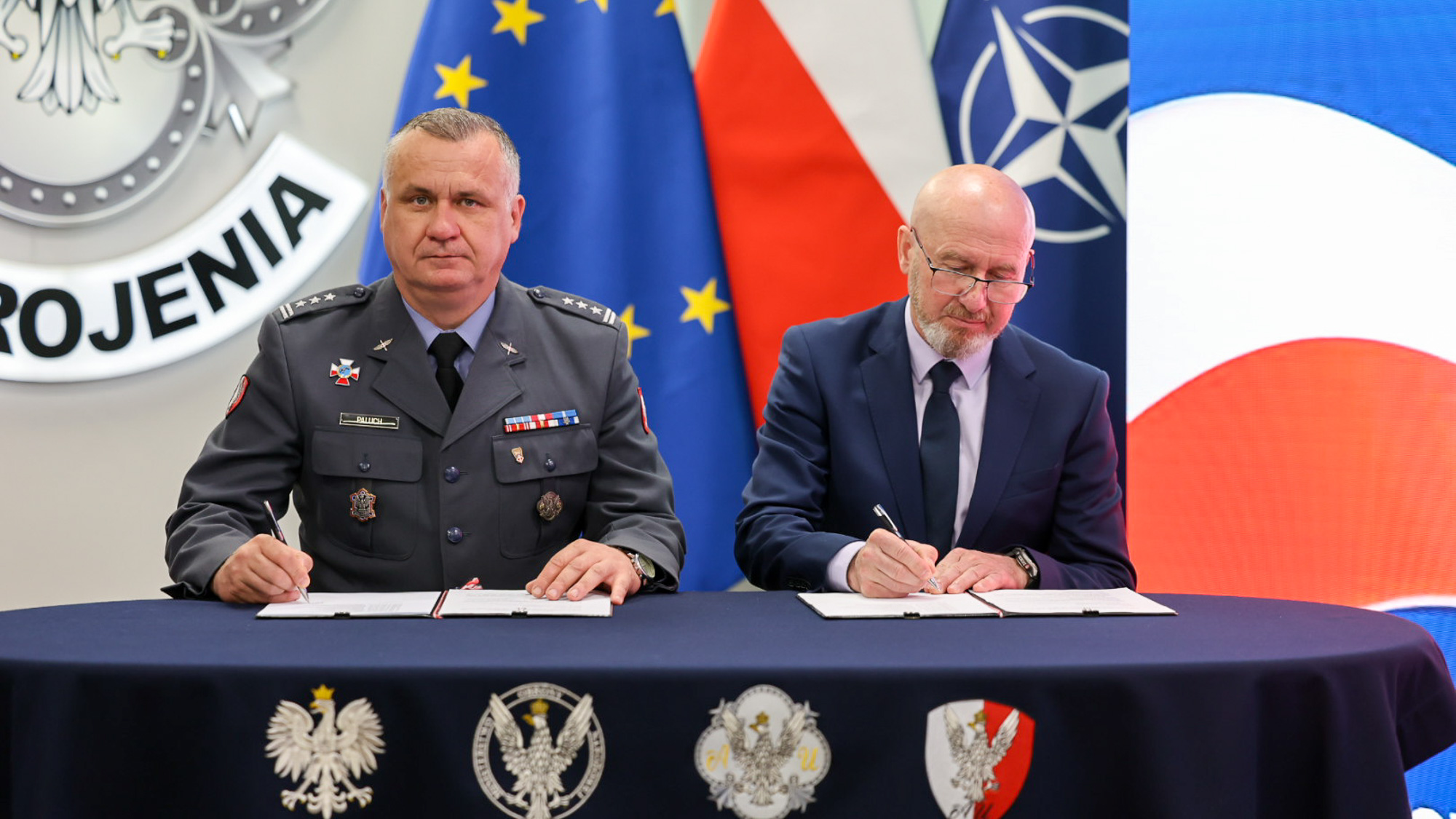
The previous contract for the delivery of 67 Medium Satellite Terminal sets was concluded on September 18, 2024, and was valued at 172,794,459 PLN. The contractor is a consortium of Siltec of Pruszków as the leader and Ultra Electronics Ltd. (Ultra Communications) of London. Details of the subject of the order remain classified.
It is worth adding that Warsaw-based GISS, which will deliver the new Terminal sets, signed a 38.1 million PLN gross contract on February 28, 2022, for the delivery of 100 sets of tactical-level portable SHF satellite terminals.
LOTR Kleszcz
The framework agreement for 286 Light Armored Reconnaissance Carriers (LOTR) under the Kleszcz (pronounced ‘kleshch’, meaning ‘tick’ ‒ translator’s note) program was signed with AMZ-Kutno on February 28, 2024, and provided for deliveries in 2025-2035.
The first delivery contract, signed on August 14, 2024, and valued at approximately 800 million PLN, covers the first batch of 28 vehicles, with deliveries postponed to 2026. Now, under the second delivery contract, 24 additional vehicles have been ordered.
Kleszcz will replace BRDM-2 armored cars and their upgraded variants in reconnaissance subunits of the Polish Armed Forces. The vehicle will enable dynamic and continuous acquisition and collection of information about the enemy and the operating environment, as well as its processing and transmission in the form of reconnaissance data to higher command levels.
On November 15, 2024, AMZ-Kutno signed a 16.632 million EUR (approx. 68.29 million PLN at the time) contract with Turkey’s Aselsan for the delivery of radar and electro-optical systems for the LOTR Kleszcz. On September 2, 2025, during the 33rd MSPO in Kielce, the companies signed an agreement to expand their cooperation. On November 3, 2025, the Turkish side announced the integration of ARSUS 100, a compact reconnaissance system mounted on a stabilized mast that combines a long-range radar with an EO/IR optoelectronic head for day-and-night operation and an inertial navigation system. It is used for target detection, identification, automatic tracking, and real-time streaming of video, audio and data. The vehicles will also be equipped with L3Harris Technologies radios.
 Photo: AMZ-Kutno
LOTR Kleszcz was developed under a 2013 agreement between the National Center for Research and Development (NCBR) and a consortium of Polish entities comprising AMZ-Kutno as the leader, the Military Institute of Communications, the Military Institute of Armament Technology (WITU) and the Military Institute of Chemistry and Radiometry (WIChiR).
The 4×4 wheeled vehicle will be introduced into service with reconnaissance subunits of the Land Forces, while ensuring an appropriate level of crew protection, and is intended to perform reconnaissance missions. AMZ-Kutno, which has been operating since 1999, specializes in the design and production of special-purpose bodies for commercial vehicles.
LOTR Kleszcz is based on the Bóbr-3 vehicle chassis, which is equipped with a 7,200 cc six-cylinder diesel engine developing 240 kW, installed as a power-pack and compliant with the EURO 3 emission standard, as well as an automatic transmission, all-wheel drive and independent suspension. The vehicle is 6.9 m long, 2.38 m high and 2.5 m wide. Its ground clearance is 400 mm, its weight ranges from 12 to 14 tonnes, depending on the armor package, with a gross vehicle weight rating of 15.6 tonnes, and its range is 600 km. Its maximum road speed on paved roads is 90 km/h, while its swimming speed is 7 km/h. The vehicle is adapted for fording and crossing water obstacles, including rivers with currents of up to 1.1 m/s.
The basic Bóbr-3 can provide ballistic protection at Levels 2 and 3 according to STANAG 4569, and mine protection at Level 2A. Additional armor panels will increase protection to Level 3. The vehicle has a modular design. LOTR Kleszcz can carry a five-soldier reconnaissance team. It is fitted with side doors for every seat located along the vehicle’s side walls, as well as three escape hatches, enabling the crew to evacuate the vehicle quickly and safely during both tactical operations and technical evacuation. The vehicle can transport the crew together with their personal and reconnaissance equipment, provide fire support using onboard weapons, and engage lightly armored vehicles, low-flying air targets and enemy personnel.
The main components of the Light Armored Reconnaissance Carrier include reconnaissance systems, equipped with a tactical battlefield surveillance radar and an electro-optical head; communications systems, providing simultaneous communications between LOTR vehicles, helicopters and superiors up to battalion level; an armament system, in the form of a remotely operated weapon station fitted with 12.7 mm WKM-B and 7.62 mm UKM machine guns; filtration-ventilation, air-conditioning, and weapons of mass destruction detection and protection systems; and a laser warning system coupled with smoke grenade launchers.
The vehicle was designed in two variants: a light amphibious version with a lower level of protection and a heavy non-amphibious version with a higher level of protection.
Under the LOTR Kleszcz program, the Ministry of National Defence initially wanted to purchase 244 amphibious 4×4 wheeled armored reconnaissance vehicles with independent suspension to replace the BRDM-2 vehicles currently in use. The program was launched in 2013, and its value was then estimated at PLN 1.2 billion. In August 2021, the prototype was sent for testing to the 17th Greater Poland Mechanized Brigade.
LOTR Kleszcz is also intended to serve as the base vehicle for a chemical, biological and radiological reconnaissance vehicle (TRSK), for which a technical dialogue was conducted between February and May 2021. At the MSPO 2019 defense industry exhibition in Kielce, AMZ-Kutno presented a prototype wheeled tank destroyer based on the Bóbr-3 vehicle.
See also:
