

















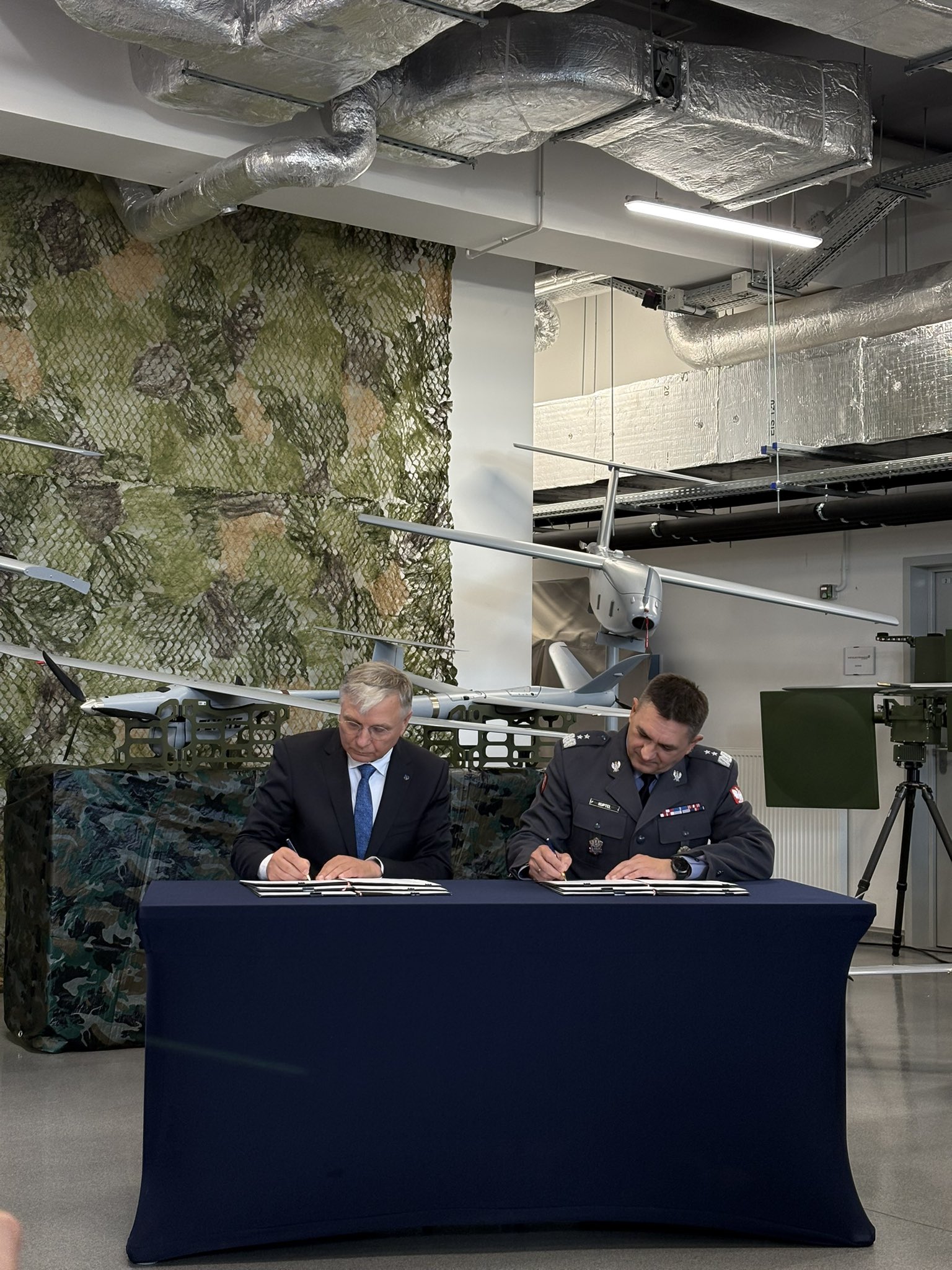
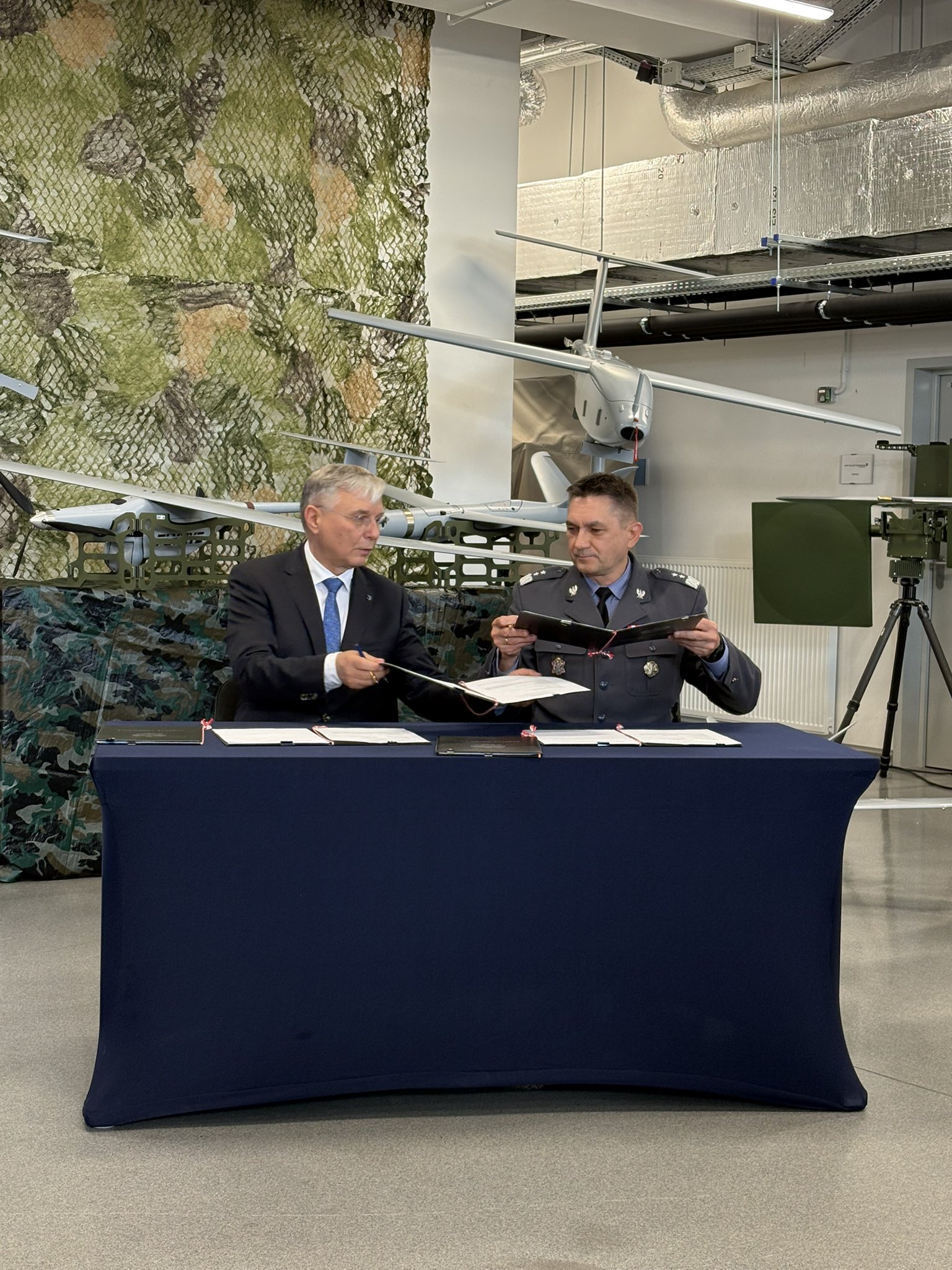






Photos: Ministry of National Defence
The contract, financed under the SAFE (Security Action for Europe) loan program, covers the delivery of:
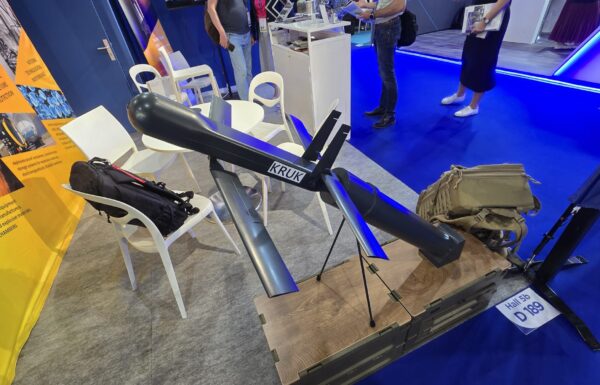
- more than 400 Warmate loitering munition systems for approximately 1 billion PLN net, each comprising 10 drones;
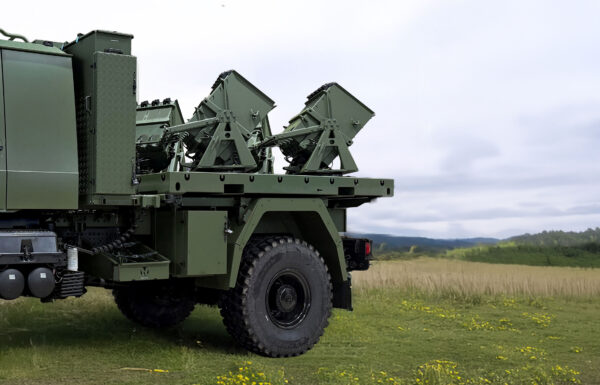
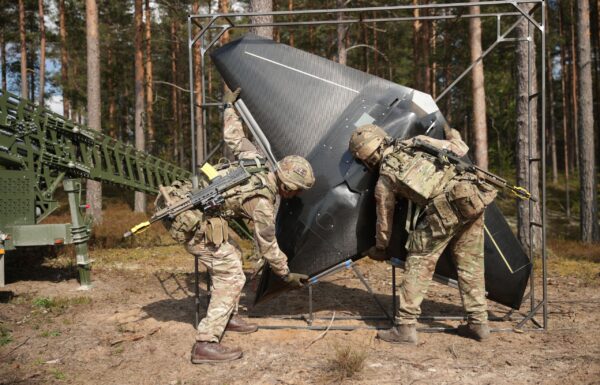
- 12 battery fire modules (BFM) of the Gladius Unmanned Search-and-Strike Systems (BSP-U) for more than 9.3 billion PLN net;
- 190 FlyEye reconnaissance UAV systems, including six systems for reconnaissance platoons of K2GF and K2PL tank battalions and 184 systems for the operational forces and Territorial Defense Forces, worth approximately 1.3 billion PLN net, with deliveries to be completed by the end of 2030.
All of the above-mentioned systems are already in service with the Polish Armed Forces.
Deputy Prime Minister and Minister of National Defense Władysław Kosiniak-Kamysz said:
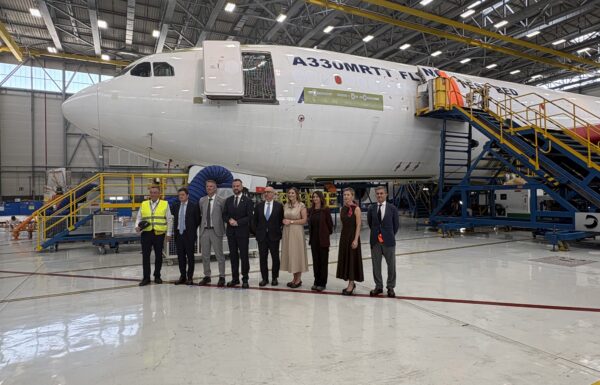
“I am very pleased and satisfied that we are at a company that is a brand of the Polish economy. WB Group is such a brand, as I have seen in recent days. We see this in Canada, and we see it every day using your equipment in the Polish Armed Forces. Because soldiers of the Polish Armed Forces are the best recommendation one can get. If they speak well of you, the whole world will speak well of you ‒ and that is what is happening. (…) You truly are a brand of the Polish economy, Mr. President, gentlemen presidents, employees. I wanted you to be in this photograph, so that Poland could see you. These are not only people in suits, but people who, every day here in Warsaw, in Ożarów, and in other places indicated by the president, build the strength of the Polish defense industry. For us, it is an honor to be able to promote the Polish economy and Polish companies at home and abroad. To sell something, you need a product and people who give it credibility. You provide that credibility.”
Magdalena Sobkowiak-Czarnecka, Government Plenipotentiary for the Instrument for Increasing Security, said:
“These are new contracts that were made possible because Poland successfully renegotiated the largest share of the SAFE mechanism. From the very beginning, when we spoke about how SAFE would be implemented, we said, first, that most of these funds, almost 90%, would go to Polish companies. And that is what is happening here: production from start to finish on Polish territory. We said this would mean business development and new jobs. And we also spoke briefly about how WB plans to expand in connection with the contracts resulting from the SAFE mechanism.”
The Warmate 1 Guided Intelligent Target Engagement System (ISKdRC) in the 3.0 version is designed to identify and engage, depending on the warhead used, lightly armored targets or enemy infantry. Warmate 1 can be used as a standalone system, carried by soldiers or transported as an element integrated with a vehicle. The system is equipped with control modules that enable full automation of most flight phases and support the operator during the target-guidance phase. The loitering munition is controlled in real time based on video transmission from the observation subsystem. The operator has full control over the selection of the system’s operating mode, choosing between a reusable reconnaissance mode and a single-use combat mode.
The Warmate 1 ISKdRC has an empty weight of 4 kg, a fuselage length of 1.1 m, and a wingspan of 1.4 m. It is powered by a battery-fed electric motor, allowing a flight time of 1.5 hours. Its armament is an interchangeable warhead. Warmate 1 uses satellite and inertial navigation (GPS/INS) and flies using an autopilot supported by an automatic target-tracking system, or video tracker.
On May 15, 2025, a framework agreement was signed for the delivery of nearly 1,000 Warmate loitering munition systems, totaling around 10,000 units, with deliveries scheduled by 2035.

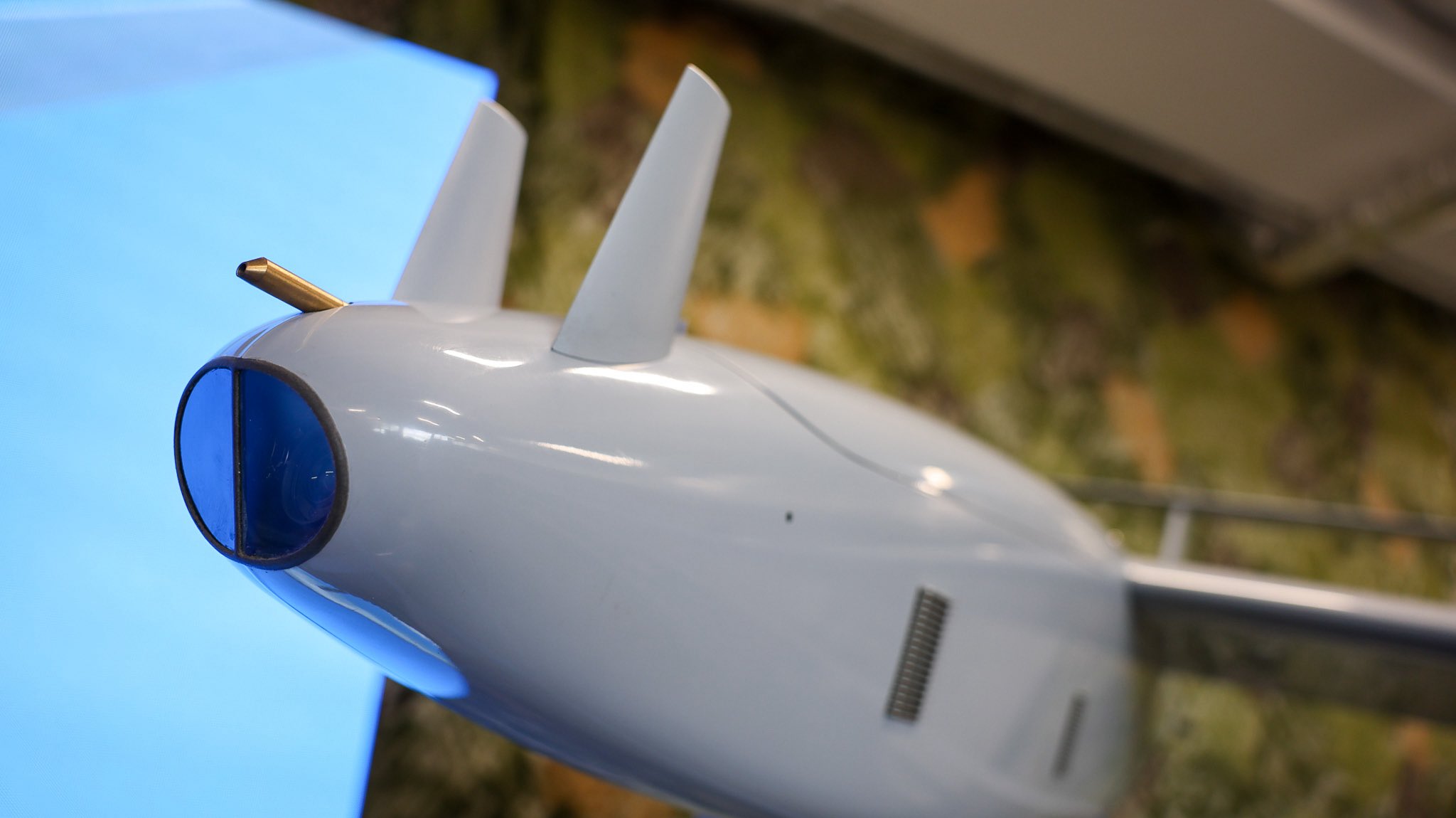
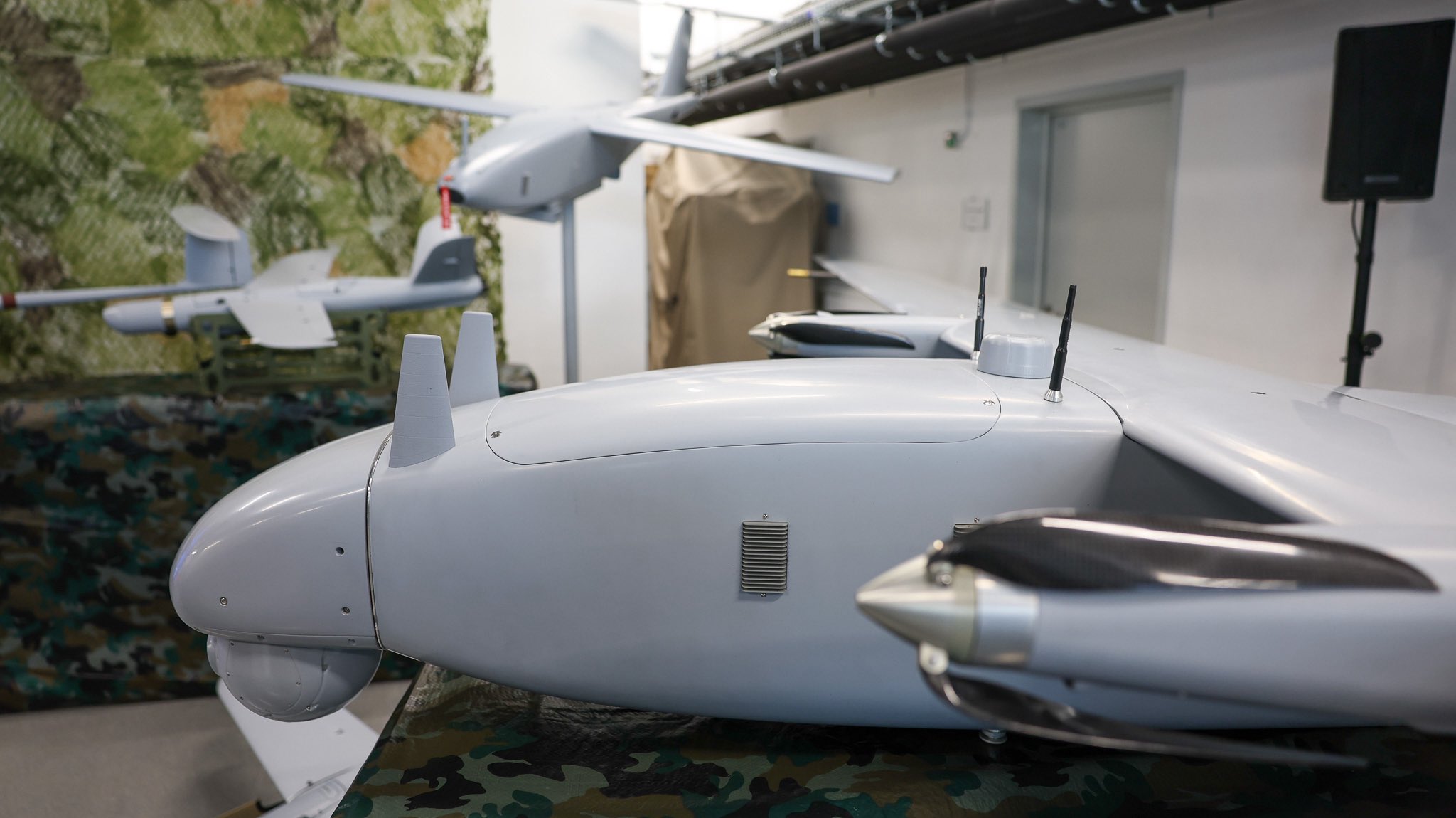
Mini-class FlyEye UAVs are intended for aerial imagery reconnaissance using electro-optical heads equipped with cameras capable of recording images both in daylight and using thermal imaging. The system has been successfully proven in the Polish Armed Forces, where it performs tasks for both the Operational Forces and the Territorial Defense Forces, as well as during combat operations in Ukraine.
FlyEye is a high-wing aircraft with a wingspan of 3.6 m, a length of 1.8 m, and a takeoff weight of 12 kg, thanks to its composite structure. Powered by a single electric motor, it reaches speeds of 60–120 km/h, operates at altitudes of up to 3,500 m, and has a range of up to 50 km using a radio link or up to 300 km with the relocation of the control and command station. The unmanned aircraft can remain airborne for more than 2.5 hours.
The previous contract for FlyEye was signed on October 24, 2025.
The Gladius unmanned search-and-strike system is intended for the precision engagement of targets at ranges of 100 km and for aerial imagery reconnaissance using the reconnaissance variant of FT-5 unmanned aerial vehicles, equipped with electro-optical heads capable of recording images both in daylight and using thermal imaging, including SAR and ELINT versions. The system’s effectors are Gladius strike unmanned aerial vehicles, integrated with the Topaz fire-control system used by the Polish Armed Forces. A battery fire module includes launchers, command vehicles, ammunition and maintenance vehicles, and a stock of Gladius strike unmanned aerial vehicles.
Gladius is an entirely Polish development. In addition to the aforementioned Topaz integrated battlefield management system, command and communications solutions, including the Fonet digital vehicle communications platform, computer terminals, active LAN and WAN network elements, and tactical radios, as well as integration into a single coherent system, are provided by WB Group. The main contractor is WB Electronics, while subcontractors include WB Group companies Flytronic and ZAiUP Arex, as well as Huta Stalowa Wola (HSW), part of Polish Armaments Group (PGZ), which supplies Waran 4×4 tactical multirole vehicle chassis in command-vehicle and launcher-vehicle variants.
Four battery fire modules had previously been ordered and are being delivered to units.
Under the new contract, the contractor will deliver the Gladius 1 effectors already known to the Polish Armed Forces, as well as Gladius 2 effectors developed on the basis of the results of development work, which will be able to engage targets at distances of up to several hundred kilometers from the launch site.