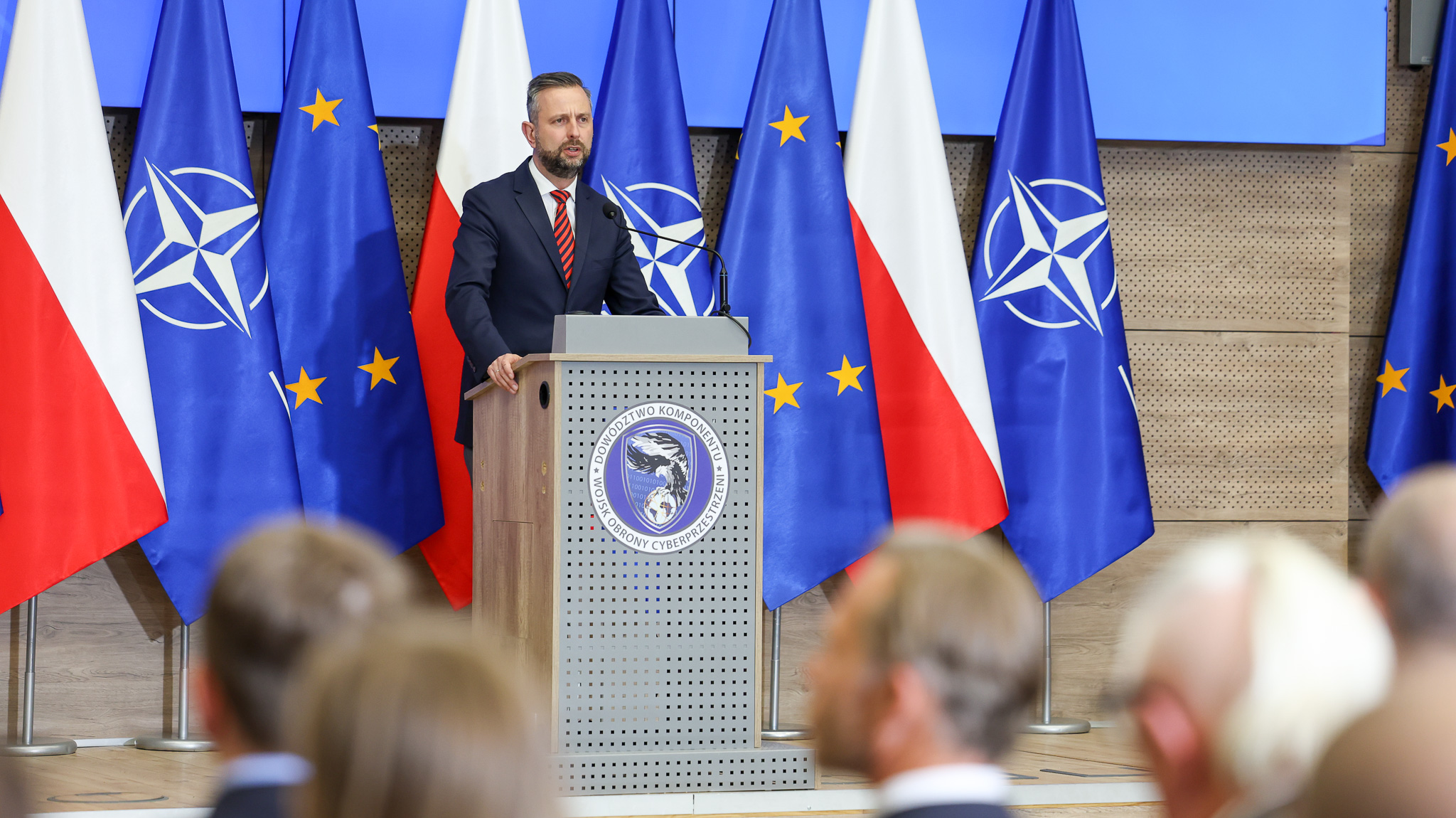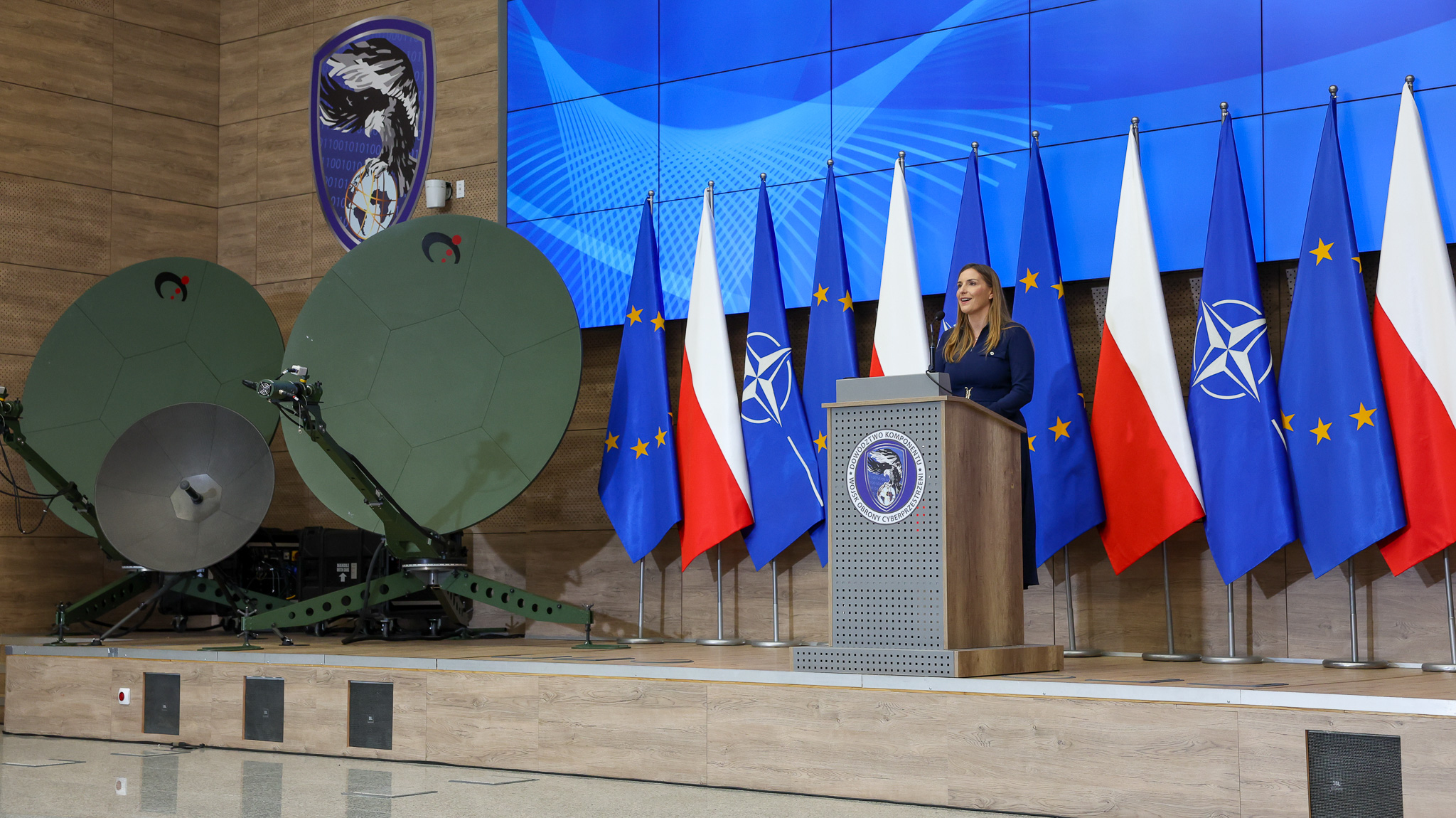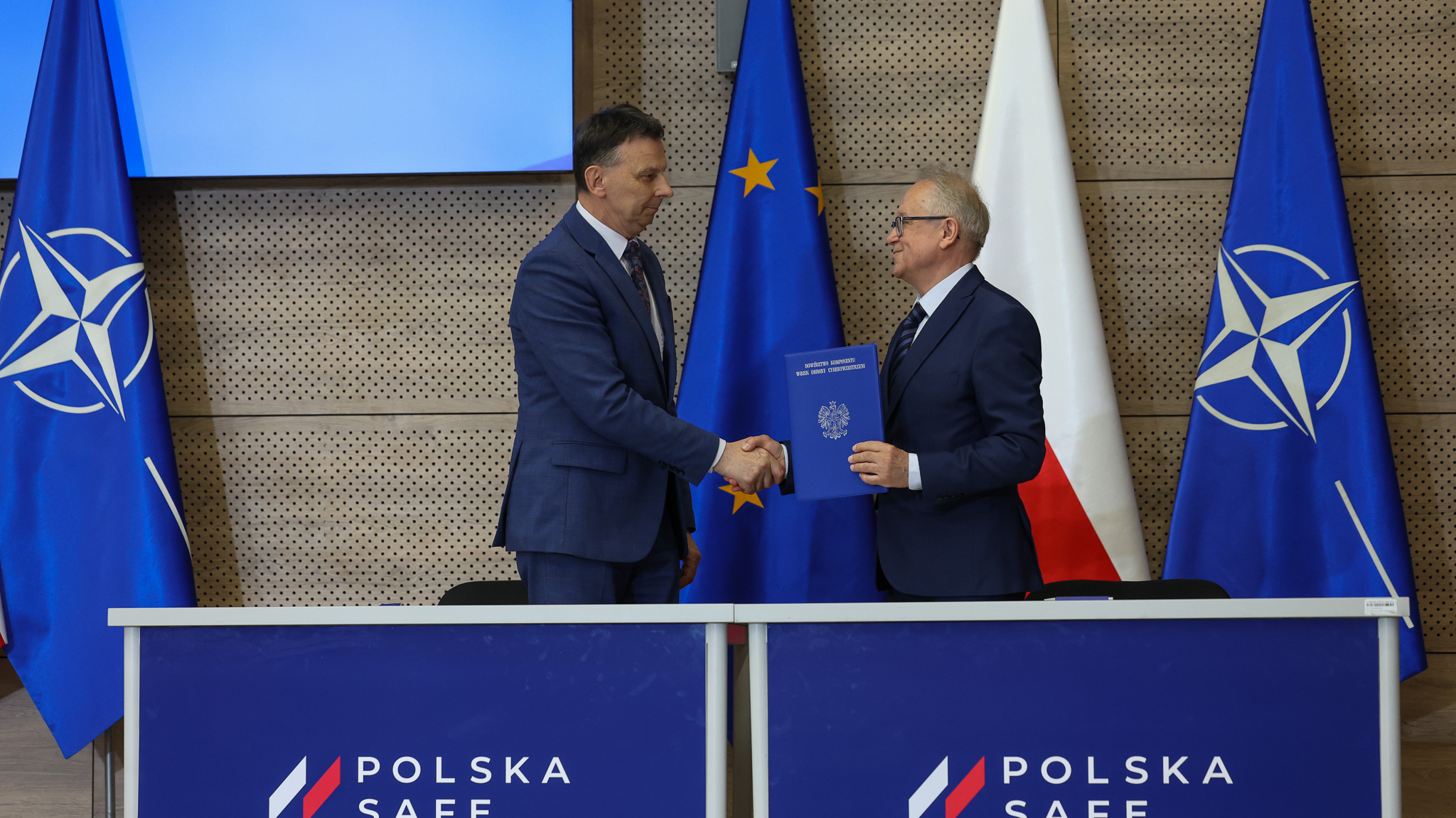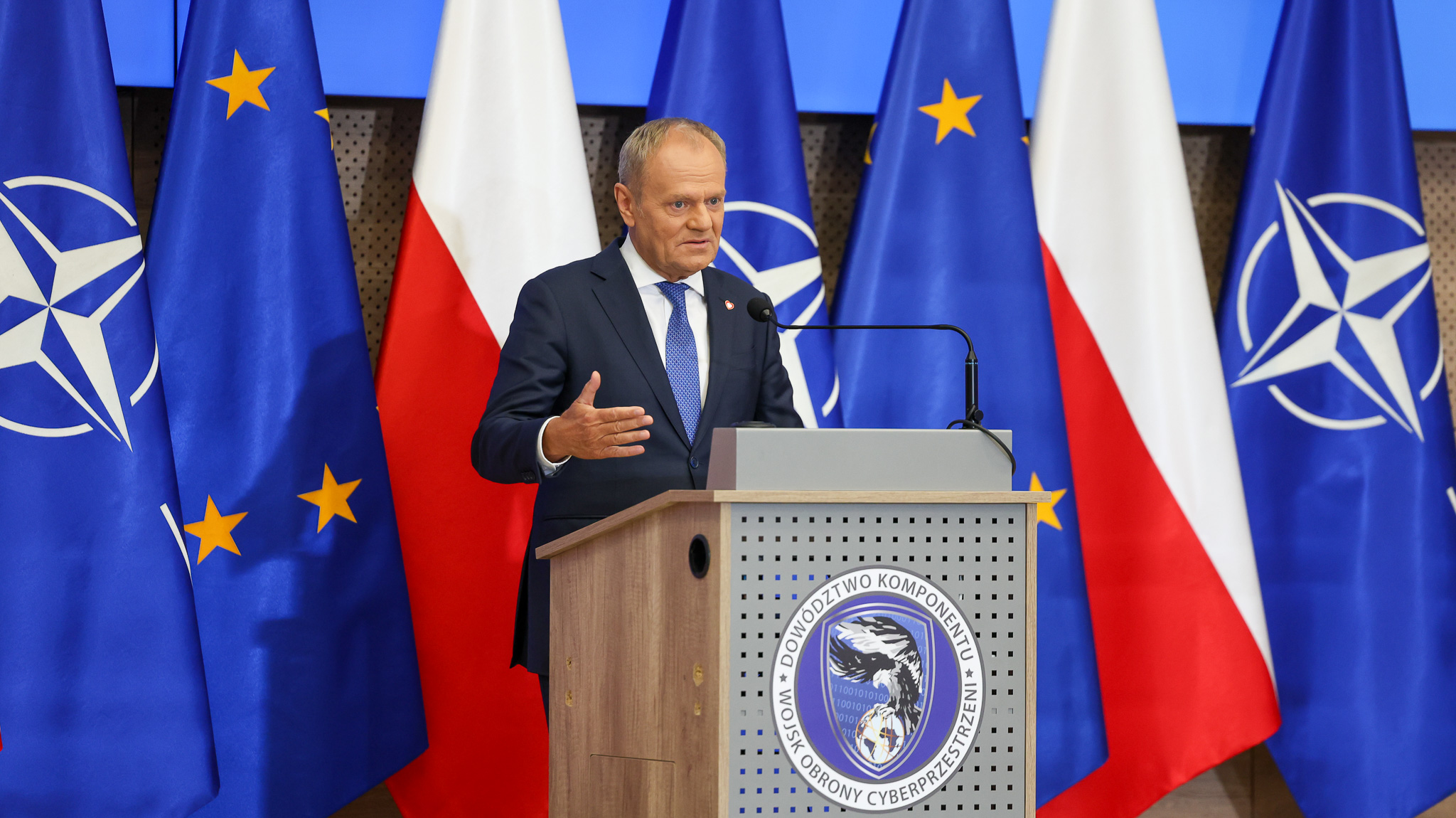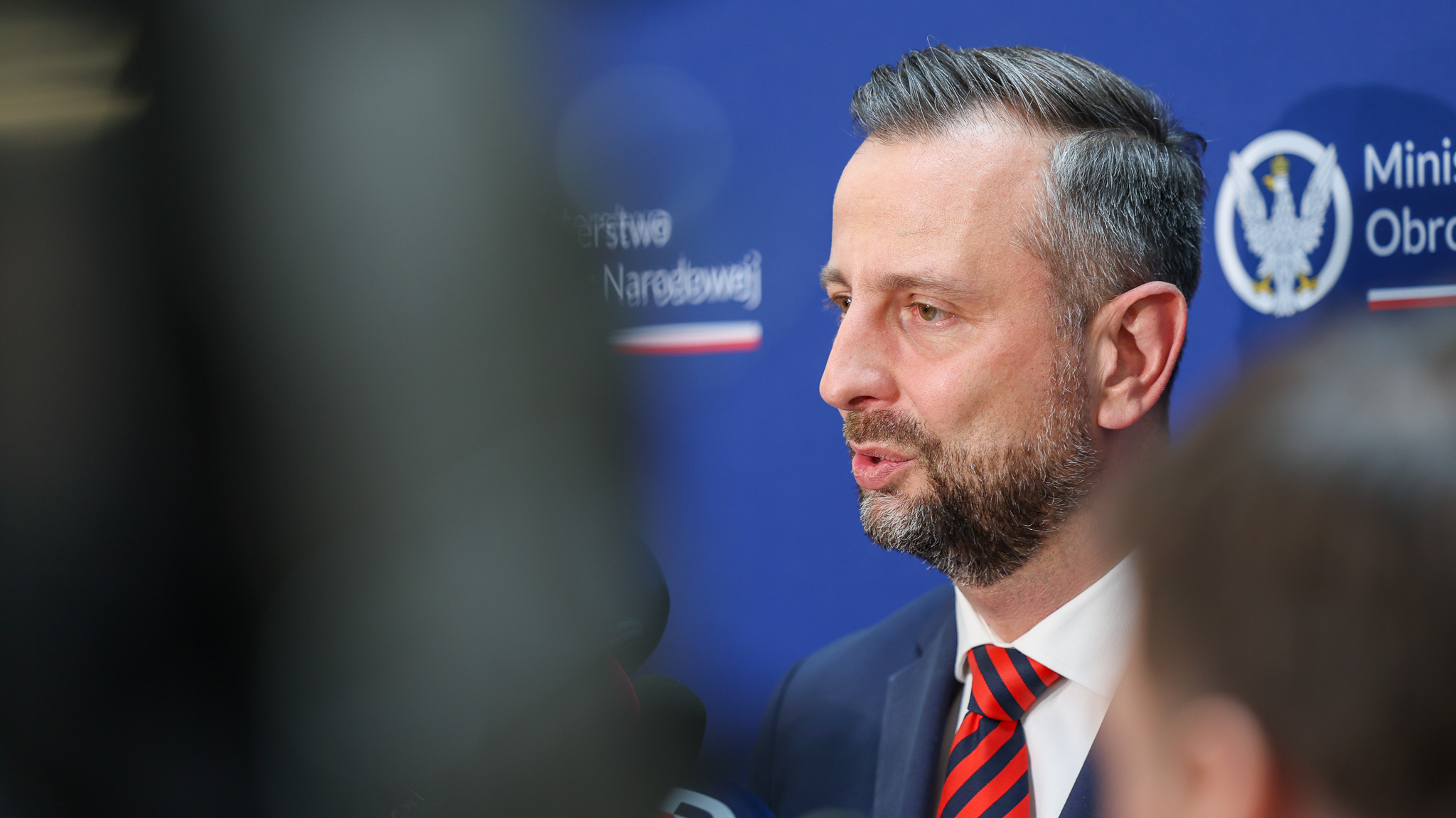






















On Thursday, May 28, 2026, at the headquarters of the Cyberspace Defence Forces Component Command in Legionowo, Prime Minister Donald Tusk, Deputy Prime Minister and Minister of National Defence Władysław Kosiniak-Kamysz, Secretary of State at the Ministry of National Defence Cezary Tomczyk, and Magdalena Sobkowiak-Czarnecka, Government Plenipotentiary for the Instrument for Increasing Security, took part in a ceremony to sign the first contracts financed under the SAFE (Security Action for Europe) loan program, worth 3 billion PLN.
 Photos: Krzysztof Gumul/WCEO
SAFE to Strengthen Poland’s Cybersecurity: New Equipment, New Competencies, New Capabilities
“SAFE funding is guaranteed in the European Union. Poland is among the most advanced countries in terms of both projects and the preparation of the relevant documentation. But today, this is not about procedures or documents. This is about very real undertakings, crucial from the point of view of the security of the state, the security of Europe, and therefore inevitably also of the entire North Atlantic Alliance,” Prime Minister Donald Tusk said during his visit to Legionowo.
Thanks to the contracts signed today in Legionowo, solutions developed by Polish companies will be acquired by the Cyberspace Defense Forces and used to increase Poland’s security in cyberspace.
The signed contracts concern the acquisition of:
- a next-generation post-quantum IP encryptor from Enigma sp. z o.o.;
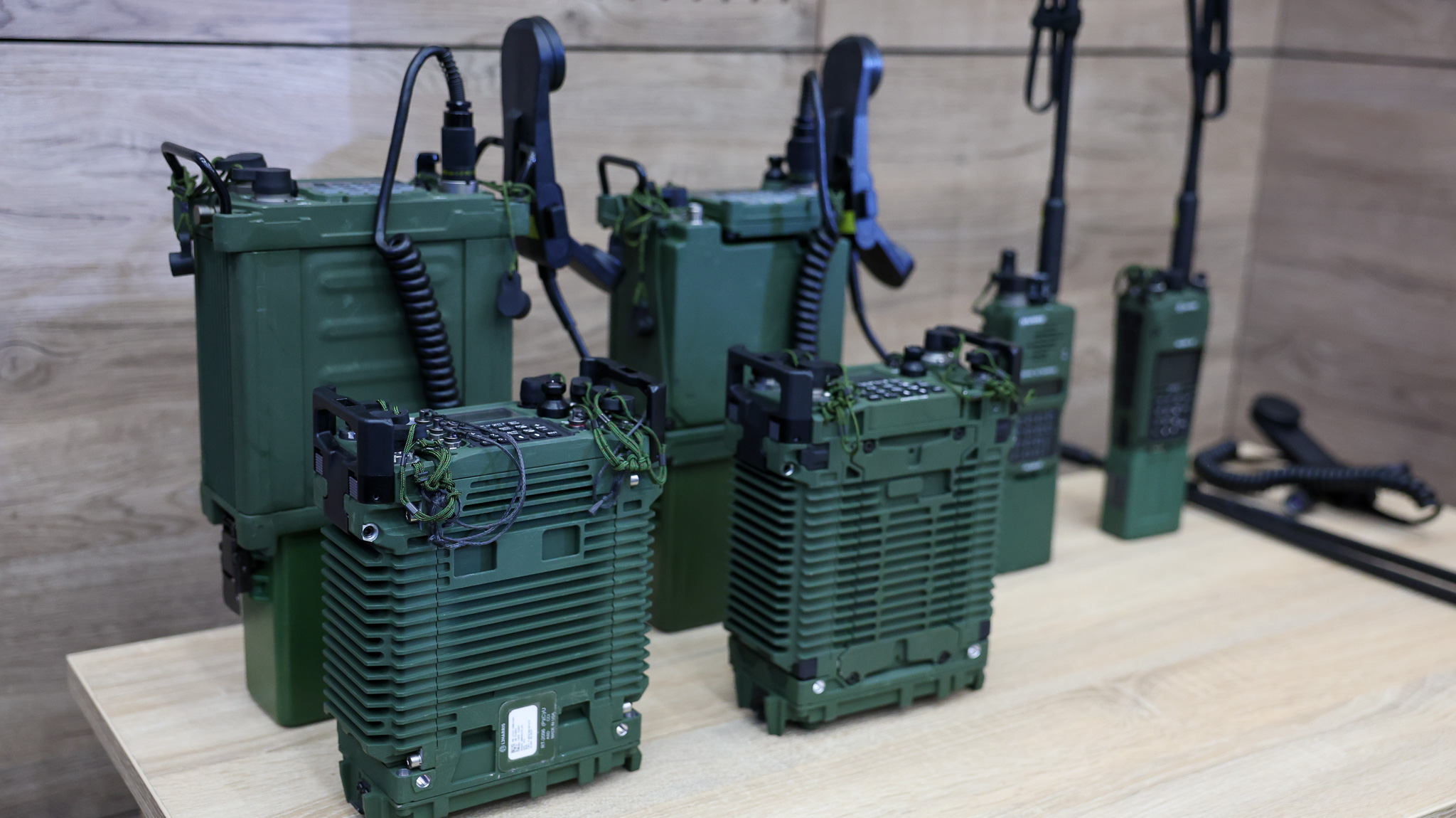
- a high-trust cryptographic system for protecting communications at the application layer from Krypton Polska sp. z o.o. and Transbit sp. z o.o.;
- a system ensuring secure data exchange between automated command systems with different classification levels from Filbico sp. z o.o.;
- a mobile cybersecurity laboratory for conducting operations in cyberspace from Media sp. z o.o.
According to information from Transbit, under the high-trust cryptographic system for protecting communications at the application layer, the company will deliver cryptographic devices compliant with applicable NATO standards, developed as part of dedicated work carried out jointly with Krypton Polska. Transbit is responsible for the hardware part of the solution and for part of the software implementation, in particular the implementation of interoperable communication protocols such as SCIP and TSVCIS, as well as broadly understood device connectivity with the external environment, including radio equipment operated by the Polish Armed Forces.
Umowy obejmują dostawy dla potrzeb @CyberWojska postkwantowego szyfratora IP od Enigma sp. z o.o., systemu kryptograficznego wysokiego zaufania od Krypton Polska sp. z o.o., systemu bezpiecznej wymiany danych od Filbico sp. z o.o. oraz mobilnego laboratorium cyberbezpieczeństwa… pic.twitter.com/TcM2JKBF6M
— Ministerstwo Obrony Narodowej 🇵🇱 (@MON_GOV_PL) May 28, 2026