















The Donald Trump administration operates in a mode of constant revision of plans, ideas, and intentions. Statements regarding military actions can change several times within a single day depending on what appears on the president’s Truth Social account.
 Image: Truth Social
Meanwhile, waging a war requires stable assumptions about objectives, the scope of operations, and the signals sent to the adversary. Yet a post published in the morning may suggest de-escalation, while one in the evening may announce an expansion of operations. In effect, the Pentagon no longer sets the direction of action, but increasingly tries to keep up with the president’s ideas.
The most visible change is the role of social media. Truth Social has effectively become a channel of strategic communication – a place where signals about objectives, intentions, and assessments of the situation appear.
This is an entirely new approach and a break with all established rules of communication. In the classical model, such messages are carefully prepared, consulted, and released in a controlled manner. Here, we are dealing with direct communication – often emotional, and most often impulsive. As a result, adversaries, allies, and domestic institutions receive signals that are difficult to interpret unambiguously.
Contradictions in real time
Donald Trump’s posts regarding the conflict with Iran have repeatedly demonstrated a lack of consistency in messaging. One day, the president writes that Iran wants to talk. So do we. We could have peace very quickly – only to publish, a few hours later, a post in a completely different tone: If Iran makes even one move, it will be met with force the likes of which the world has never seen. It looks as if there are two wolves inside Trump.
A similar dichotomy appears in the assessment of the adversary. In one post, Iran is a regime on the verge of collapse, without money and without options; in the next, on the very same day, there is a warning: Do not underestimate Iran. It is a very dangerous adversary with enormous influence in the region.
This is even more evident in the definition of operational objectives. At one point, Trump declares: Our goal is precise strikes that will restore deterrence and nothing more – only to change course shortly thereafter and write that it is time for real change in the Middle East – we will end this once and for all.
Allies begin to calculate
In alliance politics, predictability is essential. If messages change from hour to hour, the risk of misjudging the situation increases – not only politically, but also militarily.
This is becoming increasingly visible in Europe. Switzerland, traditionally neutral, cautious, and reluctant to make firm commitments, is beginning to distance itself from closely tying its security policy to decisions made in Washington that may change within a single news cycle.
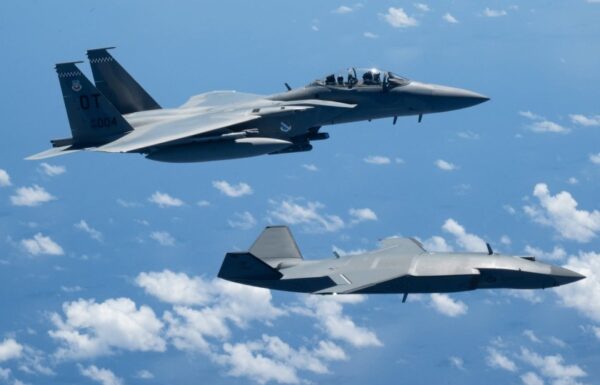
Especially since the Trump administration has decided to delay deliveries of ordered equipment, raise prices on already ordered items, and threaten to seize missiles that have already been produced. The Swiss are not alone in distancing themselves from Washington. There have been reports that Spain is moving away from plans to purchase the F-35A and redirecting funds toward the development of Eurofighters and the FCAS program.
Canada and Portugal have signaled reviews of their F-35-related programs, mainly due to disproportionately rising costs and political uncertainty. All parties involved speak of a desire to build greater industrial autonomy in Europe. This is why even Canada is interested in cooperation within the SAFE mechanism (Poland: Defense industry backs SAFE program. The military sees an opportunity as well)
This is not a reaction to a single post or a single decision. It is the cumulative effect of situations in which messages coming from Washington require immediate reinterpretation, adjustments to plans, and consideration of scenarios that just hours earlier were not being taken into account.
A blow to the defense industry
The most lasting effects may concern the defense sector. For decades, its advantage has rested on two pillars – technology and political credibility. If the latter weakens, the way customers think begins to change. The purchase of military equipment is a strategic decision, binding for decades. It requires confidence that the supplier will remain a stable partner. In the case of the United States, that certainty is no longer a given. Volatility in Washington is raising concerns in the markets.
If politics begins to resemble a series of unpredictable messages, the tendency to diversify increases. More countries are starting to look for alternatives. Thanks to SAFE, that alternative is quite reasonable and appealing. This is why the Trump administration and its allies see it as a threat.
Not entirely rightly. A critical look at the weapons systems dominant within NATO shows that it is impossible to conduct multinational operations without relying, at least in part, on equipment and doctrines originating from the United States. SAFE, however, can be seen as a tool serving exactly what Donald Trump has been demanding of European allies – namely, taking responsibility for their own security.
See also: