






















On Wednesday, March 25, 2026, the U.S. Department of State approved the potential sale to Japan of an additional support package for the domestically developed Hyper Velocity Gliding Projectile (HVGP) hypersonic missile system, valued at up to 340 million USD.
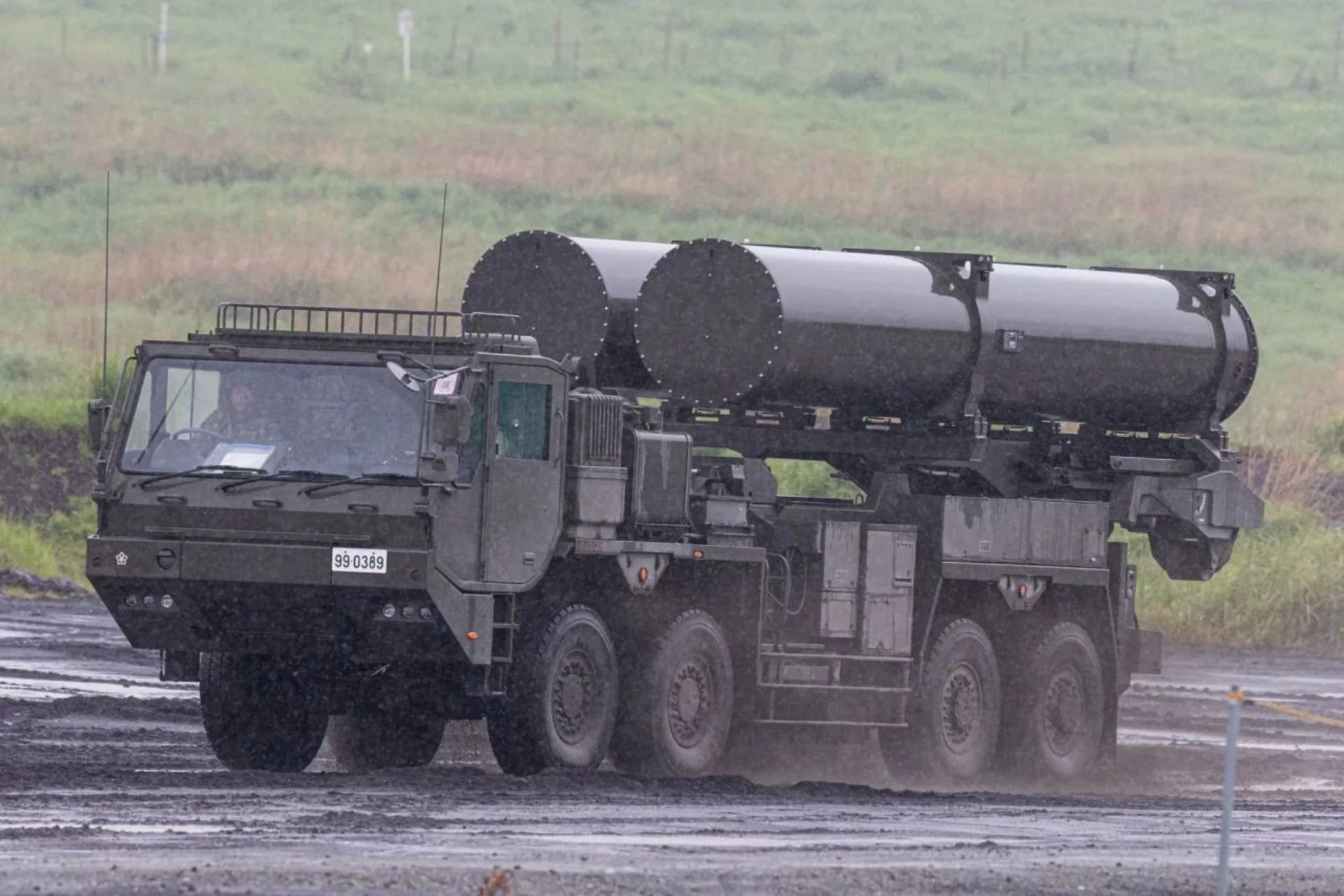 Transporter-erector-launcher with two HVGP missile launch canisters / Photo: 軍事日本 via Telegram
According to the published information, the government in Tokyo requested the possibility of procuring equipment and services supporting the HVGP weapon system, including test preparation, test and transport support, including range support, test media support (water, gas, electricity), range supervision, range safety, including post-test system review, radio frequency allocation, test plan development, test data, environmental and site approvals, office facilities, administrative services, transport of test equipment, procurement of measurement equipment, coordination meetings in the United States and Japan, and other related logistics and program support elements. The equipment and services will be provided by the U.S. government.
Approval for the sale of a previous package in this matter was published on March 10, 2025, and was valued at up to 200 million USD.
HVGP
It is worth recalling that on February 25, 2020, the Japanese daily Mainichi Shimbun reported that the Acquisition, Technology and Logistics Agency (ATLA), on behalf of Japan’s Ministry of Defense, was working on the HVGP hypersonic offensive system intended to engage surface ships and land targets. The concept of such a weapon appeared in official ATLA documents in 2019, but initial conceptual and analytical work had unofficially begun as early as 2015.
In fiscal year 2020, the equivalent of 226 million USD was allocated for research and development (R&D), with the goal of developing an early prototype of the HVGP Block 1 hypersonic glide vehicle, together with a ballistic rocket booster of a total length of 8–9 m, by 2026, while a more advanced Block 2 variant exceeding 10 m in length is planned for 2028 or later. The glide vehicles are expected to carry two types of warheads.
In the fiscal year 2024 budget, 12.7 billion JPY was allocated to the program. On July 4, 2024, ATLA reported that tests of undisclosed hypersonic missiles had been conducted in California in March and April.
According to the assumptions, the system will be capable of achieving higher speeds and more complex flight trajectories. After separation from the rocket booster, the HVGP glide vehicle would navigate using GPS signals supported by another guidance system, performing complex maneuvers at very high speeds in the upper layers of the atmosphere, making interception more difficult. It would be equipped with a new type of warhead capable of penetrating the structures of ships such as aircraft carriers, increasing the likelihood of destroying or at least disabling a vessel with a single missile.
The new weapon system is to be deployed across the Ryukyu Islands as well as the main islands of Kyushu and Hokkaido, in response to the growing military threat from the People’s Republic of China. Currently, the Japan Ground Self-Defense Force (JGSDF) operates SSM-1 (Type 88) anti-ship missiles with a range of 180 km and an upgraded version, Type 12, with a range of 200 km, which entered service in 2015. Due to concerns related to constitutional limitations, the Ministry of Defense had considered limiting the range of new HVGP missiles to less than 500 km (with a minimum range of 300 km), but current plans indicate that the Block 2 version could ultimately reach a range of up to 3,000 km.
A naval variant is also under consideration. The system was publicly presented in July 2025 (see main photo), although a presumed image had already appeared in September 2024.
In parallel, Japan is developing the HCM (Hypersonic Cruise Missile), a powered maneuvering hypersonic missile, as well as an upgraded extended-range Type 12 SSM-ER anti-ship missile. At the same time, Kawasaki Heavy Industries (KHI) and Mitsubishi Heavy Industries (MHI) are working on a new generation of land-based anti-ship and cruise missiles. MHI will also develop new torpedo-launched guided missiles and upgraded ship-launched Type 12 anti-ship missiles. These growing missile capabilities are further complemented by purchases from the United States: 50 AGM-158B/B-2 JASSM-ER air-launched cruise missiles, 400 RGM-109E Tomahawk Block V/IV naval cruise missiles, and the Norwegian JSM anti-ship missile.