

















On Tuesday, April 20, 2026, Peruvian defense website Pucará Defensa reported that Peru’s Ministry of Defense had finally ordered Lockheed Martin F-16C/D Block 70 multirole aircraft without publicity. The move, however, has not been without controversy.
 Image: Lockheed Martin
On January 31 of this year, the Peruvian daily Diario Expreso, citing sources close to the country’s defense ministry, reported that the authorities in Lima had decided in favor of the U.S. offer for 12 F-16C/D Block 70 aircraft. The program involved the purchase of 24 combat aircraft in two tranches, for which almost 7 billion USD was planned. However, the decision was expected to be announced in the second week of April, after the general election scheduled for the 12th of that month.
Meanwhile, on February 17 of this year, President José Jerí was removed from office after being accused of contacts with Chinese businessmen. He had held the post since October 2025, when he replaced the ousted Dina Boluarte, who had been accused of corruption. He was succeeded by José María Balcázar, whose objective was to lead the country to the aforementioned election. On March 20, he stated that his predecessor had indicated the selection of the F-16 and that the purchase would proceed, but on the same day his office issued a denial.
On March 29, the daily La República reported that a Lockheed Martin delegation had arrived in Lima several days earlier with a more favorable offer for Peru, as the original proposal had covered only 12 aircraft. The Americans now offered an additional 12 aircraft for just 80 million USD, roughly the value of a single aircraft, bringing the total contract to 3.5 billion USD for 24 aircraft, instead of the original 3.42 billion USD for 12.
According to reports, shortly after the first round of the election, the Peruvian authorities decided on April 13 to select the offer, and the contract-signing ceremony was to take place on April 17. It was canceled at the last minute because the entire contract was to be financed by a loan from the National Bank of Peru (Banco de la Nación), initially amounting to 7.58 billion PEN. President Balcázar argued that, given the need to take on debt, it was necessary to wait for the results of the second round on June 7 and the formation of a new government on July 28, so that it could assume responsibility for the decision. This was protested by the U.S. Embassy in Lima – Ambassador Bernie Navarro even threatened to use all available tools – as well as by veterans’ organizations of the Peruvian Air Force (Fuerza Aérea del Perú, FAP) and former President Jerí. Ultimately, the incumbent government yielded to the pressure and quietly signed the agreement with the Americans, although the details remain unknown.
F-16C/D Block 70
The program covered the purchase of aircraft, weapons, a spare parts package, and support services, such as training for flight and ground personnel. Technology transfer and the participation of local industry, including SEMAN (Servicio de Mantenimiento), were key requirements.
Peru will become the fourth F-16 operator in South America, after Venezuela (5 F-16A/B aircraft; unofficially damaged in a U.S. attack on January 3 of this year), Chile (44 F-16AM/CM/C/D aircraft; some undergoing modernization), and Argentina, which is in the process of receiving 25 ex-Danish F-16AM/BM aircraft. It is worth adding that neighboring Colombia recently, in November 2025, selected the Swedish offer for 17 JAS 39E/F Gripen aircraft, which were also offered to Peru alongside the French Dassault Rafale.
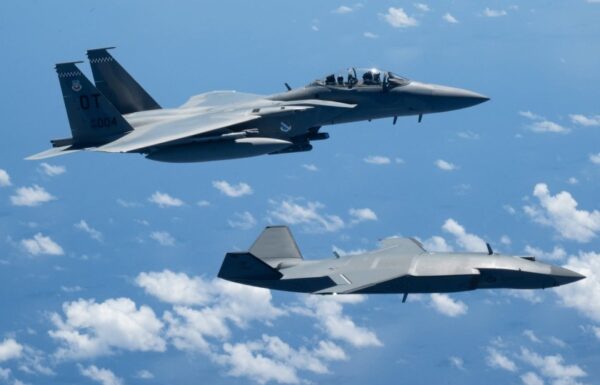
The latest F-16 variant was announced during the Singapore Airshow 2012. The F-16 Block 70 prototype made its first flight on October 16, 2015. It was fitted with the new APG-83 SABR active electronically scanned array (AESA) radar. It also received a new mission computer with a Center Pedestal Display. The aircraft was given new avionics components, a high-throughput Ethernet data bus, and upgraded electronic warfare equipment. It is also intended to carry the Sniper Extended Range targeting pod.
Production of the latest F-16s involves PZL Mielec, a Lockheed Martin company, which has begun deliveries of rear fuselage structures for the aircraft. In the future, the scope of production is expected to increase to more than 80% of the structures.
Current orders for the F-16C/D Block 70 include Bahrain (16 aircraft), Taiwan (66 aircraft), Jordan (12 aircraft), Morocco (25 aircraft), Slovakia (14 aircraft, with talks ongoing on the purchase of another 4), and Bulgaria (16 aircraft). On January 26, 2024, Turkey received approval to purchase 40 brand-new F-16C/D Block 70 aircraft. In addition, the aircraft are being offered to the Philippines and Vietnam, and were previously offered unsuccessfully to India as the F-21 variant, although India is finalizing the purchase of Rafales, and to Ukraine, although Kyiv is interested in Gripens and Rafales.
UPDATE
On Thursday, April 23, Lockheed Martin confirmed the signing of an agreement to sell 12 F-16C/D Block 70 aircraft to Peru.
 Image: Lockheed Martin
Peru’s selection of the F-16 highlights the aircraft’s unmatched operational performance and combat record, as well as its ability to meet the country’s most urgent defense requirements, said Mike Shoemaker, vice president of the Integrated Fighter Group at Lockheed Martin. He added that the company was proud that the most advanced F-16 ever produced would help protect Peru’s national sovereignty while strengthening the long-standing partnership between the two countries.
Shoemaker also noted that cooperation between the U.S. and allied defense industrial bases has always been a shared source of security and economic benefits. He said these ties with Peru would continue to deepen through the F-16 Block 70 program, supporting economic growth for all partners.
Peru has joined 29 other countries and a global fleet of more than 2,800 F-16s currently in operation. Peru’s F-16s will be manufactured at Lockheed Martin’s facility in Greenville, South Carolina.
See also: